Table of Contents
Your soft contacts may feel comfortable at first, but your vision can still shift, blur, or lose sharpness as the day goes on. That can be frustrating when you are driving at night, reading small text, working on a screen, or trying to see clearly with astigmatism, keratoconus, an irregular cornea, or a high prescription.
Gas permeable lenses offer another path when standard soft contacts do not give steady clarity. These firm, breathable lenses take more time to adjust to, but they can give the right wearer sharper focus, more stable vision, durable wear, and long-term lens value.
Are Gas Permeable Lenses Right for You?
Rigid gas permeable contact lenses can be a strong option if you need sharper vision than soft contacts can give, especially with astigmatism, keratoconus, an irregular cornea, or a high prescription. They usually take longer to get used to than soft lenses, but many wearers choose them for crisp vision, stable optics, durability, and long-term value. Ask your eye doctor about rigid gas permeable lenses if your soft contacts feel comfortable but your vision still changes when you blink, drive at night, read small text, or do detailed work.
Soft contacts may still be a better fit if you want fast comfort, occasional wear, or a lens that feels easy from the first day. They may also suit you better if you play high-contact sports, work in dusty or windy places, have severe dry eye, struggle with lens care, or cannot attend follow-up visits. Let your eye doctor decide based on your prescription, corneal shape, tear film, lifestyle, and overall eye health.
What Are Gas Permeable Contact Lenses?
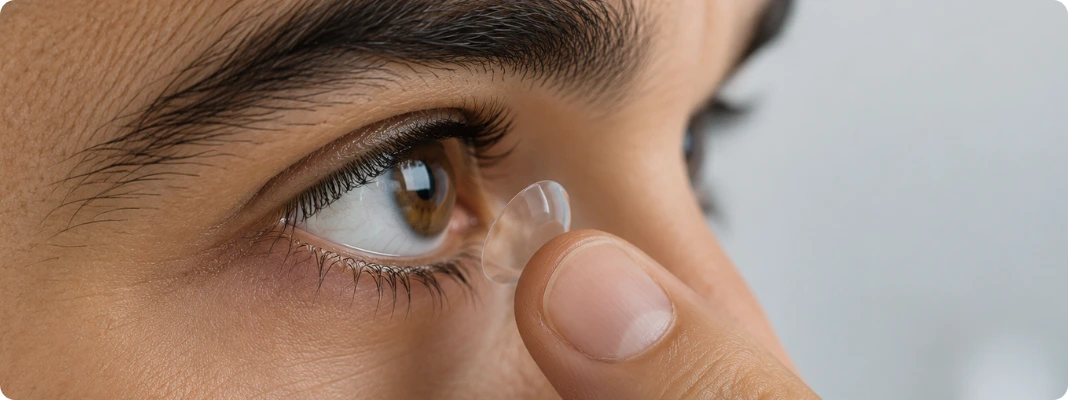
Gas permeable contact lenses are firm lenses made from materials that let oxygen pass through to the cornea. They are also called rigid gas permeable lenses, RGP contact lenses, GP contact lenses, or modern hard contact lenses. Unlike soft contacts that bend easily, gas permeable lenses keep their shape on the eye, which can help create a more stable focusing surface.
They are called gas permeable because oxygen can move through the lens material while you wear them. That oxygen flow helps support healthy contact lens wear and makes modern RGP lenses different from older hard lenses that were much less breathable. These lenses are firm, but they are not the same as the older hard contacts many people remember from decades ago.
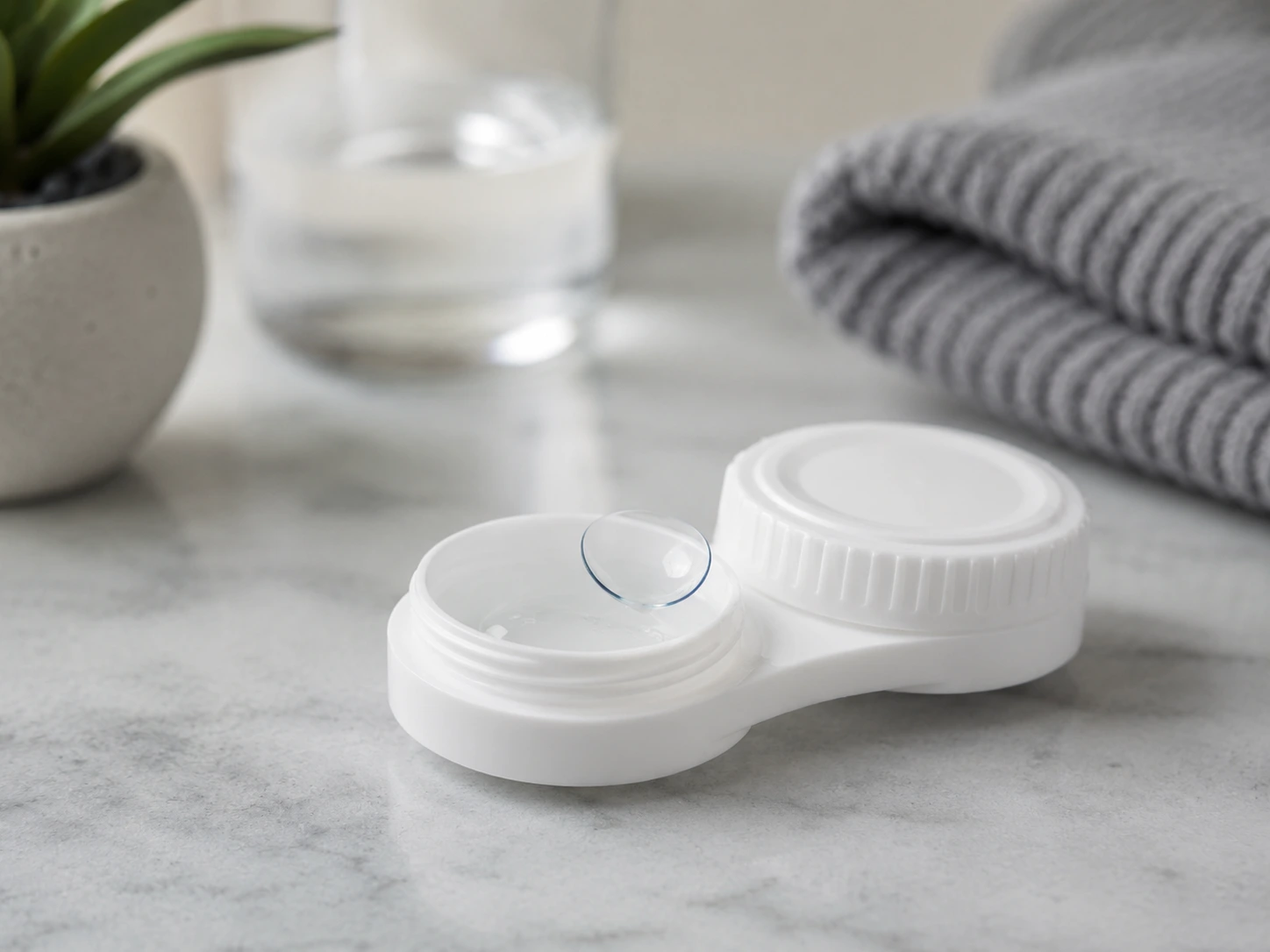
Gas permeable lenses correct vision by creating a smooth, stable optical surface over the eye. A thin layer of tears forms between the lens and the cornea, which can help smooth minor irregularities in how light enters the eye. This is why gas permeable lenses for astigmatism, keratoconus, and irregular corneas may give clearer vision than a soft lens that simply follows the uneven shape underneath.
Wondering what “breathable” really means for GP lenses? Understand DK/T oxygen permeability so you can compare materials more confidently.
How Do Gas Permeable Lenses Differ From Soft Contact Lenses?
Gas permeable lenses vs soft contacts is one of the main comparisons people search before asking about a fitting. Both can correct vision, but they feel different, behave differently on the eye, and suit different types of wearers.
Lens Material and Shape
Soft contact lenses are flexible and drape over the eye. Gas permeable contacts are firmer and keep their shape as you blink. That firm shape is one reason they can work well for wearers who need more precise optics, including some people with astigmatism, keratoconus, or irregular corneal shape.
Vision Sharpness and Stability
Rigid lenses can produce sharper, steadier vision because they do not flex as much on the eye. If your soft contacts rotate, dry out, or shift during the day, your vision may move in and out of focus. Competitor pages repeatedly highlight crisp vision, stable optics, and better performance for astigmatism or irregular corneas as major gas permeable lenses benefits.
Comfort and Adjustment Time
Soft contacts usually feel comfortable faster because they are flexible and larger. Rigid gas permeable lenses often feel more noticeable at first, especially when your eyelid blinks over the lens edge. The FDA notes that RGP lenses are not as comfortable initially as soft contacts and may take a few weeks to get used to, compared with several days for soft lenses.
Durability and Handling
Gas permeable lenses are more resistant to tearing than soft lenses, which can make them easier to handle for some wearers. They can still scratch, chip, or break if dropped on a hard surface, so careful handling matters. They also resist some deposit buildup better than soft lenses, but they still need proper cleaning, storage, and regular eye doctor checks.
Cost Over Time
The cost of gas permeable contact lenses can be higher upfront because they often involve custom measurements, fitting time, lens design, and follow-up visits. Over time, they may cost less for some wearers because they can last longer than many soft lens replacement schedules when cared for properly. Search demand also shows that readers compare rigid gas permeable contact lenses cost, brands, and gas permeable contact lenses online, so a later cost section should explain fitting fees, replacement timing, care solutions, and doctor guidance clearly.
Curious why some lenses feel firmer or hold their shape better than others? Learn what contact lens modulus means so the comfort and stability differences make more sense.
Benefits of Gas Permeable Lenses
Gas permeable lenses are often chosen when wearers need sharper, steadier vision than soft contacts can give. They are not the easiest lenses to adapt to at first, but the visual payoff can be strong for the right eyes.
Sharper, Clearer Vision
One of the main benefits of gas permeable lenses is crisp, stable vision. Because the lens keeps its shape on the eye, it can create a smooth optical surface instead of bending around every small corneal irregularity. The FDA notes that rigid gas permeable lenses generally give clearer, crisper vision than soft lenses and are more resistant to deposit buildup.
This can be helpful if your soft contacts feel comfortable but your vision still shifts during the day. You may notice this most when reading small text, driving at night, working at a computer, or doing tasks that need fine detail. Competitor content also repeatedly highlights stable optics and sharper vision as major reasons contact lens wearers consider GP lenses.
Still getting blur even when your prescription is correct? Check why contact lenses can look blurry so you can separate lens issues from vision changes that need an exam.
Strong Option for Astigmatism
Gas permeable lenses for astigmatism may help when standard soft lenses do not keep vision steady. Soft toric lenses can rotate slightly on the eye, and even small movements can make vision blur or fluctuate. A rigid lens keeps its shape, so it can create a more stable correction for some types of regular or irregular astigmatism.
This does not mean every person with astigmatism needs RGP lenses. Many wearers do well with soft toric contacts. But if your astigmatism correction still feels blurry, unstable, or inconsistent, ask your eye doctor whether rigid gas permeable contact lenses are worth trying.
Seeing CYL and AXIS on your prescription and not sure what they affect? Understand what cylinder (CYL) and axis mean in an eye prescription so you can talk about astigmatism correction with your doctor more clearly.
Helpful for Keratoconus and Irregular Corneas
RGP lenses for keratoconus are often discussed because keratoconus can make the cornea thin, steep, and irregular. A gas permeable lens can sit over that uneven surface and create a smoother focusing layer with tears underneath. The American Academy of Ophthalmology notes that rigid gas permeable lenses are commonly used for hard contact lens correction and are helpful for astigmatism and keratoconus.
These lenses may also be considered for other irregular cornea needs, such as corneal scarring, post-surgery changes, trauma, or uneven corneal shape. They do not cure keratoconus or repair the cornea. Their role is to improve how light focuses so vision can become clearer.
Durable and Long-Lasting
GP lenses are more resistant to tearing than soft contacts. The FDA notes that RGP lenses are more durable, easier to handle, and less likely to tear than soft lenses.
With proper care, a pair may last longer than many soft lens replacement schedules, depending on your prescription, lens material, deposits, scratches, and doctor guidance. That longer wear life is one reason some wearers compare rigid gas permeable contact lenses cost differently from soft lens costs. The upfront cost can be higher, but replacement frequency may be lower for some wearers.
Resistant To Deposits
Gas permeable contacts can be less prone to some deposits than soft lenses. Less buildup can help keep vision clearer and make lens cleaning feel more manageable for certain wearers. Competitor content also mentions fewer protein deposits and easier cleaning as common GP lens advantages.
Still, “resistant” does not mean maintenance-free. You still need the right contact solution for gas permeable lenses, clean hands, fresh storage solution, and regular checkups. Deposits, scratches, and poor cleaning can still affect comfort and vision.
Breathable Lens Material
Modern rigid gas permeable lenses are made from materials that let oxygen pass through to the cornea. This is one reason they are different from older hard contact lenses. The FDA describes RGP lenses as a rigid lens category and notes their durability, deposit resistance, and clearer optics compared with soft lenses.
Breathability helps support healthy contact lens wear, but it does not remove the need for safe habits. You still need to follow your wearing schedule, avoid sleeping in lenses unless specifically prescribed, keep lenses away from water, and attend follow-up visits.
Who Should Wear Gas Permeable Lenses?
Who should wear gas permeable lenses depends on your prescription, corneal shape, tear film, comfort needs, and daily routine. These lenses are often most useful for wearers who want sharper vision and are willing to go through a fitting and adjustment period.
People With Astigmatism
If your soft toric contacts rotate or your vision changes during the day, GP contact lenses may be worth asking about. Their firm shape can help create a steadier focusing surface, which may reduce blur for some astigmatism prescriptions. This is especially relevant if you need very crisp vision for driving, studying, screen work, or detail-heavy tasks.
People With Keratoconus
Keratoconus can make the cornea more irregular, so glasses or standard soft contacts may not give clear enough vision. Gas permeable lenses for keratoconus may help by masking some of that irregular shape with a smooth lens surface and tear layer. The American Academy of Ophthalmology notes that rigid gas permeable lenses may become necessary in more advanced keratoconus when soft lenses are no longer enough.
People With Irregular Corneas
If your cornea is uneven because of surgery, scarring, trauma, transplant history, or another condition, specialty contact lenses may be part of the conversation. Gas permeable designs can sometimes improve clarity by creating a smoother optical surface over an irregular cornea. This requires an eye doctor evaluation because fit, movement, oxygen flow, and corneal health all matter.
High Prescription Wearers
Some high prescription wearers may benefit from the stable optics and custom design of RGP contact lenses. A lens that keeps its shape can sometimes give sharper vision than a soft lens that flexes or dehydrates during the day. If your prescription is strong and your current contacts
People With Presbyopia
Presbyopia makes near vision harder with age, and some wearers need help seeing both near and far. Bifocal gas permeable contact lenses and multifocal GP designs may be options for some people. These lenses need a careful fitting because comfort, reading vision, distance vision, and lens movement all affect the result.
People Who Want A Longer-Lasting Lens Option
Gas permeable lenses may fit wearers who want durable lenses and are comfortable with daily cleaning. They can be a practical option if you do not mind a more involved fitting process and a short adjustment period. They make the most sense when you are willing to care for them consistently and keep follow-up visits so your eye doctor can monitor fit, vision, and eye health.
Gas Permeable Lenses vs Soft Contacts
If you are comparing gas permeable lenses vs soft contacts, the choice usually comes down to vision sharpness, comfort, lifestyle, and care routine.
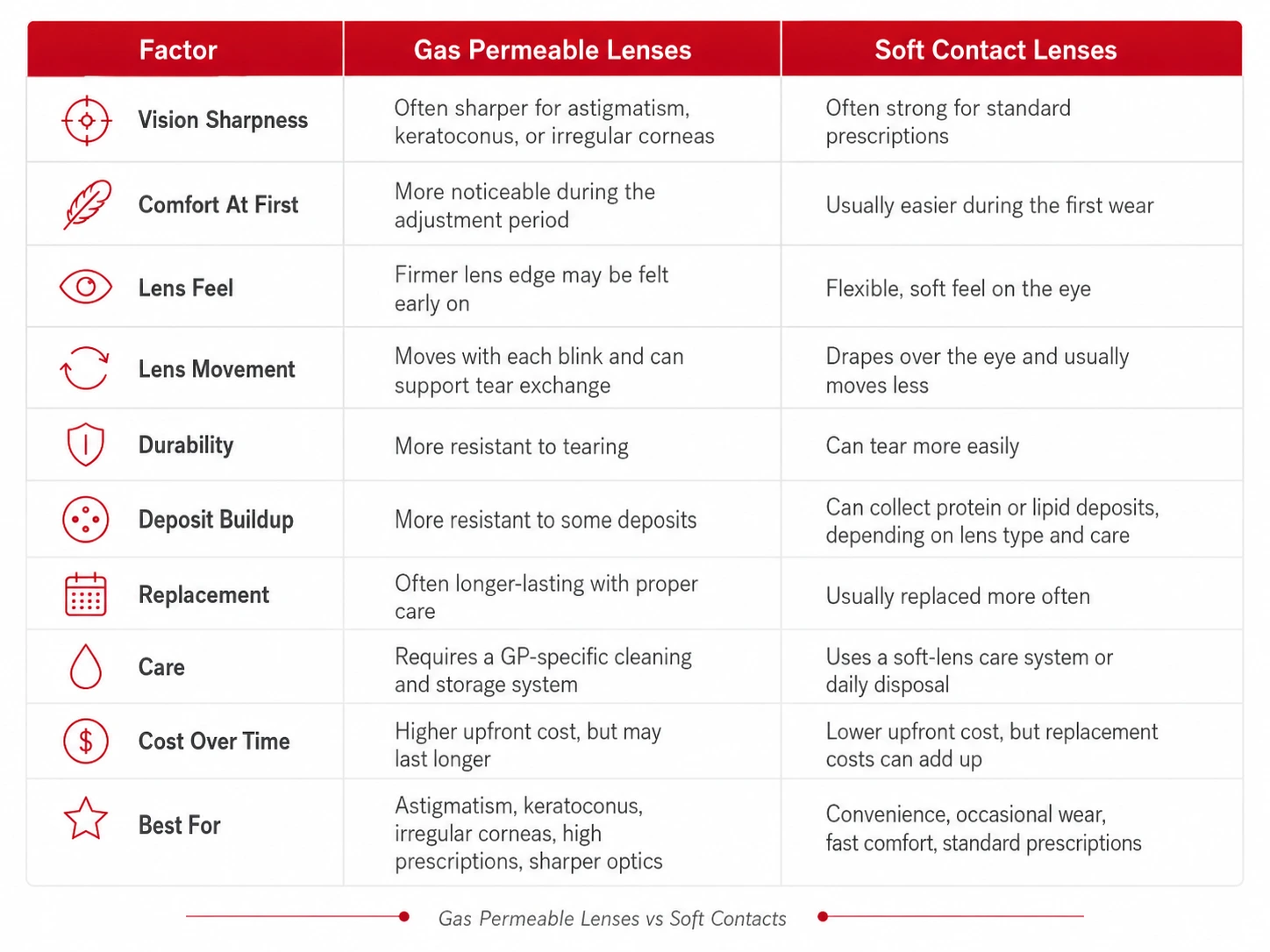
For many wearers, soft contacts are easier to start with because they feel comfortable quickly. For others, rigid gas permeable lenses are worth the adjustment period because they can create a clearer, more stable focusing surface.
Your eye doctor can help you compare both options based on your prescription, corneal shape, tear film, and daily routine.
What to Expect During a Gas Permeable Lens Fitting
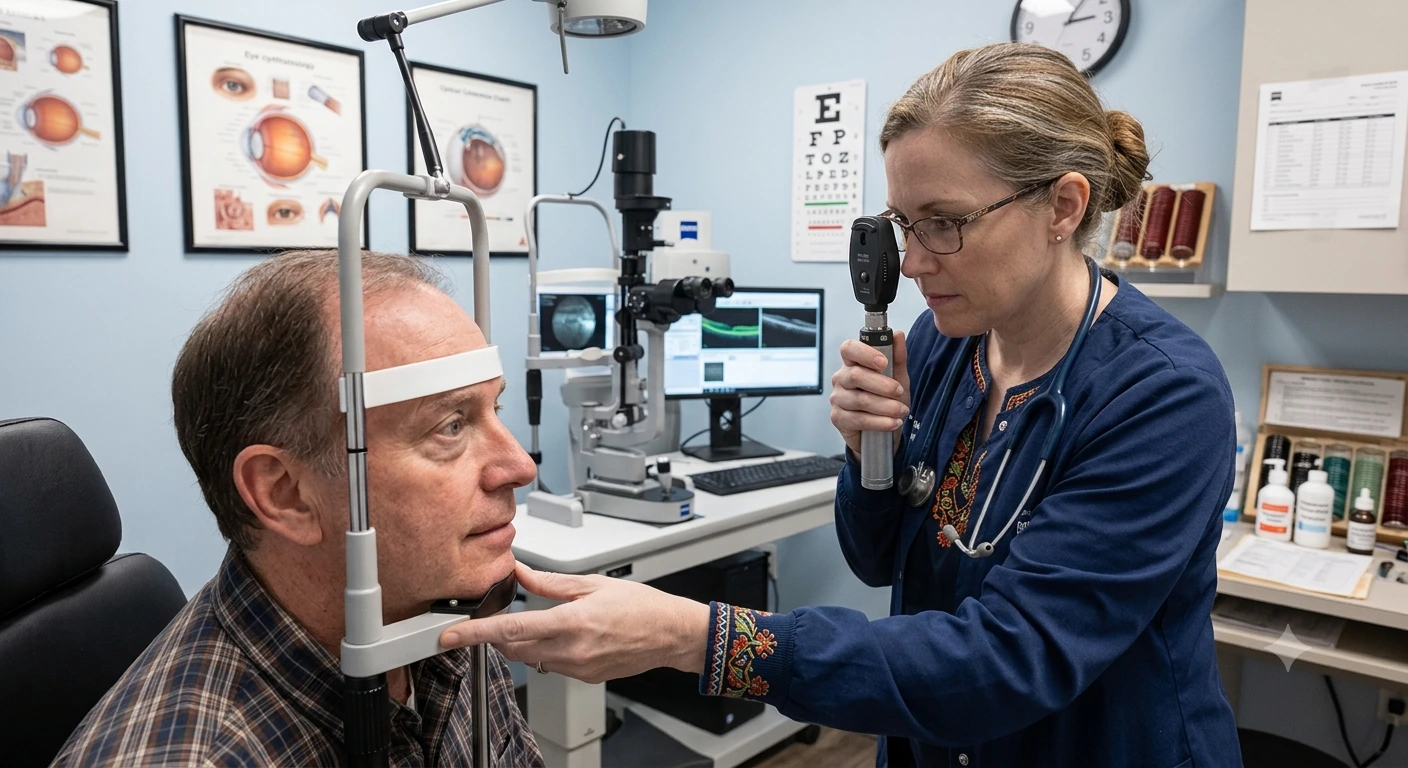
A gas permeable fitting is more detailed than a basic contact lens check because these lenses are usually custom designed for your eyes. Your doctor needs to check how the lens sits, moves, and focuses light, not just whether the prescription helps you read the chart. A careful fit can make the difference between sharp, comfortable vision and a lens that feels distracting or unstable.
Comprehensive Eye Exam
Your fitting starts with a full eye exam. Your eye doctor checks your vision, prescription, eye health, tear film, eyelids, and corneal surface. This step helps confirm whether RGP contact lenses are a safe match for your eyes before lens design begins.
Corneal Measurements and Mapping
Next, your doctor measures the shape and curve of your cornea. This may include keratometry or corneal topography, which creates a detailed map of the front surface of your eye. These measurements are especially helpful for gas permeable lenses for astigmatism, keratoconus, post-surgery corneas, or other irregular corneal shapes.
Not sure what those corneal measurements are actually checking? Learn what keratometry is and why it is important so topography and fit discussions feel easier to follow.
Trial Lens Evaluation
Your doctor may place a trial GP lens on your eye to check fit and vision. During this step, they look at lens movement, centration, edge position, comfort, and how clearly you can see. A diagnostic dye may also be used so the doctor can see the tear pattern under the lens and judge whether the fit needs adjustment.
Wondering what a proper fitting looks like beyond reading the eye chart? Understand how a contact lens fitting works so you know what your doctor is evaluating before finalizing a GP lens.
Follow-Up Visits
Follow-up visits are part of the fitting process, not an extra step to skip. Your lenses may need small changes after your doctor sees how they perform during real-world wear. Bring your lenses to each visit so your doctor can check for scratches, deposits, fit, movement, and any changes in your eye health.
Gas permeable lenses need the right fit to support comfort, oxygen flow, movement, and stable vision. A lens that is too tight, too loose, poorly centered, or poorly matched to your cornea can cause irritation, blurry vision, or poor wearing time. A custom fit helps your lenses stay comfortable enough for daily wear while giving the sharp vision many wearers expect from rigid gas permeable contact lenses.
How Long Does It Take to Adjust to Gas Permeable Lenses?
Adjusting to gas permeable lenses usually takes more patience than starting soft contacts. During the first few days, you may feel lens awareness when you blink, notice extra tearing, or feel mild discomfort while your eyelids get used to the firmer lens edge. This early stage should feel manageable, not painful, and it usually improves when you follow the wear schedule your eye doctor gives you.
Many wearers build tolerance gradually over the first few weeks by increasing wear time day by day. Wear your lenses consistently, use only recommended rewetting drops, avoid overwearing, and keep every follow-up visit so your doctor can check comfort, fit, and eye health. Remove your lenses and call your eye doctor if you have strong redness, sudden blur, light sensitivity, discharge, swelling, pain, or a lens that feels stuck.
Not sure whether what you feel is normal adjustment or a sign the fit is off? Learn how long it takes to get used to contact lenses so you know what to expect during the first few weeks.
How to Clean, Store, and Care for Gas Permeable Lenses
Good lens care protects your eyes and helps your lenses last as long as possible. Because gas permeable contact lenses are different from soft lenses, they may need a different care system, solution type, and storage routine.
Step 1. Use GP-specific solutions.
Use only the contact solution for gas permeable lenses recommended by your eye doctor. Rigid gas permeable care systems are not always the same as soft lens care systems, and many wearers need separate wetting, cleaning, rinsing, or disinfecting products. Do not switch solutions without asking your eye doctor, especially if your lenses feel dry, cloudy, or uncomfortable.
Step 2. Rub, rinse, disinfect, and store correctly.
After removing your lenses, wash and dry your hands, then clean one lens at a time. Place the lens in your palm, apply the recommended cleaning solution, gently rub the lens, rinse it with the approved solution, and store it in fresh disinfecting or conditioning solution. Repeat the same steps for the other lens, and avoid mixing up your right and left lenses.
Step 3. Keep lenses away from water.
Never rinse, store, or wet RGP contact lenses with tap water, bottled water, distilled water, or saliva. Water can carry germs that may stick to contact lenses and cause serious eye infections. Remove your lenses before showering, swimming, using a hot tub, or doing water activities unless your eye doctor gives you specific instructions.
Step 4. Replace the case as instructed.
Your lens case needs care, too. Use fresh solution every time, avoid topping off old solution, and replace the case on the schedule your eye doctor recommends. A dirty or old case can add germs and deposits back onto clean lenses.
Step 5. Bring lenses to follow-up visits.
Bring your gas permeable lenses to your follow-up appointments, even if they feel fine. Your eye doctor can check for scratches, chips, deposits, warping, fit changes, and prescription changes. These visits help keep your lenses safe, comfortable, and sharp for daily vision correction.
Want a simple routine that keeps lenses clearer and more comfortable over time? Follow cleaning techniques for long-lasting contact lens hygiene so your daily care habits stay consistent.
Top Gas Permeable Contact Lens Options
These are product options to discuss with your eye doctor. Suitability depends on your prescription, corneal shape, tear film, comfort needs, lens design, and fitting results. Gas permeable lenses are usually custom-fitted, so do not switch brands or materials without your eye doctor’s approval.
Boston ES
Boston ES, one of Polymer Technology contact lenses, is a standard rigid gas permeable lens option for clear, stable vision. It is worth discussing if you need a precise fit and steady daily vision from a custom GP lens.
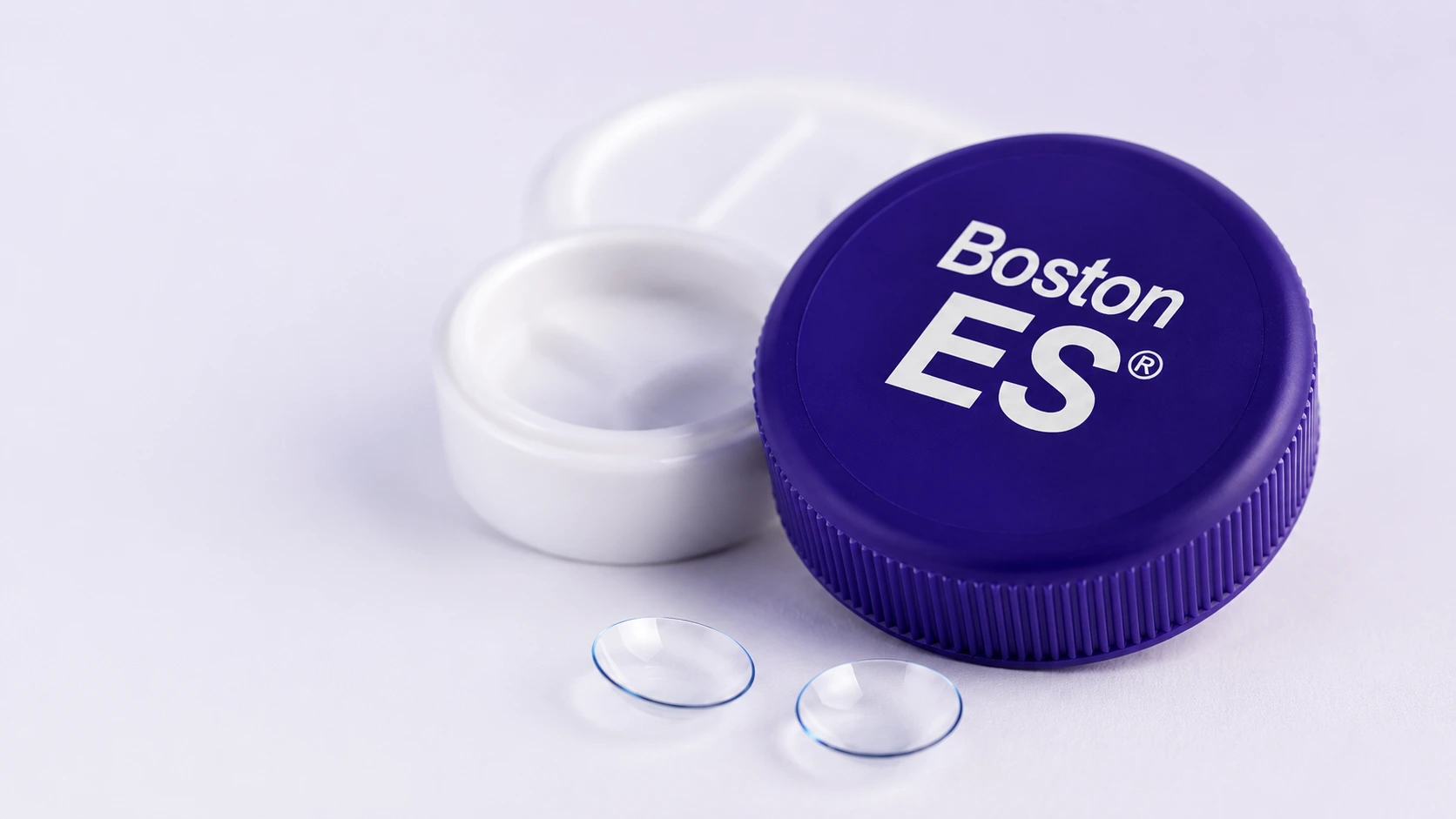
Choose Boston ES if your eye doctor recommends a classic RGP option for stable vision and a fitted lens design.
Boston Equalens II
Boston Equalens II is a rigid lens option for wearers who want crisp, steady vision. Its firm design helps the lens retain its shape on the eye, which can reduce blur during wear for some prescriptions.
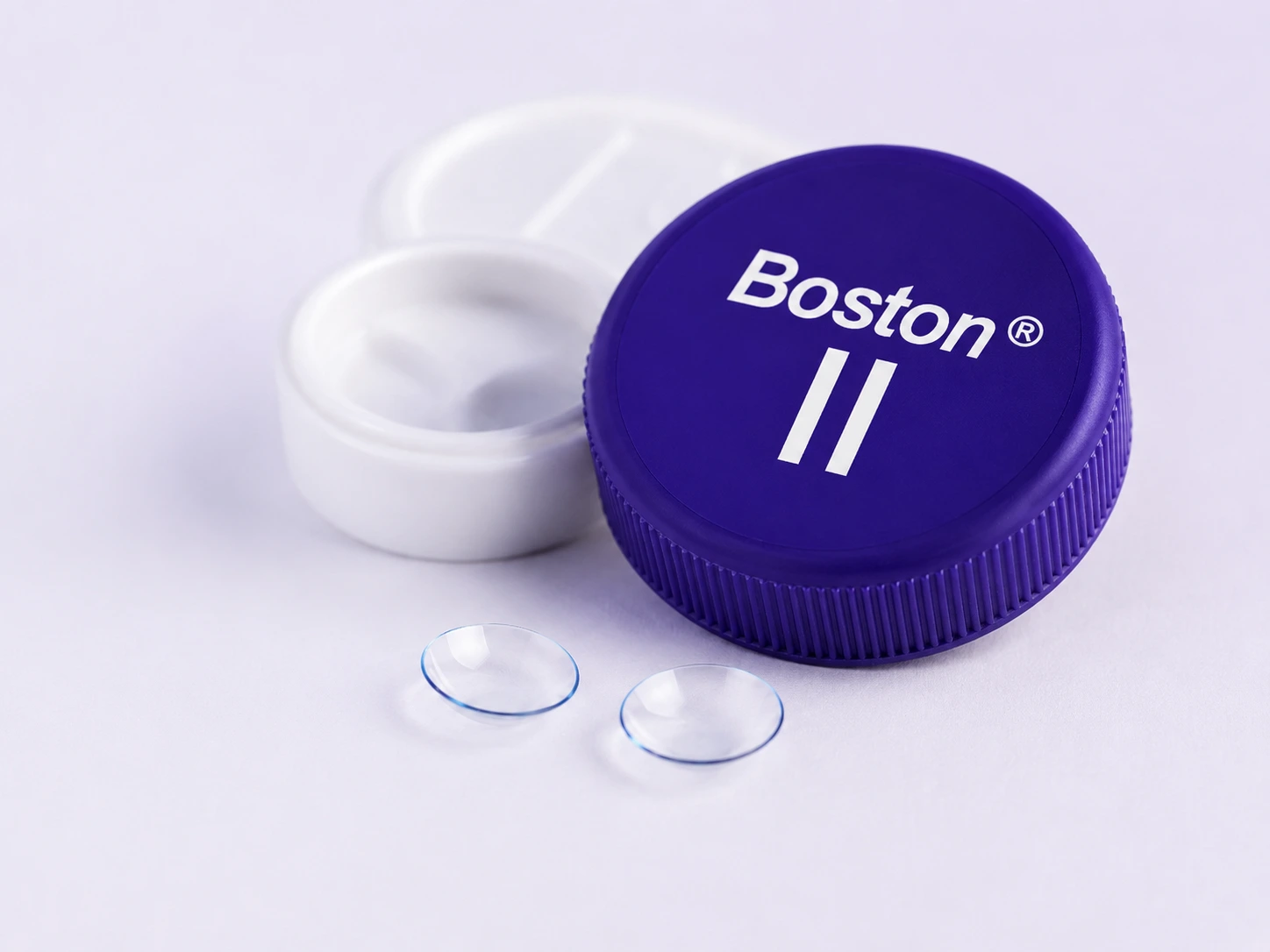
Pick Boston Equalens II if your eye doctor wants a gas permeable option that supports stable optics throughout the day.
Fluoroperm 92
Fluoroperm 92 is a custom-fit GP contact lens option for wearers who need crisp vision and a doctor-directed fit. It can be considered when standard soft contacts do not give the clarity or stability you want.
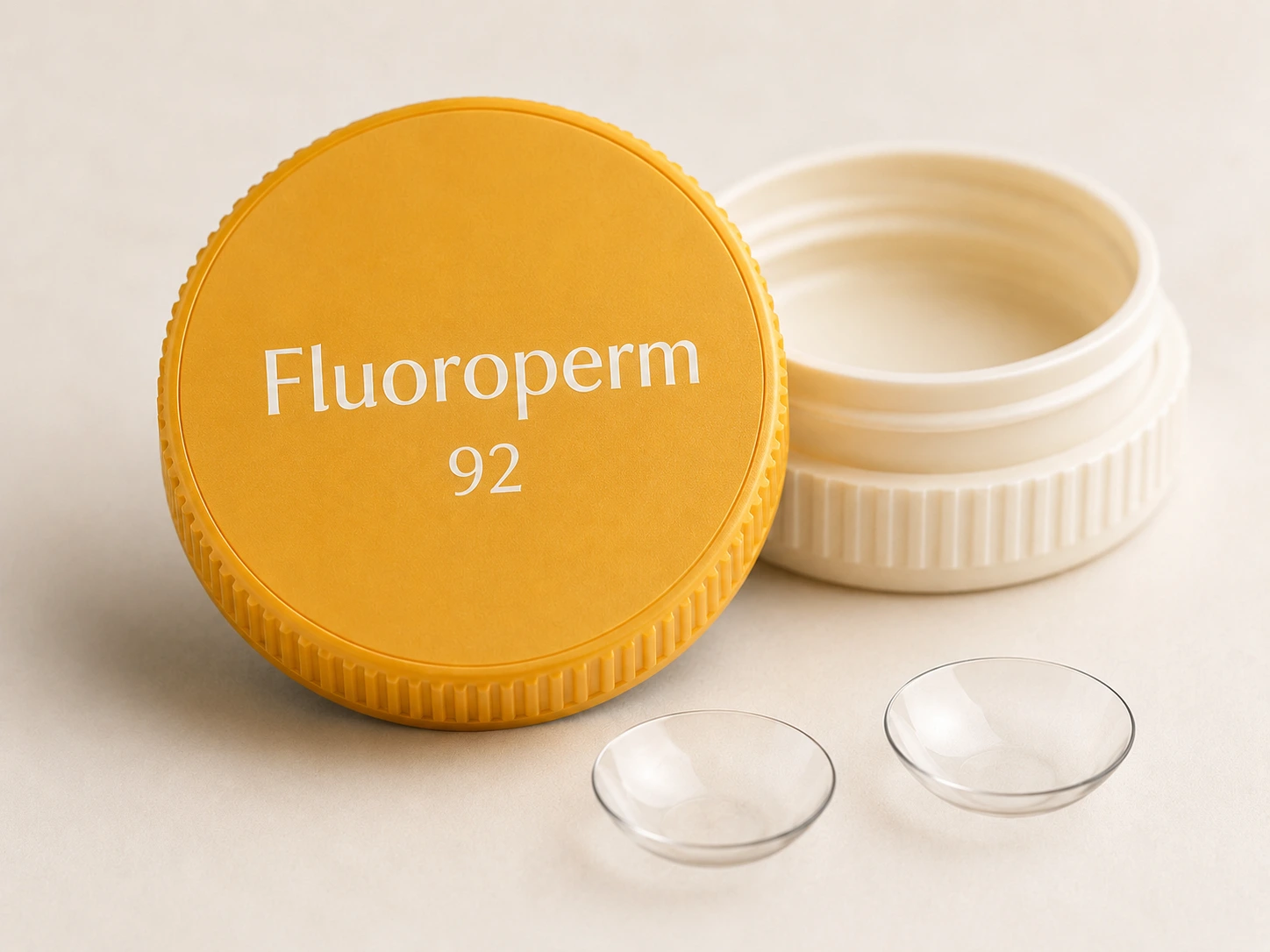
Try Fluoroperm 92 if your eye doctor recommends a custom RGP design for sharper vision and daily comfort.
Optimum Comfort
Optimum Comfort is a gas permeable lens material used for custom lens designs. It can be discussed for wearers who need visual clarity and a lens material designed for longer wearing comfort.
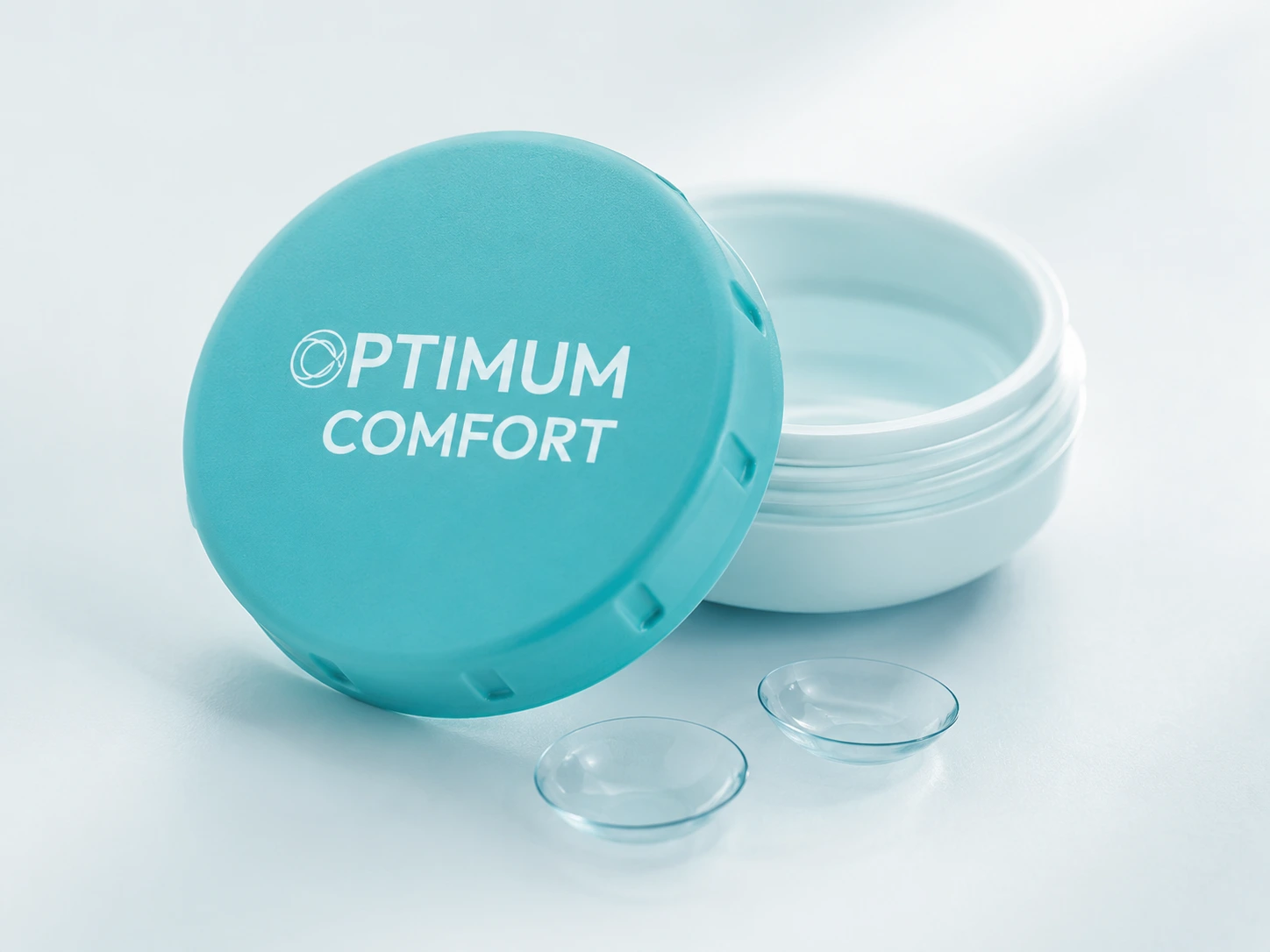
See Optimum Comfort if your eye doctor recommends a GP material focused on clarity, wettability, and comfort.
Boston XO2
Boston XO2 is a breathable rigid gas permeable contact lens option for daily vision correction. It can be considered when oxygen flow, sharp vision, and fitted lens performance are part of your eye doctor’s plan.
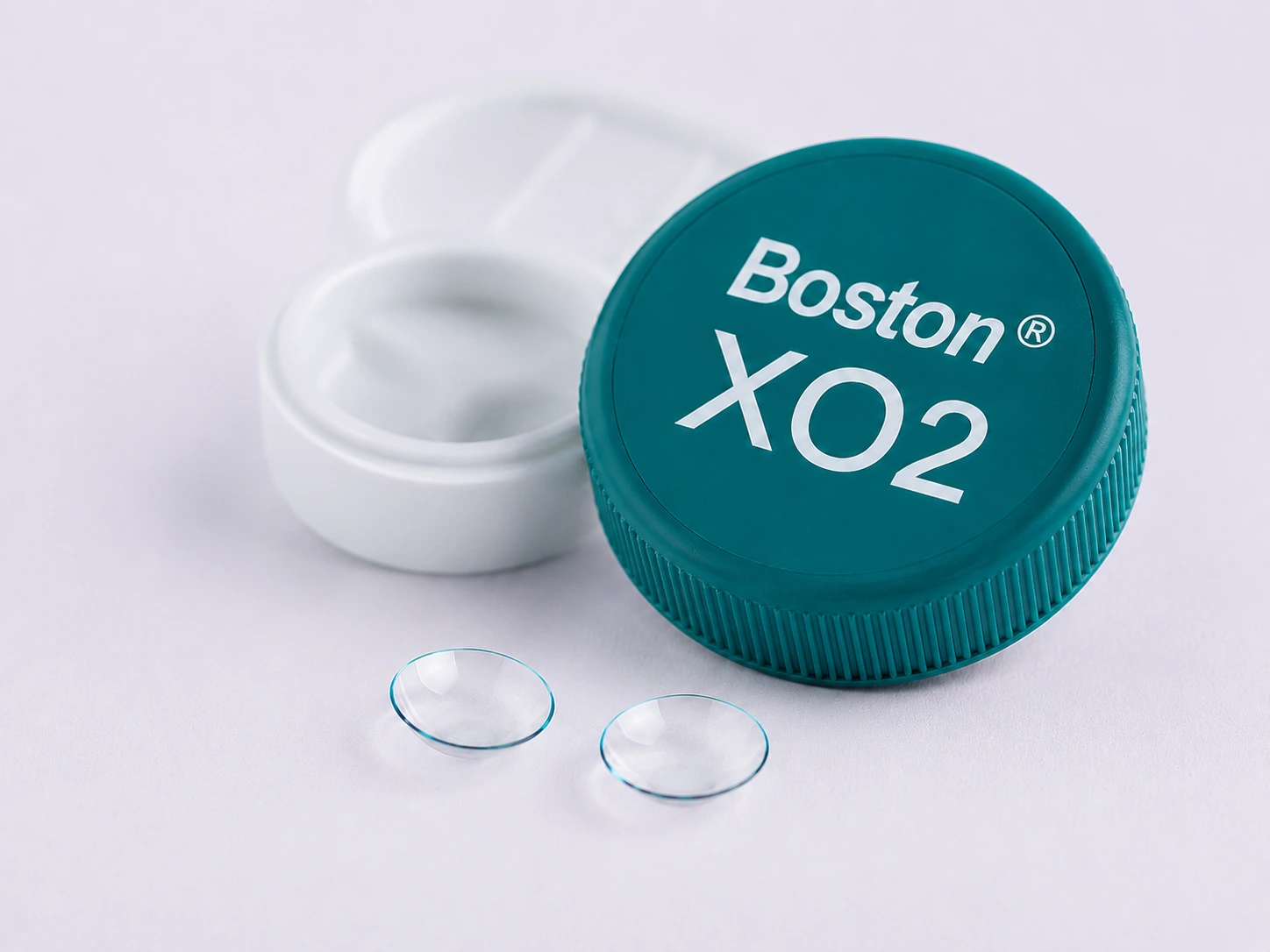
Ask about Boston XO2 if your eye doctor wants a high-breathability RGP option for reliable everyday vision.
You can also check with your eye doctor if they can recommend less popular lenses such as the Lagado Corp. contact lenses or private label brands.
Common Problems With Gas Permeable Lenses and What to Do
Gas permeable lenses can give sharp, stable vision, but they can also feel different from soft contacts at first. Some issues are part of normal adjustment, while others are signs that the lens fit, cleaning routine, or eye health needs attention. Knowing the difference helps you respond quickly and protect your eyes.
Problem 1: Lens awareness or discomfort
It is normal to feel some lens awareness during the first days of wearing gas permeable contacts. You may notice the lens edge when you blink, especially while your eyelids adjust to the firmer material. Mild awareness should improve with consistent wear, but pain, strong redness, sudden blur, or light sensitivity should not be treated as normal adjustment.
Problem 2: Lens popping out or moving too much
RGP lenses are smaller and more mobile than many soft contact lenses, so they can sometimes move too much or pop out. This may happen because of fit, dry eyes, incomplete blinking, eye rubbing, windy conditions, or high-contact sports. If the lens keeps shifting, feels unstable, or falls out often, your eye doctor may need to adjust the fit or discuss another lens design.
Problem 3: Dust under the lens
Dust or debris under a gas permeable lens can cause sharp, sudden discomfort. Remove the lens, rinse it only with the approved solution your eye doctor recommended, and check that the lens is not chipped, scratched, or dirty. Reinsert it only if your eye feels normal and the lens looks clean and intact.
Problem 4: Cloudy lenses or deposits
Cloudy vision can happen when protein deposits, oils, makeup, dust, or cleaning residue build up on the lens surface. Improve your cleaning routine, use the correct contact solution for gas permeable lenses, and ask your eye doctor if a protein remover or solution change is needed. If the lens still looks cloudy or your vision stays blurry, bring the lenses to your next appointment for review.
Problem 5: Redness, pain, or light sensitivity
Redness, pain, light sensitivity, discharge, or sudden blurry vision should be taken seriously. Stop wearing your lenses and contact your eye doctor instead of trying to push through the discomfort. These symptoms may point to irritation, a scratch, poor fit, infection, or another eye health issue that needs care.
Are Gas Permeable Lenses Safe?
Gas permeable lenses can be safe when they are prescribed, fitted, cleaned, stored, and monitored by an eye care professional. Your doctor checks your prescription, corneal shape, tear film, lens movement, and eye health before finalizing the lens design. Once you have the lenses, correct solutions, clean handling, proper storage, and follow-up visits help keep your vision clear and your eyes healthy.
Most problems happen when GP contact lenses fit poorly, are overworn, are exposed to water, or are cleaned with the wrong products. Poor fit or poor care can cause corneal scratches, irritation, redness, dryness, deposits, or infection. Stop wearing your lenses and call your eye doctor if you have eye pain, redness, swelling, sudden blur, discharge, light sensitivity, or a lens that feels stuck.
How to Decide if Gas Permeable Lenses Are Right for You
The best way to know if gas permeable lenses are right for you is to compare your vision goals with your eye health, lifestyle, and willingness to adapt. These lenses can be a strong choice when you need crisp, stable vision, but they require careful fitting and consistent care. Your eye doctor can check whether your prescription, corneal shape, tear film, and daily routine fit this type of lens.
Questions To Ask Your Eye Doctor
Come to your appointment ready to talk about how your current contacts feel and where your vision falls short. This helps your eye doctor decide whether RGP contact lenses are worth testing or whether another lens type may fit your needs better.
Ask these questions during your exam:
- Is my prescription a good match for gas permeable lenses?
- Do I have astigmatism, keratoconus, or an irregular cornea?
- Is my corneal shape suitable for a GP lens fitting?
- Is my tear film healthy enough for comfortable lens wear?
- Could dry eyes be affecting my comfort or vision?
- Would gas permeable lenses give me sharper vision than soft contacts?
- How long should I expect the adjustment period to take?
- Can I wear them with my work, sports, or outdoor routine?
- What cleaning system and solution should I use?
- How often will I need follow-up visits?
Gas Permeable Lenses Deliver Sharper Vision for the Right Eyes
Gas permeable lenses are not the easiest contact lenses to adapt to, but they can be valuable for wearers who need crisp, stable vision. They may be especially helpful if you have astigmatism, keratoconus, irregular corneas, a high prescription, or soft contacts that do not give steady clarity. They can also appeal to wearers who want durable lenses and are willing to follow a consistent cleaning and follow-up routine.
If soft contacts do not give you sharp or steady vision, schedule a contact lens exam and ask whether your prescription, corneal shape, tear film, and lifestyle make you a good candidate for gas permeable contact lenses. Bring your current lenses, describe when your vision blurs, and be honest about your care habits and daily activities. The right lens should help you see clearly, fit safely, and work realistically with your routine.
Could gas permeable lenses be the right choice for sharper, more stable vision with your prescription? Browse contact lens options and ask your eye doctor which lens type best fits your eyes, comfort needs, and daily routine.
FAQs About Gas Permeable Lenses
Are gas permeable lenses the same as hard contacts?
Modern gas permeable lenses are often called hard contacts, but they are not the same as older hard lenses. Today’s rigid gas permeable lenses use oxygen-permeable materials that allow oxygen to reach the cornea.
Are rigid gas permeable lenses better than soft contacts?
Rigid gas permeable lenses may be better if you need sharper, more stable vision, especially with astigmatism, keratoconus, or an irregular cornea. Soft contacts may be better if you want faster comfort, occasional wear, or a simpler starting experience.
Who should wear gas permeable lenses?
Gas permeable lenses may suit wearers with astigmatism, keratoconus, irregular corneas, high prescriptions, or vision that stays blurry with soft contacts. They may also work for wearers who want durable lenses and can follow a consistent care routine.
Are gas permeable lenses good for astigmatism?
Yes, gas permeable lenses can be a strong option for astigmatism. Their firm shape can create a stable optical surface, which may help when soft toric lenses rotate or vision changes during the day.
Can gas permeable lenses help keratoconus?
Yes, gas permeable lenses can help some people with keratoconus see more clearly. They do not cure keratoconus, but they may create a smoother focusing surface over the irregular cornea.
Are gas permeable lenses uncomfortable?
Gas permeable lenses can feel noticeable at first because they are firmer than soft lenses. Many wearers adapt with steady daily wear, a proper fit, and the wear schedule their eye doctor provides.
How long does it take to adjust to gas permeable lenses?
Adjustment can take a few days to a few weeks, depending on your eyes, lens fit, and wearing schedule. Consistent wear usually helps your eyelids get used to the lens edge faster.
Can gas permeable lenses pop out?
Yes, gas permeable lenses can pop out more easily than soft contacts in some situations because they are smaller and move more on the eye. This may happen with eye rubbing, dry eyes, poor fit, windy conditions, or high-contact sports.
Can you sleep in gas permeable lenses?
Do not sleep in gas permeable lenses unless your eye doctor specifically prescribes that exact overnight wearing schedule. Regular daytime GP lenses are not the same as Ortho-K lenses or other doctor-approved overnight designs.
Can you swim with gas permeable lenses?
No. You should avoid swimming, showering, or using a hot tub while wearing gas permeable lenses because water can expose your eyes to harmful germs.
How do you clean gas permeable lenses?
Wash and dry your hands first, then clean one lens at a time using the GP-specific solution your eye doctor recommends. Rub, rinse, disinfect, and store the lenses in fresh solution, and never use tap water or saliva.
Can you use a soft contact lens solution on gas permeable lenses?
Do not use soft contact lens solution on gas permeable lenses unless your eye doctor says it is safe for your specific lenses. GP lenses often need their own wetting, cleaning, rinsing, or disinfecting products.
How long do gas permeable lenses last?
Gas permeable lenses may last longer than many soft lenses with proper care, but replacement timing varies. Your lens material, prescription changes, deposits, scratches, warping, and your eye doctor’s guidance all affect how long they should be used.
Are gas permeable lenses good for dry eyes?
Gas permeable lenses may work for some people with dry eyes because they do not contain water like soft lenses and can resist dehydration. Severe dry eye, inflammation, or active irritation should be evaluated first because these conditions can make any contact lens uncomfortable.
What is the difference between GP, RGP, and scleral lenses?
GP and RGP usually refer to the same type of firm, oxygen-permeable contact lens. Scleral lenses are larger gas permeable lenses that rest on the white part of the eye instead of only the cornea, and they are often used for more complex corneal or dry eye cases.
Disclaimer: This content is for general informational purposes only and is not a substitute for professional advice, diagnosis, or treatment.
References
How do Rigid Gas Permeable Contact Lenses Work? Dean McGee Eye Institute. https://www.dmei.org/blog/how-do-rigid-gas-permeable-contact-lenses-work/. Date Accessed: June 1, 2026.
Specialty Contact Lenses for Management of Keratoconus. Moran CORE (John A. Moran Eye Center, University of Utah). https://morancore.utah.edu/section-03-clinical-optics/specialty-contact-lenses-for-management-of-keratoconus/. Date Accessed: June 1, 2026.
Contact Lenses (StatPearls). Bharat Gurnani; Kirandeep Kaur / StatPearls Publishing (NCBI Bookshelf, National Library of Medicine). https://www.ncbi.nlm.nih.gov/books/NBK580554/. Date Accessed: June 1, 2026.
Keratoconus (StatPearls). George Asimellis; Evan J. Kaufman / StatPearls Publishing (NCBI Bookshelf, National Library of Medicine). https://www.ncbi.nlm.nih.gov/books/NBK470435/. Date Accessed: June 1, 2026.
Contact Lenses. EyeWiki (American Academy of Ophthalmology). https://eyewiki.org/Contact_Lenses. Date Accessed: June 1, 2026.
Everyday Eye Care. U.S. Food and Drug Administration. https://www.fda.gov/medical-devices/contact-lenses/everyday-eye-care. Date Accessed: June 1, 2026.
Hydrogen Peroxide Solution. U.S. Food and Drug Administration. https://www.fda.gov/medical-devices/contact-lenses/hydrogen-peroxide-solution. Date Accessed: June 1, 2026.
Contact Lenses: Safe Use of Hydrogen Peroxide Solution. U.S. Food and Drug Administration. https://www.fda.gov/consumers/consumer-updates/contact-lenses-safe-use-hydrogen-peroxide-solution. Date Accessed: June 1, 2026.
Preventing Eye Infections When Wearing Contacts. Centers for Disease Control and Prevention. https://www.cdc.gov/contact-lenses/prevention/index.html. Date Accessed: June 1, 2026.
Healthy Habits: Keeping Water Away from Contact Lenses. Centers for Disease Control and Prevention. https://www.cdc.gov/contact-lenses/about/healthy-habits-keeping-water-away-from-contact-lenses.html. Date Accessed: June 1, 2026.