
You wake up, look in the mirror, and the puffiness under your eyes seems more noticeable than it did the night before. If you are wondering how to get rid of eye bags, the right approach depends on whether you are dealing with temporary under-eye puffiness from fluid, sleep, or allergies, or longer-lasting changes in the tissues beneath your eyes.
According to a 2025 MRI study of 118 adults, lower orbital fat volume increased with age, which helps explain why structural changes can make under-eye bags more noticeable over time. Most eye bags are harmless, but sudden, painful, red, one-sided, or vision-related swelling should be evaluated by an eye care professional, especially if you wear contact lenses.
Takeaways
- Temporary eye bags may improve with a cool compress, better sleep, and slight head elevation.
- Reducing excess sodium and managing allergies may help lessen under-eye puffiness.
- Eye bags caused by aging, genetics, loose skin, or prominent fat may require professional treatment.
- Eye bags and dark circles are different concerns and may need different treatments.
- Seek medical care for sudden, painful, red, one-sided swelling or swelling with vision changes.
How can you get rid of eye bags?
The best way to get rid of bags under your eyes is to match the solution to what is causing them. Temporary puffiness related to fluid retention, poor sleep, or mild irritation, including irritation that occurs even while wearing comfortable contact lenses, may improve with a cool compress, adequate sleep, sleeping with your head slightly elevated, and reducing triggers that make swelling worse. Persistent bags caused by aging, genetics, loose skin, or changes in the fat and supporting tissues around the lower eyelid are less likely to disappear with home remedies alone. If they continue to bother you, an eye care professional, dermatologist, or qualified cosmetic specialist can help determine which treatment options fit the cause.
What are eye bags?
Eye bags are areas of puffiness, mild swelling, loose skin, or a pouch-like contour that develop beneath your lower eyelids. They can appear when fluid temporarily collects in the eye area, or when the skin and supporting tissues weaken and fat becomes more prominent beneath the eyes. These different changes can look similar in the mirror even though they may respond differently to treatment.
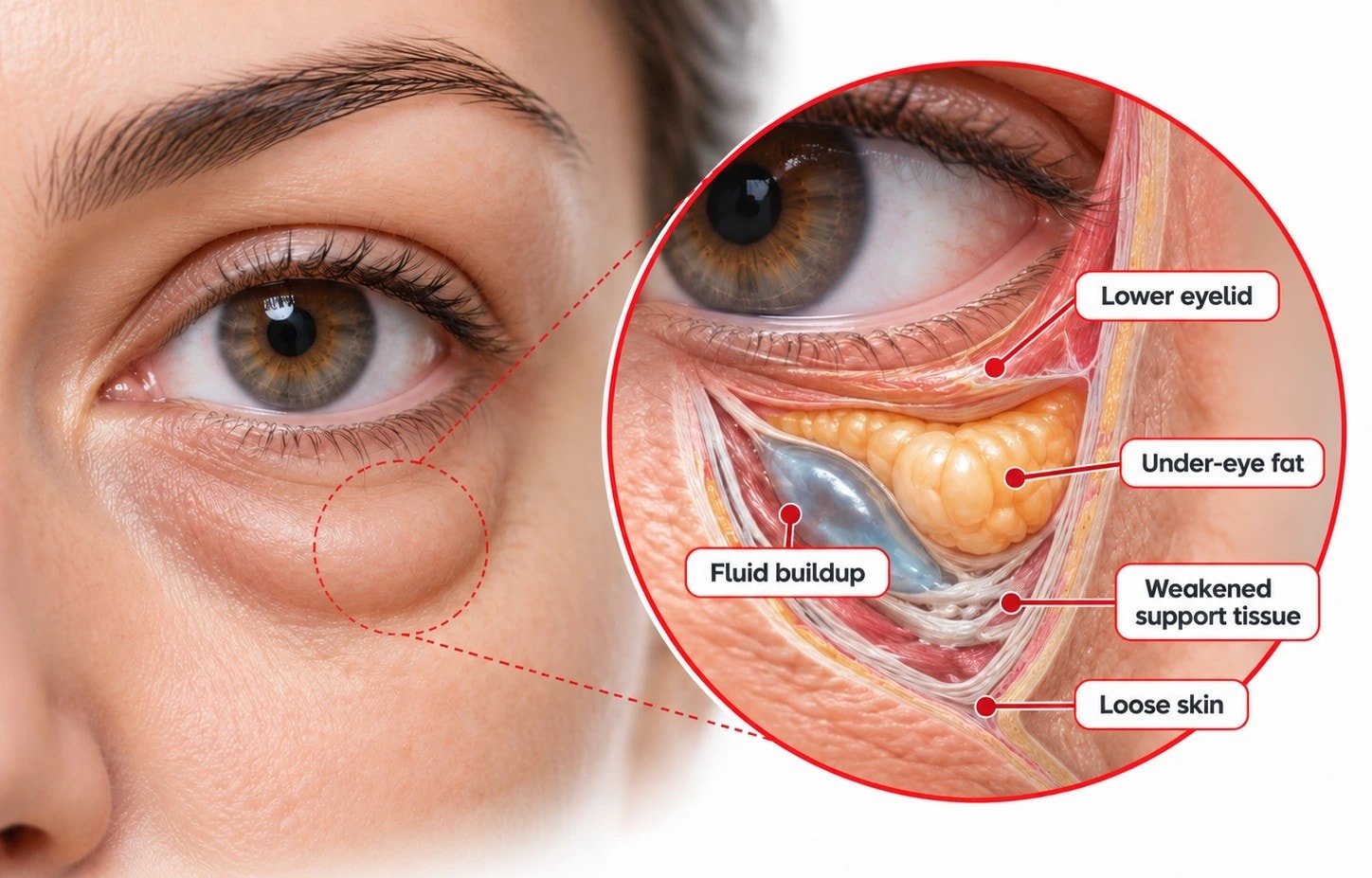
Most under-eye bags are a cosmetic concern rather than a problem with the eyeball itself, so their appearance alone does not determine whether you need vision correcting contacts. They may occur along with dark circles, shadows, or sagging skin, but these features are not necessarily caused by the same thing. Sudden or unusual under-eye swelling, especially with pain, redness, irritation, or vision problems, deserves professional evaluation rather than being assumed to be ordinary eye bags.
What causes eye bags?
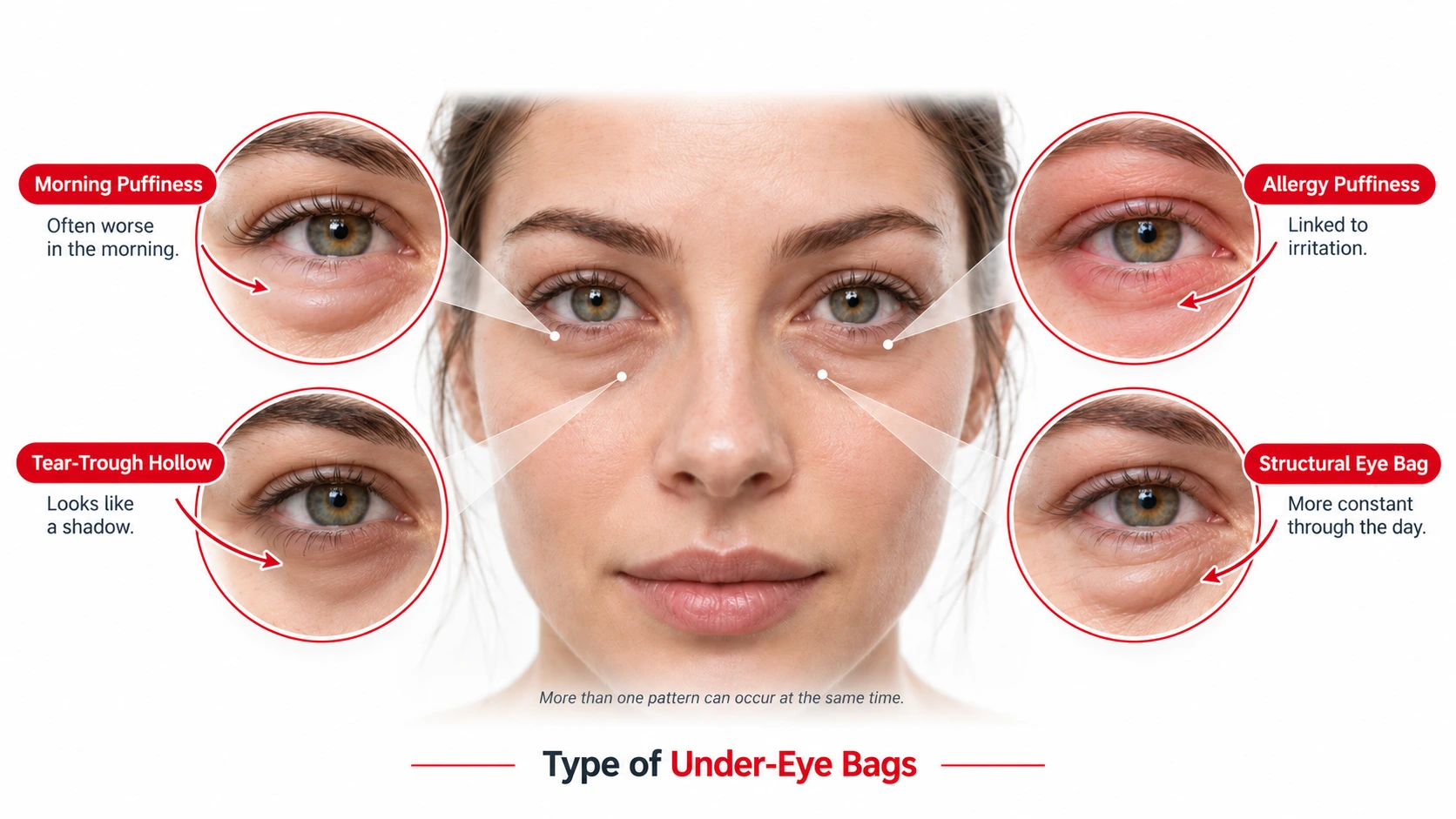
What causes eye bags can range from temporary fluid retention and poor sleep to aging, allergies, smoking, genetics, and changes in the tissues that support your lower eyelids. Some causes of eye bags make puffiness come and go, while structural changes from aging or facial anatomy tend to remain more consistent throughout the day. Identifying the likely pattern can help you understand why a cold compress or better sleep may help one type of puffiness but do little for another.
Aging and changes around the lower eyelid
As you age, the skin and supporting tissues around the lower eyelids can loosen while orbital fat becomes more prominent, contributing to eye bags from aging that do not usually disappear with extra sleep or change based on wearing contact lenses for all ages. A 2025 MRI study of 118 patients ages 18 to 99 also found age-related increases in lower orbital fat and changes in other tissues around the eyes, showing that under-eye aging involves multiple anatomical structures.
Fluid retention and morning puffiness
Fluid can collect beneath the eyes overnight, making under-eye puffiness more noticeable in the morning, while salty meals may increase fluid retention and temporary swelling. Unlike structural eye bags caused by changes in skin or fat, morning puffiness often fluctuates throughout the day.
Lack of sleep and lifestyle factors
Lack of sleep can make bags under your eyes look more noticeable, and most adults are generally advised to get about 7 to 9 hours of sleep per night. Smoking can also contribute to under-eye bags, while alcohol may disrupt sleep and make puffiness appear worse the next morning.
Allergies and eye rubbing
Allergies can cause inflammation, itching, and swelling around the eyelids, creating puffy eyes that may look like ordinary eye bags. Although rubbing your eyes can feel good for a moment, repeated rubbing can further irritate the delicate eye area and make swelling more noticeable.
Genetics and facial anatomy
Genetics and facial anatomy can influence under-eye shape, fat distribution, skin characteristics, and the development of persistent eye bags even in younger people. When inherited facial structure is the main cause, better sleep and healthy habits may improve overall appearance but are unlikely to remove the structural contour completely.
Wondering what other changes can happen around your eyes as you get older? Learn how aging can affect your eyes to understand common age-related changes beyond under-eye bags.
How to Get Rid of Eye Bags at Home
Wondering how to get rid of eye bags naturally? Simple home remedies can help reduce temporary under-eye puffiness caused by fluid retention, poor sleep, or allergies. However, they cannot permanently remove eye bags caused by aging, loose skin, or prominent fat beneath the eyes.

Apply a cool compress.
A cool compress is one of the easiest ways to reduce puffy eyes, especially in the morning. Wet a clean washcloth with cool water and gently place it over your closed eyes for a few minutes. The cooling effect may temporarily reduce swelling and make under-eye bags less noticeable. Avoid applying ice directly to your skin, as extreme cold can cause irritation.
Get enough sleep and elevate your head.
Poor sleep can make under-eye bags more noticeable. Aim for 7 to 9 hours of sleep each night, as recommended for most adults. If you frequently wake up with puffy eyes, try sleeping with your head slightly elevated using an extra pillow or raising the head of your bed. This may help prevent fluid from collecting around your eyes overnight.
Reduce salt intake.
Eating too much sodium can contribute to fluid retention, making bags under your eyes appear puffier. If you notice more swelling after eating salty foods, try limiting high-sodium meals, especially in the evening. Reducing excess salt may help manage temporary puffiness, but it will not eliminate structural eye bags.
Manage allergies and avoid rubbing your eyes.
Eye allergies can cause itching, irritation, and swelling around your eyelids. Avoid rubbing your eyes, since repeated rubbing may make irritation worse. Limiting exposure to known allergens and following appropriate allergy treatment can help reduce allergy-related puffiness. If symptoms persist, consult an eye care professional about suitable treatment options.
Try eye creams with caffeine or moisturizing ingredients.
Some eye creams may temporarily improve the appearance of under-eye bags. Caffeine-containing products may help reduce the appearance of mild puffiness, while moisturizers containing hyaluronic acid can hydrate the skin and make fine lines look less noticeable. Choose products formulated for the delicate eye area, follow the directions, and avoid getting them to your eyes or daily wear contact lenses.
Keep in mind that home remedies for eye bags work best for temporary puffiness. If your under-eye bags remain noticeable throughout the day because of loose skin, genetics, or prominent fat, professional treatments may provide more noticeable results.
Do allergies leave your eyes watery as well as puffy and itchy? Try easy tips for watery eyes in cold or windy weather for additional ways to reduce everyday environmental irritation.
What is the difference between eye bags and dark circles?
Eye bags and dark circles can appear together, but they describe different changes around the eyes and are separate from changes in iris appearance, especially when wearing cosmetic contact lenses. They usually involve puffiness, loose skin, or a pouch beneath the lower eyelid, while dark circles involve darker-looking skin or shadows below the eyes. Hollows can also cast shadows that look like dark circles, and allergy-related or irritated puffy eyelids may resemble ordinary eye bags, so identifying the pattern helps you choose a more appropriate treatment.
| Concern | Appearance | Contributors | Option |
|---|---|---|---|
| Eye bags | Puffiness or a pouch beneath the lower eyelid | Aging, facial anatomy, fluid retention, genetics | Treatment based on the underlying cause |
| Dark circles | Darker color or shadow beneath the eyes | Pigmentation, visible blood vessels, rubbing, aging, genetics | Cause-specific skin care or professional treatment |
| Tear-trough hollow | Indentation beneath the eye that creates a shadow | Facial anatomy, aging, volume changes | Professional assessment and selected treatments |
| Puffy eyelids | More generalized swelling around the eyelids | Allergies, irritation, inflammation, fluid buildup | Address the underlying trigger |
Note: More than one of these patterns can occur at the same time, and treatment for pigmentation or a hollow may not correct a true under-eye bag caused by sagging tissue or prominent fat. New swelling on one side, especially with pain, redness, discharge, irritation, or vision changes, should be evaluated by an eye care professional rather than treated as a cosmetic concern.
Which eye bag treatment fits the cause?
The right eye bag treatment depends on what is causing the puffiness or contour beneath your eyes. Temporary swelling may respond to home care, while hollows, allergies, loose skin, or prominent fat may need different approaches and, in some cases, professional assessment.
Morning fluid puffiness
Temporary under-eye puffiness may respond to simple home care, while allergy-related swelling or irritation during wear of contact lenses still needs the trigger addressed. These measures can reduce fluid-related swelling but will not remove structural eye bags caused by prominent fat or loose skin.
Allergy-related swelling
If allergies are causing swelling around your eyes, reducing exposure to known triggers and following clinician-directed allergy care may help. Treating the allergy can reduce puffiness, but it will not correct structural bags caused by aging, anatomy, or excess skin.
Tear-trough hollowing
A tear-trough hollow is an indentation beneath the eye that can create shadows and make nearby bags look more noticeable. Selected volume-restoring treatments may soften the hollow, but they do not remove protruding lower-eyelid fat.
Persistent fat or loose skin
Persistent bags caused by prominent fat or loose skin are less likely to improve with home remedies alone. A qualified specialist can assess whether skin treatments, laser resurfacing, chemical peels, or blepharoplasty may be appropriate based on your anatomy and treatment goals.
Note: Treatments such as fillers, laser resurfacing, and chemical peels may improve specific under-eye concerns, but each has limitations and potential risks, including skin-color changes after some laser procedures.
Not sure whether puffiness is simply cosmetic or something that deserves an eye exam? Review common reasons to see an eye doctor so you know when under-eye changes should be professionally evaluated.
Can you permanently get rid of eye bags?
Whether you can permanently get rid of eye bags depends on what is causing them. Temporary puffiness from fluid retention can come and go, but persistent bags caused by prominent fat, loose skin, or facial anatomy generally will not disappear permanently with sleep, eye creams, cold spoons, changes in contact lens types, or other home remedies. For selected people, lower-eyelid surgery can provide longer-lasting structural correction by removing or repositioning fat and addressing excess skin, although aging continues and no cosmetic procedure can guarantee lifetime results.
What medical and cosmetic treatments can reduce eye bags?
Professional eye bag treatment works best when it targets the specific cause, such as hollowing, loose skin, skin texture changes, or prominent lower-eyelid fat. Because the under-eye area is delicate and treatments have different purposes and risks, procedures should be selected and performed by appropriately qualified clinicians.
Skin resurfacing and chemical peels
Laser resurfacing and chemical peels can improve concerns such as fine lines, uneven tone, and some age-related skin changes around the eyes. These treatments work on the skin rather than physically removing a prominent lower-eyelid fat pad, so they are not substitutes for surgery when protruding fat or substantial excess skin is the main problem.
Your skin type and skin color also affect treatment planning. Laser resurfacing can cause permanent hyperpigmentation or hypopigmentation in people with brown or black skin, so the type of laser and treatment approach should be discussed with a clinician experienced in treating your skin tone.
Under-eye filler for hollows and shadows
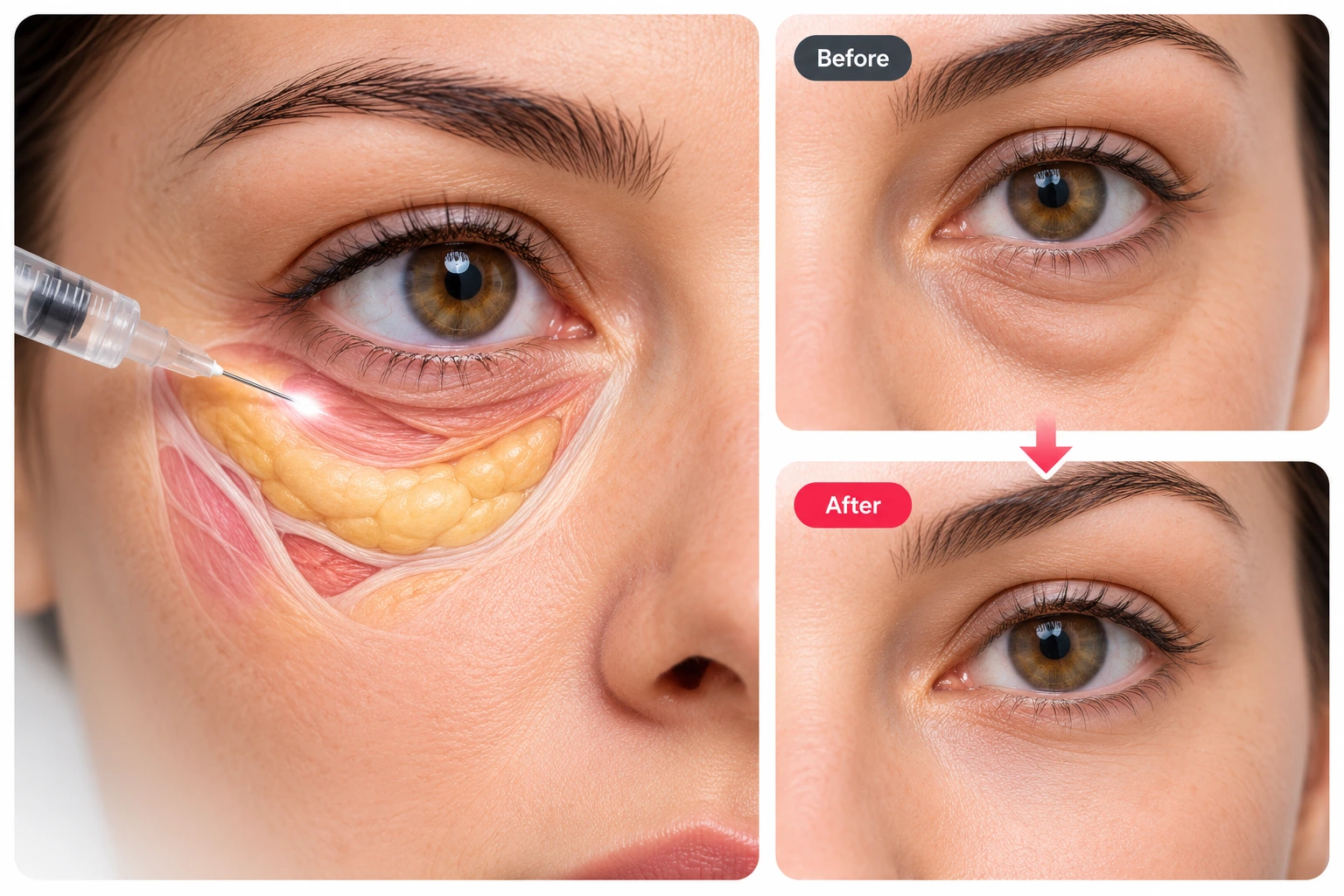
Dermal filler is generally used to restore volume to a hollow beneath the eye or smooth the transition between the lower eyelid and cheek. By reducing a shadow-producing hollow, filler may make nearby eye bags and dark circles appear less noticeable, but it does not dissolve or remove protruding lower-eyelid fat. Careful patient selection is important because adding volume is not appropriate for every type of under-eye bag.
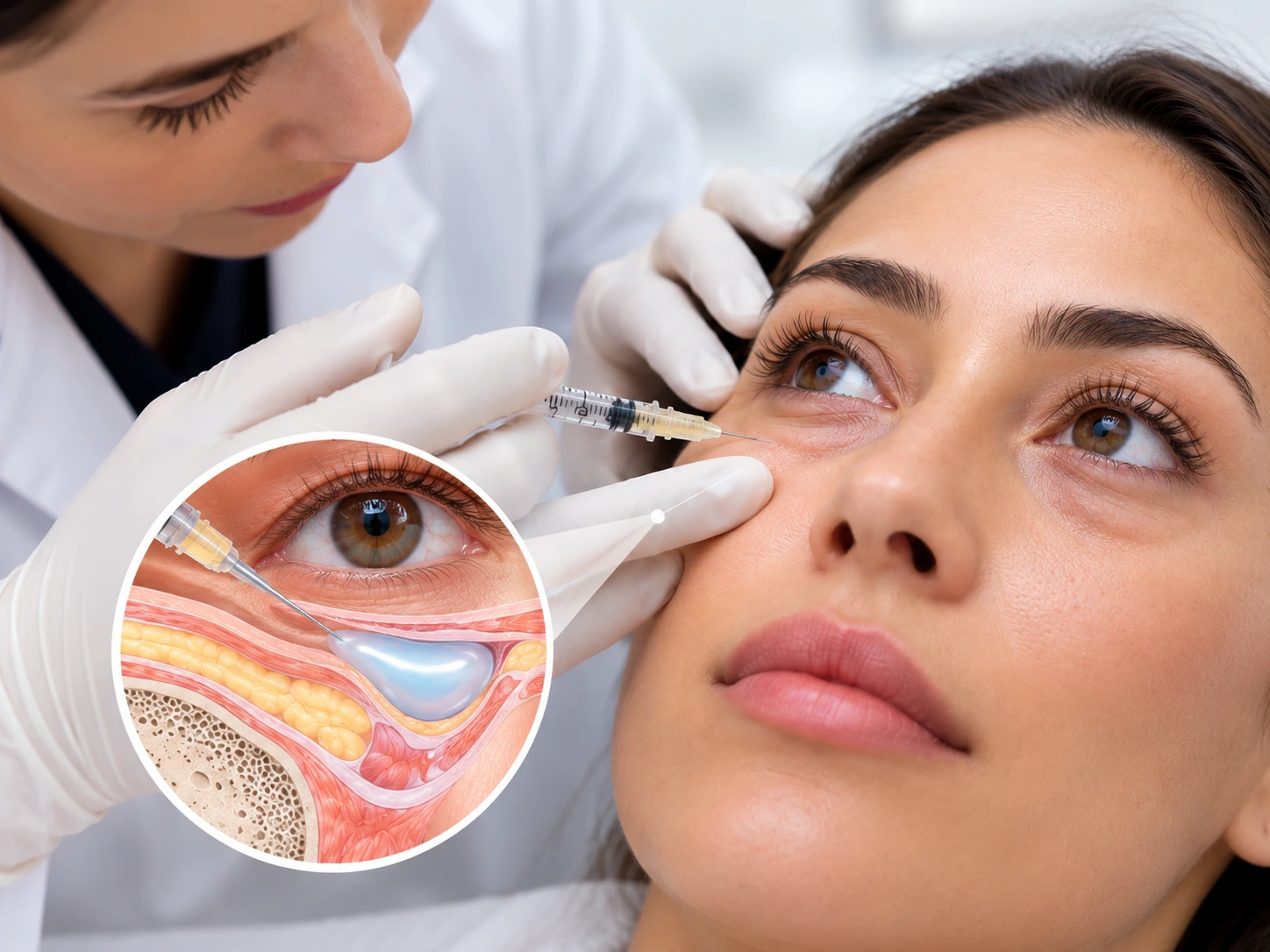
Facial fillers also carry rare but potentially severe risks. A 2025 American Academy of Ophthalmology evidence review identified 198 published cases of vision loss caused by accidental injection of filler into a blood vessel across the studies it included, with most reported injection sites located in the central and upper midface rather than around the eyes. Because reported vision loss was often not reversible with treatment, filler near the face and eye area should be treated as a medical procedure performed by an appropriately trained professional.
PRP and other regenerative treatments
Platelet-rich plasma, or PRP, and platelet-rich fibrin, or PRF, use components prepared from your own blood and are being studied for cosmetic changes around the eyes. A 2026 systematic review by Tai and colleagues evaluated 26 studies and found high patient satisfaction, but preparation methods varied considerably and objective improvements in wrinkles and skin texture were mixed. The researchers also found only moderate effectiveness for periorbital hyperpigmentation, so PRP and PRF should be viewed as evolving options rather than proven replacements for established under-eye bags treatment.
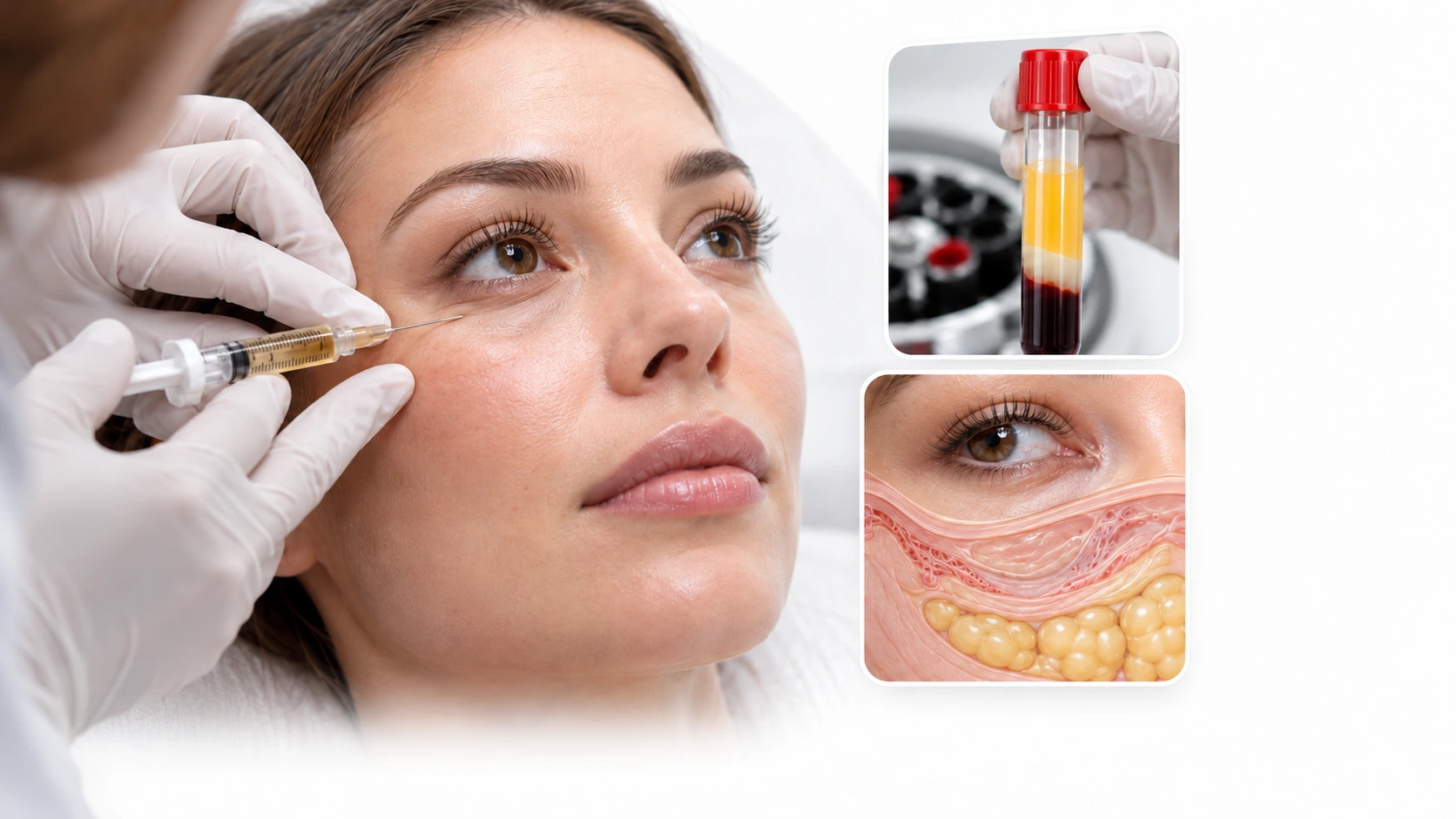
If you are considering PRP, PRF, or another regenerative procedure, ask what specific concern it is intended to address and what evidence supports that use. These treatments may focus more on skin quality, texture, or pigmentation than on physically removing a structural eye bag.
Lower eyelid blepharoplasty
Blepharoplasty is eye bag surgery that can address structural bags by removing or repositioning fat and, when appropriate, removing excess lower-eyelid skin. It may be considered when prominent fat or loose skin is the main reason for persistent bags and less invasive approaches cannot address the underlying anatomy. Your eyelid structure, eye health, medical history, and treatment goals all affect whether surgery is appropriate.
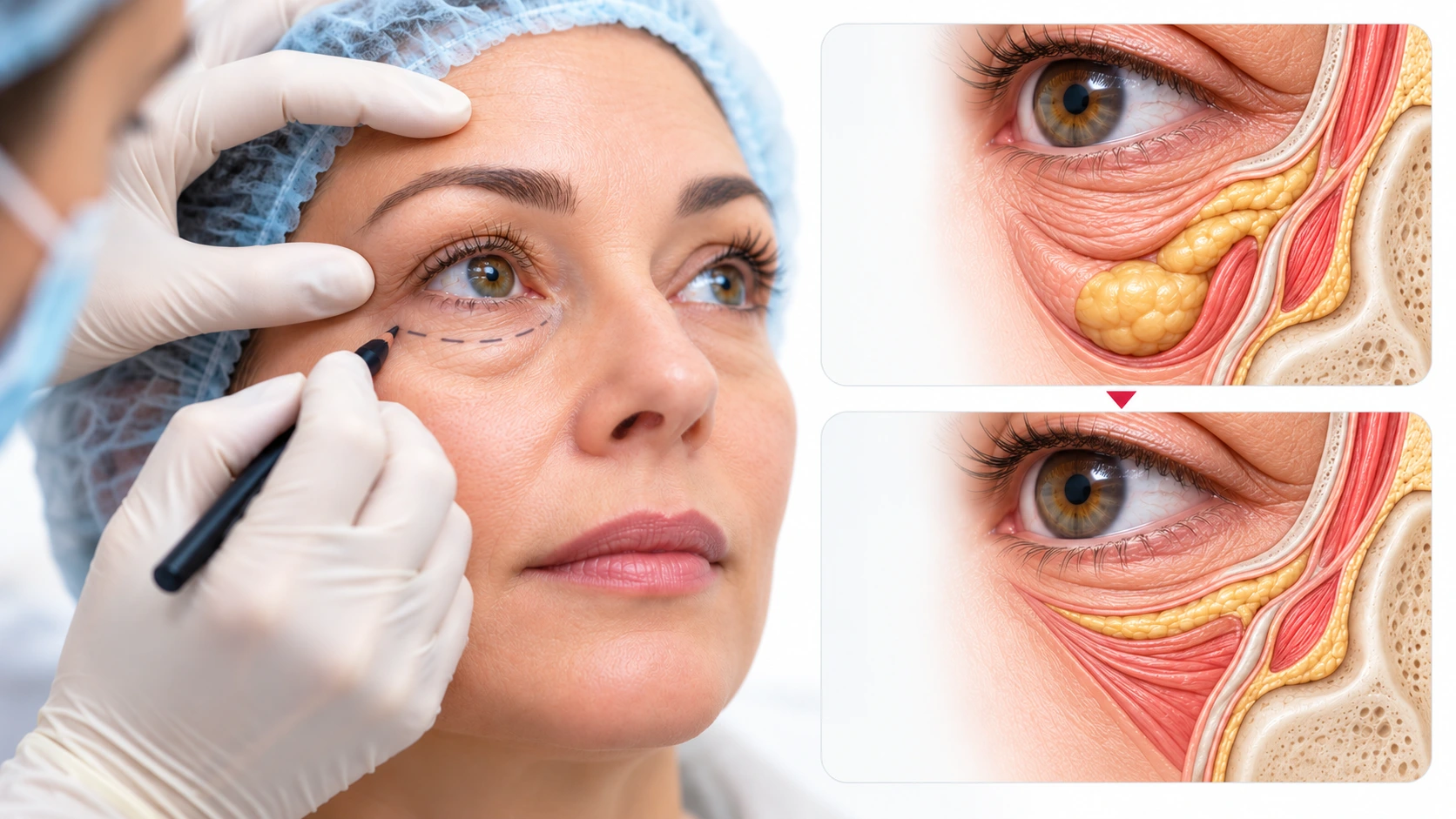
Like any surgery, blepharoplasty has risks and requires recovery. Possible complications include bleeding, infection, dry or irritated eyes, difficulty closing the eyelids, scarring, injury to eye muscles, temporary blurred vision, and, rarely, loss of eyesight, so even people who normally wear contact lenses for all day comfort may need to pause lens wear during recovery.Discuss expected results, recovery, and potential complications with an experienced ophthalmic plastic, oculoplastic, facial plastic, or plastic surgeon before deciding whether surgery fits your needs.
Can contact lenses make eye bags worse?
Contact lenses do not normally cause structural eye bags, but irritation while wearing contacts for dry eyes or other lenses, allergies, inflamed eyelids, or an eye infection can make the tissues around your eyes look swollen or puffy. Irritation may also make you rub your eyes, which can further aggravate the eye area. The CDC lists dry eyes, eye allergies, contact lens-induced acute red eye, and microbial keratitis among complications associated with contact lens wear, so new swelling with other eye symptoms should not be treated as ordinary cosmetic puffiness.
If you wear contacts and develop unusual under-eye swelling or puffy eyelids, pay attention to symptoms in the eye itself. Redness, worsening pain, light sensitivity, sudden blurry vision, unusual tearing, or discharge can signal a contact lens-related complication that needs prompt evaluation.
- Remove your contact lenses if your eyes or eyelids become unusually swollen, red, painful, or irritated.
- Switch to glasses and do not put your lenses back in until symptoms have resolved and an eye care professional says it is safe when concerning symptoms are present.
- Seek prompt eye care for swelling with pain, discharge, light sensitivity, sudden blurry vision, or worsening redness.
- Do not try to manage possible contact lens complications with home remedies for eye bags, eye creams, or cosmetic de-puffing products.
Do your lenses leave your eyes irritated or uncomfortable by the end of the day? Try ways to make your contacts more comfortable and have recurring discomfort checked instead of rubbing through it.
Can you prevent eye bags?
You cannot completely prevent eye bags caused by aging, genetics, or facial anatomy, but you can reduce factors that make temporary under-eye puffiness more noticeable. Consistent sleep, managing allergies, limiting excess sodium, avoiding smoking, protecting the eye area from sun exposure with sunglasses even when wearing UV protection contact lenses, using gentle skin care, removing eye makeup before bed, and following safe contact lens habits can all help reduce irritation and fluid retention. These habits may help keep bags under your eyes from looking worse, but they cannot stop normal aging or change inherited facial structure.
When should you see a doctor for under-eye bags?
Long-standing bags under eyes are usually a cosmetic concern, but new, persistent, or unusual swelling should be evaluated differently. Symptoms involving pain, marked redness, fever, discharge, or changes in vision may point to an eye or eyelid problem rather than ordinary under-eye puffiness.
Schedule an evaluation if:
- Puffiness persists or gradually becomes more noticeable despite addressing obvious triggers.
- One side begins to look different from the other, especially if the change is new or continues to worsen.
- You have recurring itching, irritation, or eyelid inflammation.
- The under-eye changes do not match your usual pattern.
- Persistent swelling continues even after improving sleep, managing allergies, or reducing other known triggers.
Not sure whether your swelling is still a cosmetic concern or a reason to book an appointment? Review common reasons to see an eye doctor so you know which accompanying symptoms deserve professional attention.
What should you remember about eye bags?
Eye bags can come from temporary fluid retention, allergies, poor sleep, genetics, or age-related changes in the skin, fat, and supporting tissues beneath your eyes. A cool compress, consistent sleep, slight head elevation, and reducing relevant triggers may help temporary under-eye puffiness, but these measures cannot remove prominent fat or excess skin. Persistent bags that bother you can be assessed by an ophthalmologist, dermatologist, oculoplastic surgeon, or other appropriately qualified specialist so treatment matches the cause. Sudden, painful, red, one-sided swelling or swelling with vision changes should be evaluated as a medical concern rather than treated as an ordinary eye bag.
Are your eyes comfortable and you need lenses that match your current prescription and usual wearing routine? Browse our best contact lenses to find options for your vision needs.
Learn More About Eye Bags
Get clear answers to common questions about eye bags, including how to reduce under-eye puffiness, why bags may persist despite enough sleep, whether home remedies and eye creams work, and when swelling may need medical attention.
How can I reduce eye bags quickly?
For temporary under-eye puffiness, a cool compress can help make eye bags look less noticeable within a short time. Getting enough sleep, sleeping with your head slightly elevated, limiting excess sodium, and managing allergies may also help reduce fluid-related puffiness, but these steps will not quickly remove structural eye bags caused by loose skin or prominent fat.
Can eye bags go away naturally?
Temporary eye bags caused by fluid retention, lack of sleep, or allergies may improve naturally when the underlying trigger improves. Persistent under-eye bags caused by aging, genetics, loose skin, or prominent fat are less likely to disappear with home remedies and may require professional treatment for a more noticeable change.
Why do I have eye bags even after sleeping?
Getting enough sleep does not always get rid of eye bags because lack of sleep is only one possible contributor. Genetics, aging, facial anatomy, allergies, fluid retention, and changes in the skin and fat beneath the lower eyelids can cause persistent bags even when you regularly get enough rest.
Do eye creams work for eye bags?
Eye creams may improve certain features around the eyes, such as mild puffiness, dryness, fine lines, and skin texture, depending on their ingredients. Caffeine may temporarily reduce the appearance of puffiness, moisturizers can improve hydration, and retinoids may help with fine lines over time, but eye creams cannot remove prominent under-eye fat or substantial loose skin.
Do tea bags or cold spoons help eye bags?
Chilled tea bags or cold spoons may temporarily make mild under-eye puffiness look less noticeable because of their cooling effect, but they will not permanently get rid of structural eye bags. A clean washcloth dampened with cool water is a simple alternative recommended for reducing temporary puffiness, and ice or extremely cold objects should not be placed directly on the delicate skin around the eyes.
What vitamin deficiency causes eye bags?
There is no single vitamin deficiency recognized as a common cause of eye bags. Under-eye bags are more often associated with aging, genetics, fluid retention, lack of sleep, allergies, and changes in the tissues beneath the eyes, so persistent puffiness accompanied by fatigue, weakness, or nutritional concerns should be discussed with a healthcare professional.
Can eye bags be a sign of a medical condition?
Most eye bags are harmless and primarily a cosmetic concern, but swelling around the eyes can sometimes be associated with allergies, dermatitis, thyroid disease, kidney disease, infection, or other medical conditions. Seek medical care if under-eye swelling is sudden, painful, red, occurs mainly on one side, or is accompanied by discharge, a rash, irritation, or vision changes.
Disclaimer: This content is for general informational purposes only and is not a substitute for professional advice, diagnosis, or treatment.
References
Decoding Periorbital Aging A Multilayered Analysis of Anatomical Changes. Lohakitsatian P, Tunlayadechanont P, Tantitham T / Aesthetic Plastic Surgery. https://pubmed.ncbi.nlm.nih.gov/39779502/. Date Accessed: October 13, 2026.
Vision-Threatening Complications of Soft Tissue Fillers A Report by the American Academy of Ophthalmology. Foster J, Aakalu VK, Freitag SK, et al. / American Academy of Ophthalmology. https://pubmed.ncbi.nlm.nih.gov/40167411/. Date Accessed: October 13, 2026.
Platelet-Rich Plasma and Platelet-Rich Fibrin in Periorbital Esthetics Systematic Review and Clinical Applications. Tai K, Morrissette M, Li JH, et al. / Facial Plastic Surgery Clinics of North America. https://pubmed.ncbi.nlm.nih.gov/42392651/. Date Accessed: October 13, 2026.
Improving Periorbital Aesthetics with Volume Augmentation. Asaria J / Facial Plastic Surgery Clinics of North America. https://pubmed.ncbi.nlm.nih.gov/41203332/. Date Accessed: October 13, 2026.
How Sleep Works How Much Sleep Is Enough. National Heart, Lung, and Blood Institute / National Institutes of Health. https://www.nhlbi.nih.gov/health/sleep/how-much-sleep. Date Accessed: October 13, 2026.
Similar Articles
-

Contact Lens Fitting: What to Expect at a Contact Lens Fitting/Eye Exam
-

All About The Nike MaxSight Contacts: The Definitive Guide
-

Contact Lenses Tips for Coachella for All-Day Comfort
-

Look Sharp for Less: Best Cheap Contact Lenses Online in 2026
-

The Science Behind Contact Lenses: How Do They Correct Your Vision?