

If bright sunlight, indoor lighting, or your phone screen suddenly feels uncomfortable, you may be experiencing light sensitivity, also known as photophobia. It can make you squint, tear up, develop a headache, or feel pain when exposed to light that normally would not bother you.
According to the National Eye Institute, dry eyes can cause sensitivity to light, along with burning, scratchiness, and blurred vision. However, dry eyes are only one possible explanation. Migraines, corneal injuries, inflammation inside the eye, certain medications, and other conditions may also cause this symptom. If you wear contact lenses, dryness or lens-related irritation may also contribute to discomfort, particularly when your eyes are exposed to bright light.
Why are my eyes sensitive to light?
Your eyes may be sensitive to light because of dryness, irritation, inflammation, migraines, medication effects, or another eye condition. Sometimes the discomfort develops gradually, particularly when associated with dry eyes or visual strain. In other cases, it begins suddenly and may indicate an injury or an urgent medical problem.
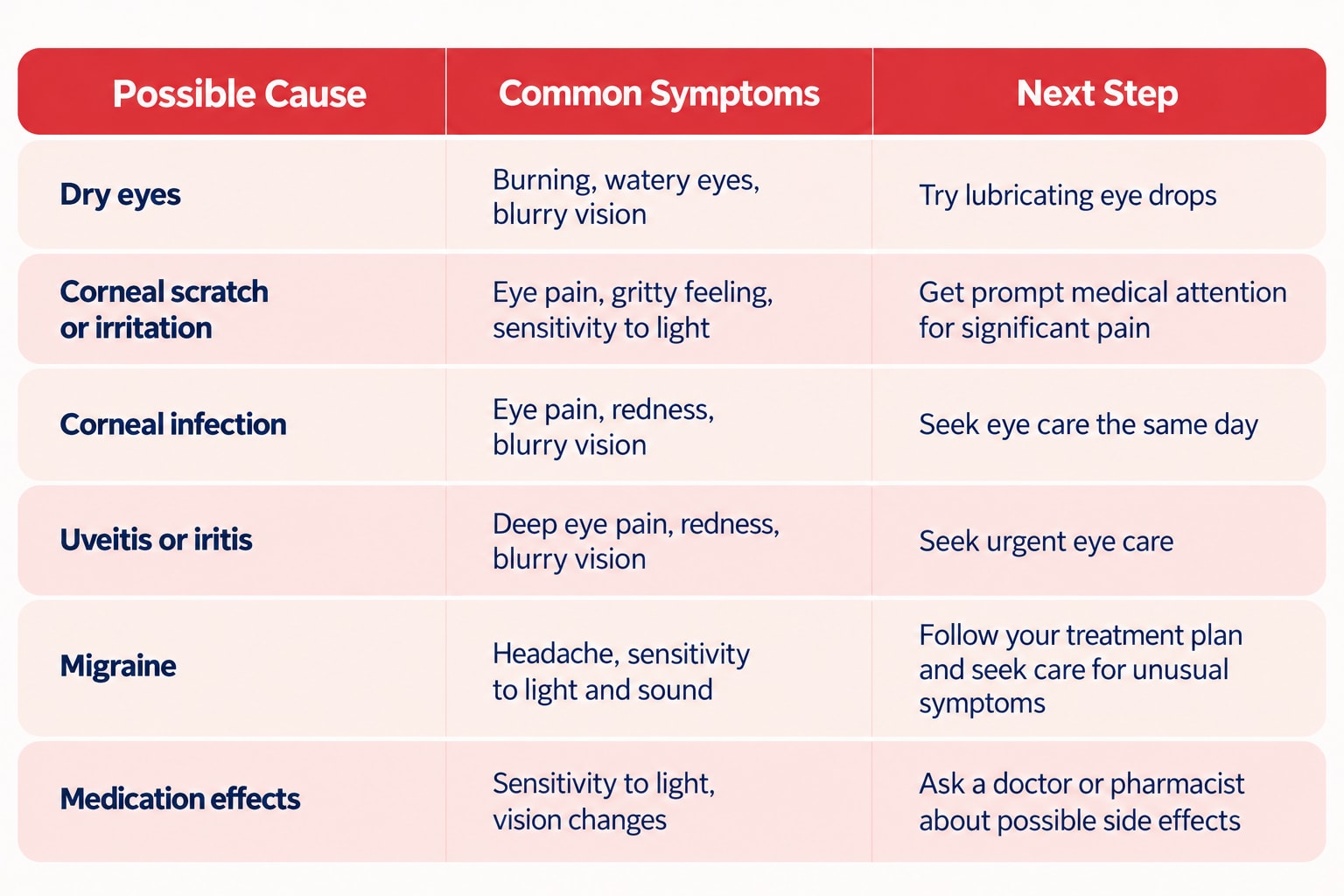
The following are common causes of light sensitivity and the symptoms that may accompany them.
1. Dry eyes
According to the American Academy of Ophthalmology (AAO), dry eyes can cause burning, stinging, redness, blurred vision, and a gritty or scratchy sensation, as though something is stuck in the eye. If you wear contacts and notice more dryness during screen use or later in the day, contacts for dry eyes may be worth discussing with your eye doctor.
2. Corneal scratches, irritation, and infection
The cornea is the clear front surface of the eye that helps focus light and protects the structures inside. Its sensitive nerve endings mean even a small scratch can cause pain, a gritty sensation, blurred vision, or difficulty keeping the eye open. Contact lens wearers should pay close attention to eye pain, or marked sensitivity to light while wearing their lenses.
3. Uveitis and other eye inflammation
Uveitis is inflammation of the uvea, the middle layer of the eye, while iritis specifically affects the iris, the colored part of the eye. Both conditions cause light sensitivity, deep eye pain, and discomfort in normal lighting due to inflammation inside the eye.
4. Migraines and neurological conditions
Migraines are a well-known cause of photophobia. For some people, light sensitivity occurs before or during a headache. Migraines may also cause nausea, sound sensitivity, and visual changes. Sunlight, fluorescent lights, and flashing lights can worsen symptoms.
5. Medications and pupil-dilating eye drops
Some medications that cause vision problems can also leave your eyes feeling dry, make your vision blurry, or affect how your pupils react to light. These effects depend on the medication and may become noticeable after starting treatment or changing a dose.
What is light sensitivity?
Light sensitivity, or photophobia, is discomfort or pain caused by light, from bright sunlight to normal indoor lighting. Light sensitivity in the eyes can affect everyday activities such as reading or spending time outdoors. It is not a fear of light but a symptom linked to how the eyes or nervous system respond to light.
Photophobia is associated with several types of health problems, including:
- Dry eyes, corneal scratches, irritation, or infection
- Uveitis and iritis
- Migraines and, in some circumstances, head injuries or other neurological disorders
- Certain medicines and pupil-dilating eye drops
The severity of the discomfort, whether one or both eyes are affected, and the presence of other symptoms can help a healthcare professional identify the cause.
Common causes of light sensitivity and their symptoms
Eye discomfort can occur for different reasons, and the symptoms may vary depending on the underlying cause. Because these symptoms can overlap, learning when they occur and what accompanies them may help you identify possible triggers.
Why do my eyes hurt when looking at a screen?
Eye pain when looking at a screen is a common symptom of digital eye strain, also known as computer vision syndrome. Spending long hours using phones, computers, or tablets can cause eye discomfort, blurred vision, headaches, and tired eyes.
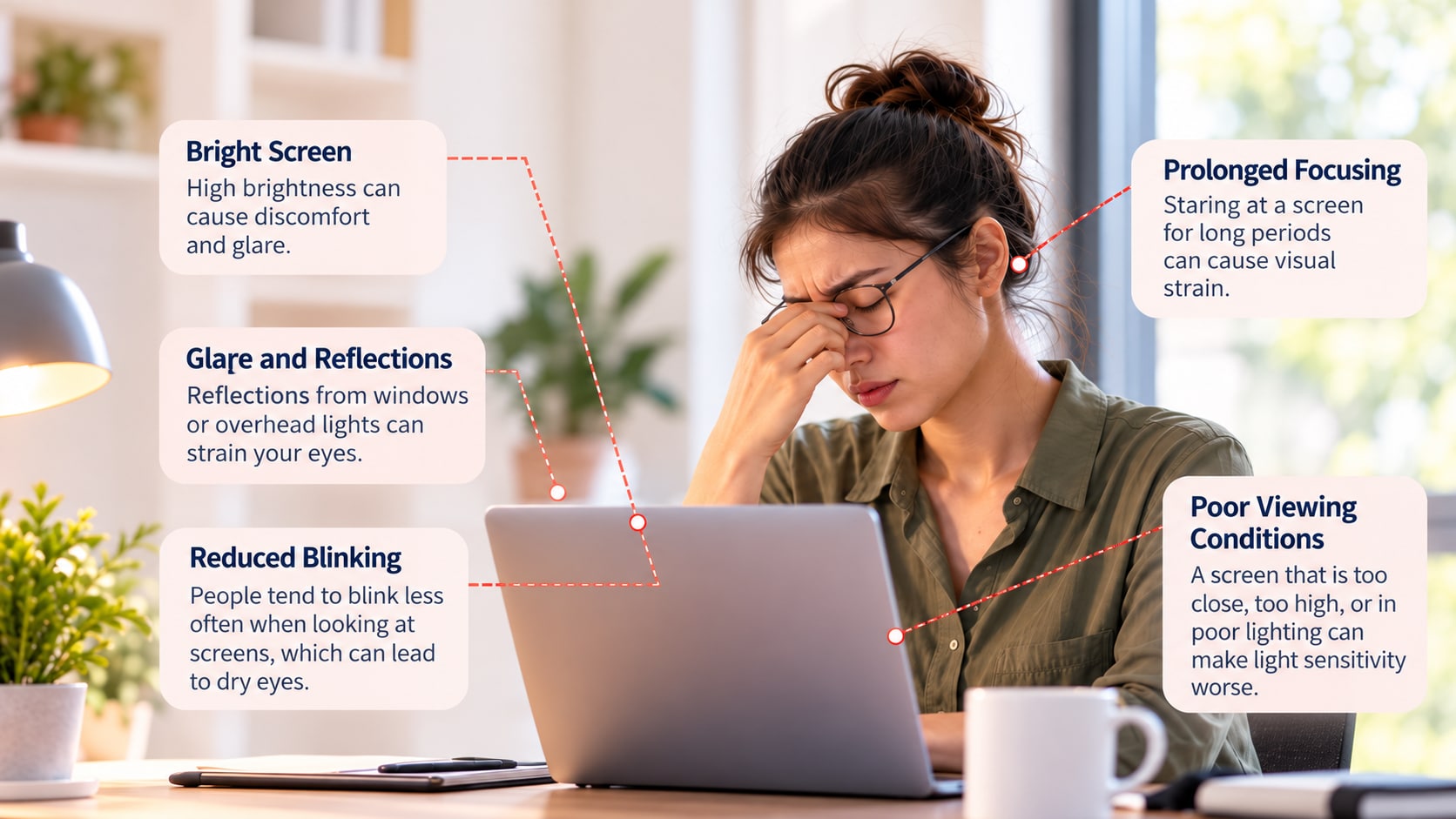
Symptoms may become more noticeable when reading small text, using devices at uncomfortable distances, or working with an unsuitable screen contrast. For people who regularly wear lenses during long work or screen sessions, comfortable contact lenses can help you compare options intended for different comfort needs and wearing routines.
Does blue light cause light sensitivity?
Blue light is part of the visible light spectrum emitted by sunlight and digital screens. However, screen discomfort does not necessarily mean blue light has damaged your eyes. Reduced blinking, dry eyes, and prolonged screen use can contribute to discomfort, making regular breaks and better screen habits helpful ways to prevent digital eye strain.
A 2022 study involving 47 healthy participants found that artificial tears, controlled blinking, and screen breaks helped reduce short-term eye discomfort after laptop use. Blue-light screen filters did not show comparable benefits under the study conditions.
How can you relieve light sensitivity at home?
If your light sensitivity is mild and is related to dry eyes, screen use, or a familiar migraine, a few changes at home may make your eyes more comfortable. People with mild sensitivity to light may also benefit from reducing glare in their surroundings.
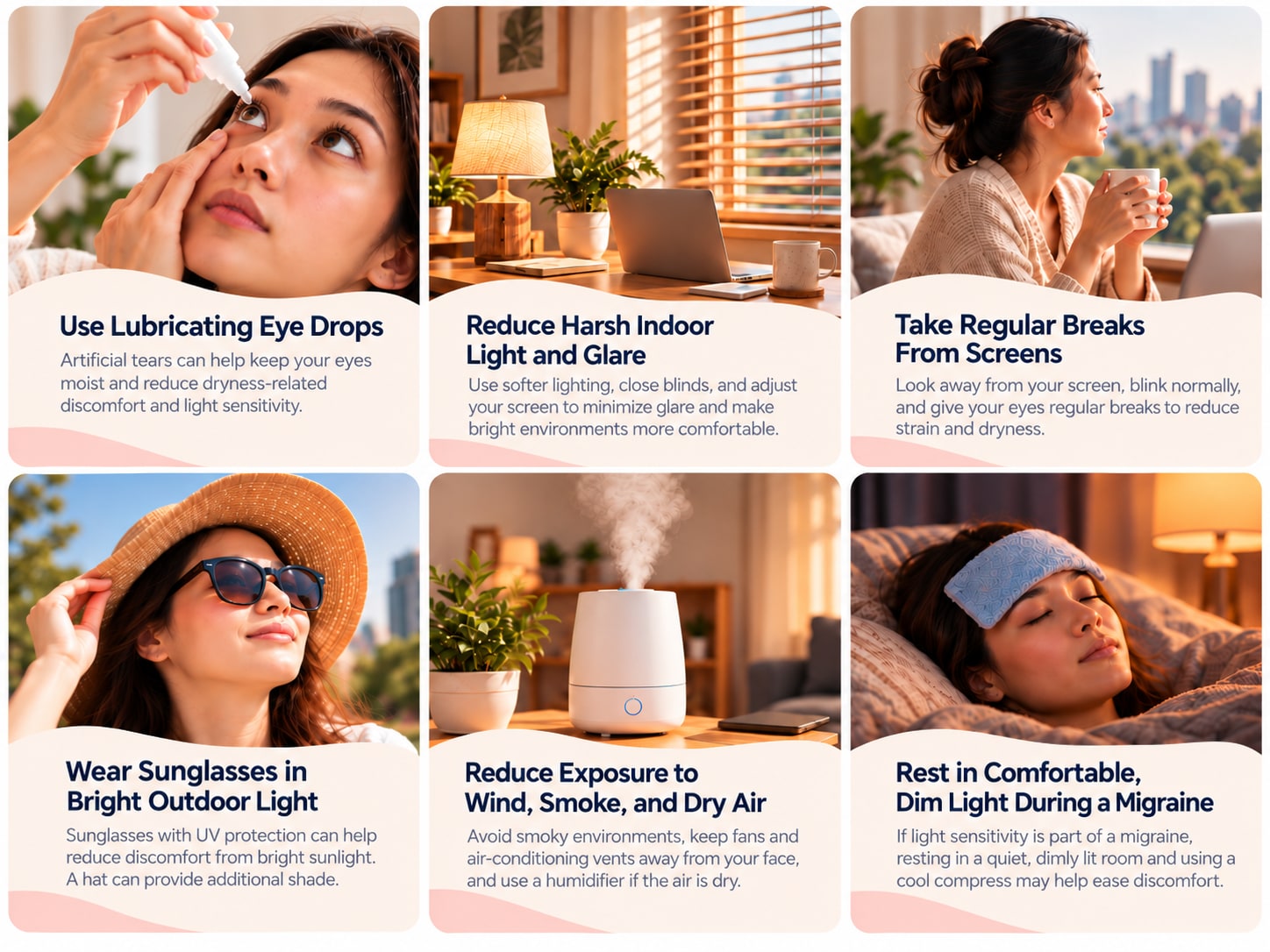
To help relieve light sensitivity, try lubricating eye drops, reduce harsh lighting and glare, take regular screen breaks, and wear UV-protective sunglasses outdoors. Avoid wind, smoke, and dry air that may irritate your eyes, and rest in a quiet, dimly lit room if light sensitivity occurs during a migraine.
When should you see a doctor for light sensitivity?
The urgency depends on how quickly the symptoms developed, how severe they are, and whether you have other symptoms.
Seek emergency medical care immediately if you experience:
- Sudden, severe eye pain, especially with blurred vision, halos around lights, headache, nausea, or vomiting.
- Sudden loss of vision or a major, abrupt change in vision.
- Light sensitivity with fever, severe headache, or neck stiffness.
- Serious eye or head trauma.
If symptoms are severe, do not wait for a routine appointment. Seek an emergency department or urgent ophthalmic service as appropriate.
Once your light sensitivity has been addressed and your eyes are comfortable, choosing the right contact lenses can help meet your everyday vision needs. Explore our prescription contact lenses to find options that match your current prescription and wearing routine.
Learn More About Light Sensitivity
Find answers to common questions about light sensitivity, including why bright lights may hurt your eyes, what causes discomfort indoors, how to reduce sensitivity, and when symptoms may require medical attention.
Why are my eyes sensitive to light indoors?
Indoor lighting may bother sensitive eyes when lights are particularly bright, there is glare or reflection, or an underlying problem such as dry eye or migraine is present. Fluorescent lighting and bright screens may also make existing light sensitivity more noticeable.
Why do my eyes hurt when I look at light?
Eye pain from bright light can occur when the surface or internal structures of the eye are irritated or inflamed. Dry eyes, corneal injuries, infections, uveitis, and migraines are among the possible causes, so persistent or severe pain should not be ignored.
Can you have light sensitivity without a headache?
Yes. Although photophobia commonly occurs with migraines, you can experience light sensitivity without a headache. Dry eyes, corneal irritation, eye inflammation, certain medications, and other eye conditions may also cause sensitivity to light.
Why is one eye more sensitive to light than the other?
Light sensitivity affecting one eye may occur with a localized problem such as a corneal scratch, irritation, infection, or inflammation. New one-sided sensitivity accompanied by redness, pain, blurred vision, or difficulty keeping the eye open should be evaluated promptly.
Why do my eyes water in bright light?
Bright light may trigger tearing when the eyes are irritated or sensitive. Dry eyes can also cause excessive watery tears as the eye responds to surface irritation, so watering does not necessarily mean your eyes have enough lubrication.
How can I reduce sensitivity to light in my eyes?
For mild symptoms, reducing glare, adjusting screen brightness, taking regular screen breaks, using appropriate lubricating eye drops, and wearing UV-protective sunglasses outdoors may help. The best approach depends on the cause, so persistent or worsening light sensitivity should be professionally evaluated.
Is sensitivity to light a sign of an eye problem?
It can be. Light sensitivity is a symptom rather than a condition itself and may occur with relatively common problems such as dry eyes or migraines as well as eye injuries, cataracts, or other conditions.
Disclaimer: This information is for educational purposes only and does not replace medical advice. Seek medical care for sudden, severe, persistent, or worsening light sensitivity.
References
Determining the Best Management Strategy for Preventing Short-Term Effects of Digital Display Use on Dry Eyes. Talens-Estarelles C, García-Marqués JV, Cerviño A, García-Lázaro S / Eye & Contact Lens. https://pubmed.ncbi.nlm.nih.gov/36155947/. Date Accessed: October 15, 2026.
What Is Dry Eye? Symptoms, Causes and Treatment. Puente MA Jr, Turbert D / American Academy of Ophthalmology. https://www.aao.org/eye-health/diseases/what-is-dry-eye. Date Accessed: October 15, 2026.
Dry Eye. National Eye Institute / National Institutes of Health. https://www.nei.nih.gov/eye-health-information/eye-conditions-and-diseases/dry-eye. Date Accessed: October 15, 2026.
Photophobia. MedlinePlus. U.S. National Library of Medicine. https://medlineplus.gov/ency/article/003041.htm. Date Accessed: October 18, 2026.
Use of Digital Displays and Ocular Surface Alterations: A Review. Talens-Estarelles C, García-Marqués JV, Cervino A, García-Lázaro S / PubMed. https://pubmed.ncbi.nlm.nih.gov/33053438/. Date Accessed: October 18, 2026.