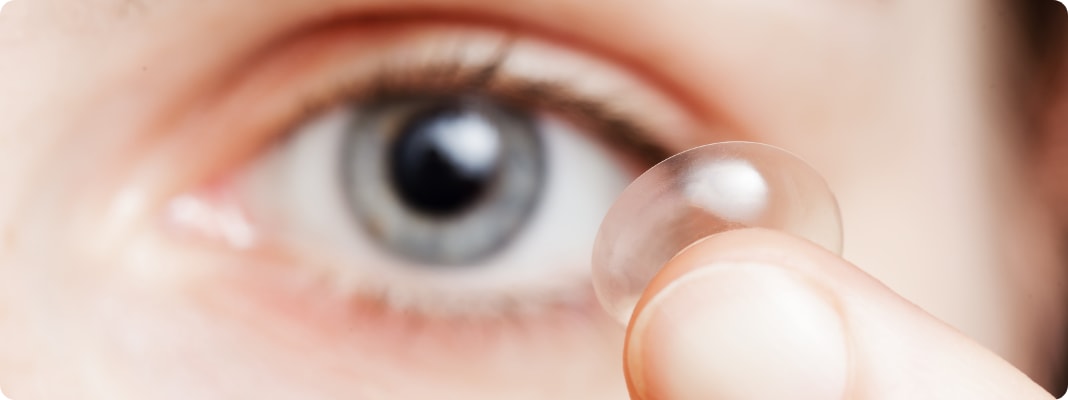

You know that tiny moment when your eyes feel itchy, tired, or dry and rubbing eyes seems like the fastest fix. Why does rubbing your eyes feel so good has a real answer: pressure, tears, and nerves can create short-term relief. The problem is that the same habit can also spread germs, worsen eye irritation, or put stress on delicate eye tissue when it becomes frequent or forceful. A safer plan starts with knowing why you want to rub and what to do instead.
Why rubbing your eyes feels good
Rubbing your eyes feels good because pressure can briefly spread your tear film, ease dryness or irritation for a moment, and trigger nerve pathways that may feel calming. When your eyes feel dry, tired, or itchy, that quick pressure can distract from the discomfort and make the surface of the eye feel temporarily more lubricated. It is a short-term fix, though, not a treatment for the reason your eyes were uncomfortable in the first place.
Pressure on or around the eyeball can also activate the oculocardiac reflex, a trigeminal-vagus nerve pathway linked with a drop in heart rate after pressure on the eye. That helps explain why rubbing eyes feels good when you are tired, stressed, or trying to “reset” your eyes after screen time. Still, rubbing harder or more often does not make it safer. If the urge keeps coming back, the better move is to look for the cause, such as dry eyes, allergies, eye strain, or contact lens irritation.
When dryness is the trigger, contacts for dry eyes can help you compare prescribed options after your eye doctor confirms the cause of your symptoms and the appropriate lens fit.
Why do people rub their eyes?
You usually rub your eyes because something feels off, such as dryness, itchiness, tiredness, irritation, or a contact lens that is not sitting comfortably. The urge is common, but rubbing only gives short-term relief. Figuring out why you are reaching for your eyes helps you choose a safer fix.
Common reasons people rub their eyes include:
- Your eyes feel tired or strained.
- Your eyes feel dry or gritty.
- Allergies are making your eyes itch.
- Dust, makeup, or an eyelash may be in your eye.
- Your contact lenses feel dry, dirty, or out of place.
Rubbing may feel like a quick reset, but it can make irritation worse if the real cause is dryness, allergies, debris, or contact lens discomfort. Try safer relief first, such as blinking, taking a screen break, using artificial tears, removing your contacts, or calling your eye doctor if symptoms continue.
Does one lens feel like it shifts or irritates your eye every time you blink? Learn why contact lenses move when you blink so you can tell when fit or dryness may be part of the problem.
Is rubbing your eyes bad for you?
Rubbing your eyes is bad for you depending on how often, how hard, and why you are doing it. Occasional light rubbing with clean hands may not harm most people, but frequent or forceful eye rubbing can worsen irritation, spread germs, scratch the cornea, or create extra risk for people with certain eye conditions. Pink eyes can spread when you rub your eyes and do not wash your hands, so hygiene matters too.
The biggest concern is excessive eye rubbing, especially when it becomes a habit or happens because of untreated allergies, dry eye, or contact lens discomfort. People with keratoconus should avoid rubbing because it can damage already thin corneal tissue and make symptoms worse. If rubbing is hard to stop, treat the reason your eyes are uncomfortable instead of trying to power through the urge.
Rubbing becomes more risky when:
- Your hands are not clean
- You rub hard or use your knuckles
- You have allergies, dry eye, keratoconus, glaucoma, or a recent eye procedure
- You are wearing contact lenses
- You have something stuck in the eye
- You rub many times a day
Worried that redness, itching, or discharge could be more than simple irritation? Review eye infection causes, treatments, and prevention tips so you know when rubbing could make things worse.
What happens when you rub your eyes too much?
Rubbing eyes too much can irritate the surface of your eye, spread germs, worsen itching, and raise the risk of injury, especially if you rub hard or often. One quick, gentle rub will not automatically cause every problem on this list, but repeated rubbing is worth taking seriously because your cornea, conjunctiva, eyelids, and retina are delicate.
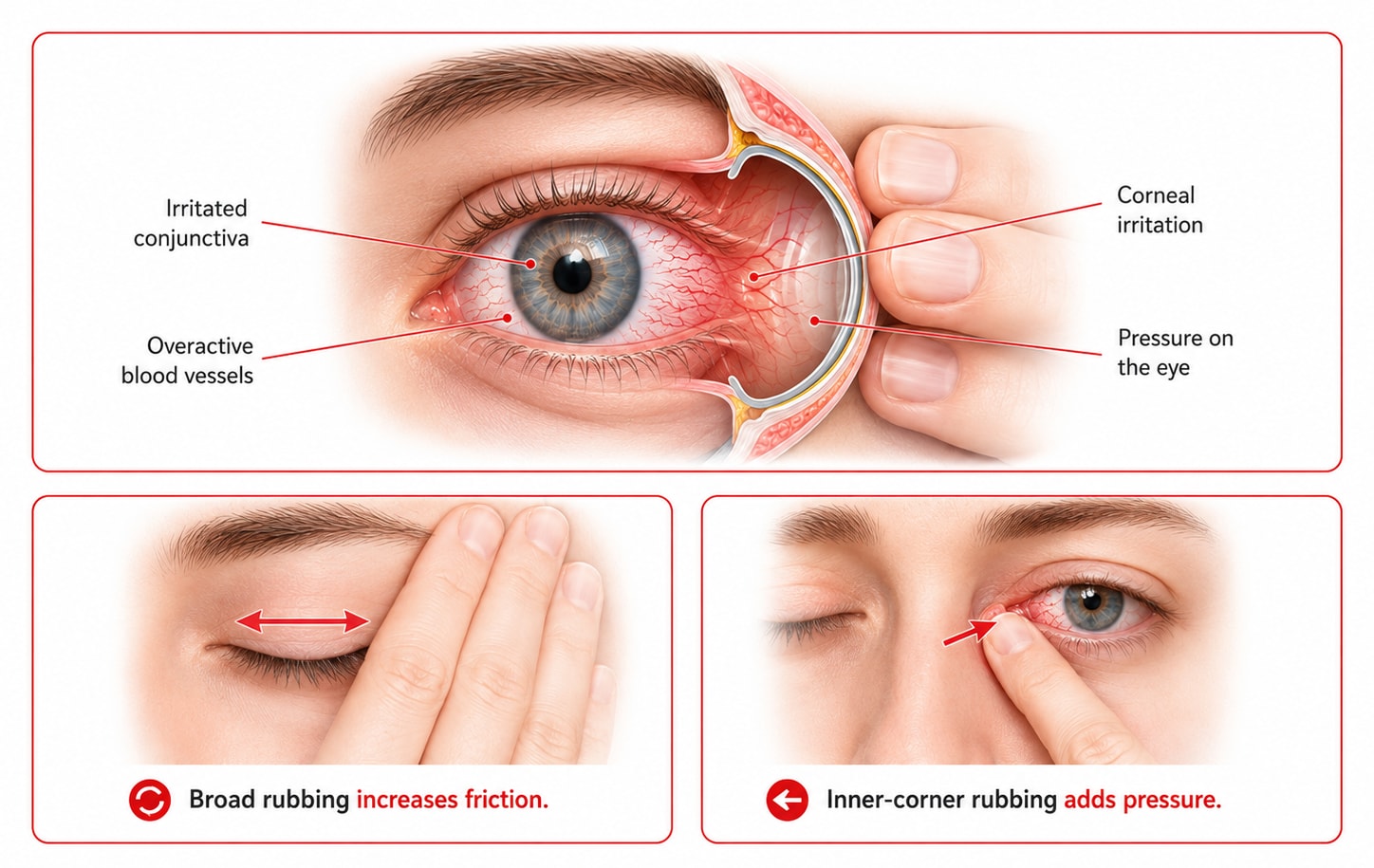
Note: Rubbing or scratching can injure the cornea, and pink eyes can spread when you rub your eyes and do not wash your hands. New floaters, flashes, or a curtain-like shadow may be signs of retinal detachment and need urgent evaluation.
Can rubbing your eyes make allergies or itchy eyes worse?
Yes, rubbing itchy eyes can make allergies feel worse. When you have allergy in the eyes, pollen, dust, pet dander, or other irritants can trigger itching, redness, watering, and swelling. Rubbing may feel good for a few seconds, but it can spread allergens around the eye area and keep the itch-rub cycle going.
Safer options include:
- Avoid rubbing during allergy flare-ups.
- Use a clean cool compress.
- Rinse allergens away with artificial tears when appropriate.
- Ask an eye care professional about antihistamine eye drops or other allergy-safe options.
- Ask which allergy eye drops for contacts are safe with your lenses and when to use them.
- Keep windows closed or reduce outdoor exposure when pollen is high.
- Remove contact lenses if your eyes feel itchy, watery, red, or irritated.
Some allergy eye drops contain antihistamines, mast-cell stabilizers, or both, but not every drop is meant to be used with contacts in your eyes. Check the label and ask your eye care professional before using allergy drops with contact lenses. Seek care if itching comes with pain, discharge, significant redness, light sensitivity, or blurry vision.
Why should you avoid rubbing your eyes with contacts?
You should avoid rubbing your eyes with contacts because the friction can move the lens, trap debris under it, scratch the eye surface, worsen irritation, or damage the lens. A contact lens sits directly on the tear film over your cornea, so rubbing over it can turn a small annoyance into a bigger problem. This matters most when the lens feels dry, gritty, folded, torn, or out of place. Remove the lens first instead of trying to rub the discomfort away.
Before touching your eye or lens, wash and dry your hands, then remove the contact and inspect it for tears, chips, deposits, or debris. Discard daily disposable lenses after removal, and clean reusable lenses only with approved solution. Switch to glasses if your eye feels red, watery, painful, or blurry, and do not reinsert the lens if the eye still feels irritated. Call an eye care professional right away for irritated red eyes, worsening pain after lens removal, light sensitivity, sudden blurry vision, unusual watering, discharge, or symptoms that continue.
Does rubbing make your lenses feel hazy, filmy, or harder to see through? Learn why contact lenses get foggy so you can spot dryness, buildup, or fit issues sooner.
What can you do instead of rubbing itchy or tired eyes?
The safest substitute for rubbing depends on why your eyes feel uncomfortable. Start with gentle relief, avoid pressing on the eyeball, and get care if symptoms persist, worsen, or come with pain, redness, discharge, light sensitivity, or blurry vision.
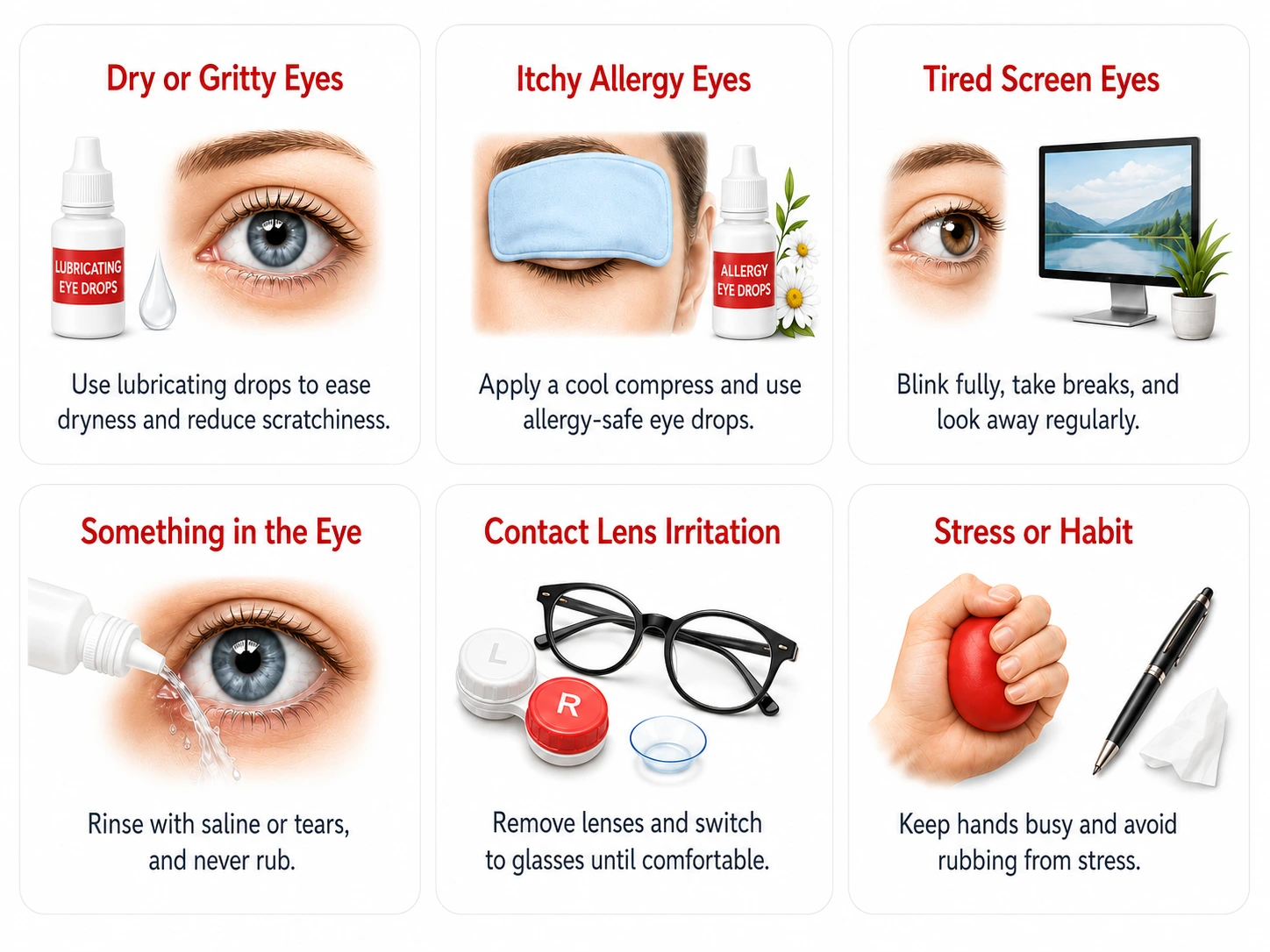
Note: Artificial tears may help rinse allergens from the eye and temporarily relieve allergy-related dryness, while dry eyes may need lifestyle changes, eye drops, or other care depending on the cause. Pain, vision changes, discharge, or worsening redness should be checked by an eye care professional.
When should you see an eye doctor for itchy eyes or eye rubbing?
See an eye doctor for itchy eyes or repeated eye rubbing when symptoms feel intense, keep coming back, or come with changes that are not normal for you.
Seek prompt eye care if you have:
- Eye pain
- Sudden or worsening blurry vision
- Light sensitivity
- Discharge or crusting
- Significant red eyes
- A feeling that something is stuck in the eye
- New floaters, flashes, or a curtain-like shadow
- Symptoms after an eye injury or chemical splash
- Frequent rubbing in a child
- Repeated rubbing with worsening astigmatism or concern about keratoconus
New floaters, flashes, or a curtain-like shadow can be warning signs of retinal detachment and need urgent evaluation. Pink eyes can also spread when you rub your eyes and do not wash your hands. CDC advises people with pink eyes to stop wearing contacts until symptoms are gone or an eye doctor says it is safe to wear them again.
Rubbing your eyes feels good because it can briefly spread tears, distract from irritation, and trigger calming pressure-sensitive nerves. That relief is short-lived, and frequent or forceful rubbing can make allergies, dryness, infection risk, corneal irritation, and certain eye conditions worse. A safer approach is to treat the reason your eyes feel itchy, dry, tired, or irritated instead of rubbing through it. Contact an eye care professional if symptoms keep coming back or come with pain, redness, discharge, light sensitivity, sudden floaters, flashes, or blurry vision.
Could contact lens irritation be making you rub your eyes more often? Browse our contact lenses to compare prescribed options that may better match your comfort, dryness, and wearing needs.
Disclaimer: This content is for general informational purposes only and is not a substitute for professional advice, diagnosis, or treatment.
References
Oculocardiac Reflex. National Center for Biotechnology Information / StatPearls. https://www.ncbi.nlm.nih.gov/books/NBK499832/. Date Accessed: July 14, 2026.
Dry Eye. National Eye Institute. https://www.nei.nih.gov/eye-health-information/eye-conditions-and-diseases/dry-eye. Date Accessed: July 14, 2026.
How to Prevent Pink Eye. Centers for Disease Control and Prevention. https://www.cdc.gov/conjunctivitis/prevention/index.html. Date Accessed: July 14, 2026.
What Is Keratoconus? American Academy of Ophthalmology. https://www.aao.org/eye-health/diseases/what-is-keratoconus. Date Accessed: July 14, 2026.
Retinal Detachment. National Eye Institute. https://www.nei.nih.gov/eye-health-information/eye-conditions-and-diseases/retinal-detachment. Date Accessed: July 14, 2026.