Table of Contents
What Are Monolids?
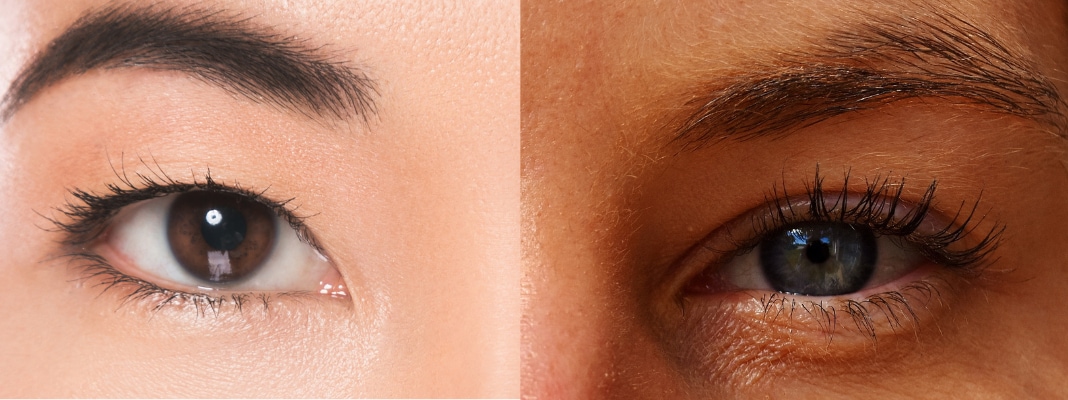
Monolids are a type of eyelid shape where the upper eyelid doesn’t have a visible eyelid crease. Instead of folding into a defined line above the lashes, the lid looks smoother from the lash line to the brow bone. This gives monolid eyes a distinct look compared with double eyelids, which have visible creases across the upper eyelid.
Monolids are a normal eye shape. They’re not a medical issue, and they don’t mean anything is wrong with your eyes or vision. Like almond eyes, round eyes, hooded eyes, and deep-set eyes, monolids are part of natural human facial features.
Some people also use the phrase eyelids monolid when describing this feature, especially when comparing eye shapes for makeup, contact lenses, or cosmetic surgery.
Monolids Vs Double Eyelids
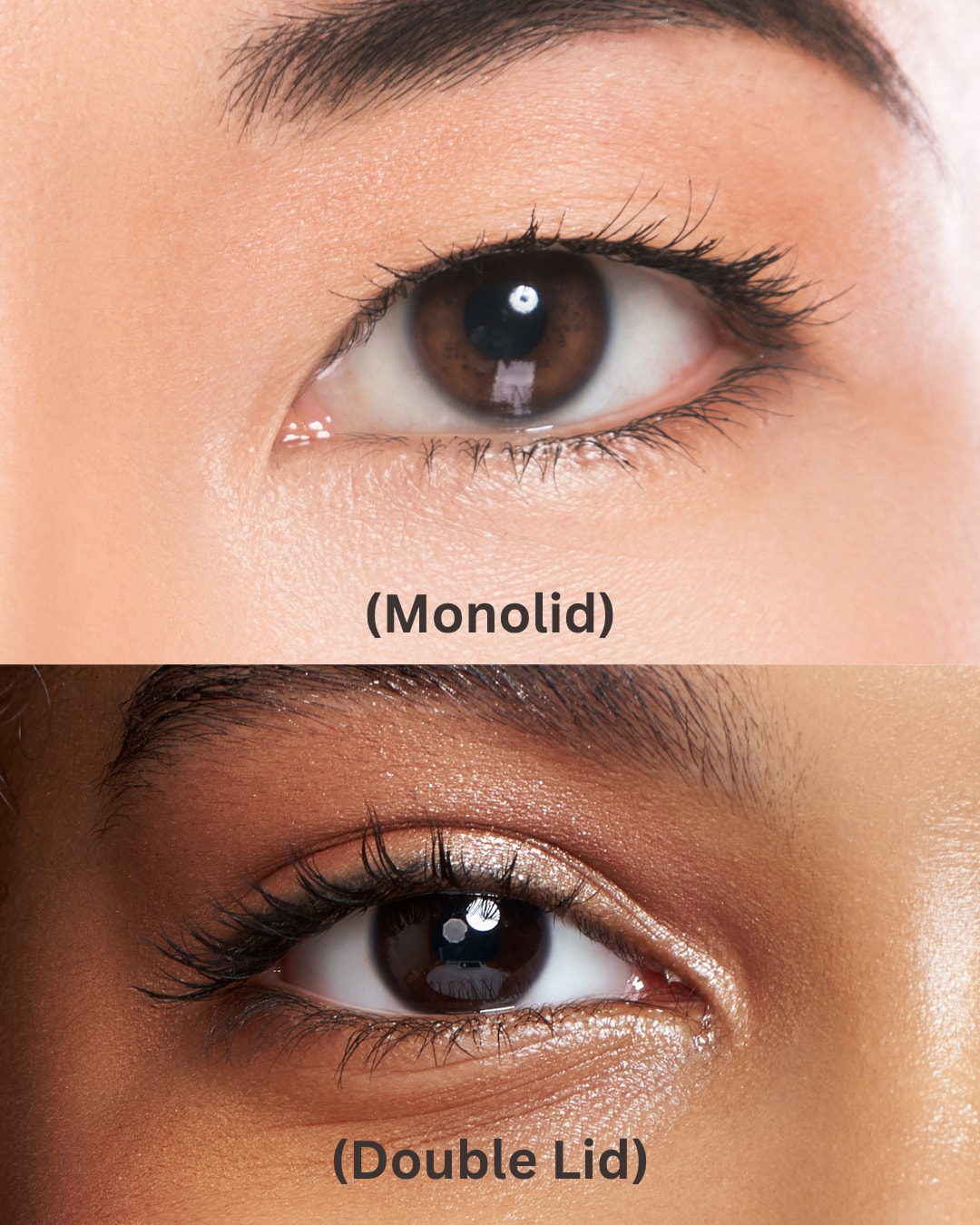
The difference between monolids vs double eyelids comes down to the eyelid crease. Double eyelids have a fold that separates the upper eyelid into two visible sections. Monolids don’t have that same crease, or the crease is hidden enough that it doesn’t show when the eyes are open.
This can change how the eye area looks. A double eyelid can make the lid space appear more divided, while monolid eyes can create a smoother surface across the upper eyelid. Neither type of eyelid is better. They’re simply different forms of eye anatomy.
Monolids can also appear with epicanthal folds, which are folds of skin near the inner corner of your eye. Epicanthal folds are common among East Asians, though they can appear in people from other ethnic backgrounds as well. They can affect how the inner eye area looks, but they aren’t the same thing as monolids. A person can have monolids with or without epicanthal folds.
Why Are Monolids Common Among People of Asian Descent?
Monolids are common among people of Asian descent, especially in East and Northeast Asia, because eyelid shape is influenced by inherited facial structure. A monolid means the upper eyelid has little to no visible crease. Epicanthal folds, which are folds of skin near the inner corner of the eye, can also appear with monolid eyes, but they’re not the same feature.
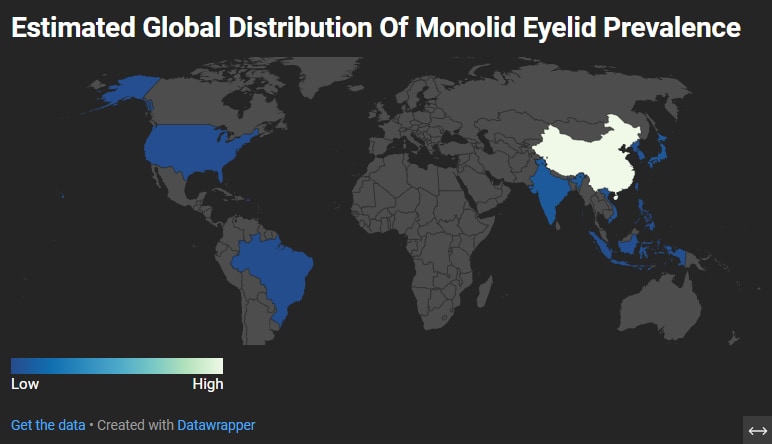
That pattern shows up in the estimated counts used for the map. China has the largest estimated monolid population at about 352 million people, followed by Japan at about 24.8 million, South Korea at about 19.3 million, Vietnam at about 16.1 million, and North Korea at about 9.8 million. The United States is estimated at about 6.8 million, which shows why total country population also affects the map. A lower estimated percentage can still translate into a large count when the country’s overall population is high.
The exact reasons behind this distribution are still debated. One theory suggests that the eyelid structure seen in some Northern and Eastern Asian populations developed partly as an adaptation to cold, wind, snow, and bright glare. In that environment, fuller upper eyelids and epicanthal folds could have helped shield the eyes from freezing air and reflected sunlight, especially in regions where snow glare and harsh weather were common.
Still, this is best understood as a theory, not a complete explanation. Not all people of Asian descent have monolids, and not all monolids come with epicanthal folds. Monolids can also appear in people from other ethnic backgrounds. Like other facial features, eyelid shape comes from a mix of inherited anatomy, population history, and natural variation. The figures above should be read as estimates, not exact census counts, since country-level monolid data is limited.
Can People of Other Ethnic Backgrounds Have Monolids?
Yes, monolids can appear in people of different ethnic backgrounds. While monolid eyes are more common among East Asians, eyelid shape varies across ancestry, families, and individual facial features.
Some people naturally have a smooth upper eyelid with little to no visible crease, even if they’re not of Asian descent. Others have hooded eyes that can look similar to monolids because the upper eyelid skin covers the crease. The difference is that hooded eyes usually have a crease that’s hidden or partly covered, while monolids don’t have the same visible eyelid crease.
Are Monolids Dominant Or Recessive?
No, monolids are not simply dominant or recessive. Eyelid shape doesn’t work like a single-gene trait where one version automatically wins over another. Instead, monolids and double eyelids are influenced by several genetic and anatomical factors.
A person’s eyelid crease depends on how the skin, muscle, fat, and connective tissue around the eye form. Family history can affect this, but it doesn’t always predict the exact result. Two parents with double eyelids can have a child with monolids. A parent with monolids and a parent with double eyelids can have children with either eye shape.
So while genetics play a strong role, monolids are better described as a complex inherited trait rather than a simple dominant or recessive feature.
Can Surgery Create Double Eyelids?
Yes, surgery can create double eyelids. Double eyelid surgery is a form of cosmetic surgery that creates or defines an eyelid crease. It’s sometimes called Asian blepharoplasty, though people from different backgrounds can choose the procedure.
This type of plastic surgery changes the structure of the upper eyelid so a crease becomes more visible. Some people choose surgery to create a crease for cosmetic reasons, while others do it because heavy eyelid skin affects comfort or vision. Like any surgery, it comes with risks, recovery time, and results that depend on anatomy and the surgeon’s technique.
Monolids don’t need to be “fixed.” For people who want double eyelids, double eyelid surgery is a personal choice. For people who love their monolid eyes, makeup, eyewear, and contact lenses can all highlight their natural eye shape.
Embracing Your Natural Eye Shape
Monolids are a natural type of eyelid with little to no visible crease on the upper lid. They’re common among people of Asian descent, especially East Asians, but they can appear across different ethnic backgrounds. They’re not a flaw, a vision problem, or a feature limited to one ancestry.
The comparison between monolids vs double eyelids comes down to eyelid structure. One has visible creases, and the other has a smoother lid shape. Both can be expressive, distinctive, and easy to style once you know what works for your eye shape.
If you wear contact lenses, your eyelid shape can affect how lenses feel during blinking, makeup wear, or long screen days. Choose comfortable, properly fitted contacts, follow your eye doctor’s instructions, and keep your lenses clean. Your lens routine should fit both your vision needs and your natural features.
Frequently Asked Questions About Monolids
Are monolids rare?
No, monolids are not rare. They’re common among East Asians and can also appear in people from other ethnic backgrounds.
Are monolids the same as hooded eyes?
No, monolids and hooded eyes are different. Monolids don’t have a visible eyelid crease, while hooded eyes usually have a crease that’s covered by extra skin on the upper eyelid.
Can you have one monolid and one double eyelid?
Yes, some people have one monolid and one double eyelid. Eyelid shape can vary between both eyes, even on the same face.
Do monolids affect vision?
Monolids usually don’t affect vision. Vision issues are more likely when heavy upper eyelid skin droops far enough to block part of the eye.
Can makeup make monolids look bigger?
Yes, makeup can make monolid eyes look more defined or open. Blending a darker shade near the lash line and placing a lighter color near the inner corner of your eye can add depth without relying on a natural crease.
Can contact lenses change how monolid eyes look?
Yes, contact lenses can change the appearance of monolid eyes, especially colored contacts or circle lenses. They change the look of the iris, not the eyelid shape itself.
Is double eyelid surgery permanent?
Double eyelid surgery can create a longer-lasting crease, but results vary by technique, anatomy, healing, and age. Anyone thinking about cosmetic surgery should speak with a qualified medical professional first.
References
Asian Blepharoplasty (Double Eyelid Procedure). EyeWiki. https://eyewiki.org/Asian_Blepharoplasty_%28Double_Eyelid_Procedure%29. Updated January 26, 2026. Accessed June 2, 2026.
Blepharoplasty. Mayo Clinic. https://www.mayoclinic.org/tests-procedures/blepharoplasty/about/pac-20385174. Published April 29, 2025. Accessed June 2, 2026.
Decorative Contact Lenses for Halloween and More. U.S. Food and Drug Administration. https://www.fda.gov/medical-devices/contact-lenses/decorative-contact-lenses-halloween-and-more. Updated October 22, 2024. Accessed June 2, 2026.
DNA-Based Eyelid Trait Prediction in Chinese Han Population. International Journal of Legal Medicine. https://doi.org/10.1007/s00414-021-02570-7. Published May 10, 2021. Accessed June 2, 2026.
Epicanthal Folds. MedlinePlus. https://medlineplus.gov/ency/article/003030.htm. Reviewed January 17, 2025. Accessed June 2, 2026.
How Have We Changed Since Our Species First Appeared? Australian Museum. https://australian.museum/learn/science/human-evolution/how-have-we-changed-since-our-species-first-appeared/. Published August 2, 2021. Accessed June 2, 2026.
Monolid Eyes: Epicanthal Folds & Causes. Cleveland Clinic. https://my.clevelandclinic.org/health/symptoms/22413-monolid-eyes. Published February 22, 2022. Accessed June 2, 2026.
2024 Census of Population (POPCEN) Population Counts Declared Official by the President. Philippine Statistics Authority. https://psa.gov.ph/content/2024-census-population-popcen-population-counts-declared-official-president. Published July 17, 2025. Accessed June 2, 2026.
Asian Blepharoplasty. Nguyen MQ, Hsu PW, Dinh TA. Seminars in Plastic Surgery. https://doi.org/10.1055/s-0029-1224798. Published August 2009. Accessed June 2, 2026.
Hong Kong’s Population Up Slightly in 2024, Rise in Newborns. Reuters. https://www.reuters.com/world/china/hong-kongs-population-up-slightly-2024-rise-newborns-2025-02-19/. Published February 19, 2025. Accessed June 2, 2026.
National Population Totals and Components of Change: 2020-2025. U.S. Census Bureau. https://www.census.gov/data/tables/time-series/demo/popest/2020s-national-total.html. Published January 2026. Accessed June 2, 2026.
Population, Total. The World Bank. https://data.worldbank.org/indicator/SP.POP.TOTL. Published n.d. Accessed June 2, 2026.
The Prevalence of Double Eyelid and the 3D Measurement of Orbital Soft Tissue in Malays and Chinese. Scientific Reports. https://www.nature.com/articles/s41598-017-14829-4. Published November 1, 2017. Accessed June 2, 2026.
World Population Prospects 2024. United Nations Department of Economic and Social Affairs, Population Division. https://population.un.org/wpp/. Published July 11, 2024. Accessed June 2, 2026.
Similar Articles
-

The Evolution of Our Eye Colors: A Story of Genetics, Migration, and Culture
-

Can I take a 20 Minute Nap with Contacts On? How About for 10 minutes, 15, 30, or 60 minutes? 2025 Update
-
Purpose of Eyebrows and Eyelashes: Functions and Importance
-

Dry Eyes or Eye Allergies: How to Tell the Difference
-

The Benefits of Wearing Contacts vs. Glasses While Working Out (pros and cons)