
You wake up one morning and notice that your baby’s eyes look a little red, watery, or crusty around the lashes. Maybe one eye seems unusually sticky, or your little one keeps rubbing it. Is it just irritation, a blocked tear duct, or something more?
Pink eye in babies, also known as conjunctivitis, isn’t always caused by an infection. Bacteria and viruses can trigger it, but allergies and irritants can also inflame the eyes. Even a blocked tear duct can cause similar symptoms without being pink eye at all. Like other eye infections with similar symptoms, infectious pink eye can be difficult to identify based on appearance alone. According to the American Academy of Ophthalmology (AAO), about 2% of babies develop pink eye during their first month of life. While many cases are mild, some infections can be serious, especially in newborns, who need immediate medical evaluation if pink eye is suspected.
What is Pink Eye in Babies?
Pink eye is inflammation of the thin, transparent membrane covering the white part of the eye and the inside of the eyelids. When this tissue becomes inflamed, tiny blood vessels become more visible, making the eye appear pink or red. Unlike adults who may also experience redness or irritation from wearing prescription contact lenses, babies can develop similar symptoms from conjunctivitis, blocked tear ducts, or other eye conditions. Baby conjunctivitis can affect one or both eyes, causing tearing, swelling, or discharge that leaves the eyelashes sticky after sleeping.
Pink eye in newborns, also called neonatal conjunctivitis, needs special attention because some infections can pass from mother to baby during childbirth. Other cases may result from irritation or conditions that cause similar symptoms. Although infant pink eye is often treatable, parents should contact their pediatrician if they notice unusual redness or discharge. Newborns with suspected pink eye need medical evaluation right away.
What Does Pink Eye Look Like in Babies?
Pink eye often makes the white part of a baby’s eye appear pink or red. You might also notice watery discharge, swollen eyelids, or yellowish crust around the eyelashes. Bacterial infections commonly produce thicker discharge, while viral infections tend to cause more watery eyes. These differences are not reliable enough to determine the cause without a medical examination.
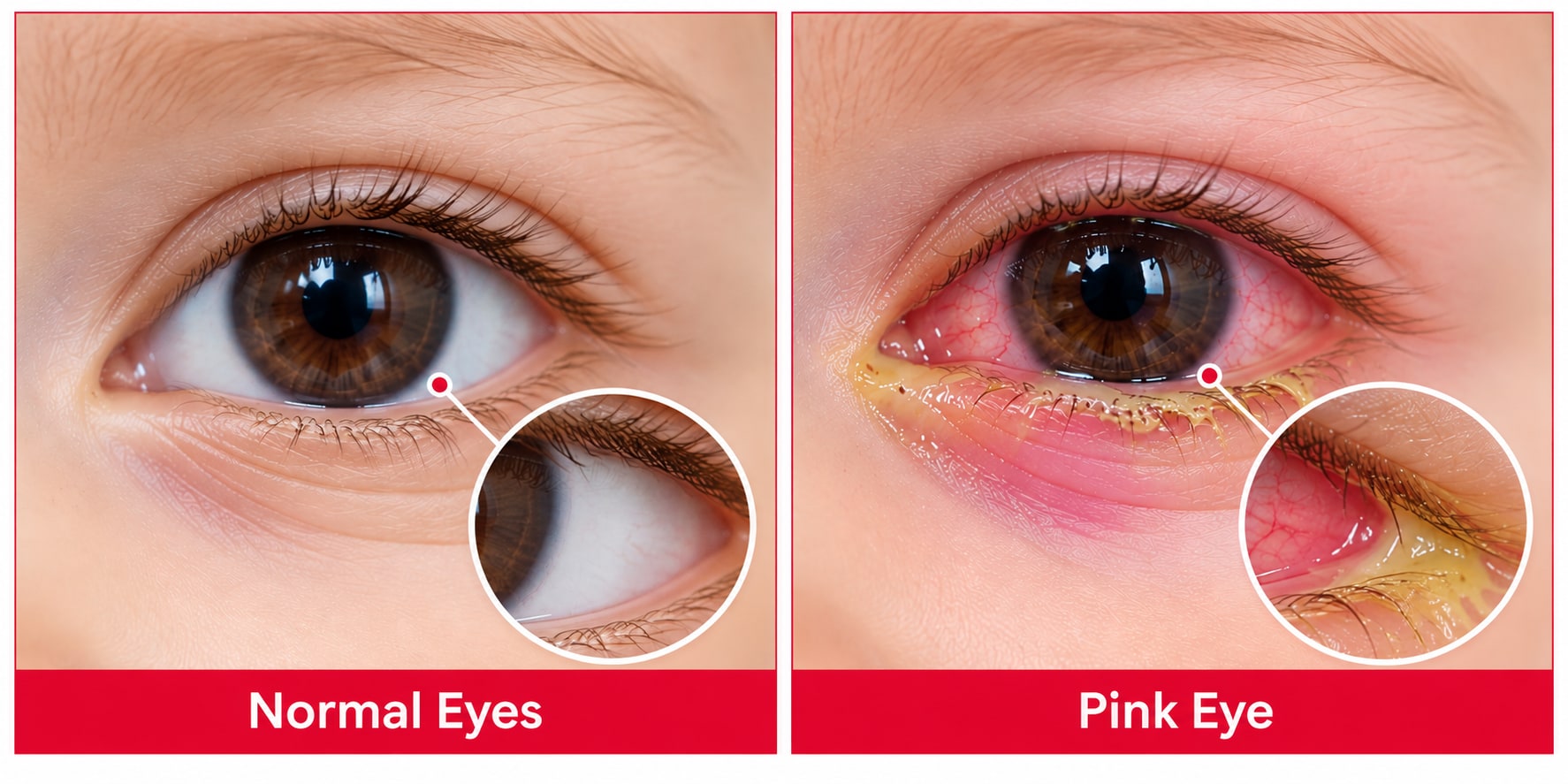
Symptoms can begin in one eye before affecting the other. Newborn pink eye may develop within the first few days or weeks after birth.
What Are the Symptoms of Pink Eye in Babies?
Baby pink eye symptoms can look different depending on whether the condition is caused by bacteria, viruses, or irritation. Some babies have only mild redness and tearing, while others develop noticeable swelling or thick discharge.
- The white part of one or both eyes appears reddish or pink.
- Your baby’s eyes may produce more tears than usual.
- Thick mucus or pus may collect around the eyes.
- Dried discharge can make the eyelids stick together after sleeping.
- The eyelids may look puffy, red, or irritated.
- Your baby may rub their eyes, become fussy, or have difficulty keeping their eyes open.
- Your baby may squint, turn away from bright light, or seem uncomfortable when exposed to it.
Redness, tearing, and eye discharge aren’t limited to babies. Adults who wear contact lenses can also develop eye infections, particularly when proper contact lens care practices aren’t followed. These infections may cause symptoms similar to pink eye, including redness, irritation, and discharge.
What Causes Pink Eye in Babies?
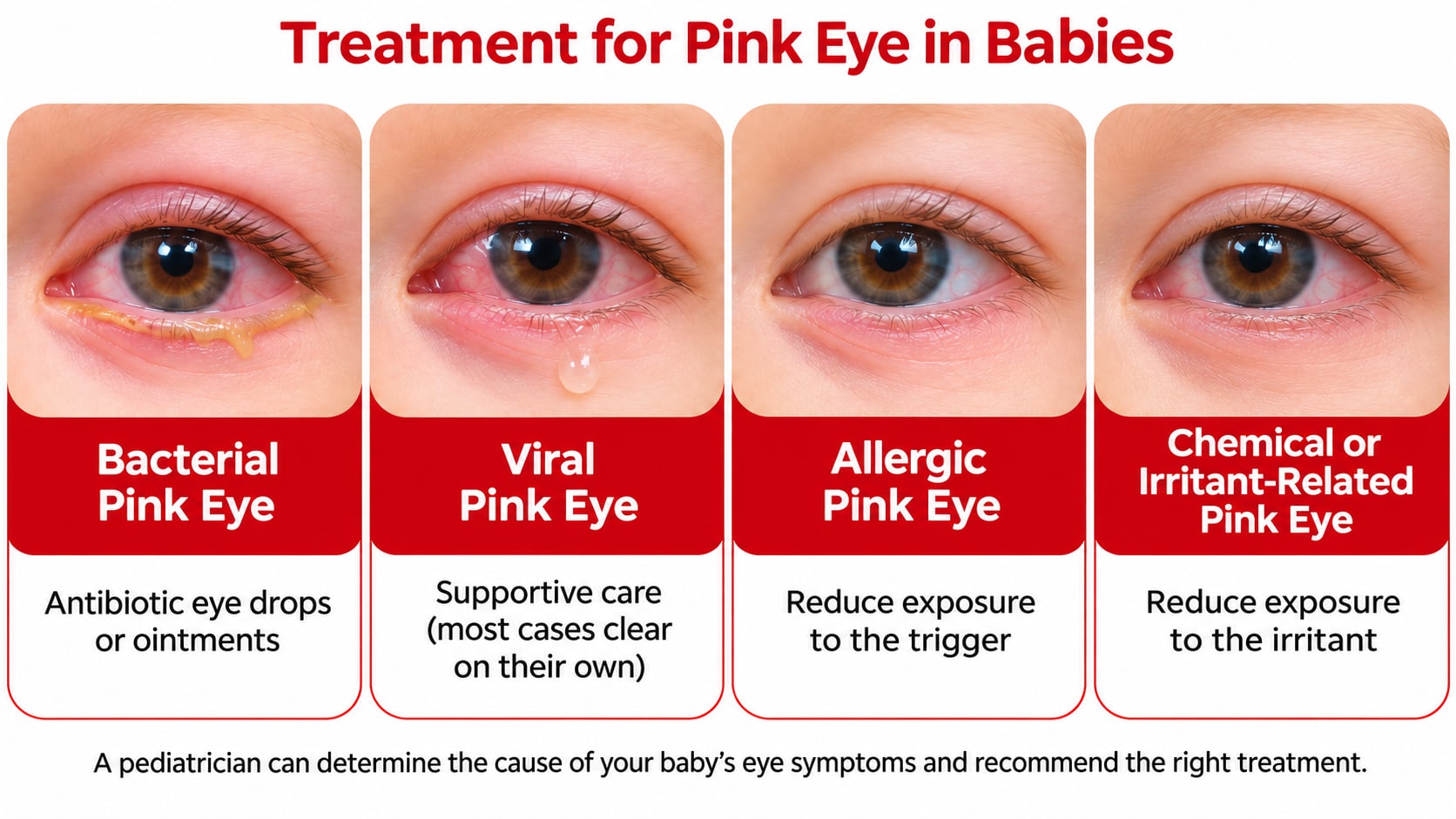
Several factors can explain what causes pink eye in babies, including bacterial infections, viruses, allergies, and exposure to irritants. The underlying cause matters because each type may require a different approach to treatment.
Bacterial Pink Eye
Bacterial conjunctivitis develops when bacteria infect the conjunctiva. It often causes eye redness, swollen eyelids, and thick yellow or green discharge that may make the eyelashes stick together. In older babies, bacteria commonly found on the skin or in the respiratory tract can cause an eye infection.
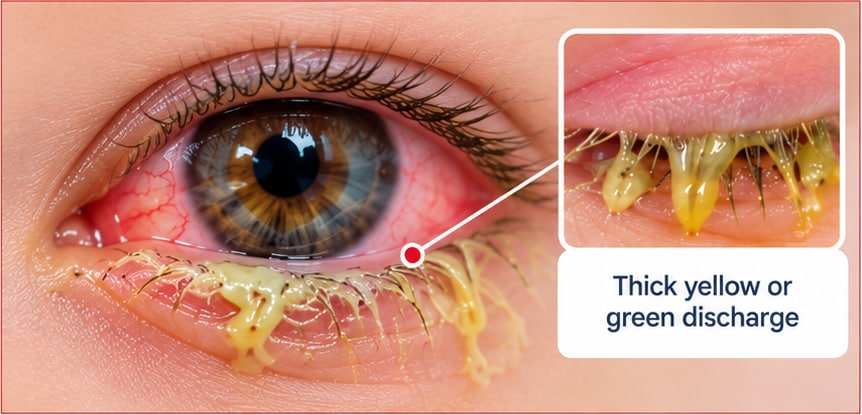
Newborns can develop infections from bacteria passed during childbirth. Two important causes of neonatal conjunctivitis are:
- Caused by Chlamydia trachomatis, this infection commonly develops 5 to 12 days after birth and may also affect the baby’s respiratory system.
- Caused by Neisseria gonorrhoeae, this infection usually appears within the first 2 to 5 days of life and can seriously damage the eyes without prompt treatment.
These infections require medical evaluation and appropriate antibiotics. Gonococcal conjunctivitis is particularly urgent because it can cause permanent vision damage and other serious complications.
Viral Pink Eye
Viral conjunctivitis occurs when a virus infects the conjunctiva. The same viruses that cause colds and respiratory infections, particularly adenoviruses, can also cause pink eye. Babies with viral pink eye may have watery discharge, eye redness, and symptoms such as a runny nose or cough. The infection may begin in one eye and spread to the other.
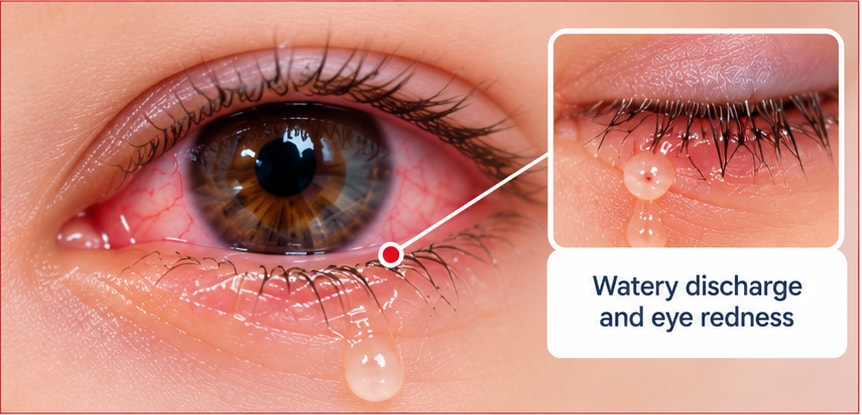
Certain viruses, including herpes simplex virus, can cause more serious infections in newborns. These infections need urgent medical care because they can affect the eyes and other parts of the body.
Allergic Pink Eye
Allergic conjunctivitis happens when the eyes react to allergens such as pollen, dust mites, or pet dander. It usually affects both eyes and can cause redness, watering, and itching. Unlike bacterial or viral conjunctivitis, allergic pink eye is not contagious.
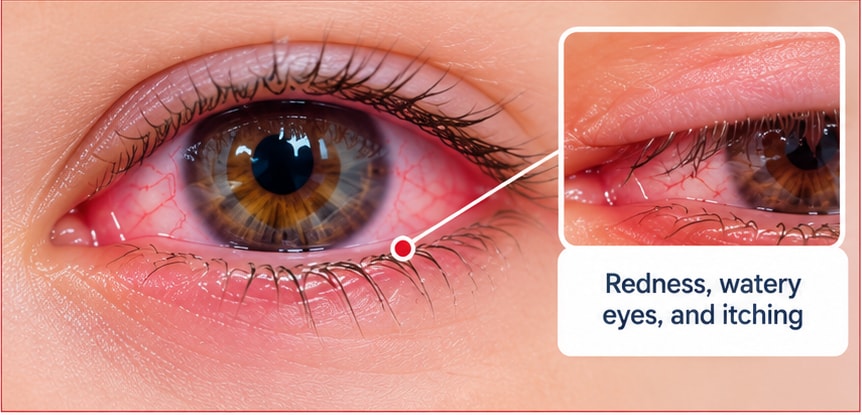
Allergic pink eye is uncommon in babies younger than 12 months. If your infant has persistent watery or red eyes, a pediatrician can help determine whether allergies or another condition may be responsible.
Chemical or Irritant-Related Pink Eye
Sometimes, pink eye causes are unrelated to an infection. Smoke, chemicals, and other irritants are among the common causes of bloodshot eyes and may also produce excessive tearing. Newborns may develop temporary eye irritation after receiving antibiotic eye medicine at birth. These medications are used to help prevent certain serious bacterial infections.
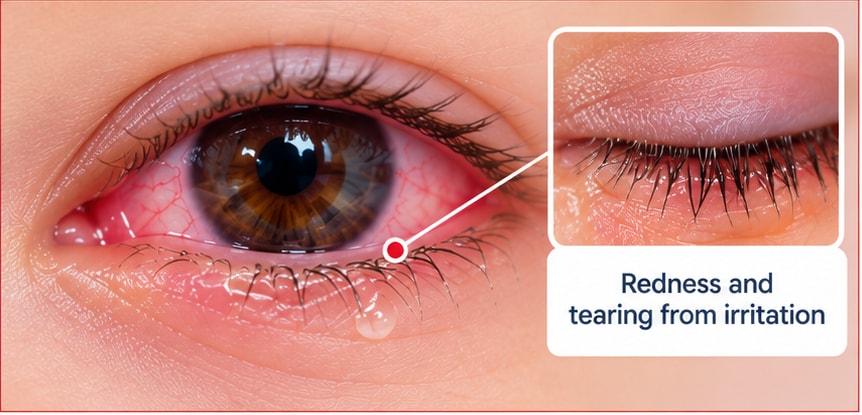
Chemical conjunctivitis associated with newborn eye medication is typically mild and may resolve within 24 to 36 hours. New redness, swelling, or discharge in a newborn should be evaluated promptly rather than assumed to be a harmless reaction.
Difference Between Pink Eye vs. Blocked Tear Duct in Babies
A blocked tear duct develops when the drainage pathway that carries tears from the eye into the nose does not fully open. This is common in newborns because their tear drainage system is still developing. In many cases, the blockage is caused by a thin membrane near the end of the tear duct that remains closed after birth.
| FEATURE | PINK EYE | BLOCKED TEAR DUCT |
|---|---|---|
| Eye redness | Often present | Usually absent |
| Discharge | Watery or thick | Often watery or sticky |
| Eyelid swelling | May occur | Usually absent unless infected |
| Excessive tearing | Common | Very common |
| Contagious | Bacterial and viral types can be | No |
According to the American Academy of Pediatrics’ HealthyChildren.org, most blocked tear ducts open naturally during a baby’s first year. A pediatrician may recommend gentle tear duct massage to help clear the blockage. Persistent cases may require evaluation by a pediatric ophthalmologist, who can determine whether a procedure is necessary.
Note: These differences are general patterns, not a reliable way to diagnose your baby’s condition at home.
Difference Between Pink Eye vs. Allergies
When the eyes come into contact with an allergen, the immune system releases a chemical called histamine, which triggers inflammation in the conjunctiva. This reaction can occur repeatedly when a baby is exposed to the same substance. Infectious conjunctivitis develops through a different process, as germs enter and infect the eye’s surface.
| FEATURE | INFECTIOUS PINK EYE | ALLERGIC PINK EYE |
|---|---|---|
| Cause | Bacteria or viruses | Allergens such as pollen or dust |
| Eye redness | Common | Common |
| Discharge | Watery or thick | Usually watery |
| Itching | May occur | Often prominent |
| Eyes affected | One or both | Usually both |
| Contagious | Yes | No |
| Common in babies under 12 months | Can occur | Uncommon |
A pediatrician can help determine the difference between an eye infection and allergies by asking when the symptoms started, whether they occur after certain exposures, and whether the baby has recently been sick. The doctor may also examine the eyes and eyelids for signs of infection or irritation.
How is Pink Eye in Babies Treated?
Not every case of bacterial pink eye requires antibiotics. Doctors are more likely to prescribe them when the eye produces pus, certain bacteria are suspected, or the infection poses a greater risk of complications. Antibiotics can also help reduce the spread of bacterial conjunctivitis. Newborns need prompt medical evaluation because some eye infections require treatment beyond standard eye drops.
Giving eye medication to a baby can be difficult when they keep their eyes closed. The American Academy of Pediatrics recommends placing a prescribed drop at the inner corner of the closed eye while the baby is lying down. The medication can enter the eye when the baby opens it or blinks. When both drops and ointment are prescribed, give the drops first and wait at least five minutes before applying the ointment, as advised by Medicines for Children.
What Home Remedies Are Safe for Pink Eye in Babies?
Home care can help keep your baby’s eyes comfortable while they recover from pink eye. Gentle cleaning and compresses can help manage crusting, discharge, and swelling. These methods relieve symptoms but do not cure an underlying infection.
- Wipe from the inner corner of the eye, near the nose, outward. Use a fresh pad for each wipe and avoid cleaning inside the eyelids.
- Hold a clean, comfortably warm, damp cloth against the closed eyelid to soften dried mucus. Never use hot water or force the eyelids apart.
- A clean washcloth dampened with cool water may help soothe swollen eyelids. Hold it gently against the closed eye without applying pressure.
- A pediatrician may recommend an appropriate eye-rinsing solution or lubricating drops. Use only products approved for your baby’s age and condition.
Home Remedies to Avoid
Some popular home remedies have no proven benefit for pink eye and may expose your baby’s eyes to unnecessary risks.
- There is no reliable evidence that putting breast milk in the eyes cures conjunctivitis. The American Academy of Ophthalmology warns that it can introduce bacteria and potentially worsen an infection.
- Herbal mixtures and tea bags are not sterile eye treatments. Plant particles and other substances may irritate the eye or introduce germs.
- Homemade saltwater solutions: Mixing salt and water at home does not produce a sterile eye rinse. The wrong salt concentration may also irritate the eye.
- Products designed to reduce eye redness are not suitable treatments for infant conjunctivitis and may make symptoms worse.
Stick to gentle cleaning and pediatrician-approved care rather than trying unproven remedies. An eye that looks cleaner or less swollen may still have an infection that needs medical treatment.
How Long Does Pink Eye Last in Babies?
As your baby’s eyes recover, you may notice less discharge or crusting around the eyelashes, reduced redness, and less frequent watering. These symptoms may improve at different rates, so the eyes might not return to normal all at once.
| TYPE OF PINK EYE | TYPICAL RECOVERY TIME |
|---|---|
| Viral conjunctivitis | Often 1–2 weeks, sometimes longer |
| Bacterial conjunctivitis | May improve within a few days; complete recovery can take up to 2 weeks or longer |
| Allergic conjunctivitis | Depends on exposure to the allergen |
| Chemical conjunctivitis in newborns | Often 24–36 hours |
| Serious newborn infections | Depends on the infection and treatment |
Even after pink eye clears, babies can develop another infection, particularly when someone in the household has contagious conjunctivitis. A second episode does not necessarily mean the first treatment failed. Pink eye can also affect adults in the household, including those who wear daily disposable contact lenses. Any disposable lenses worn during an eye infection should be thrown away. Contact lens wear should only resume once symptoms have cleared or an eye doctor says it’s safe.
All About Pink Eye in Babies
Learn what causes pink eye in babies, how to recognize the symptoms, which treatments can help, and when to see a pediatrician.
Should I take my baby to the doctor for a pink eye?
Yes, it is recommended having a pediatrician examine a child with a red eye as soon as possible. Newborns with suspected pink eye need immediate medical evaluation. Seek prompt care if your baby has significant eyelid swelling, thick discharge, difficulty opening the eye, or unusual sensitivity to light. A fever of 100.4°F (38°C) or higher in a baby younger than 3 months also requires immediate medical attention.
Is it okay to leave pink eye untreated in babies?
Some mild cases resolve without prescription medication, but parents should not assume their baby's infection will clear on its own. Untreated gonococcal conjunctivitis in newborns can cause corneal ulcers, permanent vision loss, and infections that spread beyond the eyes. Chlamydial conjunctivitis can also involve the respiratory system. A pediatrician can determine whether observation is appropriate or medical treatment is necessary.
Is pink eye contagious in babies?
Bacterial and viral conjunctivitis can spread through direct contact with infected eye discharge, contaminated hands, or shared items such as towels. Allergic and chemical conjunctivitis are not contagious.
Can pink eye in babies go away on its own?
Some mild viral and bacterial infections resolve without specific medication. The need for treatment depends on the underlying cause. Babies, particularly newborns, should be evaluated by a pediatrician rather than waiting for symptoms to disappear.
Can breast milk cure pink eye in babies?
There is no reliable scientific evidence that putting breast milk in a baby's eyes cures conjunctivitis. Breast milk is not a sterile eye treatment and may introduce bacteria. It should not replace medical care.
Can pink eye cause diarrhea in babies?
Pink eye itself does not usually cause diarrhea. Some viruses, particularly adenoviruses, can cause both conjunctivitis and gastrointestinal symptoms. Diarrhea accompanied by reduced wet diapers, poor feeding, or unusual sleepiness should be assessed promptly because babies can become dehydrated quickly.
Can pink eye cause fever in babies?
Conjunctivitis does not always cause fever, but an underlying viral or bacterial infection may. A baby younger than 3 months with a temperature of 100.4°F (38°C) or higher needs immediate medical evaluation, regardless of whether pink eye symptoms are present.
Disclaimer: This information is for general educational purposes only and is not a substitute for professional medical advice, diagnosis, or treatment. Consult a pediatrician if your baby develops eye redness, swelling, or discharge. Newborns with suspected pink eye require immediate medical evaluation, especially when symptoms are severe or worsening.
References
How Serious Is Pink Eye in Babies? American Academy of Ophthalmology. https://www.aao.org/eye-health/tips-prevention/red-pink-eye-goop-conjunctivitis-babies-infants. Date Accessed: November 2, 2026.
Symptoms of Pink Eye. Centers for Disease Control and Prevention. https://www.cdc.gov/conjunctivitis/signs-symptoms/index.html. Date Accessed: November 2, 2026.
Pink Eye: Causes and How It Spreads. Centers for Disease Control and Prevention. https://www.cdc.gov/conjunctivitis/causes/. Date Accessed: November 2, 2026.
Pink Eye in Newborns. National Eye Institute. https://www.nei.nih.gov/eye-health-information/eye-conditions-and-diseases/pink-eye/pink-eye-newborns. Date Accessed: November 2, 2026.
Blocked Tear Duct. American Academy of Pediatrics, HealthyChildren.org. https://www.healthychildren.org/English/tips-tools/Symptom-Checker/IFrame/Pages/symptomviewer.aspx?symptom=Tear+Duct+-+Blocked. Date Accessed: November 2, 2026.
How to Give Medicines: Eye Ointment. Medicines for Children. https://www.medicinesforchildren.org.uk/advice-guides/giving-medicines/how-to-give-medicines-eye-ointment/. Date Accessed: November 2, 2026.
Conjunctivitis. The Royal Children’s Hospital Melbourne. https://www.rch.org.au/kidsinfo/fact_sheets/conjunctivitis/. Date Accessed: November 2, 2026.
Pink Eye: Quick Home Remedies. American Academy of Ophthalmology. https://www.aao.org/eye-health/diseases/pink-eye-quick-home-remedies. Date Accessed: November 2, 2026.
Treatment for Pink Eye. National Eye Institute. https://www.nei.nih.gov/eye-health-information/eye-conditions-and-diseases/pink-eye/treatment-pink-eye. Date Accessed: November 2, 2026.
Gonococcal Infections Among Neonates — STI Treatment Guidelines. Centers for Disease Control and Prevention. https://www.cdc.gov/std/treatment-guidelines/gonorrhea-neonates.htm. Date Accessed: November 2, 2026.