You look in the mirror and notice that the whites of your eyes suddenly look streaked with red, even though they felt normal earlier. Bloodshot eyes can happen for everyday reasons such as dryness, allergies, irritation, lack of sleep, or contact lens wear, but infections, injuries, and other eye conditions can also cause redness.
For contact lens wearers, this is especially relevant because about 45 million people in the U.S. wear contact lenses, and the Centers for Disease Control and Prevention (CDC) lists irritated, red eyes among possible signs of contact lens-related complications. Pay attention to how the redness began and whether it comes with pain, discharge, light sensitivity, or changes in your vision.
What are bloodshot eyes?
Bloodshot eyes occur when the small blood vessels in eyes near the surface become enlarged or more noticeable, causing the white part of the eye to look pink or red. You may see fine red veins in eyes, broader areas of redness, or redness in just one eye or both eyes. The change can develop gradually or appear suddenly, depending on the cause, and if redness tends to occur during lens wear, your eye care professional can determine whether contacts for dry eyes or another prescribed lens option may be appropriate.
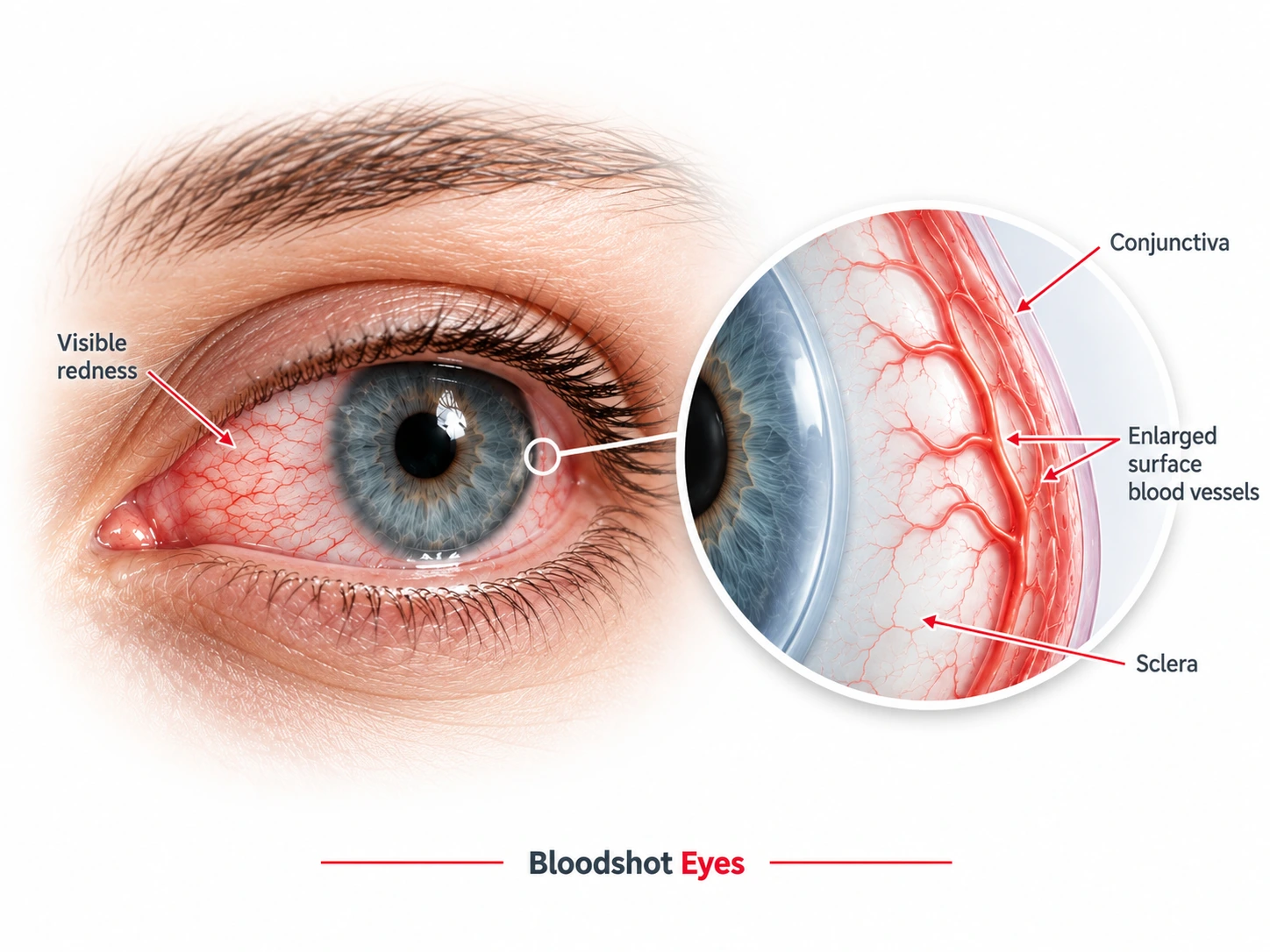
Common triggers include dryness, allergies, irritation, lack of sleep, infection, injury, or contact lens problems, so appearance alone cannot tell you exactly why your eyes are red. Bloodshot eyes symptoms may also include burning, itching, watering, discharge, blurry vision, light sensitivity, or pain. If the redness is persistent, worsening, or accompanied by pain or vision changes, have your eyes evaluated by an eye care professional.
Not sure what may be behind the redness? Learn why your eyes may look red to understand common causes and which symptoms may need professional attention.
What causes bloodshot eyes?
There are many possible bloodshot eyes causes, and redness alone usually cannot tell you exactly what is wrong. Dryness, allergies, infection, irritation, injury, and contact lens problems can all make the surface blood vessels more noticeable, while some less common eye conditions can cause similar redness. What matters most is what triggered the change and whether you also have symptoms such as pain, discharge, light sensitivity, or changes in vision.
Dry eyes and eye strain
Dry eyes can leave the surface of your eyes irritated, making them look red and feel gritty, burning, watery, or temporarily blurry. Dry air and long periods of screen use can make the problem more noticeable because you may blink less often, allowing tears to evaporate more quickly. If dry bloodshot eyes keep coming back while you wear contacts for dry eyes, learning what causes dry eyes can help you identify possible triggers and know when an eye exam may be useful.
Allergies and environmental irritants
Bloodshot eyes from allergies often come with itching, watering, and irritation after exposure to triggers such as pollen, dust, mold, or pet dander. Smoke, fumes, chlorine, wind, and dry air can also irritate the eye surface and lead to red watery eyes or burning without an allergic reaction. Avoiding a known trigger may help mild irritation, but persistent or worsening symptoms should be evaluated rather than assumed to be allergies.
Pink eye and other infections
Conjunctivitis, commonly called pink eye, is inflammation of the clear tissue covering the white of your eye and inner eyelid, and it can result from viruses, bacteria, allergens, or irritants. Viral and bacterial conjunctivitis can spread to other people, while allergic conjunctivitis is not contagious. Bloodshot eyes with discharge, crusting, increasing pain, light sensitivity, or changes in vision deserve professional evaluation because other infections can cause similar symptoms.
If you wear contacts and suspect an infection, remove your lenses and do not put them back in until your eye care professional says it is safe. Learn more about wearing contacts with pink eyes.
Contact lens irritation and overwear
Bloodshot eyes from contacts can develop when lenses are worn too long, including when extended wear contact lenses are worn beyond the prescribed schedule, handled with poor hygiene, exposed to water, or no longer fit or perform as expected. Contact lens wear is also associated with keratitis, or inflammation of the cornea, and microbial keratitis can become a serious eye infection. The CDC lists irritated red eyes, worsening pain, light sensitivity, sudden blurry vision, excessive tearing, and discharge among warning signs that need prompt attention.
If you develop these symptoms, remove your contacts promptly and contact your eye doctor. Do not reinsert the lenses until your eye care professional advises that it is safe.
Eye injuries and foreign objects
A scratch on the cornea, dust or other debris, excessive rubbing, chemical exposure, or another eye injury can cause a sudden bloodshot eye. Minor irritation and a significant injury can initially look similar, so pain, vision changes, marked light sensitivity, or difficulty opening the eye should not be ignored. Chemical exposure or a penetrating eye injury requires immediate medical attention, while other injuries should be evaluated promptly if symptoms are significant or worsening.
A broken blood vessel in the eye
A broken blood vessel in the eye, medically called a subconjunctival hemorrhage, usually looks different from general bloodshot redness. Instead of many visible vessels, you may notice a sharply defined, bright-red patch on the white of the eye where a tiny vessel has ruptured beneath the clear conjunctiva. It is typically painless, does not affect vision, and often clears on its own within days to a few weeks.
If these red patches happen repeatedly, follow an eye injury, or come with pain or vision changes, have your eye checked. Those features are not typical of an uncomplicated subconjunctival hemorrhage.
Less common but more serious causes
Bloodshot eyes can occasionally occur with more serious conditions such as keratitis, uveitis, scleritis, corneal ulcers, or acute angle-closure glaucoma. These conditions cannot be identified from redness alone, but significant eye pain, strong light sensitivity, sudden blurry or reduced vision, severe headache, nausea, or vomiting can signal a need for urgent medical evaluation.
Do not wait for severe symptoms to improve on their own, especially if you wear contact lenses. Prompt evaluation is particularly important when redness appears with pain or a sudden change in vision.
What symptoms can happen with bloodshot eyes?
Bloodshot eyes symptoms can range from mild irritation to pain or changes in vision that may also interfere with wearing vision correcting contacts, depending on what is causing the redness. These symptoms can help an eye care professional judge how urgent the problem may be, but they cannot reliably diagnose the cause by themselves.
- Itching
- Burning or stinging
- Watery eyes
- A dry or gritty feeling
- Eye discharge
- Crusting around the eyelashes
- Swollen eyelids
- Sensitivity to light
- Blurry vision
- Eye pain
- Feeling as though something is in your eye
Waking up with redness and buildup around your lashes too? Learn what causes crusty eyes so you can understand when crusting may come from ordinary buildup, irritation, or an eye condition.
When are bloodshot eyes harmless or concerning?
Bloodshot eyes are often less concerning when the redness is mild, you know what triggered it, your vision is normal, and symptoms improve after the irritant is removed. Redness deserves more attention when it is persistent or comes with pain, significant discharge, light sensitivity, injury, or changes in vision, even when you normally wear the safest contact lenses. A sudden bloodshot eye with severe pain, vision changes, headache, nausea, or vomiting can require urgent medical care.
| Pattern | What You Notice | Next Step |
|---|---|---|
| Mild irritation | Slight redness, mild dryness or burning, normal vision | Remove the trigger and monitor for improvement |
| Allergy pattern | Red itchy eyes, watering, often affecting both eyes | Avoid the allergen and seek advice if symptoms persist |
| Possible infection | Bloodshot eyes with discharge, crusting, or swelling | Contact an eye care professional |
| Contact lens warning signs | Redness with pain, blur, light sensitivity, tearing, or discharge | Remove your lenses and seek prompt eye care |
| Possible emergency | Severe pain, sudden vision change, severe headache, nausea, vomiting, or chemical injury | Seek urgent or emergency medical care |
How does an eye doctor find the cause of bloodshot eyes?
An eye doctor usually starts by asking when the redness began, whether you have pain, discharge or vision changes, whether one or both eyes are affected, and whether you wear contact lenses recommended by doctors or other lenses, recently injured your eye, or use medications or eye drops. The examination depends on your symptoms, so not everyone with persistent bloodshot eyes needs the same tests. A slit lamp, for example, gives your doctor a magnified view of the front of the eye and can help evaluate the cornea and other structures.
Depending on what your doctor suspects, the exam may include:
- Checking how clearly you can see
- Examining the eyelids, conjunctiva, cornea, and surrounding tissues
- Using a slit lamp to look closely at the front of the eye
- Applying fluorescein dye to look for a corneal scratch, ulcer, or other surface problem
- Measuring eye pressure with tonometry when needed
- Looking beneath the eyelids if a foreign object is suspected
Not sure whether recurring redness is enough reason to book an appointment? Review common reasons to see an eye doctor so you know which symptoms are worth having checked.
How are bloodshot eyes treated?
Treatment for bloodshot eyes depends on what is causing the redness. Mild irritation or dry eye may improve with lubricating artificial tears, a clean cool compress, rest, or avoiding triggers such as smoke, wind, or prolonged screen use. Dry eye treatment may also include prescription drops or other therapies when symptoms are more persistent.
Other causes need more specific care:
- Allergy-related redness may improve by avoiding the allergen and using appropriate allergy medication or eye drops recommended by a healthcare professional.
- Viral conjunctivitis often improves without antibiotics, while some cases of bacterial conjunctivitis may require antibiotic eye drops or ointment.
- A foreign object, eye injury, corneal infection, inflammation, or pressure-related eye condition may require treatment from an eye care professional rather than home remedies.
- If contact lenses are contributing to the redness, remove them promptly. Redness with worsening pain, sudden blurry vision, light sensitivity, excessive tearing, or discharge requires a call to your eye doctor, and you should not wear the lenses again until your doctor says it is safe.
The goal of bloodshot eyes treatment is to address the cause, not simply make the eye look whiter. Because treatment can range from simple supportive care to prescription medication or other medical treatment, persistent or worsening redness should be evaluated, especially when it comes with pain or changes in vision.
Thinking about using drops every time your eyes look red or dry? Find out whether eye drops can worsen dry eye symptoms so you understand why the type of drop matters.
How can you get rid of bloodshot eyes?
The right bloodshot eyes treatment depends on what is causing the redness rather than simply making the white of your eye look clearer. Mild irritation may settle after you remove the trigger and give your eyes supportive care, while infections, inflammation, injuries, and other eye conditions can require professional treatment. If you have significant pain, sudden vision changes, marked light sensitivity, or worsening redness, skip home remedies and contact an eye care professional.
What can help mild eye redness
If your eyes are mildly irritated and you have no warning signs, a few simple measures may provide eye redness relief while the trigger settles:
- Rest your eyes if fatigue or eye strain is contributing to the redness.
- Take regular breaks from prolonged screen use.
- Avoid known irritants such as smoke, dust, pollen, or fumes.
- Place a clean, cool compress over your closed eyes.
- Consider lubricating artificial tears if dryness is contributing and the product is appropriate for you.
Artificial tears can lubricate dry eyes, while a cool compress may soothe redness and irritation in some situations. These measures are for mild symptoms and should not be used as a substitute for professional care when infection, injury, or another serious problem is possible.
What should you avoid when your eyes are red?
Some habits can make red irritated eyes worse or delay appropriate treatment. Until you know what is causing the redness, avoid:
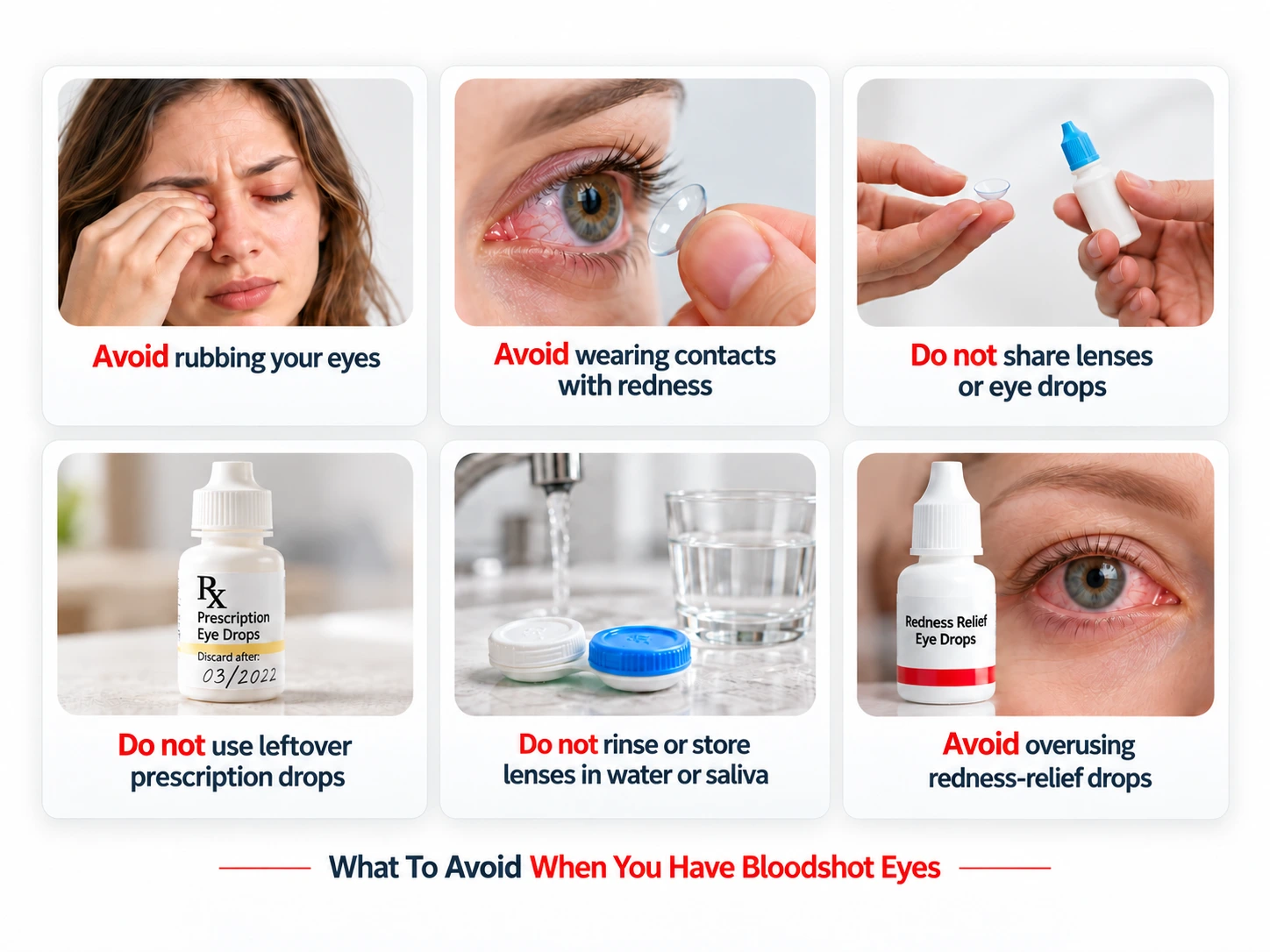
If you wear contacts and develop redness with worsening pain, light sensitivity, sudden blurry vision, excessive tearing, or discharge, remove the lenses promptly and call your eye doctor. Do not put them back in until your eye care professional says it is safe.
When medical treatment may be needed
Medical treatment is based on the underlying cause of the redness. Depending on the diagnosis, an eye care professional may recommend allergy treatment, medication for a specific infection or inflammatory condition, removal of a foreign object, or treatment for another eye problem. Antibiotics are not appropriate for every red eye, since redness may be caused by viruses, allergies, dryness, injury, or other conditions rather than bacteria.
If redness is getting worse instead of better, or you develop pain, significant discharge, light sensitivity, or changes in vision, have your eyes evaluated rather than continuing to try different home treatments. Those symptoms can occur with conditions that need prompt professional care.
What should you do if your contacts make your eyes bloodshot?
If you develop bloodshot eyes from contact lenses, remove the lenses promptly, especially if the redness comes with pain, unusual irritation, sudden blurry vision, discharge, or light sensitivity. These symptoms can occur with keratitis, an inflammation or infection of the cornea that may become serious without prompt care. Switch to glasses and do not put your contacts back in until an eye care professional says it is safe if concerning symptoms are present.
Keep these contact lens safety steps in mind:
- Remove your lenses if your eyes become painful, markedly red, blurry, or unusually sensitive to light.
- Keep contacts away from tap water and saliva, and remove them before swimming or showering.
- Avoid sleeping in your lenses unless your eye care professional has specifically directed you to do so.
- Follow the replacement schedule prescribed for your lenses.
- Discard daily disposable contact lenses after each use rather than cleaning or storing them.
- If you wear reusable contact lenses, rub, rinse, disinfect, and store them with the recommended fresh lens solution.
- Never top off an old solution in your lens case with a fresh solution.
- Keep backup glasses available in case you need to remove your contacts.
- Do not resume contact lens wear after a suspected infection until your eye care professional advises you to.
Proper wear and care can reduce the risk of contact lens-related infections, and the CDC specifically recommends removing lenses and contacting an eye doctor when unusual irritation develops. If blurry vision is part of the problem, learn why contact lenses can look blurry or review more about contact lenses and red eyes.
How long do bloodshot eyes last?
There is no single answer to how long bloodshot eyes last because the timeline depends on what is causing the redness. Mild irritation may improve after you remove the trigger, while allergies, dry eye, injury, inflammation, or eye infections can produce symptoms that last longer. Persistent bloodshot eyes or redness that keeps getting worse should not be judged by a fixed number of days, even if you normally wear contact lenses for all day comfort, especially if you also develop pain, discharge, light sensitivity, or changes in vision. If symptoms are not improving as expected, an eye care professional can determine the cause and whether treatment is needed.
How can you help prevent bloodshot eyes?
You cannot prevent every case of eye redness, but you can reduce common sources of irritation and lower your risk of contact lens-related problems. Good hygiene, regular breaks from screens, avoiding known irritants, and following your prescribed lens care routine can all help keep your eyes more comfortable.
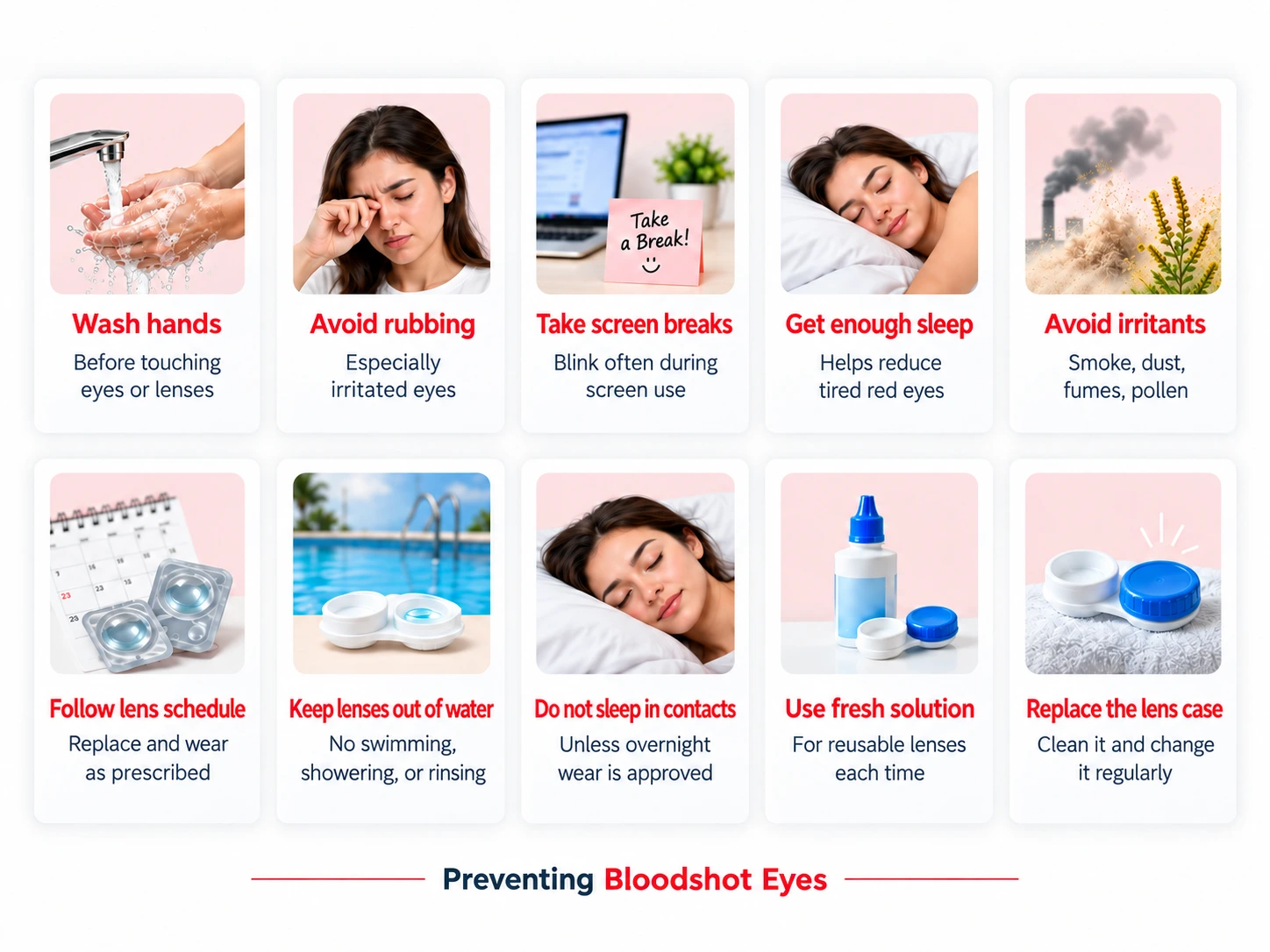
The CDC recommends keeping contact lenses away from water, using fresh solution for reusable lenses, following the prescribed replacement schedule, and removing lenses before sleeping unless directed otherwise by an eye care professional.
Do your eyes tend to turn red after long days in contact lenses? Try ways to make your contacts more comfortable while continuing to follow your prescribed wear, replacement, and cleaning schedule.
When should you see an eye doctor for bloodshot eyes?
Most mild eye redness is not an emergency, but persistent bloodshot eyes, recurring redness, or symptoms that interfere with your vision or comfort deserve an eye exam. Seek faster care when redness appears with pain, light sensitivity, injury, significant discharge, or sudden vision changes.
Schedule an eye exam for:
- Redness that keeps returning
- Redness that persists or gets worse
- Ongoing irritation, burning, or discomfort
- Unexplained eye discharge or crusting
- Daily wear contact lenses or other contacts that repeatedly cause redness or discomfort
- Symptoms that interfere with contact lens wear or everyday activities
- Bloodshot eyes and blurry vision that do not clear promptly
These warning signs can occur with eye conditions that need urgent evaluation rather than home treatment. Depending on your symptoms and what your doctor suspects, the evaluation may include additional testing, including pupil dilation and why optometrists use it to examine structures that cannot be fully assessed from the front of the eye alone.
What to Remember About Bloodshot Eyes
Bloodshot eyes often come from temporary dryness, allergies, irritation, or other common causes, but redness can also occur with infections, injuries, and more serious eye conditions. Pay attention to symptoms that appear with the redness, especially pain, discharge, light sensitivity, or changes in vision. If you wear contacts, remove them when redness develops with concerning symptoms and do not resume wear until your eye care professional says it is safe. Seek prompt medical care if the redness is sudden, severe, worsening, or accompanied by warning signs.
Are your bloodshot eyes resolved and you are ready to return to contact lens wear? Browse our contact lenses to compare prescribed options for your vision needs.
Learn More About Bloodshot Eyes
Get clear answers to common questions about bloodshot eyes, including causes, contact lens-related redness, how long symptoms may last, and when to see an eye doctor.
Why are my eyes bloodshot when I wake up?
Morning redness can result from overnight dryness, allergies, insufficient sleep, environmental conditions, eyelid inflammation, or sleeping in contact lenses. Cleveland Clinic notes that redness related to lack of sleep may improve within a few hours to a day after adequate rest, although redness caused by dry eye or another condition may last longer. If you wake with contacts in and develop pain, blurry vision, discharge, or light sensitivity, remove the lenses and contact your eye doctor.
Can dry eyes cause bloodshot eyes?
Yes. Dry eyes can make the eye surface irritated and cause redness, burning, a scratchy feeling, light sensitivity, or blurry vision. A 2026 systematic review of 119 studies involving more than 15.2 million participants estimated a global dry eye prevalence of 34.6%, although prevalence varied considerably by region and diagnostic method.
Can contact lenses cause bloodshot eyes?
Yes. Contact lenses can contribute to redness through dryness, overwear, poor hygiene, improper fit, deposits, sleeping in lenses, or exposure to water. The CDC estimates that about 45 million people in the U.S. wear contact lenses and warns that improper wear and care can increase the risk of complications such as microbial keratitis.
Why is only one of my eyes bloodshot?
Having one bloodshot eye can happen when irritation, a foreign object, injury, infection, contact lens problems, inflammation, or a broken surface blood vessel affects one eye more than the other. One-sided redness alone does not identify a specific condition, since many different eye problems can look similar. If the redness persists, worsens, or comes with pain, discharge, light sensitivity, or vision changes, have the eye evaluated by an eye care professional.
Can lack of sleep cause bloodshot eyes?
Yes, bloodshot eyes from lack of sleep can occur because insufficient sleep may reduce tear production and contribute to dryness and irritation. Redness related to sleep loss often improves with rest, but ongoing redness should not automatically be blamed on a late night. If your eyes stay red or you develop pain, discharge, light sensitivity, or vision changes, contact an eye care professional.
Are bloodshot eyes contagious?
Bloodshot eyes themselves are not contagious, but some conditions that cause them can spread from person to person. Viral and bacterial conjunctivitis are contagious, while redness caused by allergies or ordinary irritants is not. If an infection is suspected, wash your hands frequently and avoid sharing towels, eye products, or contact lenses with anyone else.
How long do bloodshot eyes usually last?
There is no single timeline because the duration depends on the cause. A simple irritation may improve after the trigger is removed, while viral conjunctivitis commonly takes 1 to 2 weeks to improve and can sometimes last 3 weeks or longer; a subconjunctival hemorrhage may take anywhere from a few days to a few weeks to disappear. Persistent or worsening redness should be evaluated instead of relying on a fixed number of days.
When should you see a doctor for bloodshot eyes?
Schedule an eye exam if redness keeps returning, persists, worsens, or is accompanied by ongoing irritation or unexplained discharge. Seek urgent medical care for sudden vision changes, severe eye pain, strong light sensitivity, halos around lights, significant swelling, a foreign object or chemical exposure, or redness with severe headache, nausea, or vomiting. Contact lens wearers should also seek prompt care when redness occurs with pain, blurry vision, light sensitivity, or discharge.
Can bloodshot eyes be a sign of something serious?
Yes, although many cases come from minor dryness, allergies, or irritation. Bloodshot eyes can also occur with more serious problems such as keratitis, corneal ulcers, uveitis, scleritis, or acute angle-closure glaucoma, especially when redness is accompanied by severe pain, blurry vision, halos, headache, nausea, vomiting, or light sensitivity. Sudden severe symptoms require urgent medical evaluation.
How common are bloodshot eyes?
Bloodshot or red eyes are common, but there is no reliable single prevalence percentage because red eye describes a sign caused by many different conditions rather than one disease. Redness can affect one or both eyes and may result from allergies, dry eye, infections, injuries, irritation, or other eye conditions. Statistics are therefore usually reported for the individual conditions causing redness rather than bloodshot eyes as a whole.
References
Red eye. Mayo Clinic Staff. https://www.mayoclinic.org/symptoms/red-eye/basics/causes/sym-20050748. Date Accessed: October 2, 2026.
Pink eye (Conjunctivitis) Symptoms and causes. Mayo Clinic Staff. https://www.mayoclinic.org/diseases-conditions/pink-eye/symptoms-causes/syc-20376355. Date Accessed: October 2, 2026.
Subconjunctival hemorrhage (broken blood vessel in eye) Symptoms and causes. Mayo Clinic Staff. https://www.mayoclinic.org/diseases-conditions/subconjunctival-hemorrhage/symptoms-causes/syc-20353826. Date Accessed: October 2, 2026.
What Causes Contact Lens-related Eye Infections. Centers for Disease Control and Prevention. https://www.cdc.gov/contact-lenses/causes/index.html. Date Accessed: October 2, 2026.
About Decorative Contact Lenses. Centers for Disease Control and Prevention. https://www.cdc.gov/contact-lenses/about/about-decorative-contact-lenses.html. Date Accessed: October 2, 2026.
Similar Articles
-

The Benefits of Wearing Contacts vs. Glasses While Working Out (pros and cons)
-

Fact vs. Fiction: 14 Contact Lens Myths Debunked
-

Why Is My Vision Blurry When I First Wake Up?
-

Can I take a 20 Minute Nap with Contacts On? How About for 10 minutes, 15, 30, or 60 minutes? 2025 Update
-

What Your Eyes Say about Your Health