You’ve just stepped out of your eye doctor’s office wearing a pair of temporary, disposable sunglasses. Even with them on, you find yourself squinting at your phone, which suddenly looks as though someone is shining a bright flashlight directly into your eyes.
That’s the temporary side effect of pupil dilation. It’s a completely normal reaction to a routine part of your eye exam. While dealing with temporary near-vision blurriness and light sensitivity can feel like a minor hassle, this quick step is one of the most powerful diagnostic tools your eye doctor has to protect your sight.
But with advanced digital cameras and high-tech retinal imaging, is this traditional step still really necessary?
The short answer’s yes, and here’s why.
What Does It Mean to Dilate Your Pupils?
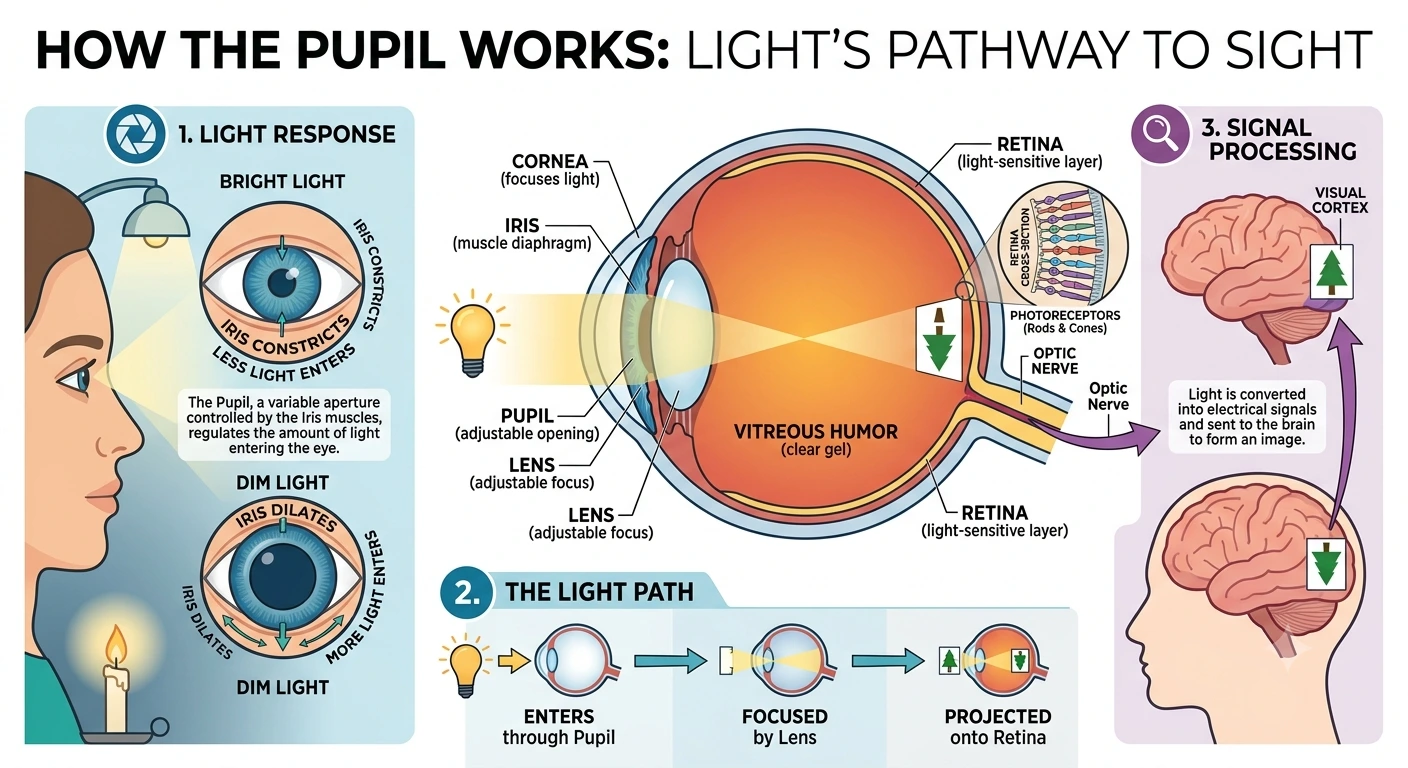
If you look at the mirror and look at your eyes closely, you would see a dark circle at the center of each of your eyes. That’s your pupil.
It’s an opening that controls the amount of light entering your eye. In bright light, the pupil contracts so only a small amount of light enters and projects on your retina. In dim light, the pupil enlarges to maximize the amount of light. This action allows you to see in a wide range of lighting conditions.
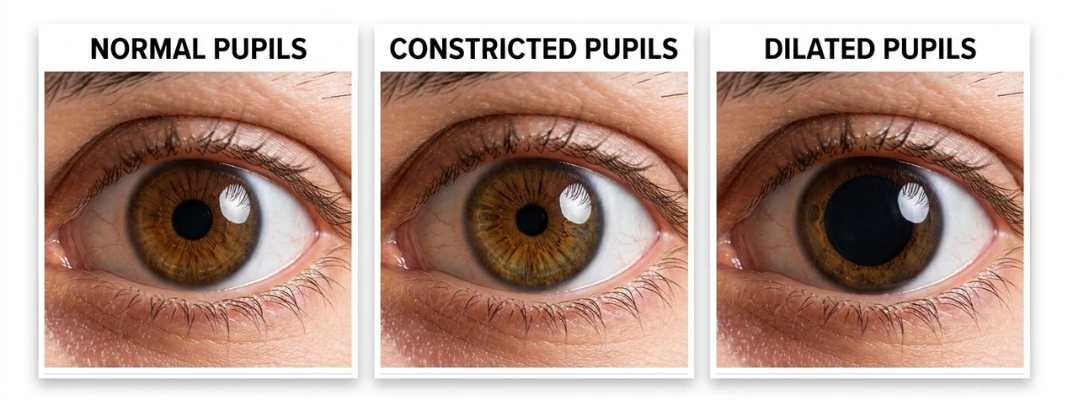
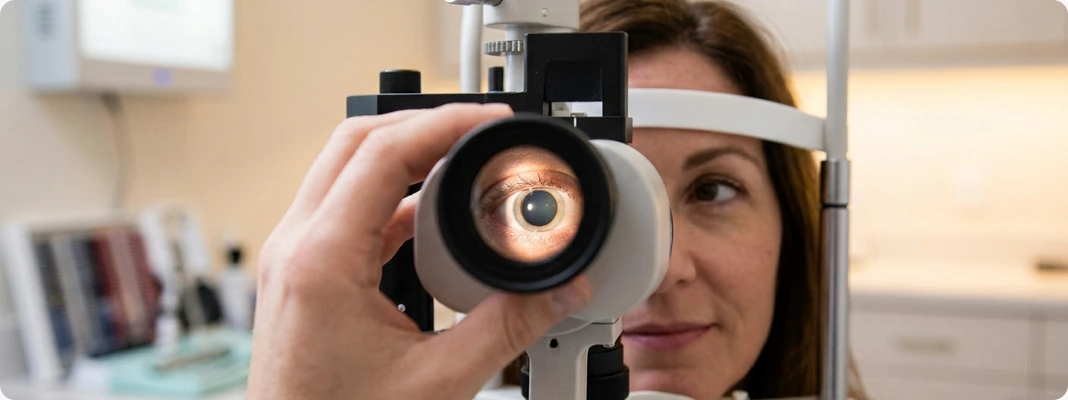
During an eye exam, your eye care professional (ECP) may use mydriatic or cycloplegic drops to temporarily enlarge your pupils. He can then shine light into the eye and get a better view of the inner structures.
Why Do Optometrists Dilate Your Pupils?
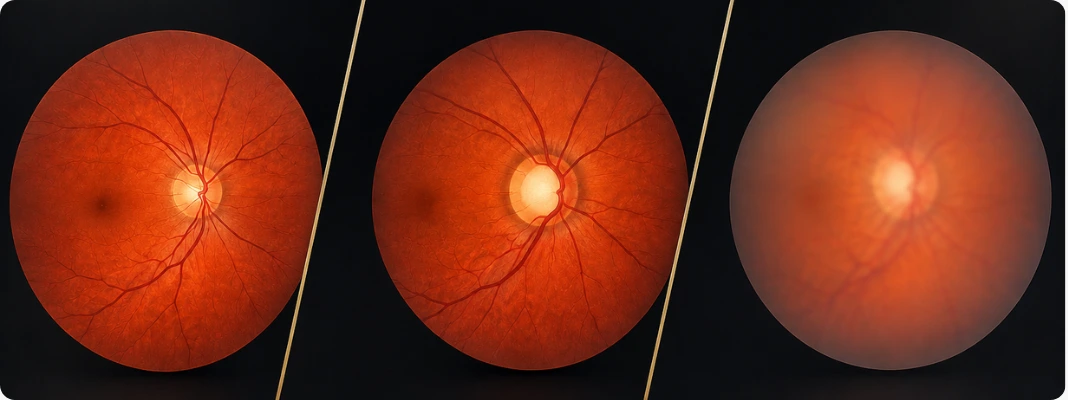
By dilating your pupils, your ECP gets a clear, unobstructed view of the back of your eye. This allows him to detect early signs of eye disease, retinal damage, inflammation, or systemic health issues before they affect your vision.
During a dilated exam, he will thoroughly evaluate several key structures in the eye:
- The Retina: The light-sensitive tissue lining the back of your eye that captures visual images.
- The Macula: The highly sensitive center of the retina that enables sharp, detailed central vision.
- Optic Nerve: The pathway that transmits visual information from your retina to your brain to process the image you see
- Retinal Blood Vessels: An intricate network of vessels that can reveal early signs of diabetes, high blood pressure, and cardiovascular disease.
- Peripheral Retina: The outer edges of the retina, which are checked for silent tears, holes, or thinning that could lead to detachment.
A standard eye chart only measures how well you see. It cannot detect what is happening inside your eyes. You can have perfect 20/20 vision and still have early-stage eye disease without knowing it.
This is why comprehensive eye care extends far beyond simply updating your glasses or contact lens prescription. Dilation, as part of a comprehensive eye care exam, allows your doctor to look beneath the surface and evaluate your true ocular health.
What Eye Conditions Can Pupil Dilation Help Detect?
A dilated eye exam helps doctors find signs of several eye and health conditions, including:
- Diabetic retinopathy
- Glaucoma
- Age-related macular degeneration
- Retinal tears or retinal detachment
- High blood pressure changes in the eye
- Inflammation inside the eye
- Optic nerve problems
- Tumors or unusual growths
Do ECPs Dilate Your Eyes at Every Exam?
Not always. Some people get dilated at almost every full eye exam. Others may get dilated less regularly, especially if they are younger, healthy, have no symptoms, and have no major risk factors.
Your ECP may be more likely to recommend dilation if you have:
- diabetes
- high blood pressure
- a family history of glaucoma or retinal disease
- high nearsightedness
- experienced floaters, flashes, or sudden vision changes
- an abnormal result during another part of the exam
The risk of many eye diseases increases as you get older. If you are over 60, we recommend you undergo regular dilated eye exams. If you have an underlying condition such as diabetes, high blood pressure, or glaucoma, you may need a pupil dilation test sooner or more regularly.
Do Eye Doctors Still Dilate Eyes if They Have Retinal Cameras?
Yes, they still do. While retinal imaging has transformed the modern eye exam, many offices still use traditional dilation.
Many clinics use specialized high-resolution cameras to capture detailed photographs of the back of your eye. Some use ultra-widefield imaging, which provides a much broader, panoramic view of the retina than older camera systems.
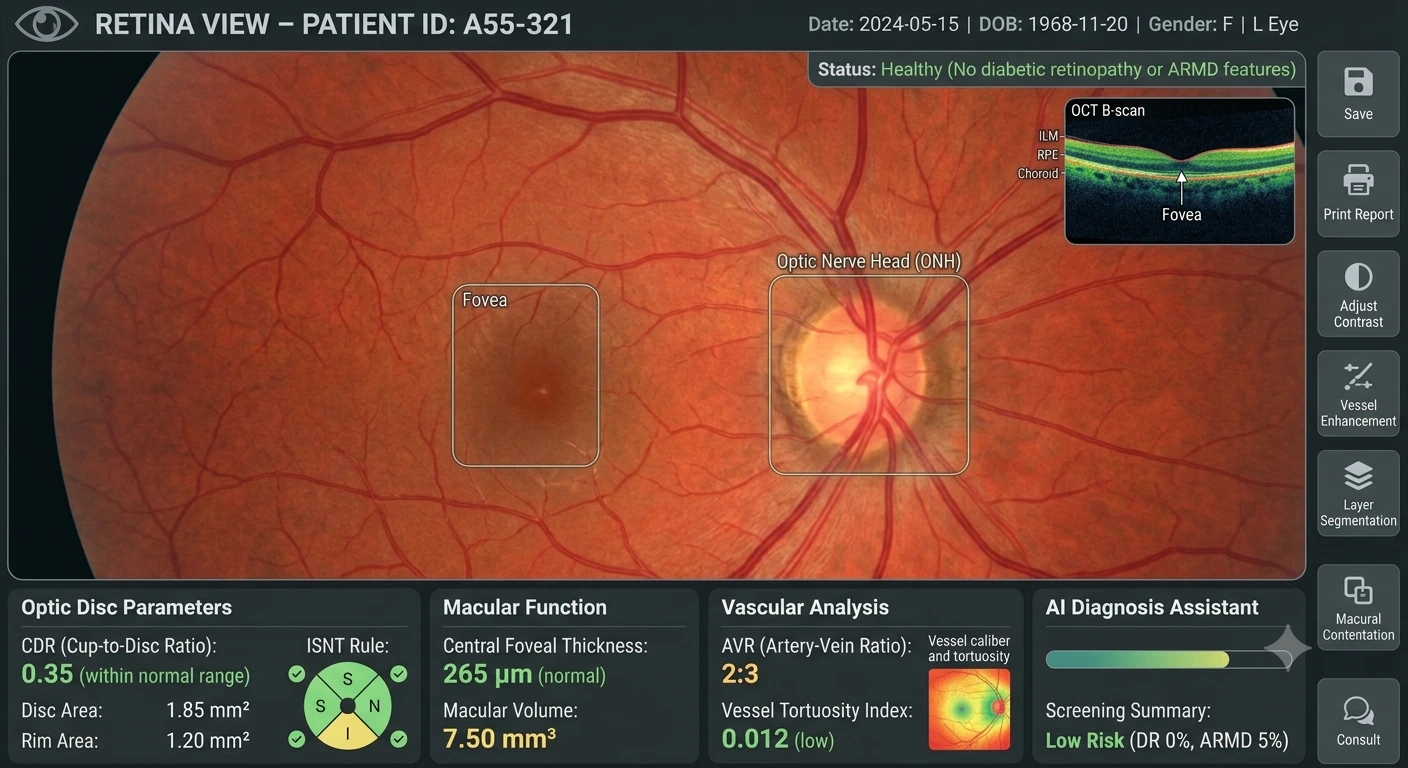
These digital images are incredibly useful. They create a visual record that your doctor can compare year after year to track even the smallest changes in your eye health. These digital images allow you to see exactly what your doctor sees as he explains your eye health to you, making the exam feel much more collaborative and transparent.
There’s a limitation, though. Retinal imaging only captures a flat, static image of the retina.
Pupil dilation, on the other hand, allows your ECP to perform a real-time, no filter, three-dimensional examination of the entire eye structure.
Depending on your personal risk factors, symptoms, and the specific details your doctor needs to see, your ECP may recommend both for the most complete picture of your health.
Does Pupil Dilation Hurt?
No, pupil dilation itself is completely painless.
When the ECP first applies mydriatics or cycloplegics on your eye, you may feel a slight, brief sting. Your eyes may water. These sensations pass quickly. Once the medication takes effect, the changes you experience will be purely visual.
While your eyes are dilated, you can expect:
- Light sensitivity: Outdoor light and bright indoor rooms will seem much brighter than usual.
- Blurry near vision: You will find it difficult to read small text, focus on your phone, or see close-up objects clearly.
- Temporary driving difficulties: Because of the glare and blurriness, driving can be challenging, especially on a sunny day.
These effects are temporary and typically fade within a few hours. The duration can vary; individuals with lighter-colored eyes or those who require stronger drops may find that the effects last a bit longer.
Can You Drive After Getting Your Pupils Dilated?
Whether you can safely drive after your eyes are dilated depends entirely on how your eyes react to the drops. Because the effects vary from person to person, the safest approach is to avoid driving immediately after your exam.

A little planning can make the experience much smoother and safer:
- Bring a pair of sunglasses: Because your eyes will be highly sensitive to light, having sunglasses on hand will make your trip home much more comfortable. (Many eye clinics can also provide temporary, wrap-around paper sunglasses if you forget yours).
- Mind your schedule: Avoid planning your exam right before a long commute, intensive computer work, or any task that requires sharp, close-up focus.
- Have a backup plan: If this is your first time being dilated, or if you know your eyes are highly sensitive, arrange for a friend or family member to drive you home.
If your vision is too blurry or the outdoor glare is too intense when you walk out of the clinic, do not get behind the wheel. Wait in the reception area until your vision clears. Ask your ECP or the clinic staff for advice if you’re unsure whether it is safe for you to leave.
How Long Does the Dilation Last?
A comprehensive eye exam typically takes about 45 to 60 minutes. If your exam includes pupil dilation, you should plan for a slightly longer visit.
Once the dilating drops are applied, it takes about 15 to 30 minutes for your pupils to open fully. After your pupils are ready, the doctor’s physical examination of the retina and internal structures takes about 5 to 10 minutes. In total, a dilated exam will add about 20 to 30 minutes to your overall appointment time.
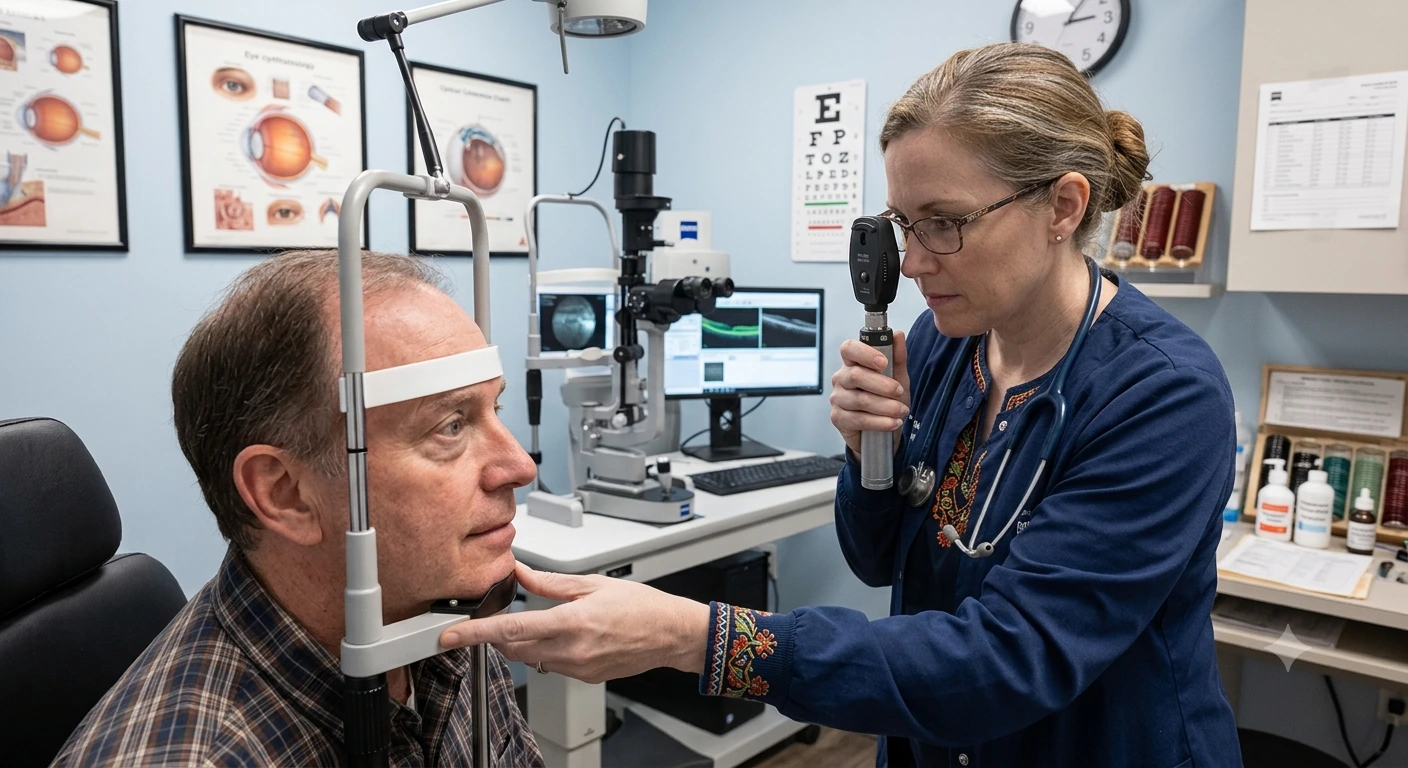
Once you leave the office, the lingering effects of the drops generally follow these timelines:
- For most adults: The visual side effects typically last for a few hours. While some people feel completely back to normal relatively quickly, others may experience mild blurriness or light sensitivity for much of the day.
- For children: Children’s eyes often remain dilated for a bit longer, sometimes up to 24 hours. That’s because pediatric eye doctors frequently use stronger drops to temporarily relax children’s highly active focusing muscles for an accurate prescription reading.
- For lighter eye colors: If you have hazel, green, or blue eyes, the pigment in your iris absorbs less of the medication. You may feel the effects of the drops for a slightly longer duration than those with dark brown eyes.
What Does Dilation Have to Do With Contact Lenses?
Because contact lenses are medical devices that rest directly on the surface of your eye, your doctor needs to verify that your eyes are completely healthy before he can give the go signal for you to wear them. The contact lens fitting and the dilated exam work together by looking at your eyes from two different angles:
- Contact Lens Fitting: This focuses on the outside. Your doctor checks how a lens physically sits on your cornea, how it moves when you blink, and whether your tear film is healthy enough to keep the lenses comfortable.
- The Dilated Exam: This focuses on the deep internal structures. Your doctor checks the health of your retina and blood vessels to ensure there are no underlying, silent conditions that could worsen through contact lens wear.
They answer two sides of the same important question. The fitting ensures that the lenses are a perfect match for the physical shape of your eyes. Dilation ensures your eyes have a healthy foundation to wear them safely.
Can You Wear Contacts After Dilation?
Yes, you technically can wear your contact lenses after a dilated eye exam, but most ECPs highly recommend switching to your glasses for the rest of the day.
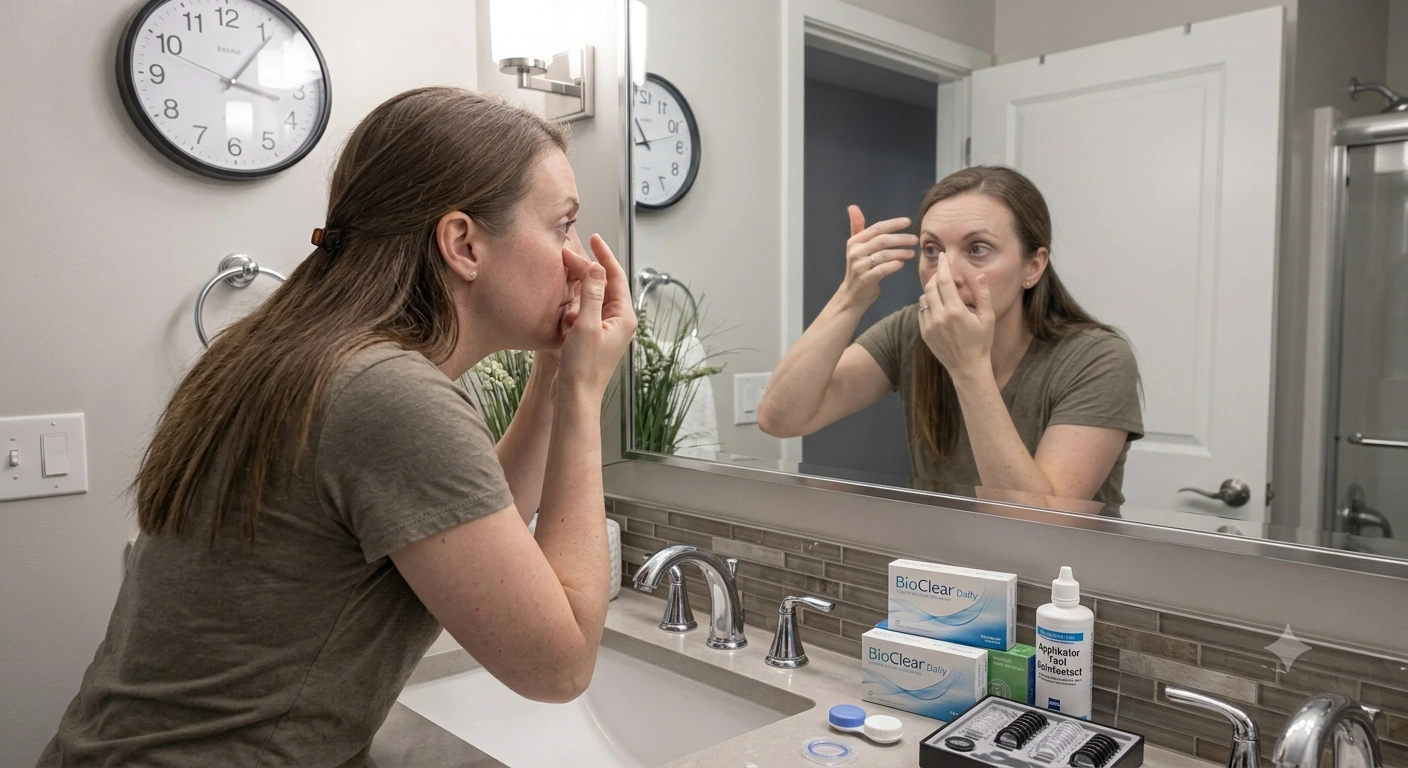
- During the exam: You will be asked to remove your contact lenses before the dilating drops are applied. Soft contact lenses can absorb the medication, which can trap the chemicals against your eye or even temporarily stain the lens.
- After the exam: Once your appointment is over, putting your contacts back in can be frustrating. Because your pupils are forced wide open, you will still experience blurry near vision and high light sensitivity, things your contact lenses cannot correct. Wearing your glasses instead gives your eyes a chance to rest.
If you are scheduled for a contact lens fitting and a dilated exam on the same day, always remember to bring your lens case, your preferred cleaning solution, and your backup pair of glasses with you to the clinic.
Disclaimer: This content is for general informational purposes only and is not a substitute for professional advice, diagnosis, or treatment.
References
Get a Dilated Eye Exam. National Eye Institute. https://www.nei.nih.gov/eye-health-information/healthy-vision/finding-eye-doctor/get-dilated-eye-exam. Published Date (November-26-2025). Date Accessed, July 16, 2026.
Eye Dilation: Necessary With Every Eye Exam? Mayo Clinic Staff/Mayo Clinic. https://www.mayoclinic.org/healthy-lifestyle/adult-health/expert-answers/eye-dilation/faq-20057882. Published Date (January-25-2025). Date Accessed, July 16, 2026.
What Are Dilating Eye Drops? Kierstan Boyd/American Academy of Ophthalmology. https://www.aao.org/eye-health/drugs/dilating-eyedrops. Published Date (December-05-2025). Date Accessed, July 16, 2026.
Comprehensive Eye Exams. American Optometric Association. https://www.aoa.org/healthy-eyes/caring-for-your-eyes/eye-exams. Published Date (No Published Date Listed). Date Accessed, July 16, 2026.
Retinal Imaging. Cleveland Clinic. https://my.clevelandclinic.org/health/diagnostics/25046-retinal-imaging. Published Date (June-05-2023). Date Accessed, July 16, 2026.