About 45 million people in the U.S. wear contact lenses, so those tiny blister packs are a common travel essential. You remembered your boarding pass, your charger, and maybe even snacks, but now you are staring at your contact lenses wondering where the Transportation Security Administration (TSA) draws the line.
Flying with contacts is allowed, but packing them well can save you from dry eyes, security-line confusion, and that very specific panic of needing your glasses at 30,000 feet. Here’s what to know before your lenses, solution, and backup pair go in the bag.
Can you bring contacts on a plane?
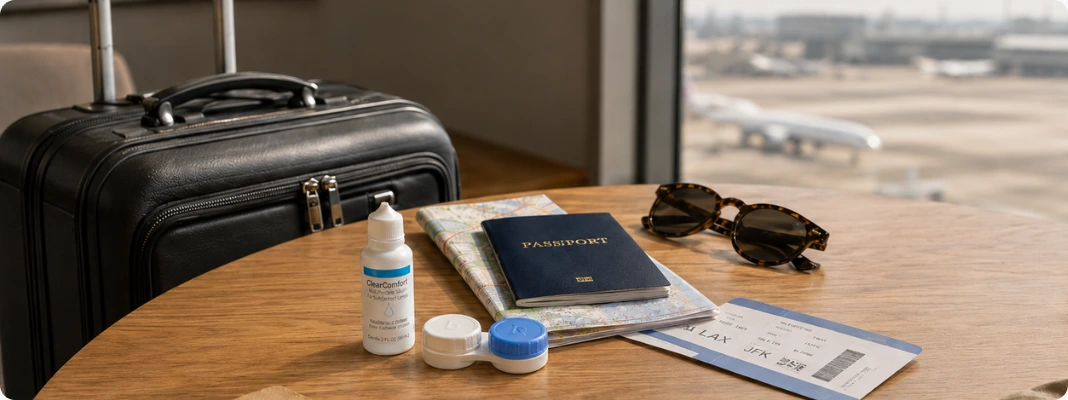
Yes, you can bring contacts on a plane in both carry-on and checked bags, and TSA allows contact lenses on a plane through security. Contact lens solution on plane trips is handled differently because it is a liquid, and TSA recommends placing solution bottles over 3.4 ounces in checked baggage. For comfort and contact lens safety, keep your lenses, solution, case, eye drops, prescription details, and backup glasses in your carry-on whenever possible. That way, flying with contacts is less stressful if your eyes feel dry, your flight is delayed, or your checked bag takes its own little vacation.
Do contact lenses count as liquids when flying?
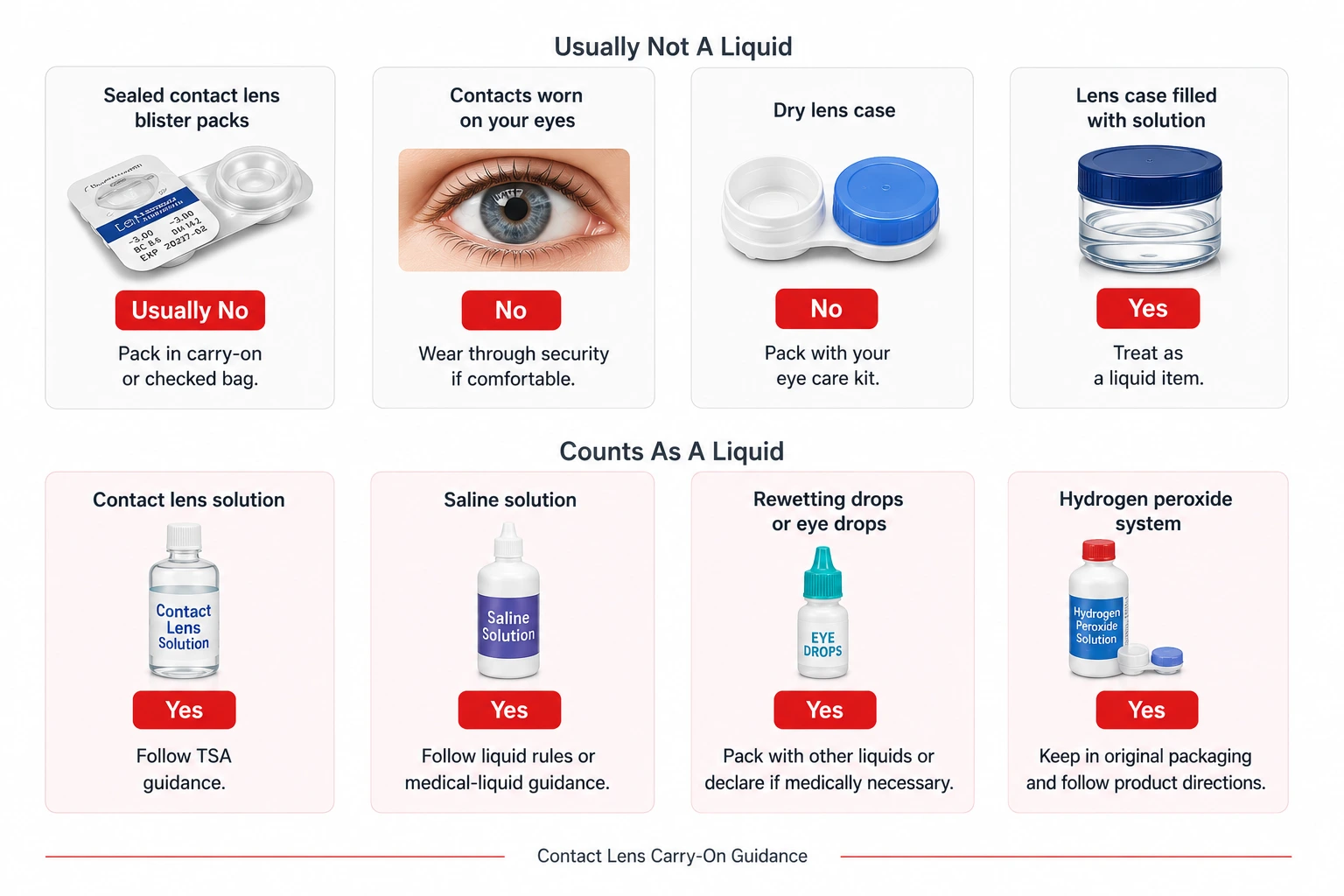
Contact lenses themselves, including sealed single use contact lenses, usually do not count as liquids when flying, even when they are sealed in small blister packs. The items around them are what need more attention, including contact lens solution, saline, eye drops, hydrogen peroxide systems, and any contact lens case filled with solution. TSA lists contact lenses as allowed in both carry-on and checked bags.
Note: Airport screening can vary, especially internationally. Keep liquid items easy to remove from your bag and check the rules for every country you travel through.
Packing blister packs, solution, and backup lenses for a trip? Check contact lens packaging labels and expiration dates so you know what is still safe to bring and wear.
Can you bring a contact lens solution through TSA?
Yes, you can bring contact lens solution on plane trips, but TSA treats it as a liquid. A travel-size contact lens solution bottle is usually the simplest carry-on option because standard carry-on liquids are commonly limited to 3.4 ounces or less.
TSA also allows larger amounts of medically necessary liquids, gels, and aerosols in reasonable quantities for your trip, but you must declare them at the checkpoint for inspection. Some contact lens solutions may alarm during screening, and TSA recommends placing contact lens solution bottles over 3.4 ounces in checked baggage when possible.
To make contact lens solution airport security easier, keep the bottle sealed, clearly identifiable, and easy to pull out of your bag. Do not pour solution into an unsterile travel bottle unless the manufacturer says it is safe, because that can compromise cleanliness.
For an easier checkpoint:
- Pack a travel-size bottle in your carry-on.
- Declare larger medically necessary liquids at security.
- Keep the solution sealed in a zip-top bag to reduce leaks.
- Put bottles over 3.4 ounces in checked baggage when possible.
- Keep hydrogen peroxide systems in their original packaging.
- Do not transfer solution into an unsterile travel bottle.
Not sure whether saline, solution, or drops belong in your travel bag? Clarify the difference between saline solution and contact solution so you do not rely on the wrong product mid-trip.
Should contacts go in your carry-on or checked bag?
Contacts are allowed in both carry-on and checked luggage, but your essential supplies should go in your carry-on. Checked bags can get delayed, lost, or hard to access, and airplane dry eyes can make you want to remove your lenses mid-flight. Keeping your lenses, drops, case, and glasses nearby gives you options instead of making your eyes wait until baggage claim.
This is especially helpful if you wear reusable lenses, have a long flight, or may need to remove your contacts before sleeping. Before a trip, it is also a good idea to confirm you have enough lenses or review how to order contacts online if you need replacements before you leave.
Pack these in your carry-on:
- Enough lenses for the travel day and possible delays
- Travel-size contact lens solution if you wear reusable lenses
- A clean contact lens case
- Rewetting drops approved for contact lens use
- Backup glasses
- A copy or photo of your contact lens prescription
- Hand sanitizer for travel moments, plus handwashing whenever possible
Worried about being stuck without enough solution during a delay or long connection? Learn how long contact lenses can last without solution so you know when not to risk wearing them.
How should you pack daily and reusable contact lenses for a flight?
How you pack contacts for a flight depends on whether you wear daily contacts, reusable lenses, specialty lenses, or an extended-wear option. The goal is simple: keep your lenses clean, easy to reach, and backed up in case of delays, dryness, or a lost bag.
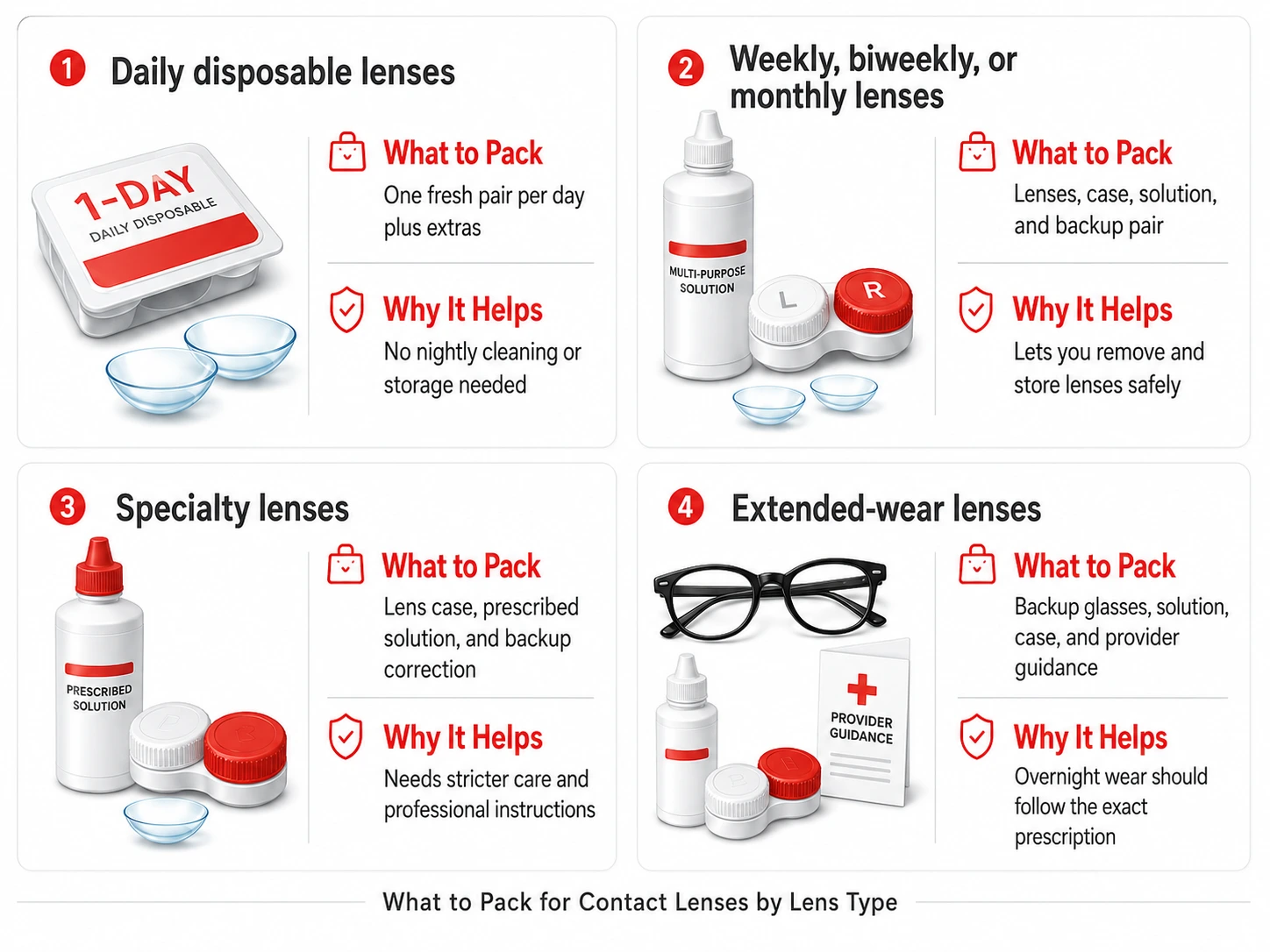
Note: Daily disposable lenses can simplify travel, but they are not automatically right for every prescription or eye. Ask your eye care professional before switching lens types for a trip.
Can you wear contact lenses during a flight?
Yes, wearing contacts on a plane may be fine for some short flights if your eyes feel comfortable and you stay within your normal wearing schedule. The catch is cabin air can be drying, and screen time or reading may make you blink less, which can leave lenses feeling dry, gritty, or less stable. The American Academy of Ophthalmology notes that eyes dry out on airplanes and advises taking contacts out before napping.
For longer flights, glasses may be the easier choice, especially if you plan to sleep, already deal with dryness, have allergies, or notice irritation. If you do wear contacts, keep your contact lens case, compatible drops, and backup glasses within reach so you can remove your lenses if they stop feeling comfortable.
Follow your usual wear time and replacement schedule rather than treating travel days as an exception. Do not sleep in daily-wear contacts, and switch to glasses if your lenses feel dry, red, painful, or blurry.
Accidentally slept in your lenses during a flight or layover? Follow what to do if you fall asleep in your contact lenses so you can reduce irritation and know when to call your eye doctor.
How can you prevent dry contacts on a plane?
You cannot control cabin air, but you can make dry eyes from flying with contacts less likely to ruin the trip. These tips can support comfort without promising that every wearer can keep lenses in through a long flight.
- Use only contact lens-compatible rewetting drops.
- Blink fully during screen time or reading.
- Drink water during travel.
- Avoid air vents blowing directly at your face.
- Remove lenses before sleeping.
- Switch to glasses when eyes feel dry, gritty, red, or blurry.
- Ask an eye care professional about dry-eye support before long travel.
For safe eye drops for flying with contacts, check that the drops are labeled for use with contact lenses or ask your eye care professional before the trip. If discomfort continues after removing your lenses, or if you notice pain, redness, discharge, light sensitivity, or blurry vision, stop wearing the lenses and get professional guidance.
What contact lens safety habits matter while traveling?
Smart contact lens travel is less about packing more and more about keeping your lenses clean, away from water, and easy to replace if something goes wrong. Use these travel tips for contact lens wearers to protect comfort and reduce the risk of eye infections while you are away:
- Wash and dry your hands before touching lenses.
- Use a fresh contact lens solution every time.
- Do not top off old solutions.
- Do not rinse or store contacts in water.
- Remove lenses before sleeping, showering, swimming, or using hot tubs.
- Replace your lens case as recommended.
- Follow the replacement schedule for the exact lens.
- Bring backup glasses and extra lenses.
- Contact an eye care professional if discomfort, redness, pain, discharge, light sensitivity, or blurry vision develops.
The CDC recommends removing lenses before sleeping, showering, or swimming, using fresh solution instead of water, avoiding the mix of old and new solution, and packing backup supplies when traveling. If you are stuck without solution, do not use water, saliva, or improvised storage.
Planning beach days, snorkeling, or pool time after you land? Review diving and snorkeling with contact lenses so your vacation plans do not put your eyes at unnecessary risk.
What should you pack in a contact lens travel kit?
A good contact lens travel kit should cover your flight, delays, dry cabin air, reusable lens care, and the moment your eyes decide they want a break. Keep the essentials in your carry-on so you can reach them before landing, not after baggage claim.
Pack these items:
- Contact lenses for each day of the trip
- Extra pair or extra daily disposable lenses
- Backup glasses
- Contact lens case
- Travel-size contact lens solution
- Contact lens-compatible rewetting drops
- Prescription copy or photo
- Clean zip-top bag for leak protection
- Sunglasses for destination use
- Hand soap access where possible or backup hand sanitizer for travel moments
- Any prescription eye drops in original packaging
What should you know about international flights and airport security?
TSA contact lens rules apply to U.S. airport screening, but international airports may follow different liquid policies for solution, saline, eye drops, and hydrogen peroxide systems. Before you fly, check the rules for your departure airport, connection airport, return airport, and airline route so your contact lenses in hand luggage do not become a security-line surprise. TSA allows contact lenses in carry-on and checked bags, but contact lens solution is treated as a liquid and may need inspection if carried in larger medically necessary amounts.
For international trips, do not assume your preferred solution, lens type, or prescription drops will be easy to find at your destination. Keep liquids in original packaging when possible, bring extra lenses, and carry a prescription copy or photo in case you need help replacing lenses while away.
Before an international flight:
- Check rules for each airport and airline route.
- Keep liquids in original packaging when possible.
- Carry a copy of your prescription.
- Bring extra lenses in case replacements are hard to find.
- Do not assume your preferred solution is available at your destination.
- Pack medically necessary drops separately and declare them when required.
You can bring contacts on a plane, and they are allowed in both carry-on and checked bags. The smarter move is to keep lenses, solution, drops, a case, prescription details, and backup glasses in your carry-on so you are covered during delays, dry cabin air, or lost luggage. Contact lens solution is a liquid, so use a travel-size bottle when possible and declare larger medically necessary amounts if needed. Remove contacts before sleeping and switch to glasses if your eyes become dry, red, painful, or blurry.
Could daily disposables or a fresh replacement schedule make travel days easier for your eyes? Browse our contact lenses at Lens.com to compare prescribed options for daily, biweekly, monthly, and specialty lens needs.
Disclaimer: This content is for general informational purposes only and is not a substitute for professional advice, diagnosis, or treatment.
References
Contact Lenses. Transportation Security Administration. https://www.tsa.gov/travel/security-screening/whatcanibring/items/contact-lenses. Date Accessed: July 17, 2026.
Contact Lens Solution. Transportation Security Administration. https://www.tsa.gov/travel/security-screening/whatcanibring/items/contact-lens-solution. Date Accessed: July 17, 2026.
Preventing Eye Infections When Wearing Contacts. Centers for Disease Control and Prevention. https://www.cdc.gov/contact-lenses/prevention/index.html. Date Accessed: July 17, 2026.
Eye Care Tips for Travelers. American Academy of Ophthalmology / Anne Sumers MD. https://www.aao.org/eye-health/tips-prevention/travel-tips-your-eyes-only. Date Accessed: July 17, 2026.
Corneal Infections Associated with Sleeping in Contact Lenses. Centers for Disease Control and Prevention / Jennifer R. Cope, MD et al. https://www.cdc.gov/mmwr/volumes/67/wr/mm6732a2.htm. Date Accessed: July 17, 2026.