

Table of Contents
If you are experiencing blurry vision, glare, eye pain, or contact lenses that never seem to fit properly, you already know how frustrating corneal surface problems can be. Corneal dystrophy is not a single condition, but rather a group of genetic corneal diseases that can alter how light passes through your cornea, which is why some people experience clouded vision, irritation, a foreign body sensation, light sensitivity, or recurring pain, while others may have few symptoms early on.
Can You Wear Contacts With Corneal Dystrophy?
Yes, you may be able to wear contact lenses if you have corneal dystrophy, but not everyone will do well in the same type of lens. Some people do well with specialty fits that improve vision and comfort, while others need lenses mainly for pain relief or epithelial protection rather than routine vision correction. Therapeutic contact lens use in corneal dystrophy is often discussed in terms of three goals: pain relief, better visual performance, and protection of the corneal surface.
That said, “can you wear contacts” is not really a yes-or-no question. It is a “which lens, for which dystrophy, at which stage” question. Corneal dystrophies can affect different corneal layers and can lead to haze, recurrent erosions, edema, irregular astigmatism, or changing vision over time, so the right answer depends on what your cornea is actually doing, not just the diagnosis name on paper.
What Is Corneal Dystrophy?
Corneal dystrophy is not one single disease. It is an umbrella term for more than 20 genetic corneal diseases that affect the clear front surface of your eye. You are born with these conditions, they are usually lifelong, and many of them can gradually change how light passes through the cornea.
Your cornea needs to stay clear, smooth, and properly shaped for sharp vision. Corneal dystrophies can change that by causing tissue buildup, surface irregularity, haze, swelling, or damage in different corneal layers. Depending on the type, you may notice corneal dystrophy vision correction problems such as blur or glare, comfort problems such as irritation or pain, or both at the same time.
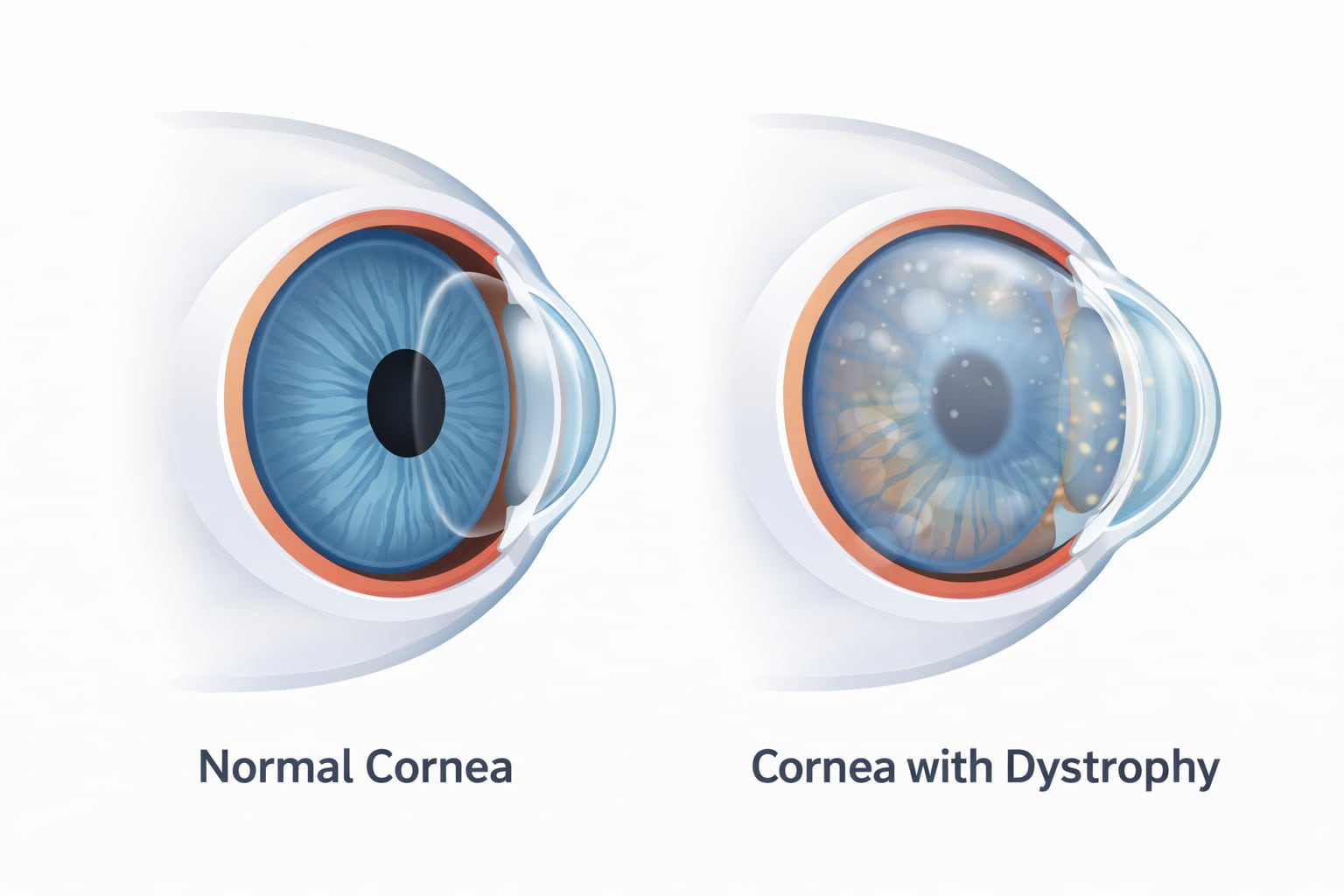
This is one reason the best corneal dystrophy contact lenses vary so much from person to person. A lens choice that makes sense for recurrent erosions is not always the same one that makes sense for endothelial swelling or an irregular corneal surface.
Some people go years without knowing they have corneal dystrophy because symptoms can be mild or absent at first. While others never develop symptoms, while others notice that symptoms in both eyes gradually get worse over time. That is why regular follow-up matters even if your day-to-day vision still seems “good enough.”
Symptoms of Corneal Dystrophy That Matter for Contact Lens Choice
Blurred or Cloudy Vision
If your main issue is blurred or cloudy vision, that usually means the cornea is no longer letting light pass through as cleanly as it should. Blurred vision, visual acuity loss, and corneal haze are among the most common symptoms. For you, that matters because the best contacts for corneal dystrophy often depend on whether the problem is mostly optical distortion, surface irregularity, or swelling.
Are your glasses clear but your contacts still look hazy or distorted? Learn why contact lenses can look blurry so you can tell whether it is fit, surface changes, or dryness.
Recurrent Erosions, Pain, or Foreign Body Sensation
Some dystrophies are less about blur and more about pain or surface breakdown. You may feel like something is stuck in your eye, wake up with sharp pain, or deal with repeated episodes of surface irritation. Foreign body sensation, eye pain, and eye irritation are listed as common symptoms, and the contact lens literature specifically discusses therapeutic contact lens and bandage contact lens use for painful erosions and epithelial protection in selected corneal dystrophy cases.
This is why symptom pattern matters so much. If your biggest problem is recurrent erosion or pain, the goal may be corneal protection and healing support, not just sharper vision. In that situation, the best lens conversation is very different from a simple glasses-versus-contacts decision.
Morning Blur, Glare, Halos, and Dryness
If you wake up with foggy vision, glare, or halos that improve later in the day, that can point to endothelial problems such as Fuchs corneal dystrophy contacts discussions often center on. Fuchs’ dystrophy can cause corneal swelling and blurred vision, and the patient education pages in your source file repeatedly describe morning blur, glare, halos, dryness, and fluctuating vision as symptoms that can affect lens choice.
Dryness matters too. Watery eyes, irritation, and a gritty or filmy feeling may sound minor, but they can change whether you do better in standard soft lenses, hard contact lenses, rigid gas permeable contact lenses, or scleral contact lenses with a fluid reservoir. That is why choosing the best specialty contacts for irregular cornea starts with your actual symptom pattern, not just the diagnosis label.
Seeing halos or extra glare around lights and not sure what it points to? Identify why you may see halos around lights so you know what to bring up during your exam.
Types of Corneal Dystrophy That Can Change Your Lens Options
Epithelial Dystrophies (EBMD or Recurrent Erosion Patterns)
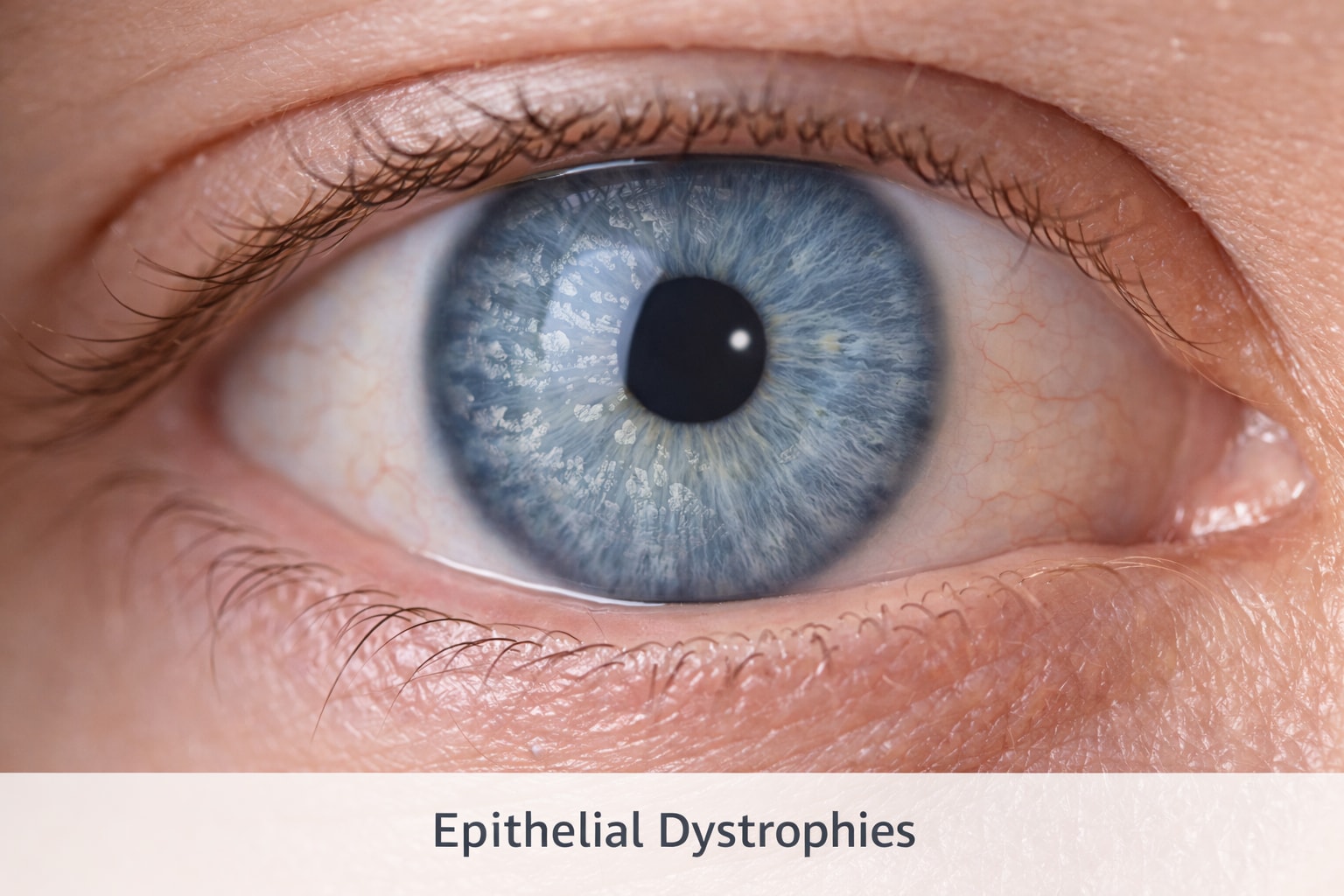
Epithelial problems often involve the corneal surface itself, so pain, recurrent erosions, and unstable vision may be a bigger issue than deep structural distortion. Epithelial basement membrane dystrophy and epithelial recurrent erosion dystrophies are listed in this group, and the contact lens literature notes that surface-based dystrophies may call for therapeutic protection or careful lens selection based on symptoms.
Stromal Dystrophies ( Lattice, Granular, and Macular Dystrophy )
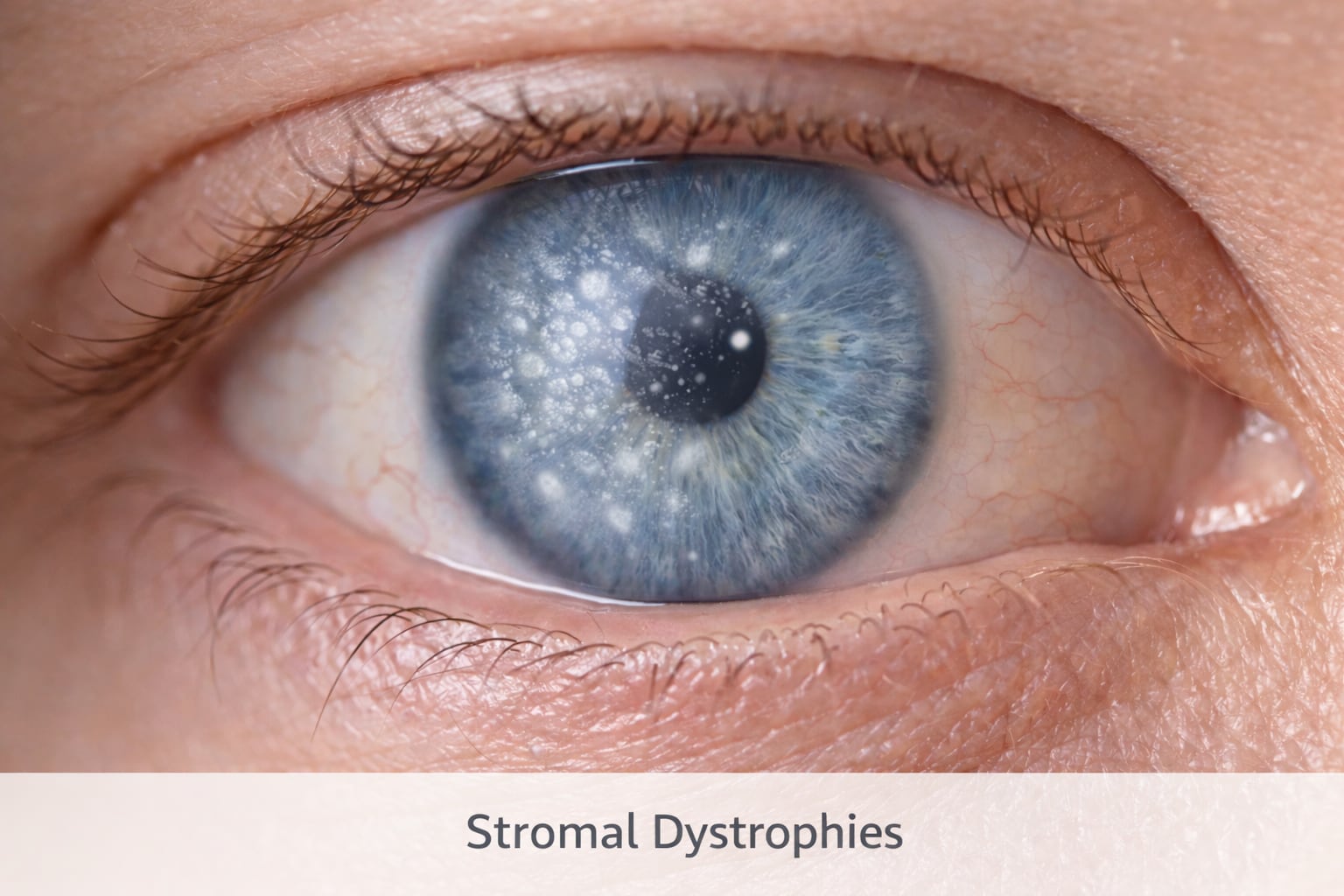
Stromal dystrophies often create more noticeable irregularity, haze, or distorted optics. Lattice, granular, and macular-type diseases in the stromal or epithelial-stromal categories, and rigid gas permeable lenses can provide the greatest visual benefit when irregular corneal astigmatism is the main issue and the epithelium can tolerate them.
Endothelial Dystrophies ( Fuchs and PPCD )
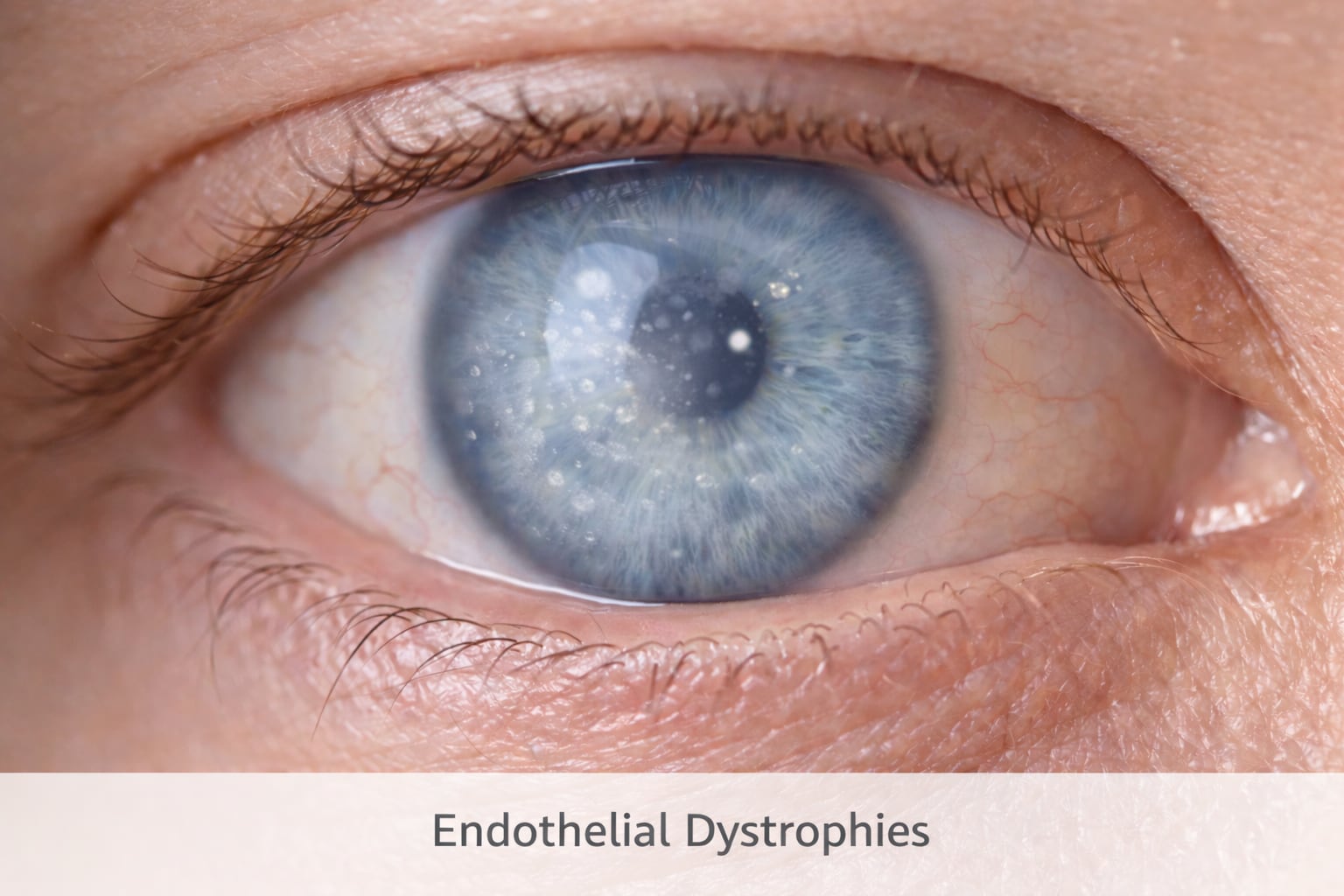
Endothelial dystrophies behave differently because swelling and fluid imbalance can become central to the problem. Fuchs and posterior polymorphous dystrophy are listed in this category, and older contact lens literature notes that high-water hydrogel lenses have been used in selected endothelial dystrophy or bullous keratopathy cases for symptom relief. At the same time, some clinical sources caution that people with Fuchs and corneal swelling may not be good scleral candidates in every stage, which is why “best lens” can look very different here than it does in EBMD.
What Contact Lenses Help Specific Corneal Dystrophies?
| Type | Symptoms | Lens Types | Caution Notes |
|---|---|---|---|
| Fuchs Endothelial Dystrophy | Morning blur, glare, halos, swelling, fluctuating vision | High-water hydrogel lenses in selected cases, therapeutic soft lenses, sometimes specialty lenses | If corneal swelling is significant, some lens options may not be appropriate right away |
| EBMD / Recurrent Erosion Patterns | Sharp pain, foreign body sensation, light sensitivity, recurring erosions | Bandage contact lens, therapeutic contact lens, sometimes rigid gas permeable lenses if the surface is stable | Active erosions or unstable epithelium usually need close doctor guidance |
| Lattice Dystrophy | Blur, discomfort, recurrent erosions in some cases | Rigid gas permeable lenses, scleral lenses, therapeutic soft lenses in selected cases | Lens choice depends on whether vision distortion or pain is the bigger issue |
| Granular Dystrophy | Glare, haze, blurred vision | Rigid gas permeable lenses, scleral contact lenses | A standard soft lens may not mask irregularity well enough |
| Macular Dystrophy | Progressive blur, clouding, visual distortion | Scleral lenses, gas permeable contact lenses | More advanced cases may need treatment beyond contact lenses alone |
The best contacts for corneal dystrophy depend on which corneal layer is affected and what symptoms are bothering you most. In some cases, the goal is sharper vision. In others, it is pain relief, surface protection, or better day-to-day comfort.
Rigid gas permeable contacts such as Polymer Technology contact lenses or Lagado Corp. contact lenses are often prescribed. Wondering why rigid lenses are often recommended for irregular corneas? Understand what rigid gas permeable (RGP) lenses are so you know what they do differently from soft lenses.
Best Contact Lens Types for Corneal Dystrophy
If you are comparing the best contact lenses for corneal dystrophy, it helps to look at each lens type by what it actually does best. The right option depends on whether your main issue is irregular corneal shape, pain, recurrent erosions, swelling, dryness, or the need for better corneal dystrophy vision correction.
| Lens | Schedule | Material | Best For | Note |
|---|---|---|---|---|
| DAILIES TOTAL1 | Daily disposable | Water-gradient design with a cushion of moisture for all-day comfort. | Comfort-sensitive wearers who may still be suitable for a soft daily lens | Best used as a doctor-guided comfort option in mild or selected cases |
| ACUVUE OASYS 1-Day with HydraLuxe | Daily disposable | HydraLuxe design for all-day hydration and freshness, with screen-time comfort emphasis. | Dryness-prone or screen-heavy wearers | A strong daily option if your doctor wants a soft lens with hydration support |
| Biofinity | Monthly | Breathable silicone hydrogel with Aquaform moisture retention and long-lasting comfort | People who want a breathable monthly lens | Best for selected cases where a standard monthly soft lens is still appropriate |
| Air Optix plus HydraGlyde | Monthly | HydraGlyde Moisture Matrix and SmartShield technology for lasting moisture and deposit resistance | Dry or sensitive eyes, longer monthly wear routines | More of a moisture-focused monthly option than a specialty irregular-cornea solution |
| PureVision 2 HD | Monthly | Silicone hydrogel lens with High Definition Optics for sharp vision, especially in low light. | People who prioritize crisp everyday vision | Doctor approval is needed before any extended or continuous-wear use |
Ordering contacts online and worried you might mix up your right and left eye details? Know how to read contact lens prescriptions (OD vs. OS) so you enter each eye correctly the first time.
Who May Be a Good Contact Lens Candidate?
Significant Corneal Swelling or Edema
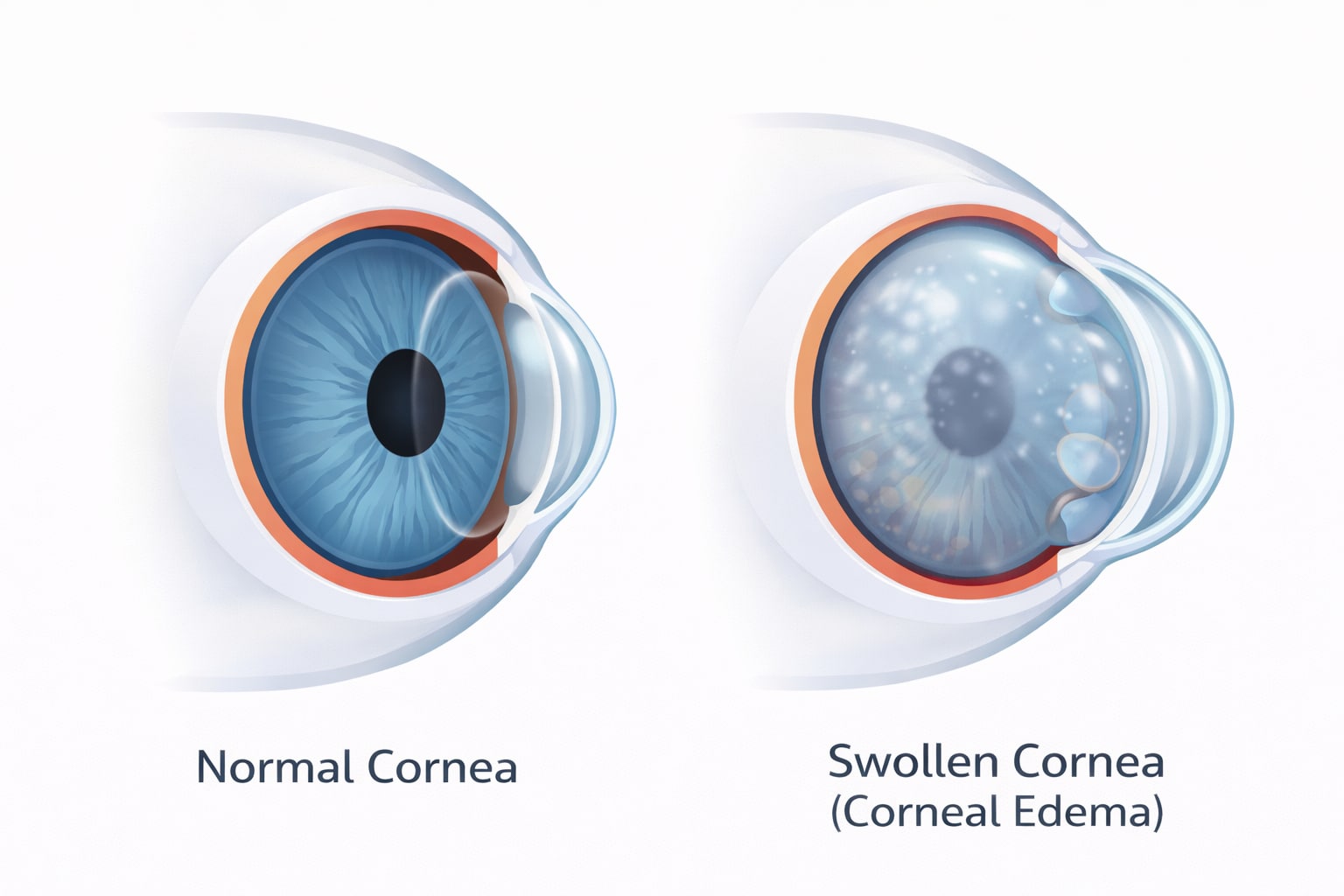
If you have obvious corneal swelling or edema, you may not be the right contact lens candidate right now, at least not for every lens type. This matters especially in Fuchs, where edema can drive blur, glare, and discomfort. Your source file specifically notes that some people with Fuchs and corneal swelling may not be candidates for scleral lenses, and AAO guidance on Fuchs also notes that painful bullae or recurrent erosions may need symptom-focused management and, in more advanced cases, surgery rather than simply changing lenses.
Active Erosions, Severe Pain, or Unstable Epithelium
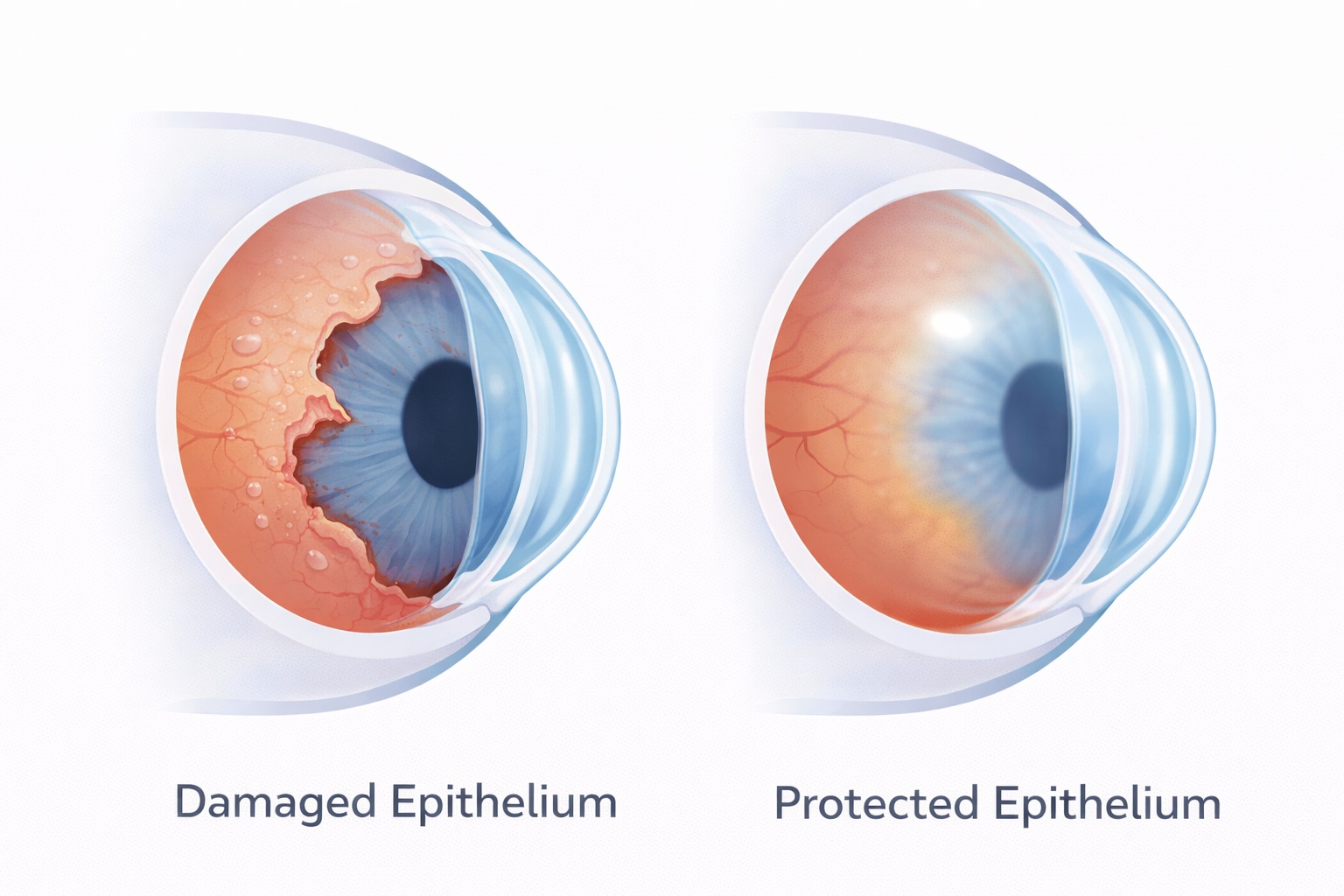
If you are having active erosions, significant pain, or an unstable epithelial surface, the priority may be healing and protection, not routine lens wear. Therapeutic soft lenses can help in selected cases, but they are not something you should self-prescribe. The corneal dystrophy literature in your file repeatedly ties therapeutic contact lens use to pain relief, epithelial protection, and symptom-driven care, which is very different from choosing a standard replacement lens for convenience.
Not sure when irritation is a normal bad day versus a sign you should stop wearing lenses? Review how to tell eye infection risk signs and how to avoid them so you know when to call your eye doctor quickly.
When Surgery or Other Treatment Need To Come First
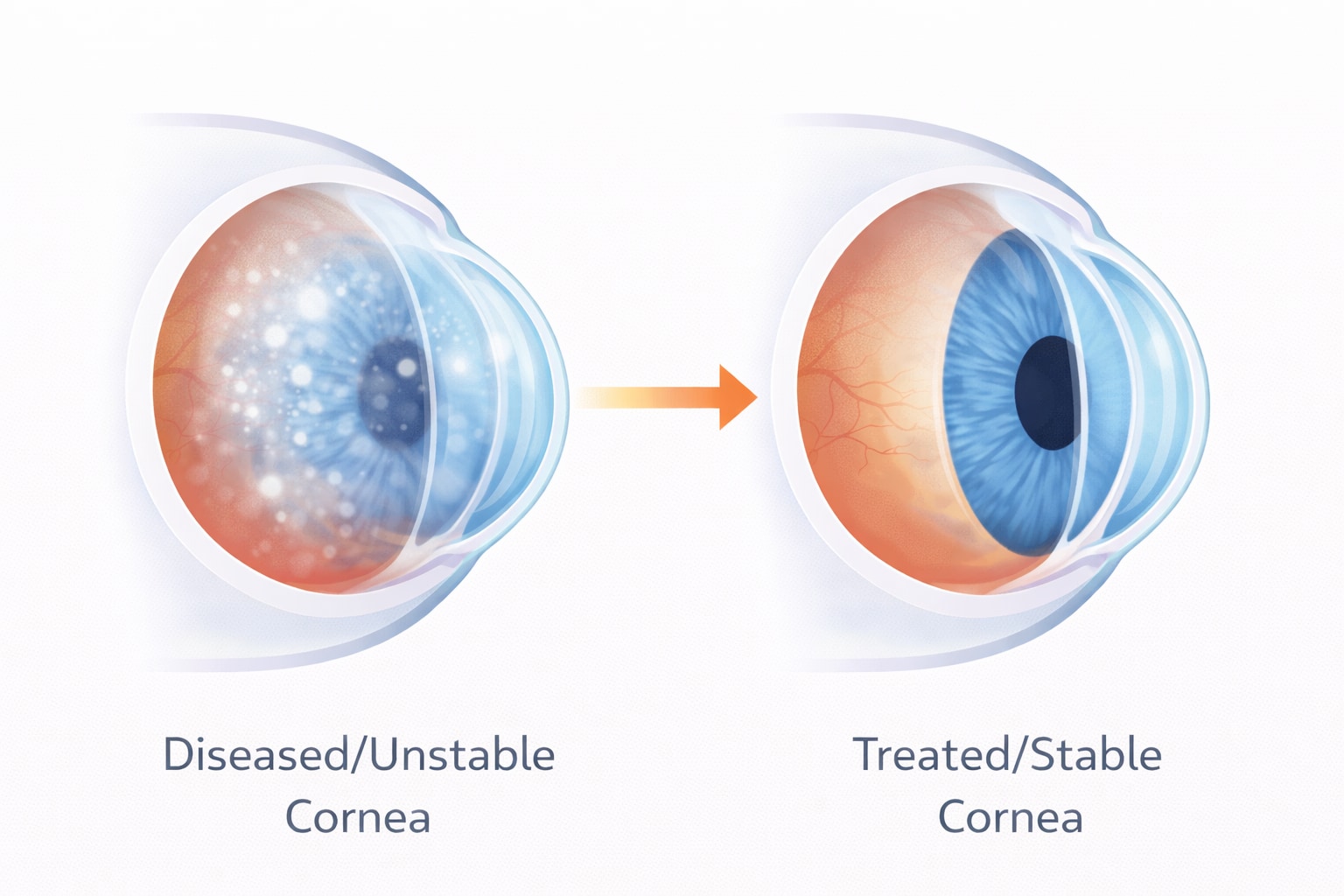
Sometimes the best lens decision is to pause the lens conversation and treat the cornea first. Topical treatments, PTK, and corneal transplant are among the treatment options for corneal dystrophy, depending on the layer involved and the severity of the disease. In other words, if your vision is significantly impaired, your cornea is unstable, or your symptoms are not controlled, corneal dystrophy treatment may need to come before another attempt at contact lens wear.
How Doctors Diagnose Corneal Dystrophy Before Choosing a Lens
Before you choose contact lenses for corneal dystrophy, your eye care specialist needs to confirm what is happening on your cornea. These tests help identify whether you need simple vision correction, surface protection, or a specialty lens fit.
1. Comprehensive Eye Exam + Slit-Lamp Exam
Your doctor starts with a full exam and a slit-lamp exam to check for corneal haze, deposits, erosions, swelling, and other layer-specific changes that affect vision and comfort. This step matters because the best lens choice depends on the cornea’s condition, not just the dystrophy name.
2. Corneal Topography + Pachymetry
If your doctor is deciding between scleral contact lenses, rigid gas permeable contact lenses (RGP), or another option, corneal shape and thickness become key. Topography maps whether your cornea is smooth or irregular, while pachymetry measures thickness and can be especially helpful when deeper-layer or endothelial issues are involved.
3. Optical Coherence Tomography (OCT) and Genetic Testing
Some cases need more detail than the basics. Your doctor may use OCT to scan the cornea more closely, genetic testing to confirm the exact dystrophy type, and rarely a corneal biopsy if the diagnosis remains unclear.
Once these results are clear, your doctor can recommend a lens type that matches your cornea’s needs and supports safer, more comfortable wear.
Ever wondered what corneal measurements actually tell your doctor during a specialty fit? Learn what keratometry is and why it is important so topography talk feels easier to follow.
Choosing the Best Contact Lenses for Corneal Dystrophy
Choosing the best contact lenses for corneal dystrophy depends on more than just comfort alone. For many people, specialty options like scleral or rigid gas permeable lenses make the most sense, while soft lenses are usually better reserved for mild or selected cases. The right option comes down to your specific dystrophy type, how irregular or swollen your cornea is, and whether your main goal is sharper vision, pain relief, or surface protection.
Looking for the best contact lenses for corneal dystrophy to discuss with your eye doctor? Shop our contact lenses to compare options by comfort, material, replacement schedule, and prescription needs.
FAQs About Contact Lenses for Corneal Dystrophy
Quick answers about lens options, scleral lenses, fittings, eye exams, and when to call your eye doctor.
Yes, you may be able to wear contacts for corneal dystrophy, but the right lens depends on how your cornea is affected. Corneal dystrophy is a group of genetic corneal diseases, and some people do better in scleral lenses or other specialty contact lenses because those designs can correct vision in ways soft lenses sometimes cannot.
Often, they are one of the strongest options when your cornea is irregular, your vision is distorted, or comfort is a major problem. Scleral contact lenses can hold fluid against the eye surface, offer more protection, and provide stronger vision correction than soft lenses in many complex cases, but they are not automatically the best fit for every dystrophy or every stage.
There is no single best answer for Fuchs corneal dystrophy contacts because it depends on whether you have swelling, blur, glare, pain, or all of the above. Fuchs causes corneal swelling from endothelial cell loss, and more advanced cases may need topical treatment or even transplant discussion, so your best lens choice has to be matched to the severity of the disease.
They can, in selected cases. Special contact lenses may help the cornea heal and prevent further damage, so a bandage contact lens or other therapeutic contact lens may be part of the plan when pain, recurrent erosions, or surface protection are the main issues.
They usually cost more because they need more specialized fitting and manufacturing than routine soft lenses. Scleral lenses often cost more, usually take multiple fitting steps, and require a more specialized process to get the lens fitting just right.
Sometimes they can help manage symptoms or improve function, but they do not cure corneal dystrophy. Specialty lenses may help you see and feel better for a period of time, but severe corneal changes can still require procedures such as PTK or a corneal transplant depending on the layer involved and how advanced the disease is.
Diagnosis usually starts with a comprehensive eye exam and a slit-lamp exam. Your doctor may also use corneal topography, pachymetry, OCT, and sometimes genetic testing or biopsy when the exact dystrophy type needs to be clarified.
If you wear contact lenses, the American Academy of Ophthalmology says you should see your eye specialist every year. If you have corneal dystrophy, regular follow-up visits and checking in sooner are recommended if you notice symptom or vision changes.
Stop wearing your lenses and call your eye doctor if you have recurring discomfort or pain, worsening redness, a sudden drop in vision, or problems with how the lenses fit or come out. Discomfort or pain with scleral lenses is not something you should try to push through.
You should expect a more detailed, step-by-step process than a routine soft lens fitting. The process often takes multiple steps, many people need time to adapt, and your provider will give you a follow-up schedule to monitor the fit, comfort, and treatment response.
Disclaimer: This content is for general informational purposes only and is not a substitute for professional advice, diagnosis, or treatment.
References
Corneal Dystrophy (StatPearls). Majid Moshirfar; Phillip Bennett; Yasmyne Ronquillo / StatPearls Publishing (NCBI Bookshelf, National Library of Medicine). https://www.ncbi.nlm.nih.gov/books/NBK557865/. Date Accessed: April 14,2026.
Fuchs Endothelial Dystrophy (StatPearls). Bharat Gurnani; Anisha N. Somani; Majid Moshirfar; Bhupendra C. Patel / StatPearls Publishing (NCBI Bookshelf, National Library of Medicine). https://www.ncbi.nlm.nih.gov/books/NBK545248/. Date Accessed: April 14,2026.
Lattice Corneal Dystrophy (StatPearls). Majid Moshirfar; William West; Yasmyne Ronquillo / StatPearls Publishing (NCBI Bookshelf, National Library of Medicine). https://www.ncbi.nlm.nih.gov/books/NBK556099/. Date Accessed: April 14,2026.
Corneal Topography (StatPearls). Uma Sridhar; Koushik Tripathy / StatPearls Publishing (NCBI Bookshelf, National Library of Medicine). https://www.ncbi.nlm.nih.gov/books/NBK585055/. Date Accessed: April 14,2026.
Corneal Dystrophy: Types, Symptoms, Causes & Treatment. Cleveland Clinic. https://my.clevelandclinic.org/health/diseases/corneal-dystrophy. Date Accessed: April 14,2026.
Fuchs dystrophy – Symptoms and causes. Mayo Clinic Staff / Mayo Clinic. https://www.mayoclinic.org/diseases-conditions/fuchs-dystrophy/symptoms-causes/syc-20352727. Date Accessed: April 14,2026.
Fuchs’ Endothelial Dystrophy. Yandong Bian, MD / EyeWiki (American Academy of Ophthalmology). https://eyewiki.org/Fuchs%E2%80%99_Endothelial_Dystrophy. Date Accessed: April 14,2026.
BCLA CLEAR summary (Contact Lenses Evidence-based Academic Reports). British Contact Lens Association (BCLA). https://bcla.org.uk/common/uploaded%20files/CLEAR/BCLA%20CLEAR%20summary.pdf. Date Accessed: April 14,2026.
Scleral lenses. Dr Paul Gifford / Contact Lens Update. https://contactlensupdate.com/2021/06/15/scleral-lenses/. Date Accessed: April 14,2026.
Analysis of association of bandage contact lens with serious vision-threatening diseases and their management. Helena Siegel, et al. / BMC Ophthalmology (Springer Nature). https://link.springer.com/article/10.1186/s12886-024-03632-1. Date Accessed: April 14,2026.