
Table of Contents
Maybe your parents wore thick glasses. Maybe your sibling’s astigmatism genetics are on full display every time they update their prescription. Or a grandparent had glaucoma or macular degeneration, and now you are wondering whether your eyes are headed in the same direction.
That is why family history is useful, not something to panic over. It can help you know what to watch for, when to get screened, and what to tell your eye doctor.
Is Bad Eyesight Genetic?
Yes, bad eyesight can be genetic, but it is not always genetic. Some eye problems are strongly inherited, while others result from a mix of genes, lifestyle, age, and health factors. That means your family history can raise your risk, but it does not guarantee that you will have the same vision problems as your parents or grandparents.
The most common inherited vision issues are refractive errors. These include myopia (nearsightedness) genetics, hyperopia (farsightedness) genetics, and astigmatism genetics. Some eye diseases also have a family history link, including glaucoma, age-related macular degeneration, cataracts, color blindness, keratoconus, and retinitis pigmentosa.
How Genetics Affects Your Eyes
Eye shape, cornea shape, retina, lens, and optic nerve
Your genes help shape how your eyes are built and how they work. They can influence the length of your eyeball, the curve of your cornea, the clarity and flexibility of your lens, the health of your retina, and how your optic nerve responds to pressure. That is why eye genetics can manifest differently from person to person.
For example, a longer eyeball can make distant objects look blurry, which is why people ask if nearsightedness is genetic or hereditary. An uneven cornea or lens shape can lead to astigmatism, which is why the question of whether astigmatism is hereditary is another common family-history question.
Why are some conditions inherited directly?
Some eye conditions are more clearly inherited. These include color blindness genetics, retinitis pigmentosa, Stargardt disease, some forms of congenital cataracts, and certain corneal conditions. In those cases, a gene change can be passed through a family in a recognizable pattern.
That does not mean every person in the family will have the same symptoms. Some people may be carriers, some may develop symptoms earlier, and others may never notice a problem. Still, if someone in your family has a known genetic eye disease, it is worth telling your eye doctor, especially if the condition affected vision at a young age or caused serious vision loss.
Why are many eye conditions multifactorial?
A single gene does not cause many common eye problems. They are multifactorial, meaning they can result from a mix of genetics, age, lifestyle, environment, and overall health. Myopia, glaucoma, age-related macular degeneration, cataracts, dry eye, and even some cases of diabetic eye disease can fall into this broader category.
This is why family history eye disease matters, but it is not destiny. A close relative with glaucoma or macular degeneration may raise your risk, but your own habits, medical history, and screening schedule still matter. For example, family history, smoking, high cholesterol, and high blood pressure are some risk factors for age-related macular degeneration.
Genetics vs Environment: Why Two Siblings Can Have Different Eyes
Family history raises risk, but habits still matter
You and your sibling may share parents, but that does not mean you will share the same prescription or the same eye health risks. Each child inherits a different mix of genes. One sibling might develop myopia early, while another may have mild farsightedness, astigmatism, or no prescription at all.
That is the key point behind bad eyesight genetics. Yes, genes can raise your risk, but your eyes are also shaped by how you use them and how healthy the rest of your body is. Family history is a clue, not a guarantee.
Screen time, outdoor time, smoking, UV exposure, and nutrition
Your daily habits can affect how your genetic risk plays out. For children, having one or both nearsighted parents raises myopia risk, but long periods of reading or screen time can also increase risk. In contrast, more time outdoors may help protect against myopia or slow its progression.
For adults, the same idea applies in different ways. Smoking can increase the risk of serious eye conditions, including macular degeneration and cataracts. UV exposure can also contribute to cataract risk over time, and conditions like diabetes, high blood pressure, and high cholesterol can affect the retina and blood vessels in the eye.
Why prevention still matters even if eye disease runs in your family
You cannot rewrite your DNA, but you can make smarter choices with the risk you inherited. If eye conditions that run in families are part of your story, regular eye exams become even more important because they can catch changes before you notice symptoms.
Prevention does not mean you can stop every inherited condition. It means you can lower avoidable risks, protect your eyes from added damage, and give your doctor a better chance to act early. If your family has glaucoma, AMD, high myopia, cataracts, or inherited retinal disease, the best next step is simple: know your history, share it clearly, and stay consistent with eye care.
Top 7 Eye Conditions That Run in Families
Some eye conditions that run in families are common prescription problems, while others are eye diseases that need closer monitoring.
1. Myopia, or nearsightedness
Myopia means you can usually see up close, but faraway things look blurry. If you are wondering if nearsightedness is genetic or if myopia is hereditary, the answer is often yes. Children with one or both nearsighted parents have a higher risk of developing myopia, according to pediatric ophthalmology guidance.
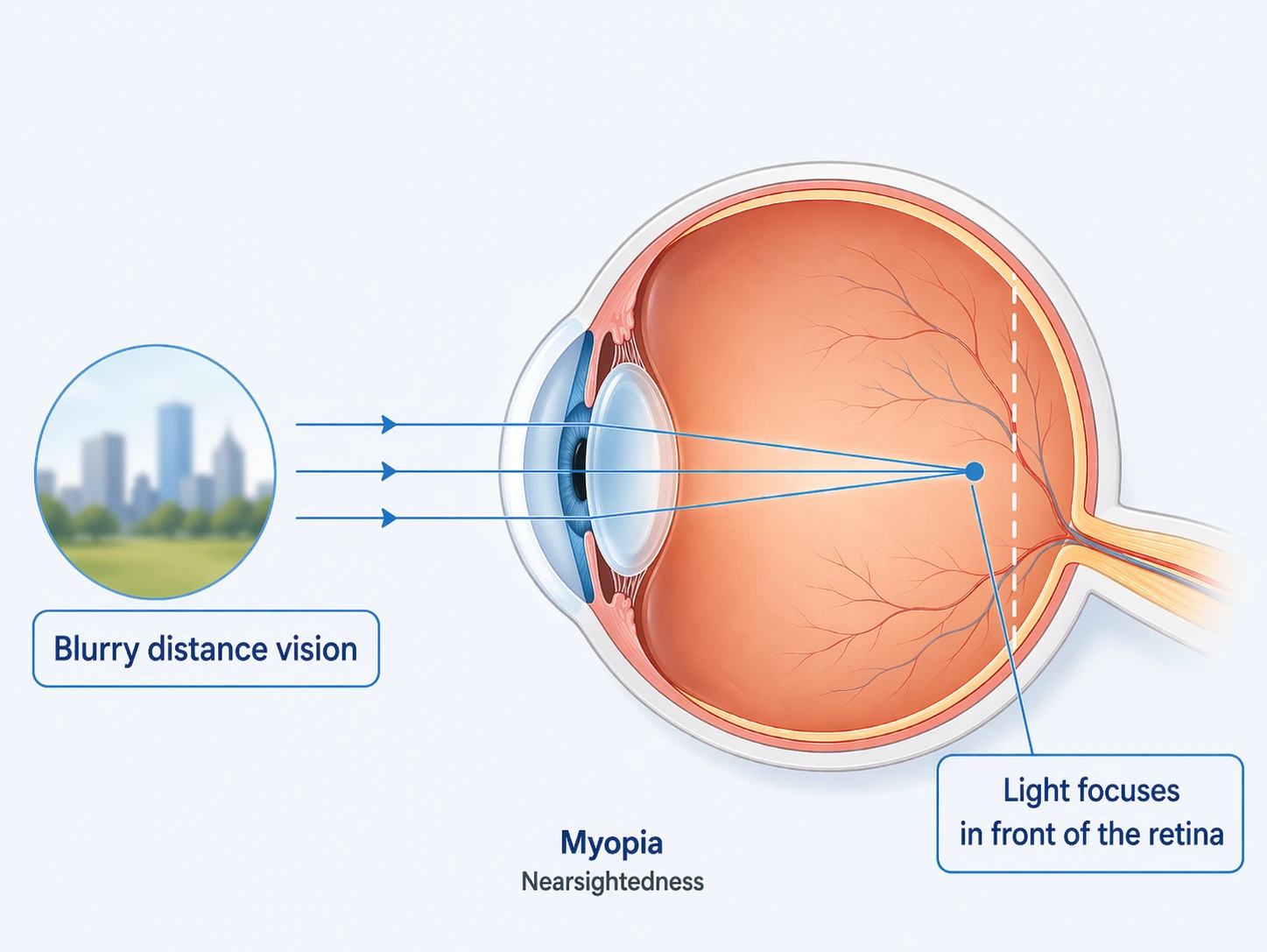
Symptoms can include blurry distance vision, squinting, headaches, eye strain, or trouble seeing classroom boards, road signs, TV captions, or faces from across a room. But myopia genetics is only part of the story. Long periods of near work, reading, or screen time may increase risk, while more outdoor time may help protect against myopia or slow its progression in children.
2. Hyperopia, or farsightedness
Hyperopia means near objects may look blurry while faraway objects are easier to see. When people ask if farsightedness is genetic, they are usually asking whether eye shape runs in families. Hyperopia often happens when the eye is shorter than average, or the cornea is flatter than needed, so light focuses behind the retina instead of directly on it.
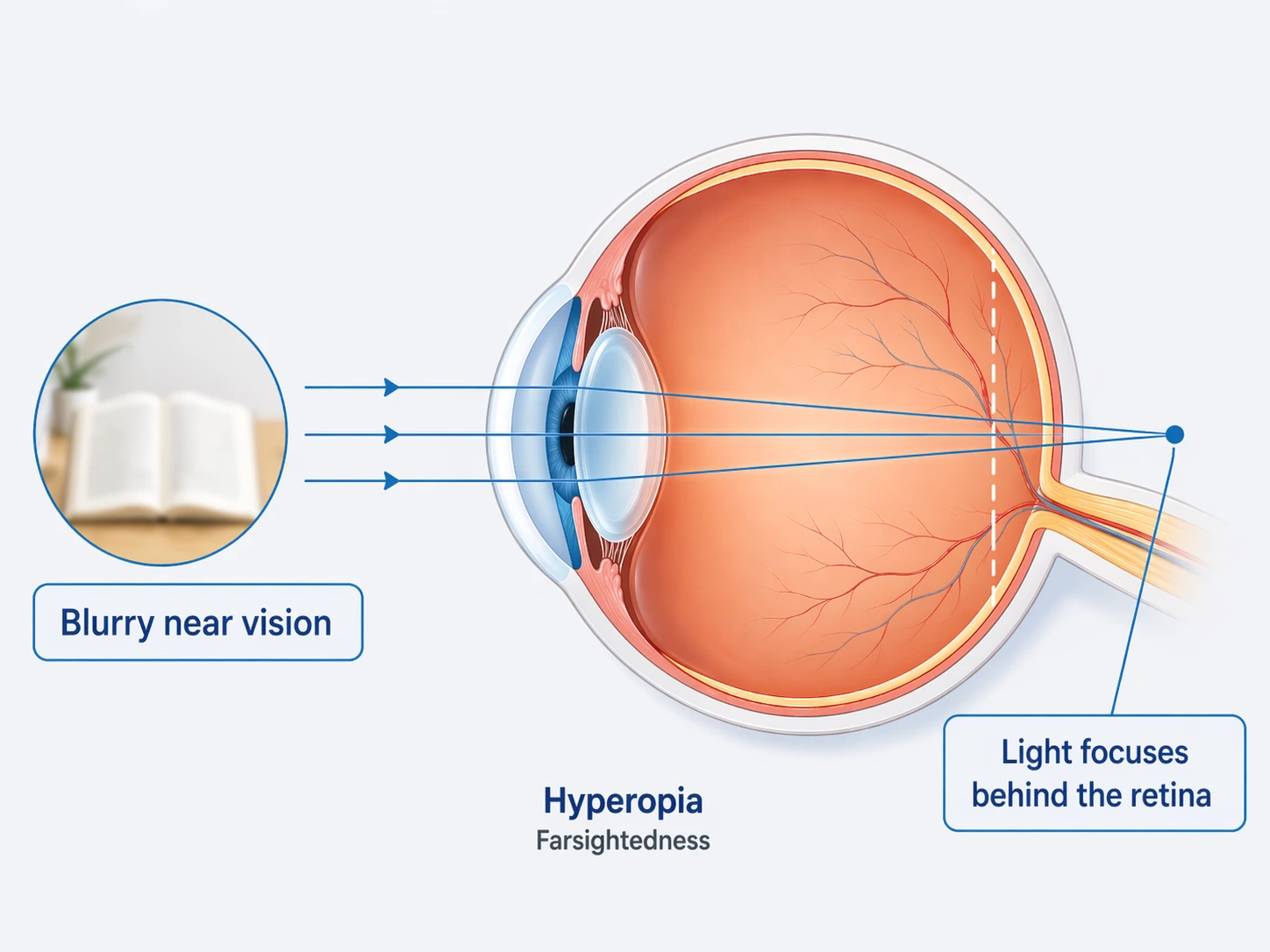
You may notice blurry near vision, eye strain, headaches, trouble reading, or fatigue after close work. Some children and younger adults can compensate for farsightedness for a while because their eyes can still focus strongly, so that symptoms may be subtle early on. That is why an eye exam matters even if you can “push through” near blur.
3. Astigmatism
Astigmatism usually comes from an irregular curve in the cornea or lens. Instead of being evenly round, the surface is more unevenly shaped, which can blur or distort light as it enters the eye. That is why people often search for whether astigmatism is hereditary or genetic when several relatives have the same kind of blurry vision.
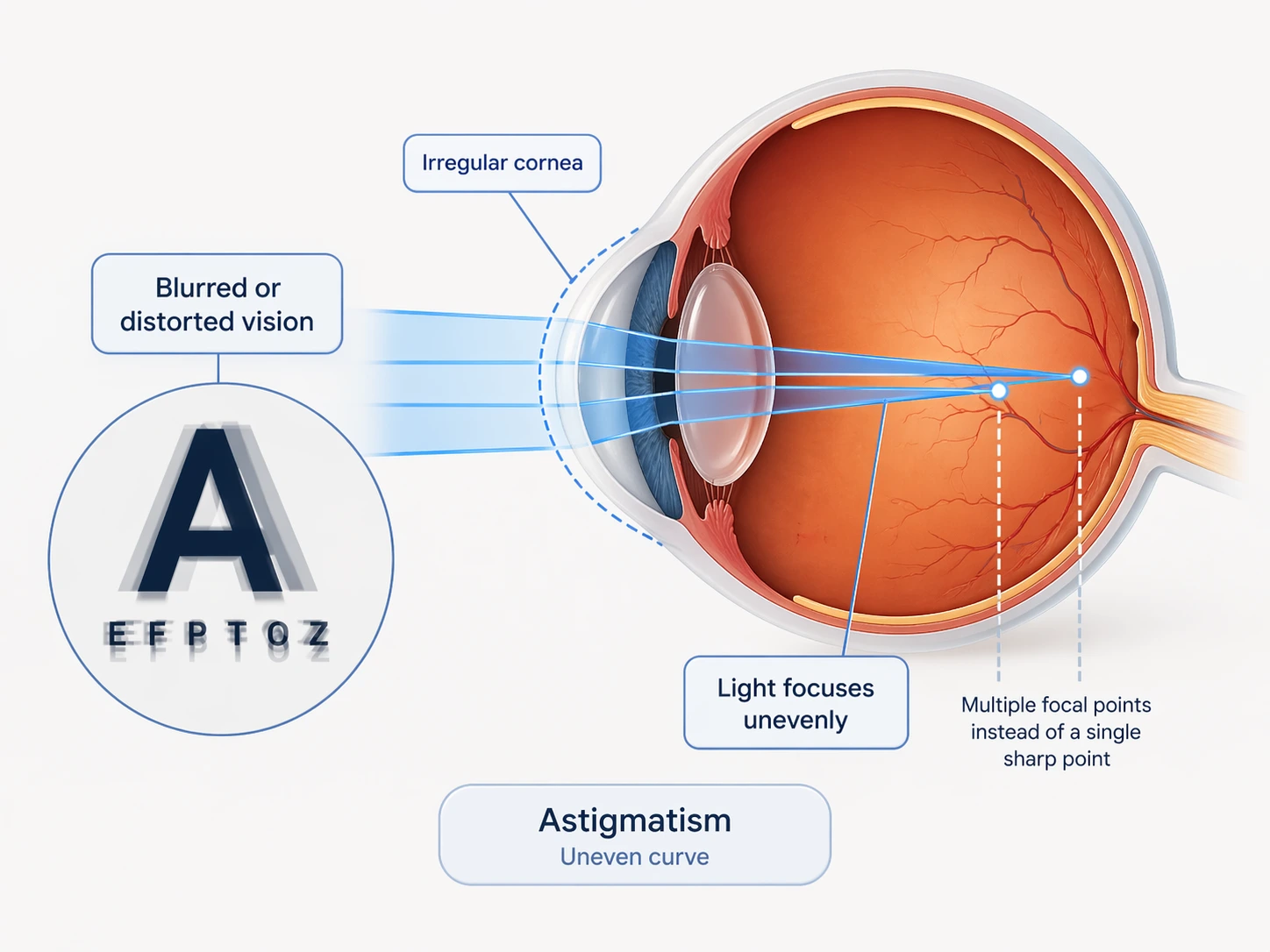
Symptoms can include blurred vision at all distances, ghosting or shadowed letters, eye strain, headaches, and difficulty seeing clearly at night. If astigmatism is part of your prescription, toric contact lenses can help correct the uneven focusing pattern. Your eye doctor can confirm whether toric lenses, glasses, or another option best fits your prescription and eye health.
4. Glaucoma
Glaucoma is a group of eye diseases that can damage the optic nerve, often related to eye pressure or the optic nerve’s response to it. Glaucoma genetics matters because family history is a major risk factor, especially if a parent, sibling, or child has glaucoma. The Glaucoma Foundation notes that family history is a strong risk factor and that relatives should be tested when glaucoma runs in the family.
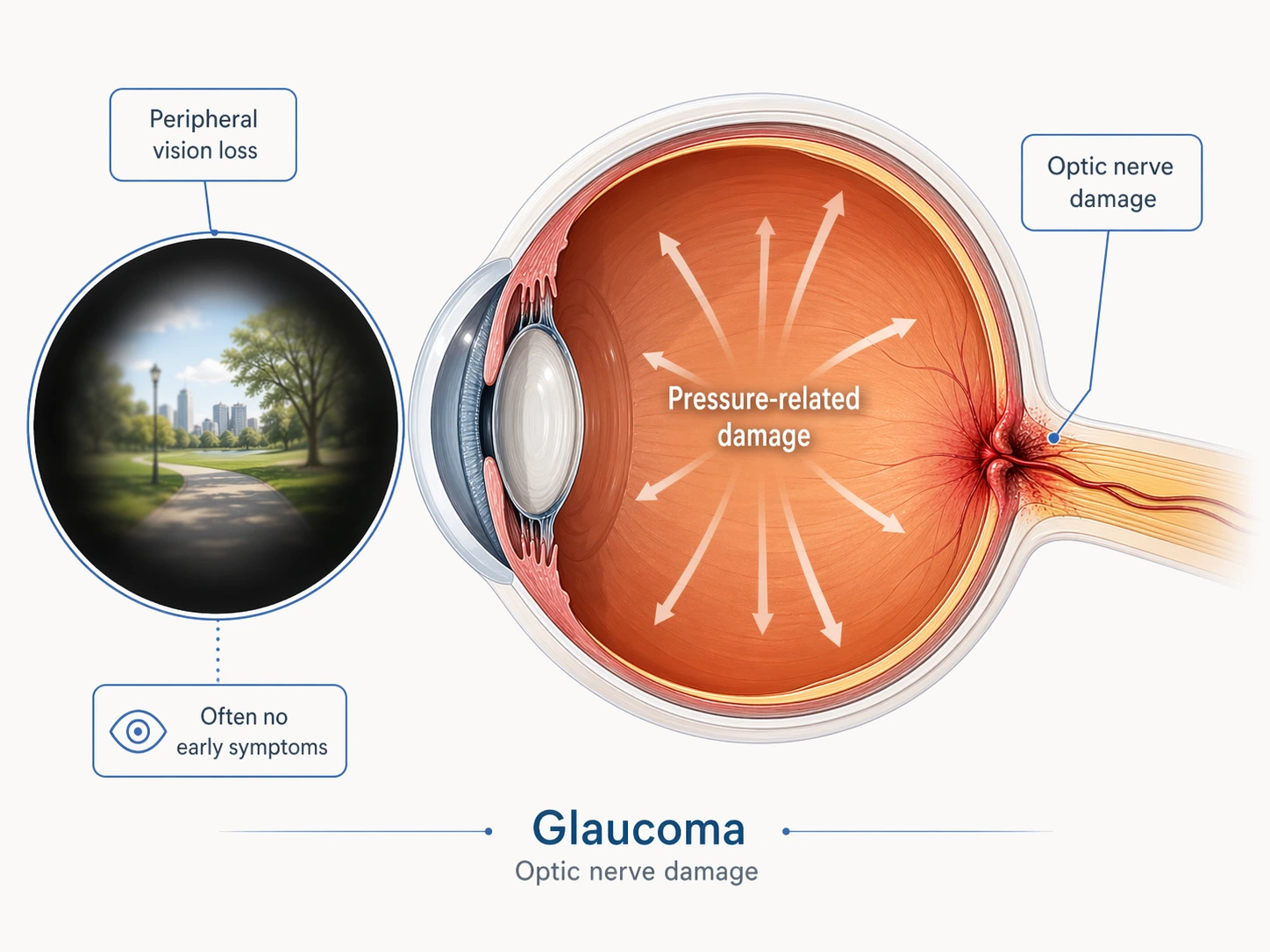
The tricky part is that glaucoma often has no early symptoms. You may not notice vision loss until damage is more advanced, which is why screening is so important. If you have a family history of eye diseases, including glaucoma, tell your eye doctor so they can decide how often you should be checked.
5. Age-related macular degeneration, or AMD
Age-related macular degeneration affects the macula, the part of the retina you use for sharp central vision. That central vision helps you read, drive, recognize faces, and see fine details. If you are asking if age-related macular degeneration is hereditary, the answer is that genetics and family history can raise your risk, but they are not the only factors. The National Eye Institute notes that AMD risk is higher if you have a family history of AMD, and smoking also raises risk.
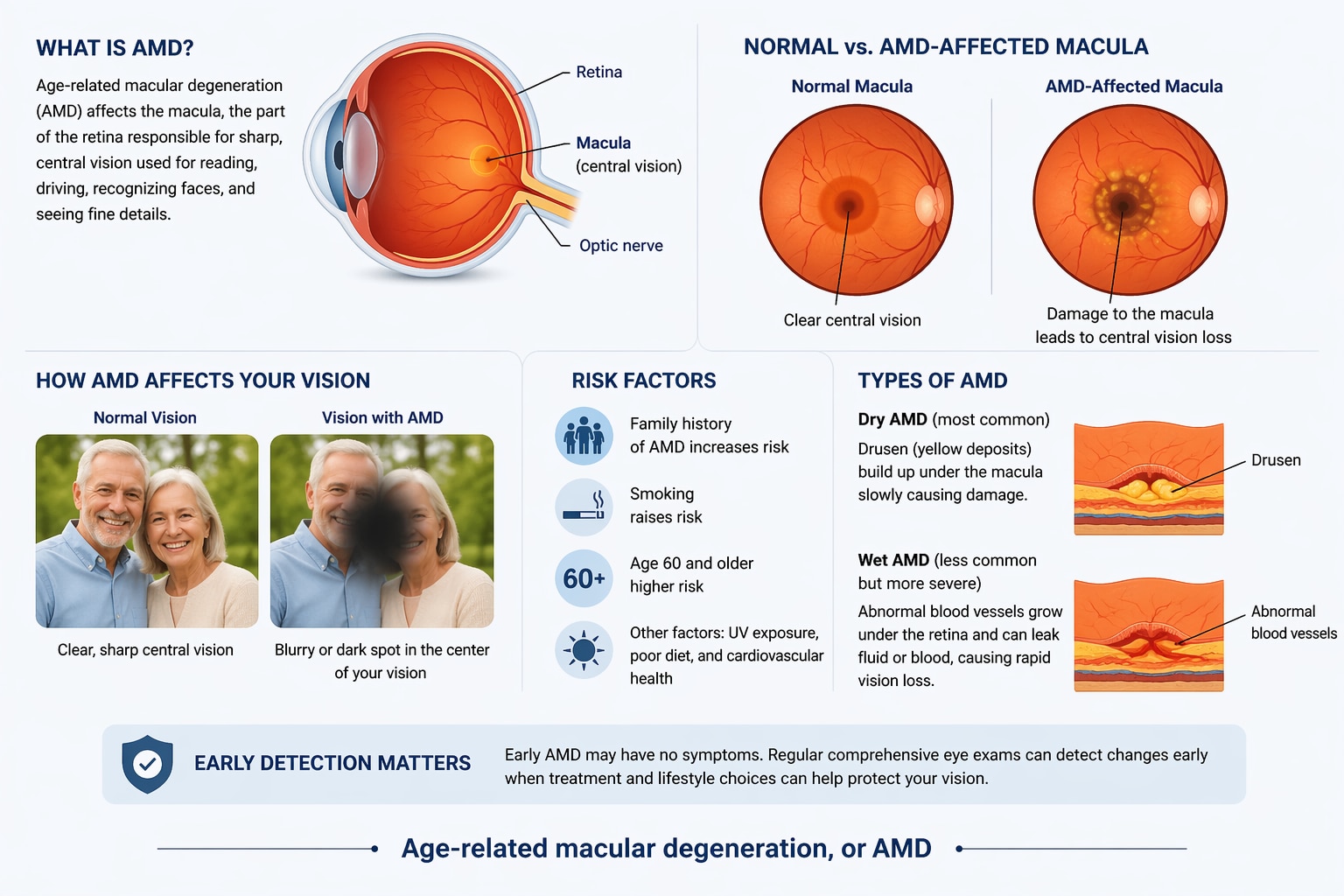
Early AMD may not cause symptoms, so you might not know it is developing. When symptoms do appear, they can include blurry central vision, distorted or wavy lines, trouble reading, or difficulty recognizing faces. If macular degeneration runs in your family, regular eye exams are one of the most practical ways to watch for early changes.
6. Cataracts
Cataracts happen when the eye’s natural lens becomes cloudy. Most cataracts are age-related, but genetic factors can play a role, especially if cataracts appear earlier than usual or if congenital cataracts run in the family. The National Eye Institute lists family history, diabetes, smoking, alcohol use, sun exposure, eye injury, and steroid use among cataract risk factors.
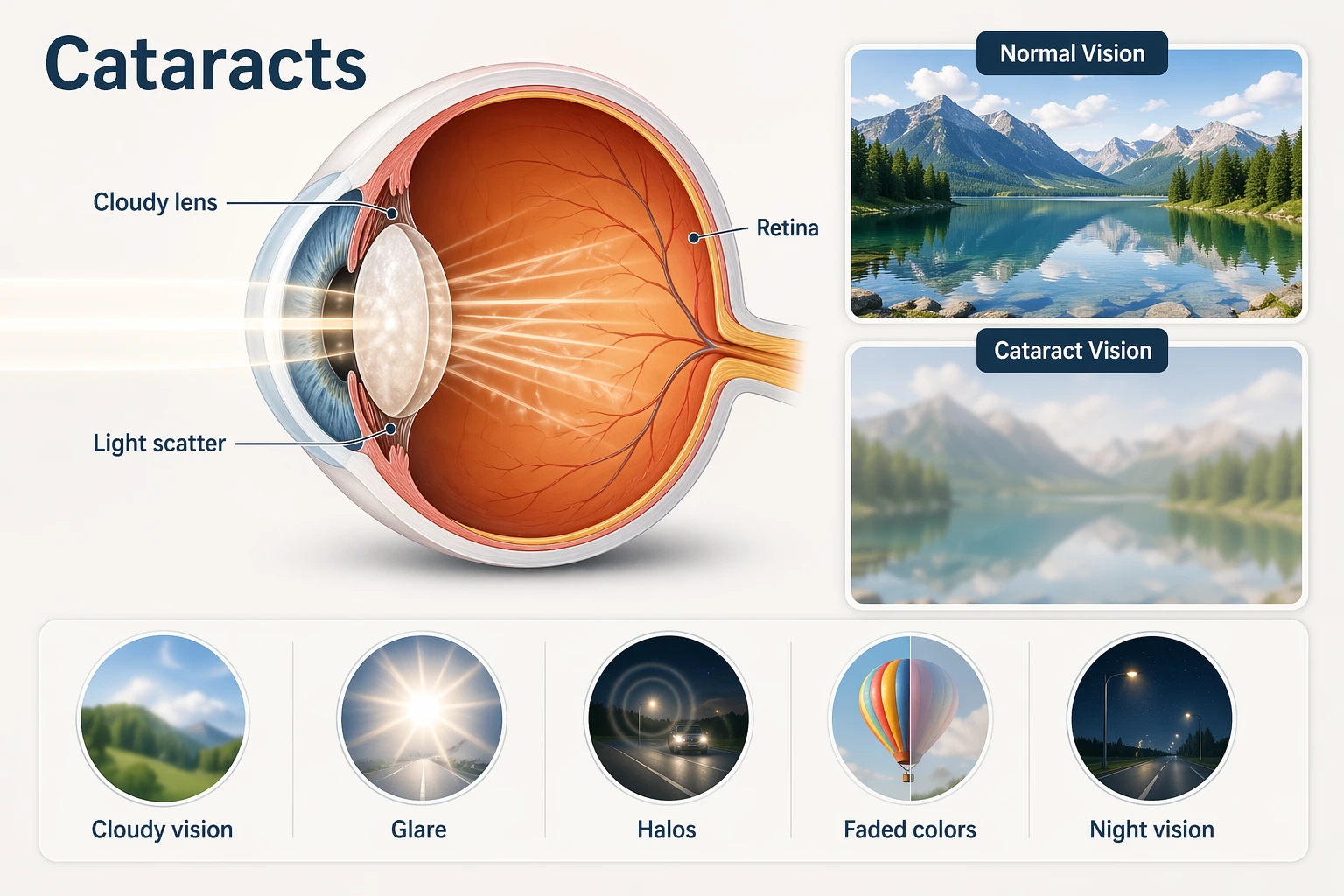
Symptoms can include cloudy or hazy vision, glare, halos around lights, faded colors, and trouble seeing at night. If you have a family history of early cataracts, it is worth mentioning during your eye exam. Genes may raise your risk, but UV protection, not smoking, diabetes management, and routine eye care still matter.
7. Inherited retinal diseases, including retinitis pigmentosa and Stargardt disease
Inherited retinal diseases are less common than myopia or astigmatism, but they are often more directly genetic. Inherited retinitis pigmentosa can present in different ways, and the condition affects the retina’s light-sensing cells over time. The National Eye Institute says the most common early symptom of retinitis pigmentosa is loss of night vision, often starting in childhood, followed by loss of side or peripheral vision.
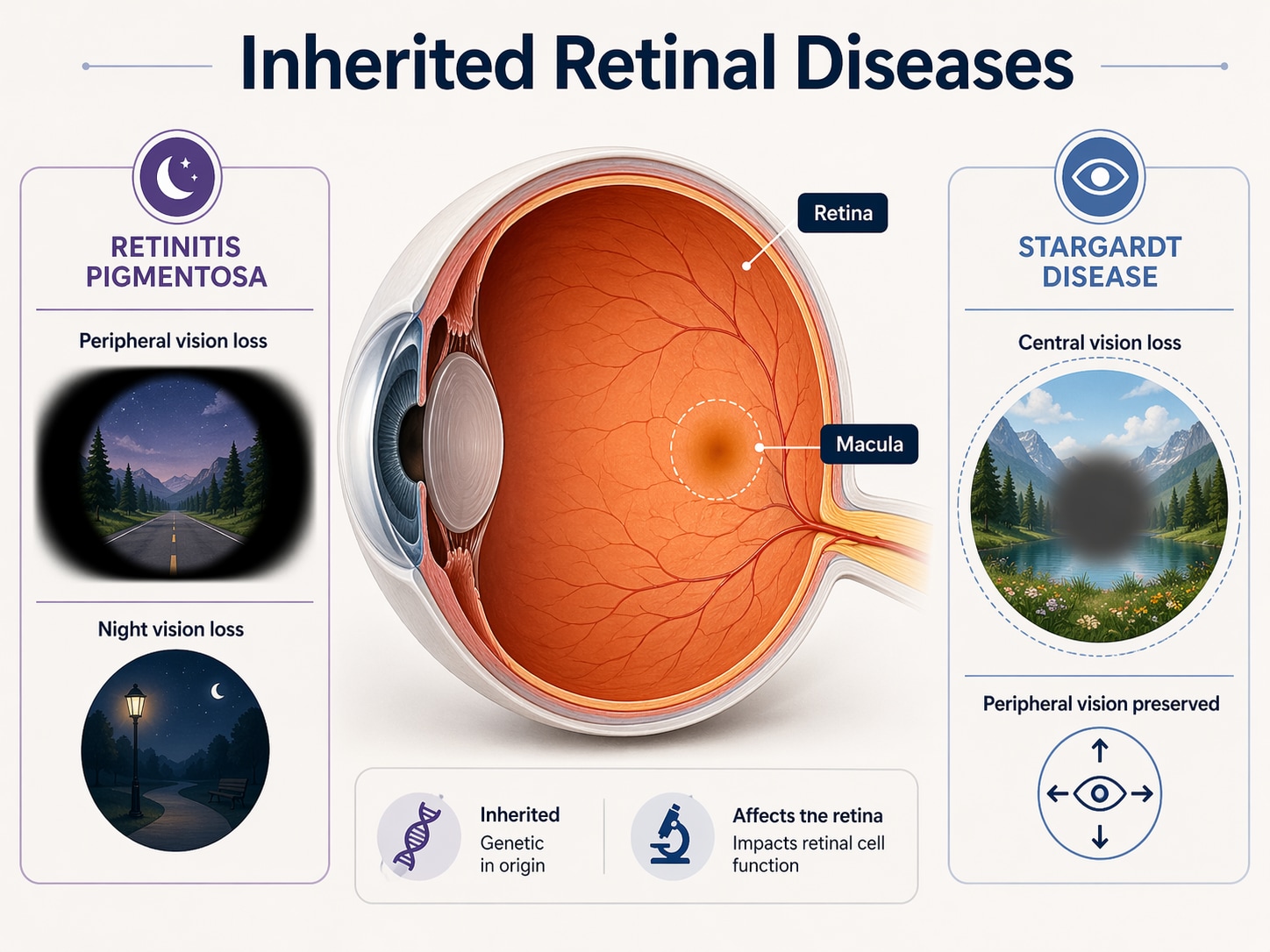
Stargardt disease is another inherited retinal disease that usually affects central vision, often earlier in life than age-related macular degeneration. These conditions are different from common prescription problems because they involve retinal cell function, not just eye shape. Genetic testing may be more useful for inherited retinal diseases than for routine refractive errors, because it can sometimes help confirm the diagnosis, identify the gene involved, and guide family counseling or future treatment planning.
| Eye Condition | How It Can Run In Families | Common Signs To Watch For |
|---|---|---|
| Myopia | Eye length and myopia risk can be influenced by family history | Blurry distance vision, squinting, headaches, trouble seeing road signs or the board |
| Hyperopia | Eye length and focusing ability can have a genetic link | Blurry near vision, eye strain, headaches, difficulty reading |
| Astigmatism | Cornea or lens shape can run in families | Blur at all distances, ghosting, eye strain, night-driving difficulty |
| Glaucoma | Family history is a major risk factor | Often no early symptoms, later side-vision loss |
| Age-related macular degeneration | Genetics and family history can raise risk | Blurry or distorted central vision, trouble reading, difficulty recognizing faces |
| Cataracts | Most are age-related, but family history can raise risk | Cloudy vision, glare, halos, faded colors, night-driving trouble |
| Inherited retinal diseases | Often more directly genetic | Night blindness, loss of side vision, central vision changes |
How to Tell if Your Vision Problem May Be Genetic
You do not need a genetics degree to start figuring out whether your vision problem may run in your family. The most useful first step is simple: ask the right questions and bring the answers to your next eye exam.
Ask who in your family has glasses, contacts, or eye disease
Start with your closest relatives: parents, siblings, grandparents, and children. Ask who wears glasses or contacts, who was diagnosed young, who needed eye surgery, and who has been told they have glaucoma, macular degeneration, cataracts, retinal disease, color blindness, keratoconus, or corneal dystrophy.
This is especially helpful if you are wondering if glasses prescriptions run in families. A family full of nearsighted or astigmatic relatives does not guarantee you will have the same prescription, but it gives your eye doctor useful context.
Look for patterns by age
Age matters. A child who becomes nearsighted early, a relative who had cataracts unusually young, or a grandparent with AMD in later life all point to different kinds of risk. Some conditions appear in childhood, while others usually develop over decades as a result of aging, health changes, or environmental exposure.
Try to note when the problem started, not just the diagnosis. For example, “my dad had cataract surgery at 72” is different from “my sister had cataracts as a child.” The timing can help your eye doctor decide whether the pattern sounds typical, early, or potentially inherited.
Pay attention to both sides of your family
Do not only ask one side of the family. Eye conditions can come from your mother’s side, your father’s side, or both. This is especially important for conditions with sex-linked patterns, such as some forms of inherited color blindness, and for diseases where risk can build across generations.
You also want to ask about relatives who may not use the same medical terms. Someone might say “tunnel vision,” “night blindness,” “bad pressure in the eyes,” “bleeding behind the eye,” or “macular problems” instead of using a formal diagnosis. Those details can still be useful.
Bring family history to your next eye exam
Once you have the information, share it clearly at your next eye exam. You do not need a perfect family tree. Even a short list can help:
- Who in your family has high prescriptions, myopia, hyperopia, or astigmatism
- Who has glaucoma, AMD, cataracts, retinal disease, or diabetes-related eye disease
- Who had eye surgery, vision loss, or unexplained blindness
- Who had childhood eye problems such as strabismus or amblyopia
- Who has color blindness, keratoconus, or corneal dystrophy
This is the practical answer to a family history of eye disease. You learn what runs in your family, tell your eye doctor, and follow the screening schedule they recommend. Family history does not decide your future, but it can help you catch problems earlier and protect your vision longer.
Warning Signs You Should Not Ignore
Family history is helpful, but symptoms still matter. If you know eye conditions that run in families are part of your background, do not wait for vision changes to become severe before getting checked.
1. Blurry vision that keeps getting worse
Blurry vision can occur for simple reasons, such as a changing prescription, dry eyes, or eye strain. But if your blur keeps getting worse, does not improve with your usual glasses or contacts, or affects reading, driving, work, or school, it is time for an eye exam.
Worsening blur can be linked to refractive changes, cataracts, macular problems, retinal disease, corneal conditions, or diabetes-related eye changes. If your family has a history of AMD, cataracts, glaucoma, high myopia, or retinal disease, bring that up during your visit.
2. Trouble seeing at night
Trouble seeing in dim light can be easy to dismiss at first. You may notice that driving at night feels harder, you need more light to read, or you bump into things in low-light rooms.
This symptom deserves attention because some inherited retinal conditions can begin with night vision problems. The National Eye Institute lists loss of night vision as an early symptom of retinitis pigmentosa, often followed by loss of side vision.
3. Loss of side vision
Loss of side vision can happen slowly, so you may not notice it right away. You might start missing objects off to the side, feel less confident driving, or notice that your field of view seems narrower than before.
This can be a warning sign of glaucoma or inherited retinal disease. Glaucoma is especially important because it often has no early symptoms, and vision loss may not be obvious until the optic nerve has already been damaged.
4. Distorted central vision or wavy lines
If straight lines look wavy, faces look distorted, or the center of your vision looks blurry or dark, do not ignore it. These can be signs of a macular problem, especially if macular degeneration genetics or AMD runs in your family.
The National Eye Institute notes that early AMD may not cause symptoms, but the risk is higher if you have a family history of AMD, and regular eye exams are important for people at higher risk.
5. Eye pain, flashes, floaters, or sudden vision changes
Some symptoms should be treated as urgent. Call an eye doctor right away, or seek urgent care, if you have:
- Sudden vision loss
- A sudden increase in floaters
- New flashes of light
- Eye pain with redness or light sensitivity
- A curtain, shadow, or missing area in your vision
- Sudden blurry or distorted vision
A sudden increase in floaters, especially with flashes or vision loss, can be a warning sign of a retinal tear or another emergency that needs prompt attention.
When Should You Get Screened if Eye Problems Run in Your Family?
If you have a family history of eye disease, screening should not be delayed until symptoms appear. Many serious eye problems are easier to manage when detected early.
Children with a family history of myopia, strabismus, or amblyopia
Children should be checked early if close relatives have strong prescriptions, childhood myopia, crossed eyes, lazy eye, or eye disease. Kids often do not know they are seeing poorly because they have no “normal” vision to compare it with.
This matters especially for myopia genetics. Pediatric ophthalmology guidance states that children with one or both nearsighted parents have a higher risk of myopia, and that near work and outdoor time also play a role.
Adults with a family history of glaucoma or AMD
If glaucoma or AMD runs in your family, ask your eye doctor how often you should be screened. These conditions can develop quietly, and waiting for symptoms may mean waiting too long.
Glaucoma can have no symptoms in its early stages, even when risk factors are present. The American Academy of Ophthalmology lists family history as a glaucoma risk factor, which means your doctor may recommend closer monitoring if a parent, sibling, or child has it.
AMD is also worth watching closely if it runs in your family. NEI notes that AMD risk is higher with family history and smoking, and that early AMD may not cause symptoms, so people at risk should ask how often they need eye exams.
Anyone with symptoms, even if they are young
Do not assume you are “too young” for an eye problem. Some inherited conditions can appear in childhood or young adulthood, while others show up later. Your age matters, but your symptoms matter more.
Book an exam if you notice night vision trouble, side vision loss, worsening blur, wavy lines, frequent prescription changes, eye pain, flashes, floaters, or sudden vision changes. These can be signs of genetic eye disease symptoms, but they can also come from non-genetic eye problems that still need care.
Why early diagnosis can protect long-term vision
Early diagnosis does not mean every condition can be prevented or cured. It means your doctor has a better chance to monitor changes, treat what can be treated, and protect as much vision as possible.
That is the practical answer to a family history of eye disease. Learn what runs in your family, tell your eye doctor, and get screened before symptoms become hard to ignore. For many hereditary or family-linked conditions, the earlier you know what is happening, the more options you may have.
Can You Prevent Genetic Eye Conditions?
What you cannot change
You cannot change the genes you inherited, and you cannot fully erase a family history of eye disease risk. If glaucoma, macular degeneration, cataracts, myopia, color blindness, or inherited retinal disease runs in your family, that history is still worth taking seriously.
But risk is not the same as destiny. Some hereditary eye conditions are strongly genetic, while others are influenced by a mix of genetic, age, health, and lifestyle factors. Your keyword research also shows that people are actively asking whether bad eyesight is “genetic or environmental,” which is exactly the right way to think about it.
What you can control
You may not be able to control your DNA, but you can control how early problems are detected and how many avoidable risks you take on. For example, pediatric ophthalmology guidance notes that children with one or both nearsighted parents have a higher risk of myopia, but near work, screen time, and outdoor time also matter. More outdoor time may protect against myopia or slow its progress.
For adults, healthy habits still matter. Smoking is linked to serious eye conditions, including cataracts and macular degeneration, and people with diabetes can lower their risk of vision loss by managing blood sugar, blood pressure, and cholesterol and getting regular dilated eye exams.
Habits That Help Protect Your Vision
If eye conditions that run in families are part of your story, these habits can help you stay ahead of problems:
- Get regular comprehensive eye exams, especially if glaucoma, AMD, diabetes-related eye disease, high myopia, or inherited retinal disease runs in your family.
- Spend more time outdoors, especially for children at risk of myopia.
- Use UV-blocking sunglasses outdoors to help reduce sun-related eye risk.
- Do not smoke, and get support to quit if you do.
- Manage diabetes, blood pressure, and cholesterol.
- Eat a balanced diet with eye-supportive nutrients from fruits, vegetables, fish, nuts, and whole foods.
- Take screen breaks and follow the 20-20-20 rule: every 20 minutes, look 20 feet away for 20 seconds.
If you already wear prescription contacts and want a lens that responds to changing light, photochromic contact lenses are another option to discuss with your eye doctor, although they do not replace UV-blocking sunglasses.
What to Tell Your Eye Doctor About Your Family History
If you are wondering about the family history of eye disease, start by bringing that history into the exam room. Your eye doctor does not need a perfect family tree, but they do need to know if certain vision problems or eye diseases keep showing up in your family. That information can help them decide whether you need earlier screening, extra testing, or closer follow-up. Your keyword file also shows strong search interest around inherited eye disease, family history, and whether eyesight comes from mom or dad.
Questions to ask your parents or grandparents
Before your next eye exam, ask a few simple questions. You do not have to make it awkward. A quick family text or casual conversation can give you useful clues.
Ask things like:
- Who wears glasses or contacts?
- Who became nearsighted, farsighted, or astigmatic at a young age?
- Did anyone have glaucoma, AMD, cataracts, or retinal disease?
- Did anyone lose vision suddenly or gradually?
- Did anyone need eye surgery?
- Did any child in the family have crossed eyes, lazy eyes, or very high myopia?
It also helps to ask when the problem started. A grandparent who developed cataracts in their 70s is different from a parent who needed cataract surgery in their 40s. Age of onset can affect how your doctor assesses risk.
Conditions worth mentioning
Tell your eye doctor about any close relatives with hereditary eye conditions or serious vision changes, especially parents, siblings, grandparents, and children. Some conditions are especially important because they can affect screening plans.
Bring up any family history of:
- High myopia or rapidly changing prescriptions
- Astigmatism, hyperopia, or strong glasses prescriptions
- Glaucoma
- Age-related macular degeneration
- Cataracts at an unusually young age
- Retinal disease, including retinitis pigmentosa
- Color blindness
- Keratoconus or corneal dystrophy
- Strabismus or amblyopia in childhood
- Diabetes-related eye disease
You should also mention if anyone in your family had unexplained blindness, repeated eye surgeries, injections for retinal disease, or vision loss that doctors described as genetic.
Is Bad Eyesight Genetic? What Your Family History Really Means
Family history matters, but it is not destiny. Is bad eyesight genetic? Sometimes, yes. Genes can raise your risk for refractive errors like myopia, hyperopia, and astigmatism, and they can also play a role in several genetic eye diseases such as glaucoma, macular degeneration, cataracts, color blindness, keratoconus, and inherited retinal disease. But your habits, health, age, screen use, UV exposure, smoking status, and routine eye care also shape your long-term vision.
The best thing you can do is use your family history as a reminder to stay proactive. Learn what eye conditions run in your family, share that information at your next eye exam, and follow your doctor’s screening schedule.
Does bad eyesight run in your family and affect your prescription? Shop contact lenses to compare options for myopia, hyperopia, astigmatism, and presbyopia based on your doctor’s prescription.
FAQs about Genetic Eye Conditions
Is bad eyesight genetic or environmental?
Bad eyesight can be both genetic and environmental. Your genes can raise your risk for myopia, astigmatism, glaucoma, AMD, cataracts, and inherited retinal disease. Still, screen habits, outdoor time, smoking, UV exposure, diabetes, blood pressure, and overall health can also affect your vision.
Does eyesight come from mom or dad?
Your eyesight can be influenced by genes from either side of your family, not just your mom or your dad. Some conditions have clearer inheritance patterns, such as X-linked color vision deficiency, while many common vision problems are influenced by multiple genes, lifestyle, and environment.
Is bad eyesight dominant or recessive?
It depends on the condition. Some inherited eye diseases can follow dominant, recessive, or X-linked patterns. At the same time, common problems like myopia and astigmatism are usually more complex and influenced by multiple genes and environmental factors.
What causes bad eyesight at a young age?
Bad eyesight at a young age can be caused by refractive errors such as myopia, hyperopia, or astigmatism, and these can run in families. For childhood myopia, having nearsighted parents increases risk, but long periods of close work or screen time and too little outdoor time can also play a role.
Will my kids have bad eyesight if I have bad eyesight?
Not necessarily, but their risk may be higher if you or the other parent has myopia, astigmatism, or certain hereditary eye conditions. The best move is to schedule regular pediatric eye exams, especially if your child squints, sits close to screens, struggles to see the board, complains of headaches, or has a family history of eye disease.
What eye conditions are hereditary and run in families?
Common eye conditions that run in families include myopia, hyperopia, astigmatism, glaucoma, age-related macular degeneration, cataracts, color blindness, keratoconus, and inherited retinal diseases such as retinitis pigmentosa and Stargardt disease. Some are mostly refractive or correctable with glasses or contacts, while others need medical monitoring or treatment.
Is nearsightedness genetic, and can it be prevented?
Nearsightedness, or myopia, often runs in families, so genetics can raise your risk. It may not always be preventable, but more outdoor time and healthier near-work habits may help reduce risk or slow progression in children.
Is astigmatism hereditary, and can it get worse over time?
Astigmatism can run in families because the cornea or lens shape can be influenced by genetics. It can change over time, and if your vision becomes more distorted, blurry, or difficult at night, an eye exam can confirm whether your prescription has changed or whether another corneal issue is involved.
Is glaucoma hereditary, and when should you get screened?
Glaucoma can run in families, and family history is an important risk factor. The American Academy of Ophthalmology recommends a comprehensive eye exam for adults around age 40. Still, if you have risk factors, such as a family history, your eye doctor may recommend earlier or more frequent screening.
Is macular degeneration genetic, and what are the early signs?
Age-related macular degeneration can have a genetic component, and a family history of the condition increases your risk. Early AMD may have no symptoms, while later signs can include blurry central vision, trouble reading, and difficulty recognizing faces.
Disclaimer: This content is for general informational purposes only and is not a substitute for professional advice, diagnosis, or treatment.
References
Myopia (StatPearls). Praveen Subudhi; Marco Zeppieri; Prateek Agarwal / StatPearls Publishing (NCBI Bookshelf, National Library of Medicine). https://www.ncbi.nlm.nih.gov/books/NBK580529/. Date Accessed: April 22, 2026.
Hyperopia (StatPearls). Soumyadeep Majumdar; Koushik Tripathy / StatPearls Publishing (NCBI Bookshelf, National Library of Medicine). https://www.ncbi.nlm.nih.gov/books/NBK560716/. Date Accessed: April 22, 2026.
Astigmatism (StatPearls). Bharat Gurnani; Kirandeep Kaur / StatPearls Publishing (NCBI Bookshelf, National Library of Medicine). https://www.ncbi.nlm.nih.gov/books/NBK582142/. Date Accessed: April 22, 2026.
Glaucoma. National Eye Institute (National Institutes of Health). https://www.nei.nih.gov/eye-health-information/eye-conditions-and-diseases/glaucoma. Date Accessed: April 22, 20265.
Age-Related Macular Degeneration (AMD). National Eye Institute (National Institutes of Health). https://www.nei.nih.gov/eye-health-information/eye-conditions-and-diseases/age-related-macular-degeneration. Date Accessed: April 22, 2026.
Causes of Cataracts. National Eye Institute (National Institutes of Health). https://www.nei.nih.gov/eye-health-information/eye-conditions-and-diseases/cataracts/causes-cataracts. Date Accessed: April 22, 2026.
Keratoconus (StatPearls). George Asimellis; Evan J. Kaufman / StatPearls Publishing (NCBI Bookshelf, National Library of Medicine). https://www.ncbi.nlm.nih.gov/books/NBK470435/. Date Accessed: April 22, 2026.
Retinitis Pigmentosa. National Eye Institute (National Institutes of Health). https://www.nei.nih.gov/eye-health-information/eye-conditions-and-diseases/retinitis-pigmentosa. Date Accessed: April 22, 2026.
Stargardt Disease (StatPearls). Piyush Kohli; Koushik Tripathy; Kirandeep Kaur / StatPearls Publishing (NCBI Bookshelf, National Library of Medicine). https://www.ncbi.nlm.nih.gov/books/NBK587351/. Date Accessed: April 22, 2026.