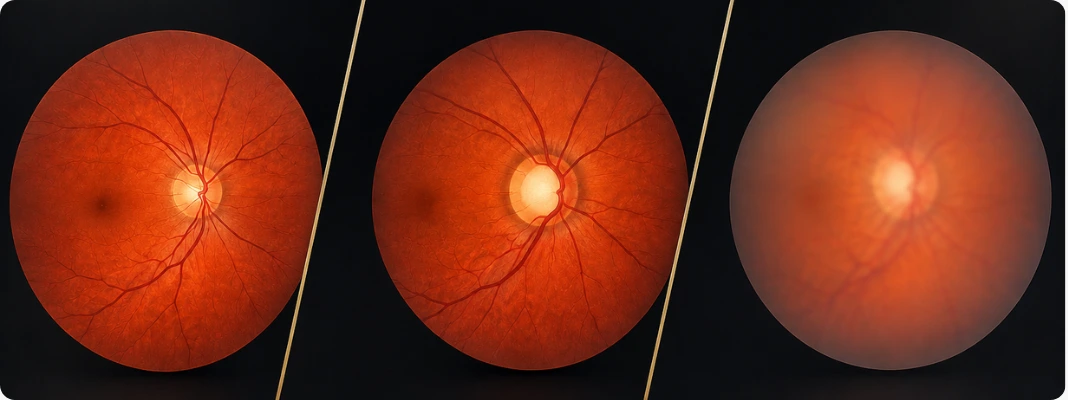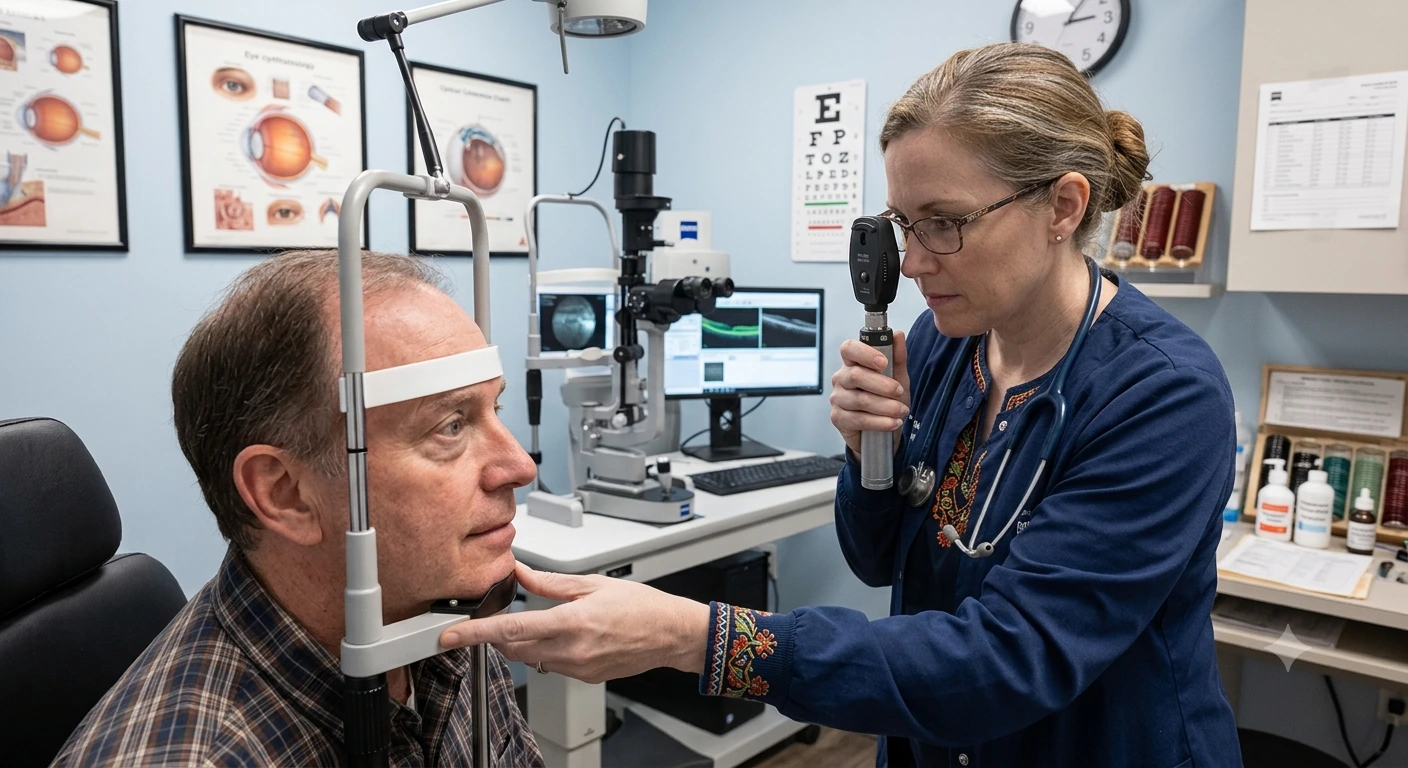
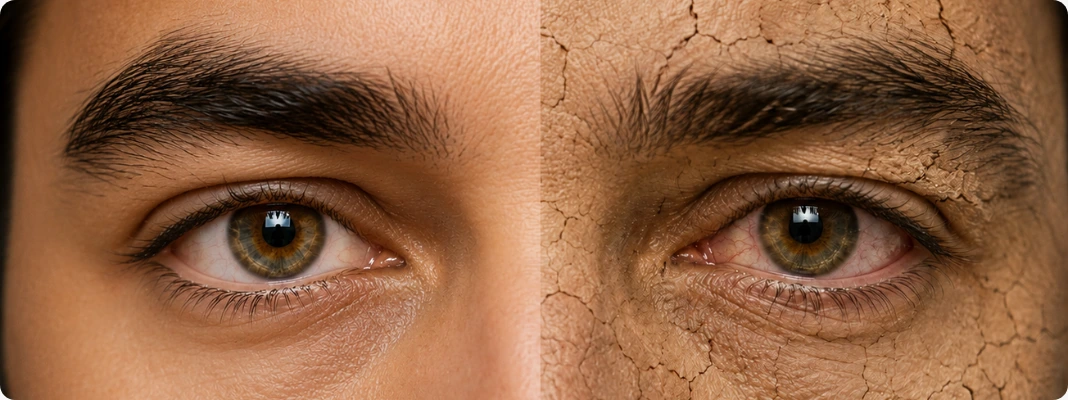
Your eyes should not feel like they are running on low battery by lunchtime. Gritty, burning, watery, or blurry eyes can turn simple things like screens, reading, driving, and wearing contacts into a daily hassle. Dry eye affects nearly 16.4 million Americans, according to the National Eye Institute, and it can make everyday things like screens, reading, driving, and wearing contacts feel harder than they should.
What causes dry eyes usually comes down to tears that are not keeping your eyes comfortable, but the reason behind that can be screen time, contacts, allergies, medications, aging, dry air, or an eye-health issue. If dryness regularly affects your lens wear, contacts for dry eyes can help you compare prescribed options after an eye care professional evaluates your tear film, fit, and symptoms.
What causes dry eyes?
Dry eyes are caused by tears that are too few, too unstable, poor quality, or evaporating too quickly. Your tear film helps keep the surface of your eyes smooth, wet, and comfortable, so when that system breaks down, your eyes may feel dry, gritty, irritated, watery, red, or blurry. That is why dry eye causes are not always as simple as “not enough tears.”
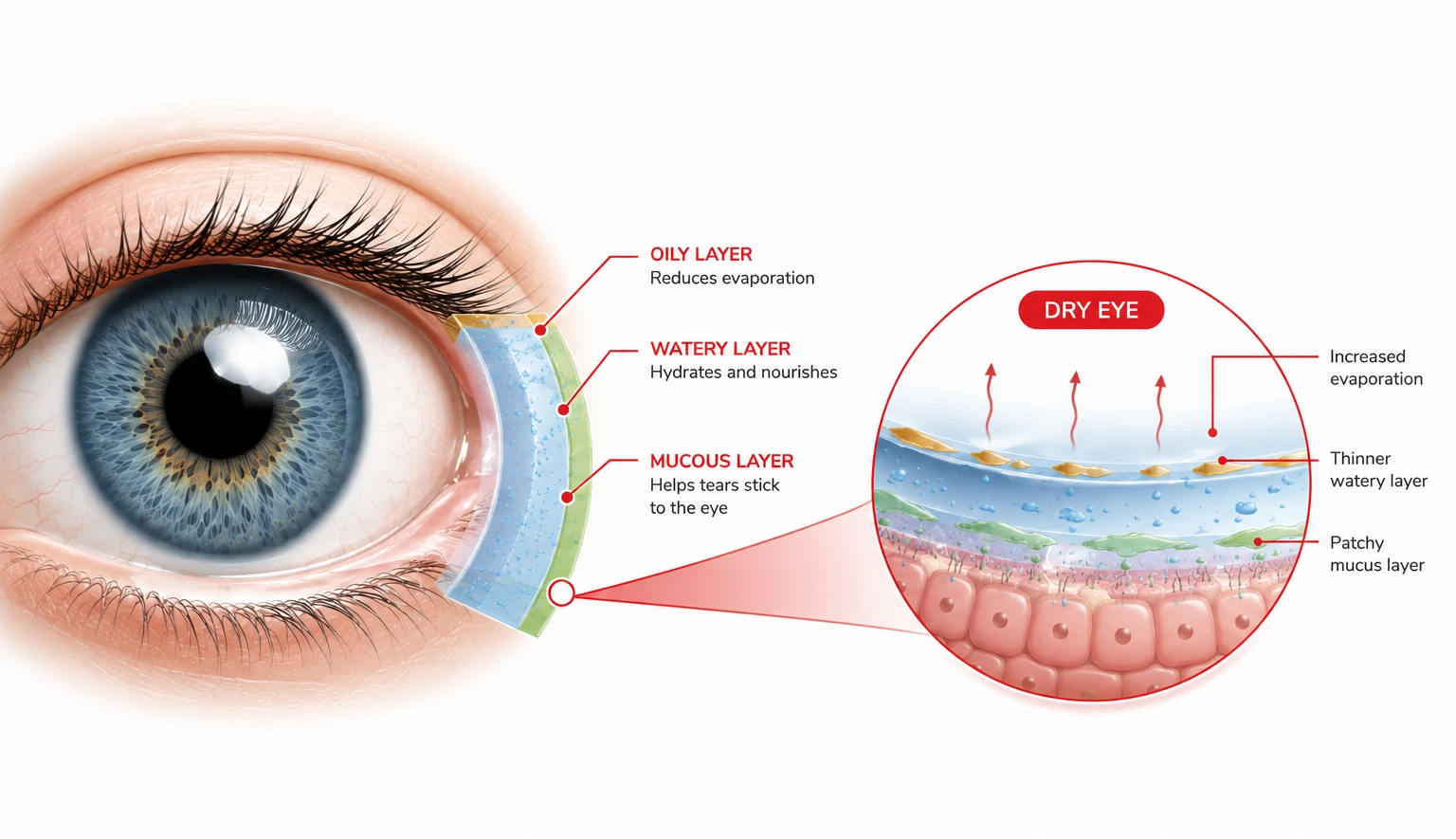
Common causes of dry eyes include aging, contact lens wear, screen time, dry or windy environments, allergies, medications, hormonal changes, eyelid gland problems, and certain health conditions. Some people make fewer tears, while others make tears that evaporate too fast or do not have the right balance of water, oil, and mucus. If dryness keeps coming back, affects your vision, or makes your contacts uncomfortable, an eye care professional can help identify what is really going on.
When lenses contribute to irritation, your eye care professional may recommend comfortable contact lenses that better match your prescription, eye surface, and wearing routine.
How do tears keep your eyes comfortable?
Tears are not just water. A healthy tear film helps keep the front of your eye smooth, clear, moist, and protected, so your vision can stay comfortable and steady. When that tear film is out of balance, eye dryness can show up as burning, grittiness, watering, redness, or blurry vision.
Dry eyes can happen when your tear glands do not make enough tears, but it can also happen when tears evaporate too quickly or do not work well enough. That is why two people can both have dry eye symptoms but need different next steps. One person may need help with tear production, while another may need help keeping tears from drying out too fast.
For some wearers, daily disposable contact lenses may reduce deposit buildup because each wearing day begins with a fresh prescribed pair.
What are the most common causes of dry eyes?
The most common causes of dry eyes usually involve tear production, tear quality, tear evaporation, or everyday triggers that make your eyes work harder. This quick guide connects common dry eye causes with what you may notice first and what to try safely before symptoms get worse.
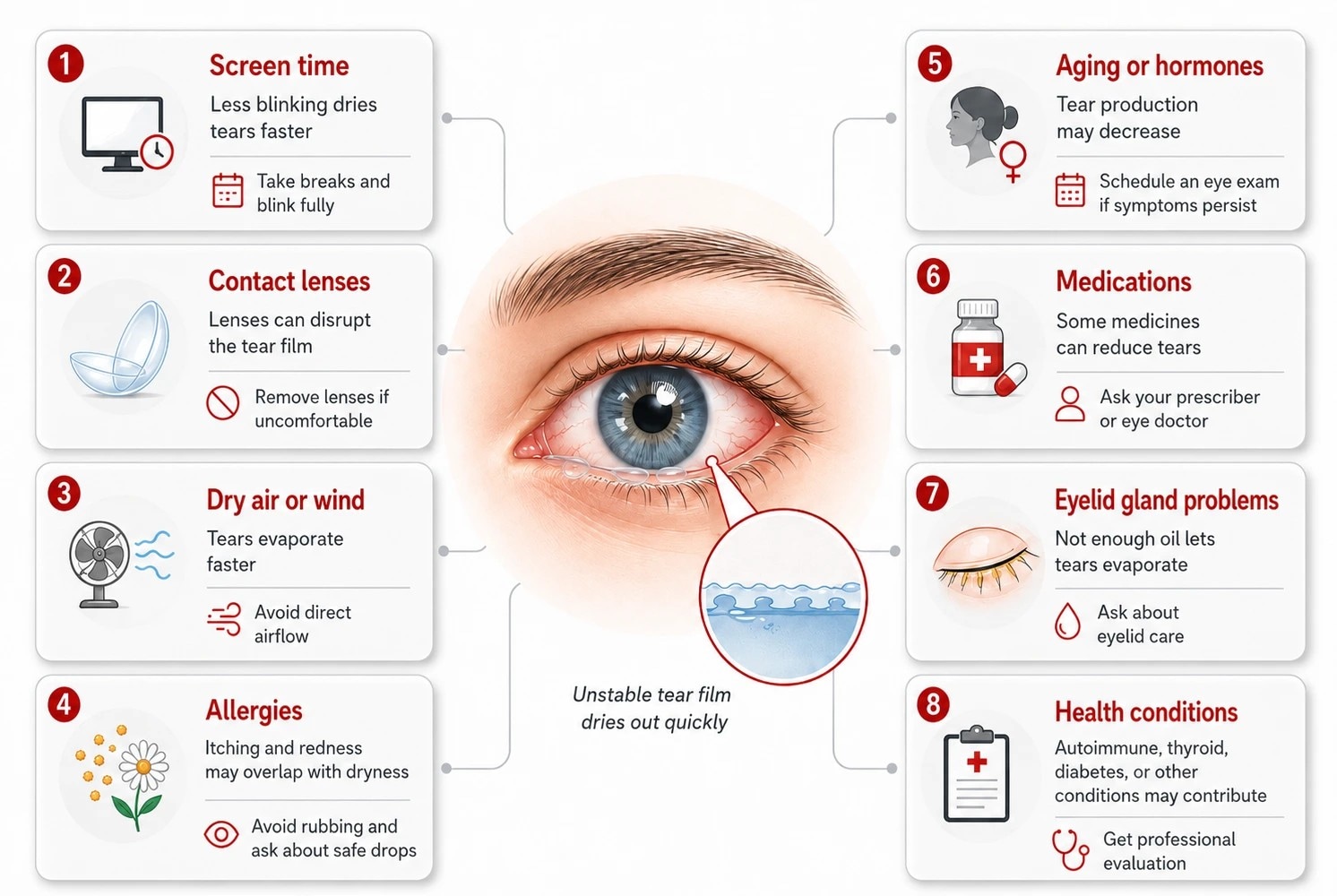
Note: Dry eyes often have more than one cause. You may have screen-related dryness, contact lens dryness, and allergy irritation at the same time. If symptoms continue, keep coming back, affect your contacts, or come with pain, redness, discharge, light sensitivity, or vision changes, schedule an eye exam.
Do your eyes feel dry, itchy, or watery when cold air or wind hits your face? Try easy tips to stop watery eyes in cold or windy weather so outdoor triggers do not keep making irritation worse.
Why do my eyes feel dry after wearing contacts?
Your eyes may feel dry after wearing contacts because lenses sit directly on your tear film, the thin layer that keeps the eye surface smooth and comfortable. Contacts do not always cause dry eyes by themselves, but they can make existing dryness more noticeable or affect how tears spread across the eye. Long wear time, buildup on reusable lenses, poor fit, old lenses, solution sensitivity, dry air, and screen time can all make contact lens dryness worse.
Daily disposable lenses may reduce buildup for some wearers because you start with a fresh pair each day, but they are not automatically right for every prescription or eye. Reusable weekly, biweekly, and monthly lenses need careful cleaning and on-time replacement, while extended-wear lenses should only be used exactly as prescribed. Remove your contacts if your eyes feel painful, very red, light sensitive, unusually watery, or blurry, and do not use redness-relief drops, tap water, or saliva to “fix” dry contacts.
For safer contact lens wear:
- Remove lenses when they feel painful, very dry, red, or blurry.
- Switch to glasses when your eyes need a break.
- Use only rewetting drops labeled safe for contact lenses.
- Do not rinse or store lenses in water or saliva.
- Replace reusable lenses on schedule.
- Clean and store reusable lenses only as directed.
- Ask an eye care professional about lens material, fit, replacement schedule, solution, and contact lens-safe drops.
Do your lenses start clear, then feel hazy or filmy as the day goes on? Learn why contact lenses get foggy so you can spot dryness, deposits, or fit issues sooner.
Can screen time cause dry eyes?
Yes, screen time can contribute to dry eyes because people often blink less when focusing on a computer, tablet, phone, or e-reader. Blinking helps keep the front surface of the eye moist, so fewer full blinks can let tears evaporate faster. That is why dry eyes from screen time can show up during office work, reading, gaming, video calls, or late-night scrolling.
Screen time can also make contact lenses feel drier because your eyes are dealing with both reduced blinking and a lens sitting on the tear film. You may notice eye strain, burning, tired eyes, or blurry vision that comes and goes. If your contacts feel dry during long screen sessions, switching to glasses for part of the day may help your eyes feel less overworked.
To reduce screen-related dryness:
- Blink fully and intentionally during screen work.
- Take regular screen breaks.
- Keep air vents or fans from blowing toward your face.
- Position the screen slightly below eye level when possible.
- Use contact lens-compatible rewetting drops only if approved for your lenses.
- Switch to glasses if contacts feel dry during long screen sessions.
Do screens make your contacts feel dry faster during work, gaming, or late-night scrolling? Explore contact lenses that can make screen time more comfortable so you know what features to ask about.
Can allergies and dry air cause dry eyes?
Yes, allergies and dry air can both make dry eyes feel worse, and they can overlap in the same very annoying way. Dry air, wind, low humidity, heating, air conditioning, airplanes, and dusty spaces can make tears evaporate faster. When your tears dry out too quickly, your eyes may feel gritty, irritated, watery, or blurry.
Allergies can add itching, watering, redness, and the strong urge to rub your eyes. Rubbing may feel good for a second, but it can spread allergens around the eye area and make irritation worse. Smoke, dust, pollen, pet dander, and other allergens can also irritate the eye surface, so dry eyes from allergies may not feel like simple dryness.
If you wear contacts, remove your lenses when your eyes feel itchy, red, painful, blurry, or unusually irritated. Do not keep wearing lenses just because the dryness seems mild at first. Ask an eye care professional which allergy drops are safe with your contacts, since not every eye drop should be used while lenses are in.
Can medications or health conditions cause dry eyes?
Yes, medications and health conditions can cause or worsen dry eyes, but you should not stop a prescription medicine without talking to your prescriber. The National Eye Institute notes that some medicines for colds and allergies, depression, and high blood pressure can contribute to dry eye, and health problems such as diabetes, thyroid problems, lupus, and Sjögren syndrome may also play a role.
Possible medication and health-related dry eye risk factors include:
- Allergy and cold medicines
- Some antidepressants
- Some blood pressure medicines
- Hormonal medications or hormone changes
- Acne medications such as isotretinoin
- Diabetes
- Thyroid problems
- Autoimmune conditions such as lupus, rheumatoid arthritis, and Sjögren syndrome
- Eye surgeries or laser vision correction
- Eyelid inflammation or meibomian gland dysfunction
If your symptoms started after a new medication, tell your prescriber or eye care professional. They can help you weigh your options without guessing or stopping treatment on your own.
Why are dry eyes worse in the morning or at night?
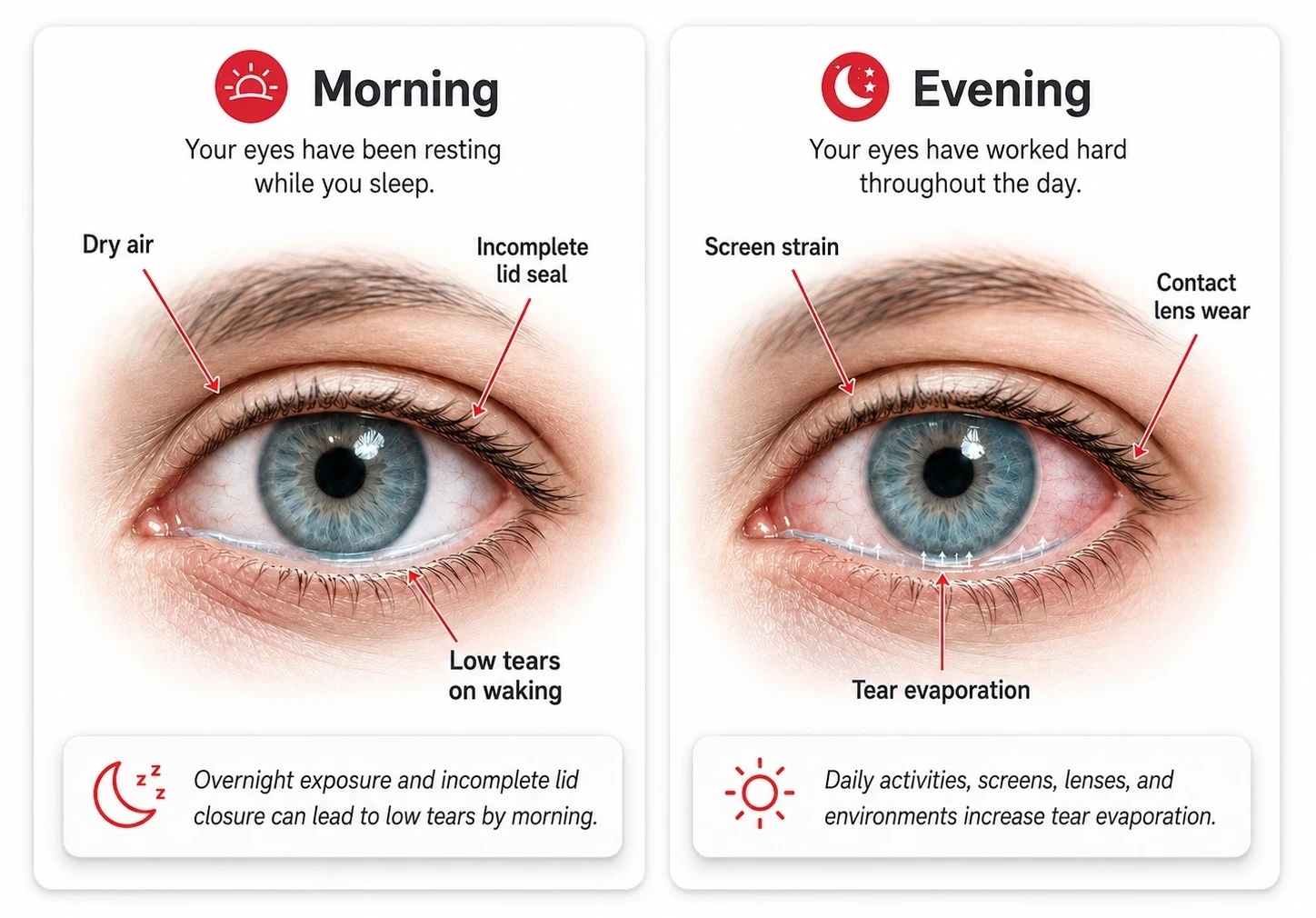
Dry eyes in the morning or dry eyes at night can happen because your tear film changes throughout the day and while you sleep. Dry rooms, fans, air vents, screen time, contact lens wear, allergies, and tear evaporation can all affect when symptoms show up most.
Dry eyes in the morning
Your eyes may feel dry when you wake up if your bedroom air is dry, a fan or vent blows toward your face, or your eyelids do not fully close during sleep. Some people also notice morning dryness from nighttime eye exposure, sleep masks that press near the eyes, or certain overnight ointments that temporarily blur vision. Do not sleep in daily-wear contacts, and ask an eye care professional if morning dryness happens often.
Dry eyes at night
Your eyes may feel drier at night because irritation can build up during the day. Screens, reading, driving, contact lens wear, air conditioning, heating, wind, low humidity, and allergies can all make tears evaporate faster by evening. Remove your contacts when they feel uncomfortable, and use only approved lubricating drops or ointments as directed.
What symptoms can come with dry eyes?
Dry eye symptoms can feel different from person to person, and they are not always limited to dryness. Some people feel burning or grittiness, while others notice watery eyes because irritation can trigger extra reflex tears. These watery tears may run down your face, but they do not always fix the tear-film problem.
Common symptoms may include:
- Dry, gritty, sandy, or scratchy feeling
- Burning or stinging
- Red eyes
- Watery eyes
- Blurry or fluctuating vision
- Eye fatigue
- Light sensitivity
- Stringy mucus
- Trouble wearing contact lenses comfortably
- Feeling like something is in the eye
Dry eye symptoms can overlap with allergies, infection, inflammation, injury, or contact lens complications. Pain, discharge, sudden vision changes, or worsening redness needs professional care.
How can you prevent dry eyes and reduce irritation?
You can help prevent dry eyes by reducing the things that make tears evaporate faster and by supporting your tear film throughout the day. Simple changes may help mild eye dryness, but dry eye treatment depends on the cause and may include artificial tears, prescription drops, eyelid care, punctal plugs, or other care from an eye doctor. The National Eye Institute recommends steps like using a humidifier, limiting screen time, taking screen breaks, and avoiding smoke and wind when dry eye is a concern.
Try these habits:
- Take screen breaks and blink fully.
- Avoid direct airflow from fans, vents, heaters, and car air.
- Use a humidifier if indoor air is very dry.
- Wear sunglasses or wraparound eyewear outdoors when wind bothers your eyes.
- Drink water regularly.
- Avoid smoke and smoky spaces.
- Use artificial tears as directed and choose preservative-free options if using drops often.
- Use only contact lens-safe drops while contacts are in.
- Clean reusable lenses exactly as directed.
- Replace lenses on schedule.
- Give your eyes glasses breaks when contacts feel dry.
If reusable lenses become uncomfortable as the day goes on, best daily contacts for dry eyes can help you compare fresh daily options after your provider confirms that the schedule suits your eyes.
When should you see an eye doctor for dry eyes?
You should see an eye doctor for dry eyes when symptoms keep coming back, interfere with daily life, affect contact lens wear, or come with pain, redness, light sensitivity, discharge, or vision changes.
Schedule an eye exam if:
- Dryness lasts more than a few days or keeps coming back.
- Your symptoms interfere with reading, driving, screen work, or contact lens wear.
- Your eyes are red, painful, or sensitive to light.
- Vision is blurry, dim, distorted, or getting worse.
- You have discharge, crusting, swelling, or a sore on the eye or eyelid.
- You feel like something is stuck in the eye.
- Dryness started after a new medication, surgery, or eye injury.
- You have dry mouth, joint pain, swelling, stiffness, or other symptoms with dry eyes.
- Contact lenses suddenly feel uncomfortable or painful.
- Symptoms do not improve with safe self-care.
Mild occasional dryness may improve with safer habits, but ongoing dry eyes and blurry vision should not be brushed off.
Dry eyes usually happen when your tears do not keep the eye surface wet, smooth, and stable. That may be because you do not make enough tears, your tears evaporate too quickly, or the tear film does not work as well as it should. Common triggers include screen time, contact lens wear, dry air, allergies, aging, medications, eyelid gland problems, and certain health conditions. Simple habits may help mild eye dryness, but persistent symptoms, pain, redness, discharge, light sensitivity, or blurry vision should be checked by an eye care professional.
Could dryness be making your current lenses harder to wear comfortably? Browse our contact lenses to compare prescribed options that may better fit your vision needs, replacement schedule, and wearing routine.
Disclaimer: This content is for general informational purposes only and is not a substitute for professional advice, diagnosis, or treatment.
References
Dry Eye. National Eye Institute. https://www.nei.nih.gov/eye-health-information/eye-conditions-and-diseases/dry-eye. Date Accessed: July 24, 2026.
Causes of Dry Eye. National Eye Institute. https://www.nei.nih.gov/eye-health-information/eye-conditions-and-diseases/dry-eye/causes-dry-eye. Date Accessed: July 24, 2026.
Dry Eyes. Cleveland Clinic. https://my.clevelandclinic.org/health/diseases/24479-dry-eye. Date Accessed: July 24, 2026.
Dry eyes. Mayo Clinic Staff. https://www.mayoclinic.org/diseases-conditions/dry-eyes/symptoms-causes/syc-20371863. Date Accessed: July 24, 2026.
Preventing Eye Infections When Wearing Contacts. Centers for Disease Control and Prevention. https://www.cdc.gov/contact-lenses/prevention/index.html. Date Accessed: July 24, 2026.