
Photochromic Contact Lenses
Photochromic contact lenses are contacts that adjust to changing light. They darken in bright conditions and fade back toward clear in softer light, so your eyes don't have to work as hard when you move between indoor and outdoor settings.
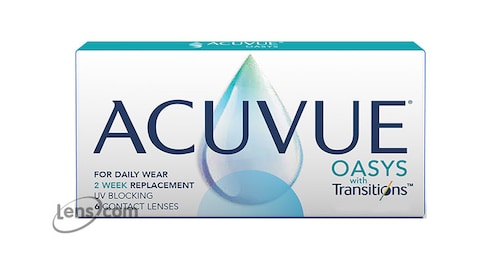
Lens.com carries one of the best-known photochromic contact lens options: ACUVUE OASYS with Transitions. These biweekly contacts feature Transitions Light Intelligent Technology, which helps balance light, reduce glare, and add built-in UV protection for everyday wear. You can also find discounts of up to 70% off retail prices when ordering here at Lens.com.
to
Why Choose A Photochromic Contact Lens?
Photochromic contact lenses are worth considering if bright light, glare, or frequent lighting changes bother your eyes during the day. They're made for people who move between different environments, such as indoors, outdoors, shaded areas, bright sidewalks, cars, offices, classrooms, and rooms with strong overhead lighting.
They Adjust As Light Changes
The main appeal of photochromic contacts is that they react to light. When you're in brighter conditions, the lenses darken. When the lighting softens, they fade back toward clear.
That light-adaptive feature can make everyday transitions feel less harsh. For example, stepping outside on a sunny afternoon, walking near reflective surfaces, or sitting beside a bright window may feel more comfortable than wearing regular clear contacts alone.
They Can Make Glare Feel Less Distracting
Glare can come from sunlight, headlights, shiny surfaces, glass, water, pavement, and indoor lighting. Photochromic contacts are designed to manage changing light, which may make glare feel less intense during regular activities.
This can be helpful if you drive during the day, spend time outdoors, work near windows, or move in and out of bright spaces often. The lenses don't block every source of glare, but they add another layer of light management directly on the eye.
They're Still Everyday Contact Lenses
ACUVUE OASYS with Transitions is not a specialty lens you wear only once in a while. It's a 2-week silicone hydrogel contact lens designed for daily wear, which makes it a practical option if your eye doctor prescribes it for your vision needs.
It corrects nearsightedness or farsightedness while adding light-adaptive benefits. That means you're not choosing between vision correction and light management. You're getting both in one lens.
They Don't Replace Sunglasses
Photochromic contacts can reduce how much your eyes react to light changes, but they're not a full replacement for sunglasses. Contacts only cover part of the eye. Sunglasses cover more of the eye area and also protect the skin around your eyes.
For outdoor wear, UV-blocking sunglasses are still recommended, especially in strong sun. Think of photochromic contacts as an added comfort feature, not your only layer of sun protection.
They Fit People With Active, Changing Routines
A photochromic contact lens may be a good fit if your day doesn't happen in one lighting condition. You might be indoors for work, outside during lunch, in the car later, and back under artificial lighting at night.
For that kind of routine, ACUVUE OASYS with Transitions gives you a contact lens that reacts throughout the day instead of staying the same in every setting. If your prescription matches the lens and your eye doctor approves it, it can be a smart upgrade from standard clear contacts.
How to Get a Rebate for Photochromic Lenses
|
box rebate
Rebate amount with a 8 box purchase
|
Contact Lens Manufacturer
|
Contact Lens Type
|
Contact Lens Material Type
|
Contact Lens Water Content Percentage
|
Contact Lens Blocks UV
|
Each Box Contains
|
Average Star Rating
|
|
|---|---|---|---|---|---|---|---|---|
| Acuvue Oasys with Transitions | $160 | Johnson & Johnson | Weekly | Silicone Hydrogel | 38% | 6 lenses, a 3-month supply |
|
Are Photochromic Contacts Expensive?
Photochromic contacts can cost more than standard clear contacts because they include light-adaptive technology. This is because apart from vision correction, you're also paying for a lens that reacts to changing light, offers UV blocking, and adds another comfort feature for people who deal with glare or brightness.
The final cost depends on your prescription, box count, retailer, shipping, taxes, fees, and any savings available at the time of purchase. Lens.com may help lower your out-of-pocket cost through online discounts, product offers, rebates when available, and insurance reimbursement if your plan allows it.
If you wear contacts every day, it also helps to compare the cost per day instead of only looking at the box price. A lens may look more expensive upfront, but the real question is how it fits your routine, prescription, and budget over time.
How Do Photochromic Lenses Work?
Photochromic contacts use light-sensitive molecules inside the lens material. When those molecules are exposed to UV light or certain types of bright light, they react by changing structure. That reaction makes the lens darken.
When the light changes again, the lens fades back toward clear. ACUVUE OASYS with Transitions was designed to move from clear to dark in bright light and back again when the lighting softens.
This makes the lens useful for daily activities where lighting shifts often, such as walking outside, driving during the day, entering a bright room, or moving between indoor and outdoor spaces.
Still, photochromic contacts are not sunglasses. They can help manage light, but you should still wear sunglasses outdoors for fuller UV protection, especially because sunglasses protect more of the eye area than contacts can.
Are Photochromic Contacts Cheaper Online Than in Stores?
Photochromic contacts may be cheaper online than in stores, especially if you already have a valid prescription and are reordering the exact lens your eye doctor prescribed. Online retailers usually focus on contact lens replacement orders, which can help lower prices compared with some in-office or optical store purchases.
That said, the lowest box price is not always the lowest final price. Compare the full order total, including shipping, taxes, fees, rebates, and insurance reimbursement. A better deal is the one that gives you the right lenses, verifies your prescription, and keeps the final cost reasonable.
How to Buy Photochromic Lenses Online
Buying photochromic contacts online is simple when you already know the exact lens your eye doctor prescribed. At Lens.com, the process is built around matching your order to your valid contact lens prescription.
- Search for ACUVUE OASYS with Transitions on Lens.com.
- Choose the prescription details for each eye.
- Select the number of boxes you need.
- Enter your eye doctor's name and phone number, or upload your prescription if you have a copy.
- Review pricing, shipping, taxes, fees, rebates, and the final order total.
- Place your order and let Lens.com verify your prescription before shipping.
Don't switch into photochromic contacts on your own just because the feature sounds useful. Contact lenses vary by brand, material, fit, diameter, base curve, and replacement schedule. Your eye doctor should confirm that the lens is right for your eyes.
How to Read a Prescription for Photochromic Contact Lenses
A contact lens prescription is different from a glasses prescription. For photochromic contacts, the prescription should name the exact contact lens brand or product your eye doctor prescribed.
For ACUVUE OASYS with Transitions, your prescription may include:
- OD and OS: OD means right eye, and OS means left eye.
- Brand or lens name: This tells you the exact contact lens your eye doctor approved.
- Power or sphere: This corrects nearsightedness or farsightedness.
- Base curve: This helps describe how the lens fits the curve of your eye.
- Diameter: This refers to the width of the contact lens.
- Expiration date: This tells you how long the prescription is valid.
ACUVUE OASYS with Transitions is a spherical lens, so it is made for standard nearsightedness or farsightedness prescriptions. If you have astigmatism or presbyopia, ask your eye doctor which lens is right for your specific prescription.
How to Use Insurance to Buy Photochromic Contacts Online
Lens.com supports vision insurance through out-of-network reimbursement. This means your insurance benefit usually won't apply directly at checkout. Instead, you pay for your photochromic contacts first, then submit a claim to your vision plan.
The usual process is:
- Order your photochromic contacts from Lens.com.
- Download or request an itemized insurance-friendly invoice.
- Fill out your vision plan's out-of-network claim form.
- Submit the claim form, invoice, and proof of payment if required.
- Wait for your insurance carrier to review the claim and decide the reimbursement amount.
Your reimbursement depends on your plan. Some plans cover contacts under a materials benefit, while others may have limits, frequency rules, or no out-of-network reimbursement. Before ordering, check your contact lens allowance, claim deadline, and required documents.
For more details, check out the Lens.com vision insurance guide.
Why Shop Photochromic Contacts at Lens.com?
Photochromic contacts are more specialized than standard clear lenses, so it helps to order from a retailer that makes pricing, prescription verification, and reorders easier. Lens.com gives you a way to shop ACUVUE OASYS with Transitions online while still following the prescription process.
Photochromic Contact Lens Discounts
Lens.com offers competitive pricing on contact lenses, including ACUVUE OASYS with Transitions. Depending on the product and current offers, you may also see rebates or savings options that can lower your final cost.
Before you buy, review the full order total. Look at the box price, quantity, shipping, taxes, fees, rebates, and delivery options. That gives you a clearer idea of what you'll actually pay.
Prescription Verification With Your Eye Doctor
You don't need to have a paper prescription in hand to order photochromic contacts from Lens.com. You can enter your eye doctor's name and phone number, and Lens.com can contact them to verify your prescription. If you already have a copy, you can upload, email, or fax it.
This step matters because photochromic contacts still need to match your prescribed lens. The light-adaptive feature does not replace fit details such as brand, power, base curve, and diameter.
Prescription verification also helps prevent ordering mistakes. It keeps the order tied to the lens your eye doctor approved, instead of treating photochromic contacts like a general upgrade anyone can choose.
AutoRefill For Future Orders
If you wear photochromic contacts regularly, AutoRefill can help you stay stocked. You can sign up during checkout, choose your delivery schedule, and receive future orders based on the timing you select.
AutoRefill also gives you 5% off future orders. Lens.com sends an email before the order ships, and you can adjust your delivery date, shipping address, payment method, or quantity when needed.
You can also snooze or cancel AutoRefill through your account. That flexibility matters if your prescription changes, your eye doctor switches your lens, or you simply don't need your next shipment yet.
Photochromic contacts are a good option if you want vision correction with light-adaptive benefits. Shop ACUVUE OASYS with Transitions at Lens.com, follow your eye doctor's prescription, and compare your full order total before checkout.
References
ACUVUE OASYS with Transitions Contact Lenses. Lens.com. https://www.lens.com/contact-lenses/acuvue-oasys-with-transitions/. Published Date Not Listed. Accessed July 7, 2026.
AutoRefill Subscribe & Save. Lens.com. https://www.lens.com/autorefill/. Published Date Not Listed. Accessed July 7, 2026.
Buying Contact Lenses. U.S. Food and Drug Administration. https://www.fda.gov/medical-devices/contact-lenses/buying-contact-lenses. Published October 28, 2020. Accessed July 7, 2026.
Contact Lens Prescription. U.S. Food and Drug Administration. https://www.fda.gov/medical-devices/contact-lenses/contact-lens-prescription. Published October 28, 2020. Accessed July 7, 2026.
Contact Lenses That Darken When Exposed To Light? Check Out The New ACUVUE OASYS With Transitions Light Intelligent Technology. Johnson & Johnson. https://www.jnj.com/innovation/how-does-acuvue-oasys-with-transitions-light-intelligent-technology-work. Published April 1, 2019. Accessed July 7, 2026.
Discontinued ACUVUE Products. ACUVUE. https://www.acuvue.com/en-us/products/discontinued-products/. Published Date Not Listed. Accessed July 7, 2026.
How Does Rx Prescription Verification Work? Lens.com. https://www.lens.com/faq/rx-verification/. Published Date Not Listed. Accessed July 7, 2026.
Online Vision Test And Eye Exam. Lens.com. https://www.lens.com/vision-test/. Published Date Not Listed. Accessed July 7, 2026.
Order Contact Lenses Online With Vision Insurance. Lens.com. https://www.lens.com/vision-insurance/. Published Date Not Listed. Accessed July 7, 2026.
The Contact Lens Rule, A Guide For Prescribers And Sellers. Federal Trade Commission. https://www.ftc.gov/business-guidance/resources/contact-lens-rule-guide-prescribers-sellers. Published Date Not Listed. Accessed July 7, 2026.