Contact Lens Prescription Explained
A contact lens prescription can look unfamiliar when it includes several abbreviations, numbers, and product details. Having a contact lens prescription explained in clear language can make the document less confusing and help you feel more prepared when reviewing your choices. It also gives you a clearer sense of why contact lens prescriptions contain more information than standard eyeglass prescriptions.
Your prescription connects the lenses you wear with the vision correction and fitting choices made by your eye care professional. Learning how to read it can make refills and product comparisons easier, including when comparing different types of contact lenses. It can also help you notice when a box, online form, or previous order doesn't match the document in front of you. Explore the contact lenses below based on your prescribed product and replacement schedule. You'll find detailed explanations of the different prescription fields throughout the page, along with factors that can help you choose comfortable contact lenses that fit your needs.
to
to
to
to
to
to
to
to
to
to
to
to
to
to
to
to
to
to
to
to
to
to
to
to
to
to
to
to
to
to
to
to
to
to
to
to
to
How Can You Read a Contact Lens Prescription?
Begin by separating the prescription into three areas, including the patient and prescriber details, the values for each eye, and the prescribed contact lenses product. Most forms place the right and left eyes on separate rows so their information can be read independently. Working across one row at a time reduces the chance of mixing values between the eyes.
- Confirm that the patient name is correct.
- Locate the rows for the right and left eyes.
- Find complete contact lens brands or manufacturers.
- Read the sphere or power value for each eye.
- Check the base curve and diameter.
- Look for cylinder and axis when toric contact lenses are prescribed.
- Look for add power when multifocal contacts are prescribed.
- Review any lens color, material, or design notes.
- Check the issue and expiration dates.
- Confirm the prescriber's name and contact details.
- Compare every order field with the written prescription before checkout.
A blank field doesn't always mean that something is missing. Spherical contacts don't use cylinder or axis values, while single-vision contacts don't use an add designation. The fields on the document should reflect the type of contact lens fitted by your eye care professional.
Which Fields Can Appear on a Contact Lens Prescription?
The exact layout can differ between eye care offices, and specialty prescriptions can contain extra measurements or design notes. Even so, most prescriptions include information that identifies the patient, the lenses, and the correction needed for each eye. Reading each field in context makes the numbers easier to follow.
Patient and Prescriber Information
The prescription should identify the patient and the eye care professional who issued it. It can also include the examination date, issue date, expiration date, office address, phone number, and fax number. Sellers use these details when reviewing the document or contacting the prescriber for verification. Check that the patient name matches the name used for the order.
Contact Lens Brand or Manufacturer
Contact lens prescriptions are product-specific. The document can list the manufacturer, complete product name, material, or an equivalent private-label product when applicable. Lenses with the same power can differ in shape, material, optical design, and available measurements. A brand or product change should be handled through your eye care professional rather than through a checkout substitution.
Power or Sphere
Power, also called sphere or SPH, describes the main amount of vision correction in the lens. Minus values are used for nearsighted correction, while plus values are used for farsighted correction. The number is measured in diopters and commonly changes in 0.25 increments. A value of 0.00 can also appear as plano or PL.
Base Curve
Base curve, commonly shown as BC, is a curve measurement connected with the back surface of the contact lens. It is one part of the product configuration selected during the fitting. Some lenses are manufactured in one base curve, while others have more than one choice. Copy the value from the prescription instead of selecting another option based on availability.
Diameter
Diameter, commonly shown as DIA, records the width of the contact lens in millimeters. It works with the rest of the lens design to help the product sit as intended on the eye. The available diameter depends on the product. An eyeglass prescription won't include this contact lens measurement.
Cylinder and Axis
Cylinder, shown as CYL, and axis appear on prescriptions for toric contacts that correct astigmatism. Cylinder records the amount of astigmatism correction, while axis identifies its orientation from 0 to 180 degrees. These two fields work together and should be entered exactly as written. A nearby axis or cylinder value isn't an equivalent choice.
Add Power
Add power, shown as ADD, appears on many multifocal contact lens prescriptions. It identifies the near-vision support used within the multifocal design. Some brands use numbers, while others use labels such as low, medium, or high. Follow the wording written for the prescribed product rather than translating it into another brand's system.
Issue and Expiration Dates
The issue date shows when the prescription was released after the fitting was completed. The expiration date shows how long the document can be used to purchase contact lenses. Federal rules set a minimum prescription period of one year unless the prescriber documents a medical reason for a shorter duration. State rules can require a longer period.
Contact Lens Options by Replacement Schedule
Biofinity
Acuvue Oasys for Astigmatism
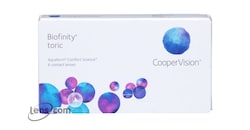
Biofinity Toric
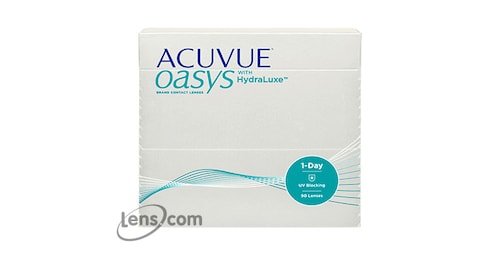
Acuvue Oasys 1-Day with Hydraluxe
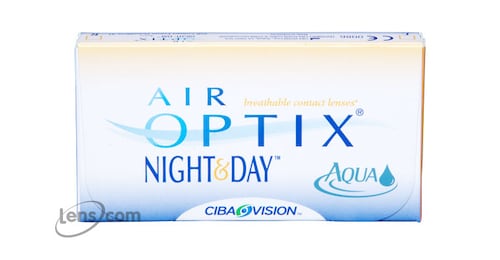
Air Optix Night & Day Aqua
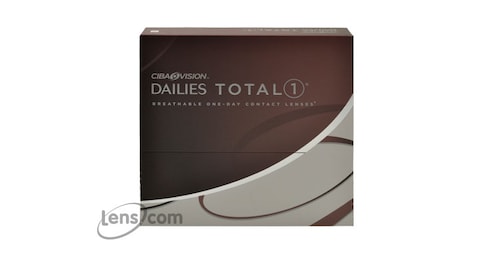
Dailies Total 1
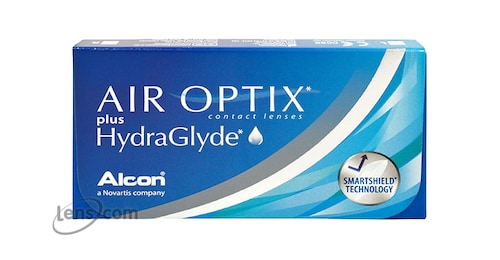
Air Optix plus HydraGlyde
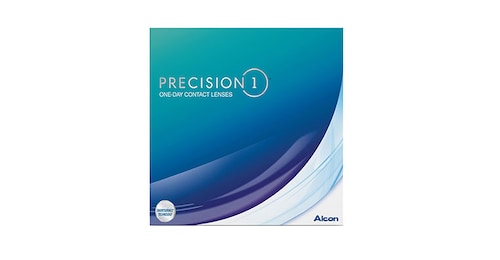
Precision1
Contact Lens Brands, Schedules, Materials, and Features
|
Average Cost per day
|
Contact Lens Manufacturer
|
Contact Lens Type
|
Contact Lens Material Type
|
Contact Lens Water Content Percentage
|
Contact Lens Blocks UV
|
Each Box Contains
|
Average Star Rating
|
|
|---|---|---|---|---|---|---|---|---|
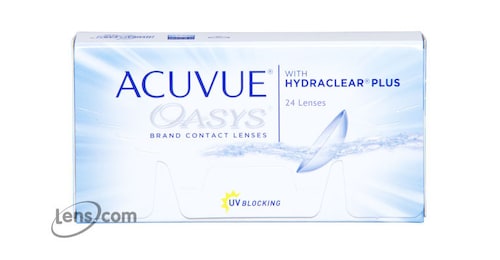
| Acuvue Oasys | $0.58 | Johnson & Johnson | Weekly | Silicone Hydrogel | 38% | 12 lenses, a 6-month supply |
|
|
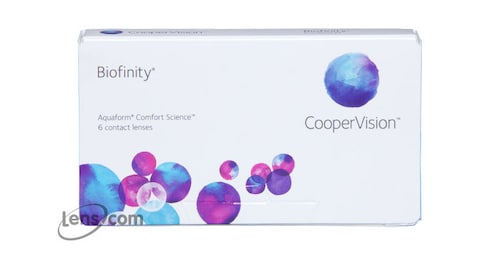
| Biofinity | $0.35 | CooperVision | Monthly | Silicone Hydrogel | 48% | 6 lenses, a 6-month supply |
|
|
| Acuvue Oasys for Astigmatism | $0.87 | Johnson & Johnson | Weekly | Silicone Hydrogel | 38% | 6 lenses, a 3-month supply |
|
|
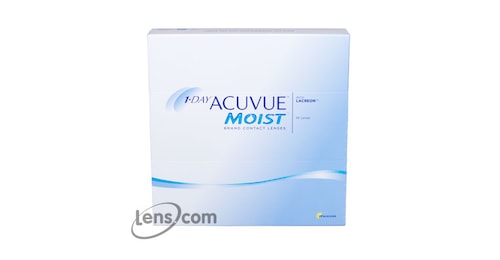
| 1-Day Acuvue Moist | $1.37 | Johnson & Johnson | Daily | Hydrogel | 58% | 30 lenses, a 1-month supply |
|
|
| Biofinity Toric | $0.39 | CooperVision | Monthly | Hydrogel | 48% | 6 lenses, a 6-month supply |
|
|
| Acuvue Oasys 1-Day with Hydraluxe | $1.29 | Johnson & Johnson | Daily | Silicone Hydrogel | 38% | 90 lenses, a 3-month supply |
|
|
| Air Optix Night & Day Aqua | $0.73 | Alcon | Monthly | Silicone Hydrogel | 24% | 6 lenses, a 6-month supply |
|
|
| Dailies Total 1 | $1.51 | Alcon | Daily | Silicone Hydrogel | 33% | 90 lenses, a 3-month supply |
|
|
| Air Optix plus HydraGlyde | $0.43 | Alcon | Monthly | Silicone Hydrogel | 33% | 6 lenses, a 6-month supply |
|
|
| Precision1 | $0.96 | Alcon | Daily | Silicone Hydrogel | 51% | 90 lenses, a 3-month supply |
|
|
| Biofinity Multifocal | $0.55 | CooperVision | Monthly | Silicone Hydrogel | 48% | 6 lenses, a 6-month supply |
|
|
| 1-Day Acuvue Moist for Astigmatism | $1.61 | Johnson & Johnson | Daily | Hydrogel | 58% | 30 lenses, a 1-month supply |
|
|
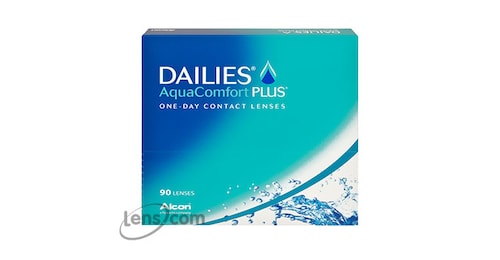
| Dailies AquaComfort Plus | $1.08 | Alcon | Daily | Hydrogel | 69% | 90 lenses, a 3-month supply |
|
|
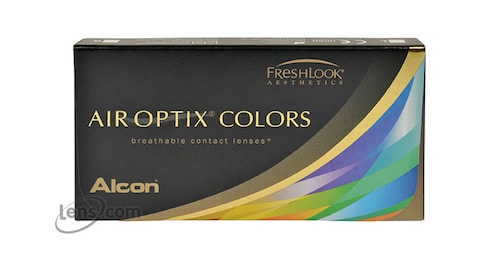
| Air Optix Colors | $0.76 | Alcon | Monthly | Silicone Hydrogel | 33% | 6 lenses, a 6-month supply |
|
|
| Air Optix plus HydraGlyde Multifocal | $0.69 | Alcon | Monthly | Silicone Hydrogel | 33% | 6 lenses, a 6-month supply |
|
How Contact Lens Rebates Work
|
box rebate
Rebate amount with a 4 box purchase
|
box rebate
Rebate amount with a 8 box purchase
|
box rebate
Rebate amount with a 2 box purchase
|
Contact Lens Manufacturer
|
Contact Lens Type
|
Contact Lens Material Type
|
Contact Lens Water Content Percentage
|
Contact Lens Blocks UV
|
Each Box Contains
|
Average Star Rating
|
|
|---|---|---|---|---|---|---|---|---|---|---|
| Acuvue Oasys | $50 | -- | -- | Johnson & Johnson | Weekly | Silicone Hydrogel | 38% | 12 lenses, a 6-month supply |
|
|
| Biofinity | $55 | -- | -- | CooperVision | Monthly | Silicone Hydrogel | 48% | 6 lenses, a 6-month supply |
|
|
| Acuvue Oasys for Astigmatism | -- | $60 | -- | Johnson & Johnson | Weekly | Silicone Hydrogel | 38% | 6 lenses, a 3-month supply |
|
|
| 1-Day Acuvue Moist | -- | $130 | $20 | Johnson & Johnson | Daily | Hydrogel | 58% | 30 lenses, a 1-month supply |
|
|
| Biofinity Toric | $70 | -- | -- | CooperVision | Monthly | Hydrogel | 48% | 6 lenses, a 6-month supply |
|
|
| Acuvue Oasys 1-Day with Hydraluxe | -- | $90 | -- | Johnson & Johnson | Daily | Silicone Hydrogel | 38% | 90 lenses, a 3-month supply |
|
|
| Air Optix Night & Day Aqua | $85 | -- | -- | Alcon | Monthly | Silicone Hydrogel | 24% | 6 lenses, a 6-month supply |
|
|
| Dailies Total 1 | -- | $150 | -- | Alcon | Daily | Silicone Hydrogel | 33% | 90 lenses, a 3-month supply |
|
|
| Air Optix plus HydraGlyde | $40 | -- | -- | Alcon | Monthly | Silicone Hydrogel | 33% | 6 lenses, a 6-month supply |
|
|
| Precision1 | -- | $105 | -- | Alcon | Daily | Silicone Hydrogel | 51% | 90 lenses, a 3-month supply |
|
|
| Biofinity Multifocal | $70 | -- | -- | CooperVision | Monthly | Silicone Hydrogel | 48% | 6 lenses, a 6-month supply |
|
|
| 1-Day Acuvue Moist for Astigmatism | -- | $90 | $20 | Johnson & Johnson | Daily | Hydrogel | 58% | 30 lenses, a 1-month supply |
|
|
| Dailies AquaComfort Plus | -- | $115 | -- | Alcon | Daily | Hydrogel | 69% | 90 lenses, a 3-month supply |
|
|
| Air Optix Colors | -- | -- | $20 | Alcon | Monthly | Silicone Hydrogel | 33% | 6 lenses, a 6-month supply |
|
|
| Air Optix plus HydraGlyde Multifocal | $80 | -- | -- | Alcon | Monthly | Silicone Hydrogel | 33% | 6 lenses, a 6-month supply |
|
What Do OD, OS, and OU Mean?
OD refers to the right eye, while OS refers to the left eye. These abbreviations come from the Latin terms oculus dexter and oculus sinister. Some forms use the words "right" and "left" instead, but the ordering process is the same when you order contact lenses online.
Read the full OD row before moving to the OS row. One eye can have a different power, cylinder, axis, add value, or lens design. Separate boxes are needed when the orderable values aren't identical between the eyes.
OU means both eyes. This abbreviation appears more frequently in clinical notes than in product-ordering rows. When an online form requests separate right-eye and left-eye values, use the OD and OS entries rather than copying an OU note into both sides.
How Do You Read Plus and Minus Powers?
The sign in front of the sphere value identifies the type of correction, while the number shows its strength in diopters. A minus sign is connected with nearsighted correction, and a plus sign is connected with farsighted correction. Since the signs represent different prescriptions, they can't be treated as interchangeable. Use these steps when checking the value:
- Find the sphere or power column for the correct eye.
- Read the plus or minus sign before looking at the number.
- Keep a minus sign with a minus prescription.
- Keep a plus sign with a plus prescription.
- Enter 0.00, plano, or PL only when the prescription shows that entry.
- Copy both digits after the decimal when the order form requests them.
- Check the other eye separately rather than repeating the first value.
- Compare the completed order with the written prescription before payment.
Prescription powers commonly change in quarter-diopter steps, such as -2.00, -2.25, and -2.50. Values farther from zero represent stronger amounts of correction. For example, -6.00 carries more minus correction than -2.00. Contact the prescriber when the sign or handwriting isn't clear.
Why Is a Contact Lens Prescription Different From an Eyeglass Prescription?
Glasses and contact lenses correct vision from different positions. Glasses sit in front of the eyes, while contacts rest directly on the tear film over the cornea. This difference can affect the prescribed power, especially with stronger corrections. Copying eyeglass numbers into a contact lens order can result in the wrong product.
How Contact Lenses Are Fitted
A contact lens fitting looks at more than visual clarity. The eye care professional evaluates how the lens centers, moves, covers the cornea, and behaves during blinking. Comfort and the wearer's response to the material and design also form part of the assessment. The final prescription identifies the product that performed as intended during this process.
Measurements Found Only on Contact Lens Prescriptions
A contact lens prescription can include the brand, material, base curve, diameter, cylinder, axis, add power, and other product-specific fields. These details help identify the lens fitted to the eye. An eyeglass prescription doesn't contain the same contact lens measurements. It should be used only for glasses.
Measurements More Common on Eyeglass Prescriptions
Eyeglass prescriptions can include pupillary distance, prism, and other information used to position lenses in a frame. These entries don't replace contact lens fitting measurements. Even when the sphere values look similar, the two prescriptions serve different purposes. Keep both documents clearly labeled when ordering eyewear.
How Are Toric Contact Lens Prescriptions Read?
Toric contacts correct astigmatism through a combination of sphere, cylinder, and axis values. These fields work together, so reading only the sphere leaves part of the prescription out. The full product name also needs to match since toric brands use different stabilization designs and parameter ranges.
Sphere provides the main nearsighted or farsighted correction. Cylinder records the amount of astigmatism correction, while axis identifies the direction of that correction in degrees. Axis values range from 0 to 180 and don't use a plus or minus sign.
Check all three values for each eye before choosing a box quantity. An axis of 180 isn't the same as an axis of 18, and a nearby cylinder value shouldn't be selected when the prescribed one is unavailable. Ask your eye care professional about any change rather than adjusting the prescription yourself.
What Does ADD Mean on a Multifocal Prescription?
ADD identifies the near-vision component used in many multifocal contact lenses. It works alongside the distance power to support vision across more than one viewing range. This field is commonly included for wearers with presbyopia. The prescribed designation belongs to the multifocal design named on the document.
Numerical Add Values
Some multifocal contact lenses use numerical add values. These can appear with a plus sign and a number representing the added near support. The available values depend on the product. Copy the entry exactly rather than rounding it to another choice.
Low, Medium, and High ADD Categories
Other brands use categories such as low, medium, or high. These labels are tied to the manufacturer's fitting system and aren't universal measurements across all brands. A low add in one product shouldn't be assumed to match a low add in another. Product changes need a new fitting decision.
Eye-Specific Multifocal Instructions
The right and left eyes can receive different multifocal values or design notes. Some fitting systems also use information related to eye dominance. Read each eye separately before entering the order. Don't apply one eye's multifocal selection to the other unless the prescription shows the same entry.
How Do Base Curve and Diameter Relate to Fit?
Base curve and diameter describe parts of the prescribed lens geometry. They help identify the correct product configuration, but they don't describe the entire fit by themselves. Material, thickness, edge shape, and lens movement also affect how a contact behaves on the eye.
- Base curve is commonly written in millimeters.
- A smaller base-curve number describes a steeper curve within the same measurement system.
- Diameter records the overall width of the lens in millimeters.
- Soft lenses extend beyond the cornea and cover part of the white of the eye.
- Available BC and DIA choices depend on the product.
- Two brands with the same printed BC and DIA aren't automatically interchangeable.
- Both values should be copied from the current contact lens prescription.
- An unavailable option should be discussed with the prescriber rather than replaced with a nearby value.
Treat BC and DIA as prescription information rather than shopping preferences. Another product with matching printed measurements can still behave differently due to its material and design. The prescribed brand, base curve, and diameter need to be considered together.
Why Should You Use the Prescribed Brand?
A contact lens prescription identifies a fitted product rather than a generic vision power. Brands can differ in material, shape, edge design, optical features, replacement schedule, and available sizes. Two boxes marked -3.00 can therefore contain lenses that fit and perform differently.
The complete product name also separates designs within the same brand family. A manufacturer can use a similar name across spherical, toric, multifocal, daily disposable, and reusable lenses. Leaving out one word can lead to a product with another prescription format.
Use the brand and full lens name written on the prescription. Federal Trade Commission (FTC) guidance states that sellers can't alter prescriptions or submit a different brand during verification outside a narrow exception involving information supplied by the customer. Speak with your eye care professional when you want to try a different brand, material, or replacement schedule.
How Should You Enter a Contact Lens Prescription Online?
Entering a prescription online is easier when the written document is open beside the order form. Begin with the complete product name before entering any numbers. Work through one eye at a time so values don't shift between the right and left sides. A final review before payment can catch small errors.
Select the Product First
Choose the exact brand and product design shown on the prescription. Confirm whether it is spherical, toric, multifocal, daily disposable, two-week, monthly, or another prescribed type. A similar name isn't enough when the lens design differs. Check the pack count after the product has been confirmed.
Complete the Right-Eye Fields
Use the OD row for the right eye. Enter the sphere power, then add cylinder and axis when the prescription is toric. Enter the add designation when the product is multifocal. Check BC and DIA when the order form requests them.
Complete the Left-Eye Fields
Repeat the process using the OS row. Don't copy the right-eye information unless every value on the prescription is identical. Different powers or design fields require separate box selections. Confirm the quantity needed for the left eye before moving forward.
Review and Submit the Prescription
Compare every sign, decimal, axis number, and add designation with the written document. Enter the prescriber's current contact information and upload a readable copy when that option is available. Sellers must obtain a prescription copy or verify the prescription with the prescriber before filling the order. Check the completed cart one final time before payment and keep the order confirmation for your records.
When Does a Contact Lens Prescription Need to Be Updated?
Use the expiration date printed on the document as the first checkpoint. The FTC's Contact Lens Rule sets a minimum validity period of one year unless the prescriber documents a medical reason for a shorter duration. State requirements can set a longer period. Once the prescription expires, schedule an eye examination and fitting update before purchasing another supply.
An update can also be needed before the printed expiration date. Blurred vision, reduced wearing time, persistent redness, pain, light sensitivity, unusual tearing, or discomfort can signal that the current lenses need to be reassessed. Remove the contacts and speak with an eye care professional rather than changing an order value yourself.
Regular visits give your provider time to review eye health, lens fit, replacement timing, and care habits. The Centers for Disease Control and Prevention (CDC) advises contact lens wearers to visit an eye care provider yearly or according to their provider's schedule. Bring your current lens boxes or clear photos of their labels when you need help comparing an older prescription with a new one. Keep backup glasses available during any period when contact lens wear needs to stop.
References
About Contact Lens Types. Centers for Disease Control and Prevention. Published May 27, 2025. Accessed July 31, 2026.
https://www.cdc.gov/contact-lenses/about/about-contact-lens-types.html
Buying Contact Lenses. Food and Drug Administration. Published October 28, 2020. Accessed July 31, 2026.
https://www.fda.gov/medical-devices/contact-lenses/buying-contact-lenses
Contact Lens Prescription. Food and Drug Administration. Published October 28, 2020. Accessed July 31, 2026.
https://www.fda.gov/medical-devices/contact-lenses/contact-lens-prescription
Contact Lens Rule. Federal Trade Commission. Accessed July 31, 2026.
https://www.ftc.gov/legal-library/browse/rules/contact-lens-rule
Contact Lens Prescriptions: What Is Power? ACUVUE. Published September 8, 2025. Accessed July 31, 2026.
https://www.acuvue.com/en-us/eye-health/contact-lens-power/
FAQs: Complying With the Contact Lens Rule. Federal Trade Commission. Published June 17, 2020. Accessed July 31, 2026.
https://www.ftc.gov/business-guidance/resources/faqs-complying-contact-lens-rule
How to Read Contact Lens Prescriptions. ACUVUE. Published August 21, 2024. Updated March 17, 2026. Accessed July 31, 2026.
https://www.acuvue.com/en-us/blog/read-prescriptions/
Preventing Eye Infections When Wearing Contacts. Centers for Disease Control and Prevention. Published May 27, 2025. Accessed July 31, 2026.
https://www.cdc.gov/contact-lenses/prevention/index.html
The Contact Lens Rule: A Guide for Prescribers and Sellers. Federal Trade Commission. Accessed July 31, 2026.
https://www.ftc.gov/business-guidance/resources/contact-lens-rule-guide-prescribers-sellers
What Are Toric Contact Lenses for Astigmatism? ACUVUE. Published August 30, 2024. Updated July 13, 2026. Accessed July 31, 2026.
https://www.acuvue.com/en-us/eye-health/astigmatism/toric-contact-lenses/
Popular Contact Lens Reviews
Excellent service!
This product has nothing to dislike about. It is a good quality of contact lenses and will not stop using this brand. My vision is satisfactory using Air Optix brand. Please do not stop carrying them. The sales representative was also very knowledgeable, professional, articulate and kind. My order came in before Thanksgiving and I appreciate it. She expedited sending my order so I will be happy, satisfied with my new lenses. Thank you kindly, for the excellent service !
Affordable price and quality
Love the ease and price of buying Focus dailies through Lens.com. Quick delivery and cheaper than through my eye doctor. Same product and quality. Why waste time and money anywhere else.
Awesome service
I have used Lens.com for several years now and their service is excellent. They even took back contacts I had ordered by mistake. They make it easy to order and receive your product quickly.
Would highly recommend them!
Easy wearing
Been wearing this brand of contacts for 3 years- feel easy on the eyes, light, flexible & easy to dispose of. Say adios to buying contact solution & contact cases!
The customer service is prompt and OUTSTANDING
Lens.com is such a breeze to order contacts from, and their customer service is the best. Several boxes of contacts I ordered were lost in the mail and they so were so kind about resending me my order fast and without any extra fees. The quality of these contacts (Biofinity) is unmatched as well. I would highly recommend both Lens.com and Biofinity to anyone.
Great prices
I have ordered several times from Lens.com.
I have had no issues with orders or scripts. I love the rebate when you order 4 boxes or more. I will purchase from them again.
First time buyer
Great service, great price and very easy to order and pay. Will be back for my next order.
I have been using B+L SofLens Toric Astigmatism.
After I had been happily using them for decades, I could not reorder my contact lenses since Bausch+Lomb officially discontinued many SofLens® Toric lenses in July  2023.
As my Rx had not changed, my optometrist recommended another manufacturer, which I tried using for months, and was very disappointed.
Then on the Lens.com website, I ordered B+L ULTRA for Astigmatism Contact Lenses, and they seem just the same to me as the discontinued B+L SofLens® Toric contact lens. Now I couldn't be happier!
Great contact lens
These lens fit well and stay comfortable no matter my activity. Very good value for keeping my eyes seeing as well as possible.