
Most people think of sunburn as a skin problem, but your eyes can get sunburned too. In 2026, the Centers for Disease Control and Prevention (CDC) reports that more than one-third of U.S. adults and more than half of U.S. high school students get at least one sunburn each year, and it also warns that UV exposure can increase the risk of potentially blinding eye diseases when eye protection is skipped.
After a bright beach day, ski trip, boat ride, or outdoor event, painful, watery, light-sensitive eyes may be more than ordinary dryness. Knowing what eye sunburn looks and feels like can help you respond early, especially if you wear contact lenses and need to know when to remove them, rest your eyes, or seek professional care.
Can UV light sunburn your eyes?
Yes, your eyes can get sunburned from too much UV light, and the condition is called photokeratitis. It affects the clear front surface of the eye, called the cornea, and sometimes the thin tissue covering the white of the eye and inner eyelids. Sunburned eyes can cause eye pain, redness, tearing, light sensitivity, blurry vision, and a gritty feeling, almost like sand is stuck in your eyes. Symptoms can show up after exposure, not always while you are still outside.
If you wear contacts, remove them right away if symptoms start. Do not rub your eyes, rinse lenses with water, or keep wearing contacts to see if the discomfort passes. Severe pain, sudden vision changes, discharge, worsening redness, or symptoms that do not improve should be checked by an eye care professional. The CDC advises contact lens wearers to remove lenses and call an eye doctor immediately for worsening pain, red or irritated eyes, light sensitivity, sudden blurry vision, watery eyes, or discharge.
Dealing with glare, bright sun, or light sensitivity after time outdoors? Review this guide on contact lenses for light sensitivity so you know what comfort options to discuss with your eye doctor.
What is eye sunburn?
Eye sunburn is the everyday name for photokeratitis, a painful condition caused by too much ultraviolet (UV) light damaging the surface of the cornea. It can happen after strong sun exposure, especially around reflective surfaces such as snow, water, or sand. Artificial UV sources, including welding equipment and tanning beds, can also cause photokeratitis. Common symptoms include sore, gritty, watery, red, or light-sensitive eyes.
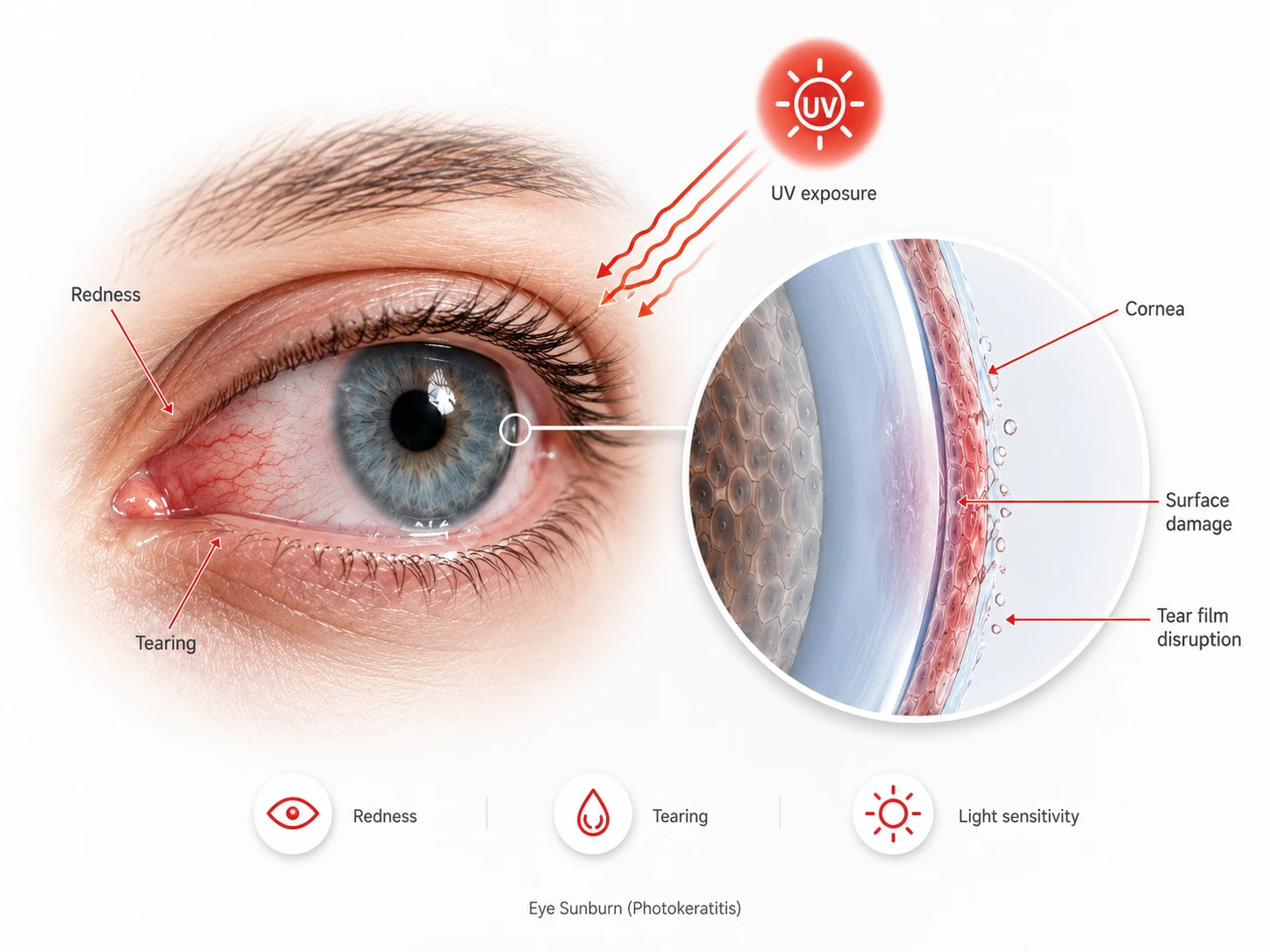
Most mild cases improve as the eye surface heals, but not every painful, red, or blurry eye is caused by UV exposure. Even if you normally wear the best contacts for sensitive eyes, remove your lenses and avoid rubbing your eyes while they recover from suspected eye sunburn. Protect your eyes from additional UV exposure and give them time to rest. Contact an eye care professional if symptoms are severe, worsening, do not improve, or come with vision changes.
What are the symptoms of sunburned eyes?
Sunburned eyes symptoms can feel like regular eye irritation at first, but they often show up after exposure to UV rays, not always while you are still outside. Photokeratitis symptoms can include pain, redness, tearing, blurry vision, swelling, light sensitivity, and a gritty feeling in the eyes. Symptoms may start several hours after UV exposure, so a beach day, ski trip, long drive, or outdoor event may not feel like the obvious cause right away.
Common symptoms of sunburned eyes can include:
- Eye pain or burning
- Red eyes after sun exposure
- Watery eyes
- A gritty or sandy feeling
- Light sensitivity
- Blurry vision
- Swollen eyelids
- Headache
- Seeing halos
- Eyelid twitching
- Temporary vision changes
These symptoms do not always mean you have photokeratitis, because dry eye, allergies, infection, irritation while wearing contacts for dry eyes, and other eye conditions can feel similar.
What causes eyes to get sunburned?
Eyes can get sunburned when too much UV light reaches the eye surface, either directly from sunlight or indirectly from reflected light, so wearing transition contact lenses does not eliminate the need for proper UV-protective eyewear. UVB rays and UVA rays can affect eye health, and the CDC notes that UV radiation comes from the sun and artificial sources such as tanning beds and germicidal lamps.
Check where UV exposure can sneak up on your eyes, even when you are not staring directly at the sun.
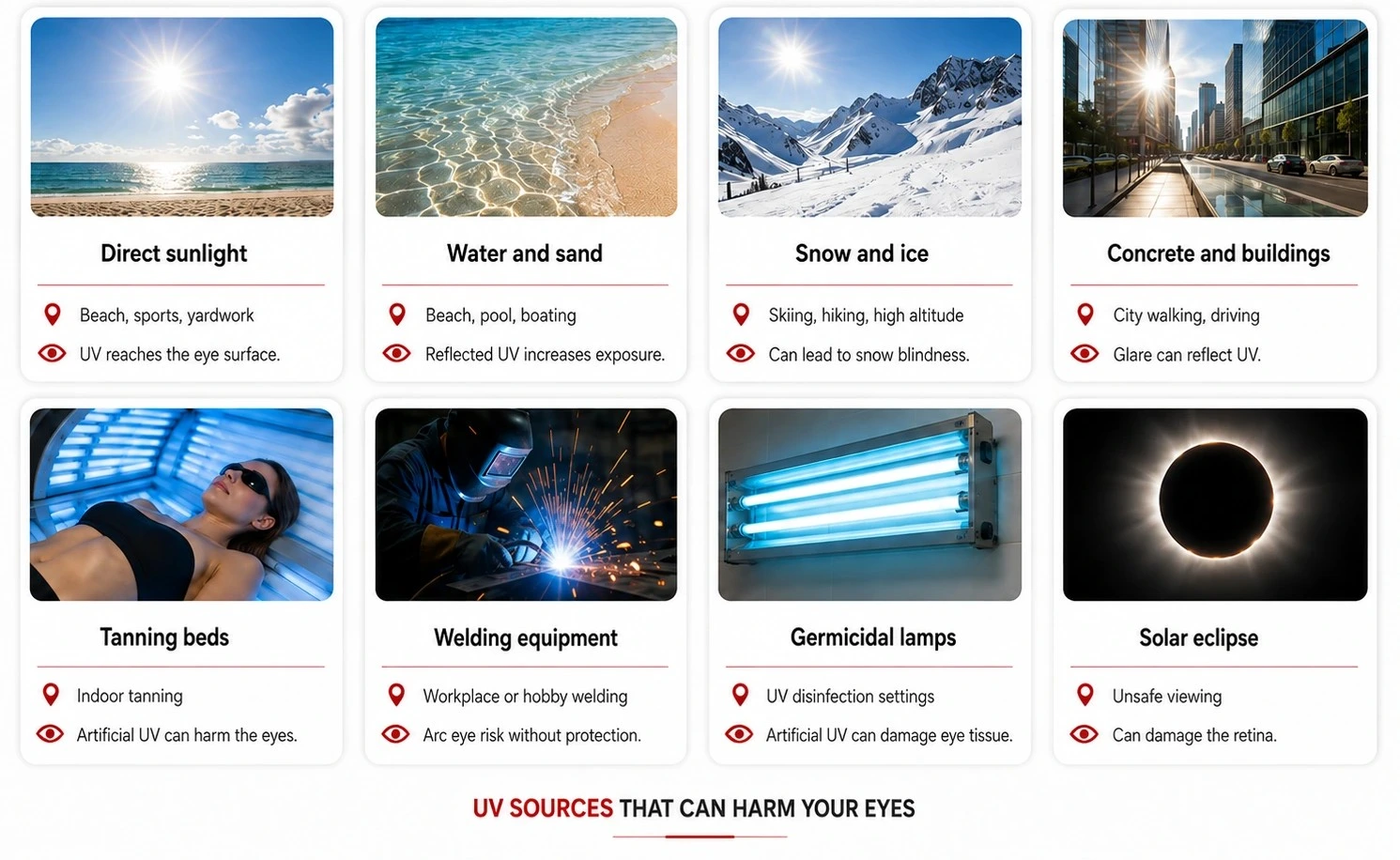
Note: The risk is not limited to summer. Bright snow, high altitude, cloudy days, and artificial UV sources can also expose your eyes to harmful UV light, so sunglasses UV protection matters in more places than the beach.
Planning beach, pool, or water activities where glare can bounce back into your eyes? Read diving and snorkeling with contact lenses so you understand why water and lenses need extra caution.
What should you do if your eyes feel sunburned?
If your eyes feel sunburned, get out of the UV light and remove your daily wear contact lenses or other contacts right away if you are wearing them. Photokeratitis treatment is usually focused on comfort while the eye surface heals, but eye pain, blurry vision, or light sensitivity should not be ignored.
Follow these steps in order:
- Move indoors or away from bright sunlight, reflected glare, tanning beds, welding light, or other UV sources.
- Wash and dry your hands before touching your eyes or lenses.
- Remove contact lenses if you are wearing them.
- Do not rub your eyes, even if they feel gritty or watery.
- Rest in a dim room to reduce light sensitivity.
- Place a cool compress over closed eyelids for comfort.
- Use preservative-free artificial tears if they are appropriate for you.
- Wear sunglasses if you need to go outside before your eyes feel normal.
- Skip eye makeup, false lashes, swimming, and contact lens wear while symptoms continue.
- Contact an eye care professional if symptoms are severe, worsening, or not improving.
Do not use leftover prescription drops, redness-relief drops, numbing drops, or anti-inflammatory eye medication unless an eye care professional tells you to.
Not sure which drops are safe while your contacts are still in or right after removing them? Confirm whether you can use eye drops with contact lenses before reaching for relief.
How long do sunburned eyes take to heal?
Mild sunburned eyes often start to improve within one to three days, but healing time depends on how much UV exposure your eyes had, how severe the symptoms are, whether you were wearing contacts, and whether another eye condition is involved. EyeWiki notes that the corneal surface often heals within 24 to 72 hours, but that does not mean every painful or blurry eye is safe to manage on your own.
Give your eyes a break while they heal. Stay out of contact lenses, avoid rubbing, use sunglasses to reduce light exposure, and rest your eyes from bright screens or harsh outdoor glare when possible. Even if you normally wear comfortable contact lenses, do not restart lens wear until symptoms are gone, and ask an eye care professional before wearing them again if your symptoms were significant.
What should you avoid if your eyes are sunburned?
When your eyes are irritated after sun exposure, avoid anything that can make the surface of the eye drier, scratchier, or more irritated. This is especially important if you wear contact lenses, because lenses can trap irritation against the eye surface or make symptoms feel worse.
- Do not rub your eyes.
- Do not keep wearing contact lenses through pain, redness, tearing, or blurry vision.
- Do not rinse reusable contact lenses with water or saliva.
- Do not swim while symptoms continue.
- Do not use eye makeup or false lashes until your eyes feel normal.
- Do not use leftover prescription drops or numbing drops unless prescribed.
- Do not return to the bright sun without proper sunglasses and UV protection.
- Do not use tanning beds while your eyes are irritated.
- Do not stare at the sun or a solar eclipse.
- Do not ignore pain, discharge, swelling, light sensitivity, or vision changes.
Take the safer route and let your eyes recover before contacts, makeup, swimming, or long outdoor time go back into the routine.
Wondering why water is risky even when your eyes feel irritated and need relief? Learn why you should never put contacts in water so you avoid turning discomfort into an infection risk.
Can contact lenses protect your eyes from UV light?
Some contact lenses offer UV protection, but they should not replace sunglasses. UV-blocking contact lenses only cover the part of the eye under the lens, so your eyelids, surrounding skin, and parts of the visible eye surface still need protection. The National Eye Institute recommends wearing UV-blocking sunglasses over contact lenses to help cover the areas contacts do not protect.
Comfort is separate from UV protection, even when you wear contacts for dry eyes. Sun, wind, heat, dry air, and glare can still make contacts feel dry or irritating, so backup glasses, contact-lens-compatible rewetting drops if recommended, and shade breaks can help on long outdoor days. Remove your contacts and switch to glasses if your eyes feel painful, red, dry, blurry, watery, or light sensitive, and never rinse contacts with water or wear them while swimming, showering, or using a hot tub.
For outdoor contact lens wear, keep these habits in mind:
- Wear sunglasses with 99% to 100% UVA and UVB protection or UV400 labeling.
- Use a wide brimmed hat when outdoors for long periods.
- Carry backup glasses.
- Use contact-lens-compatible rewetting drops if recommended.
- Remove contacts if your eyes feel painful, red, dry, blurry, or light sensitive.
- Do not swim, shower, or use a hot tub in contact lenses.
Curious how lenses that react to changing light differ from regular contacts? Learn what you need to know about transition contact lenses before asking your eye doctor about light-adaptive options.
How can you prevent sunburned eyes?
You can help prevent sunburned eyes by blocking UV light before it reaches your eyes, and even if you wear photochromic contact lenses, sunglasses remain important for protecting exposed areas around the lens. That means wearing sunglasses with 99% to 100% UVA and UVB protection or UV400 labeling, choosing wraparound frames when glare is strong, adding a wide-brimmed hat, and taking shade breaks when possible. The CDC also recommends wraparound sunglasses that block both UVA and UVB rays to help protect your eyes from UV radiation.
Check the step to match the protection step with the situation where it helps most.
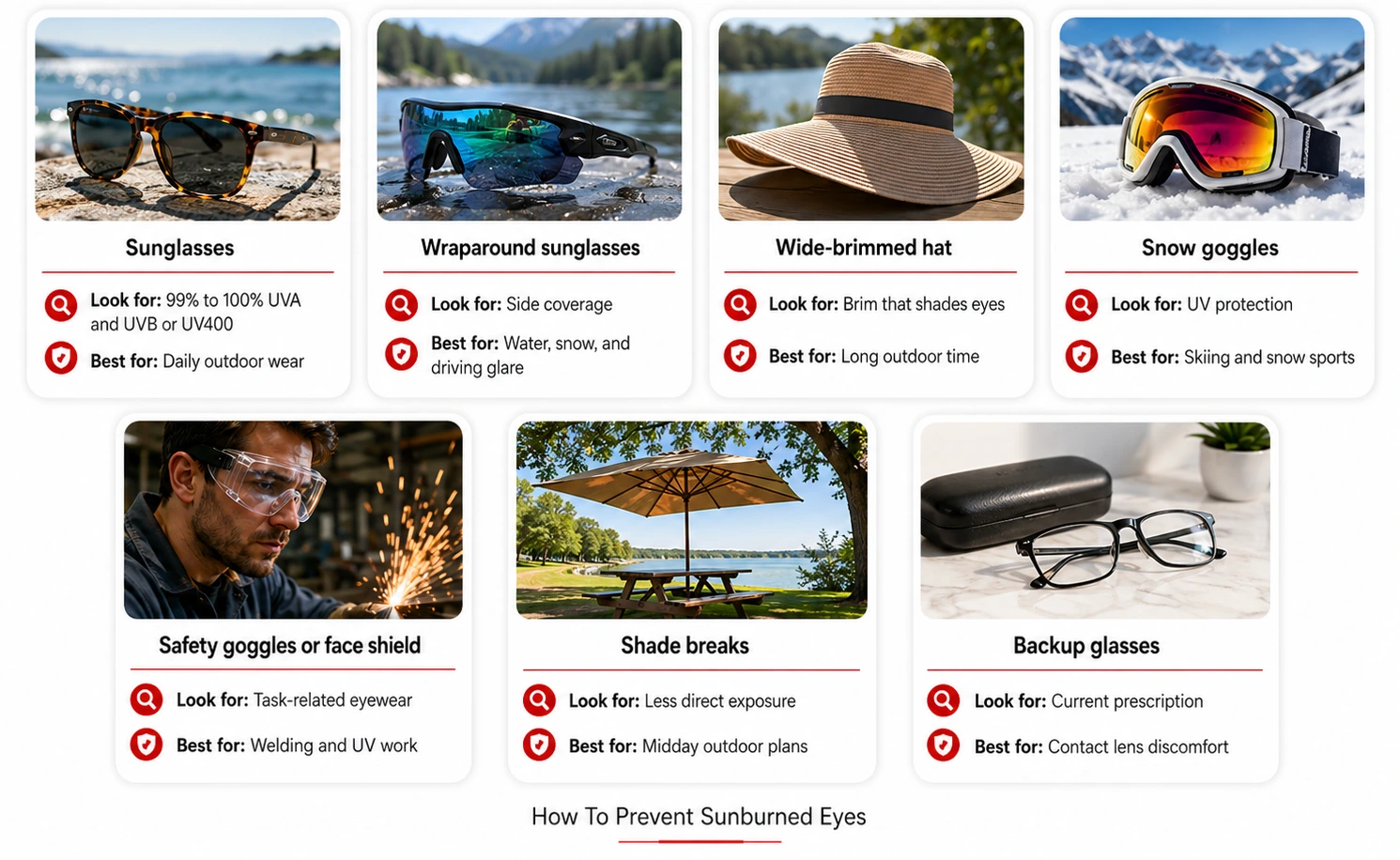
Note: Dark lenses alone do not guarantee sunglasses UV protection, so the label matters more than the lens tint. Look for UV400, 100% UV protection, or 99% to 100% UVA and UVB protection, and use extra caution around water, sand, snow, high altitude, and other high-glare settings.
Can long-term sun exposure affect your eye health?
Yes, repeated or long-term sun exposure can affect your eye health, especially when your eyes are not protected from UV light. The CDC says UV exposure can increase the risk of potentially blinding eye diseases when eye protection is not used, and the National Eye Institute notes that prolonged UV exposure is linked with cataract formation and eyelid cancers. One sunny day does not mean you have an eye condition, but regular UV protection, including sunglasses and prescribed UV protection contact lenses, can be a smart part of your outdoor routine.
Over time, UV eye damage may contribute to cataracts, pterygium, pinguecula, and cancers of the eyelid or surrounding skin. A pterygium is a fleshy growth that can extend from the white of the eye toward the cornea, while a pinguecula is often a yellowish raised spot on the white of the eye. Retinal damage is a different concern, especially if you look directly at the sun or view a solar eclipse without proper protection, so sunglasses, hats, shade, and proper eclipse viewing protection matter for more than comfort.
Watch for changes such as:
- A new or changing growth on the eyelid
- A yellowish or fleshy growth on the white of the eye
- Ongoing light sensitivity
- New glare problems
- Blurry, dim, or distorted vision
- A shadow or blind spot in central vision
When should you see an eye doctor for sunburned eyes?
See an eye doctor promptly if your sunburned eyes symptoms are severe, worsening, tied to vision changes, or not improving after a day or two. Even if you normally wear the best contacts for sensitive eyes, remove them and switch to glasses while you wait for care. The College of Optometrists describes photokeratitis as painful UV-related surface damage, and the CDC advises contact lens wearers to call an eye doctor for worsening pain, red or irritated eyes, light sensitivity, sudden blurry vision, unusually watery eyes, or discharge.
Get professional eye care if you notice:
- Severe or worsening eye pain
- Sudden blurry vision or decreased vision
- Discharge
- Significant swelling
- Light sensitivity that makes it hard to keep your eyes open
- A feeling that something is stuck in the eye that does not improve
- Symptoms lasting more than one to two days
- Symptoms after welding, tanning beds, chemical exposure, or solar-eclipse viewing
- Contact lens discomfort that continues after removing lenses
Your eyes can get sunburned when too much UV light irritates or damages the eye surface. Symptoms like eye pain, redness, tearing, gritty feeling, light sensitivity, or blurry vision are signs to get out of the sun, remove contacts, avoid rubbing, and give your eyes a break. UV-blocking contact lenses may help protect part of the eye, but they do not replace sunglasses, a hat, and smart shade habits. Contact an eye care professional promptly if symptoms are severe, worsening, tied to vision changes, or not improving.
Do your contacts feel dry or uncomfortable after long days in bright sun, wind, or reflected glare? Browse our UV-blocking contact lenses to compare prescribed options that match your vision needs, wearing schedule, and eye care professional’s guidance.
Disclaimer: This content is for general informational purposes only and is not a substitute for professional advice, diagnosis, or treatment.
References
Photokeratitis ultraviolet UV burn arc eye snow blindness. The College of Optometrists. https://www.college-optometrists.org/clinical-guidance/clinical-management-guidelines/photokeratitis_ultraviolet_uv_burn_arceye_snowblin. Date Accessed: August 25, 2026.
Protecting your eyes from the sun’s UV light. National Eye Institute. https://www.nei.nih.gov/research-and-training/research-news/protecting-your-eyes-suns-uv-light. Date Accessed: August 25, 2026.
Sun Exposure in Travelers. Centers for Disease Control and Prevention Yellow Book. https://www.cdc.gov/yellow-book/hcp/environmental-hazards-risks/sun-exposure-in-travelers.html. Date Accessed: August 25, 2026.
Ultraviolet Radiation. Centers for Disease Control and Prevention. https://www.cdc.gov/radiation-health/features/uv-radiation.html. Date Published: July 6, 2026.
Preventing Eye Infections When Wearing Contacts. Centers for Disease Control and Prevention. https://www.cdc.gov/contact-lenses/prevention/index.html. Date Accessed: August 25, 2026.