Table of Contents
Pride Month is the perfect time to play with color by wearing the best coloured contact lenses, whether you are planning a parade outfit, a drag show look, a photoshoot, a festival weekend, or a night out with friends. A new eye color can complete the look, and warmer shades like light brown contacts can create a softer, natural enhancement, but the wrong lenses can quickly turn a fun moment into eye pain, redness, infection, corneal scratches, or even vision loss.
That is why prescription colored contacts should be treated as eye care first and style second. You should know how to buy them safely, avoid fake colored contacts, understand your contact lens prescription, choose the right tint, care for your cosmetic colored contacts, and compare safer color contacts before your Pride event.
How Do You Buy Prescription Colored Contacts Safely?
To buy colored contact lenses safely, start with an eye exam and a contact lens fitting. Your eye doctor should give you a valid contact lens prescription for the exact brand, size, and lens type your eyes need. The same applies when shopping for white contact lenses halloween styles—you still need the proper prescription and fit. Buy only from a seller that verifies your prescription, and avoid “one-size-fits-all,” no-prescription, or costume lenses sold without an eye doctor’s approval.
Every pair of colored contact lenses needs a prescription, even if the lenses do not correct your vision. The FDA says decorative and colored contacts are medical devices, not cosmetics, and they require a prescription to help prevent eye injury. That includes plano colored contacts, which change your eye color but still need the right brand, base curve, diameter, and replacement schedule.
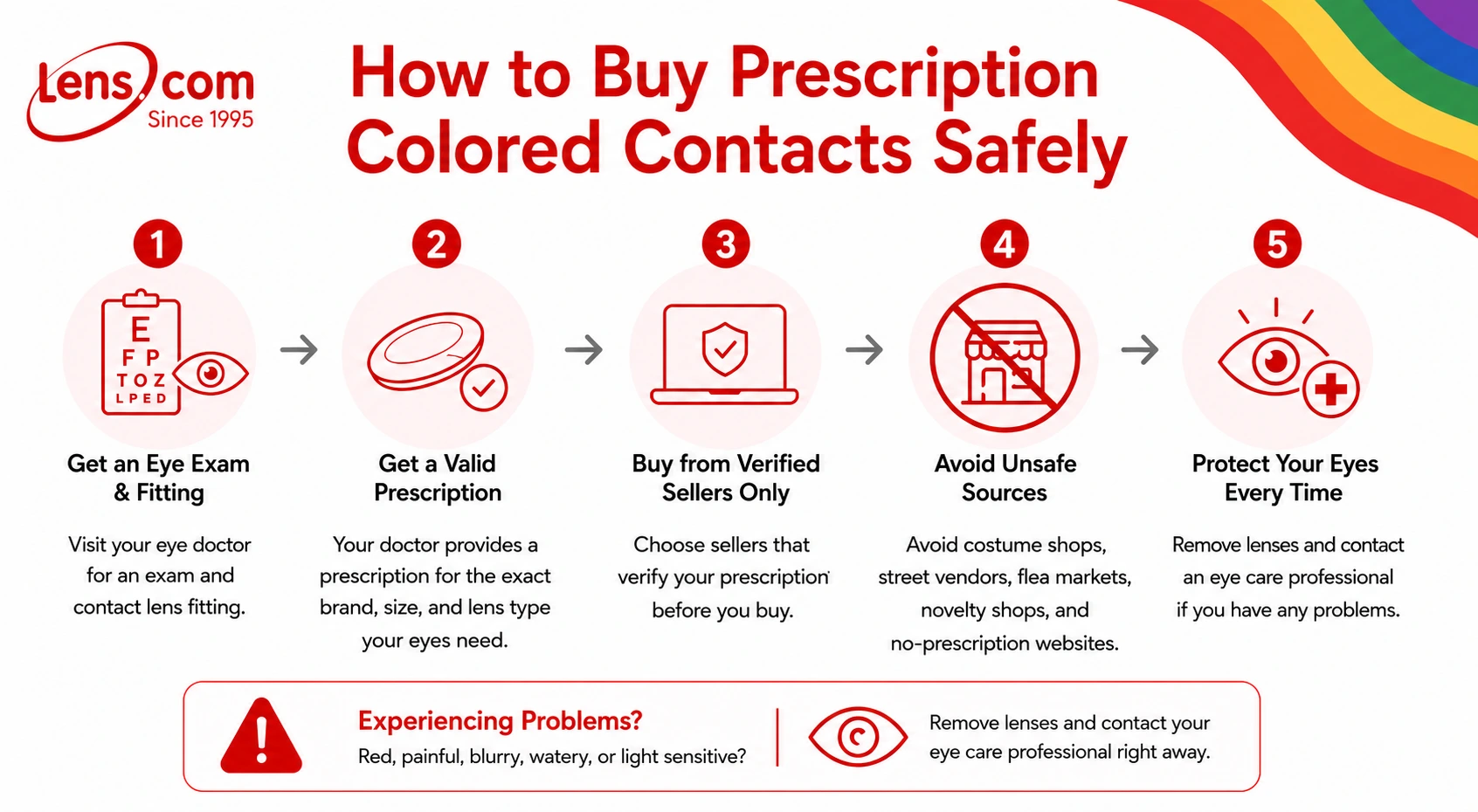
Your Pride Month look can be bold, soft, colorful, or dramatic, but your lenses still sit directly on your eyes. A vivid shade like bright blue contact lenses can complete a standout look, but you should not buy colored lenses from costume shops, beauty stores, street vendors, flea markets, novelty shops, or websites that do not require a prescription. If your eyes become red, painful, blurry, watery, or sensitive to light, remove the lenses and contact an eye care professional.
Ordering online and worried you might mix up your right and left eye details? Know how to read contact lens prescriptions (OD vs. OS) so you enter each eye correctly before you check out.
What Are Prescription Colored Contacts?
Prescription colored contacts are contact lenses that change or enhance your eye color while helping you see clearly, when vision correction is included. They are still medical devices, not beauty accessories, so they need an eye exam, a proper fit, and a valid contact lens prescription.
Colored Contacts With Vision Correction
Colored contacts with vision correction work like regular contact lenses, but they also include a tint or color pattern over the iris. They can correct refractive errors such as nearsightedness, farsightedness, astigmatism, or presbyopia, depending on the lens type available for your prescription. If you want colored contacts with a prescription, your eye doctor needs to match the color lens to your vision needs and your eye shape.
Plano Colored Contacts
Plano colored contacts change how your eyes look, but do not correct your vision. Even if you have 20/20 vision, you still need a prescription because the lens must fit your cornea correctly. The FDA states that decorative or colored contacts are medical devices, not cosmetics, and they require a prescription to help avoid eye injury.
Colored contacts have a tinted design that sits over the iris, which is the colored part of your eye. The center of the lens stays clear so light can pass through your pupil and you can see
Why Fake or No-Prescription Colored Contacts Are Risky
Fake, no-prescription, or poorly fitted colored contacts can put your eyes at risk, even if you only wear them once for a Pride event, costume, or photoshoot. A lens can look colorful in the package but still be unsafe for your eyes. Because colored contacts sit directly on the cornea, the wrong fit, material, or care instructions can lead to pain, infection, or vision damage.
Before you buy prescription colored contacts, watch for these risks and warning signs:
- Poorly fitted lenses can feel too tight, too loose, too large, or too small.
- Bad fit can cause pain, redness, unstable vision, irritation, or corneal scratches.
- Unsafe colored contact lenses can lead to allergic reactions, blurry vision, infections, corneal ulcers, or permanent vision loss.
- Sellers who skip prescription verification are not a safe choice.
- Avoid street vendors, salons, beauty supply stores, boutiques, flea markets, novelty stores, Halloween stores, convenience stores, beach shops, and websites that do not require a prescription.
- Be cautious of “one size fits all” claims.
- Avoid listings with no brand, manufacturer, base curve, diameter, or lens parameters.
- Extremely low prices can be a warning sign.
- Vague labels like “cosplay only,” “not medical lenses,” or “for photos only” should raise concern.
- Do not wear lenses with damaged packaging, no expiration date, no sealed container, or missing care instructions.
Buy only from a seller who requires or verifies your prescription with your eye doctor. If a seller treats colored contacts like costume props instead of medical lenses, choose another source.
How to Buy Prescription Colored Contacts Step by Step
Buying prescription colored contacts is not the same as buying makeup, lashes, or costume accessories. These lenses sit directly on your eyes, so the safest process starts with an eye doctor and ends with a seller who verifies your prescription.
Step 1: Get a contact lens eye exam
Start with a contact lens eye exam, even if you already have glasses. A contact lens prescription is different from an eyeglass prescription because contacts sit directly on the eye and need lens-specific details. The FDA explains that a contact lens prescription should include enough information for a seller to fill it accurately, and sellers must take steps to verify the prescription.
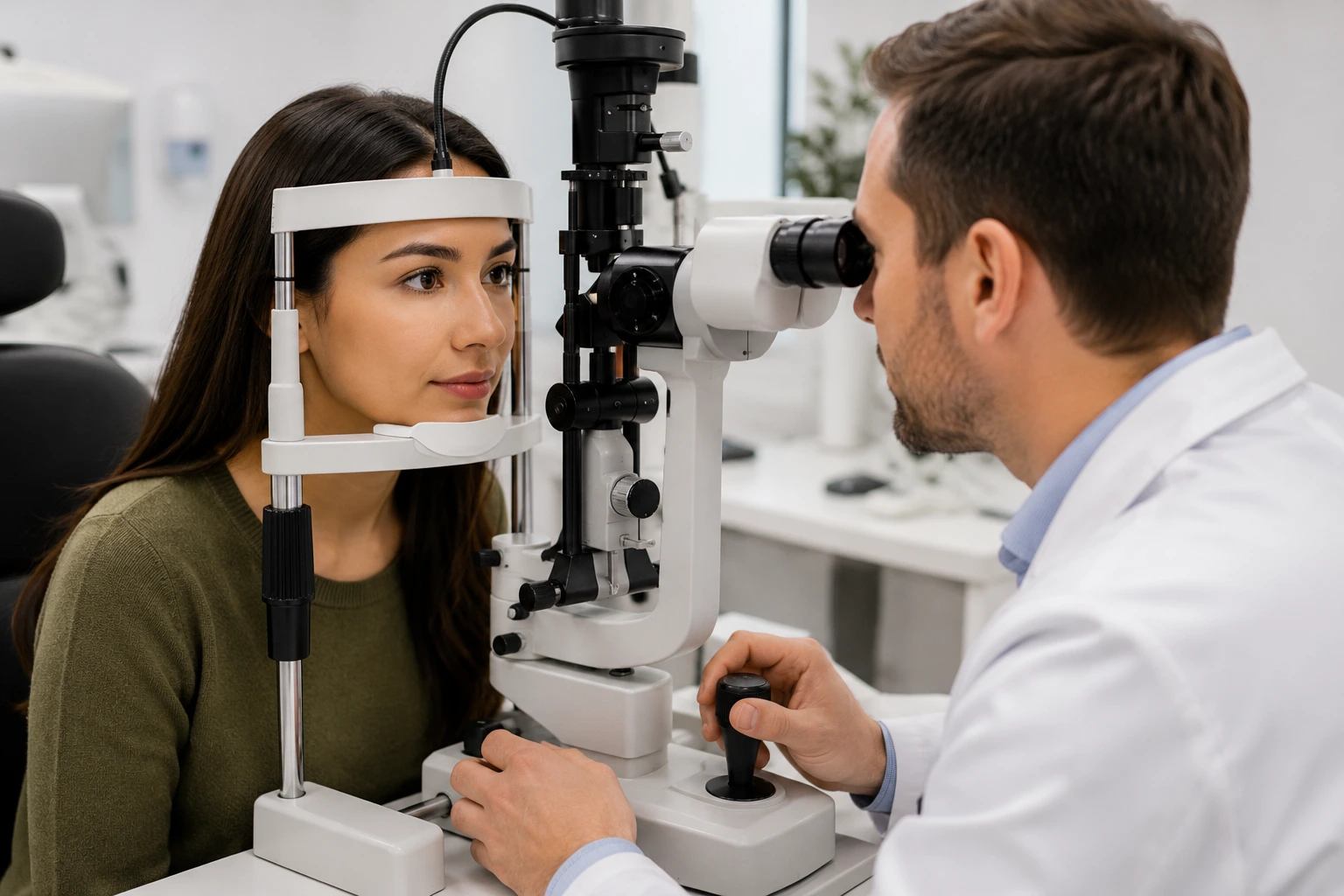
Your prescription may include details such as brand, power, base curve, diameter, lens material, replacement schedule, and expiration date. These numbers are not small details. They help your lenses fit, move, and correct your vision safely.
Step 2: Ask for a colored contact lens fitting
A colored contact lens prescription should come from a fitting, not guesswork. During the fitting, your eye doctor checks how the lens moves when you blink, whether it feels comfortable, whether your vision stays clear, and whether the colored part lines up properly with your pupil.
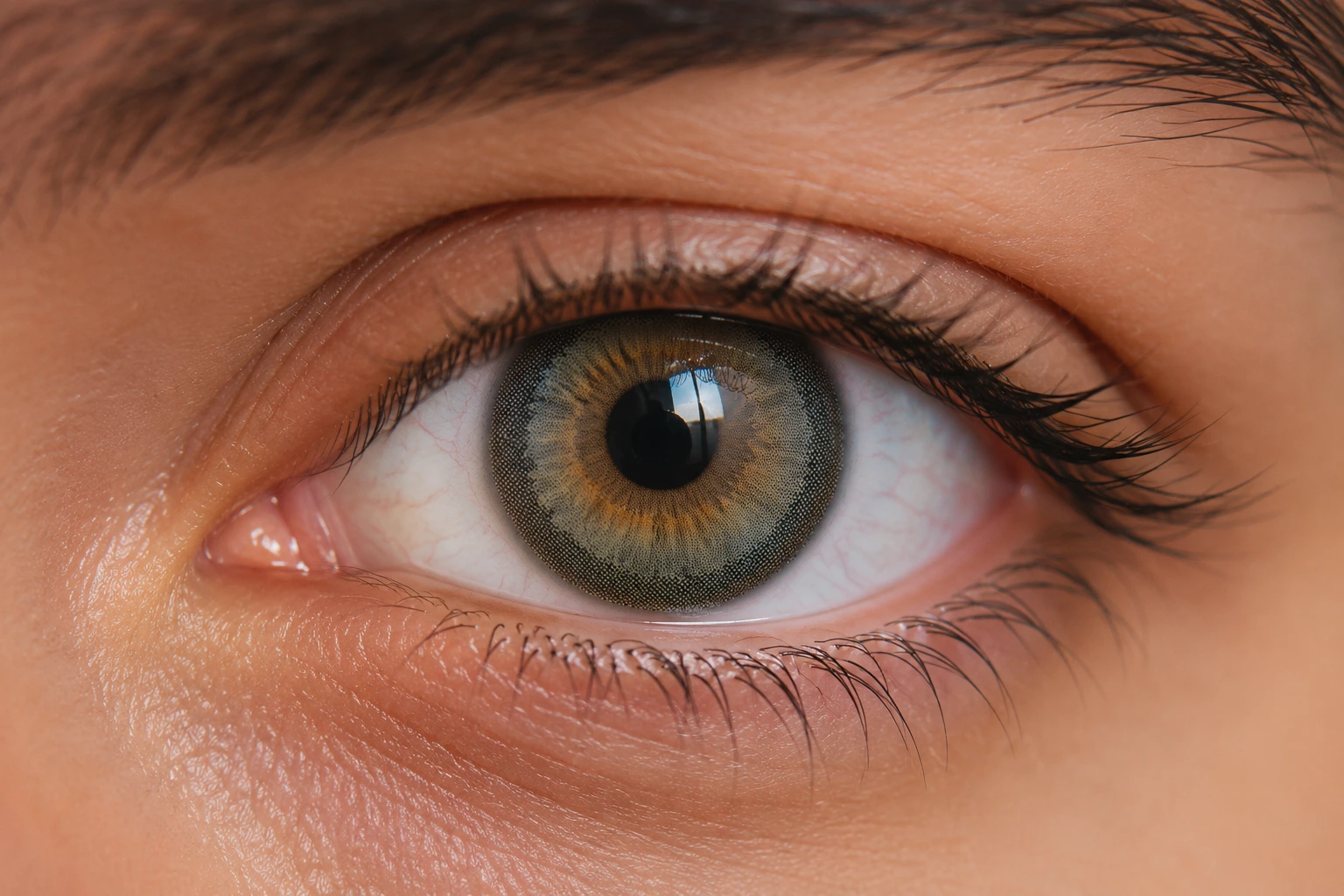
This matters even more for Pride Month looks because bold lenses can be thicker, more opaque, or more noticeable than clear contacts. A lens that looks great in a photo can still be wrong for your eyes if it moves too much, feels tight, or blocks part of your vision.
Not sure what your doctor checks during a fitting, especially with cosmetic lenses? Understand how a contact lens fitting works so you know why fit and comfort matter as much as color.
Step 3: Choose a prescribed brand and lens type
Buy the exact brand, lens type, and parameters your eye doctor prescribed. Do not swap in a “similar” color lens just because it has the same power, because fit can change by brand and design.
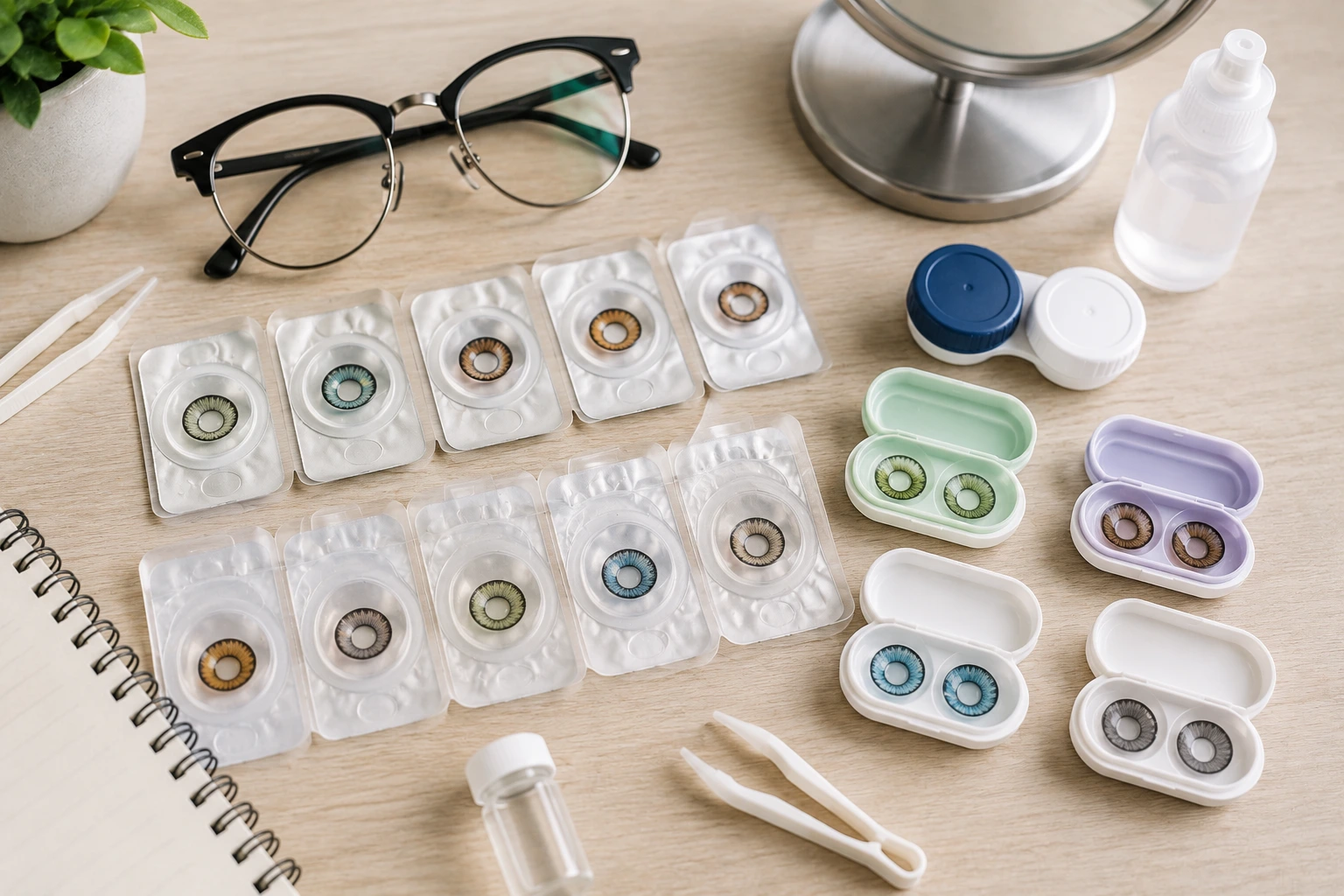
If you need vision correction, your doctor may discuss colored contacts with a prescription for nearsightedness, farsightedness, astigmatism, or presbyopia. If you do not need vision correction, you still need prescribed plano colored contacts that fit your eyes safely.
Step 4: Buy from a prescription-verifying seller
A legitimate seller should ask for your prescription or verify it with your eye doctor. Be cautious with any website or shop that lets you check out without prescription information.
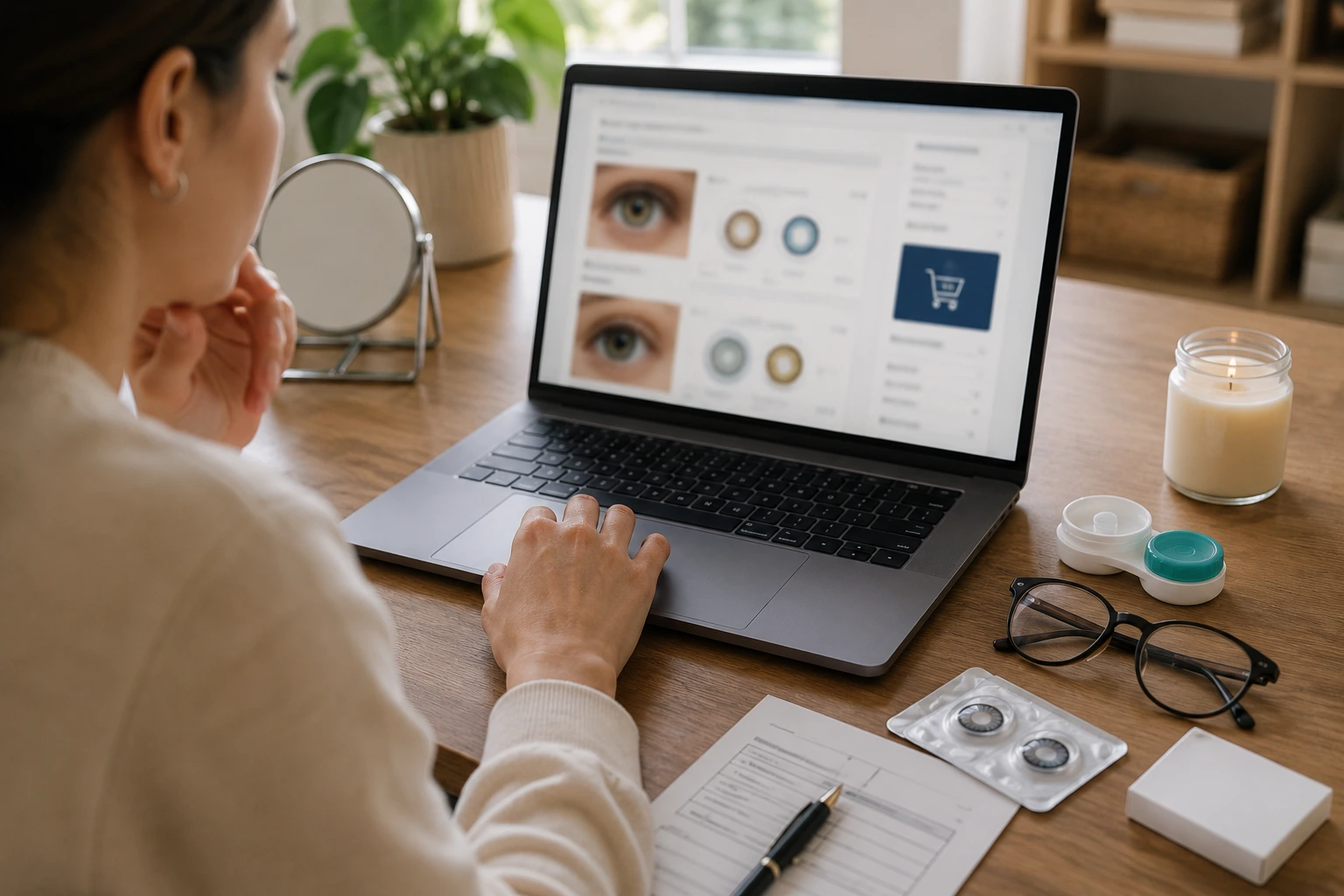
The FDA says colored and decorative contact lenses are medical devices and that sellers offering them over the counter without a prescription are breaking the law. It also warns against buying from places like street vendors, salons, beauty supply stores, novelty shops, convenience stores, and websites that do not require a prescription.
Want a quick checklist of what to watch for before you place your first online order? Follow what first time contact lens buyers should know before ordering online so you avoid common verification and shipping mistakes.
Step 5: Try lenses before your Pride event
Do not make parade day, a drag show, a photoshoot, or a long night out your first test run. Try your lenses ahead of time so you can check comfort, vision, color payoff, makeup compatibility, and how they look in daylight, indoor lighting, and photos.
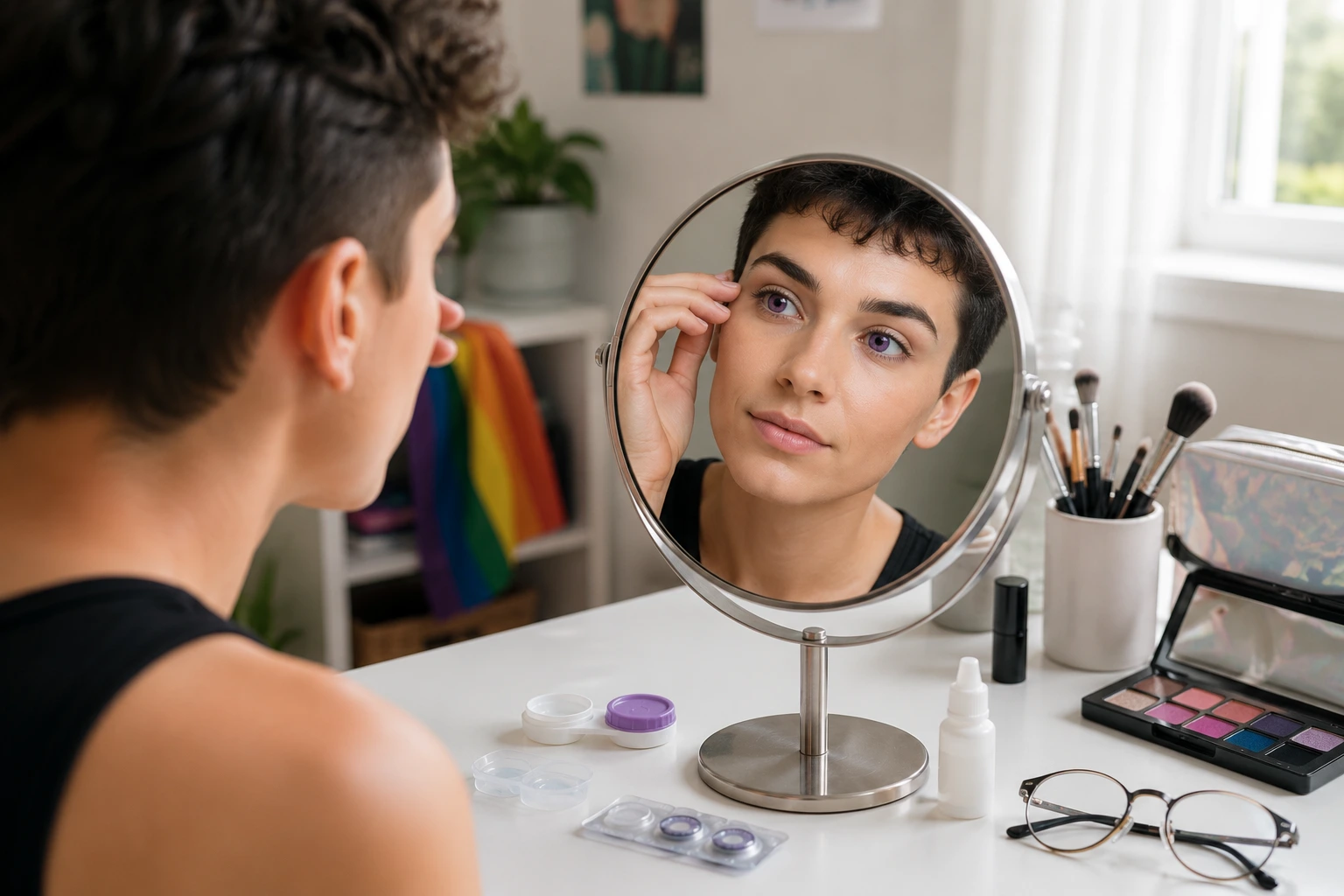
Wear them for the amount of time your eye doctor recommends, then remove them if they feel painful, scratchy, dry, or blurry. Bring backup glasses, contact-lens-safe rewetting drops, and a case with fresh solution if you wear reusable lenses.
Types of Colored Contact Lenses
Colored contact lenses come in different tint styles and replacement schedules. The right choice depends on your natural eye color, the effect you want, your prescription, and how often you plan to wear them.
1. Enhancement Tint
Enhancement tints add a soft boost to your natural eye color instead of fully covering it. They usually work best on lighter eyes because the tint blends with the color you already have. Choose this style if you want a Pride look that still feels natural in everyday lighting. For example, if you have blue eyes, try to wear natural blue contacts. Or if you want to add depth to your brown eyes, you can wear brown hazel contact lenses.
2. Opaque Tint
Opaque tints use stronger color to cover more of your natural iris. They are often the better choice for dark brown eyes or anyone who wants a more noticeable change. If you want blue, green, gray, violet, or hazel lenses to show clearly in photos, your eye doctor may point you toward an opaque design.
3. Blending Tint
Blending tints use layered color patterns to create a softer transition between the lens and your natural eye color. They can help the lens look less flat and more like a real iris. This style is useful if you want color that is visible but not costume-like.
4. Visibility Tint
Visibility tint is a faint blue or green tint added so the lens is easier to see in the package, on your finger, or in your case. It is not meant to change your eye color. Think of it as a handling feature, not a style feature.
5. Daily vs Reusable Colored Contacts
Daily coloured contact lenses are worn once and thrown away, which can be convenient for occasional Pride events, travel, photoshoots, or first-time wearers. Reusable colored contacts may be worn for a set replacement period, but they require cleaning, disinfecting, fresh solution, and proper storage every time. lenses.
How to Choose Colored Contacts for Pride Month Looks
Your Pride Month look can be soft, bold, dramatic, or photo-ready, but the safest choice starts with your prescription and fit. Once your eye doctor confirms which colored contact lenses are safe for your eyes, you can choose a tint and shade that works with your natural eye color, makeup, outfit, and lighting.
For Natural Pride Look
For a softer look, choose hazel, honey, gray, green, or a subtle enhancement tint that works with your natural eye color. If your goal is a realistic everyday effect, natural contact lenses are another option to discuss with your eye doctor. Enhancement tints are designed to deepen or brighten your existing eye color instead of fully covering it.
For Bold Pride Look
For a stronger Pride look, opaque blue, violet, green, gray, or amethyst-style lenses usually create a more noticeable color change. Opaque tints are designed to cover more of your natural iris, which helps the new color stand out. Choose only properly prescribed lenses, since colored contacts are medical devices and still require an eye doctor’s prescription, even when they are worn for style.
For Dark Brown Eyes
If you have dark brown eyes, opaque colored contacts usually show more clearly than enhancement tints. A light enhancement tint may look subtle or barely visible on a dark iris, especially indoors. For photos, parades, drag looks, or stage lighting, ask your eye doctor about opaque lens options that are available in your prescription.
For Light Eyes
If you have light eyes, enhancement tints can make your natural color look brighter, deeper, or more defined. Blue, green, gray, and hazel shades may blend more easily with light eyes while still looking natural. Opaque tints can create a stronger transformation if you want a more dramatic Pride Month look.
Match Color To Makeup, Outfit, and Lighting
Colored contacts can look different in daylight, indoor lighting, flash photos, and stage lighting. A gray lens may look soft outdoors but stronger under flash, while green or violet lenses may appear more intense with bold eye makeup. Try your lenses before your event so you can check comfort, vision, color payoff, and how the shade looks with your full outfit.
How to Avoid Fake Colored Contacts Online
Buying prescription colored contacts online can be safe when the seller follows prescription rules and provides clear product details. The risky part is buying from shops that treat colored lenses like costume makeup instead of medical devices.
1. Check whether the seller requires a prescription.
A seller that skips prescription verification is a safety warning. The FDA says all contact lenses, including decorative and colored lenses, must be prescribed by a doctor, and sellers should require your prescription information and verify it with your doctor.
The FTC also says sellers must either have your contact lens prescription or verify it with the prescriber before selling lenses. A site that lets you buy colored contact lenses with no prescription, no eye doctor details, and no verification step is not a safe place to order from.
2. Look for brand, manufacturer, and lens details.
A trustworthy listing should give you more than a pretty product photo. When comparing colored contact lenses for sale, check that the listing clearly identifies the brand, manufacturer, lens material, replacement schedule, base curve, diameter, prescription range, and care instructions.
These details matter because your eye doctor prescribes a specific lens for your eye shape and vision needs. A lens with the wrong diameter, curve, material, or replacement schedule can feel uncomfortable, move poorly, blur your vision, or irritate your eye.
3. Avoid marketplace listings with vague product details.
Be careful with unlabeled lenses, bulk costume lenses, “anime eyes,” “doll eyes,” “cosplay only,” or listings that do not include medical lens information. Vague descriptions may hide poor fit, unknown materials, unsafe manufacturing, or counterfeit products.
The FDA warns against buying decorative contacts from unknown online distributors because some may be contaminated, counterfeit, or unsafe to use. It also warns not to buy from street vendors, beauty supply stores, flea markets, novelty stores, Halloween stores, and other unauthorized sources.
If you’re shopping for red contact lenses cosplay, look for full brand, manufacturer, lens parameter, replacement schedule, and prescription information rather than relying on vague “cosplay only” claims.
4. Check packaging and instructions when lenses arrive.
Before wearing your lenses, check the packaging carefully. Safe lenses should arrive sealed and should include a brand or manufacturer name, expiration date, lot number, lens parameters, and care instructions.
Do not wear lenses if the packaging is open, damaged, leaking, missing safety information, or different from what your eye doctor prescribed. If anything feels suspicious, contact the seller and your eye doctor before putting the lenses on your eyes.
Not sure what should be on a legit lens box or blister pack before you open it? Check contact lens packaging labels and expiration dates so you can spot missing details and avoid unsafe lenses.
5. Do not wear lenses that look damaged or feel wrong.
Never “test it for a few minutes” if a lens looks torn, warped, cloudy, dried out, or chipped. Remove the lens right away if you feel pain, scratchiness, burning, sudden blur, redness, discharge, or light sensitivity.
The FDA lists warning signs of possible contact lens-related infection as redness, eye pain that does not go away after a short time, and decreased vision. It advises removing lenses and seeing a licensed eye doctor right away if these symptoms appear.
Colored Contact Lens Safety Guide for Pride Events
Pride events can mean long hours, heat, makeup, crowds, photos, dancing, and late nights. Your colored contact lens safety guide should be simple: plan ahead, keep lenses clean, and remove them at the first sign of trouble.
1. Put lenses in before makeup
Put your lenses in before applying eye makeup. This helps reduce makeup transfer onto the lens and lowers the chance of mascara, glitter, powder, or liner getting trapped between the lens and your eye.
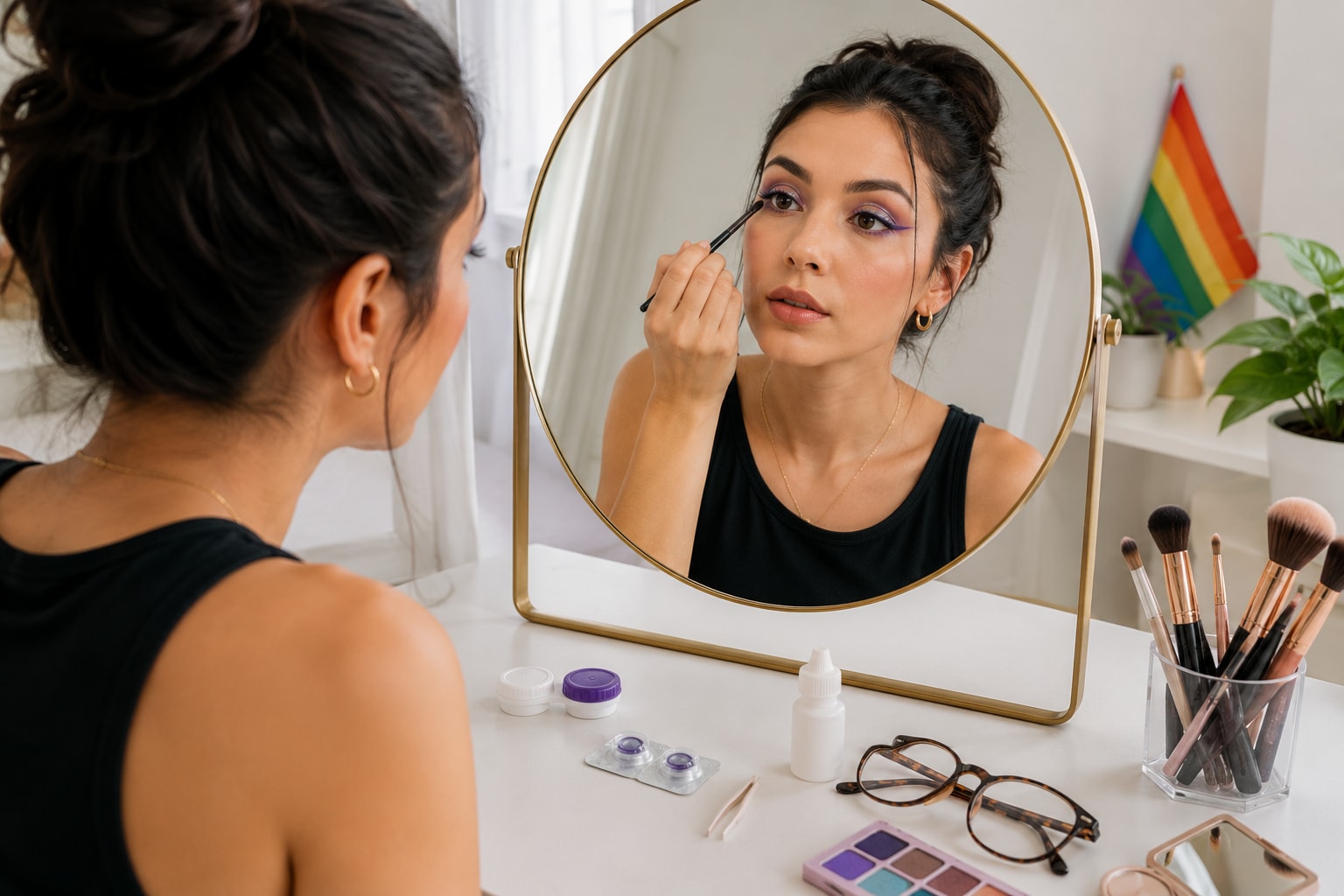
Choose eye makeup carefully when wearing colored contacts. Avoid loose glitter near the eyes, keep eyeliner away from the waterline, and replace old mascara so you are not adding bacteria near your lenses.
Not sure how to do eye makeup without getting residue on your lenses? Use makeup tips for contact lens wearers so you can keep your look fun and your eyes more comfortable.
2. Do not share lenses
Do not share colored contacts with a friend, partner, performer, or anyone in your group. The FDA warns against sharing contact lenses because eyes are not the same size and shape, and lenses are fitted for one person.
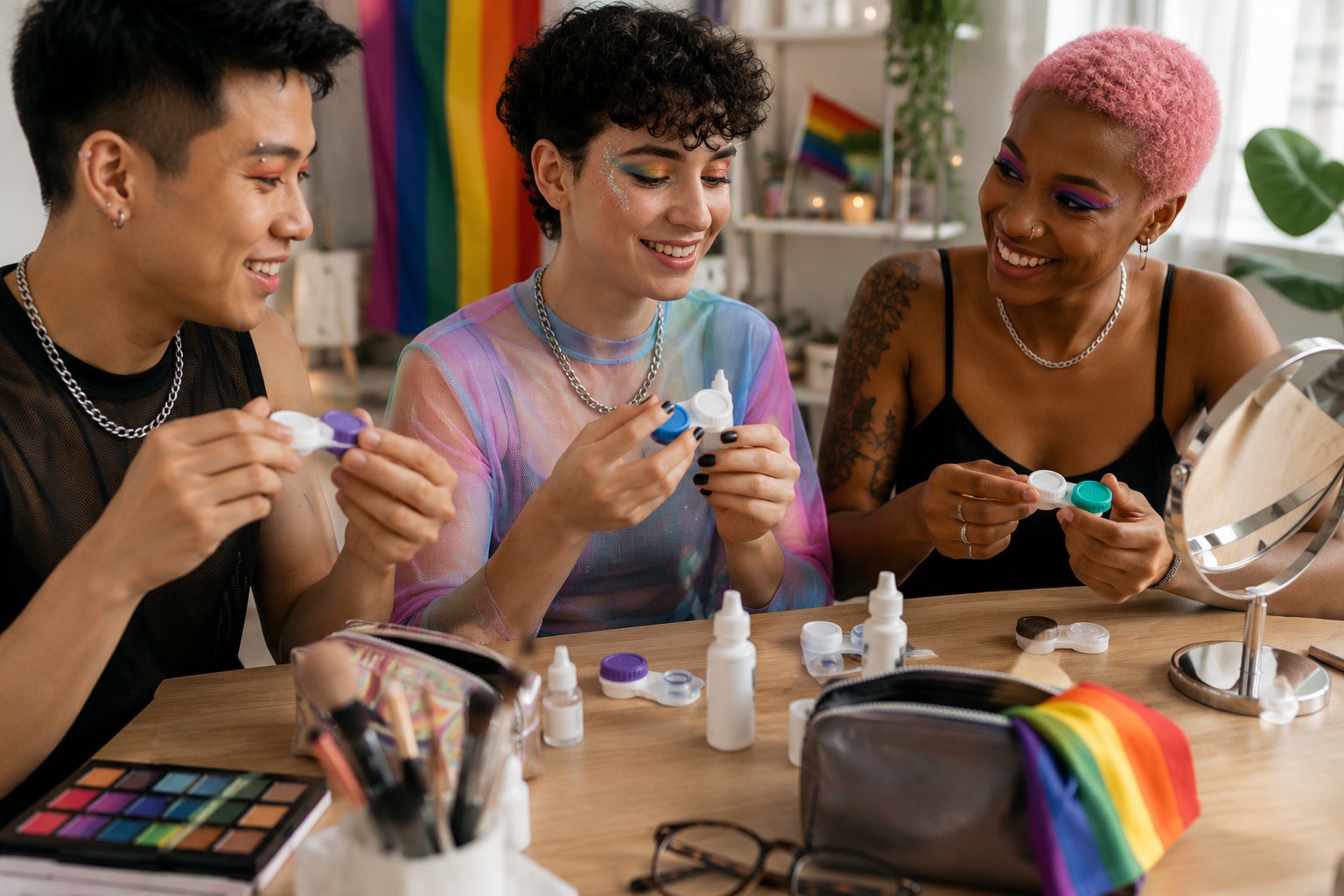
Sharing lenses can also spread germs and raise the risk of infection. Even if the lenses are only for a photo, they should never move from one person’s eye to another.
3. Do not sleep in colored contacts
Remove colored contacts before sleeping unless your eye doctor specifically prescribed overnight wear. Many decorative or colored lenses are not designed for sleep, and wearing lenses longer than directed can increase irritation and infection risk.
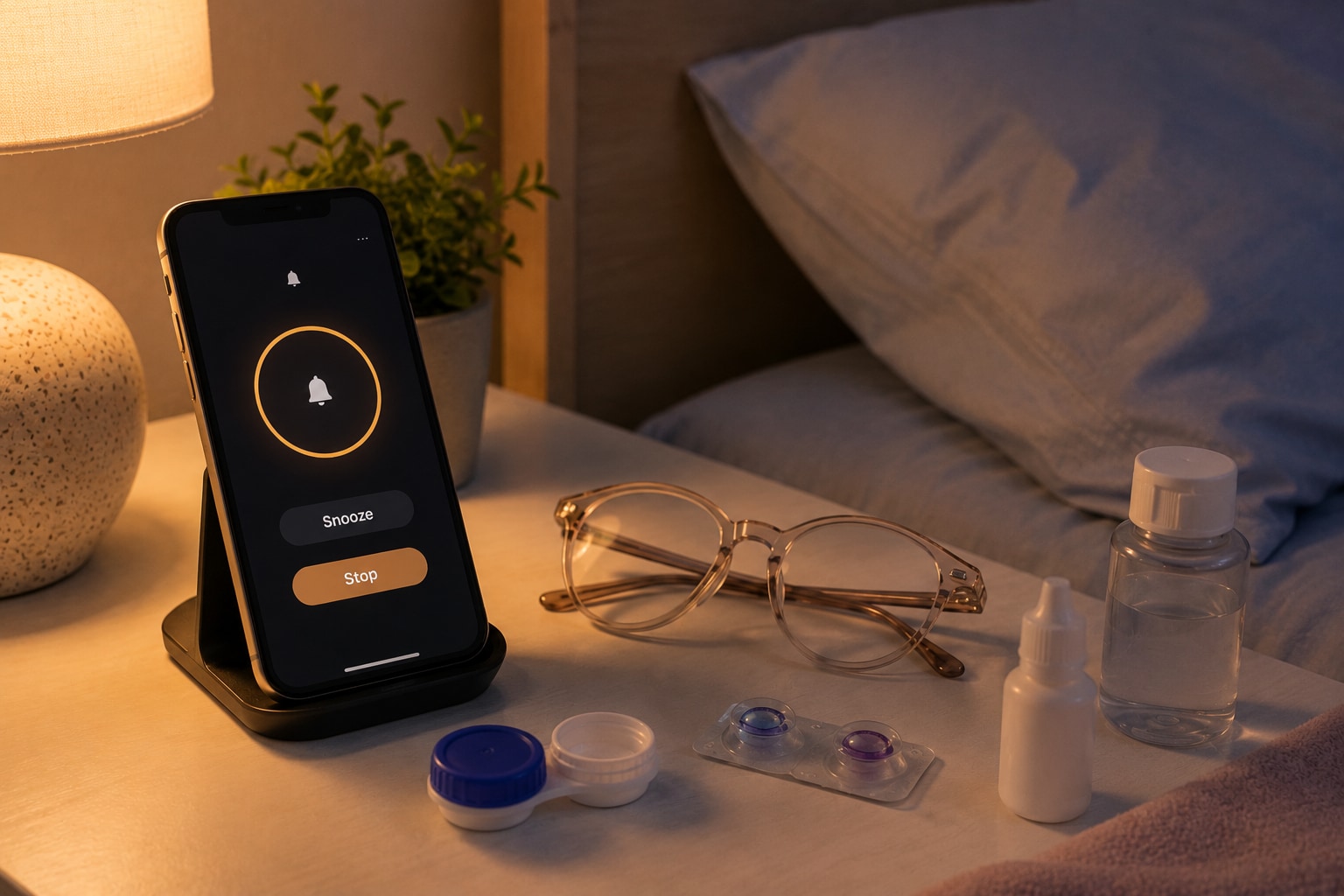
If you know your Pride event may run late, set a phone reminder to remove your lenses before bed. Bring glasses so you are not tempted to keep lenses in when your eyes are tired.
Think you might crash after a long Pride night and forget to remove your lenses? Know what to do if you fall asleep in your contact lenses so you can reduce irritation and protect your eyes.
4. Keep lenses away from water
Do not swim, shower, use a hot tub, or rinse your lenses with water while wearing contacts. CDC guidance says you should never store lenses in water and should clean them with contact lens disinfecting solution, not water or saliva.

Water can carry germs that may stick to lenses and harm your eyes. If your Pride plans include pools, beach events, water sprays, or foam parties, glasses or prescription sunglasses may be safer than contacts.
Going to a pool party, beach event, or any Pride plans involving water? Read can you put contacts in water so you understand the infection risk and safer alternatives.
5. Bring backup glasses and lens supplies
Pack a small eye-safety kit before you leave. Bring backup glasses, contact-lens-safe rewetting drops, a clean lens case, fresh solution for reusable lenses, and clean hands or hand sanitizer access before handling lenses.
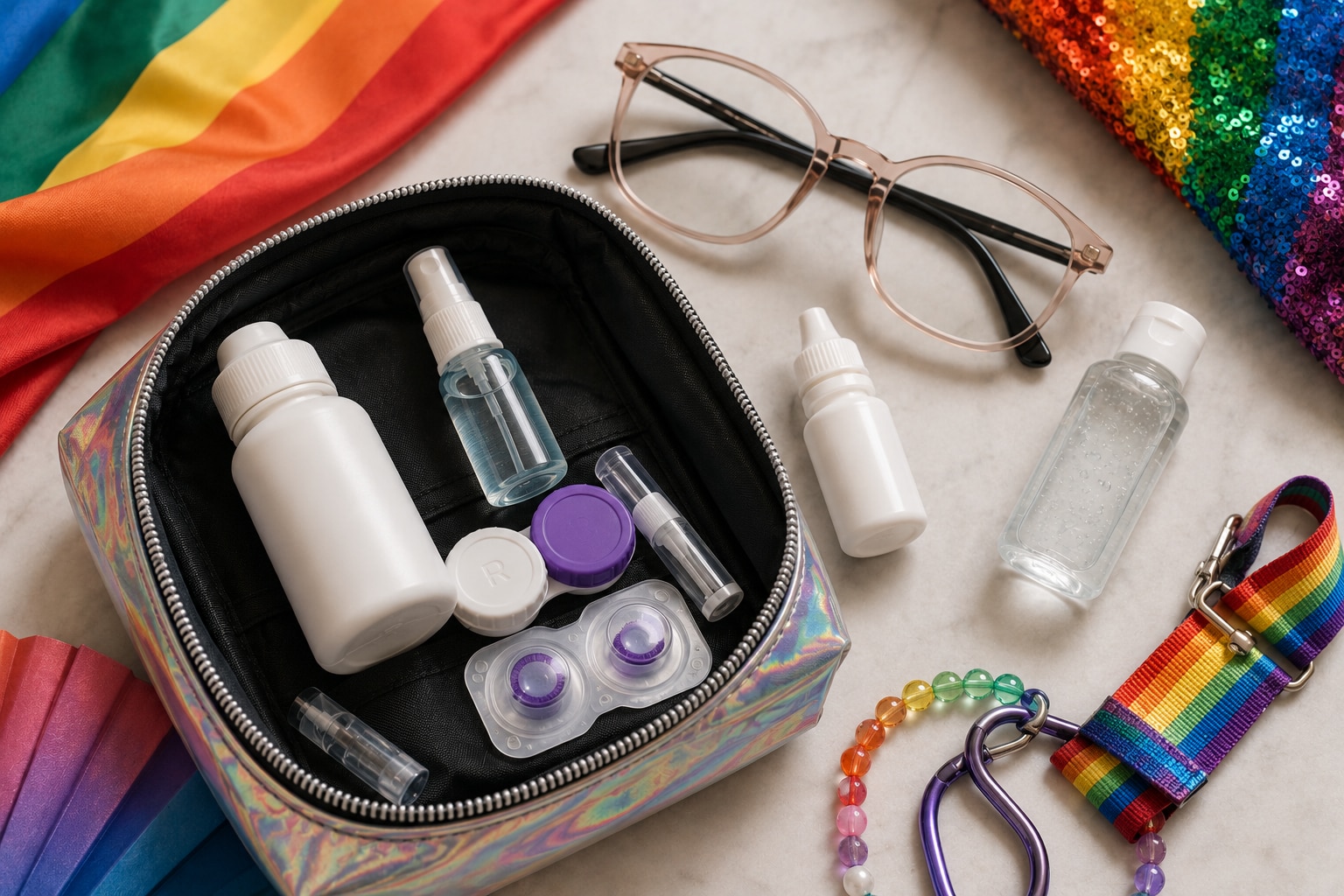
For reusable lenses, use only fresh disinfecting solutions. The CDC advises not to mix fresh solution with old solution, to replace your contact lens case at least every three months, and to replace lenses according to your eye doctor’s recommendation.
6. Remove lenses if your eyes feel wrong
Eye pain, redness, discharge, sudden blur, watery eyes, or light sensitivity should end lens wear for the day. Do not try to push through discomfort because you want the look to last.
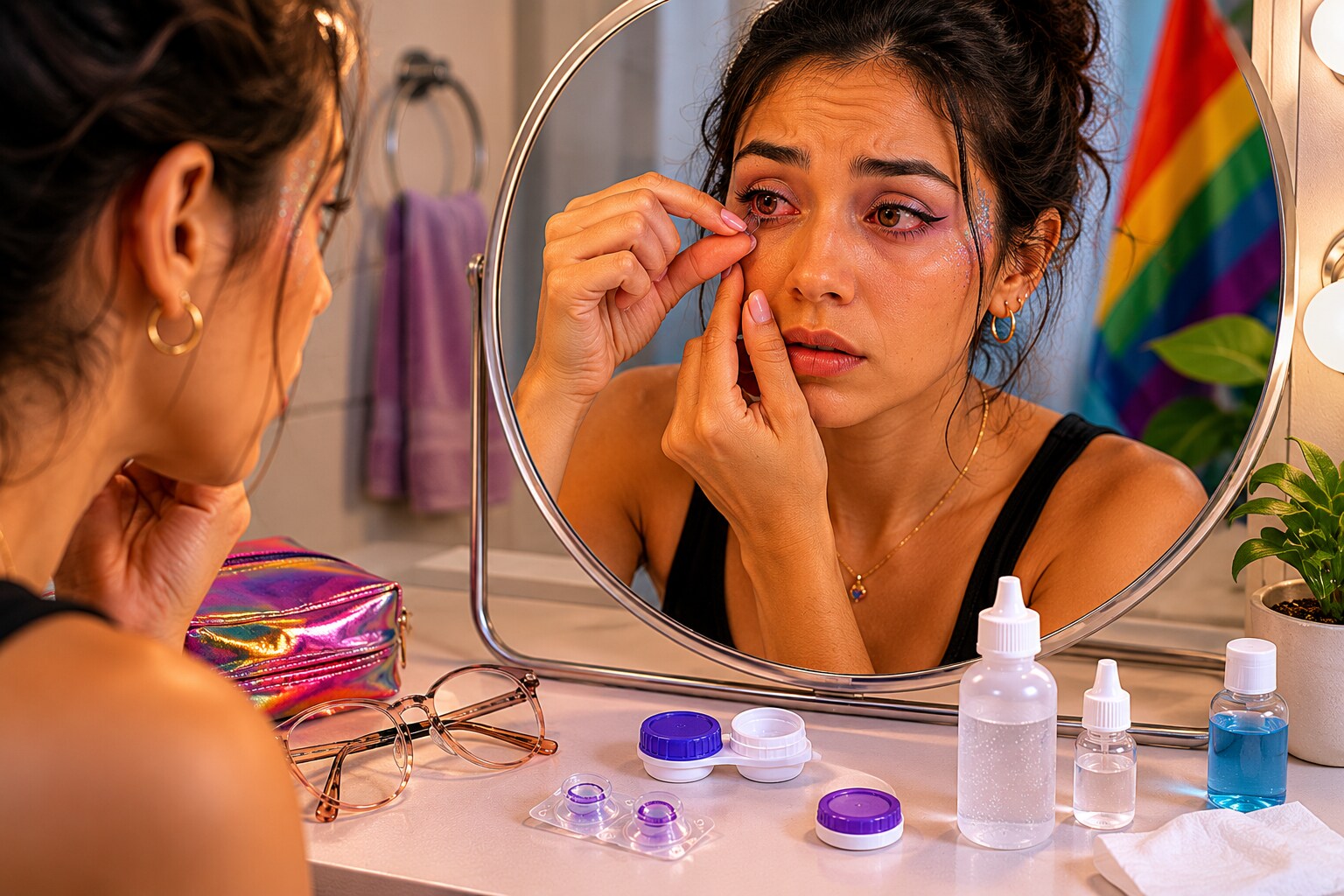
Remove the lenses, switch to glasses, and contact an eye care professional if symptoms do not clear quickly. The safest Pride look is one that protects your vision while letting you express yourself confidently.
How to Clean, Store, and Replace Colored Contacts
Colored contacts need the same care as clear contact lenses because they sit directly on your eyes. Safe care is especially important for Pride events, when you may be wearing makeup, spending long hours outside, taking photos, dancing, or traveling.
Daily Disposable Colored Contacts
Daily disposable colored contacts are worn once, then thrown away. Do not clean them, store them, or wear them again the next day. This format can be helpful if you only want prescription colored contacts for a Pride parade, photoshoot, drag show, festival, or occasional night out.
Reusable Colored Contacts
Reusable colored contacts need cleaning every time you remove them. If your prescribed dark green contact lenses are reusable, follow the same cleaning, disinfecting, and storage routine after each approved wear. CDC guidance says to rub and rinse contact lenses and store them in fresh solution every time you remove them.
Never Use Water Or Saliva
Do not rinse, store, or rewet colored contacts with water or saliva. Water can expose lenses to microbes linked to serious corneal infections, and saliva is not sterile. The FDA warns not to expose contact lenses to tap, bottled, distilled, lake, or ocean water.
Replace Lenses On Schedule
Replace your lenses based on the schedule your eye doctor prescribed, not based on how clean they look. Daily lenses are for one-time use, while reusable lenses must be replaced according to their approved schedule. Waiting too long can increase deposits, discomfort, blurry vision, and irritation.
Replace Your Case Regularly
Use a clean case and fresh solution every time you store reusable lenses. The page 20 visual in the uploaded competitor file shows a simple care flow: wash and dry your hands, fill the case with fresh solution, rub the lens, rinse with solution, and store it in the case. CDC guidance also says not to top off old solution and to rub and rinse the storage case with fresh solution, not water.
Dropped a lens while cleaning or inserting and not sure if it is still safe? Follow what to do if you drop your contact lens on the floor so you handle it safely instead of taking shortcuts.
Popular Prescription Colored Contacts To Consider
These colored contact lenses are options to discuss with your eye doctor. Availability, prescription range, color selection, comfort, and fit depend on your eye exam and contact lens prescription.
Air Optix Colors
Air Optix Colors is a monthly color contact lens option for a noticeable but wearable change. Alcon describes it as a monthly replacement color lens available in 12 shades, with 3-in-1 Color Technology and SmartShield Technology. It can be prescribed with or without vision correction, but it still needs an eye doctor’s fitting and prescription.
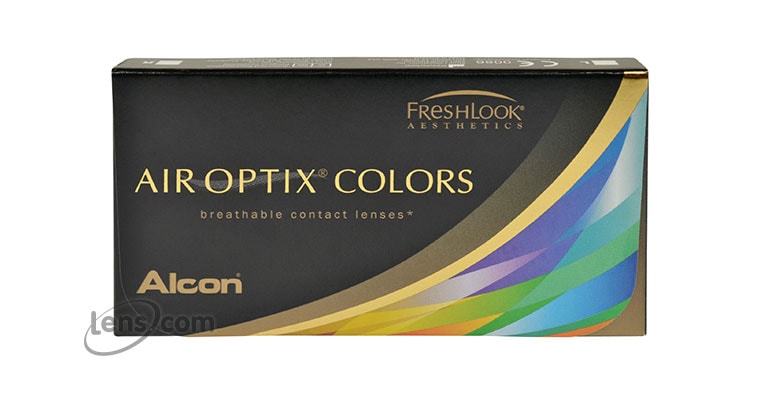
Choose Air Optix Colors if you want a monthly colored contact lens for a noticeable but wearable color change to discuss with your eye doctor.
FreshLook ColorBlends
FreshLook ColorBlends is a strong option if you want a natural-looking blend that can still be noticeable. The lens uses 3-in-1 Technology to combine three shades in one lens, helping create a blended effect rather than a flat color change. This can fit Pride looks that are soft, wearable, and photo-friendly.
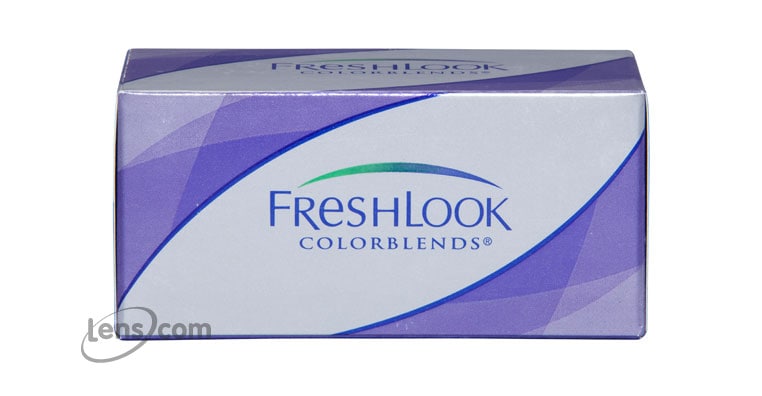
Pick FreshLook ColorBlends if you want a natural-looking blended color that can create a subtle or more noticeable eye-color change.
1-Day ACUVUE Define
1-Day Acuvue Define is a daily disposable enhancement-style lens for a refined, natural-looking effect. It is designed for one-day wear and replacement with a fresh pair the next day. This may fit wearers who want a simple, occasional-use lens without cleaning or storage.
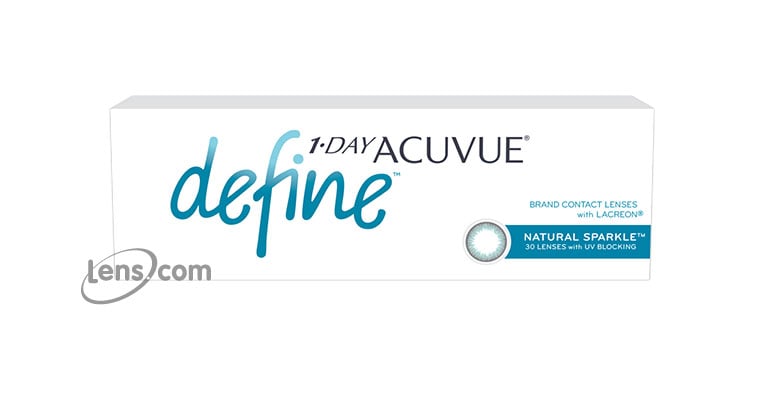
Try 1-Day ACUVUE Define if you prefer a daily disposable enhancement-style lens for a refined, natural-looking effect.
FreshLook One-Day
FreshLook One-Day is a daily disposable color option for occasional wear, first-time wearers, Pride events, or photoshoots. Lens.com has this line available in green, blue, pure hazel, misty hazel, misty grey, and simple grey contact lenses. The lens uses a 3-in-1 color design to create a natural-looking blend with your eye color.
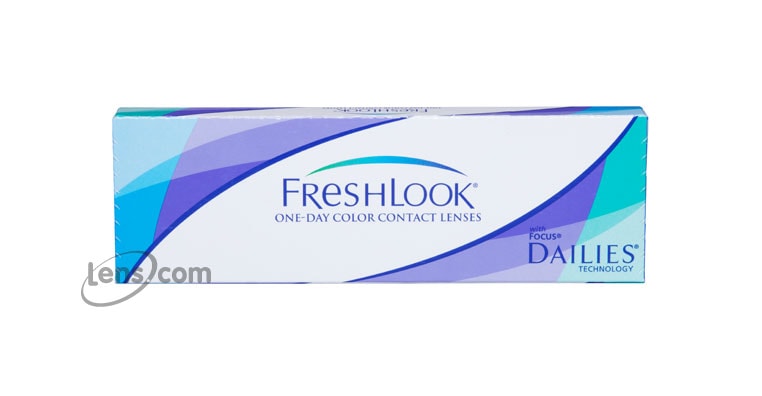
See FreshLook One-Day if you want a daily disposable colored contact option for occasional wear, Pride events, photoshoots, or first-time use.
Want more inspiration for popular, wearable shades before you choose a brand to ask your doctor about? Browse the best-selling colored contact lenses to compare top picks and care reminders.
Common Mistakes to Avoid With Colored Contacts
Colored contacts can be fun for Pride Month, but small shortcuts can put your eyes at risk. Treat them like medical lenses every time, even if you only plan to wear them for a few hours.
Mistake 1: Buying without a prescription
Do not buy colored contact lenses from any seller that skips prescription verification. The FDA says decorative and colored contacts are medical devices and require a prescription, even when they do not correct vision. Buying without one raises the risk of poor fit, eye scratches, infection, and vision damage.
Mistake 2: Wearing costume lenses “just for one night”
One night can still be enough to hurt your eyes if the lenses are unsafe, counterfeit, contaminated, or poorly fitted. Even specialty styles such as Sith contact lenses should be properly prescribed and fitted rather than treated like ordinary costume accessories.
Mistake 3: Sharing lenses with a friend or partner
Never share colored contacts with anyone, including a friend, partner, performer, or makeup artist. Lenses are fitted to one person’s eyes, and sharing can spread bacteria, viruses, and other germs. This is especially risky at Pride parties, drag shows, group costumes, and photoshoots, where people may be tempted to swap lenses for a look.
Mistake 4: Wearing lenses too long
Follow the wearing time your eye doctor gives you. Wearing lenses longer than prescribed can cause dryness, redness, blurry vision, and irritation. Long event day? Bring backup glasses so you can remove your lenses when your eyes feel tired.
Mistake 5: Reusing daily disposables
Daily disposable colored contacts are made for one use only. Do not clean, store, or wear them again the next day, even if they still look fine. Reusing daily lenses can increase buildup, discomfort, and infection risk.
When Should You Stop Wearing Colored Contacts and Call an Eye Doctor?
Remove your lenses right away if your eyes feel painful, irritated, or suddenly different. Do not wait to see if the symptoms improve while the lens is still on your eye. With prescription colored contacts, fast action helps lower the risk of a minor irritation becoming a more serious eye problem.
Stop wearing colored contact lenses and call an eye doctor if you notice:
- Redness, pain, soreness, or a burning feeling.
- Eye pain that does not improve shortly after removing the lens.
- Sudden blurry vision or vision that does not clear after lens removal.
- Light sensitivity, especially if it feels new or strong.
- Discharge, heavy tearing, or sticky eyelids.
- A scratchy, gritty, or foreign-body feeling that does not go away.
- Swelling around the eye or eyelid.
- Halos, cloudy vision, or worsening discomfort.
- Symptoms are in only one eye.
- A lens that looks torn, warped, chipped, cloudy, or dirty.
Do not put the lens back in, try another pair, or keep wearing contacts for the event. Switch to glasses and contact an eye care professional, especially if pain, redness, blurred vision, or light sensitivity continues.
Celebrate Pride Safely With Prescription Colored Contacts
Colored contacts can be a fun way to express your Pride Month look, but they are still medical devices that sit directly on your eyes. For character- or fantasy-inspired looks using blue cosplay contacts, wear only the exact lens your eye doctor has prescribed and fitted for you. The FDA states that decorative and colored contacts require a prescription, even when they do not correct vision.
Before your event, schedule a contact lens exam, choose only the lenses your eye doctor prescribed, and test them before the parade, party, show, or photoshoot. Remove them right away if your eyes become red, painful, blurry, watery, or sensitive to light. If symptoms do not clear quickly, contact an eye care professional instead of trying another pair.
FAQs About Prescription Colored Contacts
Are prescription colored contacts safe?
Prescription colored contacts can be safe when they are prescribed, fitted, worn, cleaned, and replaced correctly. Problems usually happen when people buy no-prescription lenses, use fake lenses, share lenses, or ignore care instructions.
How do you know if colored contacts are fake?
Warning signs include no prescription required, “one size fits all” claims, missing brand or manufacturer details, no lens parameters, unusually cheap prices, vague “cosplay only” labels, damaged packaging, or no care instructions.
Where should you not buy colored contacts?
Do not buy colored contacts from street vendors, salons, beauty supply stores, boutiques, flea markets, novelty stores, Halloween stores, convenience stores, beach shops, or websites that do not require a prescription. The FDA lists these as places to avoid.
Can fake colored contacts damage your eyes?
Yes. Fake or poorly fitted contacts can scratch the cornea, cause eye infection, trigger allergic reactions, blur your vision, or lead to corneal ulcers. Severe infections can threaten vision.
Can colored contacts cause blindness?
Colored contacts can contribute to serious eye damage if they are counterfeit, poorly fitted, contaminated, shared, overworn, or cleaned incorrectly. The FDA warns that poor fit and infection from decorative lenses can lead to decreased vision or blindness.
Can you wear colored contacts if you have perfect vision?
Yes, but you still need a contact lens prescription. Plano colored contacts have no vision-correcting power, but they still need to fit your eyes properly.
What are plano colored contacts?
Plano colored contacts change or enhance eye color without correcting vision. They are still medical contact lenses, so they require an eye exam, fitting, and prescription.
Can colored contacts correct nearsightedness?
Yes. Many colored contacts with prescription can correct nearsightedness if your prescription and fit match an available lens option.
Can colored contacts correct astigmatism?
Some colored contacts can correct astigmatism, but options are more limited. People with astigmatism usually need toric colored contacts or another correction plan from an eye doctor.
Can you wear colored contacts for Pride Month events?
Yes, if they are prescribed, fitted, and worn as directed. Try them before the event so you can check comfort, vision, color, and how they work with makeup and lighting.
Can you wear colored contacts with makeup?
Yes, but put your contacts in before applying makeup. This helps reduce the chance of mascara, liner, powder, or glitter transferring onto the lens.
Should you put colored contacts in before or after makeup?
Put colored contacts in before makeup, then remove them before taking makeup off. This keeps makeup residue away from the lens surface.
Can you sleep in colored contacts?
Do not sleep in colored contacts unless your eye doctor specifically prescribed that wearing schedule. Sleeping in lenses that are not approved for overnight wear raises infection risk.
Can you swim with colored contacts?
No. Keep colored contacts away from water, including pools, showers, hot tubs, lakes, and oceans. CDC guidance says all contacts, including decorative lenses, need proper care to reduce infection risk.
How long can you wear colored contacts?
Wear them only for the time your eye doctor recommends and follow the replacement schedule on your prescription. Daily lenses are worn once, while reusable lenses need cleaning and replacement on schedule.
Are daily colored contacts safer than reusable colored contacts?
Daily colored contacts remove the cleaning and storage step because you throw them away after one use. Reusable lenses can also be safe, but only if you clean, disinfect, store, and replace them exactly as directed.
What should you do if colored contacts hurt?
Remove the lenses right away. Do not rinse them with water, do not put them back in, and do not keep wearing them for photos or an event. Call an eye doctor if pain, redness, blurry vision, discharge, or light sensitivity continues.
Disclaimer: This content is for general informational purposes only and is not a substitute for professional advice, diagnosis, or treatment.
References
Decorative Contact Lenses for Halloween and More. U.S. Food and Drug Administration. https://www.fda.gov/medical-devices/contact-lenses/decorative-contact-lenses-halloween-and-more. Date Accessed: May 26, 2026.
Everyday Eye Care. U.S. Food and Drug Administration. https://www.fda.gov/medical-devices/contact-lenses/everyday-eye-care. Date Accessed: May 26, 2026.
Preventing Eye Infections When Wearing Contacts. Centers for Disease Control and Prevention. https://www.cdc.gov/contact-lenses/prevention/index.html. Date Accessed: May 26, 2026.
Healthy Habits: Keeping Water Away from Contact Lenses. Centers for Disease Control and Prevention. https://www.cdc.gov/contact-lenses/about/healthy-habits-keeping-water-away-from-contact-lenses.html. Date Accessed: May 26, 2026.
About Cleaning, Disinfecting, and Storing Contact Lenses. Centers for Disease Control and Prevention. https://www.cdc.gov/contact-lenses/about/about-cleaning-disinfecting-and-storing-contact-lenses.html. Date Accessed: May 26, 2026.
FTC Sends Cease and Desist Letters to Prescribers Regarding Potential Violations of the Commission’s Contact Lens Rule. Federal Trade Commission. https://www.ftc.gov/news-events/news/press-releases/2023/02/ftc-sends-cease-desist-letters-prescribers-regarding-potential-violations-commissions-contact-lens. Date Accessed: May 26, 2026.
Is your eye doctor violating the Contact Lens Rule? Colleen Tressler / Federal Trade Commission. https://consumer.ftc.gov/consumer-alerts/2023/02/your-eye-doctor-violating-contact-lens-rule. Date Accessed: May 26, 2026.
Decorative Contact Lenses: What Teens & Parents Need to Know. Douglas R. Fredrick, MD, FAAP / HealthyChildren.org (American Academy of Pediatrics). https://www.healthychildren.org/English/health-issues/conditions/eyes/Pages/Decorative-Contact-Lenses.aspx. Date Accessed: May 26, 2026.
Impact of contact lens hygiene risk factors on the prevalence of contact lens-related keratitis in Alexandria-Egypt. Journal of Ophthalmic Inflammation and Infection (Springer Nature). https://link.springer.com/article/10.1186/s12348-024-00421-1. Date Accessed: May 26, 2026.
Hydrogen Peroxide Solution. U.S. Food and Drug Administration. https://www.fda.gov/medical-devices/contact-lenses/hydrogen-peroxide-solution. Date Accessed: May 26, 2026.