
When finding the right contact lenses, most people think about prescription power, lens material, or base curve. But another key measurement that plays a big role in how your lenses fit and feel is the horizontal visible iris diameter (HVID).
Whether you’re getting fitted for soft contacts or more specialized lenses like hard contact lenses, rigid gas permeable contact lenses, or scleral types, understanding your HVID can help ensure your lenses sit comfortably and perform effectively. In this guide, we’ll explore what HVID is, why it matters, how it’s measured, and how it affects different lens types.
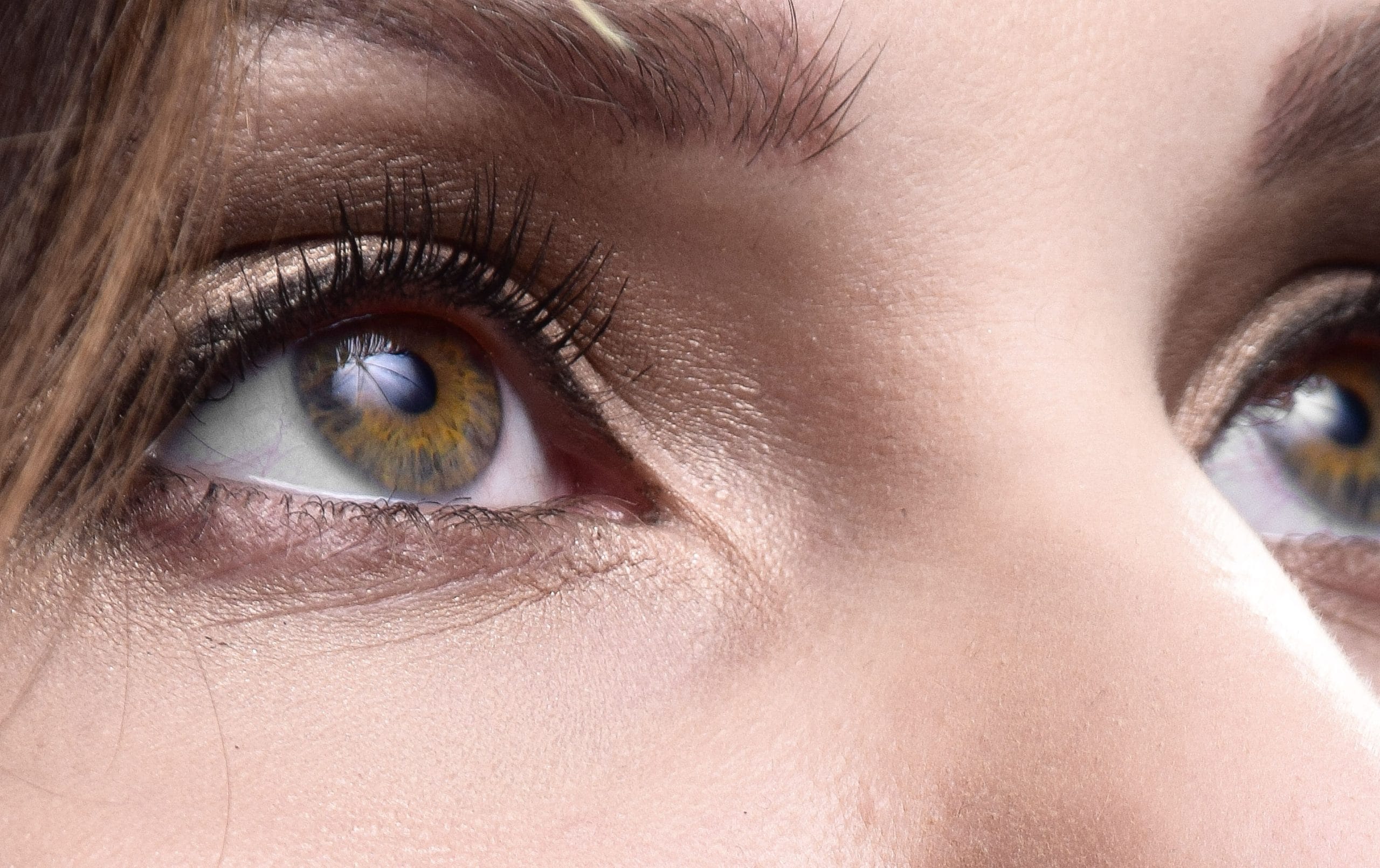
HVID refers to the horizontal distance across the visible portion of the iris (the colored part of your eye), measured in millimeters. This essential parameter helps determine the appropriate diameter for contact lenses, particularly for rigid gas permeable (RGP) and scleral contact lenses. An ill-fitting lens—either too small or too large—can lead to discomfort, reduced visual acuity, and potential eye complications.
One reason HVID is important is that it helps determine the appropriate lens diameter. A proper fit ensures the lens fully covers the cornea without being too tight or too loose. For example, scleral lenses are typically designed to be 3.5 to 4.5 mm larger than your HVID to allow full coverage while maintaining comfort.
HVID also helps estimate the shape and depth of your eye surface—especially when combined with corneal curvature. This ensures your lenses follow the natural contour of your eye and allow for good tear flow and oxygen exchange.
Finally, HVID becomes even more important if your iris is smaller or larger than average. In these cases, standard lens sizes might not provide a proper fit, so custom lenses based on your HVID measurement are recommended.
The average horizontal visible iris diameter typically ranges from 11.6mm to 12.0mm, though a significant proportion of people fall outside this range. Some research suggests a broader normal range between 11.3mm and 12.3mm.
However, take note of the following:
Accurate measurement of HVID is especially important when you’re being fitted for custom lenses, as lens diameter is directly based on this value.
HVID is the horizontal measurement of the visible iris—the colored part of your eye—from one edge to the other, measured in millimeters. It’s a critical part of contact lens fitting, especially for custom RGP and scleral lenses.
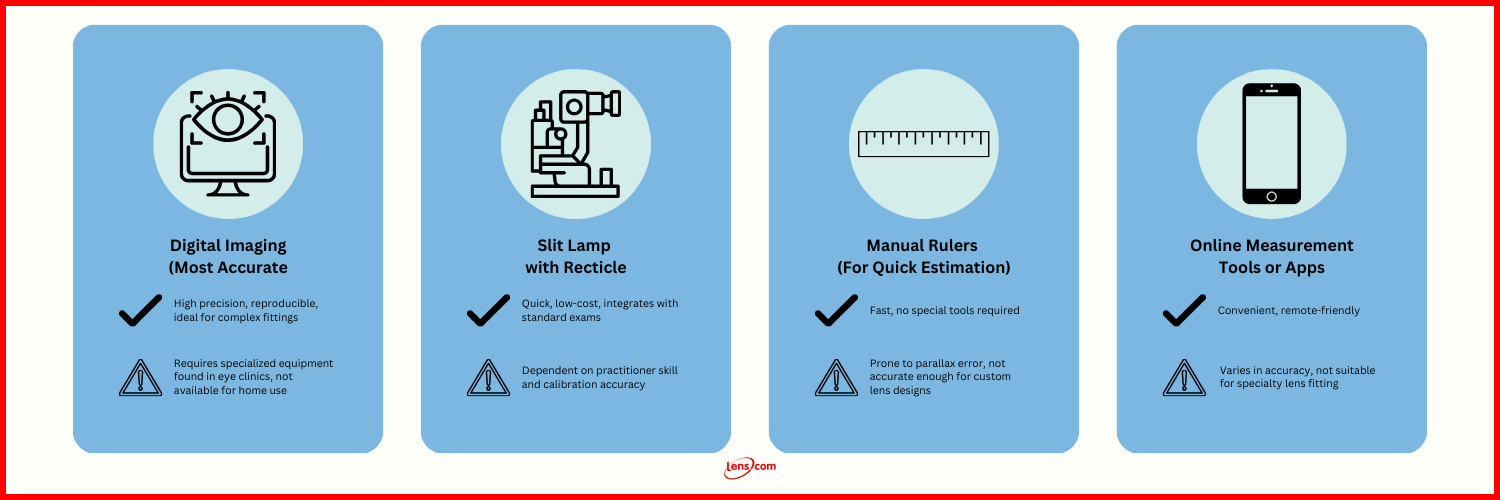
Corneal topographers or digital slit lamp cameras equipped with imaging software are the gold standard for measuring HVID in clinical settings. These tools take high-resolution images of the front of the eye. The software then detects the iris boundaries and calculates the horizontal visible iris diameter in millimeters with high precision.
Systems like Medmont E300, Oculus Keratograph 5M, and Zeiss Atlas are commonly used and trusted in specialty lens fittings.
Another widely used method is through a slit lamp with a built-in reticle or measurement scale. The eye care professional manually aligns the scale across the iris while examining the eye. The reading, usually in millimeters, gives a close approximation of the HVID. This approach is simple and effective for routine lens fittings and is commonly available in most optometry clinics.
For a more basic approach, manual rulers like a PD ruler or HVID-specific ruler can be used to estimate the diameter. The ruler is held in front of the eye, and the practitioner measures the visible horizontal iris width. This method can be helpful when digital tools aren’t available or in mobile or outreach settings. However, it’s far less accurate and should not be used for specialty contact lenses requiring precision.
Lastly, some online tools and mobile apps allow users to estimate their HVID using webcam or smartphone photos. These platforms use scaling references and image analysis to generate an estimate. While these tools are convenient and may assist in online lens purchases, they lack clinical precision and should be used cautiously. They are not recommended for patients needing advanced lenses like RGPs or sclerals.
Standard soft contacts or silicone hydrogel lenses typically come in diameters between 13.8mm and 14.5mm, which work well for most wearers. However, if your HVID falls significantly outside the average range, even standard soft lenses may not center properly or could shift on your eye—potentially causing discomfort or vision issues.
Lens.com has variety of soft contact lenses, from monthly disposables like Acuvue Vita, toric lenses such as Biofinity Toric and bifocals such as Air Optix Aqua Multifocal contact lenses. Visit Lens.com to shop silicone hydrogel contact lenses that suits your needs!
Shop Better Affordable High Quality Soft Contact Lenses at Lens.com!
RGP lenses are smaller in diameter and sit directly on the cornea. They require custom fitting based on both HVID and corneal curvature. A mismatch can result in poor lens movement, edge lift, or irritation. Proper HVID measurement helps determine the correct lens size to ensure a stable fit and adequate tear exchange.
These specialized lenses are much larger, resting on the white part of your eye (the sclera) while vaulting over the cornea. For scleral lenses, HVID is particularly crucial as it helps define how the lens centers, how the vault is shaped, and where the lens lands on the eye. An improperly fitted scleral lens can cause discomfort or reduce vital oxygen flow to the eye.
Have a question? Call us at
1-800 LENS.COM (536-7266)
Online 24/7
© 1995-2021 Lens.com. All Rights Reserved. Lens.com is a contact lens replacement company, and a direct to consumer marketer of contact lenses.
As a contact lens replacement center, we can only sell you contact lenses that you have a valid prescription for, and are wearing successfully.