Your partner swears they caught you dozing on the couch last night with your eyes half open, staring at nothing like a store mannequin. You laughed. Surely you’d know if you did that?
Probably not. In a 2020 survey of 2,000 adults led by researchers at Keio University in Tokyo, 36.8% of people couldn’t say whether their eyes stay open while they sleep. They checked “not sure.” That’s more than one in three people with no idea what their own eyelids are up to for roughly a third of their lives.
So yes, you can sleep with your eyes open. Plenty of people do it every night, and scientists have made people do it on purpose. The “but” is what hours of open air can do to the front of your eyes, and it’s a bigger issue if you wear contact lenses.
Can you really fall asleep with your eyes open?
Yes. Eye doctors call it nocturnal lagophthalmos, which simply means your eyelids don’t fully close while you sleep. For some people the opening is wide enough to show the whole iris. For most, it’s a thin sliver of white peeking out between the lids.
Your brain doesn’t need closed eyelids to power down. Sleep is something your brain does, and your lids are more like curtains. Drawn or not, the lights still go out.
Two sleep labs taped people’s eyes open. Everyone still fell asleep.
In 1960, British sleep researcher Ian Oswald ran one of the odder experiments in sleep science. He taped volunteers’ eyelids open, put flashing lights in front of their faces, and played loud music into their ears. They nodded off anyway. He published the results in the British Medical Journal under a title that tells you everything: “Falling asleep open-eyed during intense rhythmic stimulation.”
Jump ahead to 2025. A team at ETH Zurich wanted to watch people’s pupils change through the night, which meant the eyelids had to stay out of the way. They taped open the right eye of 17 healthy adults for the first half of the night, protected it with a vitamin A ointment and a clear bandage, and sent everyone to bed at their usual time. All 17 fell asleep and moved through light sleep, deep sleep, and REM. Only 2 said the strange setup woke them up.
- 17 of 17 volunteers fell asleep with an eye taped open (ETH Zurich, Nature Communications, 2025)
- Every major sleep stage showed up, REM included
- Researchers found “no major disturbances” from sleeping with the eye open
Lead author Manuel Carro Domínguez said the team’s biggest worry was that nobody would manage to sleep. Instead, he said, most people in a dark room simply forget their eyes are open.
If your eyes are open, why don’t you see anything?
Two things work in your favor. First, in most people the eyes roll upward and outward when the lids try to close. That reflex is called Bell’s phenomenon, and it’s the reason open-eye sleepers tend to show mostly the whites of their eyes. It also explains the slightly spooky look that makes partners jump at 2 a.m.
Second, your sleeping brain turns the volume way down on incoming signals. Light can still reach the retina, but the brain filters most of it before it ever becomes something you “see.” The ETH Zurich team did find that pupil size kept shifting with sleep stages and with how the brain reacted to sounds. So your brain is still processing the world overnight. You just won’t recall any of it.
How many people sleep with their eyes open?
Nobody has a solid number, and the internet can’t agree. Search the question and you’ll find “1 in 5 people” on one site and “1 in 20” on another. Turner Eye Institute credits the 1 in 5 figure to the National Sleep Foundation, while the Sleep Foundation says about 1 in 20. Neither links to a study behind the number.
The clearest survey data we found comes from that Keio University study, published in the journal Life. Here’s how 2,000 adults answered the question “Are your eyes open during sleep?”
So the 1 in 20 figure lines up with what people report about themselves. With more than a third of people unable to answer at all, though, the real number could run higher. Most open-eye sleepers find out from someone else: a partner, a roommate, a parent peeking in on a napping kid.
One more surprise from the data. The people who said yes were younger, on average, than the people who said no (about 40 versus 45). Open-eye sleep isn’t only an older-adult thing.
Wait, do hares really sleep with their eyes open?
The word lagophthalmos comes from the Greek lagos, meaning hare, thanks to an old belief that hares sleep with their eyes open. The name stuck even though, according to All About Vision, hares don’t sleep that way at all.
Some animals really do it, though. In a 1999 study in Nature, researchers watched mallard ducks sleeping in a row. The ducks on the ends kept their outward-facing eye open, with the matching half of the brain awake to watch for predators, while ducks in the middle could relax. Dolphins and some seals rest one brain hemisphere at a time, too. Humans didn’t get that upgrade. When your eye stays open, your whole brain is still asleep, and you get none of the lookout perks.
What keeps your eyelids shut in the first place?
Closing your eyes for sleep feels passive, like a garage door rolling down. It isn’t. Keeping your lids sealed all night takes steady, low-level tone from the orbicularis oculi, the ring-shaped muscle around each eye, while the muscle that lifts the upper lid relaxes.
The operating room proves the point. General anesthesia dials down that muscle tone, and incomplete eyelid closure has been reported in over half of patients under general anesthesia, according to a case review from the University of Iowa’s EyeRounds that cites a classic 1977 study. That’s why anesthesia teams tape or lubricate patients’ eyes before surgery. A 2006 anesthesia review lists corneal abrasions as the most common eye injury during surgery.
Your nightly version is much milder. But the lesson carries over: anything that weakens that muscle, shortens the lid, or pushes the eye forward can leave a sliver open.
Now for the “but.” What does open-eye sleep do to your eyes?
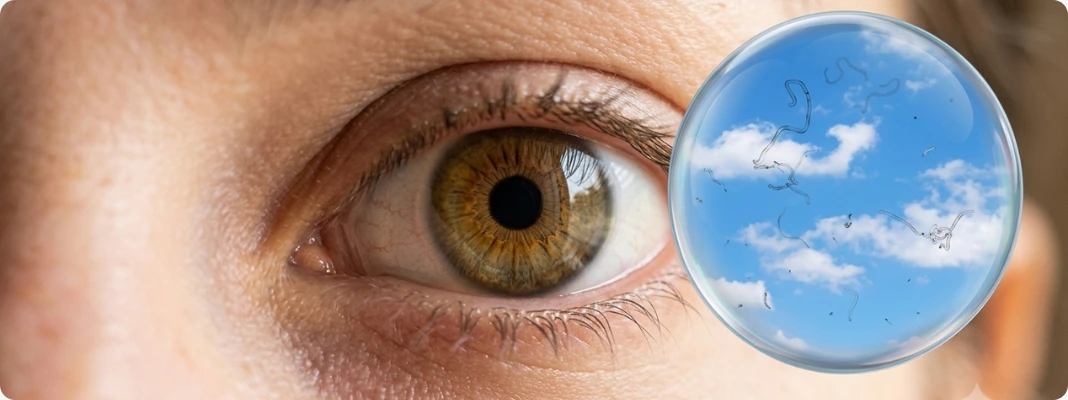
Closed eyelids work like a lid on a pot. They hold moisture against the eye all night. When the lids stay parted, the tear film on that exposed strip of eye keeps evaporating for hours, and there’s no blinking to refresh it.
The strip that dries out is usually the lower part of the cornea, the clear dome over your iris and pupil. Eye doctors call the resulting damage exposure keratopathy. You feel it the next morning as a gritty, sandy sensation, redness, watering, light sensitivity, or blurry vision that clears after some blinking. If morning blur sounds familiar, you might like our look at why your vision is blurry when you first wake up.
Screen-related dry eye tends to get worse as the day goes on. Open-eye sleep flips that pattern. Your eyes feel worst right after you wake up and improve by afternoon.
Left alone for months or years, exposure can lead to corneal scratches, ulcers, infections, and in rare cases, vision loss. It can hit your rest, too. The Keio researchers linked open-eye sleep with worse dry eye symptoms and poorer sleep quality.
Why do some people’s eyelids stay open?
Sometimes there’s a clear culprit. Nerve problems are a big one. Bell’s palsy, a facial nerve injury, a stroke, or Lyme disease can weaken the muscle that closes the eye, and that’s usually obvious because it affects the whole side of the face.
Eye position plays a part as well. Thyroid eye disease can push the eyes forward and pull the lids back, leaving more of the eye exposed. That extra visible white is related to what people call sanpaku eyes, though visible sclera on its own doesn’t mean anything is wrong.
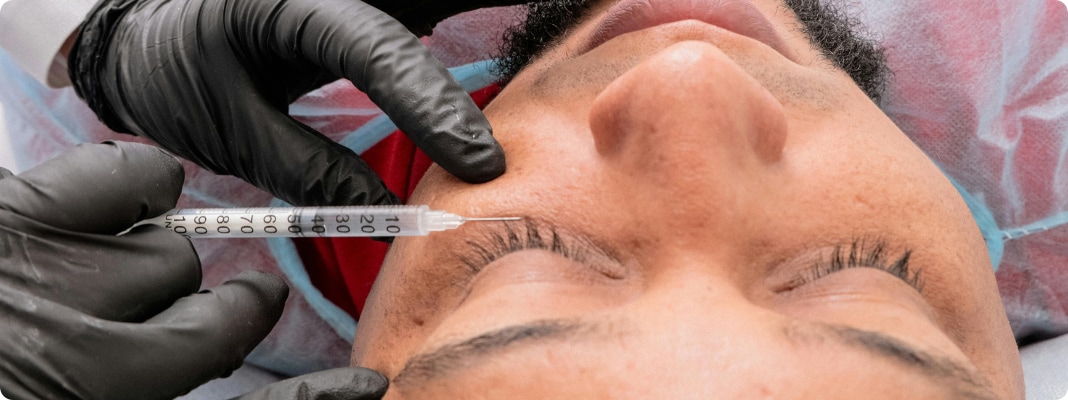
Eyelid changes are another route. Upper eyelid surgery, ptosis repair, Botox injections near the eyes, and scarring can all shorten or stiffen the lids. Floppy eyelid syndrome, where the upper lids turn loose and rubbery, shows up in about 40% of people with sleep apnea, according to a 2023 meta-analysis summarized in Optician.
Then there’s what you do before bed. Alcohol and some sleep medications relax muscles, eyelid muscles included. And for a lot of people, doctors never find a specific cause at all.
Could you be doing it without knowing?
Since you can’t watch yourself sleep, you’ll have to play detective. The easiest move is asking whoever shares your room to take a look after you drift off. A phone camera in night mode works in a pinch.
Eye doctors have a neat trick of their own called the light test. In a dark room, you close your eyes gently, as if you’re asleep, and the doctor holds a small light against your upper eyelid. If light leaks out onto your cheek, your lids aren’t sealing all the way. Before your next exam, run through the check below to see how many morning clues fit you.
The Morning-After Check
Tap every clue that sounds like your mornings. Nothing is saved or sent anywhere.
0 of 10 clues
Tap any clues that sound like your mornings.
Since you wear contacts: keep lenses out for every sleep, naps included, and give your eyes a few minutes with lens-friendly drops each morning before lenses go in. Morning pain or redness means skip the lenses that day and call your eye doctor.
For curiosity, not diagnosis. Only an eye care professional can confirm nocturnal lagophthalmos.
What if you wear contact lenses?
Contact lens wearers get a double dose of the “but.” Two separate problems tend to get tangled together.
The first is sleeping in your lenses. According to the CDC, sleeping in contact lenses raises the risk of a lens-related eye infection six to eight times, and about a third of wearers say they sleep or nap in them. Pair that with lids that don’t seal, and a lens can sit on a drying eye for hours, where it may cling to the cornea and make morning removal harder. Our guide to whether you can sleep with contacts on digs into the research.
The second is daytime comfort. If your eyes start the morning already dry from a night of exposure, your lenses may feel scratchy by midmorning even though you took them out on time. Tell your eye doctor, who can check the lower cornea for dry spots and talk through contact lenses designed for dry eyes. For severe exposure problems, specialists sometimes prescribe scleral contact lenses, which vault over the cornea and hold a pool of fluid against it all day.
- Lenses come out before any sleep, couch naps included
- Bedtime gels or ointments go in only after your lenses are out
- In the morning, blink, use lubricating drops approved for lens wear, and give your eyes a few minutes before lenses go in
- If you wake up with pain, redness, or light sensitivity, skip lenses that day and call your eye doctor
CPAP users, this part’s for you
Sleep apnea and open-eye sleep overlap more than most people realize. If your CPAP mask leaks, air can blow up toward your eyes all night. Combine that with lids that don’t quite close, and it’s a bit like sleeping with a tiny fan aimed at your face.
A 2025 study in Biomedicines looked at 57 adults with sleep apnea in Taipei. Among those using positive airway pressure therapy, mask leak averaged 25.84 liters per minute, above the 24 L/min threshold in ResMed’s clinical guidelines. Higher leak was tied to lower tear production. If your eyes feel parched after CPAP nights, ask your sleep provider about a mask refit, and check the leak data in your machine’s app.
How do you stop sleeping with your eyes open?
It depends on the cause and how much it bothers you, and most people start simple. Thicker lubrication at bedtime is the usual first step. Regular eye drops don’t last long enough for a full night. One 2011 study found artificial tears and gels stayed on the eye for an average of 2 to 35 minutes, with the longest lasting 81 minutes. That’s why doctors tend to suggest a gel or ointment at bedtime.
Physical barriers help, too. Moisture goggles and sealed sleep masks trap humidity around the eyes, and they work differently than a silky mask that just blocks light. Some doctors recommend medical tape designed for eyelids. Don’t grab whatever tape is in the junk drawer.
Your bedroom setup counts. Point ceiling fans and AC vents away from your face, try a humidifier in dry months, and go easy on alcohol and sleep aids close to bedtime. Treating what’s underneath, whether that’s thyroid eye disease or sleep apnea, can make a big difference as well.
For stubborn or severe cases, eyelid specialists can place a small gold or platinum weight in the upper lid, tighten a loose lower lid, or partially stitch the lids together. Those are uncommon fixes, and most people never need them. For a wider look at the causes of dryness, see what causes dry eyes.
When should you see an eye doctor?
Book an exam if your eyes feel gritty, red, or blurry most mornings for more than a couple of weeks, or if drops and bedroom tweaks don’t help. Go sooner if you have eye pain, discharge, light sensitivity, or vision changes, especially as a contact lens wearer.
One situation can’t wait. If one eye suddenly won’t close, or one side of your face starts to droop, get emergency care right away. That can signal Bell’s palsy or a stroke, and fast treatment helps.
So you can sleep with your eyes open, and a few sleep labs have proven it by taping lids apart. Your brain handles it fine. Your eyes are another story, since hours of exposure can leave them dry, gritty, and irritated by morning. If your worst eye moments happen right after you wake up, ask someone to check on you at night, keep your lenses out of bed, and bring it up at your next eye exam. When you’re ready to restock, you can browse contact lens brands that fit your prescription and routine.
Disclaimer: This content is for general informational purposes only and is not a substitute for professional advice, diagnosis, or treatment.
References
Falling Asleep Open-eyed During Intense Rhythmic Stimulation. Ian Oswald. British Medical Journal, 1960.
https://pubmed.ncbi.nlm.nih.gov/14429345/. Date Accessed: September 23, 2026.
Pupil Size Reveals Arousal Level Fluctuations in Human Sleep. Manuel Carro-Domínguez, et al. Nature Communications, 2025.
https://www.nature.com/articles/s41467-025-57289-5. Date Accessed: September 23, 2026.
The Pupil as a Window Into the Sleeping Brain. ETH Zurich via ScienceDaily, March 2025.
https://www.sciencedaily.com/releases/2025/03/250305135152.htm. Date Accessed: September 23, 2026.
Nocturnal Lagophthalmos and Sleep Quality in Patients with Dry Eye Disease. Aya Takahashi, et al. Life (Basel), 2020.
https://www.mdpi.com/2075-1729/10/7/105. Date Accessed: September 23, 2026.
Can You Sleep With Your Eyes Open? Sleep Foundation.
https://www.sleepfoundation.org/physical-health/sleeping-with-eyes-open. Date Accessed: September 23, 2026.
Did You Know That 20% of People Sleep With Their Eyes Open? Turner Eye Institute.
https://www.turnereye.com/did-you-know-that-20-of-people-sleep-with-their-eyes-open/. Date Accessed: September 23, 2026.
Sleeping With Eyes Open: Nocturnal Lagophthalmos. All About Vision.
https://www.allaboutvision.com/conditions/sleeping-with-eyes-open/. Date Accessed: September 23, 2026.
Half-awake to the Risk of Predation. Niels C. Rattenborg, Steven L. Lima, and Charles J. Amlaner. Nature, 1999.
https://www.nature.com/articles/17037. Date Accessed: September 23, 2026.
Perioperative Corneal Abrasions. EyeRounds, University of Iowa Department of Ophthalmology.
https://eyerounds.org/cases/152-perioperative-corneal-abrasions.htm. Date Accessed: September 23, 2026.
Injury During Anaesthesia. Shruti Contractor and Jonathan G. Hardman. Continuing Education in Anaesthesia, Critical Care and Pain, 2006.
https://www.bjaed.org/article/S1743-1816(17)30395-5/fulltext. Date Accessed: September 23, 2026.
Nocturnal Dry Eye Disease. Optician (CPD).
https://www.opticianonline.net/cpd-archive/6888. Date Accessed: September 23, 2026.
Better Manage Nocturnal Lagophthalmos for Dry Eye Patients. Optometry Times.
https://www.optometrytimes.com/view/better-manage-nocturnal-lagophthalmos-dry-eye-patients. Date Accessed: September 23, 2026.
Corneal Infections Associated with Sleeping in Contact Lenses: Six Cases, United States, 2016 to 2018. Centers for Disease Control and Prevention, MMWR.
https://www.cdc.gov/mmwr/volumes/67/wr/mm6732a2.htm. Date Accessed: September 23, 2026.
Impact of Positive Airway Pressure and Mask Leakage on Dry Eye and Glaucoma Risk in Obstructive Sleep Apnea. Wei-Xiang Wang, et al. Biomedicines, 2025.
https://pubmed.ncbi.nlm.nih.gov/41463088/. Date Accessed: September 23, 2026.