Table of Contents
If you already have a glasses prescription, needing a separate contact lens fitting will seem like an extra step. A contact lens fitting is the part of your eye care visit that helps your eye doctor find lenses that sit safely, comfortably, and clearly on your eyes. Glasses rest in front of your face, while contact lenses sit directly on the surface of your eye, including FDA-approved colored contacts used for appearance changes.
What a Contact Lens Fitting Is
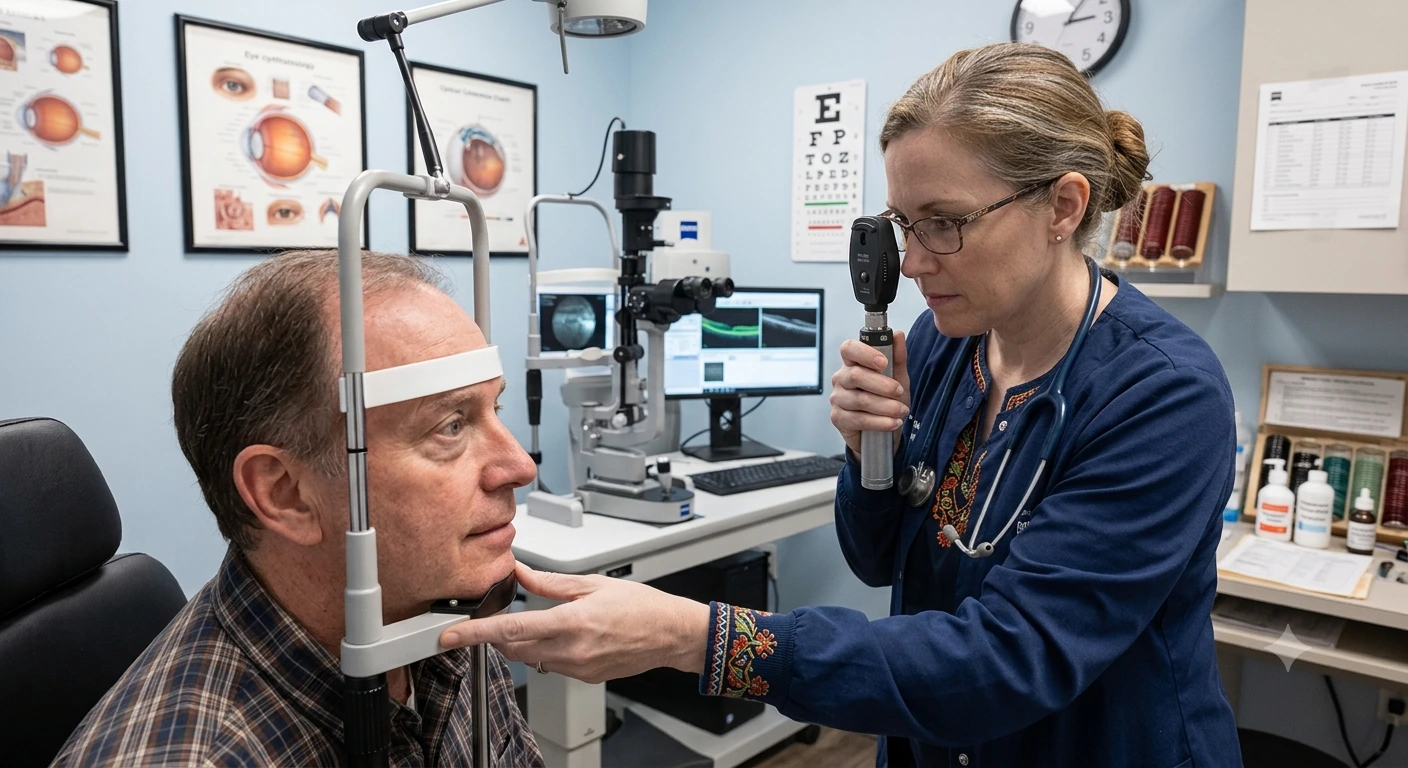
A contact lens fitting is an eye care visit, or part of an eye exam, where your optometrist or ophthalmologist checks which contact lenses are right for your eyes.
During the fitting, your doctor may measure the shape of your cornea, check how your eyes handle moisture, place trial lenses on your eyes, test your vision with those lenses, and see how the lenses move when you blink.
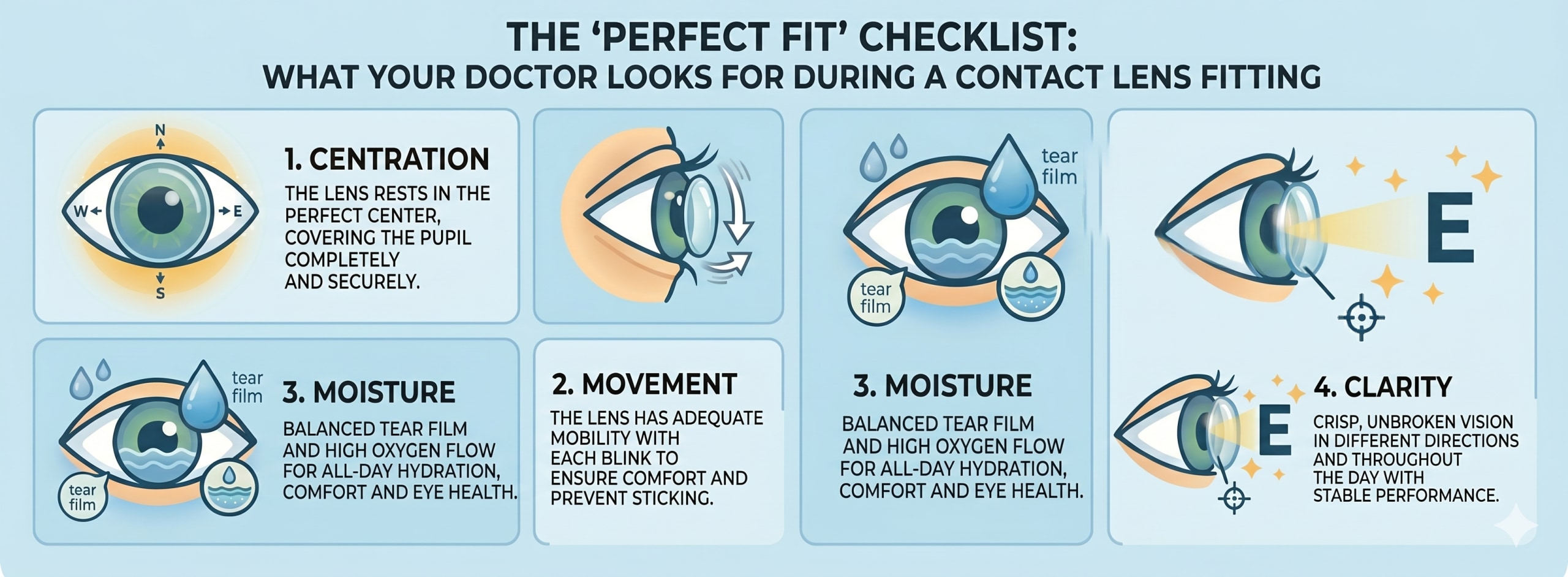
A contact lens should not be too tight, too loose, too dry, or unstable on the eye. It needs to center properly, move enough to stay comfortable, and give you clear vision throughout the day.
Contacts are regulated medical devices, not ordinary beauty or convenience products. This applies to clear prescription lenses and appearance-focused options like non-prescription color contacts, because all contact lenses need to fit the eye properly. They can be safe and effective when they are prescribed, worn, and cared for properly, but they still need to be matched to the person wearing them.
Why Isn’t a Glasses Prescription Enough
A glasses prescription and a contact lens prescription aren’t the same thing.
Your glasses prescription tells a lens maker how to correct your vision through lenses that sit a short distance in front of your eyes. A contact lens prescription has to account for lenses that sit directly on your eyes.
That’s why a contact lens prescription includes extra details. A contact lens prescription can include the lens power, material or manufacturer, base curve, and diameter when appropriate.
Those details help answer questions such as:
- Can this lens curve match the front of your eye?
- Is the lens the right size?
- Does this material work well with your eyes?
- Does the lens move properly when you blink?
- Does this brand and lens design give you clear, stable vision?
Two people can have the same glasses prescription and still need different contact lenses. Their eyes may have different shapes, tear quality, comfort needs, or health concerns.
That’s why, when searching for eye contact lenses near me, you should look for the exact brand and lens specifications listed on your contact lens prescription.
What Happens During a Contact Lens Fitting
Your eye doctor starts with your eye health and vision needs. They may ask whether you want contacts for daily wear, sports, travel, occasional use, work, dry eyes, astigmatism, reading, or cosmetic reasons. If near vision is one of your goals, they may also discuss contact lenses for reading.
Then they look at the physical fit. This may include measurements of the cornea and an assessment of how your eyes handle tears and moisture. Dryness, allergies, screen use, and certain medications can all affect contact lens comfort.
Next comes the trial lens. Your doctor places a sample lens on your eye and checks how it performs. They look at the lens position, movement, comfort, and clarity. You may be asked to blink, look in different directions, or wait a few minutes while the lens settles.
You may also learn how to insert, remove, clean, and store your lenses. For new wearers, this part can take time. That’s normal. Safe handling is part of successful contact lens wear.
Some fittings are simple. Others take more than one visit, especially for toric lenses, multifocal lenses, rigid gas permeable contact lenses, scleral lenses, dry eye issues, keratoconus, or hard-to-fit eyes. Some patients may need follow-up visits before the fitting is complete.
Why You Can’t Skip a Contact Lens Fitting
Fit affects comfort, clarity, and eye health. A well-fit contact lens should feel comfortable enough that you are not constantly aware of it. It should give clear vision. It should stay centered. It should move slightly with blinking, but not slide around. It should also allow your eye to get the oxygen and moisture it needs.
A poor fit can cause problems such as dryness, redness, irritation, blurry vision, lens awareness, eye fatigue, or a scratchy feeling. Sometimes wearers think they “can’t wear contacts” because they had a bad experience with one lens. In reality, they may need a different brand, material, replacement schedule, or lens design. Daily disposable lenses, toric lenses for astigmatism, multifocal lenses, silicone hydrogel lenses, and specialty lenses all solve different problems. The fitting helps your ECP narrow the options.
Can a Bad Contact Lens Fit Hurt Your Eyes
It can, yes. A lens that doesn’t fit properly can rub the eye, trap debris, reduce comfort, or contribute to irritation. Poor wear habits can make the risk worse.
Sleeping in contacts is one of the clearest examples. The CDC tells us that sleeping in lenses increases the risk of contact lens-related eye infections by six to eight times.
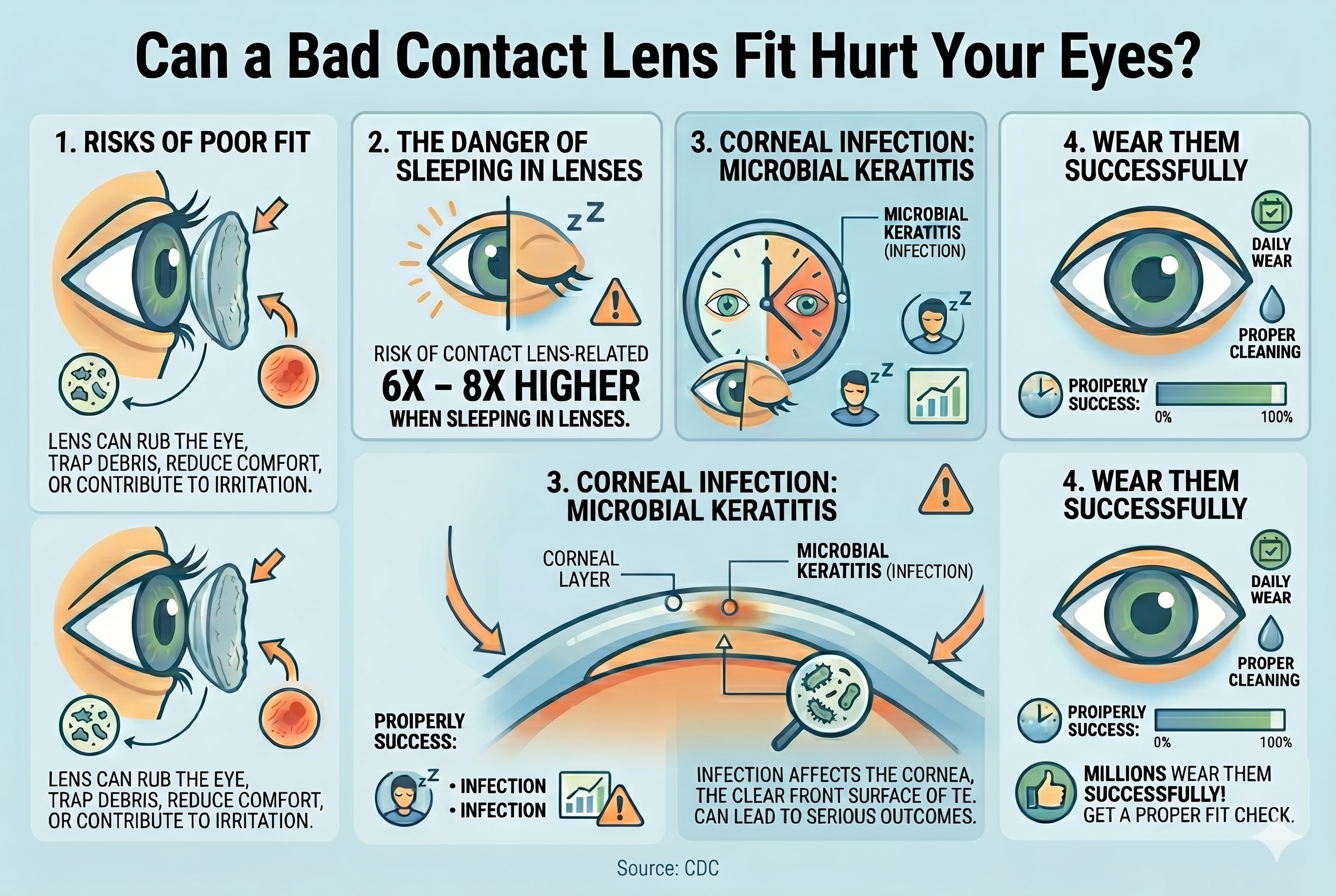
Contact lens-related infections can affect the cornea, the clear front surface of the eye. The CDC describes microbial keratitis as a corneal infection that can lead to serious outcomes, especially when contact lenses are not worn or cared for properly.
This does not mean contacts are unsafe for most people. Millions of people wear them successfully. The same fit requirements apply when shopping for colored contact lenses for sale, since cosmetic lenses still need to match the prescription and fit approved for your eyes.
Do You Need a Fitting If You Already Wear Contacts
Yes, you still need contact lens exams and fittings over time, or if you and your ECP decide to change brands/types of contacts.
Your eyes can also change. Your prescription can change. Your tear film can change. A lens that worked well a few years ago may not be the best option now.
Moving from monthly lenses to daily disposables, switching to toric lenses for astigmatism, trying multifocal contact lenses for presbyopia, or changing to colored contacts can all require a proper fit check.
You should also talk to your eye doctor if your contacts feel dry, blurry, uncomfortable, unstable, or harder to wear than they used to.
Don’t try to solve lens discomfort by guessing at a new brand or size on your own. The better move is to get your eyes checked and let your doctor adjust the lens choice.
Do Colored Contacts Need a Fitting
Yep. Colored contacts, including pure hazel contact lenses, costume contacts, and decorative contacts still sit on your eyes. Even if they do not correct your vision, they still need a prescription and proper fit. That includes cosmetic and novelty styles such as moody contacts. Even if they do not correct your vision, they still need a prescription and proper fit.
Decorative contact lenses require an eye exam and a prescription, and that a wrong fit can damage the eyes (FDA).
This is especially true around Halloween, cosplay events, music festivals, and costume parties. Contacts sold without a prescription from costume shops, beauty stores, street vendors, or random websites are not worth the risk.
What Happens After the Fitting
Once your doctor confirms the right lens, they finalize your contact lens prescription.
That prescription gives you the information needed to order the exact lenses prescribed for your eyes. If your prescription is for a cosmetic colored option such as ice blue contact lenses, make sure the exact product and fit details match what your eye doctor approved.
Under the FTC Contact Lens Rule, prescribers must give patients a copy of their contact lens prescription at the end of the fitting, even if the patient does not ask for it. That means you can take your valid prescription and buy your lenses from the seller you choose. Lens.com can help you order the lenses on your prescription, but the fitting itself comes from your eye care provider.
References
FDA, “Contact Lens Prescription.”
FTC, “The Contact Lens Rule: A Guide for Prescribers and Sellers.”
CDC, “Preventing Eye Infections When Wearing Contacts.”
CDC MMWR, “Corneal Infections Associated with Sleeping in Contact Lenses.”
FDA, “Decorative Contact Lenses for Halloween and More.”
Similar Articles
-

Advanced Contact Lens Finder – Search by Feature, Diameter (DIA), Base Curve (BC), Overnight Wear & More
-

Visible Blood Vessels in Your Eyes
-
4 Eye Care Tips For Winter
-

Which Solution is Best for Contact Lenses? 4 Common Questions About Contact Lens Solution
-

Understanding Eye Flashes: What You Need to Know