
If you have ever stared at a shelf of bottles and wondered which contact lens solution is actually right for your lenses, you are asking the right question. The wrong pick can leave lenses feeling dry, cloudy, or uncomfortable, and in some cases can raise infection risk.
But choosing gets simple once you match the solution to your lens type and your routine. Below is a quick, beginner friendly way to choose confidently, plus the few safety rules that matter most.
Which Contact Lens Solution Should You Use?
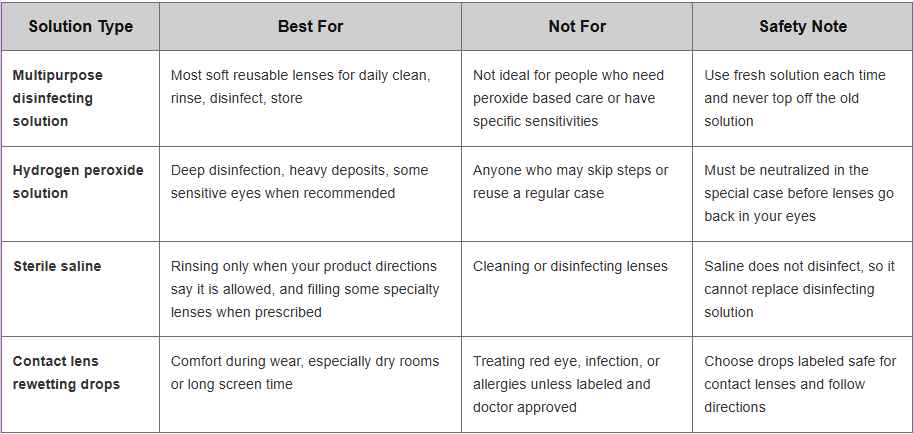
For most people who wear soft reusable contacts, a multipurpose solution is the everyday option because it is made to clean, rinse, disinfect, and store lenses in one bottle. If you want a deeper clean, have frequent buildup, or your doctor recommends it, a hydrogen peroxide solution can work well, but it must be fully neutralized in the special case before the lenses touch your eyes.
Two quick clarifiers that prevent the most common mistakes: sterile saline is not a disinfectant, and water should never touch your lenses or your lens case. Always use fresh disinfecting solution, never “top off,” and keep lenses away from tap water, shower water, and pools.
Start Here (30-second Decision)
- If you wear daily disposables: you typically do not need a cleaning solution for the lenses because you throw them away after wear. Keep rewetting drops labeled for contacts on hand if dryness hits.
- If you wear monthly or two week soft lenses: start with a multipurpose solution unless your doctor directs you to peroxide.
- If your doctor prescribed peroxide care: use hydrogen peroxide solution only with its neutralizing case and follow the full soak time.
- If you wear scleral lenses: you may need preservative free sterile saline to fill the lens, plus separate cleaning and disinfecting products your doctor recommends.
Want a quick way to confirm what your box is really telling you? Check contact lens packaging labels and expiration dates before you switch solutions.
Quick Match
Contact Lens Solution Types
Choosing the right contact lens solution mostly comes down to two things: what your lenses require and what your eyes tolerate best. Here is what each type is designed to do:
Multipurpose Solution
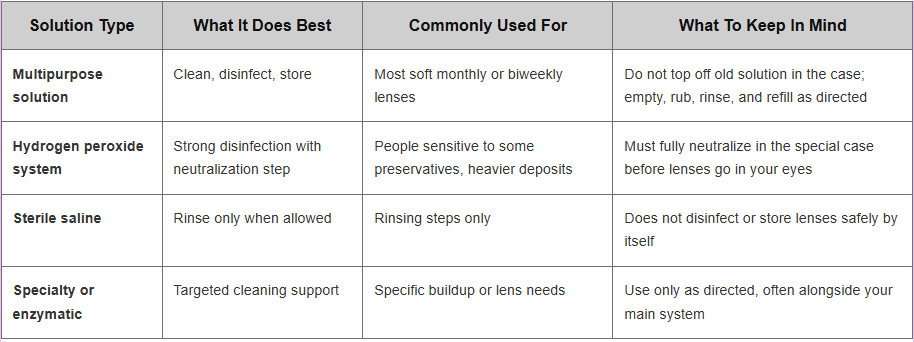
Multipurpose solution is an all in one liquid used to clean, rinse, disinfect, and store most soft contact lenses when used exactly as directed. For best results, use the rub and rinse step, then fully soak lenses for the minimum time on the bottle, because soaking alone is often not enough to remove deposits. Do not use MPS on rigid gas permeable lenses unless your eye doctor specifically says the product is compatible.
Not sure if your cleaning steps are actually enough? Follow cleaning techniques for long-lasting contact lens hygiene to keep lenses comfortable and reduce buildup.
Hydrogen Peroxide Systems
Hydrogen peroxide systems disinfect very effectively and can be a good choice for people who get buildup or feel sensitive to some preservatives in multipurpose solutions. The key safety step is complete neutralization in the special case, because unneutralized peroxide can cause significant burning and irritation if it touches your eye. Never rinse lenses with peroxide directly, and never transfer it into a regular flat lens case.
Sterile Saline
Sterile saline is primarily for rinsing, not for cleaning or disinfecting, unless the label clearly states a specific approved use. It does not remove protein deposits well and it typically does not kill germs, so it should not replace your disinfecting solution for reusable lenses. If you are unsure whether a saline product is appropriate for your routine, check the label and confirm with your eye doctor.
Enzymatic Cleaners and Specialty Products
Enzymatic cleaners are add-ons used less often today, mainly for managing stubborn protein deposits when a doctor recommends them for certain wearers or lens types. Specialty products can include daily cleaners, surface conditioners, or solutions designed for rigid lenses, scleral lenses, or other specialty fits, and they must match the lens material to avoid damage or discomfort. Because these products vary widely, the safest approach is to follow your prescriber’s instructions and the product’s exact steps rather than mixing routines.
Quick Comparison
Hydrogen Peroxide vs Multipurpose
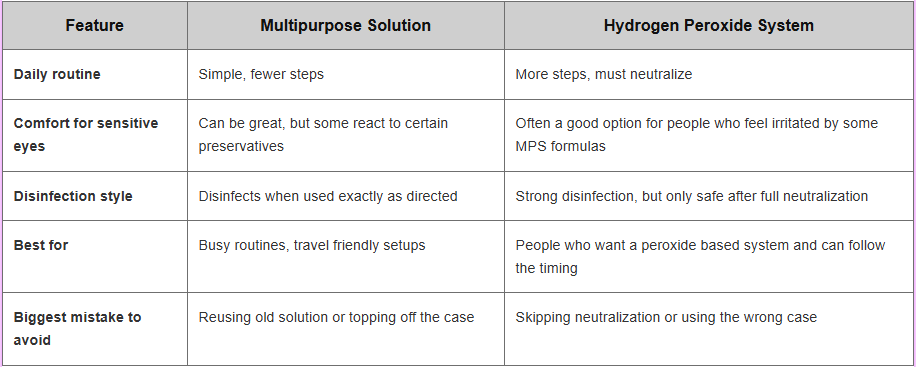
There is no single best solution for everyone. The better choice is the one that matches your lens type, fits your routine, and keeps your eyes comfortable.
Choose multipurpose if
- You want a straightforward routine with one bottle.
- Your eyes feel fine with your current solution and you are not fighting buildup.
- You are confident you can avoid topping off and can clean the case the right way.
Consider hydrogen peroxide if
- Your eyes sting, feel irritated, or get filmy deposits even when you clean well.
- You want a system that is often helpful for people who do not love certain multipurpose formulas.
- You can commit to the full neutralization time every single use.
A Simple Decision Check
- Confirm what your prescription and lens brand recommend first.
- If comfort is good and your routine is consistent, stay with MPS and tighten technique.
- If comfort is consistently poor or buildup is frequent, ask your eye doctor whether a peroxide system is a better fit.
Saline vs Contact Lens Solution
It is easy to mix these up because they can look similar in a bathroom cabinet, but sterile saline and contact lens solution do different jobs. The safest rule is simple: use saline only for the purpose it is labeled for, and never use water on contacts.

Still wondering why saline cannot replace disinfecting solution? Read saline solution vs contact solution and the real difference for your eyes before you swap products.
Why Water Is Never A Substitute
Water is not sterile, even if it looks clean, and microbes can cling to a lens surface. That raises the risk of painful infections and inflammation, and it can also change how a lens fits and feels.
Avoid these common “water” mistakes:
- Rinsing lenses or a case with tap water
- Storing lenses in water or saline only
- Swimming or showering with contacts on
- Wetting a lens with saliva to “fix” dryness
Tempted to rinse lenses with tap water in a pinch? Here is why you can use water instead of lens solution and why it is not safe.
How to Use Contact Lens Solution Correctly
Using the right contact lens cleaning solution matters, but technique matters just as much. These steps work for most soft reusable lenses, and you should always follow your lens brand directions and your eye doctor’s instructions.
Step By Step Routine for Reusable Soft Contacts
- Wash and dry your hands
Use soap, rinse well, then dry with a clean lint free towel so you do not transfer residue to the lens. - Empty your case completely
Dump old solutions every time. Do not “top off” because that weakens disinfection and lets germs build up. - Rub the lens
Place the lens in your palm, add fresh solution, and gently rub with your fingertip to lift deposits unless your doctor says otherwise. This simple step often improves comfort and clarity. - Rinse with fresh solution
Rinse each side of the lens with a fresh solution to wash away loosened debris. Do not use water for this step. - Fill the case with fresh solution
Fill each well with a new solution, then place the correct lens on the correct side. Close the caps tightly. - Let lenses soak for the full time on the label
Disinfection takes time, so do not shortcut the soak. If you are unsure, check the minimum soak time printed on your solution. - Insert lenses and keep the case clean
After inserting, empty the case, rinse it with fresh solution if directions allow, then leave it open to air dry. Replace the case regularly, many doctors suggest about every three months.
If You Use Hydrogen Peroxide Systems
Use only the case that comes with the system, and wait the full neutralization time before lenses touch your eyes. Never transfer peroxide into a flat case, and never rinse lenses with peroxide right before insertion.
Quick “Safe Use” Checklist
- Use fresh solution every time
- Keep solution tip clean, do not let it touch countertops or your fingers
- Replace solution bottles by the expiration date
- Stop wearing lenses if you have pain, discharge, or strong light sensitivity and contact an eye doctor
Not sure what to do with old pairs that have been sitting in your drawer? Use what to do with expired contact lenses to decide what is safe and what to toss.
Why Does Contact Lens Solution Burn?
A mild sting can happen occasionally, but burning with contact lens solution is a sign to pause and figure out why. Most of the time it comes down to irritation on the eye surface, residue on the lens, or using the wrong product in the wrong way.
Common Reasons Solution Burns
- Dry or irritated eyes before you insert lenses
When the eye surface is already dry, even normal saline or multipurpose solution can feel sharper than usual. - Peroxide mix ups
Hydrogen peroxide systems are safe only after full neutralization in the special case. If peroxide touches your eye before it neutralizes, it can burn. - Not rubbing or rinsing well enough
Protein and lipid buildup can trap solution and irritants on the lens, leading to stinging when the lens goes in. - Topping off old solution or a dirty case
Old solution gets weaker and can grow biofilm in the case, which increases irritation risk. - Sensitivity to preservatives or disinfectants
Some people react to certain preservatives, especially if they wear lenses for long hours or already have dry eye symptoms. - Using saline or rewetting drops like a disinfecting solution
Saline does not disinfect and can leave lenses contaminated or uncomfortable.
Feeling stinging or burning after you insert your lenses? Check why your contact lenses burn and tips for soothing irritated eyes to troubleshoot safely.
Safer Fixes You Can Try First
- Remove the lenses and reset
If burning starts, take lenses out right away and rinse them with fresh solution. If burning continues, switch to glasses and give your eyes a break. - Check your solution type and expiration
Confirm you are not using peroxide incorrectly, and make sure the bottle is not expired. If you opened the bottle a long time ago, replace it. - Improve your cleaning routine
For reusable lenses, rub and rinse with fresh solution before soaking. Empty the case every time, refill with fresh solution, and let the case air dry. - Switch to preservative free lubricating drops for comfort, not cleaning
If the burn is from dryness, lubricating drops labeled safe for contacts can help, but they do not replace cleaning and disinfecting. - If burning happens repeatedly, ask your eye doctor about changing products
Your doctor may recommend a different solution type, a peroxide system, or a lens material change based on your eyes.
When Burning Is Not Normal
Stop wearing lenses and contact an eye doctor urgently if you have:
- Moderate to severe pain
- Significant redness
- Light sensitivity
- Discharge
- Blurry vision that does not clear
Choosing the Best Contact Lens Solution for Dry Eyes, Allergies, or Sensitive Eyes
There is no single best solution for everyone, but there is usually a best match for your lens type and your eyes. If you deal with dry eyes, allergies, or sensitivity, the goal is to reduce irritation while still disinfecting properly.
Daily Disposable
Daily disposables are worn once and thrown away, so you usually do not need cleaning or disinfecting solution at all. If they feel dry, use contact lens safe rewetting drops and stick to the wear time your eye doctor recommended.
Reusable Soft Lenses (Two Week or Monthly)
Reusable soft lenses need a daily cleaning and disinfecting routine because protein, oils, and debris can build up over time. Most people use either a multipurpose solution or a hydrogen peroxide system, depending on comfort needs and what their eye doctor recommends.
Rigid Gas Permeable or Specialty Lenses
RGP and specialty lenses often require specific cleaners and conditioning solutions that are different from soft lens products. Follow your prescriber’s exact directions because the wrong products can affect comfort, clarity, and lens life.
3 Lens.com Contact Lens Picks for Dry Eyes, Sensitive Eyes, and Allergies
Here are three popular daily lenses that many contact wearers and eye doctors consider for dry eyes, sensitive eyes, or allergies (final choice should match your prescription and fitting).
Shop DAILIES Contact Lens at Lens.com
DAILIES TOTAL1
Comfort Feature: Water Gradient design with water content that increases toward the surface (Alcon describes the surface as approaching 100% water).
Why It May Help:
- Moisture-cushioned surface: A highly hydrated surface can feel smoother and less “dry” for some wearers.
- Fewer deposits/allergens day to day: Wearing a fresh lens daily reduces the time protein deposits and allergens can build up on the lens.
- High breathability: The lens is designed to combine high oxygen flow with comfort, which can support all-day wear for many people.
ACUVUE OASYS 1-Day with HydraLuxe
Comfort Feature: HydraLuxe is a tear-inspired design intended to mimic natural tear components (including tear film mucins) to help maintain moisture.
Why It May Help:
- Supports moisture through the day: Built to help “infuse and maintain” moisture for comfort.
- Good for demanding/screen-heavy days: The brand positions it for modern “digital demands,” which often correlate with dryness symptoms.
- Daily replacement during allergy season: Daily disposables can be a practical option for people prone to allergies because the lens is replaced each day, limiting buildup.
Biotrue ONEday
Comfort Feature: HyperGel material (nesofilcon A) with 78% water content (the same water content Bausch + Lomb notes as the cornea) and strong moisture retention claims.
Why It May Help:
- High water content: 78% water content is designed to align with the eye’s natural environment.
- Moisture retention: Bausch + Lomb states it maintains nearly all moisture for up to 16 hours.
- Less solution-related irritation for some: Daily disposables can reduce exposure to cleaning solutions and are often suggested as an option for allergy-prone wearers.
Safety Note: If you have significant redness, pain, light sensitivity, or sudden vision changes, remove your lenses and contact your eye care professional.
Travel and Game Day Lens Care
Travel days and long events can be rough on contact lenses and your contact lens solution routine. A few small habits make a big difference in comfort and safety.
Here is a quick checklist that covers most situations:
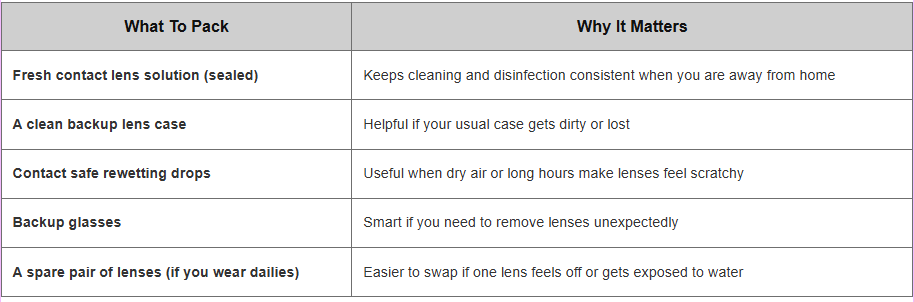
Flying with a contact lens solution and not sure what can go in your carry-on? See what is the 3-1-1 rule for contact lenses and what the Transportation Security Administration allows so you can pack without delays.
Do These Quick Moves During Long Days
- Wash and dry hands before touching lenses.
- Use fresh disinfecting solution every time, and never top off old solution in the case.
- Keep lenses away from water, including showers, pools, and hot tubs. If water touches your lenses, remove them as soon as you can and discard them or clean and disinfect them overnight before wearing them again.
- Let your case air dry with the caps off and store it face down on a clean surface after use. Replace the case at least every three months.
- If you are running on very little sleep or in very dry air, shorten wear time and plan a glasses break.
When to See an Eye Doctor
Most discomfort issues are fixable, but some symptoms should never be ignored. A safe rule is this: if your eyes feel truly painful or your vision changes suddenly, take the lenses out first, then get help.
Make an appointment soon if you notice
- Dryness that keeps returning even with good hygiene
- Burning that happens every time you insert lenses
- A lens that feels fine for an hour, then gets consistently uncomfortable
- Increasing glare or light sensitivity over time
This is often a sign your fit, lens material, or solution choice needs an update.
Wondering how to throw away lenses and cases the right way? Follow proper methods to recycle and dispose of contact lenses for simple, responsible disposal steps.
Stop wearing contacts and get help urgently if you have
- Significant redness
- Pain
- Light sensitivity
- Discharge or heavy tearing
- Sudden vision changes or blur that does not clear
- Swelling or a gritty foreign body feeling that does not improve after removing the lens
The FDA advises removing lenses immediately and contacting an eye care professional if you have symptoms of irritation or infection, because serious problems can develop quickly.
A Quick “What To Do Right Now” Plan
- Remove your lenses and do not put them back in.
- Switch to glasses.
- Call your eye doctor and describe your symptoms clearly.
- If symptoms are severe, seek urgent care.
Reminder: Regular eye care still matters even when everything feels fine. The CDC recommends seeing your eye care provider yearly or as advised for your situation.
Pick the Right Solution, Then Stick to a Simple Routine
The best contact lens solution is the one that matches your lens type and your eyes, then gets used the right way every time. Multipurpose solution works well for many soft lens wearers when you rub, rinse, and soak as directed, while hydrogen peroxide solution can be a great option for buildup or sensitivity as long as you fully neutralize it in the special case. If your eyes burn, lenses feel filmy, or comfort keeps dropping, it is usually a sign to adjust your routine or ask your eye doctor which formula and lens material are best for you.
Ready to restock for clear, comfortable wear? Browse our contact lenses and reorder your exact prescription. Shop contact lenses by brand and prescription at Lens.com
Contact Lens Solution Guide FAQs
How do I know what contact lens solution to use?
Start with what your eye doctor recommended and what your lens type allows, since some specialty lenses require specific systems. If you are unsure, bring your lens box and current solution to your next visit so your doctor can confirm the safest match.
What solution is best for contact lenses?
There is no single best for everyone, but multipurpose solution is a common everyday choice for soft lenses, and hydrogen peroxide systems can be helpful for deposits or sensitive eyes when used correctly. The best choice is the one that keeps your lenses comfortable without burning and fits your prescribed wear schedule.
Is hydrogen peroxide solution better than multipurpose?
Hydrogen peroxide can clean very effectively, but it must be fully neutralized in the correct case before lenses touch your eyes. Multipurpose is simpler for many people, so “better” usually comes down to comfort, sensitivity, and how consistent you are with the steps.
Can I use water instead of contact lens solution?
No, water is not sterile and can introduce germs that raise the risk of serious eye infections. Always use the correct solution for cleaning, disinfecting, and storing, and keep lenses away from tap water, bottled water, and showers.
What else can I use instead of a contact lens solution?
For storing or disinfecting reusable lenses, you should not substitute other liquids because most do not disinfect safely. If you are out of solution, the safer move is to wear glasses and get a new bottle rather than trying a shortcut.
Saline vs contact lens solution: are they the same?
No, sterile saline is mainly for rinsing when the label says it is appropriate, and it typically does not disinfect lenses. For reusable lenses, you still need a disinfecting system such as multipurpose or hydrogen peroxide, depending on what your doctor recommends.
How long should I let my contacts sit in solution?
Follow your solution label, but many multipurpose solutions require several hours of soak time, and hydrogen peroxide systems often require a full neutralization cycle. Cutting the soak short can leave lenses under disinfected and less comfortable.
What is the 4 to 1 rule for contact lenses?
People often use “4 to 1” to describe the basic care rhythm: give lenses enough soak time, and do the quick hands on steps like rubbing and rinsing instead of only soaking. The most accurate version is always the one printed on your specific solution bottle, so treat the label as the rulebook.
Why does my contact lens solution burn?
Burning can happen if you use hydrogen peroxide without full neutralization, if your lenses still have residue, or if your eyes are already irritated or dry. Stop wearing the lenses, rinse and re clean them using the correct steps, and if burning continues or you have redness, light sensitivity, or discharge, contact an eye doctor.
Which contact lens solution is best for dry eyes or sensitive eyes?
Many people do better with preservative friendly options or hydrogen peroxide systems, but the safest choice depends on your eyes and lens type. If you need to rewet your drops often or feel stinging every day, ask your eye doctor about changing your solution, your lens material, or both.
Disclaimer: This information is for general informational purposes only and is not a substitute for professional advice, diagnosis, or treatment.
References
Contact Lens Risks. U.S. Food and Drug Administration (FDA). https://www.fda.gov/medical-devices/contact-lenses/contact-lens-risks. Date Accessed February 11, 2026.
Other Lens Care Systems. National Eye Institute (NEI), National Institutes of Health (NIH). https://www.nei.nih.gov/eye-health-information/healthy-vision/contact-lenses/other-lens-care-systems. Date Accessed February 11, 2026.
How to Take Care of Contact Lenses. American Academy of Ophthalmology (AAO). https://www.aao.org/eye-health/glasses-contacts/contact-lens-care. Date Accessed February 11, 2026.
Contact Lens Care. American Optometric Association (AOA). https://www.aoa.org/healthy-eyes/vision-and-vision-correction/contact-lens-care. Date Accessed February 11, 2026.
Eyewear: Contact Lenses | Eyeglasses. MedlinePlus, National Library of Medicine (NLM). https://medlineplus.gov/eyewear.html. Date Accessed February 11, 2026.Topical Review: Contact Lens Eye Health and Safety. Optometry and Vision Science (via PubMed Central). https://pmc.ncbi.nlm.nih.gov/articles/PMC9553256/. Date Accessed February 11, 2026.