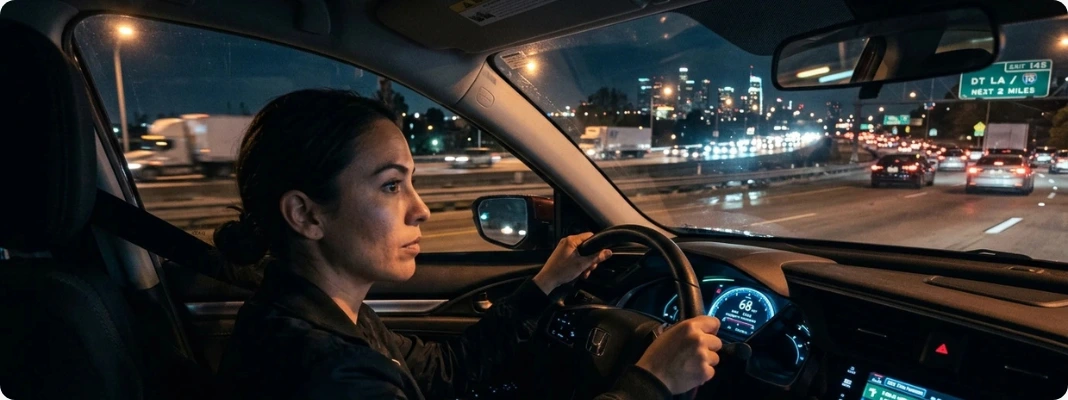
Darkness severely limits your field of vision and strips away contrast, making pedestrians, lane markings, sharp curves, and roadside hazards much harder to spot. Throw in blinding headlight glare, reflections off wet pavement, or late-night fatigue, and the challenge multiplies fast.
The latest crash data further shows how much of the fatality burden falls during evening and nighttime hours. In 2024, 39,254 people died in U.S. motor vehicle crashes, and 20,971 of those deaths, or about 53%, occurred between 6 p.m. and 6 a.m. The 6 p.m. to 9 p.m. period alone accounted for 6,777 deaths, while another 6,131 occurred between 9 p.m. and midnight.
Understanding why vision changes after dark, what makes glare worse, and which habits can improve visibility can help you recognize nighttime hazards sooner and make safer decisions on the road.
Why Is It Harder to See While Driving at Night?
After dark, your eyes are working under significantly different physiological conditions. Your pupils dilate to let in as much light as possible. But there’s a tradeoff: your visual acuity and contrast sensitivity both drop. Objects blending into the dark background, like a pedestrian in dark clothes, road debris, or an animal on the shoulder, become much harder to pick out.
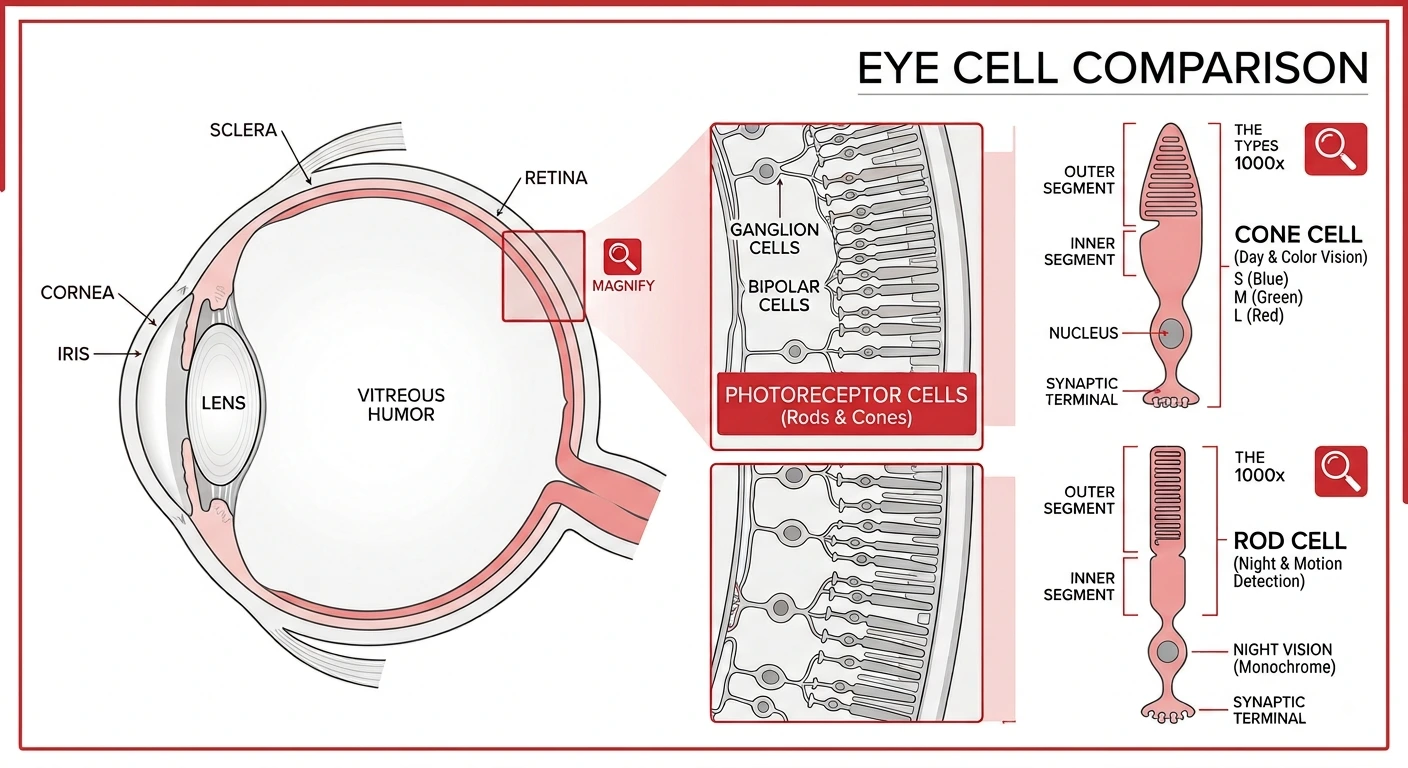
This comes down to the specialized cells in your retina. In bright light, you rely on cone cells, which give you sharp detail and color. In low light, your eyes switch over to rod cells. Rods are excellent for sensing light and movement, but they don’t process color or fine details nearly as well. Without those crisp visual references, your depth perception takes a hit, which makes judging the distance and speed of approaching vehicles noticeably harder.
Your eyes work harder with less clear data in the dark. Hazards don’t register until they’re much closer to your headlights, leaving you with a smaller window to react.
How Does Headlight Glare Make Night Driving More Difficult?
A driver on the opposite lane switches on his high beams. In annoyance, you switch your own high beams in retaliation. Two blinded drivers are a recipe for disaster.
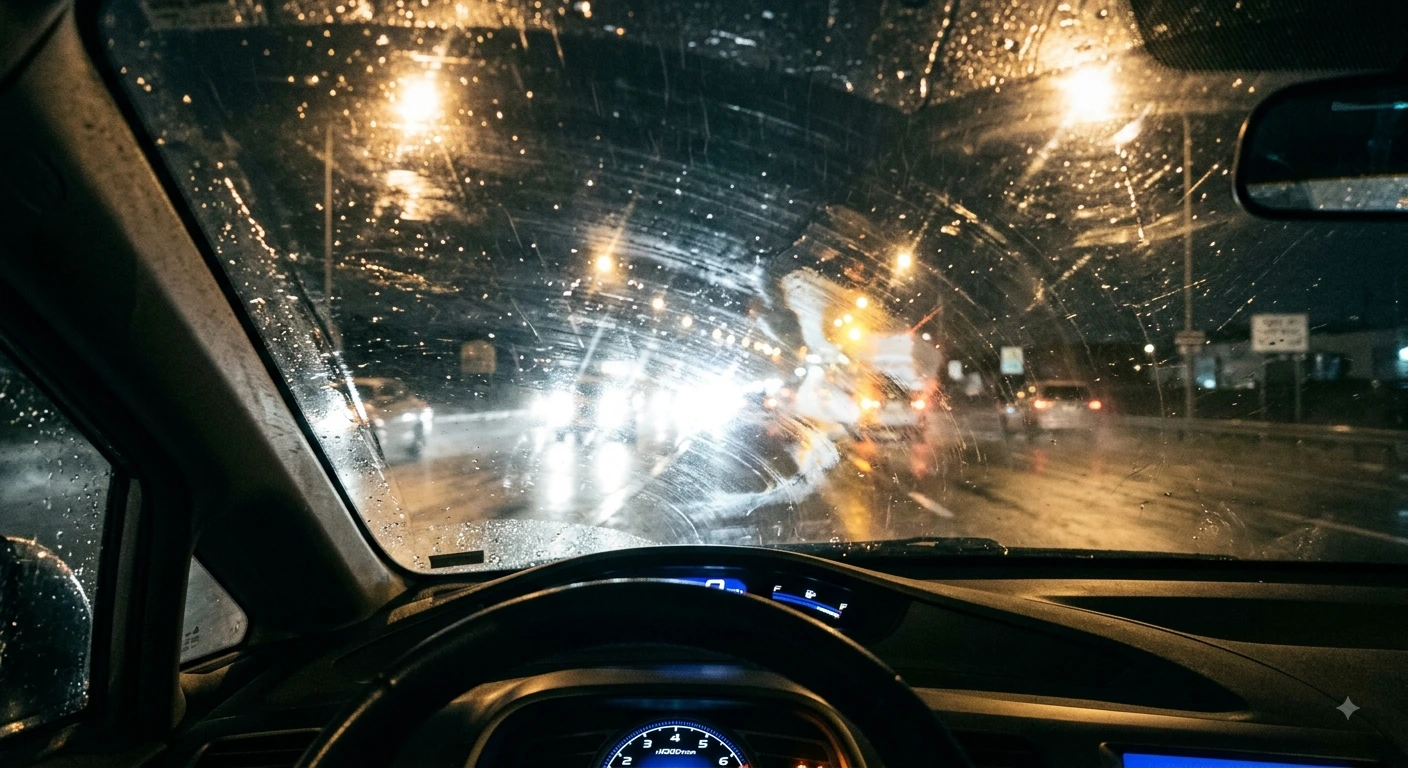
Bright headlights, especially high beams, can temporarily overwhelm your eyes at night. Because your vision has already adapted to the dark, a sudden burst of intense light washes out contrast, making it much harder to spot lane markings, pedestrians, or hazards sitting just past that beam of light.
You may also see halos or starbursts around headlights and streetlights, scattering light across your visual field and blur details. Wet pavement, acting like a mirror, reflects streetlights and oncoming traffic right back into your eyes.
What Are the Dangers of Driving at Night?
Driving after dark presents distinct challenges. When low light combines with natural fatigue, identifying dangers becomes more challenging, leaving you with far less time to safely respond.
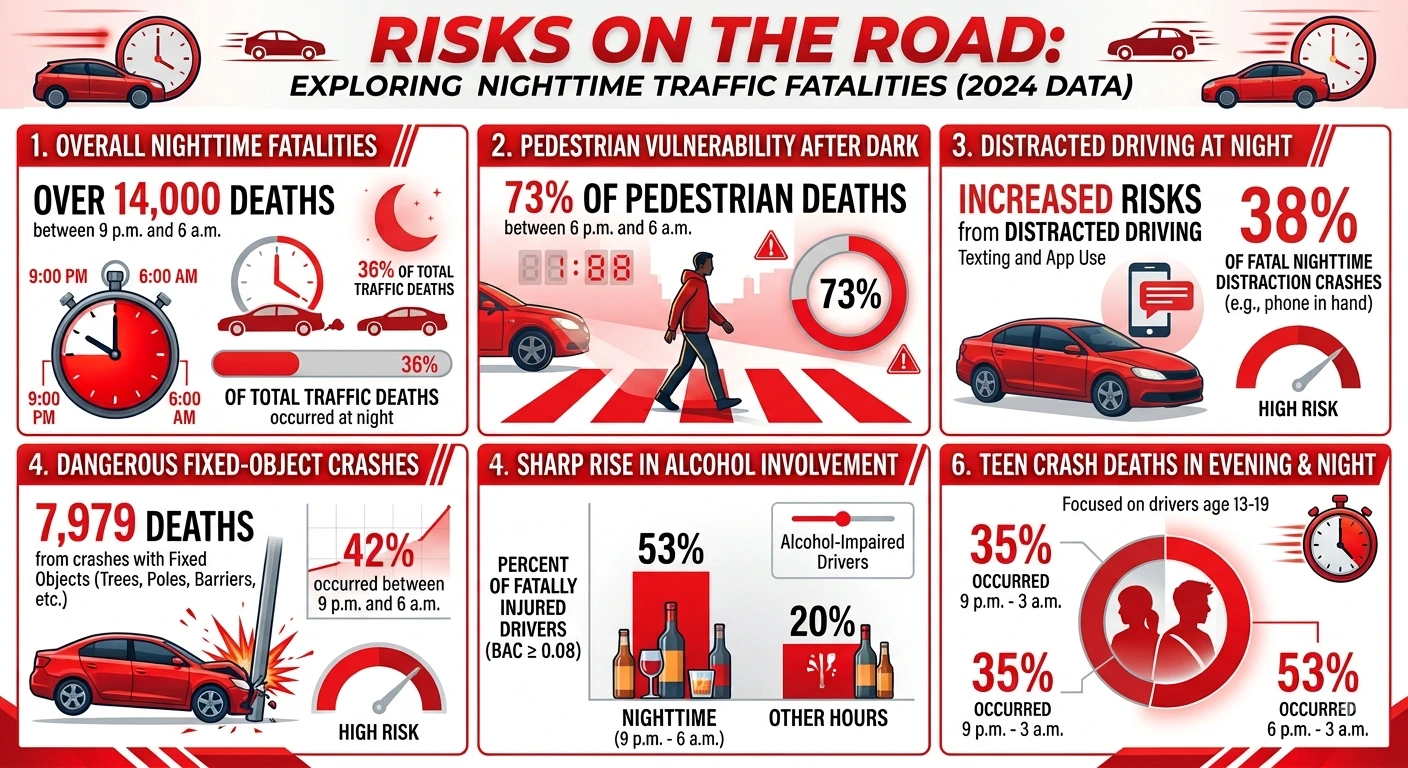
- Diminished visibility: Low light restricts how far down the road you can see, making subtle curves, debris, lane markings, and road signs harder to pick out.
- Shorter reaction windows: Because hazards don’t register in your vision until they’re relatively close, you have significantly less time to brake or maneuver out of the way.
- Vulnerable road users blending in: Pedestrians and cyclists wearing dark or non-reflective gear easily vanish into the background.
- Natural fatigue: Drowsiness actively slows your reaction time and impairs judgment. It’s a risk that spikes late at night and early in the morning when your internal clock expects you to sleep.
- Blinding glare: Oncoming headlights and high beams temporarily wash out your vision, a problem made worse by wet roads or a hazy windshield.
- Impaired depth and speed perception: With fewer visual reference points in the dark, accurately judging how far away an approaching car is or how fast it’s moving gets surprisingly difficult.
- Magnified weather effects: Rain and fog scatter ambient light while wet pavement reflects it, obscuring lane lines and blurring the cars around you.
- Higher likelihood of impaired drivers: The chances of sharing the road with drivers under the influence go up significantly at night, particularly during late-night hours, weekends, and holidays.
Why Do Some People Struggle More With Night Driving?
Night driving affects everyone differently. Certain physiological changes and underlying eye conditions can make it much harder to resolve fine detail, process intense glare, or adapt as you transition between bright headlights and pitch-black stretches of road.
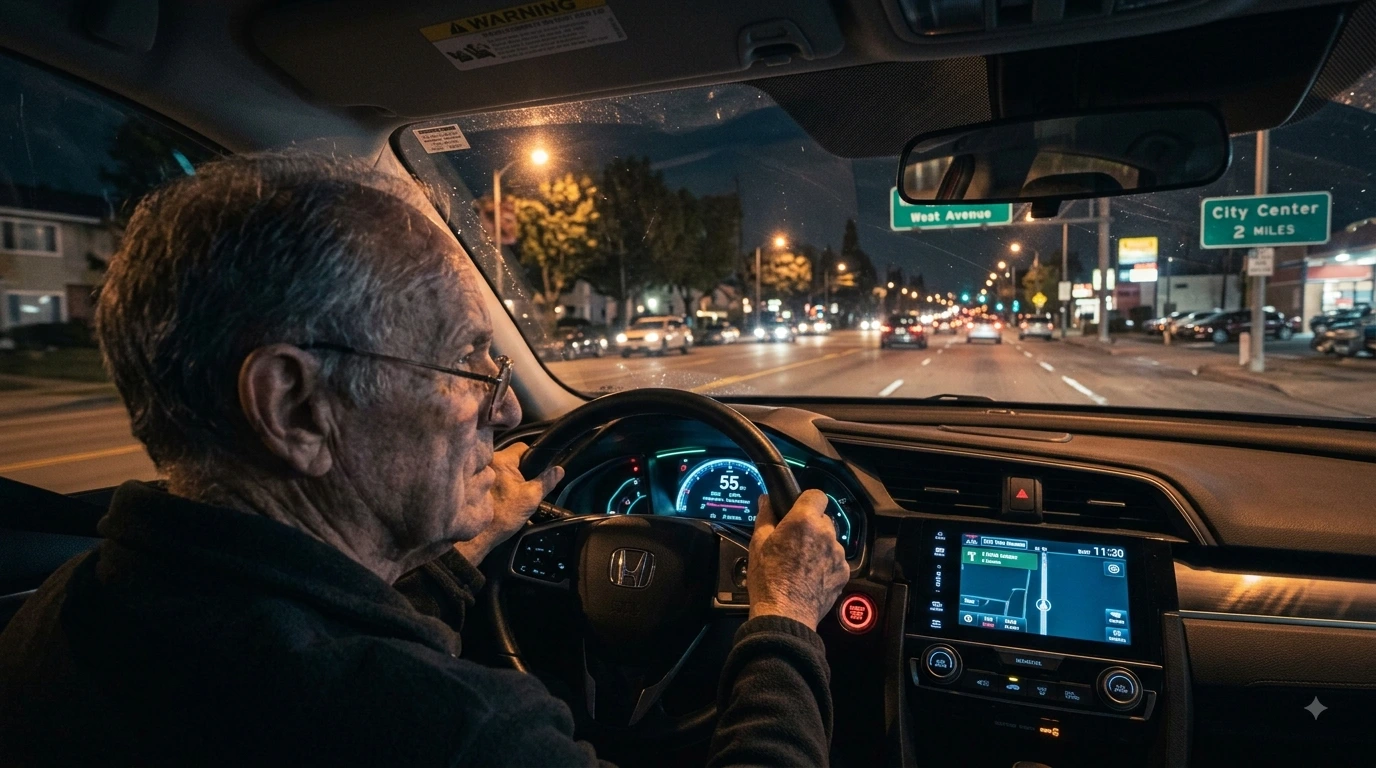
- Natural aging process: As time goes on, your pupils naturally shrink. The eye’ s internal lens gradually loses clarity, allowing less overall light to hit the retina. Older eyes also take longer to recover after being dazzled by bright lights.
- Uncorrected nearsightedness (myopia): Myopia blurs your distance vision, but low light amplifies the issue. Reduced contrast and widened pupils at night make far-off hazards and road signs look even softer and harder to read.
- Astigmatism: An unevenly curved cornea or lens prevents light from focusing on a single point. In the dark, this optical imperfection causes headlights and streetlights to stretch out into streaks, halos, or distinct starburst patterns.
- Cataracts: As the eye’s natural lens clouds over, it scatters incoming light rather than focusing it cleanly. This causes debilitating glare, large halos around oncoming traffic, muted contrast, and significantly compromised low-light vision.
- Dry eye syndrome: An uneven tear film disrupts how light enters the eye, leading to fluctuating sharpness. When the eye’s surface lacks proper lubrication, oncoming lights scatter more dramatically, making glare seem more intense.
- An outdated lens prescription: Minor refractive errors that you barely notice during the day become obvious at night. If your glasses or contacts are even slightly off, signs, lane lines, and distant vehicles quickly lose their crisp edges.
- Reduced contrast sensitivity: If your visual system struggles to separate an object from a similar background, night driving will feel particularly challenging. Pedestrians, unlit curbs, and debris in shadow easily drop out of view.
- Underlying ocular conditions: Issues affecting the cornea, retina, or optic nerve can directly impair your night-vision mechanisms. If dark roads have suddenly become uncomfortable or glare feels overwhelming, a thorough eye exam is the best way to pin down what is happening.
How Can You See Better When Driving at Night?
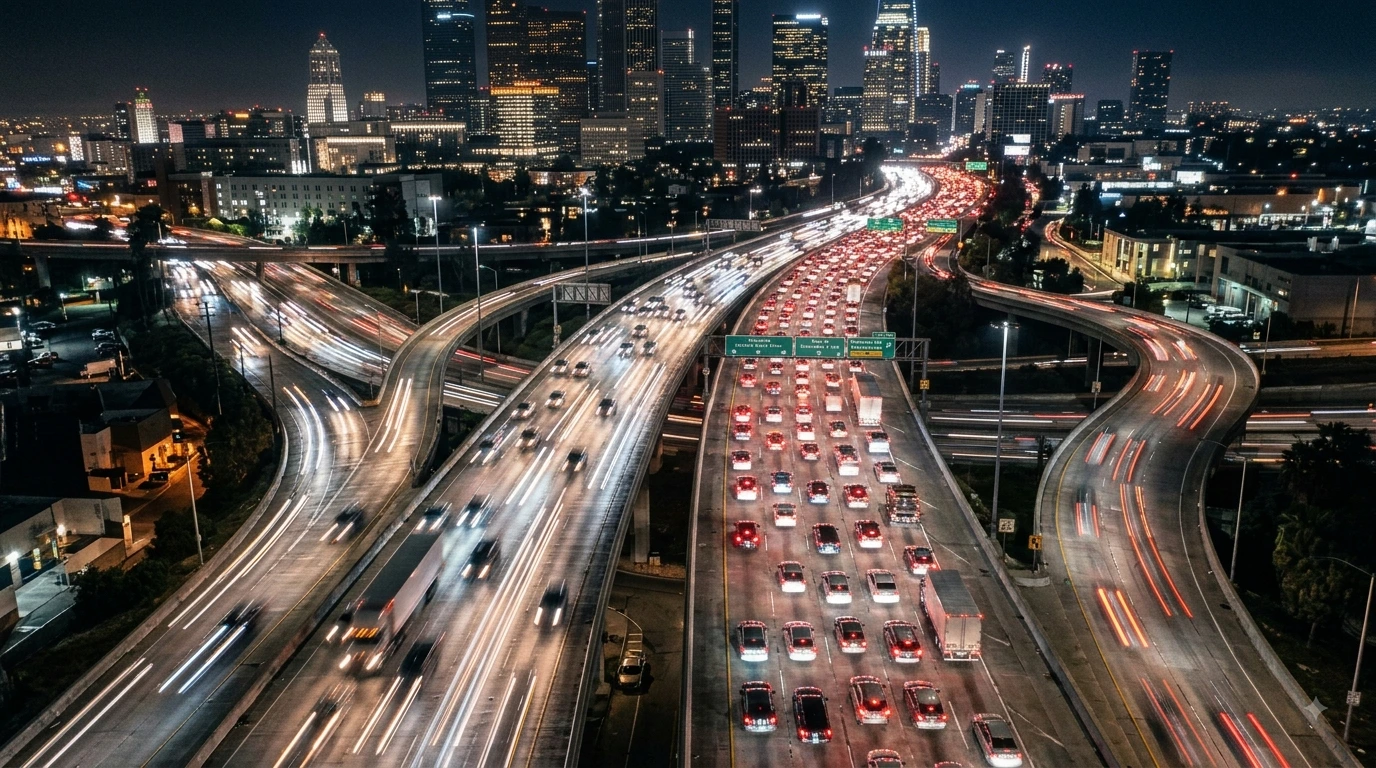
A few practical adjustments to your vehicle, habits, and eye care routine can make nighttime driving noticeably safer and more comfortable.
- Clean your glass inside and out.
Dust film, smudges, and haze on your windshield scatter oncoming light. Keep your side mirrors and headlight lenses wiped clean. - Optimize your mirror angles.
Position your side mirrors slightly outward so trailing headlights don’t shine directly into your eyes. Flip your rearview mirror to its night-mode toggle, or activate its auto-dimming feature. - Dial down dashboard lighting.
A brightly lit instrument cluster forces your pupils to constrict, compromising your night-adapted vision. Dim your cabin displays to a level where you can read your gauges but without washing out the road ahead. - Keep your vision prescription current.
Uncorrected refractive errors magnify low-light distortions and glare. Regular eye exams ensure your lenses compensate properly for subtle changes in your distance vision. - Maintain spotless eyeglass lenses.
Smudges and micro-scratches on your spectacle lenses act as mini-prisms that scatter light. A quick cleaning before you drive eliminates a major source of unnecessary glare. - Shift your gaze away from oncoming high beams.
Avoid staring directly into approaching headlights. Instead, drop your eyes toward the right edge of your lane. Use the white fog line to guide your path until the vehicle passes. - Use high beams responsibly.
Toggle your brights on for unlit, open stretches, but dip them back to low beams as soon as you detect oncoming traffic or trailing cars to avoid blinding other drivers. - Ease off the accelerator.
Slowing down ensures your stopping distance stays well within the reach of your headlights. - Expand your following distance.
Give yourself a larger safety cushion between your car and the vehicle ahead. Extra space buys critical reaction time when your forward visibility is shortened by the dark. - Consult an eye care professional for persistent symptoms.
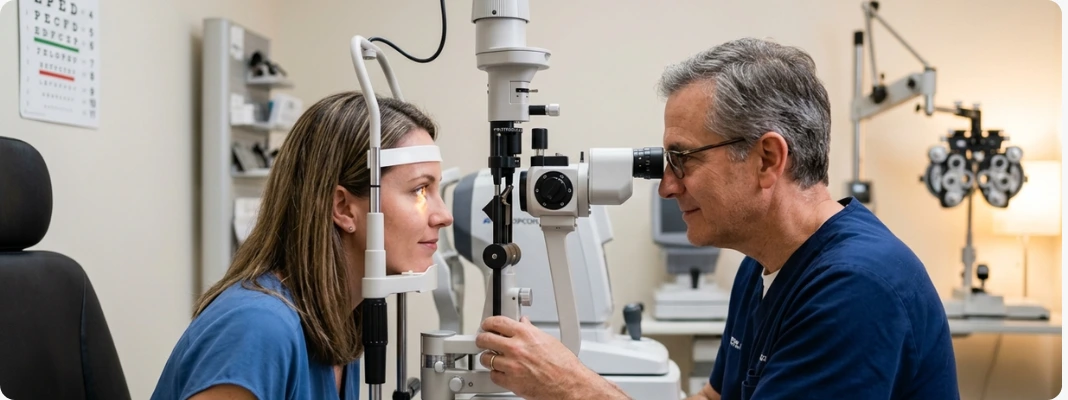
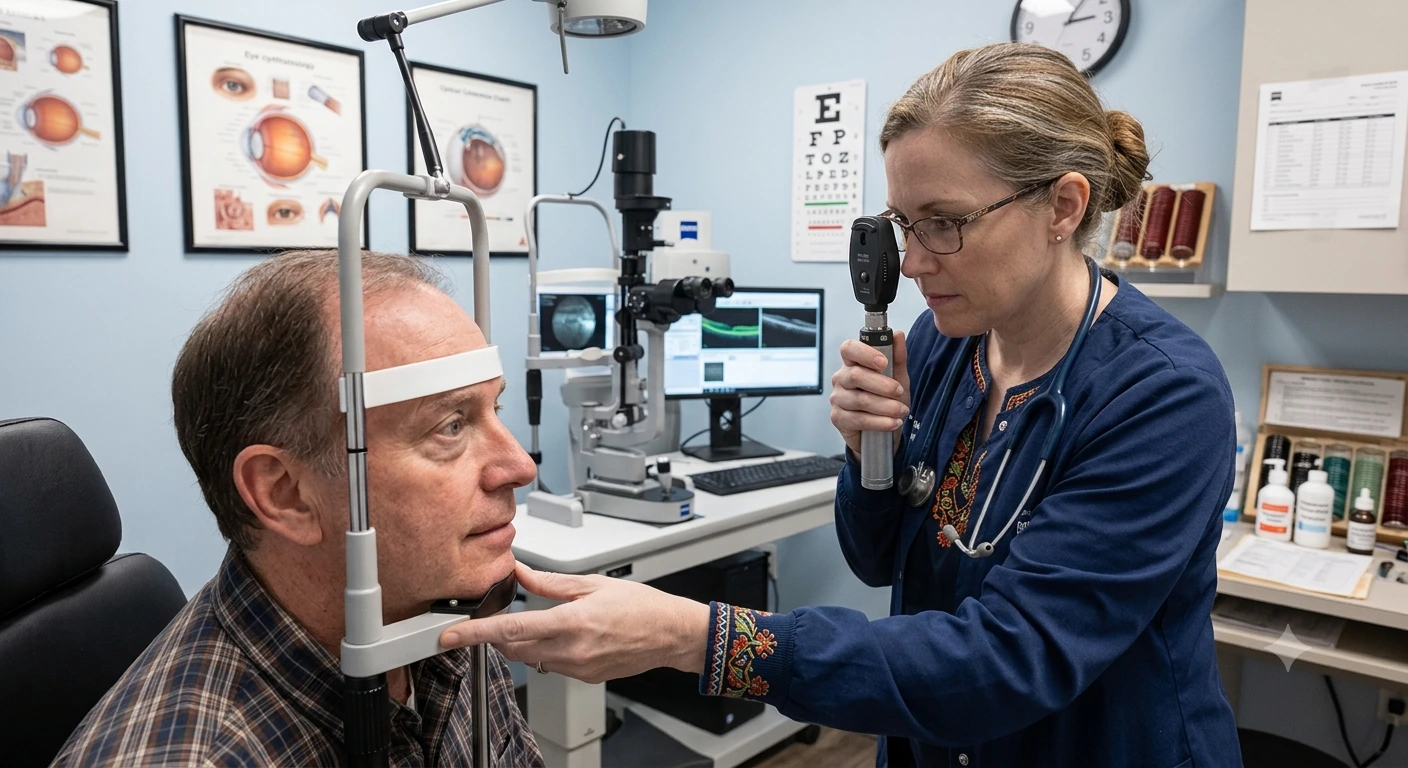
If glare feels unusually debilitating, or if halos make driving at night genuinely uncomfortable, consult your optometrist or ophthalmologist. They can check for underlying factors like early cataract development or corneal irregularities.
When Should Night Driving Problems Be Checked by an Eye Doctor?
Noticeable or progressive difficulty driving after dark shouldn’t be swept under the rug. A comprehensive eye exam can determine if there’s an underlying condition that needs treatment.
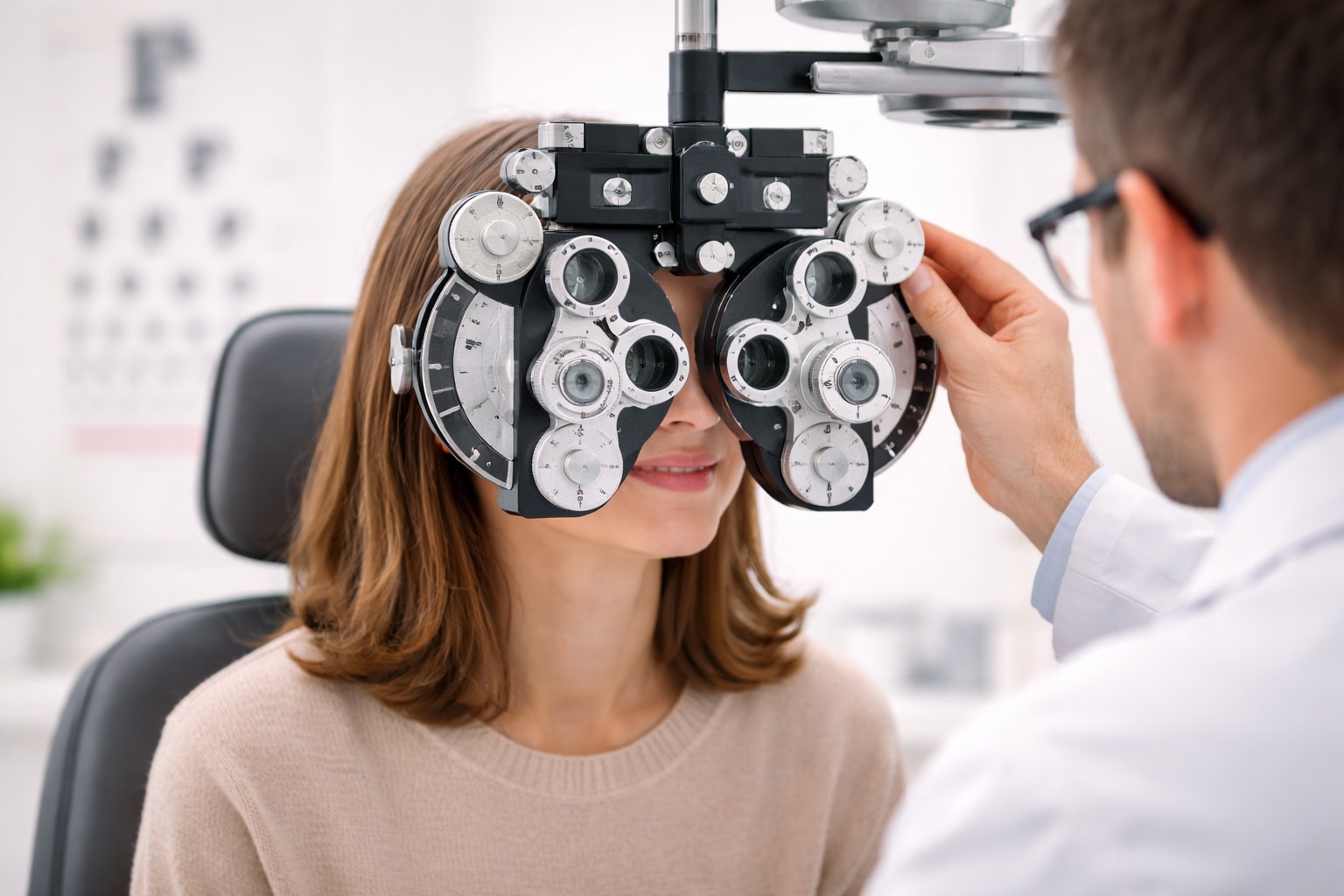
- Your night vision has noticeably declined.
Schedule an appointment if signs, lane markings, or obstacles that used to be clear after dark are becoming increasingly difficult to pick out. - Headlight glare is becoming intolerable.
Intense, dazzling lights that take longer to flicker out can significantly compromise your safety on the road. - You regularly see halos or starbursts around light sources.
Persistent light rings, dramatic streaks, and poor low-light visibility are indicators of cataracts or other corneal changes. - Your distance vision feels soft or blurry.
Struggling to read highway signs or spot hazards early signals that your glasses or contact lens prescription needs updating. - Objects blend into the background.
Reduced contrast sensitivity makes it difficult to distinguish dark clothing, curbs, or debris from the surrounding shadows, a change that frequently accompanies aging eyes. - Your vision fluctuates while behind the wheel.
Episodes of intermittent blur, haze, or fatigue indicate an unstable ocular surface or focus issue that an eye doctor should evaluate. - One eye clearly outperforms the other.
Worsening visual disparity between your eyes directly impacts depth perception and low-light spatial awareness. - You experience sudden or severe visual disturbances: Sudden vision loss, double vision, light flashes, or a shower of new floaters require urgent medical evaluation.
Clearer Vision, Safer Night Drives
Night driving demands more of your attention, your eyes, and your vehicle. Understanding these physiological and environmental shifts puts you back in the driver’s seat. Small habits, like keeping your glass spotless, dimming your dashboard, and adjusting your speed, make a massive difference in your reaction time and overall safety behind the wheel.
Disclaimer: This content is for general informational purposes only and is not a substitute for professional advice, diagnosis, or treatment.
References
Night Driving: The Dark Side of the Road. National Safety Council (NSC).https://www.nsc.org/road/safety-topics/driving-at-night?srsltid=AfmBOoqWxCM58B8C3AdLAmWMgB7hHJfg-hvF_q5v6QefHP1e1GRYkWKi. Published October 15, 2023. Date Accessed: August 13, 2026.
Consumer Alert: NHTSA Encourages Older Drivers and Their Families to Make Safe Driving Choices. National Highway Traffic Safety Administration. https://www.nhtsa.gov/press-releases/consumer-alert-nhtsa-encourages-older-drivers-and-their-families-make-safe-driving. December-02-2024. Date Accessed: August 13, 2026.
Fatality Facts 2024: Yearly snapshot. Insurance Institute for Highway Safety (IIHS). https://www.iihs.org/topics/fatality-statistics/detail/yearly-snapshot. Published September 01, 2025. Date Accessed: August 13, 2026.
Fatality Facts 2024: Collisions With Fixed Objects and Animals. Insurance Institute for Highway Safety. https://www.iihs.org/research-areas/fatality-statistics/detail/collisions-with-fixed-objects-and-animals. June-2026. Date Accessed: August 13, 2026.
Night Vision. American Academy of Ophthalmology. https://www.aao.org/eye-health/tips-prevention/night-vision. December-19-2018. Date Accessed: August 13, 2026.
Vision and Driving. American Academy of Ophthalmology. https://www.aao.org/eye-health/tips-prevention/vision-driving. May-14-2024. Date Accessed: August 13, 2026.