
Table of Contents
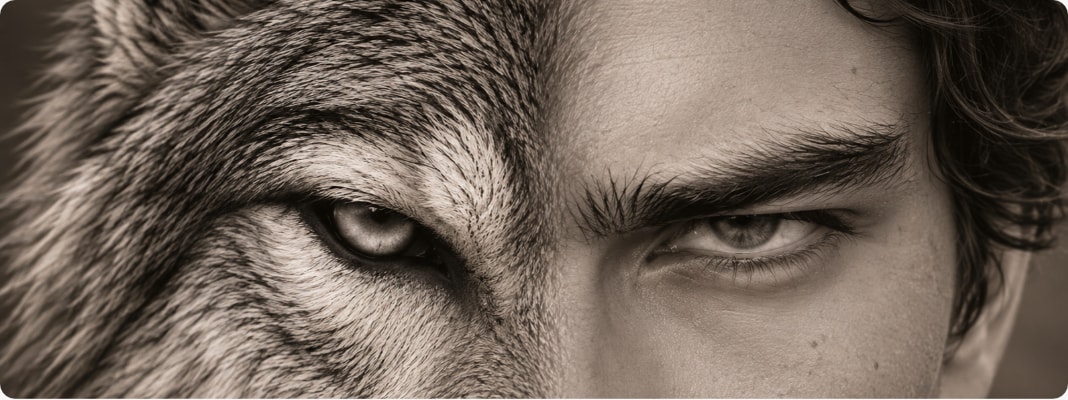
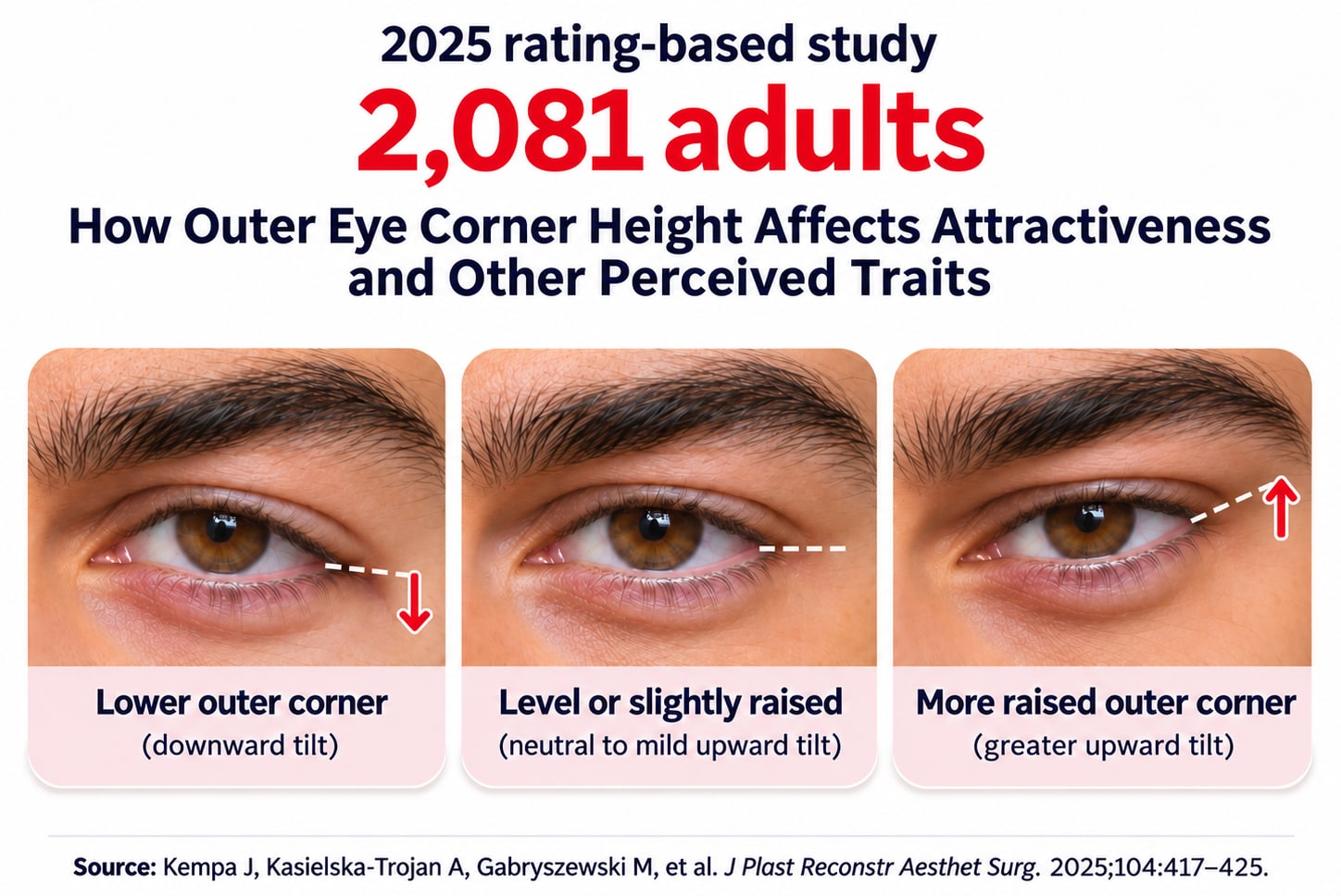
Scroll through looksmaxxing or eye-shape content and you may see hunter eyes treated like a precise beauty category, but the term has no standardized clinical definition. A 2025 study involving 2,081 adults found that changing the height of the outer eye corner affected how people rated attractiveness and other perceived traits, but raising the corner more was not consistently viewed as better. The takeaway is simple: one angle does not determine how attractive an eye shape or face looks.
If you are trying to decide whether the label fits your eyes, it is more useful to look at several features together, including eye depth, eyelid exposure, corner tilt, and brow position. These traits describe what you can actually see without turning an internet label into a beauty score. If you wear contact lenses, remember that they can correct vision or, with appropriately prescribed cosmetic lenses, change iris color, but they do not change your natural eye shape or anatomy.
What are hunter eyes?
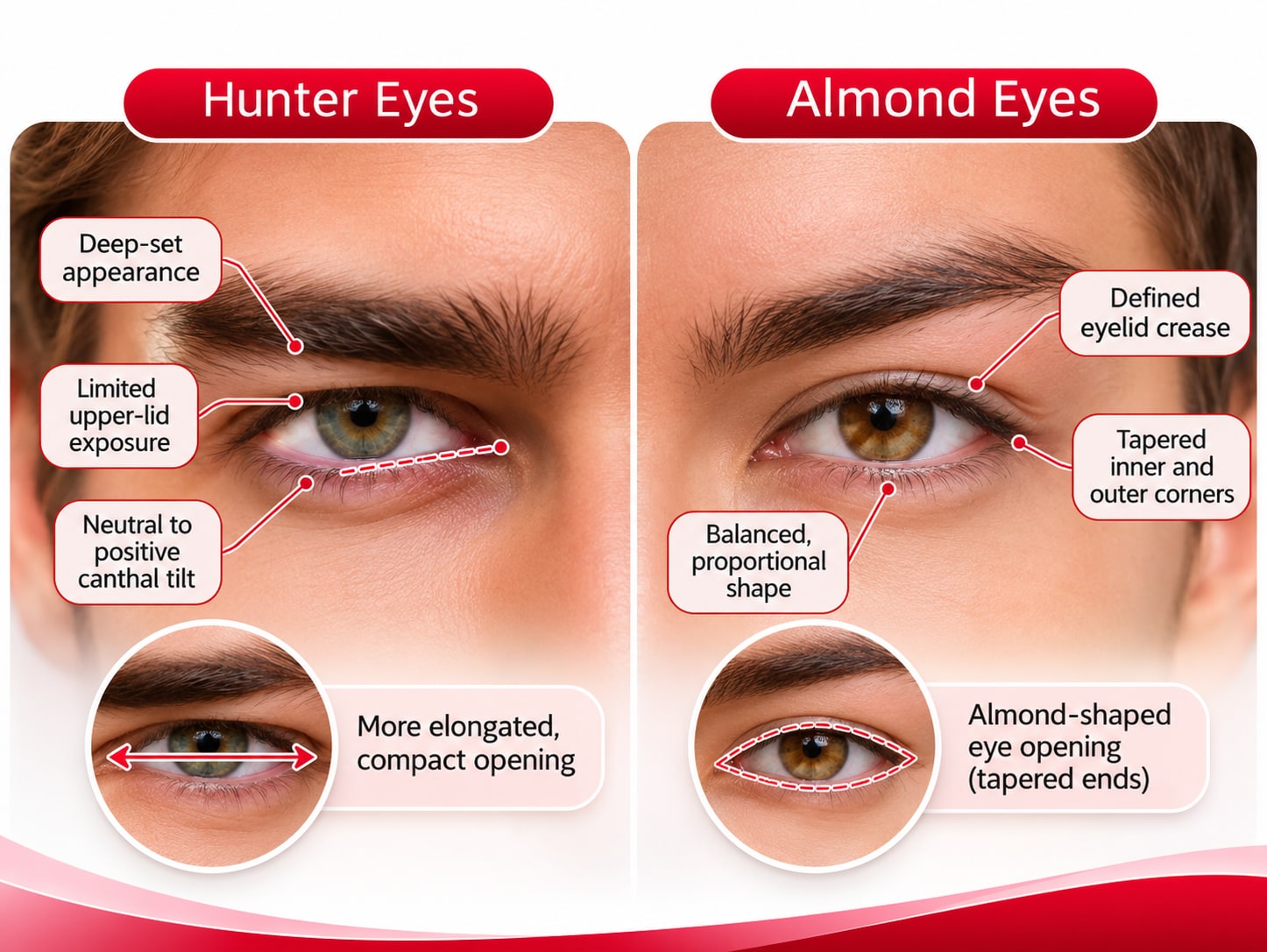
Hunter eyes is an informal internet and looksmaxxing term for an eye-area appearance that typically combines relatively deep-set eyes, a compact or almond-shaped opening, limited visible upper eyelid, brows that sit fairly close to the eyes, little white showing beneath the iris, and often a neutral or positive canthal tilt. In plain terms, the eyes tend to look horizontally elongated and somewhat recessed beneath the brow rather than wide or prominently exposed.
There is no medical diagnosis or scientifically accepted measurement called a hunter eye shape, and no single feature proves that you have it. The label groups together several normal variations in facial and eyelid anatomy, so two people described as having hunter eyes may not share exactly the same features. It also does not tell you anything reliable about personality, confidence, dominance, health, attractiveness, or your need for vision correcting contacts.
What Features Make Up Hunter Eyes?
The hunter eyes label usually describes several eye-area features appearing together rather than one specific eye shape or changes in iris appearance created by colored eye contact lenses.
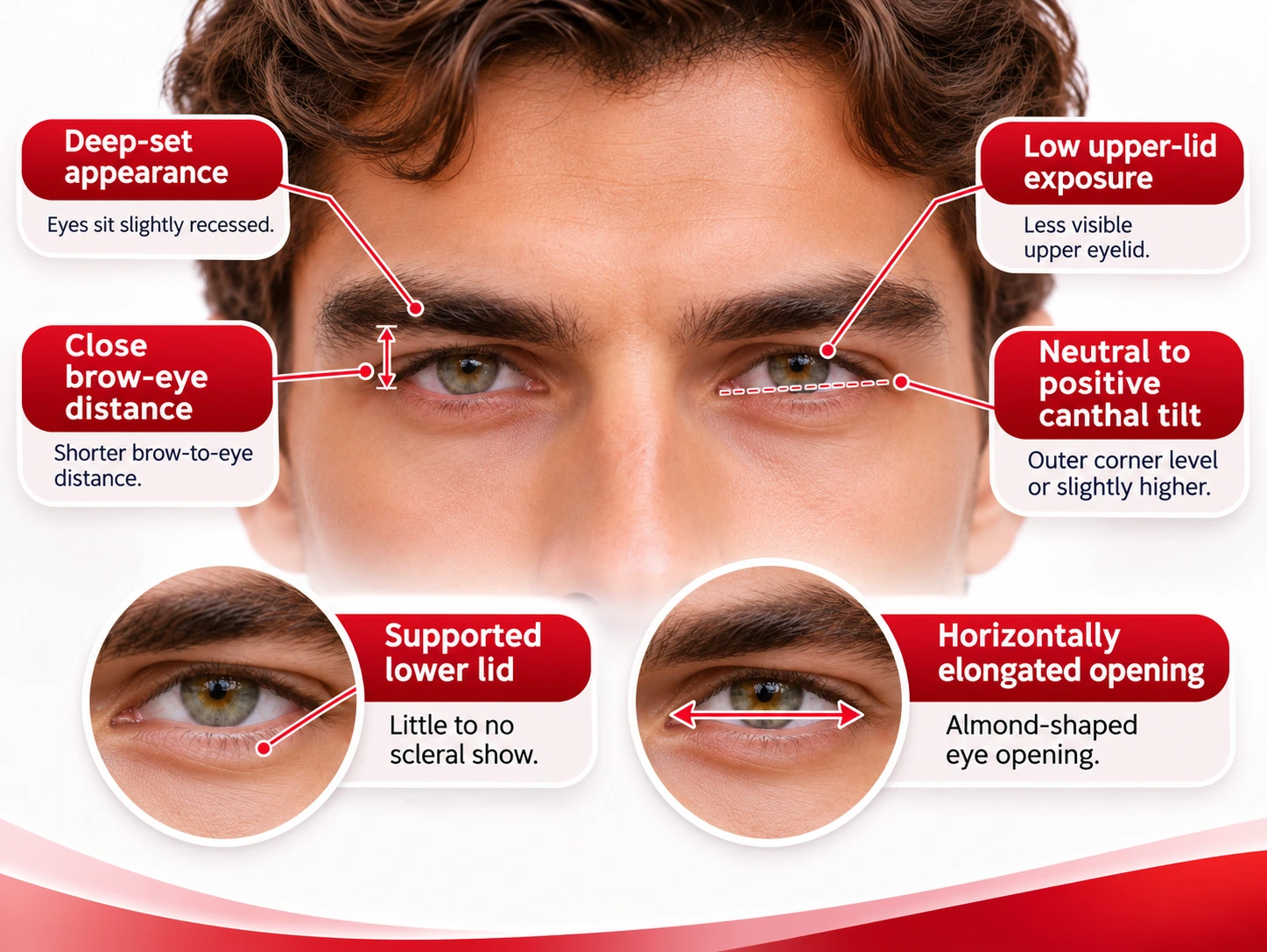
No single feature defines hunter eyes, and there is no medically accepted checklist or measurement cutoff for the term. The next section breaks down the main anatomical traits individually.
What "Hunter Eyes" Actually Consists Of
The hunter eyes label usually combines several separate eye-area traits rather than describing one officially recognized eye shape. The features most often associated with the look invol
Positive Canthal Tilt
A positive canthal tilt means the outer corner of the eye sits slightly higher than the inner corner. This upward relationship is one of the most commonly cited hunter-eye traits, although a neutral tilt can also appear in people described this way. There is no scientifically validated angle or cutoff that determines whether someone has hunter eyes.
Low Upper-eyelid Exposure
Low upper-eyelid exposure means relatively little of the movable upper lid is visible when your face and forehead are relaxed. This can make the eye opening look more compact and horizontally focused. The amount of visible lid varies naturally with eyelid anatomy, brow position, eye depth, and skin folds, so low exposure alone does not define hunter eyes.
Straight, Supported Lower-lid Contour
A hunter-eye appearance is often associated with a lower eyelid that follows the eye closely, with little or no visible white beneath the iris when looking straight ahead. In clinical terms, doctors are more likely to describe lower-lid position and scleral show than call the lid “straight.” A sudden change in lower-lid position or new scleral show, especially with discomfort or vision changes, should be evaluated by an eye care professional regardless of the types of contact lenses you wear.
Deep-set Eyes and Brow Proximity
Deep-set eyes appear positioned farther back beneath the brow and surrounding orbital structure, which can create more natural shadow around the upper eye area. Hunter-eye descriptions also commonly include brows that sit relatively close to the eyes, making the area appear more compact. Eye depth and brow position are separate traits, however, so having one does not automatically mean you have the other or that you have hunter eyes.
Taken together, these features can create the look commonly described online as hunter eyes. Because the term has no medical definition, it is more accurate to describe the individual traits you have rather than treat the label as a formal anatomical category.
What anatomy creates the hunter-eye look?
The hunter eyes anatomy described online comes from several structures working together, including the bony eye socket, eyelids, brow position, surrounding soft tissue, and the tendons that support the inner and outer eye corners. Together, these features influence how deep-set eyes, eyelid exposure, canthal tilt, lower-lid support, and overall eye shape appear.
Some parts of this look are largely structural, while others can change with aging, swelling, expression, grooming, makeup, or lighting. These differences help explain why certain hunter-eye traits are easier to alter visually than others.
| Visible Feature | Anatomy Involved | What You Notice | Can Presentation Change? |
|---|---|---|---|
| Apparent eye depth | Bony orbit and surrounding soft tissue | Eyes appear more recessed beneath the brow | Yes, somewhat with lighting, swelling, and soft-tissue changes |
| Outer-corner tilt | Canthal tendons and eyelid position | Outer corner appears higher, level, or lower than the inner corner | Expression and photos can alter appearance, but attachment is structural |
| Upper-lid exposure | Upper eyelid crease, brow, and surrounding tissue | More or less visible eyelid above the lashes | Yes, with expression, swelling, aging, or makeup |
| Lower-lid contour | Lower eyelid and supporting tissues | Lower lid follows the eye closely or shows more white beneath the iris | Some temporary changes are possible, but underlying support matters |
| Brow-to-eye relationship | Brow position and brow ridge | Brow appears closer to or farther from the eye | Grooming and expression can change the look |
| Surrounding soft tissue | Skin, fat, and muscle around the orbit | Puffiness, hollows, or shadowing affect apparent eye depth | Yes, depending on swelling, age, lighting, and other factors |
Note: Camera position, expression, makeup, lighting, temporary swelling, and brow movement can all affect how these features appear, while color enhancing contacts can alter iris appearance without changing the underlying anatomy.
Hunter Eyes vs. Sanpaku, Almond, and Prey Eyes
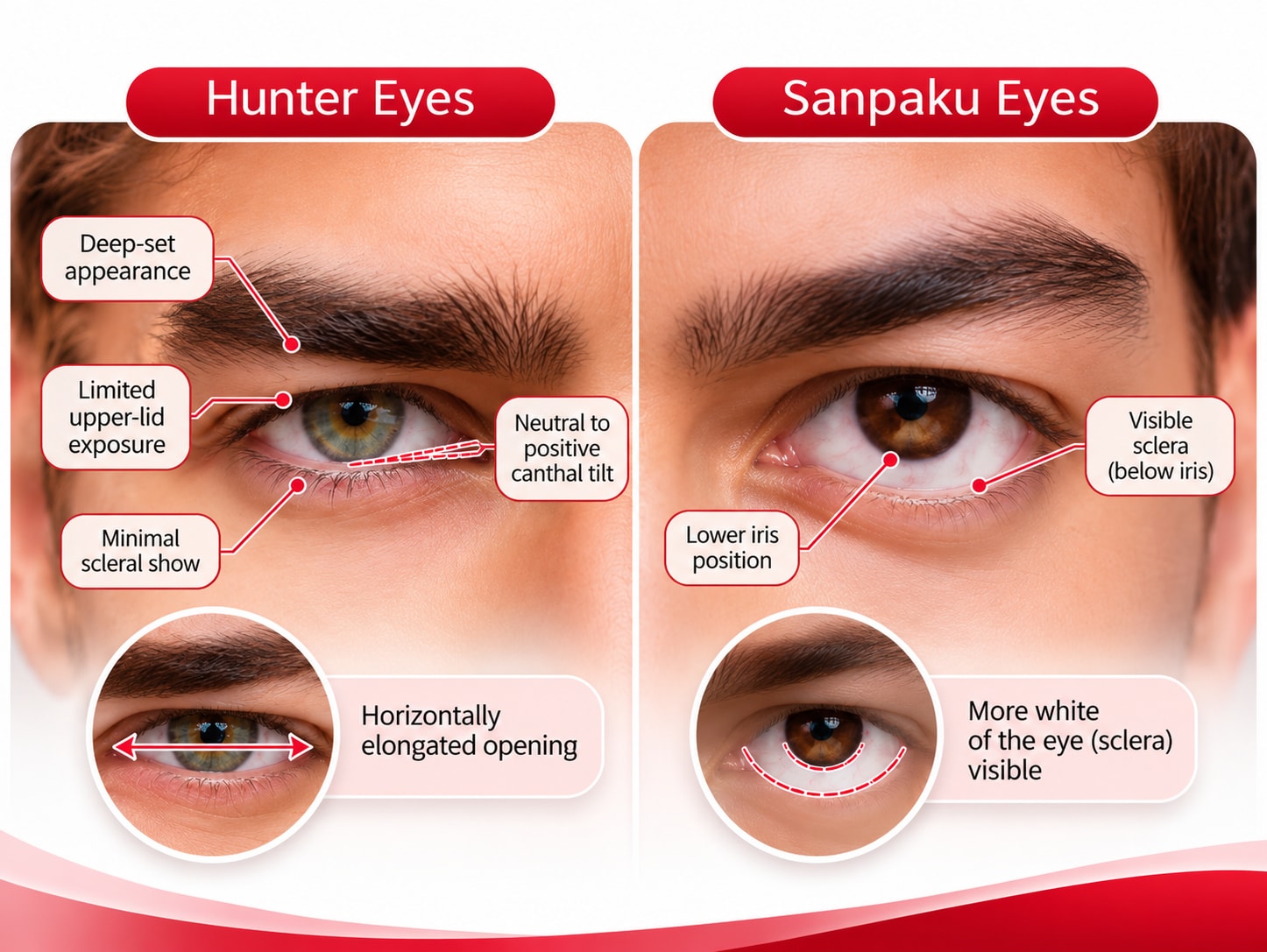
Hunter eyes, sanpaku eyes, almond eyes, and prey eyes describe different aspects of how the eye area looks. They are not four medically recognized eye types, so the most useful comparison is to focus on the specific visible features each term describes.
Hunter Eyes vs. Sanpaku Eyes
Hunter eyes and sanpaku eyes describe different features rather than opposite eye shapes. Hunter eyes usually refers to a combination of traits such as a deep-set appearance, limited upper-lid exposure, a compact eye opening, close brow position, and sometimes a neutral or positive canthal tilt. Sanpaku eyes is an appearance term commonly used when the white of the eye, or sclera, is visible on three sides of the iris, often below or above it. In clinical eye care, doctors describe features such as scleral show and eyelid position rather than diagnosing someone with “sanpaku eyes.”
Hunter Eyes vs. Almond Eyes
Almond eyes describe the shape of the eyelid opening, which is usually longer horizontally and tapers toward the inner and outer corners, rather than the appearance of iris size created by circle contact lenses. Hunter eyes is a broader informal description that can include eye depth, upper-lid exposure, brow position, lower-lid contour, and canthal tilt. This means you can have almond-shaped eyes while also having several traits commonly associated with hunter eyes.
Hunter Eyes vs. Prey Eyes
Hunter eyes and prey eyes compares two informal terms commonly used in online appearance and looksmaxxing communities. Hunter eyes usually describe a more compact or deep-set appearance with limited upper-lid and lower scleral exposure and sometimes a neutral or positive corner tilt. Prey eyes is commonly used for a rounder or more vertically open appearance, sometimes with greater eyelid or scleral exposure and a neutral or negative canthal tilt. These are not biological human eye categories, and individual features such as eye depth, lid exposure, brow position, and canthal tilt can occur in many combinations.
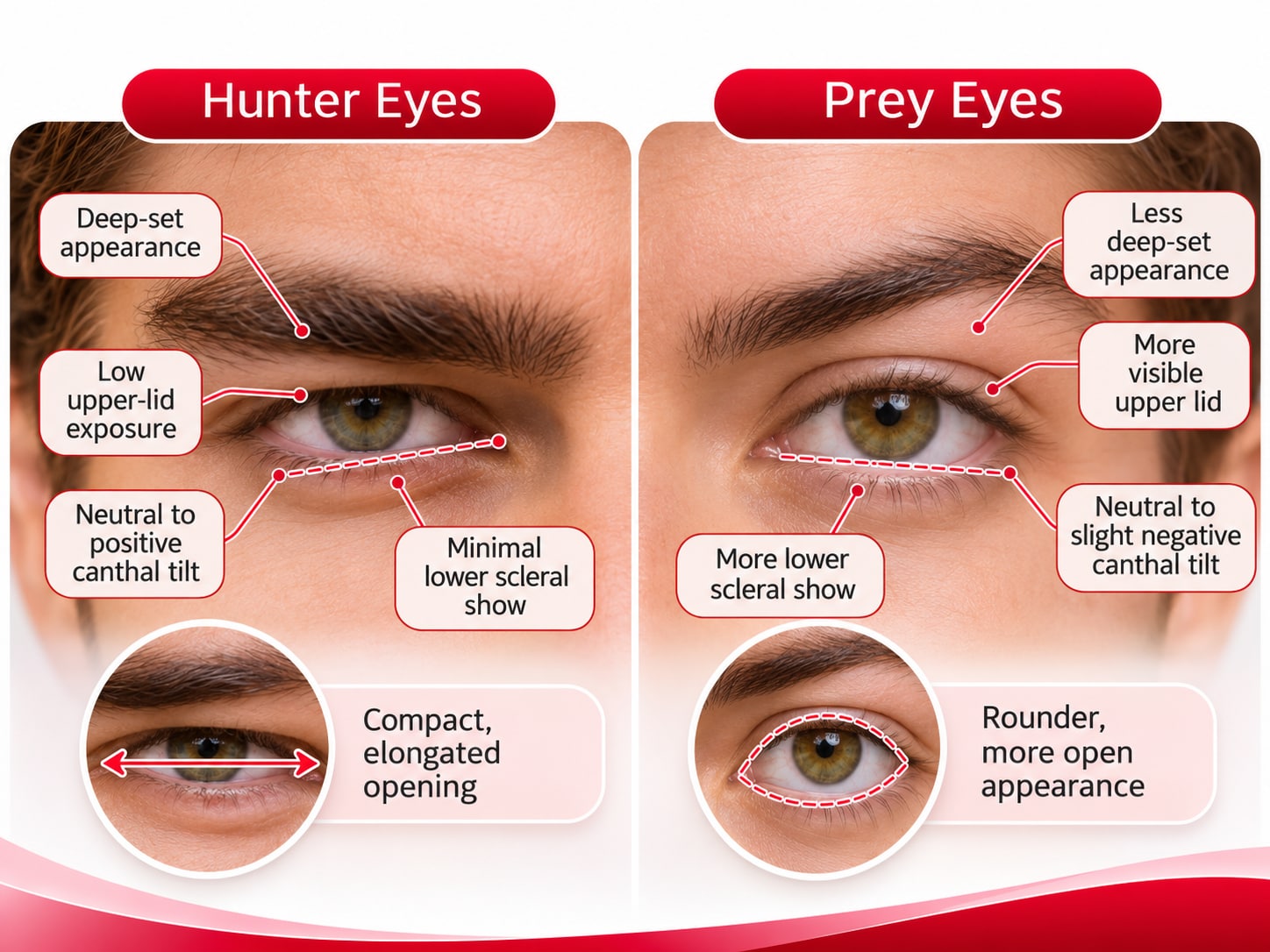
Across all three comparisons, terms such as hunter eyes, sanpaku eyes, almond eyes, and prey eyes are most useful as appearance descriptions rather than medical diagnoses. Features such as canthal tilt, eyelid shape, apparent depth, brow position, and scleral show give you a clearer way to describe your natural eye shape, regardless of changes in iris appearance created by tinted contact. If your eyelid position or eye appearance changes suddenly, particularly with pain, double vision, or changes in sight, contact an eye care professional.
Here is a quick comparison without ranking one appearance above another:
| Feature | Hunter Eyes | Sanpaku Eyes | Almond Eyes | Prey Eyes |
|---|---|---|---|---|
| What the term describes | Combination of several eye-area traits | Sclera visible on three sides | Almond-like eyelid opening shape | Informal contrast to hunter eyes |
| Eye opening | Compact and horizontally elongated | Shape is not defining | Elongated with tapered corners | Rounder or more vertically open |
| Canthal tilt | Often neutral to slightly positive | Not a defining feature | Not a defining feature | Often neutral or negative |
| Upper-lid exposure | Usually relatively limited | Depends on eyelid position | Varies by individual anatomy | Often more visible or exposed |
| Lower-lid contour | Close-fitting with limited scleral show | May show sclera below iris | Not a defining feature | Often more open inferiorly |
| Apparent eye depth | Often deep-set beneath brow | Not a defining feature | May be deep-set or prominent | Often more open or prominent |
| Brow relationship | Brow often sits relatively close | Not part of definition | Not part of definition | Not consistently defined |
| Main visual cue | Compact, deep-set, low-exposure appearance | Extra sclera above or below iris | Almond-shape of palpebral fissure | Broader, more open appearance |
| Medical classification | No | No | Descriptive shape, not diagnosis | No |
Note: Hunter eyes, sanpaku eyes, and prey eyes are informal appearance terms rather than standardized medical categories. Almond-shaped eyes describe the contour of the palpebral fissure, while features such as canthal tilt, eyelid exposure, eye depth, and scleral show are separate anatomical characteristics that can occur in different combinations.
How can you tell if you have hunter eyes?
There is no medical test, official checklist, or validated score for hunter eyes, so the most useful approach is to look at individual features across several neutral photos rather than relying on one selfie. Camera height, head position, eyebrow tension, squinting, lighting, filters, and lens perspective can all change how your eye shape appears.
Research on standardized facial photography has also shown that changing head tilt can alter measured eyelid and brow features and make the eye area appear more or less angled.
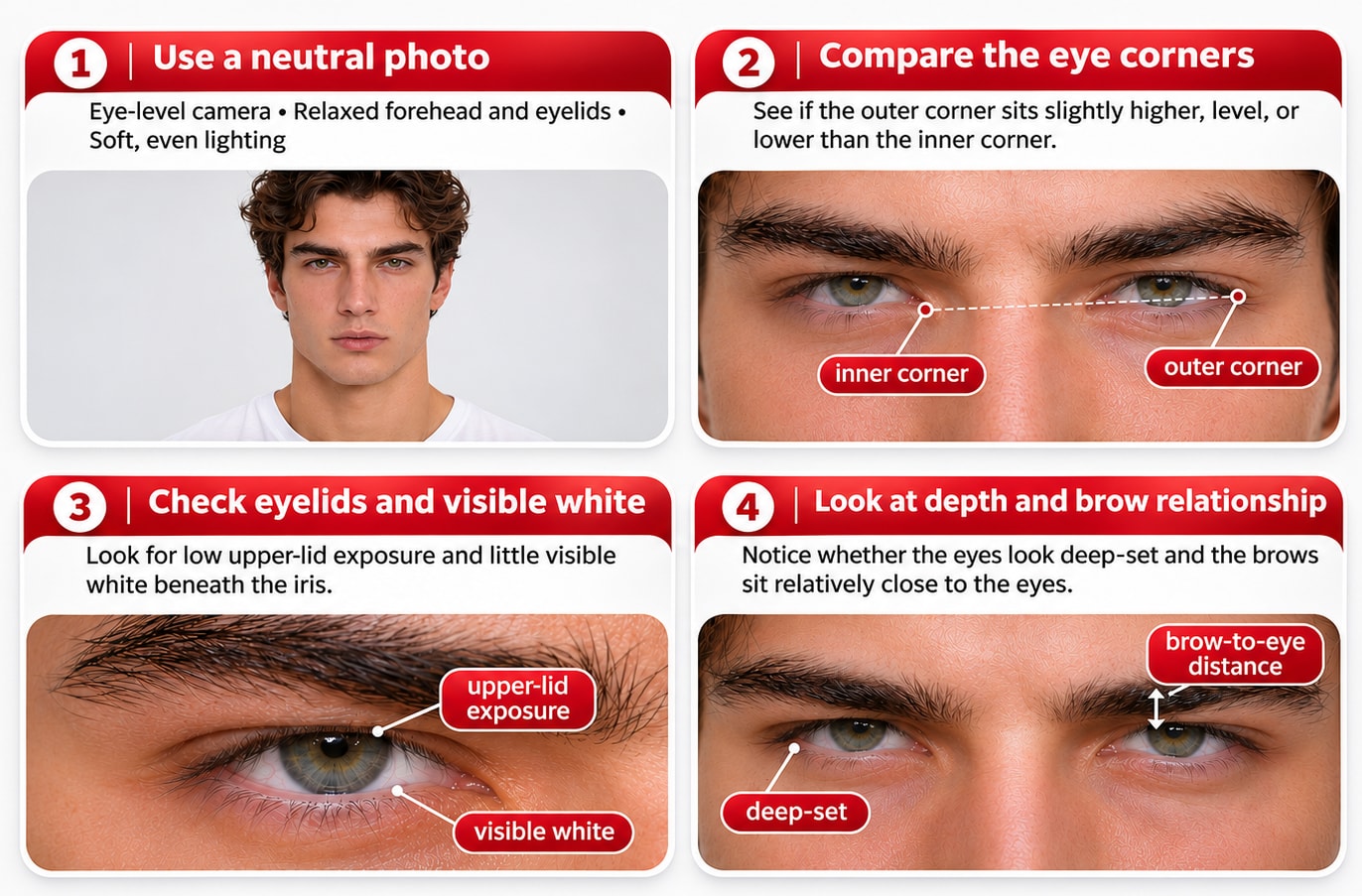
You do not need to force your eyes into a yes-or-no category. Describing them as slightly upturned, deep-set eyes, almond-shaped, mildly hooded, or close-set often tells you more than the hunter-eyes label itself. Small differences between your left and right eyes are also normal.
Do your eyes seem smaller or more compact in some photos than others? Review contact lens tips for small eyes if your natural eye opening also makes lens insertion or removal more challenging.
Are hunter eyes attractive?
Attractiveness is subjective, and hunter eyes have not been scientifically established as the most attractive eye shape. A 2025 study involving 2,081 participants found that changing eyebrow height and the position of the outer eye corner affected ratings of attractiveness, trustworthiness, dominance, and other traits, but greater lateral canthal elevation reduced several favorable ratings rather than proving that a stronger positive canthal tilt is always more attractive.
If you are asking why some people find hunter eyes attractive, the answer is more about overall facial balance than one measurement. Eye depth, brows, eyelids, surrounding facial structures, expression, and individual preference all shape how a face is perceived, and there is no scientifically proven “most attractive” eye shape to aim for when choosing makeup or natural colored contacts.
Do hunter eyes look the same in men, women, and different ethnic groups?
No. The features associated with hunter eyes can look different across men, women, ethnic groups, and individual faces because eyelid shape, eyebrow position, eye spacing, canthal measurements, and surrounding soft tissues naturally vary. A 2025 three-dimensional study of 46 young Chinese adults and 101 young Caucasian adults found multiple sex- and ethnicity-associated differences across eyelid, eyebrow, spacing, and canthal measurements.
That means a single social-media diagram, celebrity example, or set of measurements should not be treated as a universal standard for hunter eye shape. The term itself remains informal, while the underlying anatomical features exist across a wide range of normal human variation.
Hunter eyes in men and women
The informal hunter-eyes label can be applied to both men and women, even though looksmaxxing communities often discuss hunter-eyes male examples more frequently. The same general features, such as apparent eye depth, limited upper-lid exposure, brow position, and canthal tilt, can occur in either sex, but their proportions and overall appearance may differ regardless of cosmetic choices such as wearing colored contact lenses for men.
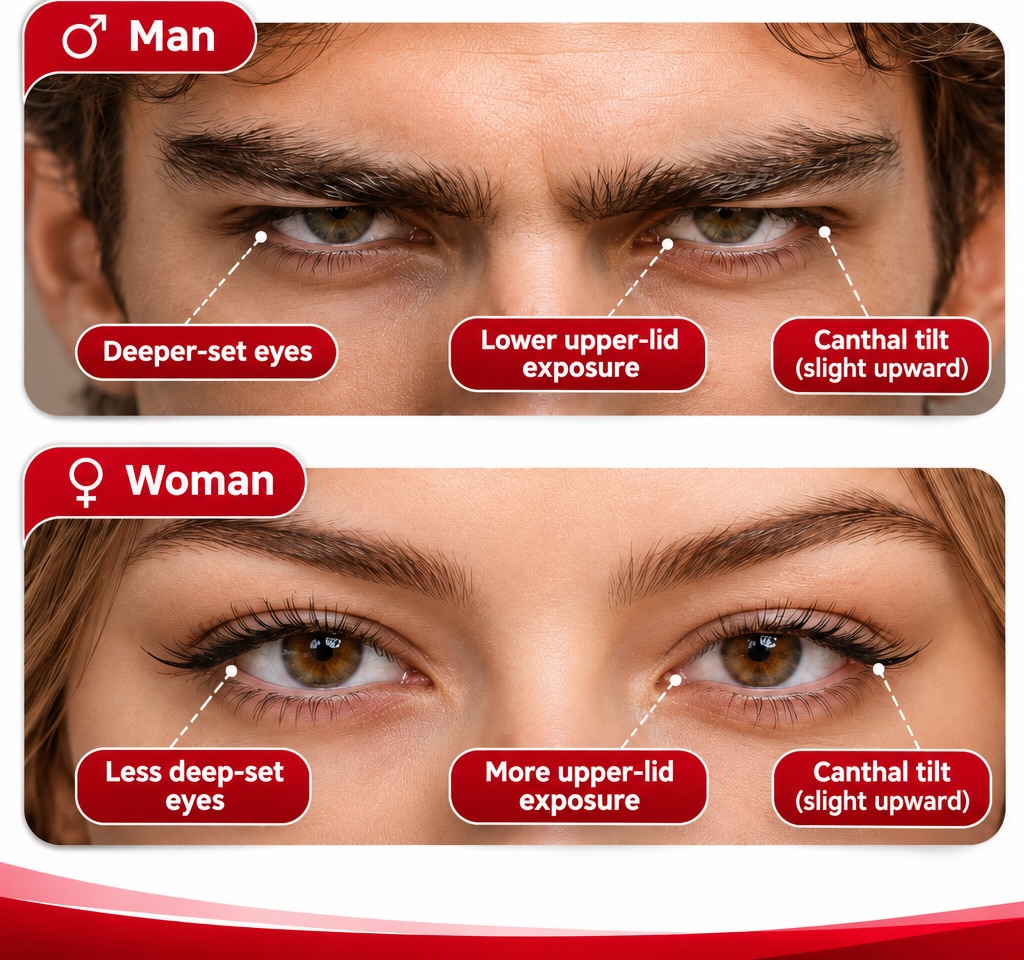
You should also be cautious about claims that a particular eye shape proves masculinity, femininity, testosterone levels, confidence, dominance, or personality. Facial appearance can influence first impressions, but those impressions do not reveal someone’s biology, character, or health.
Eye shape across ethnic groups
Eye anatomy also varies naturally across populations. The 2025 three-dimensional study found differences between its young Chinese and Caucasian groups in measurements including canthal tilt, eye-opening dimensions, spacing, eyelid folds, and some eyebrow relationships, reinforcing why one set of facial proportions should not be applied to everyone.
Terms such as “Asian hunter eyes” may appear online, but they should not be treated as a separate medical type. Eyelid folds, brow relationships, eye shape, and surrounding soft tissues vary widely within every population, so it is more accurate to describe the features you actually have than compare yourself with a single Western or social-media ideal.
Can you get hunter eyes naturally?
You can change how your eye area looks, but there is no credible evidence that hunter eyes exercises, repeated squinting, massage, taping, or mewing for hunter eyes can permanently reshape an adult eye socket or reposition the tissues supporting the eyelid corners. Features such as orbital depth, brow-ridge shape, eyelid support, and positive canthal tilt are largely structural.
What can safely change the appearance?
Reversible changes can affect how your eyes are framed without changing their anatomy. Eyebrow grooming, makeup, lighting, camera angle, facial expression, and temporary puffiness from sleep or allergies can make the eyes appear more elongated, recessed, or lifted, while properly prescribed natural looking colored contacts can subtly change iris color.
If under-eye puffiness is a concern, see Lens.com’s guide on how to get rid of eye bags. Changes in facial fullness may also affect how surrounding facial structures look, but weight loss should not be pursued simply to achieve an online eye shape label.
What does not change adult eye anatomy?
Squinting may temporarily narrow the eye opening, but it does not reshape orbital bone or permanently move canthal attachments. The same applies to mewing, aggressive massage, eyelid pulling, or taping the outer corners of the eyes.
Avoid “bone smashing,” cutting, puncturing, or other DIY methods around the eyes. These can damage the eyelids, orbital bones, nerves, eye muscles, or the eye itself and may cause permanent vision problems.
- Do use reversible options such as grooming, makeup, lighting, and proper care for temporary puffiness.
- Do see an eye care professional for persistent swelling, eyelid changes, pain, double vision, or vision changes.
- Don’t expect mewing, squinting, massage, or taping to permanently change adult eye anatomy.
- Don’t strike, cut, puncture, or otherwise attempt DIY modification around your eyes.
Can makeup or contact lenses make your eyes look more hunter-like?
Yes, but only visually. Makeup can make the eyes appear longer, more defined, or more compact, while colored contacts can change iris color and contrast. Neither changes your natural eye shape, orbital depth, eyelid anatomy, or positive canthal tilt.
How makeup can change the look
Makeup can create the illusion of a more elongated eye area. Outward-directed eyeliner and shadow placed toward the outer corners can make the eyes look longer, while brow grooming and outer-focused lashes can change how the eye area is framed.
These effects are temporary and cosmetic. They change how your features appear rather than altering the underlying anatomy.
If you wear daily wear contact lenses, insert clean lenses before applying makeup and remove them before taking your makeup off. Keep loose glitter, flaky mascara, powders, and lash adhesive away from the lens surface because particles can irritate the eye. For more tips, see Lens.com’s guide on how to wear makeup with contact lenses.
Can surgery create hunter eyes?
There is no standardized procedure officially called hunter eye surgery. Canthoplasty and canthopexy can change or support the outer eye corner, while blepharoplasty can remove or reposition selected eyelid skin and fat. However, these procedures cannot guarantee the full combination of traits described online as hunter eyes, and blepharoplasty for hunter eyes is not a single established operation.
Results depend on your anatomy, eyelid function, eye health, healing, and the procedure used. A 2026 surgical review emphasizes maintaining balanced lateral-canthal position because excessive changes can contribute to eyelid malposition, ectropion, or increased scleral show.
Like other eyelid plastic surgery, these procedures can involve asymmetry, scarring, dry or irritated eyes, difficulty closing the eyelids, exposure problems, and revision surgery, with some complications potentially affecting your ability to wear even normally comfortable contact lenses. Anyone considering a change should discuss the exact anatomical feature they want altered with a qualified oculoplastic ophthalmologist or appropriately trained surgeon rather than asking for a guaranteed “hunter eyes” result.
- Hunter eye surgery is an informal aesthetic label, not one standardized procedure.
- Ask which eyelid or canthal structure would be changed and why.
- Discuss risks including dryness, asymmetry, ectropion, scleral show, scarring, and revision.
- Be cautious of promises of exact measurements or guaranteed results.
What should you know about hunter eyes?
Hunter eyes is an informal appearance label, not a medical diagnosis or an objective beauty standard. The look usually reflects several normal features working together, including deep-set eyes, upper-eyelid exposure, lower-lid contour, brow position, and sometimes a neutral or positive canthal tilt. Much of this hunter eye’s anatomy comes from your natural bone, eyelid, and surrounding soft-tissue structure, so no single feature or measurement defines this eye shape.
Grooming, makeup, lighting, photography, and properly fitted prescription colored contacts can change how your eye area appears, but they do not reshape the adult eye socket or reposition the structures that support your eyelids. If your eyelid position or eye appearance changes suddenly, especially with eye pain, double vision, or a change in sight, seek prompt evaluation from an eye care professional.
Want to change the look of your eyes without changing their natural shape or anatomy? Browse our colored contact lenses to explore prescription and cosmetic options that can change your iris color and overall eye appearance while keeping your natural eye shape the same.
FAQs About Hunter Eyes
Learn how hunter eyes are described, how genetics and anatomy influence the look, how they compare with other eye features, and what changes can affect their appearance.
01 How do you know if you have hunter eyes?
There is no medical test or scientifically validated cutoff for determining whether you have hunter eyes. If you want to describe your eye area, look at several relaxed, straight-on photos and consider individual features such as apparent eye depth, upper-lid exposure, lower scleral show, brow position, and canthal tilt rather than relying on a single measurement.
Camera angle, lighting, eyebrow movement, and squinting can change how these features appear, so one selfie is not a reliable way to classify your natural anatomy.
02 How rare are hunter eyes?
There is no reliable prevalence figure for hunter eyes because the term is not a standardized medical or scientific category. There is no agreed definition, diagnostic test, or measurement cutoff that separates hunter eyes from other normal variations in eye shape.
Because researchers do not have a consistent way to classify who does or does not have hunter eyes, claims that a certain percentage of the population has them are not supported by reliable prevalence data. Individual traits such as deep-set eyes or positive canthal tilt can be studied separately, but that does not establish how common the combined hunter-eye appearance is.
03 Are hunter eyes genetic?
The hunter-eyes label itself is not a genetic or medical category, but many facial and eye-area traits that influence the look have a genetic component. Features such as orbital structure, eye spacing, brow shape, eyelid anatomy, and other craniofacial proportions are influenced partly by genetics, while aging and surrounding soft tissue also affect how your eyes appear.
There is no single “hunter eye gene.” It is more accurate to say that several anatomical traits associated with the look can be inherited.
04 Are hooded eyes the same as hunter eyes?
No. Hooded eyes describe upper-eyelid skin that folds over part of the eyelid crease, while hunter eyes is an informal label for a broader combination of features such as apparent eye depth, eyelid exposure, corner tilt, lower-lid contour, and the relationship between the eyes and brow ridge.
You can have hooded eyes without having other hunter-eye traits, or you can have several hunter-eye traits without hooded eyelids. Some people have both, and others have neither.
05 Can almond eyes also have hunter-eye traits?
Yes. Almond eyes describe the outline of the eye opening, which is generally longer horizontally and tapers toward the inner and outer corners. The hunter-eyes label describes a wider group of surrounding features, so the two descriptions can overlap.
For example, someone can have an almond-shaped eye opening along with deep-set eyes, limited upper-lid exposure, and a neutral or positive canthal tilt. Having almond eyes alone, however, does not automatically mean you have hunter eyes.
06 Is positive canthal tilt the same thing as hunter eyes?
No. Positive canthal tilt is one specific relationship between the inner and outer corners of the eye. It means the outer corner sits slightly higher than the inner corner when viewed with the head in a neutral position.
Hunter eyes refers to a broader appearance involving several features, and positive tilt is only one of them. There is also no scientifically validated angle or cutoff at which a positive canthal tilt becomes a hunter eye shape.
07 Can one eye look more hunter-like than the other?
Yes, mild left-right differences are common. Natural facial asymmetry, differences in brow height or eyelid position, facial expression, lighting, and camera angle can make one eye appear more open, tilted, hooded, or deep-set than the other. Small differences between the two sides do not necessarily indicate a problem.
A sudden new difference deserves more attention. If one eyelid unexpectedly droops or the change comes with eye pain, double vision, reduced vision, or another sudden visual symptom, seek prompt medical evaluation.
08 Do hunter eyes change with age?
The appearance can change with age, even though the label itself is not a medical category. Your eyelid skin, fat and other soft tissues around the eyes, brow position, muscles, and eyelid-supporting tissues can all change over time. These changes can affect how open, hooded, recessed, or supported the eye area appears.
Age-related changes can also affect eyelid position and scleral show, or how much of the white of the eye is visible beneath the iris. These changes affect appearance, but they do not mean you have developed a new biological eye type called hunter eyes.
09 Does mewing give you hunter eyes?
No credible scientific evidence shows that mewing can reshape an adult eye socket, change canthal tilt, or permanently reposition your eyelids. Professional orthodontic guidance also does not support claims that mewing can predictably reshape an adult face.
Mewing should therefore not be treated as a proven way to change your eye shape or develop hunter-eye anatomy.
10 Are hunter eyes a medical diagnosis?
No. Hunter eyes is internet appearance terminology rather than a medical diagnosis. Eye doctors may describe specific anatomical findings such as ptosis, which means a drooping upper eyelid, canthal position, orbital depth, eyelid position, or scleral show, but they do not diagnose someone with hunter eyes.
If you notice a new change in your eyelids or eyes, it is more useful to describe the specific change and any symptoms you have than to rely on an online appearance label.
Disclaimer: This content is for general informational purposes only and is not a substitute for professional advice, diagnosis, or treatment.
References
Understanding the impact of eyebrow and lateral canthal height on the perception of character traits A rating-based analysis of 2081 participants. Journal of Plastic, Reconstructive & Aesthetic Surgery / Joanna Kempa et al. https://pubmed.ncbi.nlm.nih.gov/40174260/. Date Accessed: November 23, 2026.
Canthoplasty. American Academy of Ophthalmology EyeWiki. https://eyewiki.aao.org/Canthoplasty. Date Accessed: November 23, 2026.
Dermatochalasis. American Academy of Ophthalmology EyeWiki. https://eyewiki.aao.org/Dermatochalasis. Date Accessed: November 23, 2026.
Examination Techniques for Lower Eyelid Malposition. American Academy of Ophthalmology EyeWiki. https://eyewiki.aao.org/Examination_Techniques_for_Lower_Eyelid_Malposition. Date Accessed: November 23, 2026.
Eyelid Drooping. MedlinePlus / U.S. National Library of Medicine. https://medlineplus.gov/ency/article/001018.htm. Date Accessed: November 23, 2026.
Racial and sexual differences of eyebrow and eyelid morphology three-dimensional analysis in young Caucasian and Chinese populations. Quantitative Imaging in Medicine and Surgery / Tao Gao et al. https://pmc.ncbi.nlm.nih.gov/articles/PMC11744102/. Date Accessed: November 23, 2026.
Lateral Canthal Management in Esthetic Blepharoplasty, an Update. Facial Plastic Surgery Clinics of North America / Erik Peterson and Robert Schwarcz. https://pubmed.ncbi.nlm.nih.gov/41203326/. Date Accessed: November 23, 2026.
Decorative Contact Lenses for Halloween and More. U.S. Food and Drug Administration. https://www.fda.gov/medical-devices/contact-lenses/decorative-contact-lenses-halloween-and-more. Date Accessed: November 23, 2026.
Similar Articles
-

Why Are My Eyes Sensitive to Light?
-

Which Is Your Dominant Eye and Why It Helps to Know?
-

What Does the World Look Like to Someone Who Is Color-Blind?
-

Guide to the Fairness to Contact Lens Consumers Act: Take a Stand Against Its Erosion (w/Full Text of FCLCA)
-
Are You Left or Right-Eyed? Try This 10-Second Eye Dominance Test