Table of Contents
In old European folklore, the Sandman visited people after dark. He’d slip quietly into bedrooms, sprinkle sleepy dust into their eyes, and help them drift into dreams. By morning, the tiny grains left in the corners of the eyes were said to be proof he’d been there.
It’s a charming explanation for something much less magical: the dried buildup many people wake up with around their eyelids. Today, we usually call it eye crust, eye gunk, or simply crusty eyes. Modern science has a less magical explanation, but the mystery is the same: why do your eyes leave crust behind while you sleep?
Why Crusty Eyes Show Up After Sleep
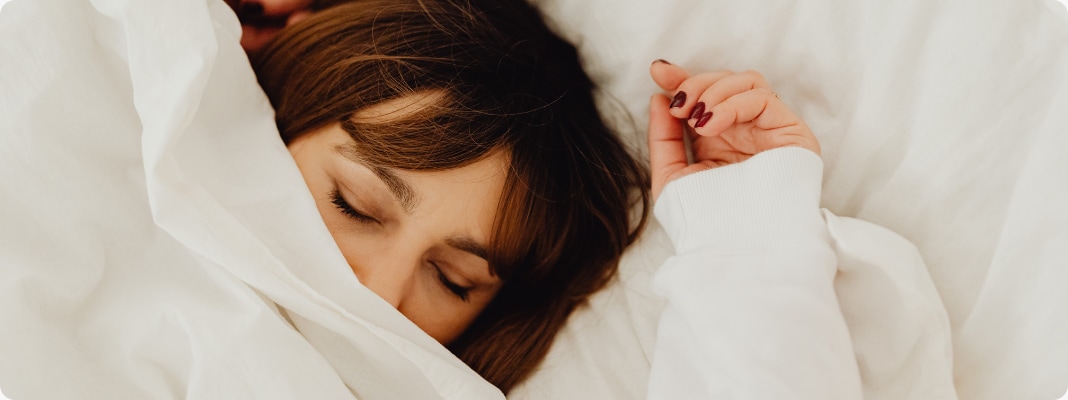
Morning crust is mostly about timing. Your eyes still make protective fluid while you’re asleep, but the blinking part of the cleanup slows down. That gives the residue several hours to collect.
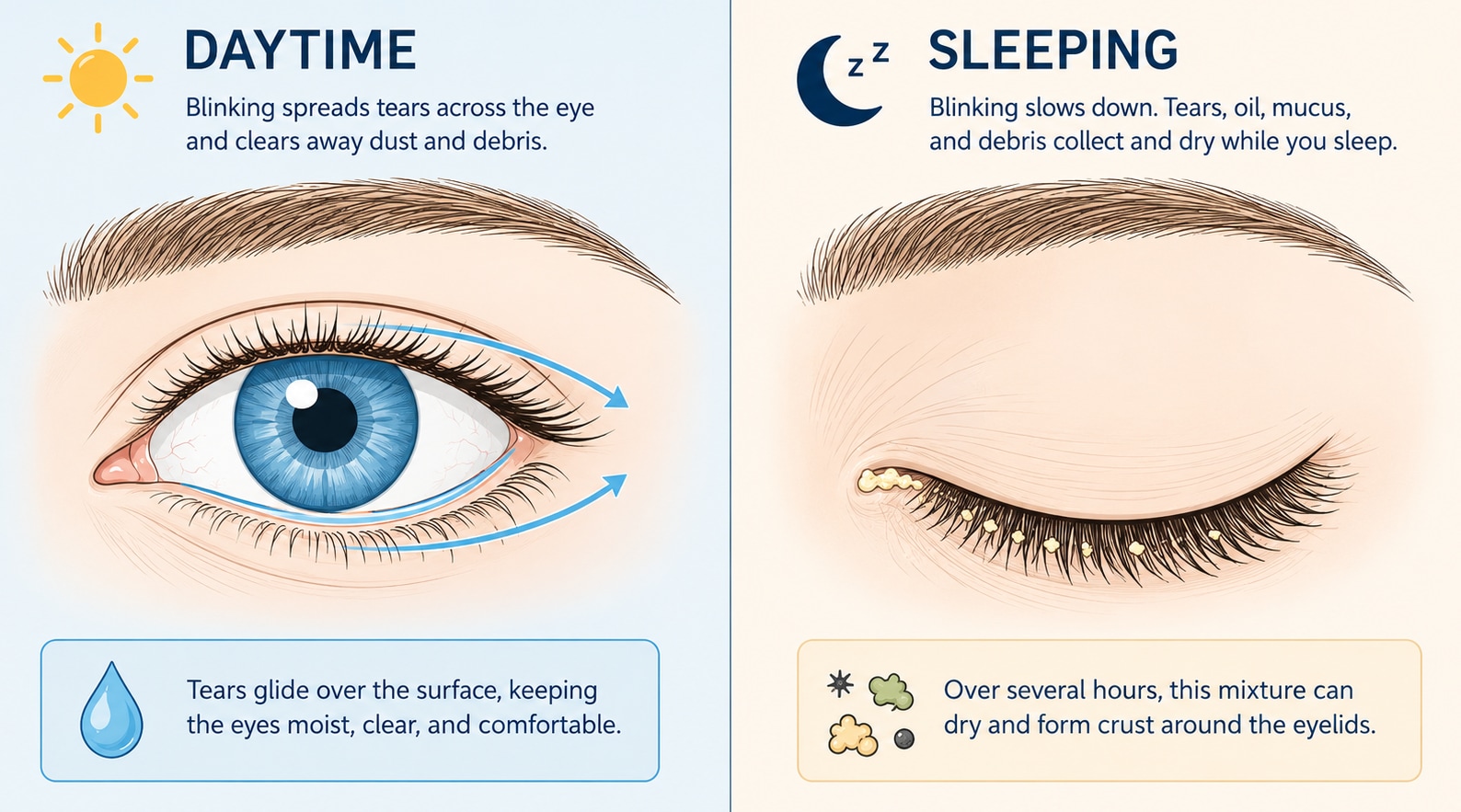
A small amount of pale, dry crust that wipes away easily is usually not alarming. It becomes more concerning when the discharge is heavy, thick, yellow or green, painful, or paired with red eyes, swollen lids, light sensitivity, or blurry vision. Cleveland Clinic recommends paying attention to discharge that changes in color, amount, or feel, especially when other symptoms show up.
What Is Eye Crust Made Of?
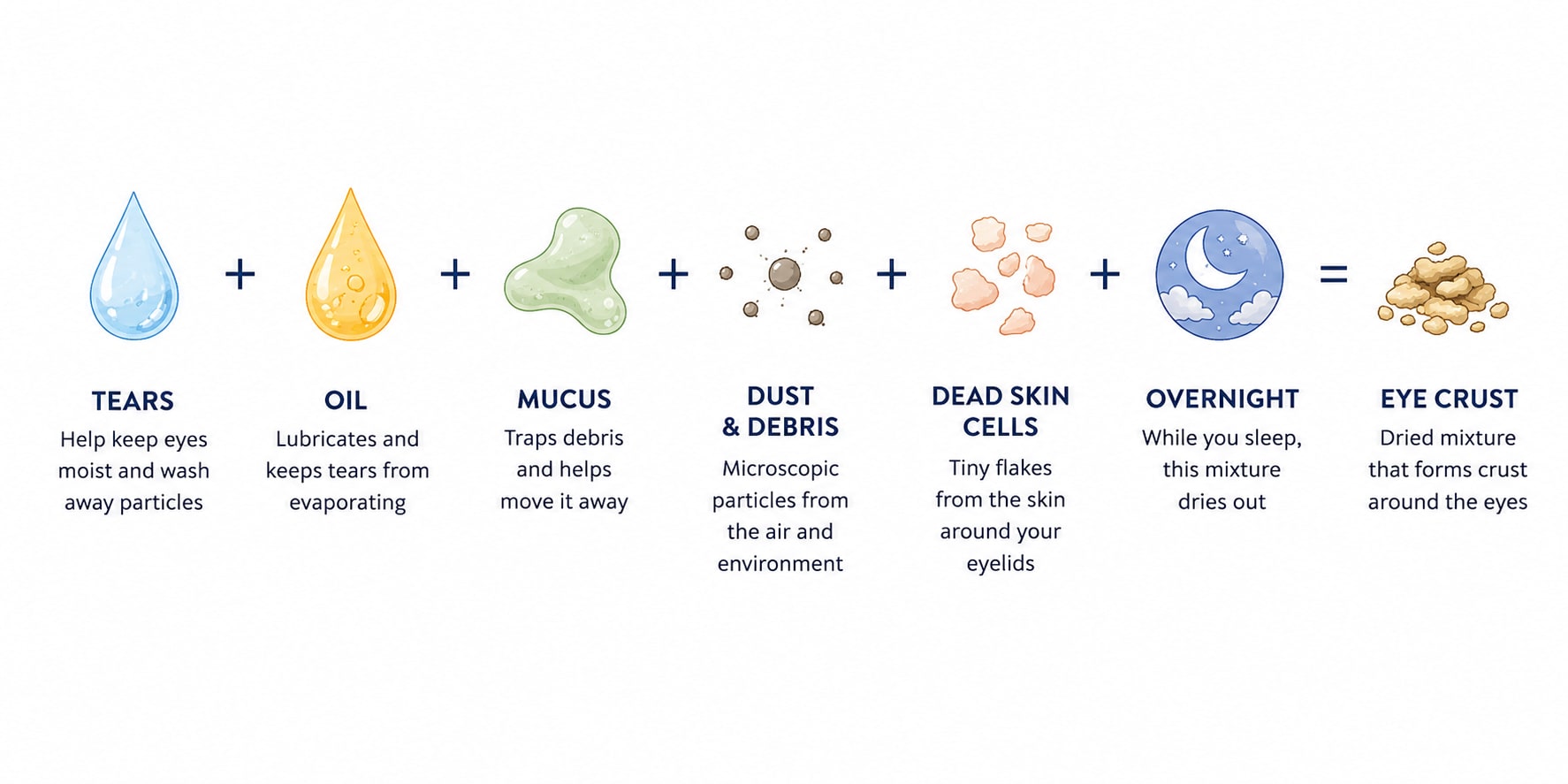
Eye crust starts as eye discharge. In small amounts, especially after sleep, it’s usually part of the eye’s cleaning process. Cleveland Clinic describes eye discharge as something your eyes make while clearing away waste and buildup, and notes that a little morning gunk is normal.
During the day, blinking spreads tears across the eye and moves old fluid toward the tear ducts. While you sleep, blinking stops. Fluid, oil, mucus, dust, and tiny skin cells sit longer near the corners of the eyes or along the lashes. By morning, that mixture dries into the flakes or sticky bits people call crusty eyes.
When Eye Crust Looks Different From Usual
Not all eye crust looks the same. Thin, watery residue can happen when the eyes are irritated or tearing. Dry flakes can show up after sleep or with dry eyes. Thick discharge that crusts on the lashes can appear with pink eye, especially overnight. Mayo Clinic lists crusting on the eyelashes during the night as a possible sign of pink eye.
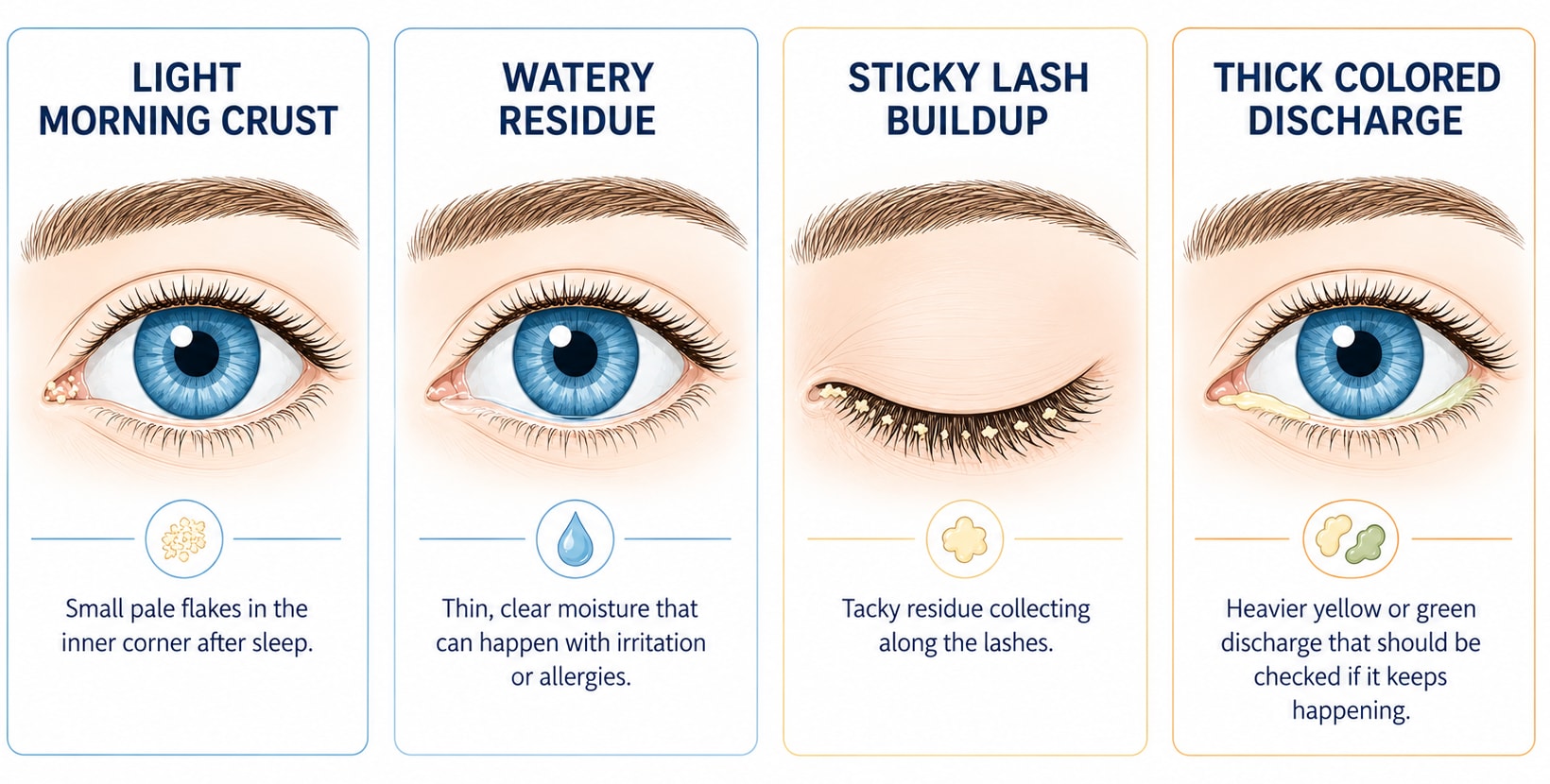
Color alone does not diagnose the cause. The bigger picture matters: how much discharge there is, whether one or both eyes are affected, how the eye feels, and whether vision changes are happening.
Reasons Your Eyes Can Get Crusty
Crusty eyes are not one single thing. The cause depends on what else is happening around the eye.
Normal Morning Buildup
This is the light crust many people wipe away after waking up. It usually sits near the inner corners of the eyes and clears after gentle washing.
Dry Eyes
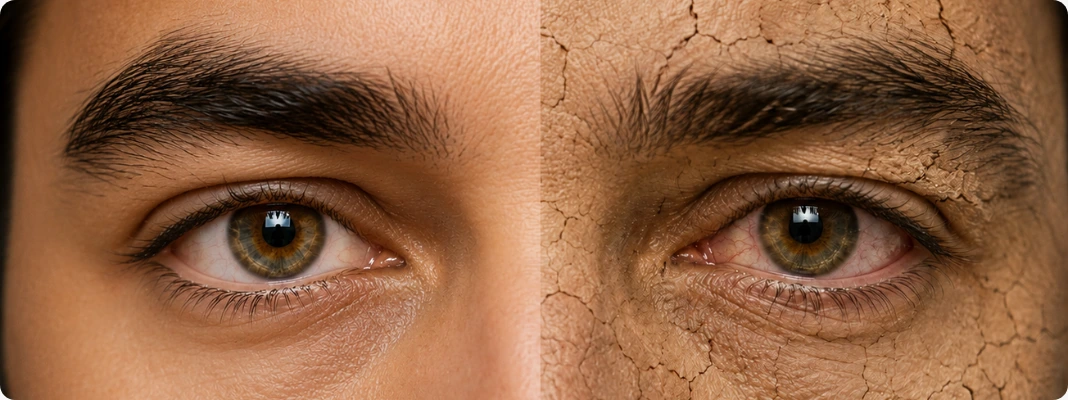
Dry eyes can leave the eye surface feeling gritty, tired, or irritated. When the tear film is not working well, residue can dry more easily around the eyelids.
Allergies
Allergies often bring itching, watery eyes, redness, and swelling. Rubbing makes irritation worse, and dried tears or mucus can collect near the lashes by morning.
Pink Eye
Pink eye can cause redness, itching, a gritty feeling, tearing, and discharge. Mayo Clinic notes that discharge from pink eye can crust on the eyelashes overnight and make the eyes hard to open in the morning.
Blepharitis
Blepharitis affects the eyelid edges. The eyelids can look red or swollen, feel sore or burning, and develop flakes or oily crusts around the lashes, according to the American Academy of Ophthalmology.
Contact Lens Irritation
Contact lenses enter the picture when crusty eyes come with discomfort, redness, light sensitivity, blurry vision, or unusual discharge. The CDC advises contact lens wearers with these symptoms to remove their lenses and call an eye doctor right away.
What Contact Lens Wearers Should Do
If your eyes are only a little crusty in the morning and feel normal after washing, your usual lens routine may not need to change. But if your eyes look red, feel painful, produce unusual discharge, or your vision seems blurry, skip the lenses.
Do not reuse a lens that was worn while your eye felt irritated. Do not rinse contacts with water. Do not try to “push through” discomfort just because the crust looks minor. Contact lens-related infections can involve eye pain, redness, blurry vision, light sensitivity, tearing, and discharge, and the CDC says lenses should come out when those symptoms appear.
How to Clean Crusty Eyes Safely
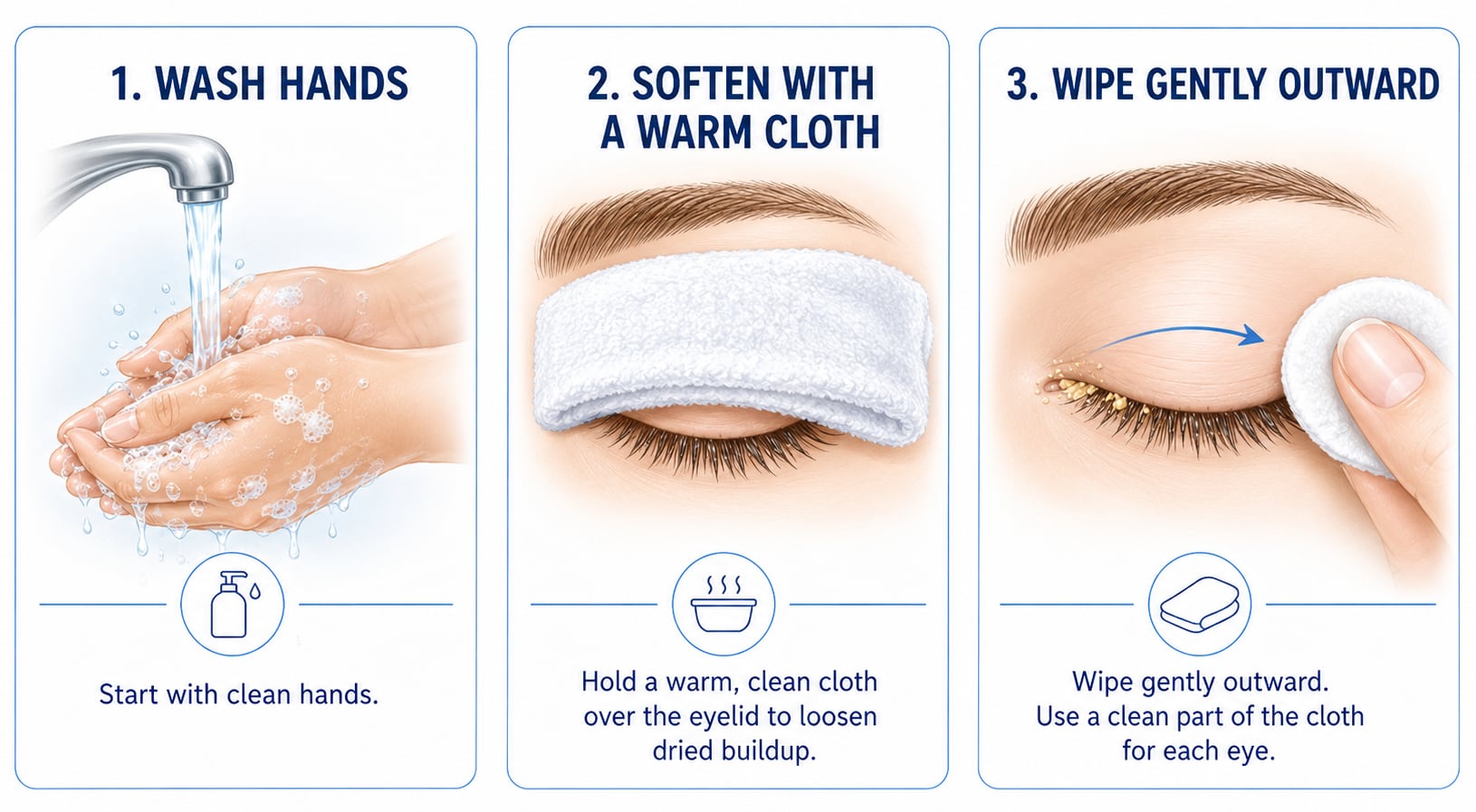
Wash your hands first. Use a clean, damp washcloth or cotton pad to soften the crust before wiping. Warm water helps loosen dried buildup around the lashes.
Do not scrape the crust off. Do not rub hard. Use a clean part of the cloth for each eye so you are not moving discharge from one eye to the other.
If crust keeps forming, or if your eyelids are red, swollen, greasy, flaky, or sore, an eye doctor can check for blepharitis or another eyelid condition. Mayo Clinic lists warm compresses and eyelid washing as self-care steps often used for blepharitis, but recurring symptoms still deserve an exam.
When to Call an Eye Doctor
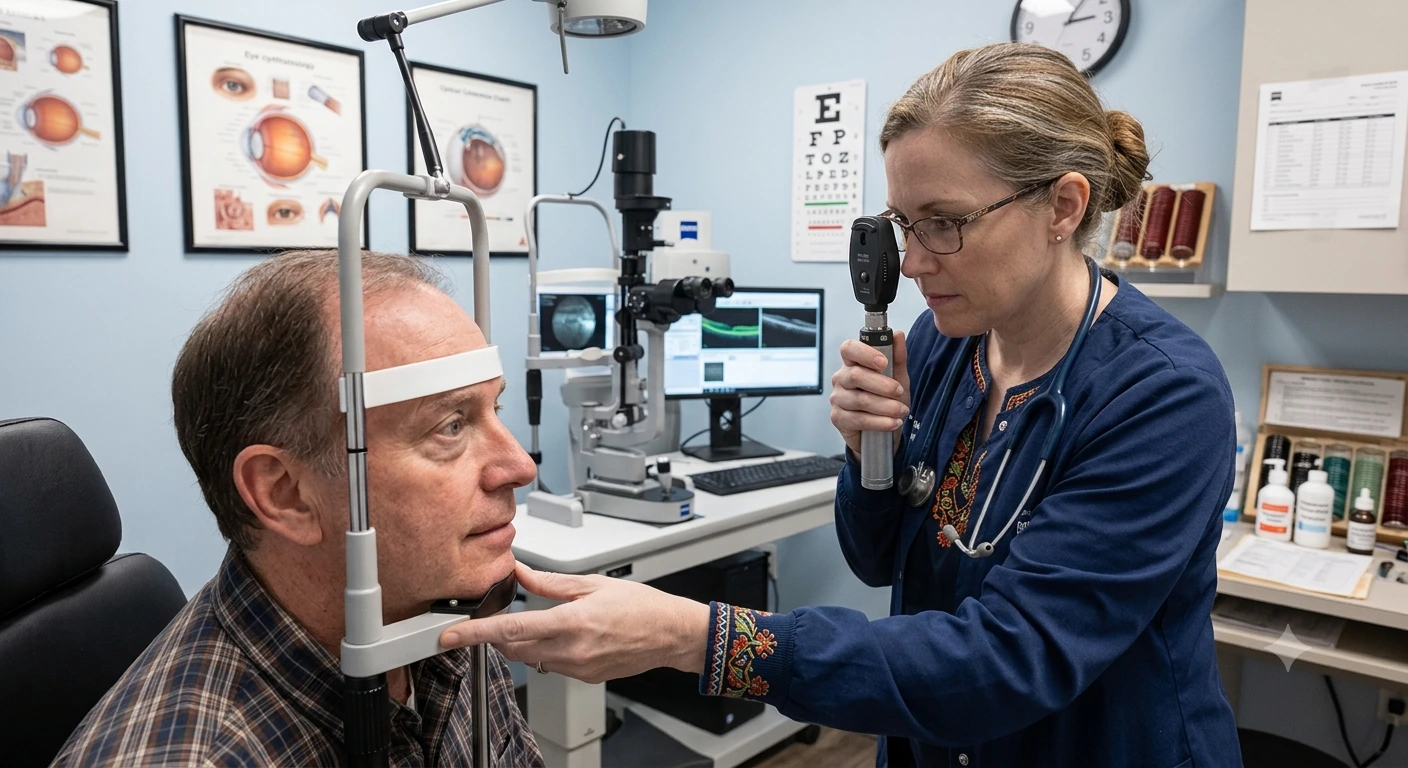
Call an eye doctor if crusty eyes come with thick discharge, yellow or green buildup, eye pain, strong redness, swelling, light sensitivity, blurry vision, or eyelids stuck shut. Get checked sooner if you wear contact lenses.
A little morning crust is usually just dried eye discharge. Crust that changes color, keeps returning, or comes with discomfort is different. That’s when the Sandman story stops being cute, and your eyes need a real answer.
FAQs About Crusty Eyes
Why are my eyes crusty when I’m sick?
Colds, sinus pressure, and congestion can make your eyes water or feel irritated. Extra fluid around the eyes can dry while you sleep, leaving more crust than usual in the morning. If the discharge becomes thick, colored, painful, or keeps getting worse, check with an eye doctor.
Why do my eyes get crusty after crying?
Crying leaves extra tears, salt, oil, and mucus around the eyelids. If you fall asleep afterward, that moisture can dry near the lashes or inner corners by morning. It should clear with gentle washing unless your eyes are swollen, painful, or producing unusual discharge.
Can makeup cause crusty eyes?
Yes. Mascara, eyeliner, eyeshadow, makeup remover, or old eye makeup can irritate the eyelids and eye surface. Makeup can also collect along the lash line if it is not fully removed before bed. Stop using products that sting, burn, itch, or make your eyes water.
Can allergies make your eyes crusty in the morning?
Yes. Allergies can make the eyes watery, itchy, red, or puffy. After several hours of sleep, dried tears and mucus can leave a crust around the lashes or corners of the eyes. Try not to rub your eyes, since rubbing can make irritation worse.
Why do my eyes crust more in winter?
Cold air, indoor heating, and dry rooms can make the eyes feel drier than usual. When the eye surface gets irritated, morning crust may become more noticeable. A humidifier, breaks from dry air, and eye doctor-approved lubricating drops may help if dryness is part of the problem.
References:
Blepharitis. Mayo Clinic. https://www.mayoclinic.org/diseases-conditions/blepharitis/symptoms-causes/syc-20370141. Accessed July 2, 2026.
Blepharitis Diagnosis & Treatment. Mayo Clinic. https://www.mayoclinic.org/diseases-conditions/blepharitis/diagnosis-treatment/drc-20370148. Accessed July 2, 2026.
Eye Discharge. Cleveland Clinic. https://my.clevelandclinic.org/health/symptoms/eye-discharge. Published April 24, 2024. Accessed July 2, 2026.
Pink Eye (Conjunctivitis): Symptoms and Causes. Mayo Clinic. https://www.mayoclinic.org/diseases-conditions/pink-eye/symptoms-causes/syc-20376355. Published January 10, 2025. Accessed July 2, 2026.
Pink Eye (Conjunctivitis): Symptoms, Treatment & Causes. Cleveland Clinic. https://my.clevelandclinic.org/health/diseases/pink-eye-conjunctivitis. Published April 17, 2024. Accessed July 2, 2026.
What Causes Contact Lens-Related Eye Infections. Centers for Disease Control and Prevention. https://www.cdc.gov/contact-lenses/causes/index.html. Published May 27, 2025. Accessed July 2, 2026.
What Is Blepharitis? American Academy of Ophthalmology. https://www.aao.org/eye-health/diseases/what-is-blepharitis. Accessed July 2, 2026.
Who Is the Sandman? HowStuffWorks. https://history.howstuffworks.com/history-vs-myth/who-is-sandman.htm. Accessed July 2, 2026.