

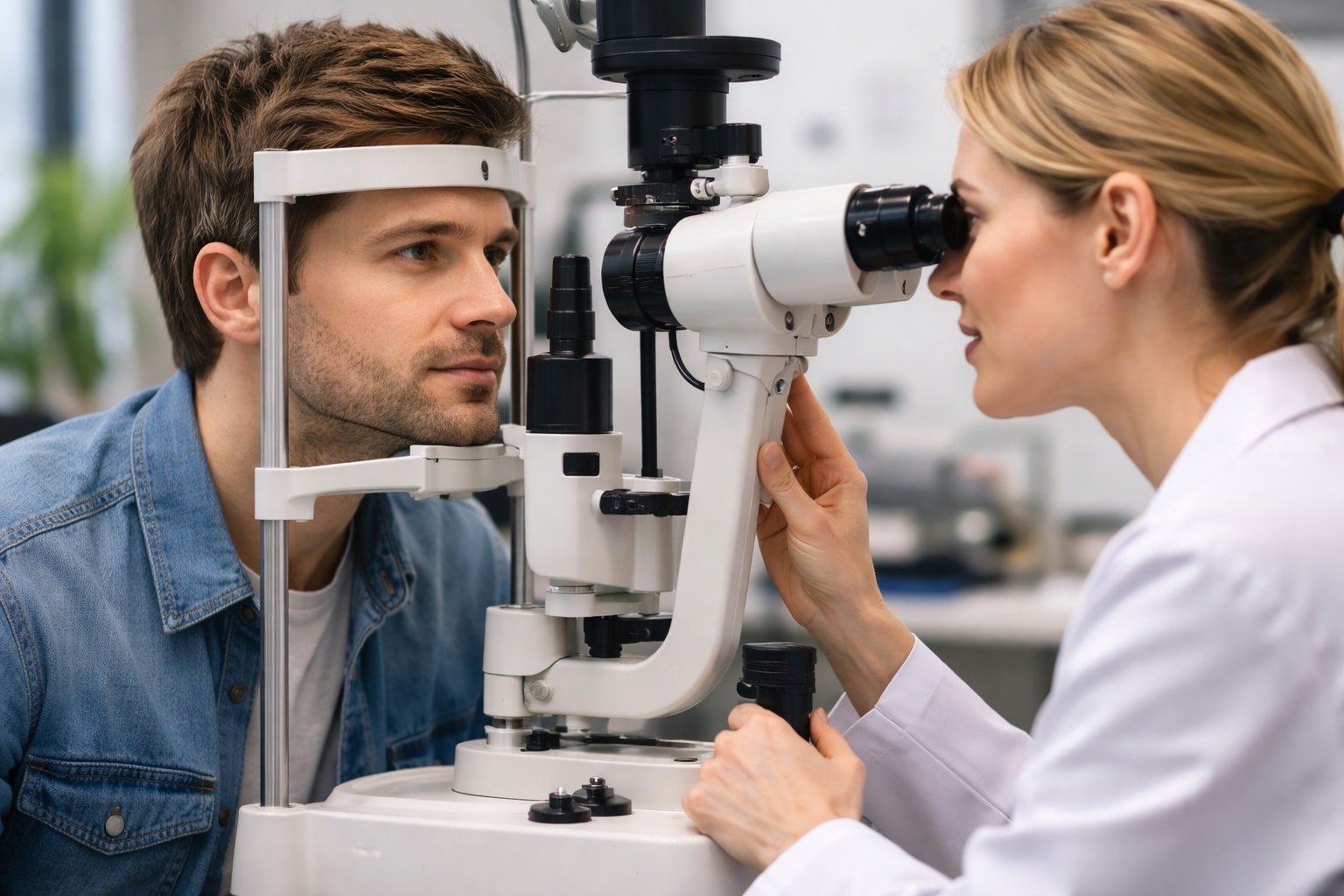
Astigmatism is a common eye condition that can make objects appear blurry, stretched, or distorted. It can affect people at any age. For some, the prescription may change gradually over time.
Does astigmatism get worse with age? It depends on several factors, including natural eye changes, overall eye health, and certain conditions that affect the cornea or lens. Here’s what to know about how astigmatism can change as you get older.
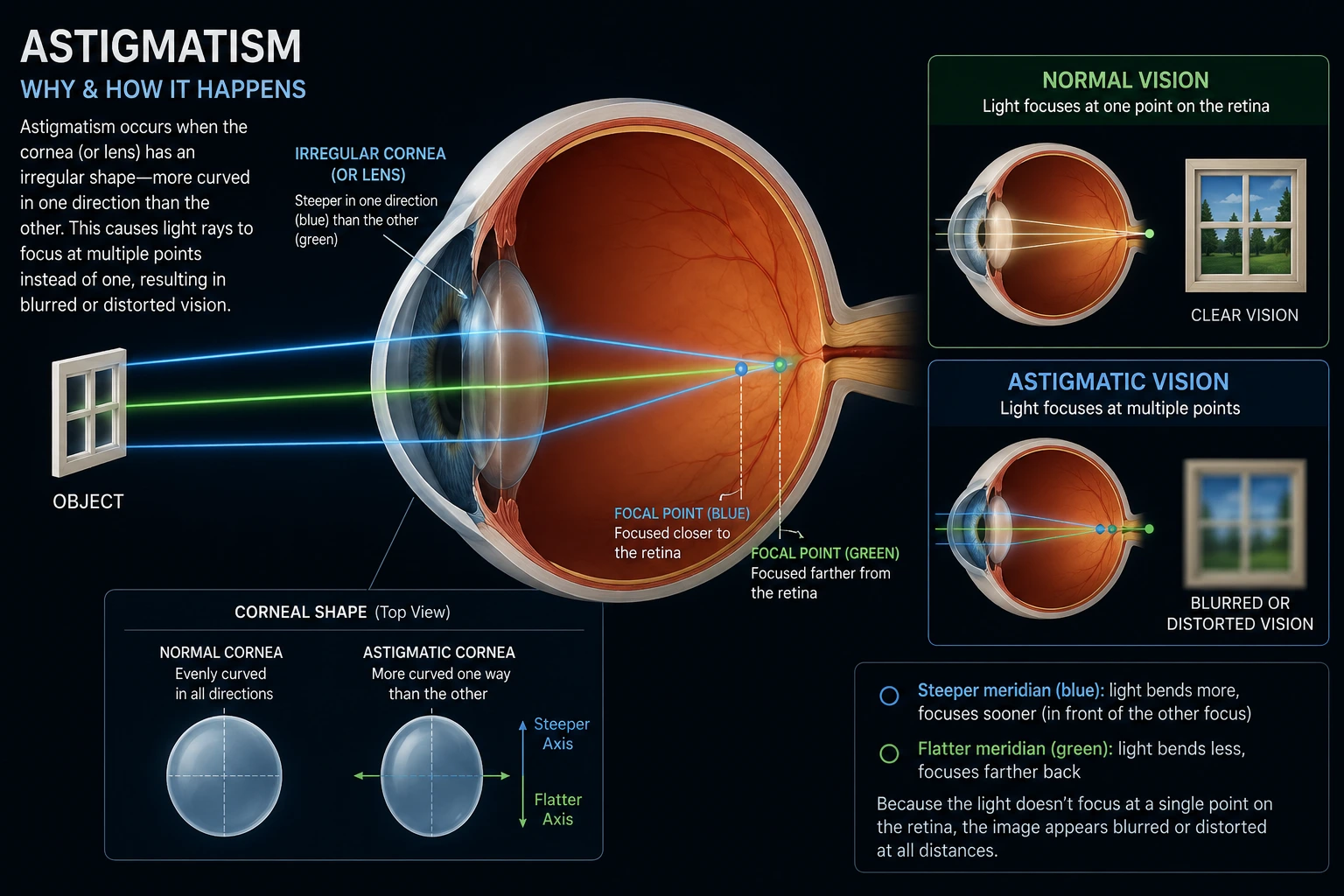
Astigmatism is a common refractive error that alters how light enters and focuses inside the eye. In a healthy symmetrical eye, light bends evenly to create a sharp image. With astigmatism, however, the cornea or the internal lens has an irregular curvature. This uneven surface causes light to bend in multiple directions, preventing it from focusing the image precisely on the retina. The image you see appears blurry, stretched, or distorted at both near and far distances.
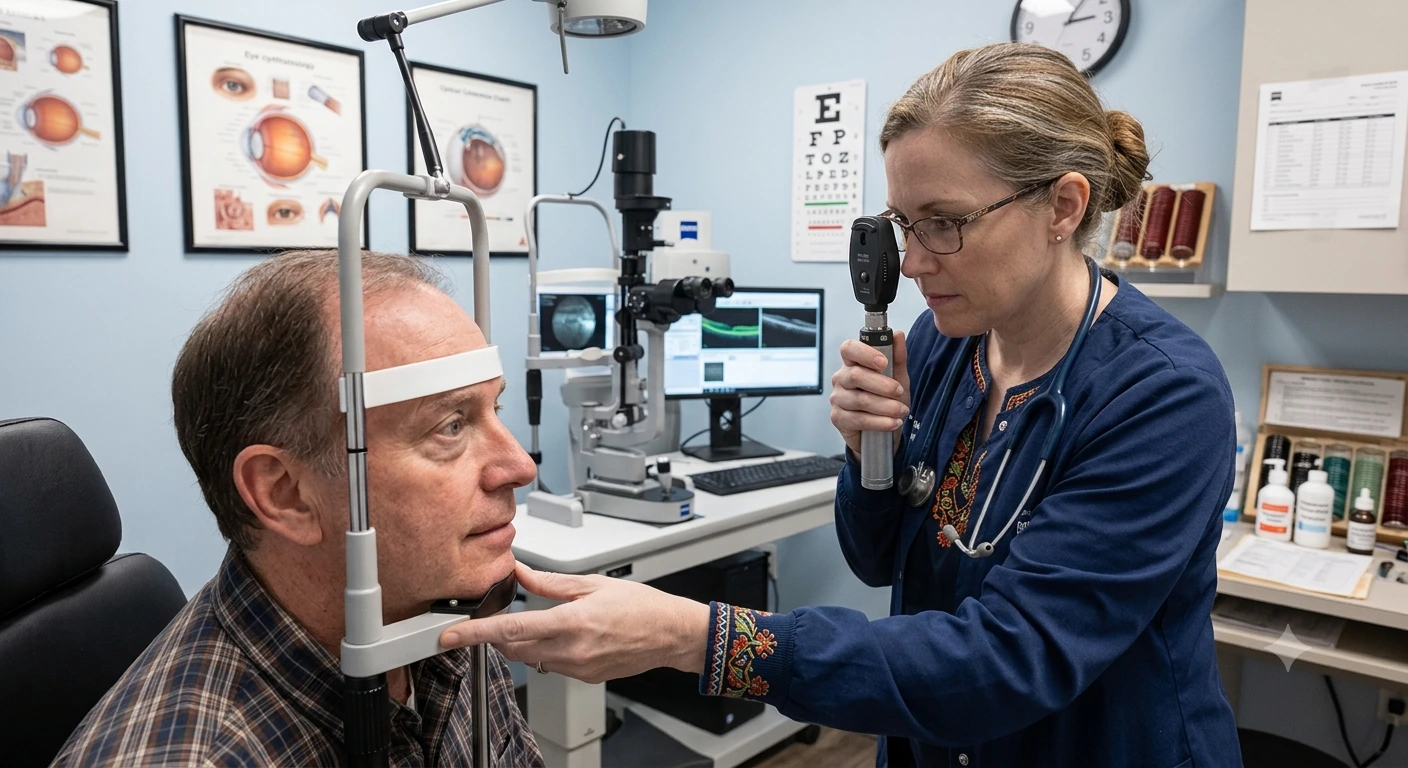
A person with astigmatism usually suffers from nearsightedness or farsightedness. While many individuals are born with astigmatism, others experience the condition later in life. Fortunately, astigmatism can be effectively corrected; a standard eye exam allows an optometrist or ophthalmologist to easily resolve the distortion using prescription glasses, contact lenses, or refractive surgery.
Yes, astigmatism can change as you get older. That doesn’t mean that it always gets worse. Age-related changes in the cornea or the lens inside the eye can affect how light focuses. In older adults, these shifts frequently occur alongside, or just prior to, the development of cataracts, which naturally alter the eye’s internal structure.
While gradual changes in your prescription are entirely normal over several years, sudden or dramatic visual changes require prompt evaluation by an eye care professional. Consistent, regular eye exams are the most effective way to monitor these structural shifts and ensure your glasses, contact lenses, or treatment plans are updated to maintain clear vision.
Astigmatism naturally evolves alongside the changing structure of the eye. Over time, subtle shifts in the curvature of the cornea or the internal lens alter the precise path light takes to the retina.
For many individuals, these age-related changes remain mild and progress slowly. For others, the structural shifts are pronounced enough to require a stronger corrective prescription to resolve increasing blurriness.
Specific medical conditions can also accelerate these changes. Conditions such as cataracts, corneal issues such as keratoconus, or physical trauma and subsequent eye surgeries can fundamentally alter how the eye bends light.
Because astigmatism can be gradual, looking out for subtle changes in your visual clarity and comfort is essential. An updated corrective prescription may be necessary if you notice any of the following indicators:
What will happen if astigmatism is left untreated? Your vision remains blurred or distorted, which frequently increases discomfort during routine activities like reading, driving, and digital screen use. You experience persistent eye strain, fatigue, frequent squinting, or tension headaches.
While astigmatism itself is highly manageable and does not inherently damage your eye structure, scheduling a comprehensive eye examination accurately updates your prescription and verifies your overall eye health.
Astigmatism is highly manageable by wearing prescription lenses or specialized vision correction procedures. The optimal approach depends on your specific prescription, ocular health, lifestyle preferences, and the recommendation of your eye care professional.
This remains one of the most direct and reliable methods of correction. The lenses have a specific cylindrical design that compensates for the irregular curvature of the eye, allowing light to focus evenly onto the retina.
Engineered specifically for astigmatism, these soft lenses feature varying refractive powers throughout the lens to align precisely with the unique shape of your eye and prevent rotation.
For more pronounced or irregular corneal changes, rigid gas-permeable (RGP) or scleral lenses may be utilized to provide a perfectly smooth refracting surface.
Procedures such as LASIK or PRK permanently correct astigmatism by surgically reshaping the cornea. A comprehensive pre-operative evaluation is required to determine candidacy.
For individuals developing cataracts, specialized toric intraocular lenses or specific surgical incisions can significantly reduce or eliminate astigmatism during the cataract removal process.
Routine eye examinations, however, remain important to monitor any ongoing prescription shifts and ensure your corrective method continues to provide optimal visual performance.
Astigmatism can develop with age, but that doesn’t always mean it will get worse. Small prescription shifts are common over time, while sudden or noticeable changes should be checked by an eye doctor.
With the right treatment plan, glasses, or toric contact lenses here, astigmatism can be managed clearly and comfortably.
Astigmatism may worsen as the shape of the cornea or lens changes over time. Eye injury, surgery, cataracts, or corneal conditions such as keratoconus may also worsen the condition.
Anyone regardless of age can have astigmatism. Some people are born with it or develop it during childhood, while others notice it later in life as their eyes change.
Screen time doesn’t usually change the shape of the cornea, so it isn’t typically considered a direct cause of worsening astigmatism. It can, though, make blurry vision, eye strain, dryness, and headaches more noticeable.
Astigmatism itself does not cause blindness. It’s a common and treatable refractive error, but sudden or severe vision changes should always be checked by an eye doctor.
Astigmatism may change over time, especially in childhood, but it often does not fully go away on its own. Glasses, toric contact lenses, or certain vision correction procedures can help correct it.
Have a question? Call us at
1-800 LENS.COM (536-7266)
Online 24/7
© 1995-2021 Lens.com. All Rights Reserved. Lens.com is a contact lens replacement company, and a direct to consumer marketer of contact lenses.
As a contact lens replacement center, we can only sell you contact lenses that you have a valid prescription for, and are wearing successfully.