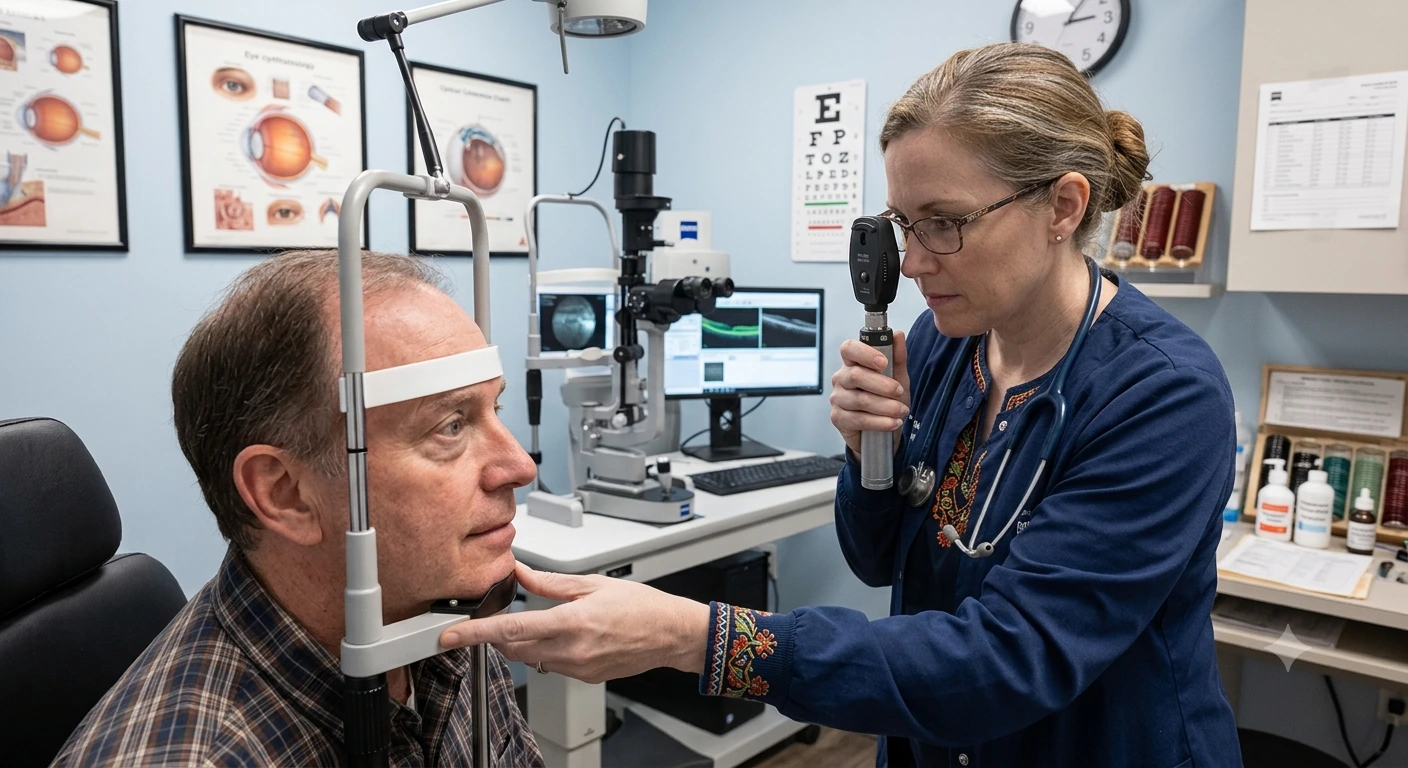
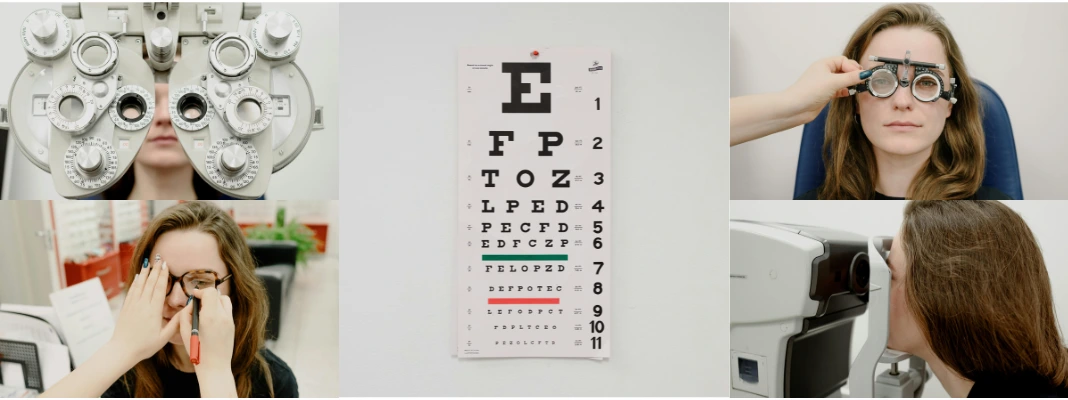
May is here, which means Healthy Vision Month is in full swing. By this time, you may be thinking about taking an eye exam.
Eye exams sound simple, yes? They are, until you start wondering about the requirements. Should you wear contact lenses, or skip them and wear glasses instead?
There’s no clear-cut guide on how to prepare for an eye exam. However, the preparation isn’t complicated. All you need is a little planning, which goes a long way for your results.
Signs You Need an Eye Exam
These should be enough for you to book that appointment:
- Blurry vision
You’re having trouble seeing things from near and far distances. - Difficulty with night vision
Driving at night or seeing in low-light settings is difficult. - Eye strain/frequent headaches
You feel pain around or behind your eyes, especially after screen time or reading. - Squinting
You find yourself squinting frequently just to see objects clearly. - Double vision
You see two images of a single object. - Red or dry eyes
Your eyes experience persistent discomfort or irritation. - Flashes or spots
Black spots or flashes of light are becoming a regular occurrence. - Irregular spots
There’s a “curtain” blocking a part of your vision.
What To Bring to Your Eye Exam
Avoid last-minute scrambles and gather these items. You don’t want to make a scene and dig into your bag at the front desk.
|
What To Do Before Your Comprehensive Eye Exam
Come prepared before you set foot in the doctor’s office.
1. Know your personal and family medical history.
Your medical history is an important requirement for assessing your risk of specific eye conditions. It includes any medical condition you may have, even those unrelated to vision.
Your doctor will normally give you a form asking for your medical history, even your family’s. It’s highly advisable to bring any material stating such information for a better diagnosis.
2. List your symptoms.
Having a sharp memory is good. However, not everyone has that. Write whatever symptom you’re feeling, whether it’s new, strange, or nagging.
Include the timing of those symptoms as well. It will help your doctor identify patterns, triggers, and duration. This will directly impact your diagnosis and treatment.
3. Bring your current glasses and contacts.
Doctors usually want to know how their patients’ current eyewear is working. Bring your contact lenses and glasses.
Don’t wear your contacts if you wear lenses. Store them in their case or box. Doctors need to examine the eyes without visual aids for more accurate prescriptions.
4. Bring your insurance information.
Your insurance cards should be with you at all times. Whether it’s medical or vision insurance, don’t forget to bring supporting documents with you to your appointment. Make sure to double-check the benefits, so you’ll know what your coverage entails.
5. Lower your caffeine intake.
A cup of joe in the morning is always great, but you may want to ease up on the coffee before your appointment.
A study on caffeine and vision reported that caffeine can affect eye health. It blocks adenosine receptors, which can impact tear production. It also spikes blood pressure, which may produce inaccurate results.
6. Plan around dilation.
Your eye doctor may dilate your pupils. This procedure uses special eye drops to temporarily enlarge the pupils, giving clearer views of the retina and optic nerve for examination. This helps them detect diseases like glaucoma and macular degeneration.
Bright light may feel uncomfortable, and near vision may be blurry for a few hours after the process. Bring sunglasses and avoid adding detailed screen work after your appointment. Ask someone to drive you if you don’t feel safe getting home on your own.
7. Stay hydrated.
Being well-hydrated before an eye exam helps. Hydrated and lubricated eyes will make it easier for doctors to conduct tests and deduce findings.
8. Prepare your questions.
Your eye exam is the best time to ask questions and raise concerns about your vision. Mention problems and changes because they may indicate underlying conditions.
What Not To Do Before Your Eye Exam
Restrictions may be few, but it’s best to err on the side of caution.
|
How To Prepare for an Eye Test if You Wear Contacts
This preparation is slightly different from how glasses-only patients do their pre-exam preps.
First, you should bring your current lenses, packaging, and any notes about how your lenses feel. Disclose whatever dryness, discomfort, redness, or other condition you’ve experienced.
Your exam is also a great time to ask if your current lenses still fit your lifestyle. Whether you’re experiencing vision issues or simply inquiring about a possible switch, don’t hesitate to ask your doctor.
What To Expect at an Eye Exam
Appointments can make anyone feel anxious, so knowing what to expect helps. Most exams are painless and straightforward, so there’s no need to worry about invasive procedures.
The Standard Eye Exam, Explained
This test is a 30 to 90-minute session of checking a patient’s vision, eye pressure, and the overall structural eye health. Medical history, refraction tests, and retina checks may be expected.
Below are some standard processes:
Patient History
This covers the disclosure and discussion of vision symptoms, family history, and overall health.
Visual Acuity Test
Patients read letters on a Snellen chart to measure how clear their vision is at different distances.
Eye Muscle Movement
Patients will follow a light or target to check eye muscle alignment and assess proper function.
Cover Test
This exam will check how patients’ eyes work together. One segment has one eye covered to see how it’s aligned with the other.
Tonometry
This test will measure the pressure inside patients’ eyes. A quick puff of air or a gentle probe touching the eye may be done.
Slit Lamp Exam
A special microscope will illuminate and magnify the front parts of the eye to inspect for abnormalities.
Pupil Dilation
The doctor will use special eye drops to open the pupils. This will let them check the back of the eye, which spans from the retina to the blood vessels.
What Happens During a Glasses Prescription Exam?
Exams for glasses prescriptions include the same processes as a standard exam. The difference here is that patients may have to undergo more specialized tests.
A refraction test may be given. Doctors will employ a phoropter (a device with multiple lenses) to determine patients’ accurate prescriptions. They’ll ask them which lens looks and feels best to find the best fit.
What Happens During a Contact Lens Exam?
Like the previous exam, this one has additional tests.
Consultation and Lifestyle Discussion
Doctors will ask patients about their daily activities, work, and replacement preferences.
Corneal Measurement
Specialists will measure the curvature of patients’ corneas using keratometers or corneal topographers. This will help with comfort and fit.
Pupil and Iris Measurement
The pupil’s and iris’s size will be measured to determine the proper lens diameter.
Tear Film Evaluation
Patients’ tear films will be evaluated to check for dry eyes. This will help with moisture and comfort.
Trial Fitting
Patients will be given trial pairs of contacts to assess vision and comfort. They’ll test how well they sit on their eyes.
Insertion and Removal Training
This is more for first-time wearers. They’ll learn how to use, remove, and clean their contacts properly.
A Little Preparation Can Make a Big Difference
Now that you know how to prepare for an eye exam, there’s no need to overthink it. The steps and recommendations above are easy for any patient to follow. They may be simple, but they go a long way in ensuring successful eye exams.
Once you have your doctor’s updated prescription, read it carefully and plan your next steps from there. If you’re a contact lens wearer, shop Lens.com for pairs that match your prescription and other eye care needs.
Frequently Asked Questions About Preparing for an Eye Exam
Per the American Academy of Ophthalmology, adults with little to no vision problems or risk factors should get comprehensive eye exams every 1 to 2 years. Glasses wearers, contact lens wearers, patients with diabetes, and adults over 65 should have annual eye exams.
Eye exams usually include tests for eye alignment, vision clarity, and overall eye health. Procedures can include dilation, refraction, tonometry, and an eye chart test.
It depends on the type of eye exam you’ll get. For general eye checkups, patients are usually asked to remove contact lenses. If you’re scheduled for a contact lens exam or fitting, your eye doctor may ask you to bring your lenses so the fit can be checked.
You can wear makeup to an eye exam, but keeping it minimal is recommended. It’s even better to go in with barefaced eyes. Heavy makeup, especially eye products, can flake into the eyes, smudge during tests, and obstruct vision.
Limiting or avoiding coffee before an eye exam is generally recommended. Caffeine can temporarily increase blood pressure and eye pressure, which can lead to inaccurate results.
Disclaimer: This content is for general informational purposes only and is not a substitute for professional advice, diagnosis, or treatment.
References
Caffeine and Vision: Effects on the Eye. PubMed Central/National Library of Medicine. https://pmc.ncbi.nlm.nih.gov/articles/PMC11589232/. Date Accessed: May 14, 2026.
Frequency of Ocular Examination. American Academy of Ophthalmology. https://www.aao.org/education/clinical-statement/frequency-of-ocular-examination. Date Accessed: May 15, 2026.
Similar Articles
-

Here Are Some of the Best Contacts You Can Sleep In
-

How to Stop Your Contacts from Making Your Eyes Water: Quick Fixes
-

Monotone Eyeshadow for Spring—Here’s How to Nail the Look (And What Contacts to Wear With It)
-

Why Do I See Halos Around Lights?
-
How To Buy Prescription Colored Contacts? Pride Month Safety Guide