RX

What Is the Difference Between Nearsighted and Farsighted?

Table of Contents

Most people have heard the terms nearsighted and farsighted, but knowing which one applies to you is not always obvious. Both are refractive errors, meaning the eye does not focus light correctly. The difference comes down to where that light lands inside the eye and what part of your vision suffers as a result.

What Is Nearsightedness?

Nearsightedness, also called myopia, means you can see things close to you clearly but struggle with objects at a distance. Road signs, whiteboards, and faces across a room tend to look blurry. Up close, your vision is sharp.

This happens because light entering the eye focuses in front of the retina rather than directly on it. The retina is the light-sensitive tissue at the back of the eye that sends visual signals to the brain. When light misses the retina, the image your brain receives is out of focus.

The most common cause is an eyeball that is slightly too long. A cornea that curves too steeply can also cause the same effect. Myopia typically develops during childhood and tends to worsen through the teenage years as the eye continues growing.

What Is Farsightedness?

Farsightedness, also called hyperopia, is the opposite. Distant objects are usually clear, but things close to you are blurry. Reading, using a phone, or working on a computer can all cause eye strain, headaches, and difficulty focusing.
With hyperopia, the eye focuses light behind the retina instead of directly on it. This happens when the eyeball is too short or the cornea is too flat to bend light correctly.

Farsightedness is usually present from birth and can run in families. Mild cases may go unnoticed in childhood because young eyes can compensate naturally. That ability fades with age, which is why symptoms become more noticeable in adulthood.

Nearsighted vs. Farsighted at a Glance

Nearsighted (Myopia) Farsighted (Hyperopia)
Clear Vision Up close At a distance
Blurry Vision Far away Up close
Eye Shape Too long or cornea too curved Too short or cornea too flat
Light Focus In front of the retina Behind the retina
When It Develops Often in childhood Often present from birth
Common Symptoms Squinting, headaches, sitting close to screens Eye strain, headaches, difficulty reading

How Do You Know Which One You Have?

The easiest way to tell is to pay attention to where your vision breaks down. If you find yourself squinting at things far away, sitting close to the television, or struggling to read signs while driving, myopia is likely the cause. If close-up tasks like reading or looking at your phone cause your eyes to strain or your vision to blur, hyperopia is more likely.

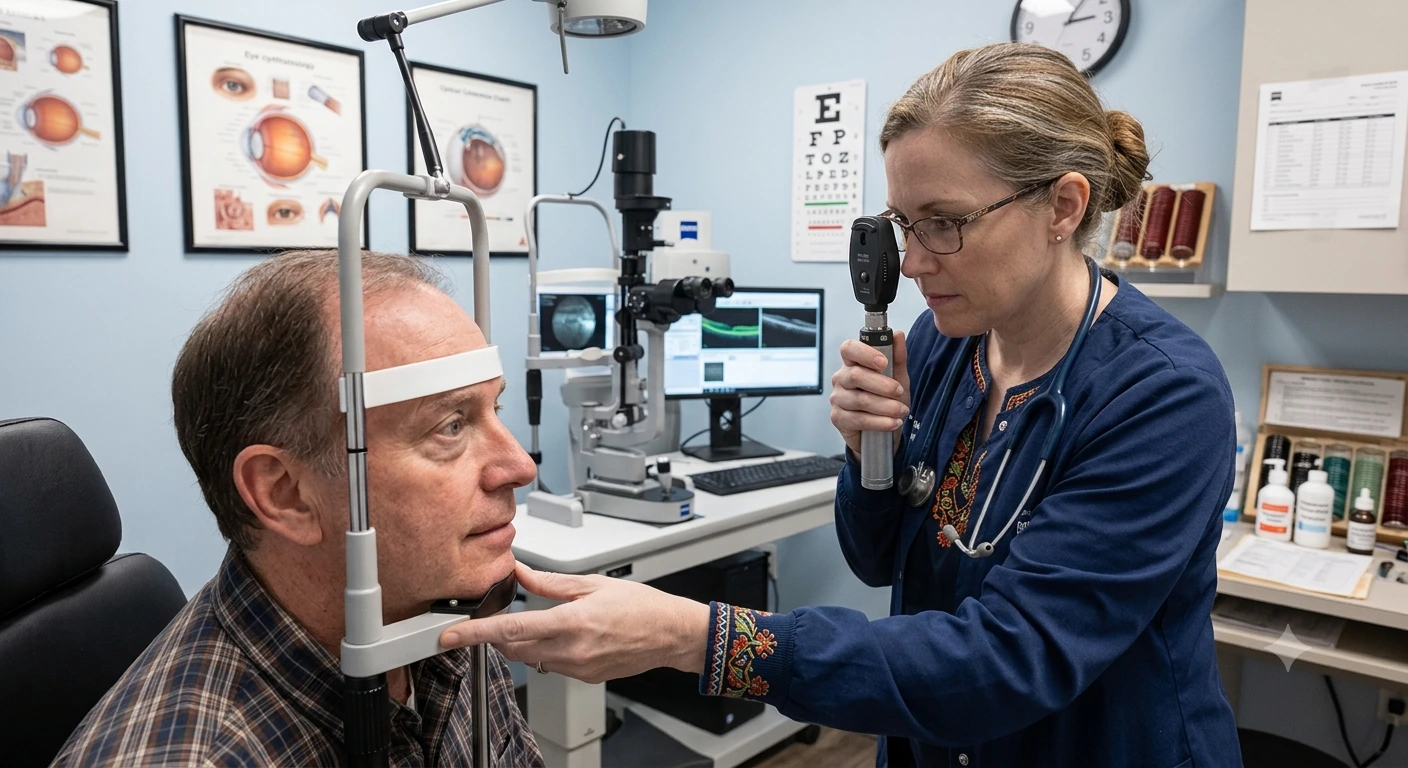
These symptoms are worth noting before an eye exam since your eye doctor will want to know which distances give you the most trouble. A standard eye exam with a refraction test will confirm which condition you have and to what degree.

What Do the Numbers on Your Prescription Mean?

Your prescription tells you the lens power needed to correct your vision. A minus sign before the number indicates myopia. A plus sign indicates hyperopia. The further the number is from zero in either direction, the stronger the correction needed.

For example, -2.50 means moderate nearsightedness. +1.75 means mild to moderate farsightedness. These numbers directly determine which contact lenses or glasses you need.

How Contact Lenses Correct Each Condition

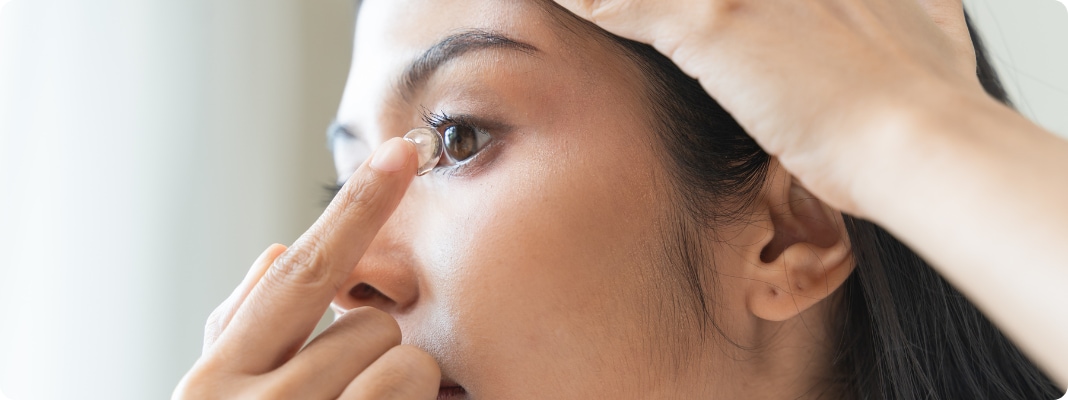
Contact lenses sit directly on the cornea and adjust how light bends as it enters the eye. For myopia, nearsighted contacts redirect light slightly backward so it lands on the retina rather than in front of it. For hyperopia, lenses bend light forward so it reaches the retina rather than overshooting it.

Both conditions are correctable with single-vision contact lenses, which are the most common type. Daily, biweekly, and monthly options are available for both prescriptions. Silicone hydrogel lenses, which allow more oxygen to reach the cornea, are a strong option for all-day wear regardless of whether your prescription is a minus or a plus.

Can You Be Both Nearsighted and Farsighted?

Yes, though it is uncommon. Each eye can develop differently, and in rare cases one eye is nearsighted while the other is farsighted. This is called antimetropia. It is also possible to have astigmatism alongside either condition, which causes blurry vision at multiple distances due to an irregular cornea shape.

Presbyopia is another condition worth knowing about. It develops with age, typically from the mid-40s onward, and affects the eye’s ability to focus on close objects. People who are already nearsighted or farsighted can develop presbyopia on top of their existing prescription. Multifocal or bifocal contact lenses address both issues in a single lens.

If you have a current prescription for myopia or hyperopia, Lens.com carries a wide range of lenses to match it. Finding the right lens for your eyes starts with knowing what your prescription says.

References

American Optometric Association. Myopia. AOA.org. 2023.
American Optometric Association. Hyperopia. AOA.org. 2023.
American Academy of Ophthalmology. Farsightedness Hyperopia. AAO.org. 2023.
Holden BA, et al. Global Prevalence of Myopia and High Myopia. Ophthalmology. 2016.