
Table of Contents
Updated July 29, 2025 – Summer is here, and for contact lens wearers, it raises some important questions: Can you wear contacts at the beach? Can you leave contacts in a hot car? Can I get contacts with UV protection? Here’s everything you need to know to keep your eyes safe and comfortable this season.
UV Rays and Your Eyes
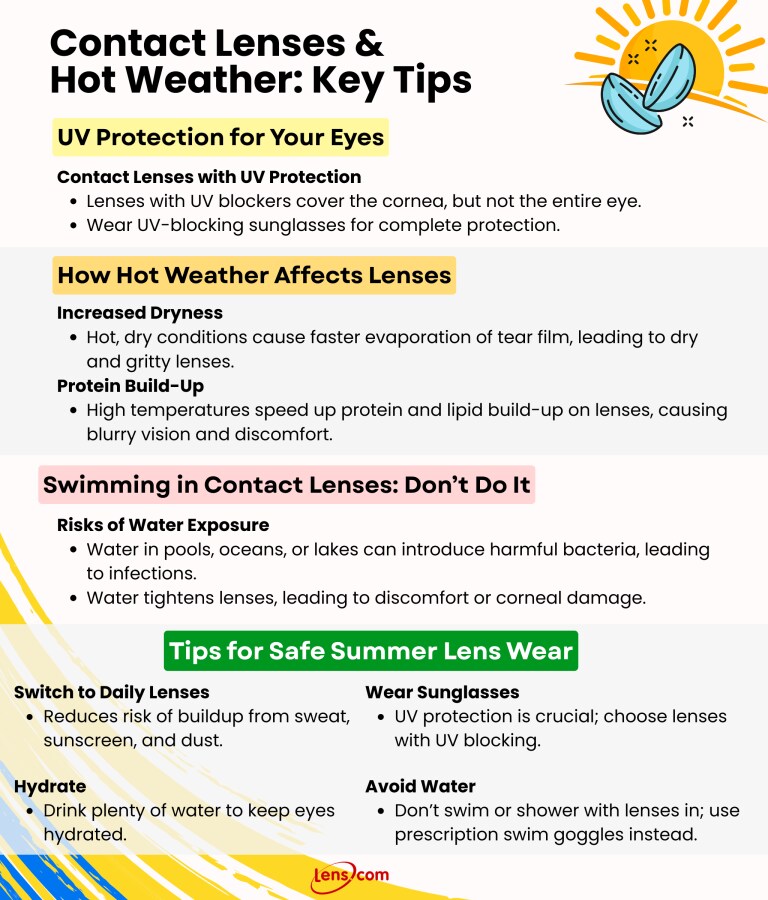
Summer means more sun exposure, and with it, increased UV risks for your eyes. Protecting your eyes from UV rays is essential to prevent long-term damage.
Long-Term Effects of UV Exposure on Eye Health
UV rays don’t just harm your skin—they can damage your eyes, too. Prolonged UV exposure can lead to:
Cataracts: Clouding of the eye’s lens that can blur vision over time.
Photokeratitis: A painful “sunburn” of the eye’s surface that can cause temporary vision loss.
Macular Degeneration: UV exposure contributes to this leading cause of vision loss in older adults.
Choosing Sunglasses and Contacts for UV Protection
Protecting your eyes from UV rays is simple and effective with the right approach. Start by choosing contacts with built-in UV protection, especially if you need vision correction. For example, Acuvue Oasys contact lenses for astigmatism provide both clear vision and added UV defense. Just remember that contacts only shield the cornea, not the entire eye area. For full protection, wear sunglasses that block 100% of UVA and UVB rays, as they shield the eyes and surrounding skin from harmful sunlight. Adding a wide-brimmed hat can further reduce UV exposure by up to 50%, making it a valuable addition on especially sunny days. Combining these elements offers the best defense against UV damage to your eyes.
How to Keep Sweat Out of Eyes
While UV rays pose a direct threat to eye health, sweat can indirectly exacerbate issues, especially when combined with sunscreen. Sweat dripping into the eyes can cause irritation and potentially wash sunscreen into them, which might increase sensitivity to light and enhance the harmful effects of UV rays.
To prevent this, wear a headband or a cap with a sweatband. You should also choose water-resistant sunscreens that are less likely to run and irritate your eyes. Also, opt for eye-friendly face moisturizers and makeup that are labeled water-resistant to further reduce the risk of eye irritation while you’re out in the sun.
Swimming in Contact Lenses: Do or Don’t?
Swimming with contacts can seem convenient, but it poses several risks. Here’s what you need to know:
Why Contacts & Water Don’t Mix
Water in pools, lakes, and oceans can carry bacteria and microorganisms that stick to your lenses, potentially causing eye infections or irritation. Water can also tighten soft lenses on your eyes, which can lead to discomfort or even corneal damage.
What to Do if You Accidentally Wear Contacts in the Pool
If you end up swimming with contacts, take these steps:
- Remove and clean your lenses thoroughly with lens solution, or ideally, use a new pair.
- Rinse your eyes with clean water or saline solution to remove any irritants.
- If you experience redness, irritation, or blurred vision, consult your eye care professional promptly.
Should I Wear Prescription Swim Goggles?
For those needing vision correction while swimming, prescription swim goggles are a safer alternative. They’re designed to match your prescription and prevent water from entering, offering clear underwater vision without the risks of wearing contacts in water. prescription swim goggles are a safe and effective alternative to contact lenses. These goggles are tailor-made to match your prescription and are sealed to prevent water from entering, thus protecting your eyes from contaminants in the water.
How to Order Prescription Swim Goggles
Using prescription swim goggles ensures that you see clearly underwater without risking the health of your eyes. If you’re interested in prescription swim goggles, here’s how you can order them:
- Obtain your current prescription from your optometrist.
- Choose a reputable provider that specializes in prescription goggles. Many optical stores and online retailers offer a variety of styles and fits.
- Select the goggles that best fit your needs and activities. Make sure to provide your prescription details when ordering.
Shop High-Quality Contacts at Lens.com
How Hot Weather Affects Contact Lenses
High temperatures and dry air can impact your contacts, making them less comfortable. Here’s how summer conditions can affect your lenses and what you can do to stay comfortable:
Increased Dryness: Hot, dry conditions cause faster evaporation of the tear film, which keeps your eyes and lenses moist. As the tear film evaporates, your lenses can start to feel gritty, dry, or uncomfortable, leading to irritation and potentially blurred vision.
Protein and Lipid Buildup: High temperatures can cause proteins, lipids, and other substances from your tear fluid to build up more quickly on your lenses. This buildup can reduce lens clarity, causing blurry vision, and may lead to discomfort or even inflammation if left unaddressed.
Can Contacts Melt in the Sun?
A common myth among contact lens wearers is the fear that lenses might melt under the sun. Rest assured, contact lenses cannot melt while worn on the eye because they are designed to withstand typical environmental conditions, including direct exposure to sunlight. The materials used in contacts, such as hydrogel or silicone hydrogel, have melting points much higher than any temperature your eye could be exposed to in natural environments.
Can You Leave Contacts in a Hot Car?
Leaving contact lenses in direct sunlight, such as on the dashboard of a car or near a window, is a different story. High temperatures can warp or shrink contact lenses, making them uncomfortable or even unsafe to wear. As such, always store your lenses in a cool, dry place. Avoid leaving them in environments where high temperatures are common, such as in a car during a sunny day.
Summer Eye Care Tips for Contact Lens Wearers
Summer brings unique challenges for contact lens wearers. But you can keep your eyes healthy and comfortable by following these essential summer eye care tips:
Switch to Daily Lenses: Daily disposable lenses are a great option for summer as they provide a fresh, clean pair each day. This minimizes the risk of deposit buildup from sweat, sunscreen, and dust, which can all accumulate more quickly in hot weather. Daily lenses are convenient and eliminate the need for cleaning solutions, making them ideal for travel and outdoor activities.
Stay Hydrated – Keeping hydrated is crucial not just for your body but also for your eyes. Adequate fluid intake helps maintain the natural moisture levels in your eyes, reducing dryness and irritation that can be exacerbated by hot weather.
Use Quality Sunglasses – Wear sunglasses that offer 100% UV protection to shield your eyes from harmful UV rays. Sunglasses also help prevent wind and debris from irritating your eyes, which is especially important for contact lens wearers.
Keep Your Contact Lenses Clean – Heat can increase the buildup of proteins and other deposits on your lenses. Stick to a rigorous cleaning routine using proper solutions, and consider using daily disposable lenses to avoid accumulation of deposits.
Opt for Water-Resistant Sunscreen and Makeup – When applying sunscreen and makeup, choose products that are water-resistant and non-greasy to prevent them from running into your eyes, which can cause irritation or discomfort.
Carry Lubricating Drops – Have a bottle of lubricating eye drops that are compatible with your contact lenses. They can provide quick relief from dryness and help flush out any particles that might irritate your eyes.
Avoid Direct Airflow – Direct air from air conditioners or fans can dry out your eyes. Try to minimize exposure to direct airflow, particularly when staying in air-conditioned rooms for prolonged periods
Take Breaks from Lenses – Give your eyes a break by occasionally wearing glasses instead of contacts, especially on hot days. This can help prevent overwear symptoms like eye strain and irritation.
Follow the “No Water Rule” – Remember: no swimming or showering while wearing contact lenses. Water can harbor bacteria and other pathogens that can lead to irritation and infection.
Monitor for Irritation – Pay close attention to how your eyes feel. At the first sign of irritation or discomfort, remove your contact lenses and give your eyes a break. If symptoms persist, consult your ECP.
What Contact Lenses Can You Wear in the Sun?
Contact lenses with UV protection are designed to help shield your eyes from the sun’s harmful rays. These lenses are classified into two types based on the level of UV protection they offer: Class I and Class II.
FDA Class I Blocker – Class I lenses provide the highest level of UV protection available in contact lenses. They are recommended for high exposure environments such as mountains or beaches. Class I lenses block more than 90% of UVA and 99% of UVB rays.
FDA Class II Blocker – Class II lenses are recommended for general purposes. They are suitable for general daily wear but might not be sufficient for prolonged outdoor activities in bright sunlight. These lenses block more than 70% of UVA and 95% of UVB.
Here are some notable contact lens brands that provide UV protection:
| Class I | Type | Class II | Type |
| 1-DAY ACUVUE® TruEye® | Daily | 1-DAY ACUVUE® MOIST | Daily |
| ACUVUE® OASYS 1-DAY | Daily | ACUVUE® 2 | Bi-weekly |
| ACUVUE® OASYS with HYDRACLEAR® PLUS Technology | Bi-weekly | Bausch + Lomb INFUSE® | Daily |
| ACUVUE® VITA® | Monthly | Biotrue® ONEday | Daily |
| Avaira Vitality™ | Bi-weekly | clariti® 1 day | Daily |
If you’re looking for top-tier UV protection in a daily lens, you can stock up on 1-DAY ACUVUE TruEye or Acuvue Oasys 1-Day with HydraLuxe. Both are FDA Class I lenses, making them excellent choices for sunny days outdoors.
Best Practices at the Beach (or Pool)
If you’re planning a day at the beach or pool, keeping your eyes healthy and comfortable requires some additional precautions. Follow these practices to ensure your beach or pool day is enjoyable without compromising your eye health:
Wear Protective Eyewear – Invest in a good pair of UV-protective sunglasses to wear over your contact lenses. For swimming, consider switching to prescription swim goggles.
Keep Backup Glasses Handy – Always bring a pair of up-to-date prescription glasses. This gives you an option to switch out of contacts if your eyes become irritated by sand, sunscreen, or water splashes.
Use a Tight-Sealing Beach Bag – Protect your lens case and solution from sand and heat by storing them in a tightly sealed bag. Extreme temperatures and particles can compromise the safety of your lens care products.
Avoid Touching Your Eyes – The beach and pool are full of potential irritants. Minimize the risk of infection by keeping your hands clean and avoiding touching your eyes or adjusting your contacts without sanitizing your hands first.
Apply Sunscreen Carefully – When applying sunscreen, do so before inserting your contacts. Consider using sunscreen lotions or creams instead of sprays to avoid aerosol particles soiling your lenses.
Hydrate and Refresh – The sun and wind can dry out your contacts quickly. Drink plenty of water and use preservative-free lubricating drops to keep your eyes moist and refreshed throughout the day.
Plan for Quick Lens Removal – If an eye irritation occurs, it’s vital to be able to remove your contacts quickly and safely. Carry a small, portable contact lens kit equipped with a mirror, lens case, and solution.
When to Contact Your Eye Doctor
Reach out to your eye care professional if you experience any of the following:
Persistent Irritation or Discomfort: If your eyes feel uncomfortable, dry, or irritated even after removing your contacts, it’s best to seek advice to rule out any potential infection or allergy.
Exposure to Water: If your eyes were exposed to water while wearing contacts and now feel irritated or itchy, consult your doctor. Water exposure can introduce harmful bacteria that may lead to infection.
Sudden Changes in Vision: Blurred or reduced vision, sudden floaters, or flashes of light may indicate an underlying issue that requires immediate medical attention.
Eye Injury: Any injury to the eye, even minor, should be evaluated to prevent further damage or complications, especially if you wear contacts.
Symptoms of UV Damage: Signs like excessive tearing, a gritty feeling, or light sensitivity can signal UV damage, which needs prompt assessment to protect your eye health.
Damaged or Warped Lenses: Worn or misshapen lenses can irritate your eyes and potentially scratch the cornea. If your lenses are damaged, replace them and avoid wearing until you consult your eye care professional.
Are You Ready for Summer?
Enjoying the summer safely while wearing contact lenses requires a little extra care. Protect your eyes from UV rays, avoid contact with water, and follow a good lens hygiene routine to keep your eyes healthy. Stay hydrated, wear UV-blocking sunglasses, and have eye care essentials on hand. If you encounter any discomfort or vision changes, don’t hesitate to reach out to your eye care professional. By taking these steps, you can fully enjoy your summer adventures with clear vision and healthy eyes.
Frequently Asked Questions About Wearing Contact Lenses During Summer
1. Do contact lenses have UV protection?
Yes, some contact lenses offer UV protection. However, UV-blocking contact lenses only cover the cornea, not the entire eye. While they provide some level of defense against harmful UV rays, they are not a substitute for UV-blocking sunglasses.
2. Can you wear sunglasses with contacts?
Absolutely, you can and should wear sunglasses with contact lenses, especially those that offer UV protection. Sunglasses help protect the parts of your eyes and eyelids that are not covered by contacts.
3. Do contacts protect your eyes?
Yes, but only if they have built-in UV blockers. However, even UV-blocking contact lenses do not prevent all forms of UV damage unless worn with additional protective eyewear, like UV-blocking sunglasses.
4. Should I wear contacts to the beach?
Wearing contacts to the beach is not recommended, especially if you plan to swim. Sand and water can harm the lenses and irritate your eyes. Prescription swim goggles are a safer alternative for vision correction while swimming.
5. Can you leave contacts in a hot car?
No, it is not advisable to leave contact lenses in a hot car. Extreme temperatures can warp and even damage the lenses, making them uncomfortable to wear and potentially unsafe for your eyes.
6. Can you wear contacts underwater?
No, wearing contact lenses underwater without protection is risky as it exposes your eyes to potentially harmful bacteria and microorganisms. If you must swim, use prescription swim goggles to protect your eyes and maintain clear vision while in the water.
Summary Graphics: Contact Lenses & Hot Weather: Key Tips