If you’ve ever noticed tiny specks, delicate threads, or cobweb-like shapes drifting lazily across your field of view, you’re in good company. Eye floaters are remarkably common. Large population-based surveys show that around 20% to 30% of all adults experience noticeable floaters, and clinical autopsies reveal that up to 80% of individuals over age 60 exhibit the structural gel changes that create them.
Most floaters pop up as a natural byproduct of time, as the clear vitreous gel filling the eye slowly breaks down. According to the American Academy of Ophthalmology, the presence of these pesky floaters affects about 63% of people in their 70s and becomes nearly universal by age 80.
While the vast majority of floaters are completely harmless, roughly 10% to 15% of people who experience a sudden onset of new floaters alongside flashes of light turn out to have a retinal tear.
We’ll break down what floaters look like, why they form, who is most at risk, and when you should get them checked.
What Are Eye Floaters?
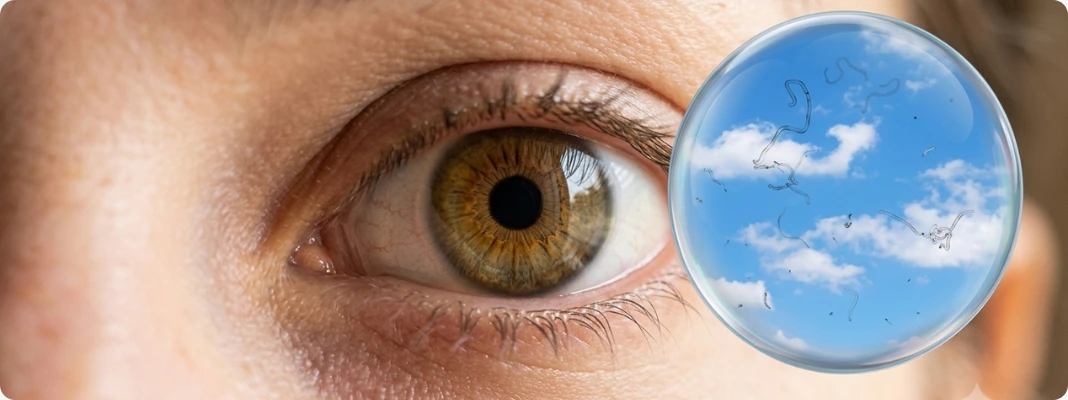
If you’ve ever noticed tiny cobwebs, squiggles, or dark specks drifting through your view, you’re seeing eye floaters.
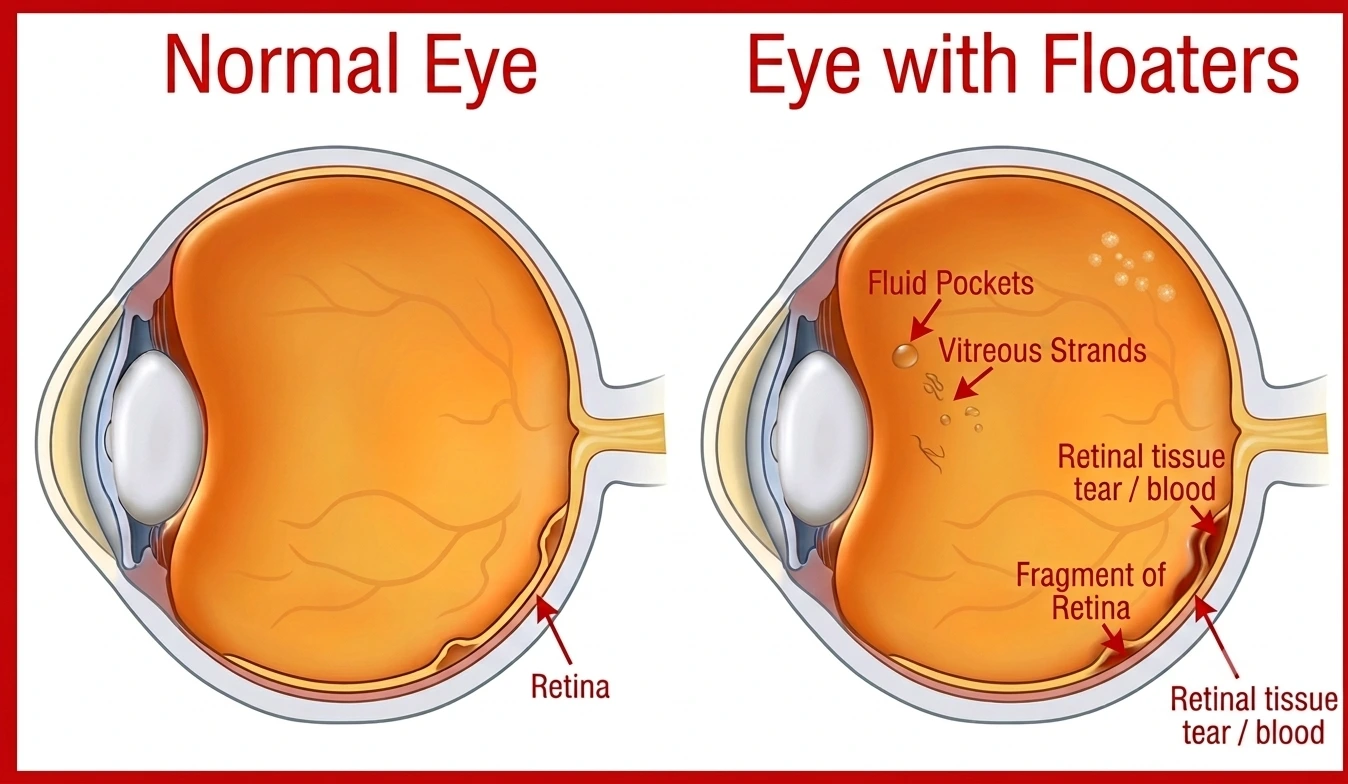
Here’s what’s actually happening. Floaters aren’t floating outside or on your eye. They’re inside it. The back of your eye is filled with a gel called the vitreous. Over time, tiny protein fibers in the gel start to clump together. When light enters your eye, these microscopic clumps produce tiny shadows onto your retina, creating those drifting shapes that seem to slip away whenever you try to look directly at them.
What Do Eye Floaters Look Like?
Eye floaters are famous for being shape-shifters. What one person sees might look completely different to someone else.
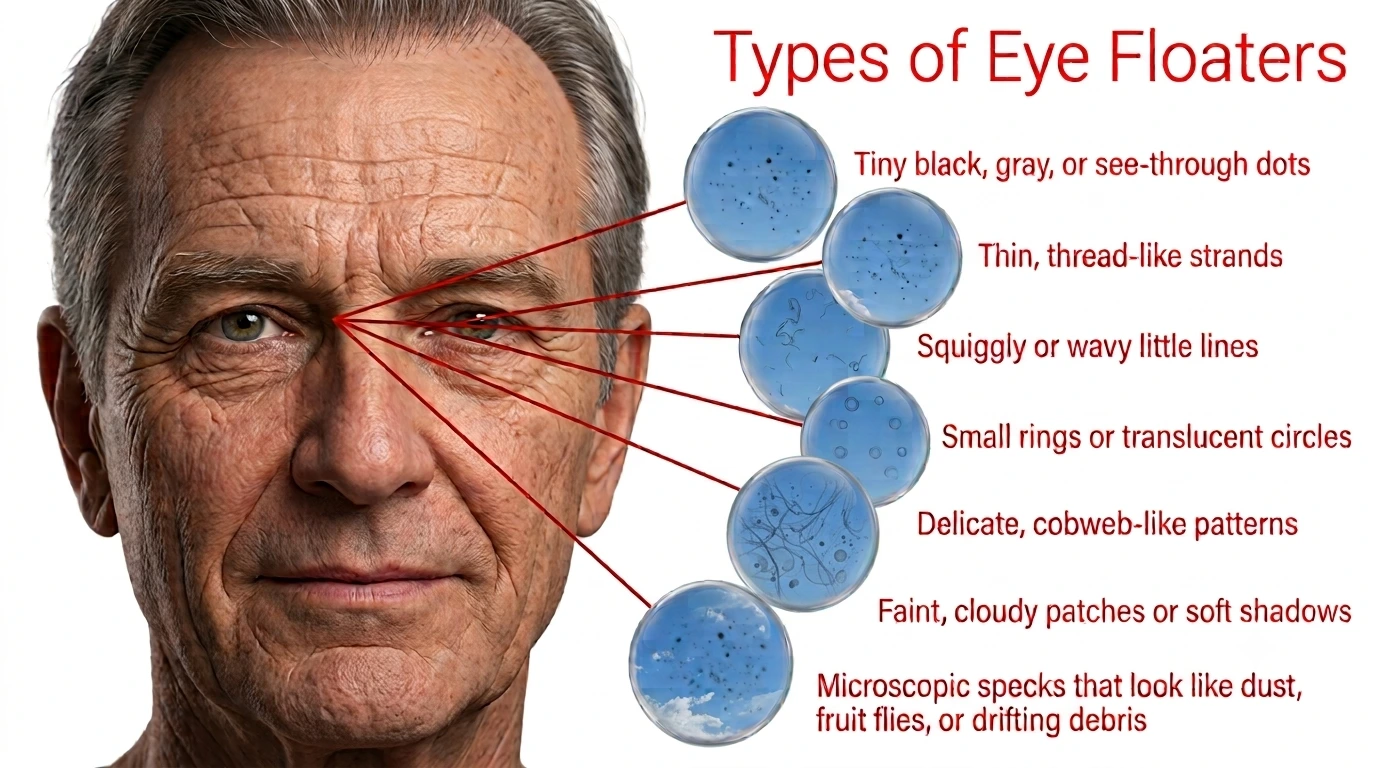
Floaters drift as your eyes move. They may seem to slip away when you try to look directly at them. They’re often easier to notice against a bright, plain background, such as a blue sky, white wall, or computer screen.
What Causes Eye Floaters?
Most floaters pop up because the vitreous, the clear, jelly-like center of your eye, is changing. As those changes occur, tiny clumps of protein, stray cells, or bits of debris float around in the gel, casting shadows on the retina. Your brain then interprets these shadows as floaters. Several things can trigger these strange spots that seem to float in front of you.
Aging
When you’re young, the vitreous has a smooth, firm, gel-like consistency. As you become older, it gradually becomes thinner, causing its tiny protein fibers to clump together. When light enters your eye, those clumped fibers throw shadows on your retina, showing up as moving specks, lines, or web-like shapes.
Age-related floaters are common and typically harmless when they drift in gradually. However, if you experience a sudden surge of new shapes, get checked quickly to rule out deeper issues.
Posterior Vitreous Detachment (PVD)
PVD occurs when the shrinking vitreous gel fully separates from your retina. This common age-related process leaves behind a noticeable ring, strand, or fresh cluster of floaters. As the gel tugs away from the retina, you might also spot brief flashes of light in your peripheral vision.
While PVD itself is usually harmless, that initial pulling action can sometimes snag and tear the retina. That’s why any sudden combination of new floaters or flashes needs a doctor’s evaluation.
Bleeding (Vitreous Hemorrhage)
When damaged blood vessels leak into the vitreous gel, the stray blood cells show up in your vision as dark dots, hazy clouds, or a sudden spray of specks. This internal bleeding can stem from diabetic retinopathy, eye trauma, or a torn retina.
The visual impact ranges from a few subtle dots to significant vision blockage. Sudden floaters paired with noticeable blurriness or pain require prompt care to find the underlying source of the bleed.
Inflammation
Inflammation inside the eye can push inflammatory cells and debris straight into the vitreous gel. These floating particles appear as dark spots or hazy patches in your visual field. Unlike standard floaters, this condition usually brings along symptoms like eye redness, pain, sensitivity to light, or overall blurriness.
Uveitis can be caused by infections, underlying autoimmune diseases, or physical eye trauma. Treating it requires targeted medical care to bring down the swelling and protect your vision.
Retinal Tears and Detachment
If the vitreous pulls on the retina with enough force, it can cause a physical tear, releasing a shower of cells and blood into your field of view. Left untreated, fluid slips behind the tear and detaches the retina from the back of the eye entirely.
A sudden cloud of new floaters, light flashes, or a dark shadow pulling over your vision like a window shade are serious warning signs. These symptoms require immediate emergency care to prevent permanent vision loss.
Eye Trauma and Surgery
Surgery or a direct injury or blow to the eye can disrupt the vitreous gel, rupture blood vessels, or damage the retina, triggering new floaters.
Other rare causes include infections that introduce inflammatory cells into the gel. If you notice a fresh set of floaters following a recent injury or eye procedure, have an eye doctor check your eye right away.
What Is the Difference Between Eye Floaters and Flashes?
Eye floaters and flashes are two completely different visual phenomena. As mentioned earlier, floaters are physical stuff floating around in your vitreous.

Flashes are pure light shows. They look like sudden sparks, jagged lightning streaks, or that brief, disorienting pop of a camera flash in the corner of your eye.
Flashes occur when the gel inside your eye physically pulls or rubs against the sensitive retina behind it. While an occasional drifting spot is rarely a big deal, a sudden burst of floaters paired with light flashes is a major red flag. That combination often signals a retinal tear or detachment, particularly if it comes with blurry vision, reduced side vision, or a dark shadow pulling over your eyes like a window shade.
Who Is More Likely to Develop Eye Floaters?
Eye floaters can show up for anyone, but aging, specific medical conditions, vision profiles, and past treatments can increase your odds of seeing fresh specks or shadows:
- Older adults: The gel inside your eye naturally thins and forms microscopic protein clumps, making floaters a common companion as you age.
- Nearsighted individuals (Myopia): If you’re nearsighted, the shape of your eyeball stretches the vitreous gel, often causing it to break down or pull away at a younger age.
- Diabetics: Unmanaged blood sugar can damage the delicate blood vessels in your retina, causing tiny leaks or bleeding inside the eye that look like floating specks.
- Anyone with a history of eye inflammation: Conditions like uveitis can send stray inflammatory cells or debris directly into the vitreous gel, creating visible shadows.
- People who’ve had cataract or eye surgery: Past procedures alter the internal dynamics of the eye, which can accelerate gel breakdown or trigger a detachment.
- Anyone who has suffered an eye injury: A hard blow to the head or face can shake up the vitreous, burst tiny blood vessels, or tear retinal tissue.
- People with a personal history of retinal issues: If you’ve previously had a retinal tear or detachment, your risk of experiencing a similar event in either eye is significantly higher.
How Are Eye Floaters Treated?
Treatment for eye floaters depends on their root cause and how severely they impact your vision. An eye care specialist can run a full exam to decide on the best path forward.

Observation and Monitoring
Most age-related floaters are simply monitored rather than actively treated. Over time, these shapes often drift away from your vision. Or you simply learn to ignore them. Even if you still spot them occasionally on a bright computer screen or plain wall, they rarely interfere with your day-to-day life.
A sudden swarm of new floaters, fresh flashes of light, blurry sight, or a shade-like curtain over your field of vision demands urgent evaluation, though. These symptoms can signal a torn or detaching retina.
Addressing the Underlying Cause
If an underlying medical condition is causing floaters, treatment focuses on resolving that primary issue. Inflammation inside the eye might require prescription anti-inflammatory drugs, while bleeding from diabetic eye disease or damaged blood vessels requires specialized retinal therapy. A retinal tear can often be sealed quickly to prevent a full detachment.
Because treatments vary so widely, identifying the root cause is the top priority. Attempting to get rid of floaters without treating the underlying infection, bleeding, or tissue damage won’t protect your long-term vision.
Laser Treatment (Vitreolysis)
Laser vitreolysis uses focused light beams to vaporize larger floaters so they cast smaller, less noticeable shadows. Eye doctors typically consider this option for persistent floaters that significantly disrupt reading, driving, or computer work.
Note that vitreolysis isn’t suitable for all floaters, and outcomes can vary quite a bit. Potential risks include elevated eye pressure, lens damage, bleeding, early cataract formation, and retinal tears. A thorough eye exam is essential before proceeding with this treatment.
Surgery (Vitrectomy)
A vitrectomy is a surgical procedure that removes the vitreous gel and its floating debris entirely, replacing it with a clear fluid that maintains the eye’s structural shape. Doctors generally consider this only when dense, stubborn floaters severely degrade a patient’s vision and everyday functionality.
While a vitrectomy gets rid of floaters, it carries serious surgical risks. Infections, severe bleeding, rapid cataract progression, and retinal detachment are all potential complications. Surgery is strictly reserved for cases where visual impairment clearly outweighs the risks.
When Eye Floaters Become a Medical Emergency?
Seeing a stable, familiar floater every now and then is typically nothing to worry about. But when changes happen out of nowhere, it could be an indication of something serious. Reach out to an eye doctor right away if you experience:

- A sudden burst of new floaters that looks like a shower of specks or pepper across your view.
- Fresh floaters popping up along with bright flashes of light in either eye.
- A dark shade, veil, or curtain pulling over part of your vision.
- A sudden drop or shadow in your side (peripheral) vision.
- Blurriest, dimmer, or suddenly degraded vision coming on without notice.
- New floaters appearing after an eye injury or recent eye procedure.
- Floaters that come with eye pain, redness, discharge, or extreme light sensitivity.
Retinal detachments can cause permanent sight loss, and they are almost never painful. Warnings can come too late. Getting a prompt exam is the single best way to protect your eyesight before any further damage occurs.
Can Eye Floaters Be Prevented?
Unfortunately, you can’t really stop age-related floaters from forming. As time goes on, the clear gel inside your eye naturally changes texture, making occasional drifting shapes a normal part of life even for healthy eyes. Despite popular myths, no supplements, eye drops, or visual exercises have been scientifically proven to dissolve or prevent everyday floaters.
You can protect your eyes from the more serious conditions that cause floaters to appear out of the blue. Keep up with routine dilated eye exams, manage underlying health conditions like high blood pressure and diabetes, and always wear protective safety glasses during high-risk activities like construction, yardwork, or contact sports.
Protecting your eyesight means responding immediately when something feels off. A sudden surge of floaters, flashes of light, diminished peripheral vision, or a curtain-like shadow over your eyes requires prompt evaluation before lasting damage occurs.
Disclaimer: This content is for general informational purposes only and is not a substitute for professional advice, diagnosis, or treatment.
Resources
What Are Floaters and Flashes? American Academy of Ophthalmology. https://www.aao.org/eye-health/diseases/what-are-floaters-flashes. Published Date (December-10-2025). Date Accessed: August 5, 2026.
Vitreous Floaters: Etiology, Diagnostics, and Management. Milston R, Madigan MC, and Sebag J/Survey of Ophthalmology. https://pubmed.ncbi.nlm.nih.gov/26679984/. Published Date (December-08-2015). Date Accessed: August 5, 2026.
Management of Vitreous Floaters: A Review. Aleman AI, Kiryakoza L, Sridhar J, and Sengillo J/Current Opinion in Ophthalmology. https://pubmed.ncbi.nlm.nih.gov/39046174/. Published Date (July-11-2024). Date Accessed: August 5, 2026.
Prevalence of Vitreous Floaters in a Community Sample of Smartphone Users. Webb BF, Webb JR, Schroeder MC, and North CS/International Journal of Ophthalmology. https://pubmed.ncbi.nlm.nih.gov/23826541/. Published Date (June-18-2013). Date Accessed: August 5, 2026.
Acute-Onset Floaters and Flashes: Is This Patient at Risk for Retinal Detachment? Hollands H, Johnson D, Brox AC, Almeida D, Simel DL, and Sharma S/JAMA. https://pubmed.ncbi.nlm.nih.gov/19934426/. Published Date (November-25-2009). Date Accessed: August 5, 2026.
Retinal Detachment. National Eye Institute. https://www.nei.nih.gov/eye-health-information/eye-conditions-and-diseases/retinal-detachment. Published Date (November-05-2025). Date Accessed: August 5, 2026.
Safety and Efficacy of YAG Laser Vitreolysis for the Treatment of Vitreous Floaters: An Overview. Katsanos A, Tsaldari N, Gorgoli K, Lalos F, Stefaniotou M, and Asproudis I/Advances in Therapy. https://pubmed.ncbi.nlm.nih.gov/32086749/. Published Date (February-21-2020). Date Accessed: August 5, 2026.