
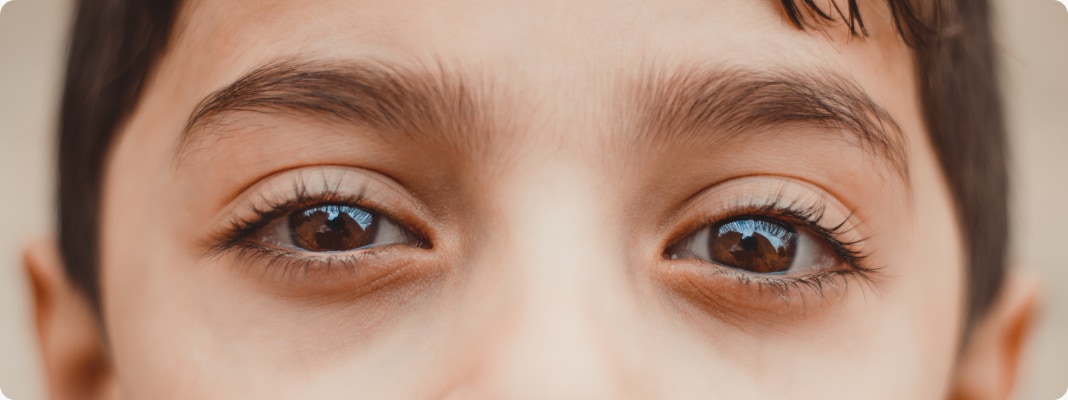
Doe eyes are known for their large, round, open appearance. The name comes from the wide, soft-looking eyes associated with deer, and people often use the term for eyes that look especially bright or expressive.
Doe eyes are not one formal eye shape or a medical classification. The look can come from a mix of natural features, including the height and width of the eye opening, eyelid position, iris visibility, lashes, and surrounding facial features. Makeup and colored contact lenses can also change how open or defined the eyes appear without changing their natural shape.
What Do Doe Eyes Look Like?
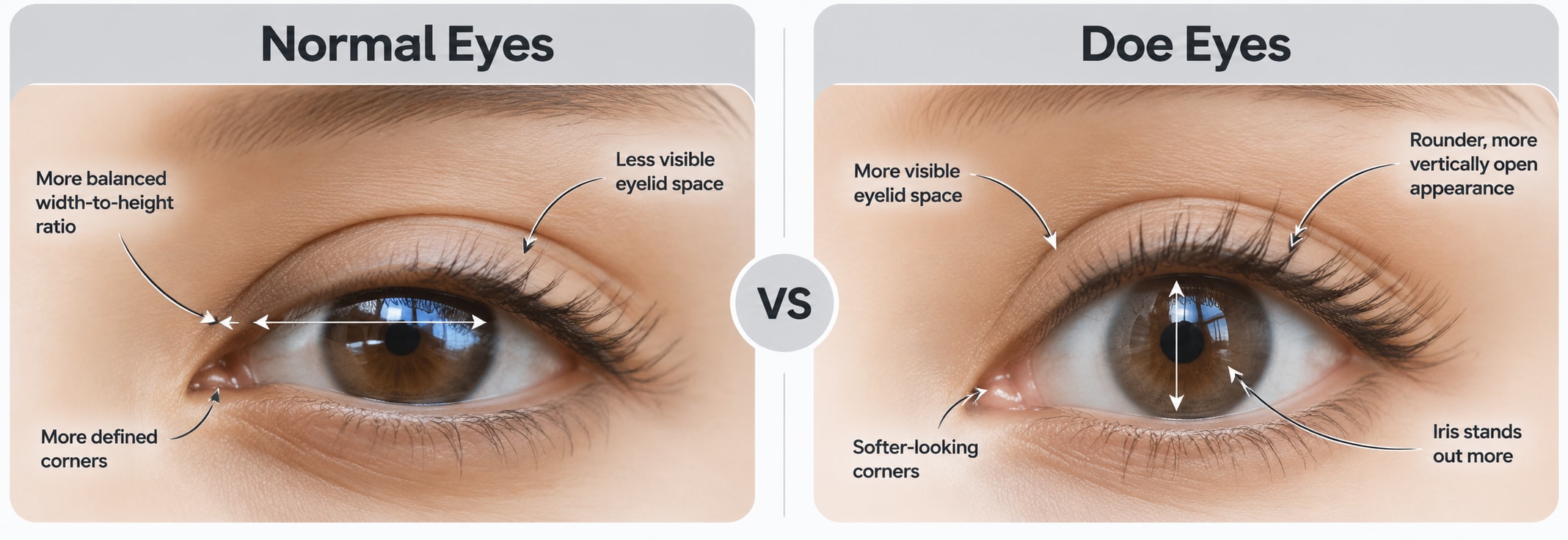
Doe eyes usually look rounder and more vertically open than eyes that appear long or narrow. The iris tends to stand out, and the eye opening can look relatively tall compared with its width. Softer-looking corners and visible eyelid space can also contribute to the effect.
The name comes from the appearance of a doe, or female deer. Deer have large-looking eyes with a wide, alert gaze, so the term became a way to describe a similar visual effect in people.
Not everyone with doe-like eyes shares the exact same features. One person might have naturally round eyes, while another might have almond-shaped eyes that still look open and soft.
How Can You Tell If You Have Doe Eyes?
A mirror or front-facing photo can help you look at the features that create a doe-eyed appearance. Keep your face relaxed and look straight ahead so your expression does not change the natural shape of your eyes.
- Compare the width and height of your eye opening. Doe-like eyes tend to look relatively tall rather than strongly stretched from side to side.
- Look at the overall outline. A softer, rounder shape can contribute to the effect.
- Notice how prominent the iris looks. A clearly visible iris can make the eyes appear more open.
- Check the outer corners. Corners that do not look strongly pulled upward or outward can make the eyes appear softer.
- Look at the whole eye area. Eyelids, lashes, brows, and surrounding facial proportions can all affect the final appearance.
These are visual cues rather than fixed criteria. Someone can have doe-like eyes without matching every characteristic.
Doe Eyes vs. Siren Eyes
Doe eyes and siren eyes describe very different visual effects.
Doe eyes emphasize roundness and vertical openness. Siren eyes emphasize length, lift, and the outer corners of the eyes.
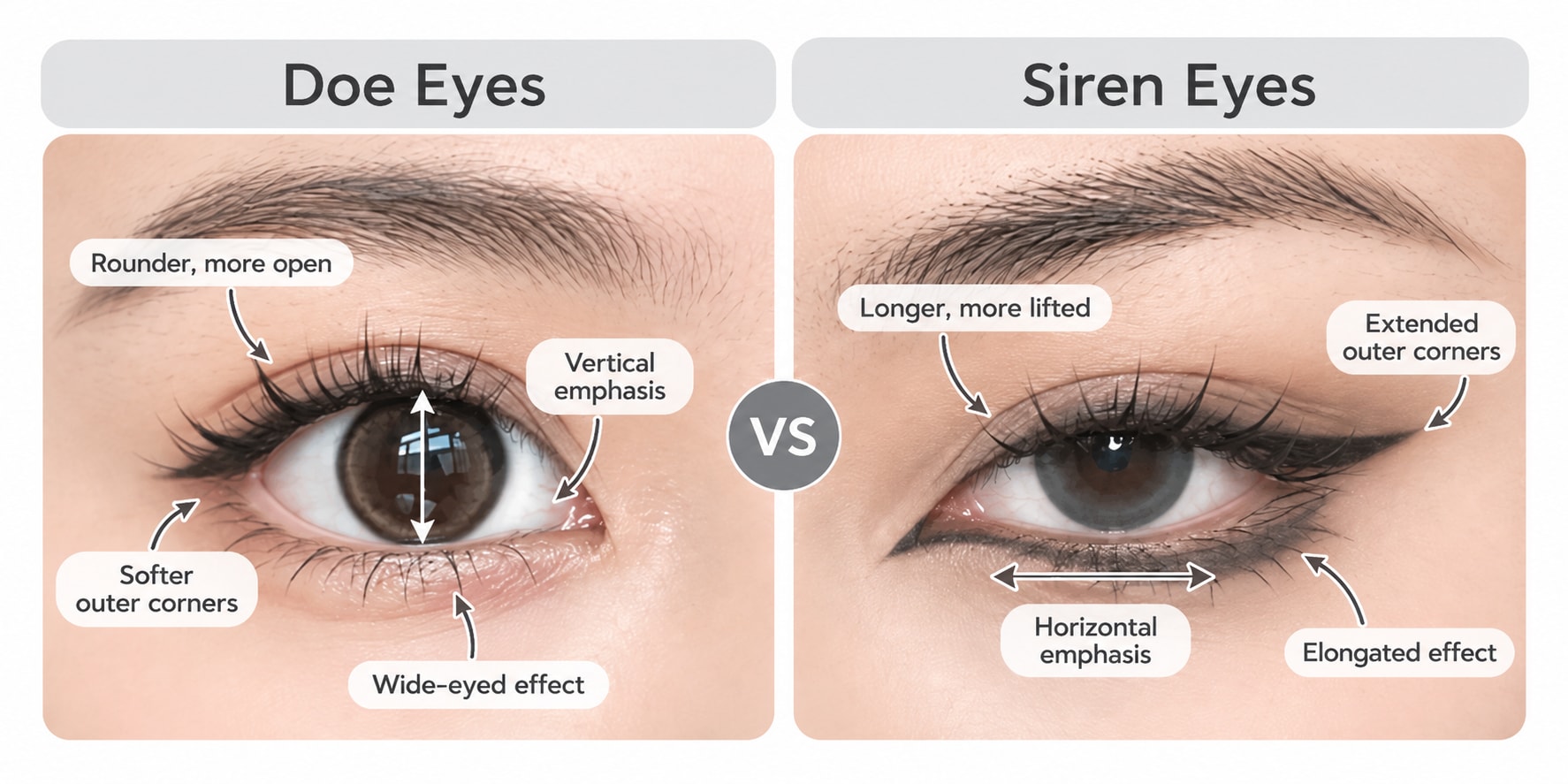
Doe Eyes
- Rounder, more open appearance
- Greater emphasis on vertical height
- Softer-looking outer corners
- Wide-eyed makeup effect
Siren Eyes
- Longer, more lifted appearance
- Greater emphasis on horizontal length
- More extended outer corners
- Elongated makeup effect
The distinction is especially common in makeup. Doe-eye looks usually draw attention toward the center of the eye, while siren-eye looks extend the eye outward.
Neither term is a medical classification, and neither determines how healthy the eyes are or how well someone sees.
Can Makeup Make Your Eyes Look More Doe-Like?
Yes. Doe-eye makeup usually focuses on making the eyes look rounder and more vertically open instead of extending them outward.
How to Make Your Eyes Look More Doe-Like
- Apply mascara to the center lashes. Focus on the middle lashes to create a rounder, wide-eyed appearance.
- Use rounded eyeliner. Follow the upper lash line without extending the liner into a long outer wing.
- Brighten the lower waterline. Apply a nude or light-colored eyeliner to make the eyes appear larger and more open.
- Highlight the inner corners. Add a light, shimmery eyeshadow to brighten the eyes and draw attention toward the center.
- Keep the outer corners soft. Avoid heavily extending eyeshadow or lashes outward, which creates a more elongated appearance.
The same techniques can look different from person to person. Natural eyelid shape, lashes, eye proportions, and brow position all affect the result.
Can Contact Lenses Make Eyes Look More Doe-Like?
Contact lenses cannot change the physical shape of your eyes, but colored contacts can change how the iris appears.
Different lens designs can change iris color, add definition around the outer edge, or increase the contrast between the iris and the white of the eye. Those changes can make the eyes appear more noticeable or more defined.
Some colored contacts include a darker limbal ring around the outer edge of the iris. This can make the colored part of the eye appear more prominent, which can support a wide-eyed look depending on the lens design and the wearer’s natural features.
The result will vary based on natural eye color, lighting, iris size, and the pattern printed on the lens.
Colored contacts still require a valid prescription in the United States, even when they do not correct vision. Proper fitting is also necessary since decorative contact lenses are regulated medical devices.
Learn More About Doe Eyes
Are doe eyes rare?
There is no accepted medical definition of doe eyes, so there is no reliable figure showing how common they are. The term is subjective and can describe a range of naturally open or round-looking eyes.
Are doe eyes naturally big?
They can look large without the eyeballs themselves being larger. Eyelid position, vertical openness, iris visibility, lashes, and facial proportions can all influence perceived eye size.
Can almond eyes also look doe-eyed?
Yes. Almond eyes can still look doe-eyed if their proportions, eyelids, iris visibility, and surrounding features create an open and soft appearance.
Can anyone create a doe-eye look?
Makeup can make different eye shapes look rounder and more open. The final effect will depend on the person’s natural eye shape, eyelids, lashes, and facial proportions.
Can photos make eyes look more doe-eyed?
Yes. Camera angle, facial expression, raised brows, lighting, and how wide someone opens their eyes can all make the eyes look rounder or larger in a photo.
Can colored contacts make your eyes look bigger?
Colored contacts can change the appearance and definition of the iris, which can make the eyes look more noticeable. They do not physically enlarge the eye or change its natural shape.
Are doe eyes an actual eye shape?
Not exactly. Terms such as round, almond, upturned, and downturned describe more specific features of the eye opening or eyelid position. Doe eyes describe the overall impression created by several features working together.
The visible opening between the upper and lower eyelids is called the palpebral fissure. Its height, width, contour, and angle vary from person to person. Those differences can make eyes look rounder, longer, more open, or more tapered.
That is why doe eyes are better thought of as a look rather than a separate anatomical category. A person can have one recognized eye shape and still have a doe-eyed appearance.
References
American Academy of Ophthalmology. Four Risks of Colored Contacts. https://www.aao.org/eye-health/tips-prevention/avoid-these-four-dangers-of-non-prescription-conta. Date Accessed October 5, 2026.
Centers for Disease Control and Prevention. About Decorative Contact Lenses. https://www.cdc.gov/contact-lenses/about/about-decorative-contact-lenses.html. Date Accessed October 5, 2026.
L’Oréal Paris. How To Get the Doe Eyes Look with Eyeliner and Mascara. https://www.lorealparisusa.com/beauty-magazine/makeup/makeup-trends/how-to-get-doe-eyes-with-eyeliner-and-mascara. Date Accessed October 5, 2026.
Read, S. A., Collins, M. J., Carney, L. G., & Iskander, D. R. The Morphology of the Palpebral Fissure in Different Directions of Vertical Gaze. https://pubmed.ncbi.nlm.nih.gov/17041316/. Date Accessed October 5, 2026.
StatPearls. Lower Eyelid Laxity Examination. https://www.ncbi.nlm.nih.gov/books/NBK576403/. Date Accessed October 5, 2026.
U.S. Food and Drug Administration. Colored and Decorative Contact Lenses. A Prescription Is A Must. https://www.fda.gov/consumers/consumer-updates/colored-and-decorative-contact-lenses-prescription-must. Date Accessed October 5, 2026.
Similar Articles
-

The Evolution of Our Eye Colors: A Story of Genetics, Migration, and Culture
-

Dry Eyes or Eye Allergies: How to Tell the Difference
-

What’s the Best Option For Treating or Correcting Astigmatism?
-

Can I take a 20 Minute Nap with Contacts On? How About for 10 minutes, 15, 30, or 60 minutes? 2025 Update
-
Can You Sleep With Your Eyes Open? Yes, But…