Blurry vision, glare while driving at night, or an unexpected result at an eye exam can leave you wondering whether glaucoma and cataracts are basically the same problem, especially if you wear contact lenses. In a glaucoma vs cataracts comparison, the difference is where the damage occurs because glaucoma affects the optic nerve, while cataracts cloud the eye’s natural lens.
The distinction matters because the National Eye Institute reports that about half of people with glaucoma do not know they have it, while more than half of Americans age 80 or older either have cataracts or have already had cataract surgery. Glaucoma-related vision loss cannot be restored, while vision affected specifically by cataracts can often improve after surgery, so an eye exam is the safest way to determine what is affecting your sight.
Glaucoma vs Cataracts
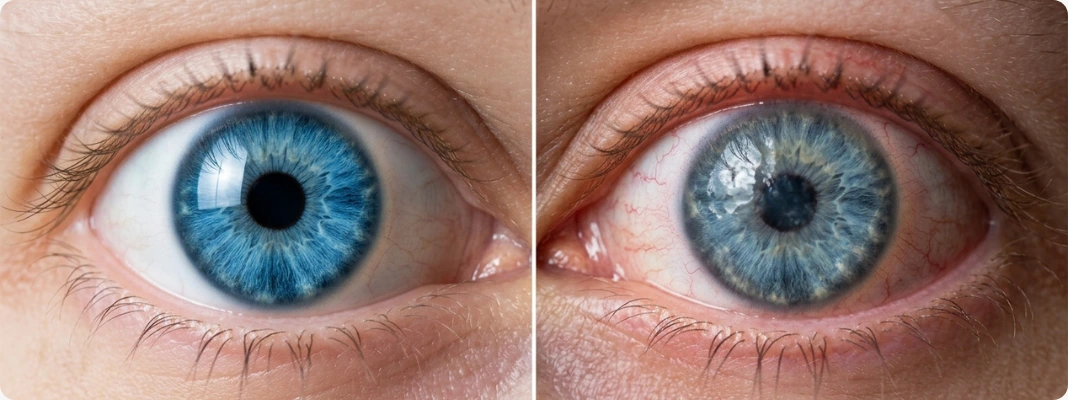
Glaucoma is a group of eye conditions that cause damage to the optic nerve, while a cataract is a cloudy area that develops in the eye’s natural lens. Open-angle glaucoma, the common type in the United States, often has no symptoms in the early stages and may gradually reduce peripheral vision as it progresses. Cataracts also may cause no early symptoms, but over time they are more likely to produce cloudy or blurred vision, faded colors, glare, and difficulty seeing at night.
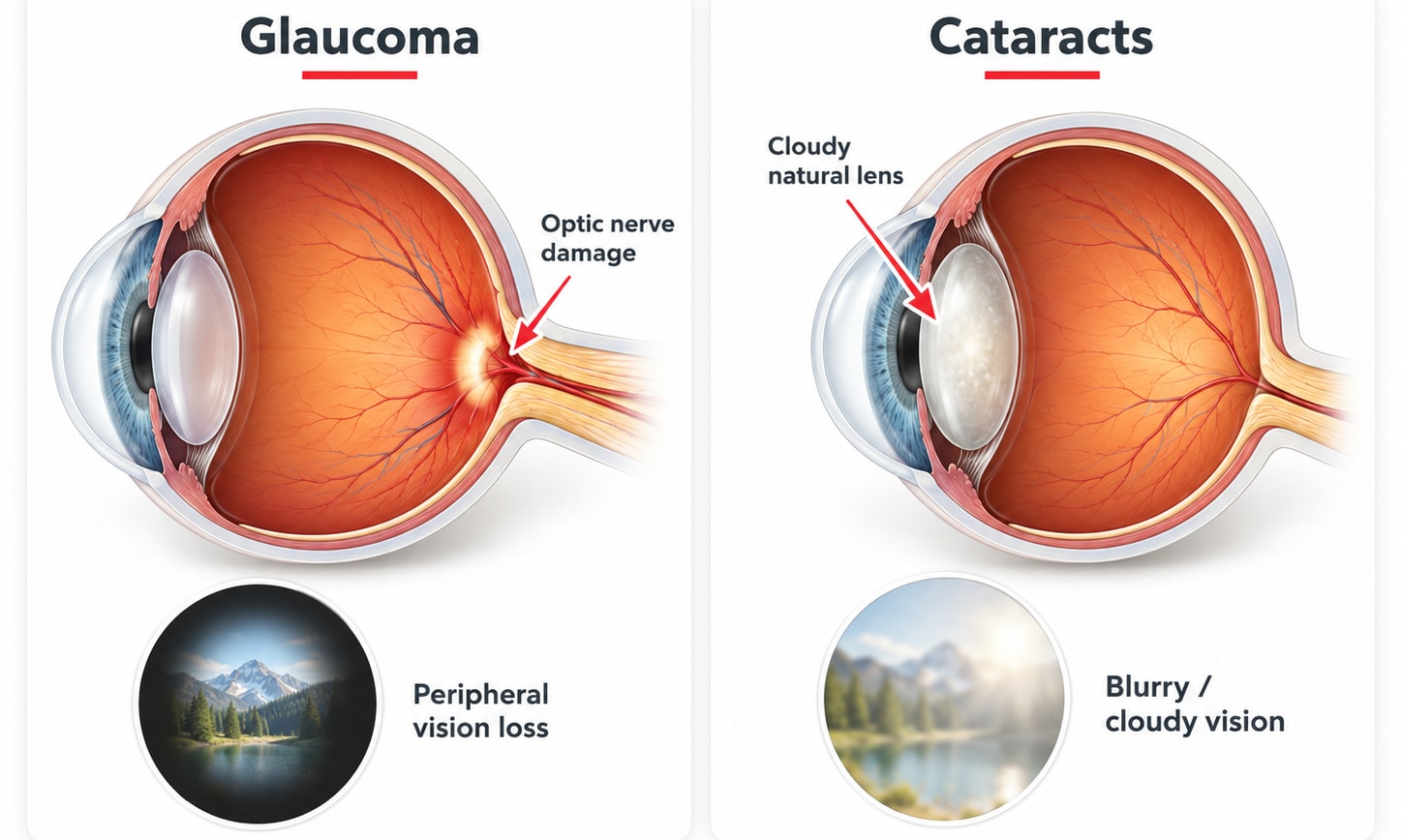
Treatment is another major difference. Glaucoma treatment options such as prescription eye drops, laser treatment, and surgery aim to lower eye pressure and prevent additional optic nerve damage, but they cannot restore vision that has already been lost. Cataract surgery, on the other hand, removes the cloudy lens and replaces it with an artificial intraocular lens, which can often improve vision affected by the cataract.
Both conditions can affect your vision, but what you experience, how quickly the condition progresses, how it is treated, and whether changes to your contact lens types are needed can be very different.
What is glaucoma?
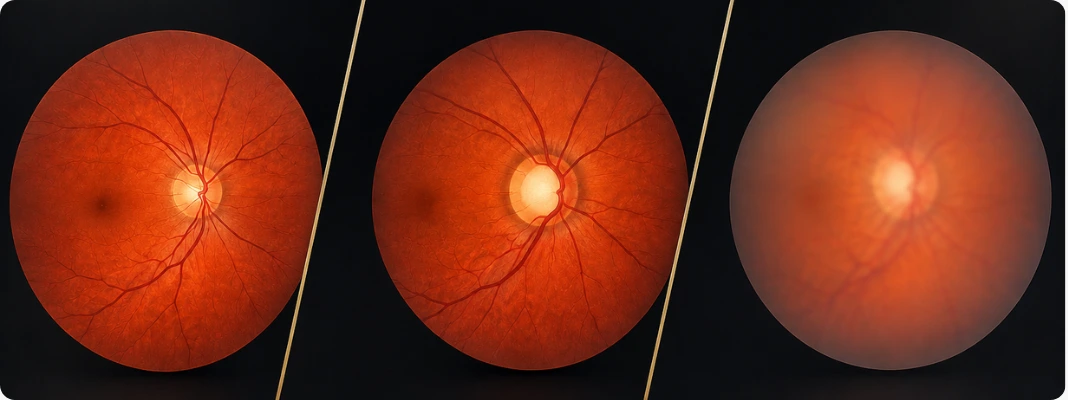
Glaucoma is a group of eye diseases that cause damage to the optic nerve, which carries visual information from your eye to your brain. Higher eye pressure is an important risk factor, but glaucoma can also develop when pressure is within the usual range. Open-angle glaucoma, the common type in the United States, often develops slowly with no noticeable symptoms in the early stages and can gradually reduce peripheral vision. Angle-closure glaucoma can develop suddenly and cause severe eye pain, redness, nausea, and blurred vision, so urgent medical care is needed.
What are cataracts?
Cataracts are cloudy areas that develop in the eye’s natural lens and become more common with age. The National Eye Institute reports that more than half of Americans age 80 or older either have cataracts or have already had cataract surgery. As cataracts progress, you may notice cloudy vision, faded colors, glare, halos around lights and why they can occur, trouble seeing at night, or frequent prescription changes. If a cataract begins to interfere with everyday activities, surgery can remove the cloudy natural lens and replace it with an artificial intraocular lens.
How do glaucoma and cataract symptoms differ?
Glaucoma and cataracts tend to affect your vision in different ways. Open-angle glaucoma often causes no noticeable symptoms at first, while cataracts are more likely to cause gradual blur, glare, faded colors, and trouble seeing at night. Symptoms can overlap, so an eye exam is still needed to find the cause.
How glaucoma may change your vision
Open-angle glaucoma can progress slowly without obvious warning signs. As optic nerve damage increases, you may notice:
- Gradual loss of peripheral vision
- Blind spots in your visual field
- More limited vision as the condition advances
Angle-closure glaucoma is different because symptoms can appear suddenly. Severe eye pain, redness, nausea, and blurred vision require immediate medical care.
How cataracts may change your vision
Cataracts usually affect how clear and sharp your vision looks rather than your peripheral vision. As the natural lens becomes cloudier, you may notice:
- Cloudy or blurry vision
- Faded or less vivid colors
- Increased glare
- Halos around lights
- Difficulty seeing at night
- Frequent glasses or contact lens prescription changes
These changes usually develop gradually. If your vision is changing, why your eyesight may be getting worse can provide more context, but an eye care professional can determine whether cataracts, glaucoma, a prescription change, or another condition is responsible.
What raises your risk for glaucoma and cataracts?
Age increases your risk for both glaucoma and cataracts, but each condition has its own risk factors. Family history, overall health, medications, and past eye problems can also matter. Having a risk factor does not mean you will develop either condition, but it can help guide how often your eyes should be checked.
Who has a higher risk of glaucoma?
Anyone can develop glaucoma, but risk is higher for:
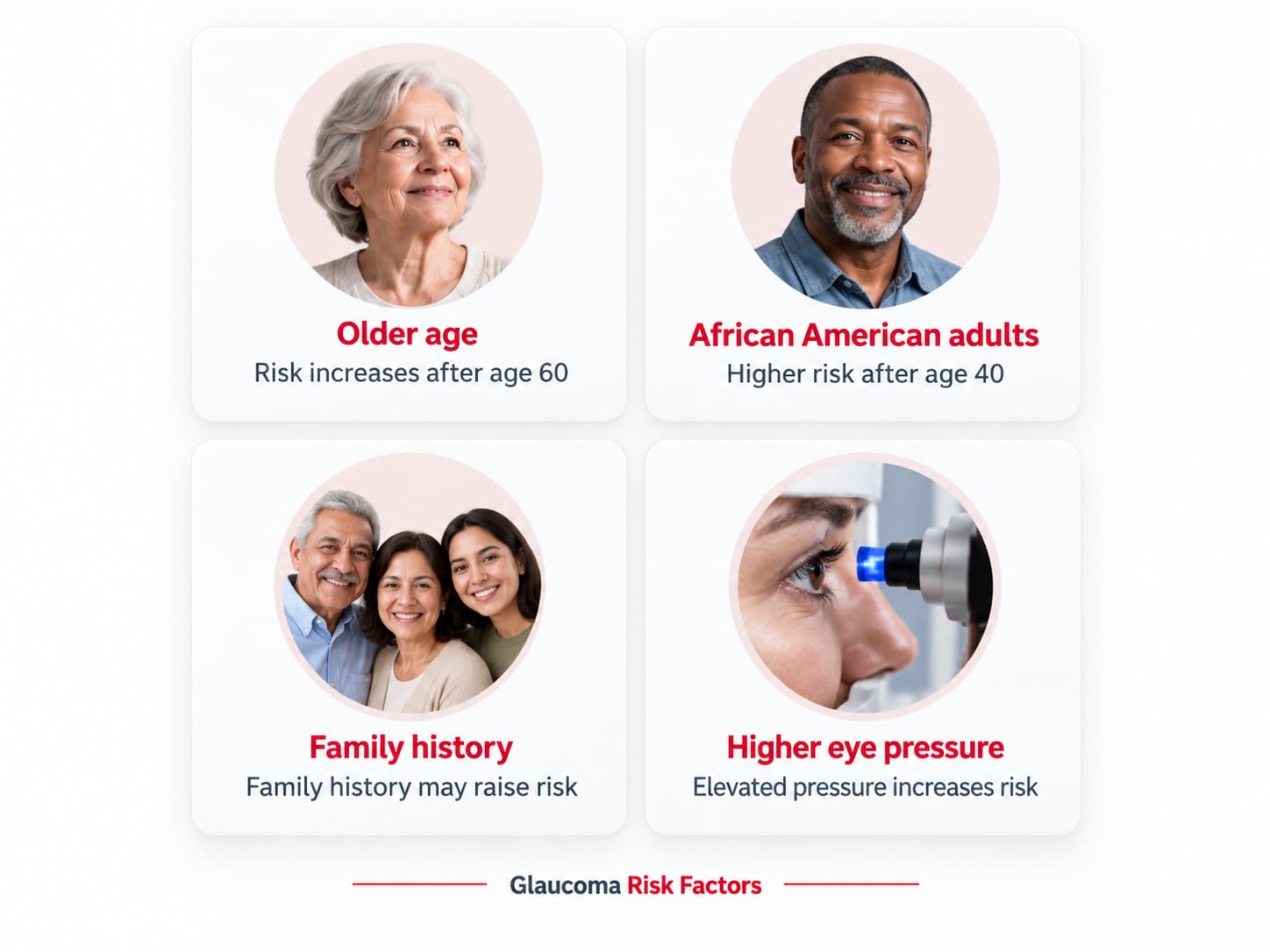
High eye pressure raises risk, but it does not automatically mean you have glaucoma. Some people with elevated pressure never develop the disease, while others develop glaucoma even when their pressure is within the usual range.
If you are at higher risk, ask your eye care professional how often you should have a dilated eye exam. The National Eye Institute recommends exams every one to two years for people at higher risk, although your schedule may be different.
Who has a higher risk of cataracts?
Your risk of cataracts rises with age, but other factors can also increase it. These include:
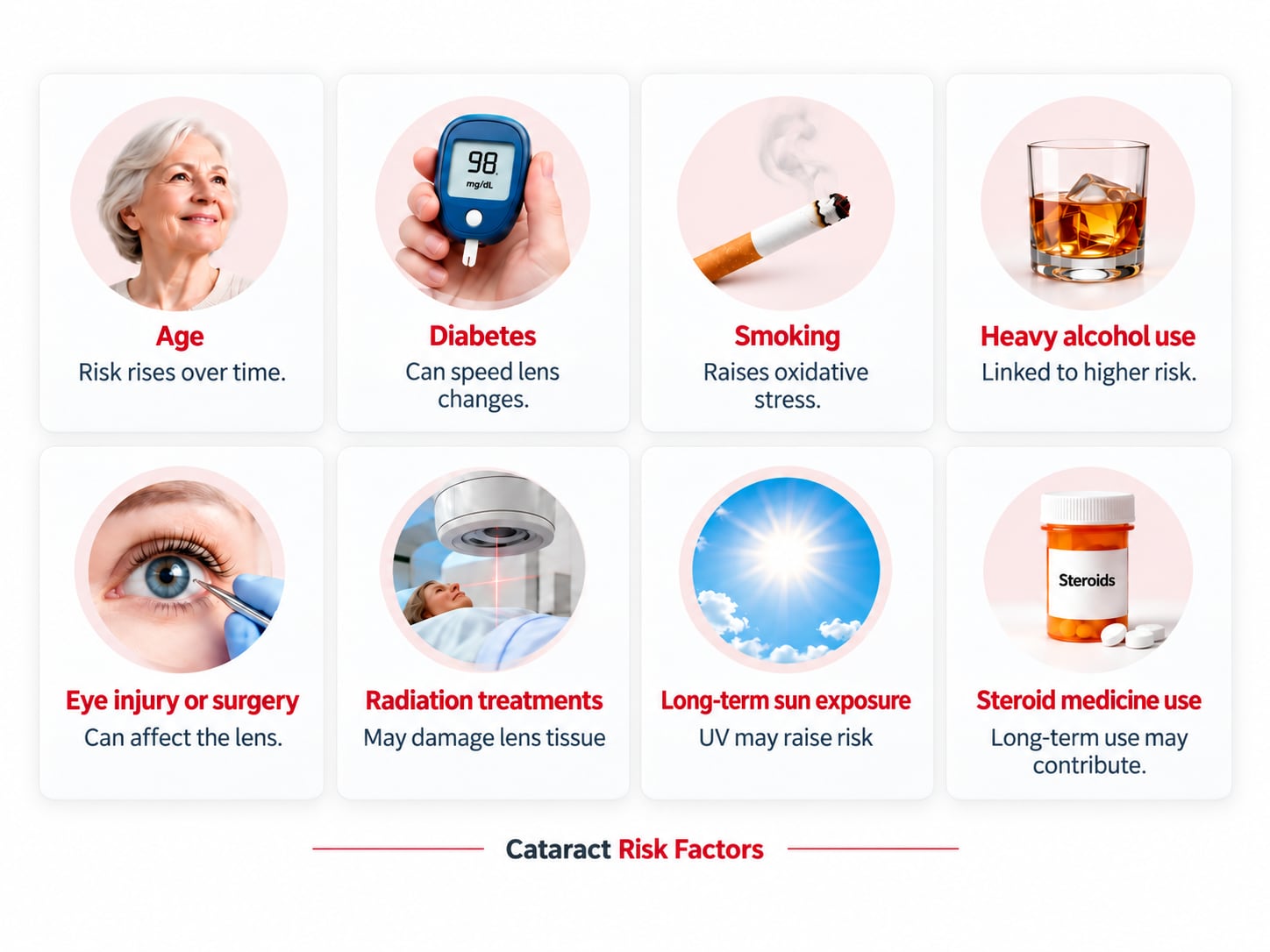
These factors increase your risk, but they do not guarantee that cataracts will develop. Age-related cataracts usually form gradually as the natural lens changes over time.
What can you do about your risk?
There is no proven way to prevent glaucoma, so early detection is especially important. If you are at higher risk, follow your eye doctor’s screening schedule and learn more about how often you need a comprehensive eye exam.
You cannot always prevent age-related cataracts either, but you can support your eye health by wearing UV-protective sunglasses, using UV protection contact lenses when prescribed, avoiding smoking, protecting your eyes from injury, and managing conditions such as diabetes. These habits can help reduce avoidable risks, but they do not replace regular eye exams.
Can you have glaucoma and cataracts at the same time?
Yes, you can have glaucoma and cataracts at the same time because they affect different parts of the eye. Glaucoma damages the optic nerve, while cataracts cloud the natural lens, and both become more common with age. Your eye doctor can check the lens, optic nerve, eye pressure, and visual field to determine how much each condition is affecting your vision and whether your current contact lenses recommended by doctors still meet your vision needs. In some cases, cataract surgery may be combined with a glaucoma procedure such as minimally invasive glaucoma surgery (MIGS), depending on the type and severity of glaucoma, pressure goals, medication needs, and overall eye health.
How are glaucoma and cataracts diagnosed?
Glaucoma and cataracts cannot be diagnosed from symptoms alone, so a comprehensive eye exam is needed to tell them apart. A dilated exam lets your eye care professional check the natural lens for cataracts and the optic nerve for signs of glaucoma. Depending on the findings, additional tests may measure eye pressure, peripheral vision, the drainage angle, and the structure of the optic nerve. If you have an appointment coming up, knowing how to prepare for an eye exam and bringing details about your current Rx contacts can help you know what to expect.
How doctors check for glaucoma
Glaucoma is diagnosed by looking at several findings together, not just one eye pressure reading. Common tests may include:
- A dilated eye exam to check the optic nerve
- A visual field test to measure peripheral vision
- Tonometry to measure eye pressure
- OCT imaging to create detailed images of the optic nerve and nerve fibers
- Gonioscopy to examine the eye’s drainage angle when needed
High eye pressure can increase glaucoma risk, but it does not confirm the disease on its own.
How doctors check for cataracts
Cataracts are usually found during a dilated eye exam, which allows your doctor to see the natural lens more clearly. Vision testing also helps show how much the cataract is affecting your sight and everyday activities.
Finding a cataract does not automatically mean you need surgery right away. Cataract surgery is generally considered when vision changes begin interfering with activities such as reading, driving, working, or watching television.
Wondering why dilation may be part of your glaucoma or cataract evaluation? Learn whether getting your eyes dilated is always required so you know what dilation helps your doctor examine.
How are glaucoma and cataracts treated?
Treatment is one of the clearest differences in glaucoma vs cataracts. Glaucoma care focuses on lowering eye pressure and protecting the optic nerve, while cataract care eventually removes the cloudy natural lens when it begins interfering with daily life. The best approach depends on your condition, symptoms, severity, and overall eye health.
How glaucoma is treated
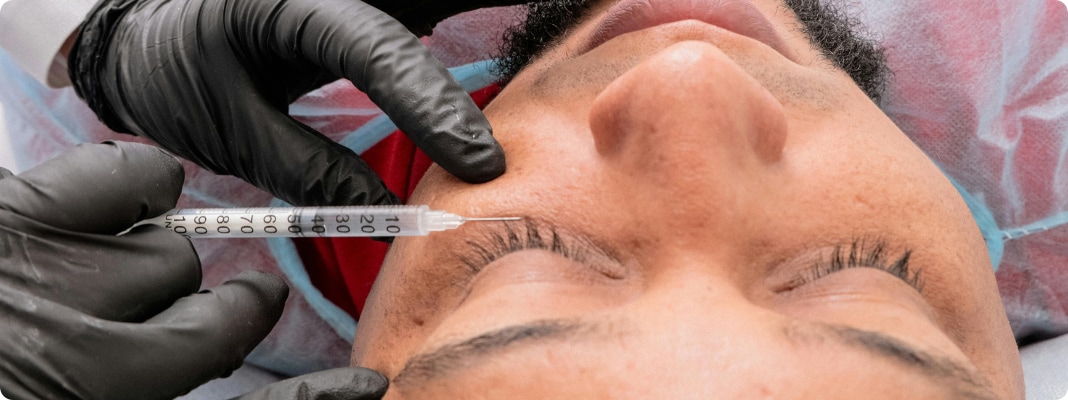
Glaucoma treatment cannot restore vision already lost from optic nerve damage, but it can help prevent or slow further loss. Your eye care professional may recommend:
- Prescription eye drops or other medicines to lower eye pressure
- Laser treatment to improve fluid drainage
- Glaucoma surgery when other treatments are not enough
- Minimally invasive glaucoma surgery, or MIGS, for selected patients
Glaucoma usually needs ongoing monitoring even when treatment is working. Regular follow-up visits help your eye care professional track eye pressure and check for changes in the optic nerve.
How cataracts are treated
Early cataracts may not need surgery right away. Brighter lighting, anti-glare sunglasses, magnification, or updated vision correcting contacts may help temporarily, but they do not remove the cataract.
Cataract surgery is the only treatment that removes the cloudy lens. The lens is replaced with a clear artificial intraocular lens, or IOL, and the National Eye Institute reports that about 9 out of 10 people see better afterward, although results can vary depending on other eye conditions.
Can contact lenses help if you have glaucoma or cataracts?
Different types of contact lenses can correct refractive errors, but they do not prevent, treat, or cure glaucoma or cataracts. With early cataracts, an updated prescription may help if part of the vision change is refractive, but contacts cannot clear a cloudy lens or restore peripheral vision lost from glaucoma-related optic nerve damage. If you develop sudden blurry vision, pain, redness, discharge, or unusual light sensitivity while wearing contacts, remove them and contact an eye care professional.
Keep these contact lens safety reminders in mind:
- Wear only contact lenses prescribed and fitted for you.
- Do not change your lens type or prescription without an eye exam.
- Remove your contacts if you have pain, redness, sudden blur, discharge, or unusual light sensitivity.
- After eye surgery, wait for your surgeon’s approval before wearing contacts again.
Still seeing blur even after putting in a fresh pair of contacts? Learn why contact lenses can look blurry so you can tell when the problem may be your lenses and when an eye exam is the safer next step.
When should you see an eye doctor for glaucoma or cataract symptoms?
Gradual or unexplained vision changes are a good reason to have your eyes checked. If you are unsure where to start, understanding whether you should see an ophthalmologist versus an optometrist can help you choose the appropriate eye care provider.
Schedule an eye exam for:
- Gradually worsening blurry or cloudy vision
- Increasing glare or halos around lights
- Difficulty seeing at night
- Colors that look faded or less vivid
- New or worsening peripheral vision changes
- Frequent unexplained prescription changes
- Vision changes that interfere with reading, driving, work, or daily activities
Seek immediate medical care for:
- Sudden severe eye pain
- A red eye with sudden blurry vision
- Nausea or vomiting with severe eye symptoms
- Sudden major vision loss
If you wear contact lenses and develop significant pain, redness, sudden blur, discharge, or strong light sensitivity, remove them and contact your eye doctor. Do not wear them again until your eye care professional says it is safe.
What should you remember about glaucoma and cataracts?
Glaucoma and cataracts can both affect your vision, but they involve different parts of the eye and need different types of care. Cataracts cloud the natural lens and vision can often improve after cataract surgery, while glaucoma damages the optic nerve and treatment focuses on preventing further vision loss. Because open-angle glaucoma may progress without early symptoms and cataracts often develop gradually, regular eye exams are important even when your vision seems fine. Seek urgent medical care for sudden severe eye pain, a red eye with abrupt blurry vision, nausea with severe eye symptoms, or sudden vision loss.
If glaucoma, cataracts, or a recent eye exam has changed how you see, make sure your prescription still matches your current vision needs. Browse our contact lenses to compare prescribed options for clear, comfortable everyday vision.
Disclaimer: This content is for general informational purposes only and is not a substitute for professional advice, diagnosis, or treatment.
References
Glaucoma. National Eye Institute. https://www.nei.nih.gov/eye-health-information/eye-conditions-and-diseases/glaucoma. Date Accessed: September 3, 2026.
Cataracts. National Eye Institute. https://www.nei.nih.gov/eye-health-information/eye-conditions-and-diseases/cataracts. Date Accessed: September 3, 2026.
Get a Dilated Eye Exam. National Eye Institute. https://www.nei.nih.gov/eye-health-information/healthy-vision/finding-eye-doctor/get-dilated-eye-exam. Date Accessed: September 3, 2026.
Cataract surgery combined with glaucoma surgery. Julien Torbey and Kaweh Mansouri / Current Opinion in Ophthalmology. https://pubmed.ncbi.nlm.nih.gov/39508422/. Date Accessed: September 3, 2026.
About Contact Lens Types. Centers for Disease Control and Prevention. https://www.cdc.gov/contact-lenses/about/about-contact-lens-types.html. Date Accessed: September 3, 2026.