
Table of Contents
Updated January 13, 2026 – You get home after a long day at work, and you’re exhausted. You forget to remove your contact lenses and just jump straight to bed. If you’ve done this at least once, then you’re not alone.
Sleeping in regular daily-wear contacts can increase the risk of dryness, irritation, and eye infection. If you sometimes need lenses approved for overnight use, ask your eye care professional whether extended wear contact lenses are appropriate for your prescription, eye health, and wearing habits.
But what happens if you accidentally sleep in your contacts? Here is what to know and what steps to take next.
What Happens If You Sleep in Your Contact Lenses?
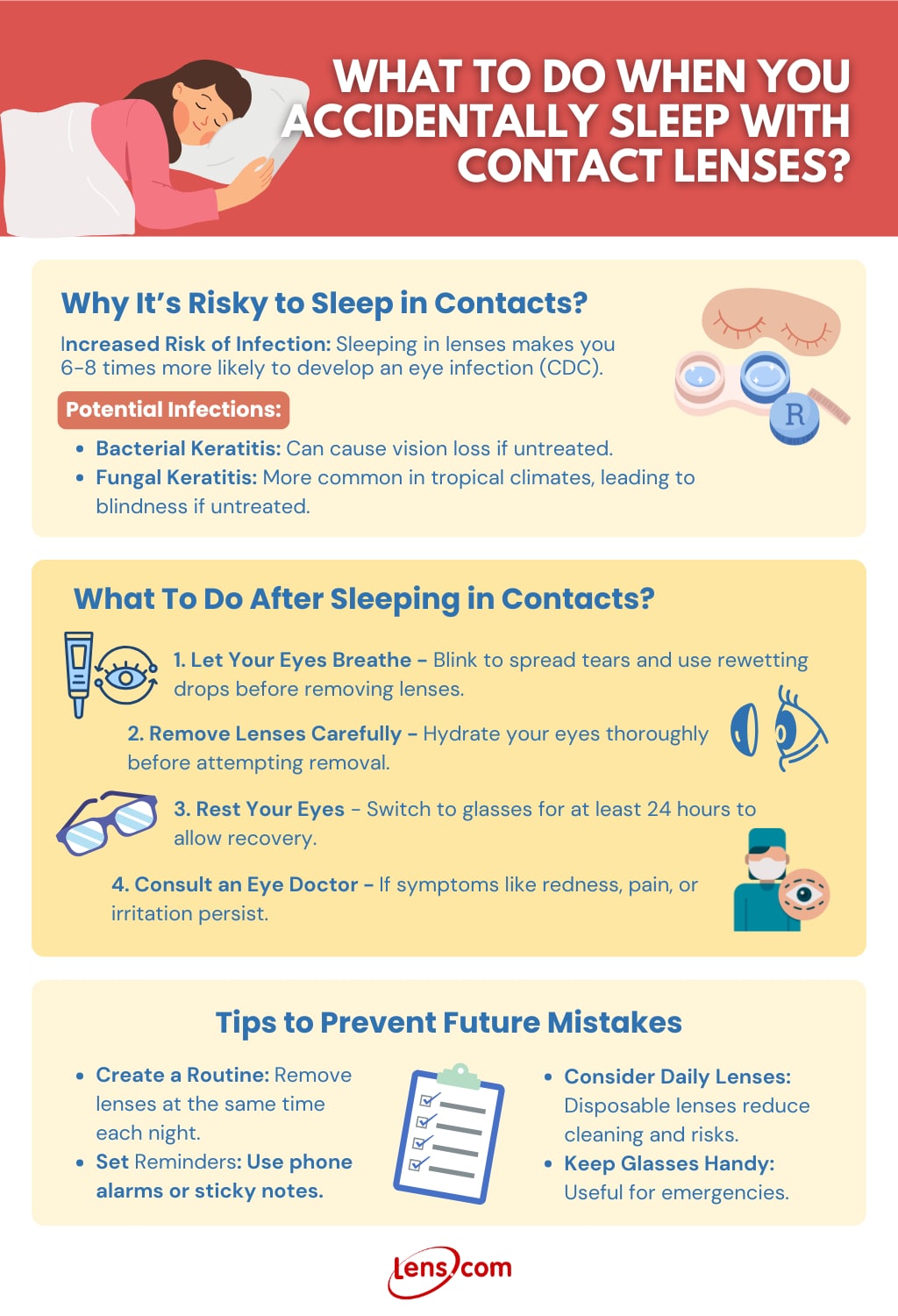
Sleeping in contact lenses that are FDA-approved for overnight or extended wear is generally safe. However, the CDC says that sleeping with any kind of contact lenses can make you six to eight times more vulnerable to eye infections. As such, you should only sleep in your contact lenses if your eye care professional (ECP) approves it and provides you with the proper guidance.
When your eyes are closed, less oxygen reaches the cornea. A contact lens can further reduce oxygen flow and trap debris or bacteria against the eye, especially if the lens was not designed for sleep. That is why overnight contact lenses should only be worn as directed and should not be confused with regular daily-wear contacts.
If you accidentally fall asleep in your lenses, do not panic. Wash your hands, use lubricating drops if your lenses feel dry, and remove them carefully once they move freely. Call your eye care professional right away if you notice pain, redness, discharge, light sensitivity, blurry vision, or symptoms that do not improve.
Eye infections you can get from sleeping in your contact lenses include:
- Bacterial keratitis
Bacterial keratitis is a corneal infection that can be caused by either Staphylococcus aureus or Pseudomonas aeruginosa, which are two types of bacteria found in the environment.
You can treat mild cases of bacterial keratitis with antibiotic eye drops. Meanwhile, more severe cases often require oral medication. Left untreated, bacterial keratitis can lead to permanent vision loss or blindness.
- Fungal keratitis
You are more likely to contract fungal keratitis if you live in a tropical region that has mild temperatures. Sleeping in your contact lenses further increases your risk of getting fungal keratitis. To treat fungal keratitis, your ECP will prescribe you antifungal eye drops and antifungal oral medication. Like bacterial keratitis, untreated fungal keratitis can result in permanent blindness.
What to Do After Sleeping in Contacts
If you find yourself saying, “I accidentally slept with my contacts in,” don’t panic. It’s a common mistake, and there are steps you can take to minimize any potential damage to your eyes.
1. Let your eyes breathe and rehydrate
The first thing you need to do is remove your contact lenses. However, removing your contact lenses after you sleep in them is not as simple as it seems. There’s a high chance that your contact lenses have dried out and are now stuck to your corneas. You’re going to need to let your eyes breathe and rehydrate before you can remove your contact lenses.
Try blinking a few times to spread tears into your eyes and moisturize them. Next, apply rewetting drops to your eyes to help loosen the contact lenses from your corneas. The lubrication from your tears, combined with the rewetting drops, should make it easier to remove your contact lenses.
2. Rest your eyes
Once you remove your contact lenses, avoid wearing them again for a full 24 hours. Wear glasses instead. Not wearing contact lenses allows your eyes to recover from the redness, dryness, and irritation from sleeping in your contact lenses the previous night.
3. Consult your ECP
Pay attention to how your eyes feel. If you have eye pain, redness, or irritation that doesn’t go away after a few days, you may have an eye infection. In this case, it’s best to immediately consult your ECP.
Tips to Prevent Falling Asleep in Your Contact Lenses in the Future
1. Develop a routine: Try to establish a routine for removing your contacts before going to bed. Make it a habit to remove them at the same time every night.
2. Set reminders: Use alarms or reminders on your phone to prompt you to remove your contact lenses if you tend to forget.
3.Use daily disposable lenses:If you’re prone to falling asleep in your contacts, consider using daily disposable lenses. These are designed to be worn once and discarded, eliminating the need for cleaning and storage. By comparison, reusable contact lenses are cleaned, stored, and worn again according to their prescribed replacement schedule, so building a consistent nighttime removal routine is especially important.
Shop Better Affordable High Quality Daily Disposable Contact Lens at Lens.com
4. Keep a backup pair of glasses: Having a pair of glasses handy can be a helpful backup in case you forget to remove your contacts or experience discomfort. Alternatively, if you’re interested in a reliable daily disposable option, you can order Biotrue ONEday lenses online for easy, all-day comfort and hydration.
Remember that neglecting proper contact lens care and hygiene, including falling asleep in them, can increase the risk of eye infections and other complications. Always follow your eye doctor’s recommendations for contact lens use and care to maintain your eye health.
How to Treat Eyes After Sleeping with Contacts
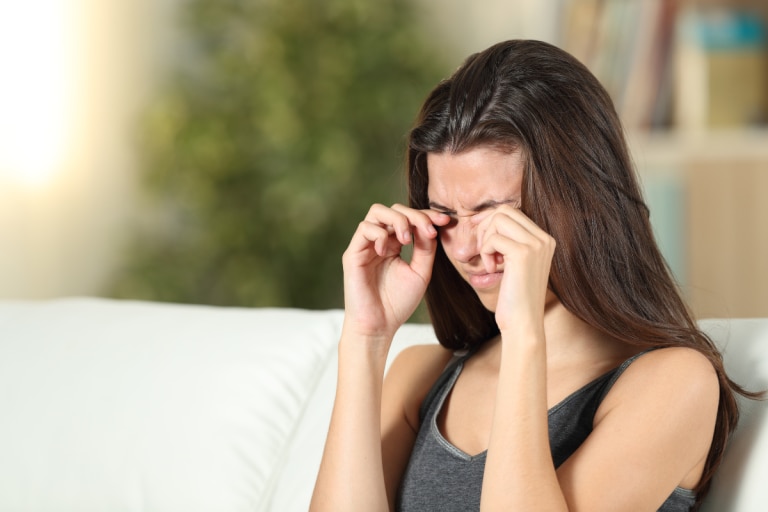
If you find yourself waking up with contact lenses that are not designed for overnight wear, it’s crucial to handle the situation with care to avoid eye irritation or damage. Here are some immediate steps to take:
1. Assessing Eye Comfort
Before you attempt to remove the contact lenses, gently assess your eyes for any signs of discomfort. Check for symptoms like excessive dryness, irritation, or a gritty sensation. If your eyes feel overly dry or sore, proceed with extra caution in the following steps.
2. Hydrating the Eyes
To facilitate easier and safer lens removal, start by hydrating your eyes. Apply a sterile, lubricating eye drop specifically designed for contact lens wearers. These drops will help to moisten the eyes and loosen the lenses from the surface of your eyes. Allow a few minutes for the drops to take effect. Blink several times to distribute the moisture evenly.
3. Safe Removal Techniques
Once your eyes are sufficiently lubricated:
- Wash your hands thoroughly with soap and water, then dry them with a lint-free towel.
- Look upward and carefully pull down your lower eyelid with your middle finger.
- Use your index finger and thumb to gently pinch the contact lens.
- Slowly pull the lens away from the eye. If the lens does not come out easily, apply more lubricating drops and wait a few more minutes before trying again.
4. Immediate Post-Removal Eye Care
After successfully removing the lenses, it’s important to continue caring for your eyes:
- Apply a cooling, preservative-free eye drop to soothe any irritation.
- If your eyes remain red or feel irritated, a clean, warm compress can help relieve discomfort. Make sure the compress is not too hot and is applied with gentle pressure.
- Avoid rubbing your eyes, as this can exacerbate irritation and lead to further complications.
Following these immediate care steps can significantly reduce discomfort and prevent potential damage to your eyes after accidentally sleeping in contact lenses. If symptoms persist or you experience significant pain, consult your eye care professional promptly.
If you’re looking for a reliable, comfortable lens for extended wear, where to buy Air Optix plus HydraGlyde online offers a great option. Designed with SmartShield technology, these lenses are made for those who need a long-wearing, breathable option.
Take Better Care of Your Eyes With Lens.com
If you find yourself sleeping in non-overnight contact lenses more than once, it may be time to consult your ECP about whether a different wearing schedule is appropriate. Before considering a change, reviewing the broader pros and cons of contact lenses can help you understand differences in convenience, care, comfort, and wearing routines.
Summary Graphic: What To Do When You Accidentally Sleep With Contact Lenses