
RX

Best Contact Lenses for Runners Ahead of the Boston Marathon

best contact lenses for runners

Training for the Boston Marathon means going over every detail, from the shoes down to the pacing. Eyewear is important too. The last thing runners want on race day is slippery glasses or their contacts getting in the way when the weather changes.

That’s why many runners prefer sporting contact lenses for big races. Per the National Eye Institute, they improve side vision and don’t fog up like glasses. This makes them easier to wear when being active.

The 130th Boston Marathon is coming soon. 30,000 participants are expected to hit the tracks on April 20. Now’s the right time to think about comfortable, practical race-day lenses.

This begs the question: what are the best contact lenses for runners?

For runners looking for the best contact lenses for sports, the best race-day pairs are stable, provide clear vision, and don’t need extra work before they arrive at the starting line. 

It’s why daily disposable lenses make the most sense for marathoners. Still, the right choice depends on these factors:

  • prescription 
  • how the eyes feel on long runs
  • special correction for near vision or astigmatism.

Let’s find out what those lenses are.

What Are the Best Contact Lenses for Marathon Runners?

For most runners, daily disposable soft contact lenses are a good place to start. For marathon training and race day, sports contact lenses are a great option when they are comfortable, stay in place, and require minimal handling.

The American Academy of Ophthalmology reports that disposables have the lowest complication rate among soft contact lenses. Their fuss-free nature makes them a good choice for runners ahead of major races.

It’s not hard to see its appeal. Training for marathons already comes with enough moving parts, and race mornings can amp up the hecticness. 

A fresh pair of disposables is easier to manage because they don’t need to overthink them. That simplicity and straightforwardness are a plus when they travel to Beantown.

However, one type of lens isn’t a one-size-fits-all item. Some runners may need toric contact lenses to address their astigmatism. Others fare better with multifocal lenses because they need help seeing both far and near. 

But as a starting point, daily disposables suit a wide range of marathon runners. They’re simple, easy to clean, and seamlessly fit into a race-week routine.

Why Daily Disposables Are a Smart Pre-Race Day Pick

These lenses keep things simple. Runners don’t have to deal with lens cases, cleaning solution, or pre-race cleaning. 

All they have to do is just get a new pair, wear them, and throw them at the end of the day. That convenience is huge, especially for marathoners staying in hotels or waking up early on race mornings.

They also don’t ruin healthy lens habits. It’s a reason they’re often seen as one of the best contact lenses for athletes, especially those who want simple routines before big games or events.

The CDC also notes that daily disposables have a lower chance of infection. While disposables don’t eliminate all the risks, they support the idea of fresh pairs being great for less handling and room for error.

Race day prep means being practical. If you’re already juggling a lot of gear, your lenses should be low-maintenance. Daily disposables fit that bill.

But as mentioned earlier, the “best” is the lens that already works for you. If you’ve been training in your current pair or a specific type and your doctor gave their approval, now’s not the time to make the switch.

Best Contact Lenses for Marathon Runners With Astigmatism

toric contact lenses

Toric contact lenses are best for runners with astigmatism. They’re built to correct the uneven focus that comes with the condition.

That feature is important because stable vision is a must for long races. You don’t want your lenses to feel off, especially if you’re already deep into the race. If your prescription emphasizes astigmatism correction, a regular soft lens isn’t going to cut it.

Don’t treat the Boston Marathon as a test run for a new lens type. If you’re already comfortable with toric lenses, why change something that’s already effective?

Best Contact Lenses for Marathon Runners Who Need Help Near and Far

These runners should take a serious look at multifocal contacts. The National Eye Institute says these lenses correct both near and distance vision.

You might see the road and course markers okay, but you still find yourself holding your phone at a distance to read something. Multifocal lenses bridge that gap, making them a practical option for training and race day. 

They make general routines easier, too. Instead of switching between contacts and glasses for different purposes, multifocals try to cover multiple ends. It’s great for runners who don’t want to manage a lot before, after, or during the race, or on a long day in Boston.

Still, these lenses are one of the options you want to get used to well before the race. Some adjust to them quickly, while others need more time.

Are UV-Blocking Contacts Enough for the Boston Marathon?

Don’t get us wrong: these lenses are great. But they can’t give you full protection. One, they only cover the central part of the eye. And two, they don’t shield you from dust, debris, or wind either. 

Just because your lenses have UV-blocking capabilities doesn’t mean you should leave your sunglasses. You’ll be outside for hours, after all. If you like running in sunnies, keep that habit.

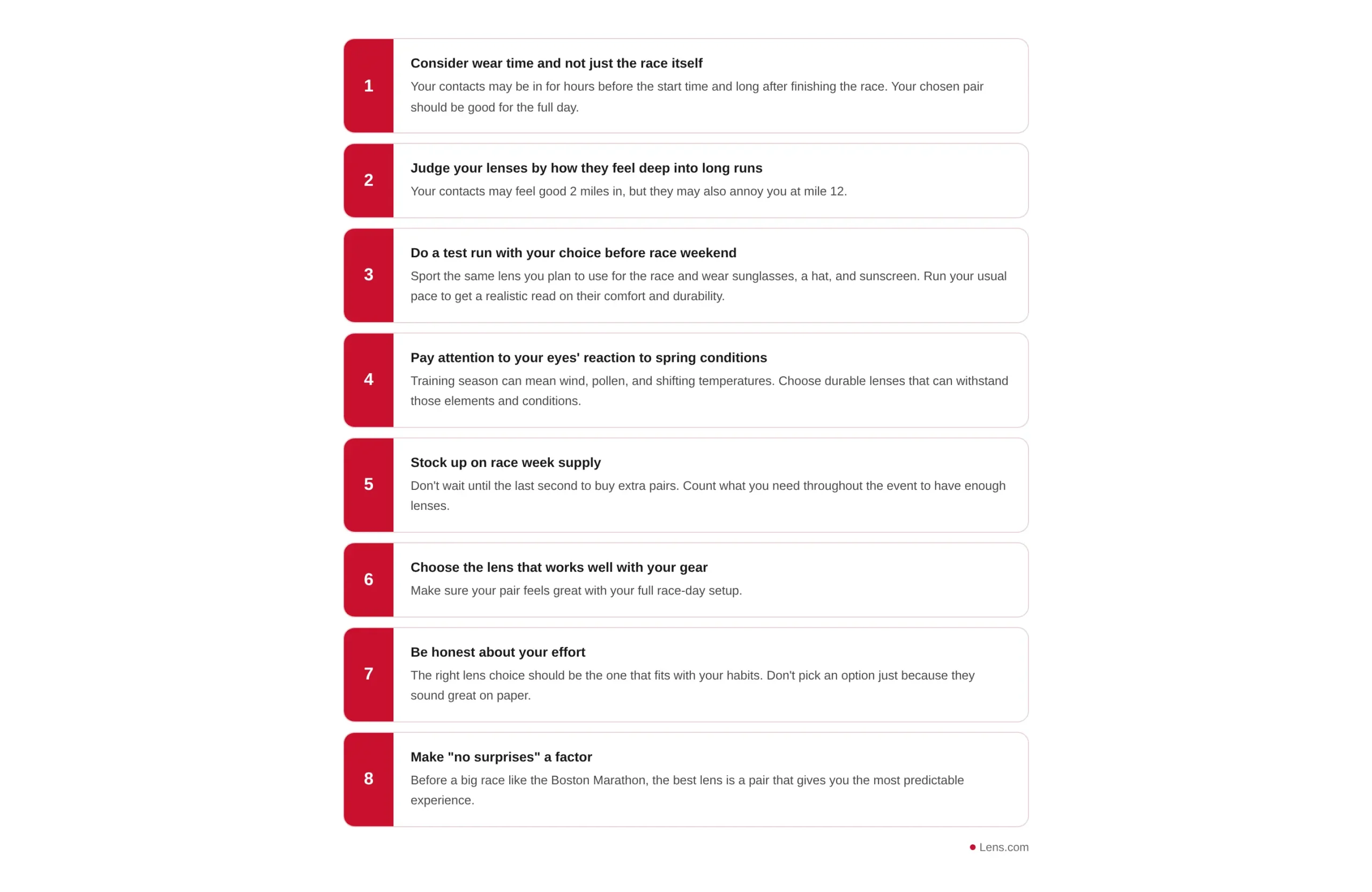
Race Day Contact Lens Tips for Boston Marathon Runners

Focus on the tracks with these suggestions:

lens tips for Boston Marathon runners

How To Choose the Right Lenses Before the Boston Marathon

Take these considerations:

Shop Contact Lenses for Marathon Training and Race Day

As race day dawns on you, your lenses should be the last thing to stress over. When you wear the right pair, all you have to do is focus on the tracks.

Getting ready for the Boston Marathon begins with a trusted and reliable setup. Shop Lens.com for daily disposables, torics, and multifocal lenses to find the pair that works best for you.

FAQs About Contact Lenses for Runners

Yes. Those contacts offer stability, locking in place despite constant movement. They also provide moisture retention to prevent dryness. Lastly, they help maintain clear vision.

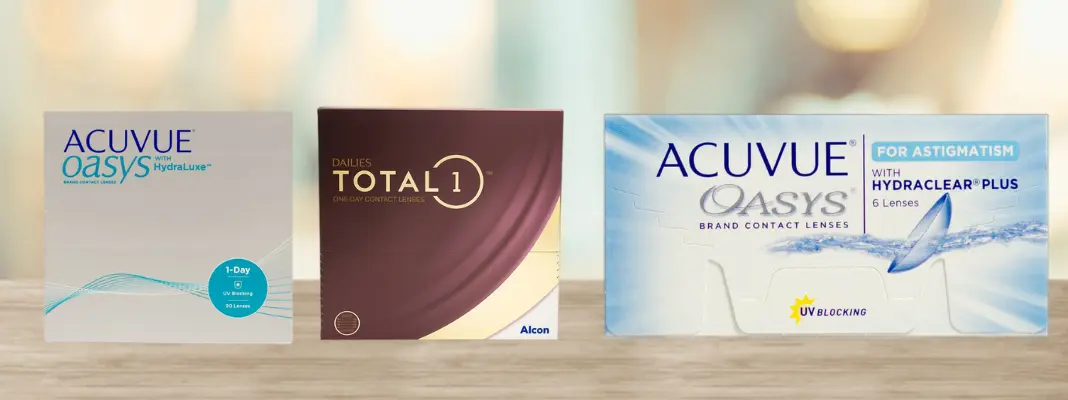
Daily disposable soft contacts are generally a top choice for runners. They give comfort, help reduce debris buildup, and require minimal handling. Acuvue Oasys 1-Day with HydraLuxe and Dailies Total 1 are good examples.

Yes. Provided that toric lenses fit your prescription, training and running in them should not be a problem.

Yes. Contacts may have UV-blocking properties, but they do not provide full coverage. Wearing sunglasses and a visor gives you added protection.

Acuvue Oasys 1-Day gives wearers breathability and comfort despite sweaty conditions and fast-paced activity. Biofinity Monthly is another good option because its soft, flexible lens material helps keep eyes comfortable during long training sessions.

Disclaimer: This content is for general informational purposes only and is not a substitute for professional advice, diagnosis, or treatment.

References

American Academy of Ophthalmology Preferred Practice Pattern Refractive Management/Intervention Panel. (n.d.). Refractive Errors Preferred Practice Pattern – Updated 2025. American Academy of Ophthalmology. Date Accessed: April 15, 2026, from https://www.aao.org/education/preferred-practice-pattern/refractive-errors-ppp-2022

Cope, J. R. (2025, August 21). Contact Lens Wearer Demographics and Risk Behaviors for Contact Lens-Related Eye Infections — United States, 2014. Centers for Disease Control and Prevention. Date Accessed: April 15, 2026, from https://www.cdc.gov/mmwr/preview/mmwrhtml/mm6432a2.htm

National Eye Institute. (n.d.). Contact Lenses. National Eye Institute. Date Accessed: April 15, 2026, from https://www.nei.nih.gov/eye-health-information/healthy-vision/contact-lenses

National Eye Institute. (n.d.). Other Types of Contact Lenses. National Eye Institute. Date Accessed: April 15, 2026, from https://www.nei.nih.gov/eye-health-information/healthy-vision/contact-lenses/other-types-contact-lenses