
Contact lenses are a great alternative to eyeglasses for many people. They are more compact, sitting directly on your eyes, and they allow freedom for playing sports and other activities.
Let’s review the science behind how contact lenses work, why their prescription differs from glasses, and the various types of lenses available.
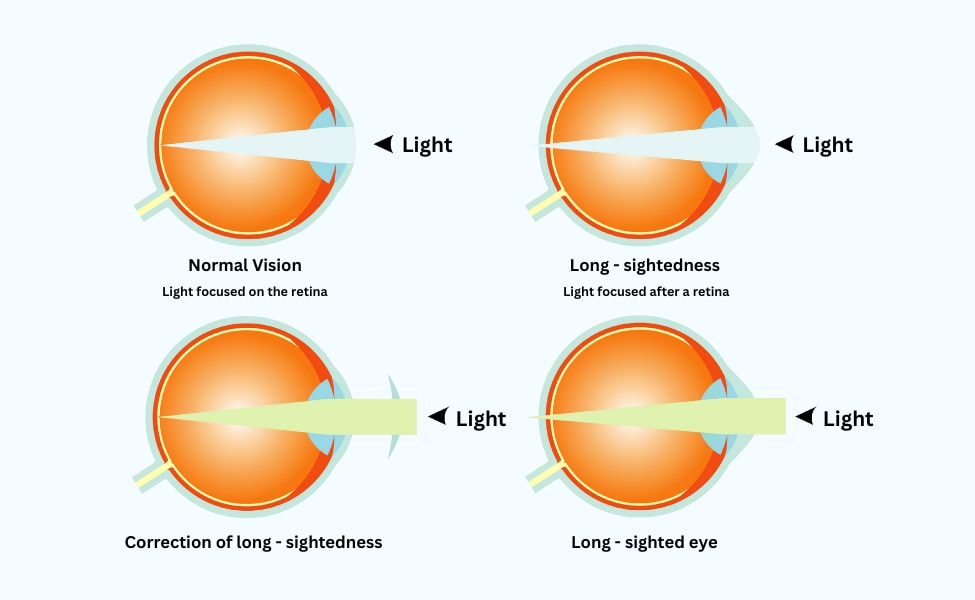
Contact lenses correct vision by bending light so it focuses correctly on the retina. The retina is the light-sensitive structure at the back of the eye. For the brain to process a clear image, light must focus precisely on this structure.
If you are nearsighted, light comes to a focus in front of the retina. If you are farsighted, light focuses behind the retina. In both cases, objects appear blurry because of this improper focusing of light. Contact lenses work by providing a precise curve that redirects light directly onto the retina, giving you a crisp, clear view.
Your contact lens prescription is determined during a contact lens exam and fitting, which is typically separate from your annual comprehensive eye exam.
Contacts and glasses prescriptions are different because, unlike glasses, contact lenses sit right on top of your eye. This means the surface area of the lens is much smaller. The curve of your eyeball must be taken into account when measuring and prescribing the lens. This direct placement also allows contacts to be much thinner than eyeglass lenses.
The brand and material of your contacts are also written into the prescription. Your eye doctor determines the best brand and lens type during your contact lens exam and fitting.
Your prescription includes different information and measurements than a glasses prescription. Here are the key elements you will find:
| Element | Purpose of the Measurement |
|---|---|
| Power/Sphere (PWR/SPH) | The lens strength needed to correct your vision. Minus (-) is for nearsightedness; Plus (+) is for farsightedness. |
| Base Curve (BC) | The curvature of the contact’s back surface to match the natural curve of your eyeball. |
| Diameter (DIA) | The total size of the contact lens from edge to edge. |
| Cylinder (CYL) | The amount of correction required for astigmatism. |
| Axis | The orientation of the astigmatism correction on the lens. |
| Addition (ADD) | The amount of added near power for people with presbyopia. |
Contact prescriptions also list the lens brand, material, issue date, and expiration date. Correction needs for each eye can be different. As long as your contacts help you see clearly and comfortably, it is fine if the numbers for your left eye do not match your right eye.
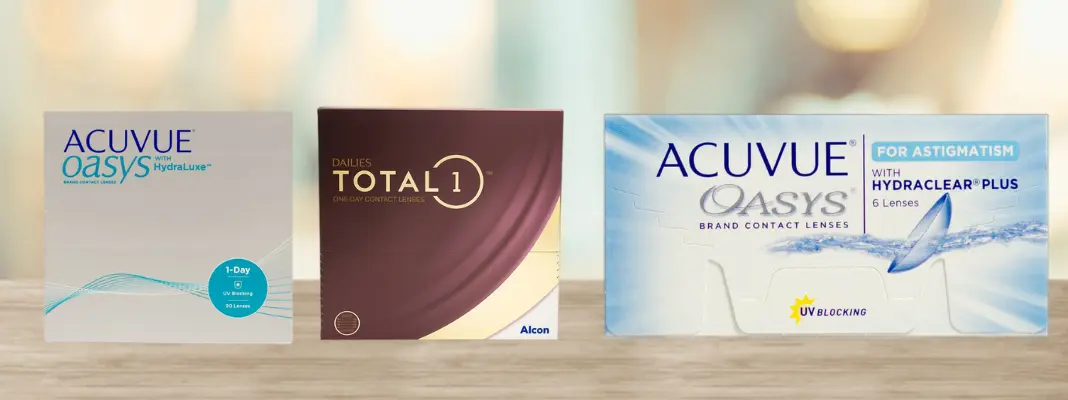
Several types of contact lenses are available, each designed to correct specific vision problems. Most disposable contacts are available on daily, weekly, or monthly replacement schedules.
Numerous types of contact lenses have also been developed to help minimize dry eye symptoms associated with contact use. Speak with your eye doctor about the best fit for your needs during your next contact lens consultation.
Once you know your prescription details, you can shop specific lens types tailored for comfort and stability.
Contact lenses are a viable solution for clear vision. They correct refractive errors by precisely bending light onto the retina. Because they sit directly on the eye, they require different measurements than glasses.
If you are thinking about making the switch to contacts, schedule an appointment with your eye doctor. They can perform a contact lens exam to determine the exact fit and lens type that works best for your eyes.
Have a question? Call us at
1-800 LENS.COM (536-7266)
Online 24/7
© 1995-2021 Lens.com. All Rights Reserved. Lens.com is a contact lens replacement company, and a direct to consumer marketer of contact lenses.
As a contact lens replacement center, we can only sell you contact lenses that you have a valid prescription for, and are wearing successfully.