Updated: January 14, 2026
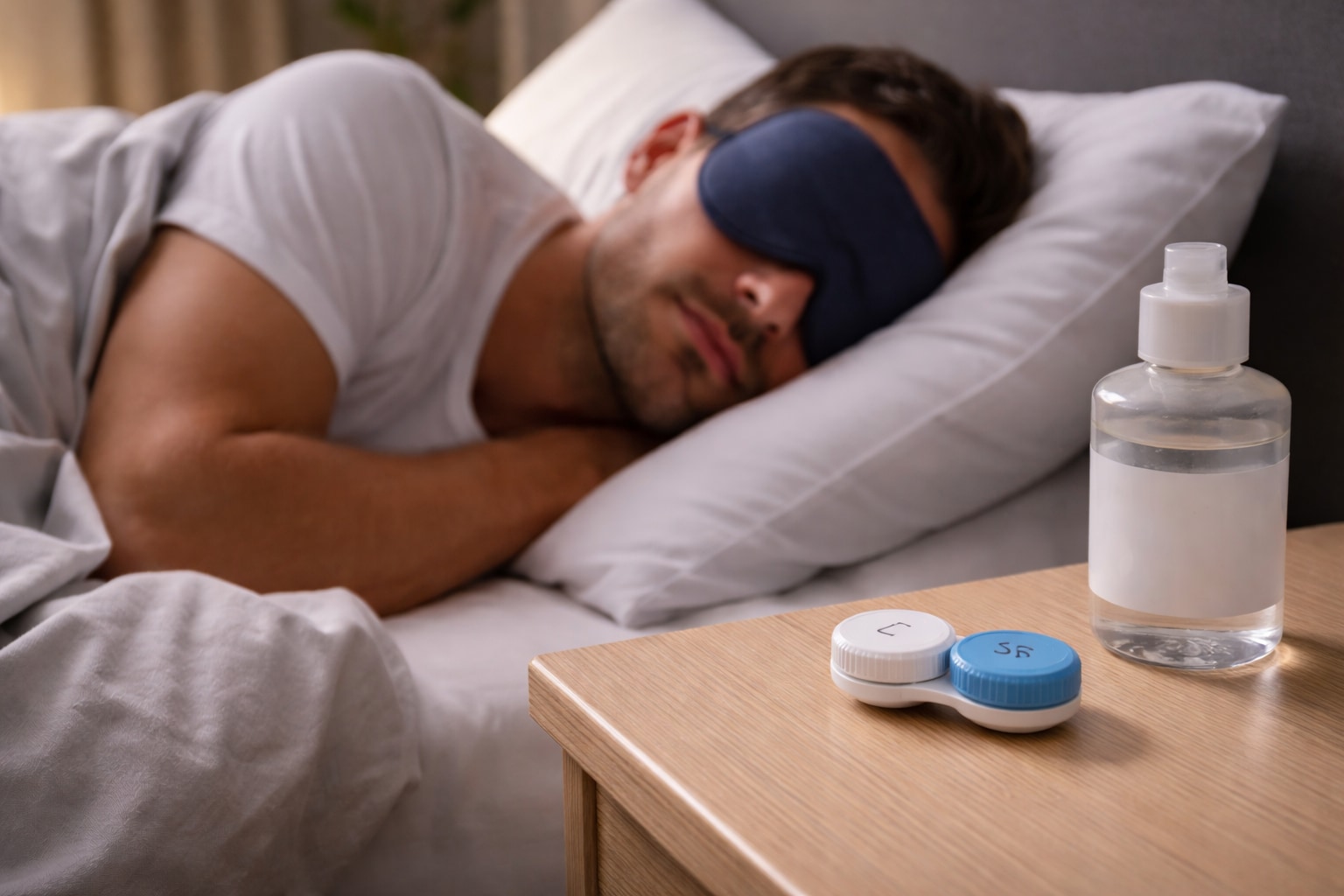
Only contact lenses that are specifically prescribed and approved for overnight wear, often called extended wear lenses, should be slept in, and even then the risk of eye infection is higher than removing lenses before sleep. When your eyes are closed, they get less oxygen, and a lens can trap moisture and germs, which makes infections more likely. Even a short nap can leave lenses feeling dry or irritating, so it helps to know whether your lenses are truly approved for sleeping before you doze off.
What to Check:
1. Confirm your lenses are prescribed for extended wear and that your eye care provider specifically approves overnight use for you.
2. Follow the allowed overnight schedule exactly, since extended wear may range from one to six nights or up to 30 days depending on the lens and your tolerance.
3. Never sleep in daily wear lenses, because they are not designed for overnight wear and can raise the chance of serious infection.
4. Avoid sleeping in lenses if you have irritation, dryness, allergies flaring, or you were exposed to water such as swimming or showering.
5. Remove lenses and seek care urgently for pain, increasing redness, light sensitivity, discharge, or sudden blurry vision.
Sleeping in contacts is safest only when an eye doctor has prescribed an overnight wear lens and you follow the exact wear and care instructions.
Disclaimer: This information is for general informational purposes only and is not a substitute for professional advice, diagnosis, or treatment.
References:
About Contact Lens Types. Centers for Disease Control and Prevention (CDC). https://www.cdc.gov/contact-lenses/about/about-contact-lens-types.html. May 27, 2025.
Preventing Eye Infections When Wearing Contacts. Centers for Disease Control and Prevention (CDC). https://www.cdc.gov/contact-lenses/prevention/index.html. May 27, 2025.
Everyday Eye Care. U.S. Food and Drug Administration (FDA). https://www.fda.gov/medical-devices/contact-lenses/everyday-eye-care. December 4, 2023.