
If you’ve ever wondered whether bad eyesight runs in the family, you’re not alone. Many vision problems, from nearsightedness to more serious eye diseases, have a strong genetic component. But heredity is only part of the story. Your environment, habits, and overall health also influence how your eyesight develops and changes over time.
In this guide, we’ll look at the genetic side of vision problems, other contributing factors, and how you can protect your eyesight at every stage of life.
The most common causes of reduced vision are refractive errors. These occur when the eye doesn’t focus light correctly onto the retina. Common types include:
These conditions often run in families. If both of your parents are nearsighted, your chances of being nearsighted are significantly higher. Even with just one parent affected, your risk still increases. Some childhood conditions like amblyopia (lazy eye) also have a genetic link, especially when related to untreated vision issues or alignment problems.
Yes, several serious eye diseases have a genetic connection. Conditions like macular degeneration, glaucoma, and cataracts often develop later in life, but family history can increase your risk. Macular degeneration affects the central part of the retina and leads to gradual vision loss. Glaucoma damages the optic nerve, often without early symptoms, and is one of the leading causes of blindness. Cataracts cause cloudy vision and typically progress with age, but genetics can influence how early they appear.
Having a relative with any of these conditions doesn’t guarantee you’ll develop them, but it does mean regular eye exams are especially important. Early detection and treatment can slow progression and help protect long-term vision.
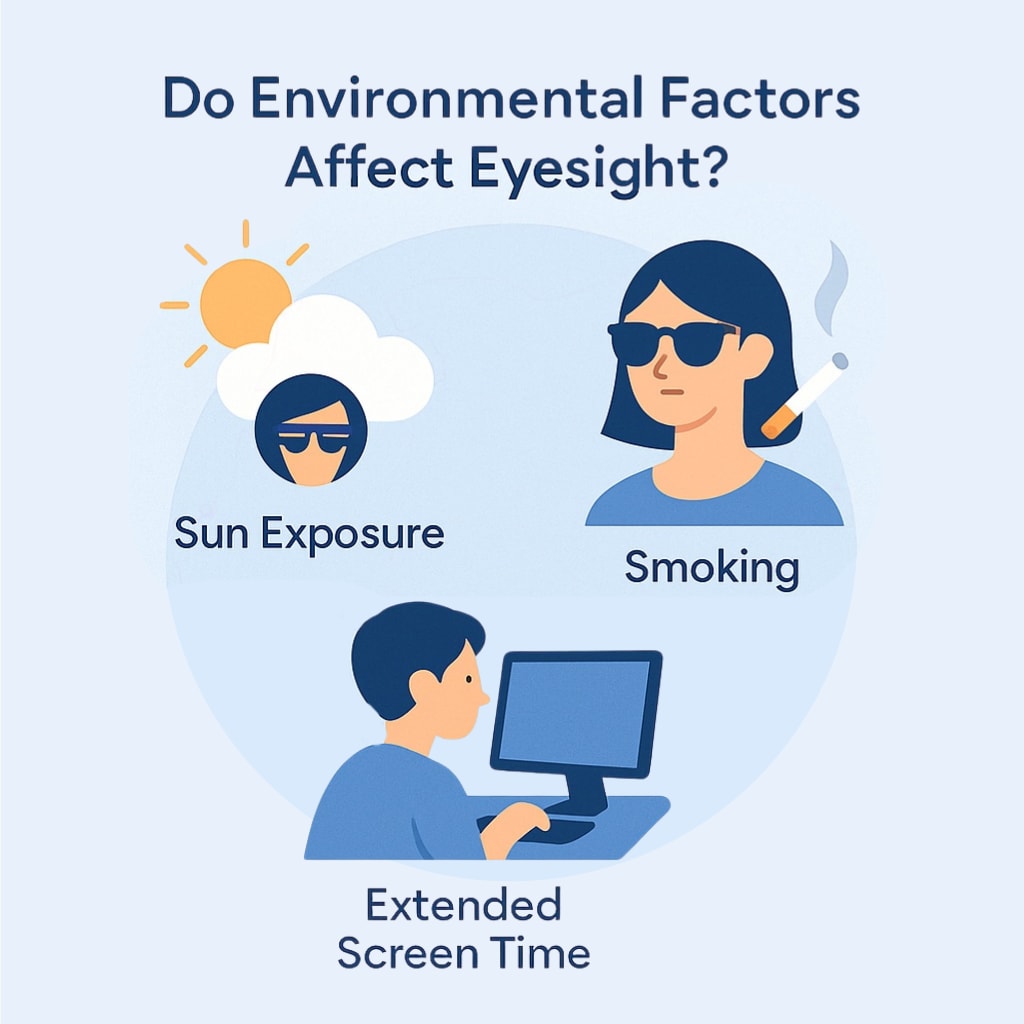
While genetics play a role, lifestyle and environmental habits can significantly influence your eye health. Overexposure to sunlight without proper eye protection increases the risk of cataracts and macular degeneration. Smoking is another risk factor, as it is linked to higher rates of both conditions. Extended screen time and frequent close-up tasks have also been associated with a rise in nearsightedness, especially among younger people.
Practicing healthy habits such as wearing UV-blocking sunglasses, avoiding tobacco, and giving your eyes regular breaks from screens can help reduce the risk of future vision problems. Even if you’re genetically predisposed to certain conditions, your daily choices still matter.
Treatment depends on the cause. Most refractive errors can be corrected with glasses or contact lenses. If you’re looking for reliable lens options, consider:
Amblyopia is typically treated in childhood using corrective lenses, patching, or medicated drops to strengthen the weaker eye.
Macular degeneration treatment depends on the type. Dry AMD is managed through vitamins and lifestyle changes, while wet AMD may require injections.
Glaucoma can be managed with prescription eye drops, laser treatments, or surgery but early detection is critical.
Cataracts are treated with surgery, where the cloudy lens is replaced with a clear, artificial one. It’s one of the most effective procedures in eye care.
You can’t control your genes, but you can take proactive steps to support your vision. A balanced diet rich in leafy greens, orange vegetables, and omega-3 fatty acids supports overall eye health. Staying hydrated, getting enough sleep, and avoiding smoking are all habits that benefit your eyes over time.
Protective steps like wearing sunglasses that block 100% of UVA and UVB rays and following the 20-20-20 rule during screen use can also help reduce strain and long-term damage. Most importantly, schedule regular eye exams, even if your vision seems fine. Early diagnosis of common conditions gives you the best chance to preserve your eyesight as you age.
Whether your vision issues are inherited, environmental, or both, Lens.com is here to help. We offer a wide selection of trusted contact lenses, including daily disposables, toric lenses for astigmatism, and multifocal lenses. Our prices make it easier to stay on top of your eye care without overpaying.
Need a prescription update? Try our convenient online vision test to renew your contact lens prescription from home. You can also reorder your favorites, set up refill reminders, and shop top brands in one place. Keep your eyes healthy and your vision clear with Lens.com.
Have a question? Call us at
1-800 LENS.COM (536-7266)
Online 24/7
© 1995-2021 Lens.com. All Rights Reserved. Lens.com is a contact lens replacement company, and a direct to consumer marketer of contact lenses.
As a contact lens replacement center, we can only sell you contact lenses that you have a valid prescription for, and are wearing successfully.