The History of
Contact Lenses
A chain of experiments that solved four hard problems, from optics, fit, oxygen, and manufacturing.

Five centuries,
of evolution.
Every real advance in this story solved 4 problems. Most of the famous names solved exactly one, and got credit for all four.
Bend light
Put a corrective surface in front of the pupil without the eye rejecting it.
Meet a living surface
The eye moves, blinks, and is never the same shape twice. Glass is not.
Let the cornea breathe
The cornea has no blood vessels. It draws oxygen from the air, and a lens sits in the way.
Make one into millions
A lens ground by hand for one patient is a curiosity. The same lens made cheaply is an industry.
Before anyone could build one, they had to imagine it.
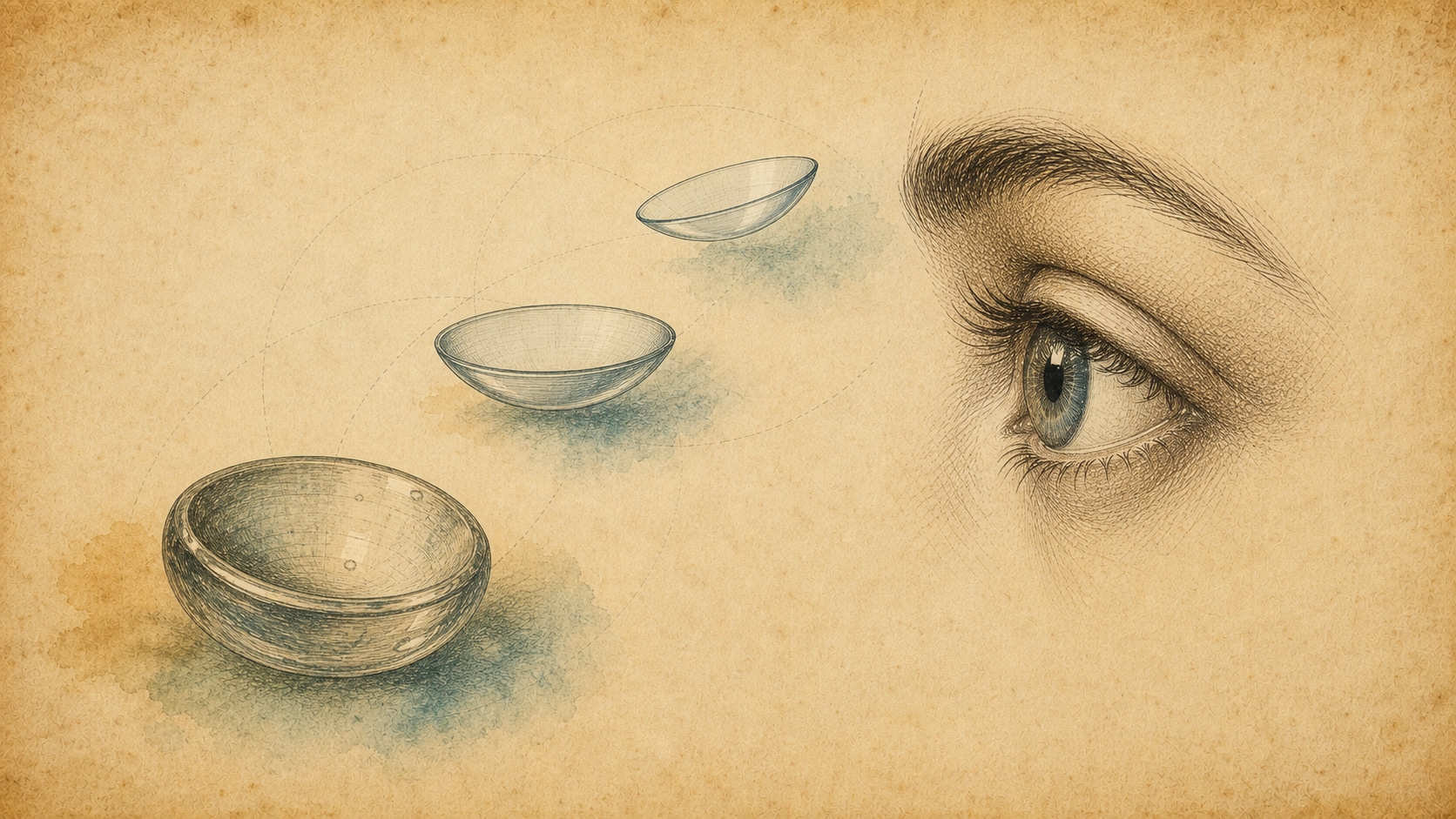
Leonardo’s notebook sheet from around 1508 is the first thing anyone points to, and it’s the most misread page in the whole story. He wasn’t sketching a contact lens. He was working out what happens to vision when the eye sits behind water, and he described putting your face in a bowl to find out.
That’s a note about optics, not a wearable object. The same goes for what came next. In 1637 Descartes described a water-filled tube pressed against the eye, which does move the refracting surface onto the cornea, but it sticks out several inches and you can’t close your eyelid over it.
In 1801 Thomas Young built something similar and used it to study accommodation, not to correct anyone’s sight. The first person to describe the real thing was John Herschel in 1845, who proposed taking an impression of the eye and filling a molded glass shell with animal jelly. He never built it. He just wrote down, correctly, what would need to happen.
So the first three hundred and thirty years of this history produced no lenses at all. What they produced was a clear description of the problem.

Wellcome Collection M0011676. CC BY 4.0

.jpg?width=800)
Four people got there at almost the same time.
There’s no clean invention moment here, which is why the question “who invented contact lenses” has never had one honest answer.

Public domain, via Wikimedia Commons.
Friedrich Anton Müller
A glassblower produces a thin glass shell to protect a diseased eye that could not close. It corrects nothing. It’s the first time a shell is worn on an eye for a medical reason.
Adolf Eugen Fick
Publishes the first systematic experiments fitting large glass corrective shells, working first on rabbits, then on himself, then on volunteers. He coins the term for them.
Eugène Kalt
Independently fits glass shells in Paris for patients with keratoconus, a cone-shaped cornea. Treatment first, correction second.
August Müller
A medical student with severe myopia commissions a powered glass scleral lens, wears it himself, and writes his dissertation on it. First real correction of a refractive error.
Protection, treatment, then correction. Three different goals in three years, from three people who mostly didn’t know about each other.
Then somebody made it smaller.
Every glass lens until this point covered the whole visible eye. The single biggest change in five centuries is a change in diameter.
Ground glass scleral lens. It rests on the white of the eye, not the cornea. Wearable for a few hours before the eye protests.
Both circles are drawn in true proportion to each other. The dashed circle is an average adult cornea at 11.7 mm.

CC BY-SA 4.0, via Wikimedia Commons.
Kevin Tuohy was working in a Los Angeles lab in 1948 when a scleral lens broke and left only the small central portion. The story of exactly how deliberate this was gets told several ways, and the record doesn’t settle it. What isn’t in dispute is what he filed in 1950 and what it changed.
A corneal lens is small enough for the eyelid to slide across it, and it floats on the tear film instead of clamping onto the sclera. Tears move underneath it every time you blink. That’s what made all-day wear possible for the first time.
The same work was happening elsewhere. Kyoichi Tanaka developed a practical corneal lens in Japan around 1951 and commercialized it through what became Menicon. The corneal revolution wasn’t only American, and it wasn’t only one person.
The trade-off arrived with it. PMMA is a hard plastic that passes almost no oxygen at all. The lens had gotten small enough to wear. It hadn’t yet gotten breathable.

The first soft lenses were spun at home, on a rig built from a children’s construction set.
Otto Wichterle, Christmas 1961, after being removed from his own institute.
The cornea has no blood vessels. It still needs oxygen.
Material science changed the question from whether a lens could correct vision to whether it could share the eye safely, all day, for years.

Wellcome Collection M0004570. CC BY 4.0

CC BY-SA 3.0 cz, via Wikimedia Commons.
Make the material
Otto Wichterle and Drahoslav Lím developed a water-loving polymer called pHEMA in 1954 and published on hydrophilic gels in Nature in 1960. The material could hold water, stay soft, and sit against living tissue without the tissue rejecting it. That’s a chemistry result, not a lens.
Then make the method
Turning a gel into a repeatable optical surface took another seven years. Wichterle’s spin-casting rig, assembled from a Merkur construction set and a bicycle dynamo on his kitchen table, produced the first usable soft lenses. Method, not material, is what unlocked production.
Then solve oxygen properly
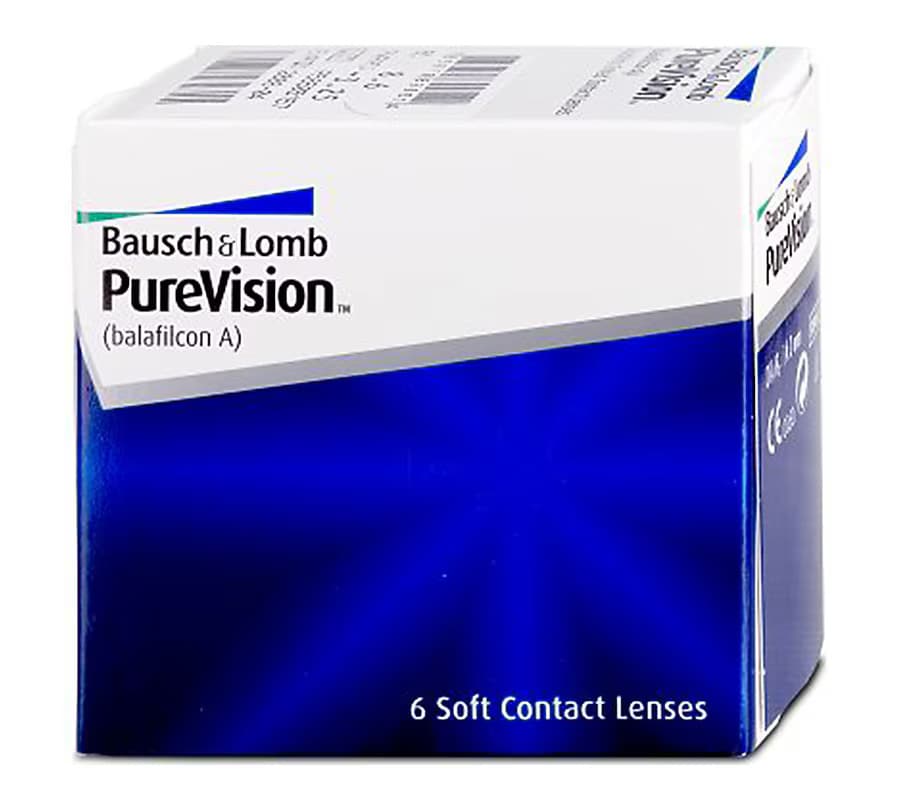
Soft hydrogels were comfortable but still limited how much oxygen reached the cornea. Two separate lines of work fixed it: rigid gas-permeable materials from Norman Gaylord’s silicone-acrylate patent in 1974, and silicone hydrogels reaching the market around 1999. Only then did safe extended wear become a reasonable claim.
One lens becomes millions.
The last problem wasn’t optical. It was industrial. A lens ground by hand for one patient is a curiosity.
Years between Leonardo’s note on the eye in water and Descartes describing a tube placed against the cornea.
Years between that first note and the first lens worn to correct a refractive error, in 1888.
Years from the first glass shell on an eye to a practical corneal lens you could wear all day.

CC BY-SA 4.0, via Wikimedia Commons.
Denmark got there first. MIA, later Danalens, launched in 1983 as the first lens made and marketed as disposable. Four years later Acuvue arrived as a mass-market lens designed around scheduled replacement, and the economics of the whole category changed.
Then came the rules. The 2004 Fairness to Contact Lens Consumers Act and the FTC’s Contact Lens Rule gave patients the right to their own prescription, which is the reason you can buy lenses from someone other than the person who fitted them. Access is part of this history too.
The lens begins to act.
For five centuries a contact lens was a passive optical surface. In the last fifteen years it started doing other jobs.

2002A lens that reshapes the cornea overnight
Paragon CRT received U.S. approval for overnight corneal reshaping, or orthokeratology. You wear a rigid lens while you sleep, it flattens the cornea slightly, and you see without correction during the day. The effect wears off, so it has to be repeated nightly.
2016A lens that measures
The FDA permitted marketing of the Triggerfish sensor, a lens that records corneal changes related to eye pressure over a single 24-hour period. It’s a diagnostic recording device for one day of data, not a continuous glaucoma monitor, and the difference between those two descriptions is the whole claim.
2018A lens that responds to light
The FDA cleared a photochromic contact lens that changes how much light it absorbs in response to UV and visible light. The lens itself adapts. Nothing about the prescription changes.
2019A lens that slows a condition
MiSight 1 day received U.S. approval to slow the progression of myopia in children who are between 8 and 12 years old when first fitted. That age range is part of the approval, not a footnote to it. This is the first time a contact lens was approved to change the course of a condition rather than compensate for it.
2022A lens that delivers a drug
Theravision with Ketotifen became the first U.S.-approved drug-eluting contact lens, releasing an antihistamine for itch associated with allergic conjunctivitis while correcting vision at the same time. One object, two jobs.
All 40 milestones.
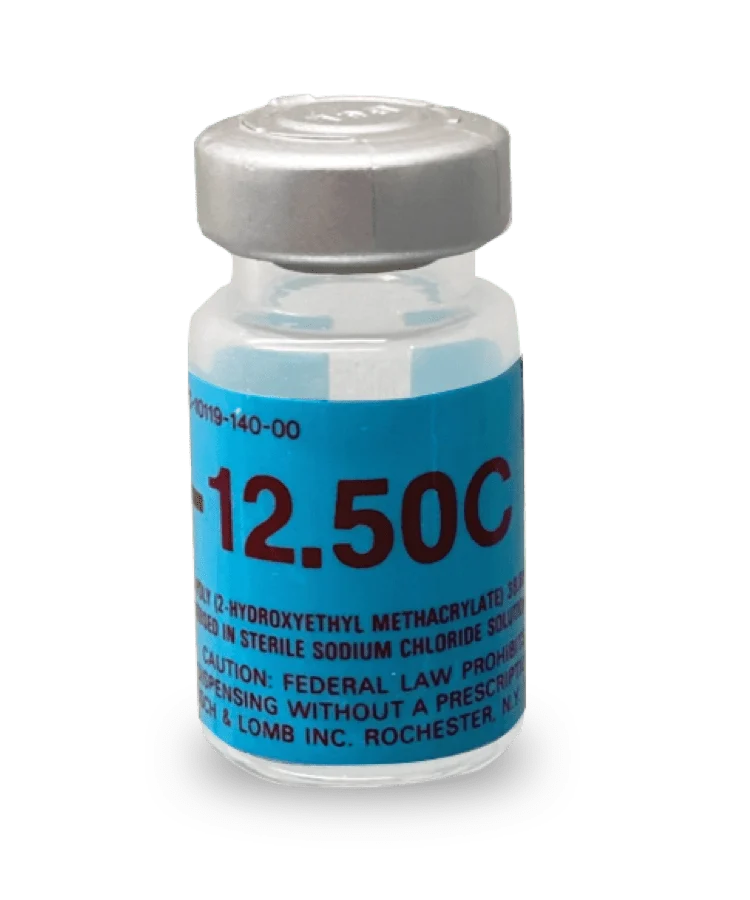
The chapters above tell the story. This is the underlying record, filterable by the problem each milestone solved.
Showing all 40 milestones

Public domain, via Wikimedia Commons.
No milestones in that category.
Where the record is genuinely unsettled.
Histories of contact lenses disagree with each other more than you’d expect, and the disagreements are worth knowing about rather than hiding.
József Dallos’s exact chronology in the 1930s varies between sources. The Tuohy story is told as a lab accident in some accounts and as deliberate design in others. European soft-lens availability is dated to 1962 in one account and 1963 in another, depending on whether you mean available to practitioners or commercially on sale. Several of the 1880s milestones were simultaneous enough that priority claims depend on which definition of “contact lens” you accept.
We’ve kept product histories separate from independent scholarship throughout. A manufacturer’s account is good evidence for its own launch dates and poor evidence for settling a disputed global first. Where two credible sources give different years, this page shows the range instead of picking a winner.
None of this is fitting advice. A contact lens is a medical device, and what’s right for your eyes comes from an eye care professional who has examined them, not from a history page.
View our sources.
This page draws on 43 sources: primary papers, patents, regulator records, museum collections, peer-reviewed histories and manufacturer archives.
Among them: the British Optical Association Museum at the College of Optometrists, EyeWiki and the American Academy of Ophthalmology, the U.S. Patent and Trademark Office, the National Museum of American History, Contact Lens Spectrum, Nature, PubMed Central, and the corporate history archives of Menicon and Bausch + Lomb.
Open the complete source register
-
S01
Contact Lens History4
Lens.com · Current page · Accessed 2026-08-18
Baseline copy and structure audit. -
S02
The history of contact lenses2
College of Optometrists / British Optical Association Museum · Professional museum history · Accessed 2026-08-18
Backbone for chronology and nuanced early attribution. -
S03
History of Contact Lenses2
Contact Lens Spectrum; Patrick J. Caroline and Craig Norman · Expert historical article · 2022-08
1887–89 production, Fick, Müller, museum context. -
S04
US2510438A: Contact lens1
Kevin M. Tuohy / U.S. patent record · Patent · Filed 1948-02-28; granted 1950-06-06
Tuohy filing/grant dates and patent design. -
S05
The 75th anniversary of the Tuohy corneal contact lens: A review2
Contact Lens & Anterior Eye · Peer-reviewed historical review · 2023
1947 experiments, 1948 filing, 1950 grant, disputed antecedents. -
S06
Hydrophilic Gels for Biological Use1
Otto Wichterle and Drahoslav Lím, Nature · Original research paper · 1960
Publication milestone and author credit. -
S07
History of the development of a soft contact lens2
PubMed-indexed historical article · Peer-reviewed history · 1999
1954 hydrogel development and 1961 first soft lenses. -
S08
Otto Wichterle: scientist and inventor2
PubMed Central · Peer-reviewed historical profile · 2009
Hydrogel development, patient work, 1961 spin casting. -
S09
Contact lenses collection/exhibit2
National Technical Museum, Prague · Museum collection page · Accessed 2026-08-18
1961 machine, first lenses, and manufacturing plates. -
S10
History & Heritage3
Bausch + Lomb · Manufacturer history · Accessed 2026-08-18
SofLens, toric, bifocal, and PureVision company milestones. -
S11
Soflens contact lenses, Aseptor patient unit2
Smithsonian Institution · Museum object record · 1971 object / accessed 2026-08-18
March 1971 FDA approval and object context. -
S12
USRE31406: Oxygen-permeable contact lens composition1
Norman Gaylord / U.S. patent record · Patent · Priority 1972; original grant 1974
Silicone-acrylate gas-permeable material milestone. -
S13
Menicon corporate history3
Menicon · Manufacturer history · Accessed 2026-08-18
Tanaka dates and Menicon O2 release. -
S15
Key milestones in Johnson & Johnson history3
Johnson & Johnson · Manufacturer heritage timeline · Accessed 2026-08-18
1987 Acuvue and 1993 1-Day Acuvue claims. -
S16
Thirtieth anniversary of daily disposable contact lenses2
Clinical and Experimental Optometry · Peer-reviewed historical analysis · 2024
Explains regional-to-global rollout across 1993–95 and proposes 1994 as a defensible marker. -
S17
P980006: PureVision contact lens1
U.S. Food and Drug Administration · PMA record · Decision 1999-02-05
U.S. silicone-hydrogel approval milestone. -
S18
FTC issues final rule implementing the Fairness to Contact Lens Consumers Act1
U.S. Federal Trade Commission · Regulatory release · 2004-06
2003 act and 2004 prescription-release/verification rule. -
S19
Decorative, non-corrective contact lenses guidance1
U.S. Food and Drug Administration · Regulatory guidance · Law effective 2005-11-09
All U.S. contact lenses, including decorative, treated as medical devices. -
S20
P870024/S043: Paragon CRT1
U.S. Food and Drug Administration · PMA supplement / approval documentation · 2002
U.S. overnight orthokeratology approval milestone. -
S21
FDA permits marketing of device that senses optimal time to check eye pressure1
U.S. Food and Drug Administration · Regulatory release · 2016-03-04
Triggerfish indication and important limitation that it does not measure IOP directly. -
S22
K180299: Photochromic contact lens1
U.S. Food and Drug Administration · 510(k) record · Decision 2018-04-10
Photochromic clearance date and device scope. -
S23
P180035: MiSight 1 day1
U.S. Food and Drug Administration · PMA record · Decision 2019-11-15
Approved myopia-progression indication and age range. -
S24
Theravision with Ketotifen prescribing information1
U.S. Food and Drug Administration · Drug/device label · Initial U.S. approval 2022
First U.S.-approved drug-eluting contact lens, indication and limitations. -
S25
Contact lens materials: a materials science perspective2
Peer-reviewed open-access review · Technical review · 2019
Glass, PMMA, RGP, hydrogel, silicone-hydrogel material tradeoffs. -
S26
Smart contact lenses: advances, challenges and future directions2
PubMed-indexed review · Future-technology review · 2025
Evidence-calibrated future research rail. -
S27
About contact lenses1
U.S. Centers for Disease Control and Prevention · Public-health guidance · Accessed 2026-08-18
Current device and safe-wear context; optional U.S. prevalence statistic with date. -
S28
Contact Lenses2
EyeWiki / American Academy of Ophthalmology community · Clinical reference · Accessed 2026-08-18
Cross-check dates, types, physiology, and disputes. -
S29
Contact lens objects2
Science Museum Group Collection · Museum collection search · Accessed 2026-08-18
Object and image shortlist across historical eras. -
S30
Smithsonian Open Access FAQ1
Smithsonian Institution · Rights policy · Accessed 2026-08-18
Determine whether specific assets are marked CC0 and commercially reusable. -
S31
Corneal lenses / Tuohy object record2
National Museum of American History, Smithsonian · Museum object record · Accessed 2026-08-18
Tuohy artifact and patent context. -
S32
The Contact Lens Museum2
Contact Lens Museum · Specialist museum · Accessed 2026-08-18
Expert consultation and objects from a collection of more than 2,000 items. -
S33
British Optical Association Museum: what we do/contact1
College of Optometrists · Museum contact · Accessed 2026-08-18
Historical inquiry, filming, object access, and curator outreach route. -
S34
Science Museum Group collections reuse / Creative Commons1
Science Museum Group · Rights policy · Accessed 2026-08-18
Rights triage for museum collection images. -
S35
For journalists1
National Technical Museum, Prague · Press contact · Accessed 2026-08-18
Outreach route for Wichterle machine and collection imagery. -
S36
The history of contact lenses4
ACUVUE · Competitor page · Accessed 2026-08-18
Competitive experience/content audit only. -
S37
A brief history of contact lenses4
1-800 Contacts · Competitor page · Accessed 2026-08-18
Competitive experience/content audit only. -
S38
When were contact lenses invented?4
All About Vision · Competitor page · Accessed 2026-08-18
Competitive experience/content audit only. -
S39
How contact lenses work4
CooperVision · Competitor page · Accessed 2026-08-18
Competitive experience/content audit only. -
S41
The first powered contact lens and August Müller’s dissertation2
Contact Lens & Anterior Eye / ScienceDirect · Peer-reviewed historical article · 2006
August Müller, Karl Otto Himmler, 1889 dissertation, and approximately −14 D correction. -
S42
The Müller contact lens2
Survey of Ophthalmology / ScienceDirect · Peer-reviewed historical review · 1989
August Müller’s brief tolerance, edema, tear flow, and edge observations. -
S44
In Contact: Chapter 1 history3
Contamac · Industry educational history · 2024
Danalens, RGP, toric, manufacturing chronology, and 1962 Western European soft-lens availability cross-check. -
S45
Contact Lens Rule1
U.S. Federal Trade Commission · Current regulator rule page · Rechecked 2026-08-19
Current prescription-release and seller-verification framework. -
S46
Decorative, Non-corrective Contact Lenses1
U.S. Food and Drug Administration · Current regulator guidance · Rechecked 2026-08-19
Current U.S. device and prescription framework for decorative lenses.
Five centuries later, you can order them online.
Everything on this page was a hand-ground curiosity within living memory of some of these dates. Today the lens Wichterle spun on a kitchen table is a next-day delivery.
Want to know more?
Who invented contact lenses?
No single person. Adolf Eugen Fick published the first systematic fitting experiments in 1888, Eugène Kalt independently fitted shells for keratoconus the same year, and August Müller wore the first lens made to correct a refractive error in 1889. Leonardo and Descartes described the optics centuries earlier but never made a wearable lens.
When were soft contact lenses invented?
The pHEMA hydrogel material was developed by Otto Wichterle and Drahoslav Lím in 1954, and Wichterle produced the first usable soft lenses on a home-built spin-casting rig in 1961. Soft lenses reached European practitioners around 1962 to 1963, and Bausch + Lomb’s SofLens received U.S. approval in 1971.
What were the first contact lenses made of?
Blown and ground glass. The earliest wearable lenses from the late 1880s were large glass shells that rested on the white of the eye. Acrylic plastic arrived in 1938, all-plastic corneal lenses around 1948, and soft water-based hydrogels in the 1960s.
Why did early contact lenses cover the whole eye?
Glass could not be made thin and precise enough to balance on the cornea alone, so early lenses were around 23 mm across and rested on the sclera. Kevin Tuohy’s corneal lens patent, filed in 1950, brought that down to roughly 9.5 mm, small enough for the eyelid to pass over and for tears to circulate underneath.
When did daily disposable contact lenses appear?
MIA, later Danalens, launched in Denmark in 1983 as the first lens made and sold as disposable. Acuvue brought scheduled replacement to the mass market in 1987, and single-use daily disposables spread internationally through the mid 1990s.
Can a contact lens do anything besides correct vision?
Yes, and only recently. Approved examples include overnight corneal reshaping (2002), a 24-hour diagnostic sensor (2016), a photochromic lens that adapts to light (2018), a lens approved to slow myopia progression in children (2019), and a drug-eluting lens that releases an antihistamine (2022).
Similar Articles
-

5 Tips for Switching From Glasses to Contacts
-

Online vs. In-Person Eye Exams: Which is Right for Your Vision Needs?
-

Advanced Contact Lens Finder – Search by Feature, Diameter (DIA), Base Curve (BC), Overnight Wear & More
-

Can You Use Contact Solution as Eye Drops? The Definitive Answer
-
10 Common Contact Lens Mistakes to Avoid