Table of Contents
You may have started holding menus farther away, turning on an extra lamp to read, or feeling less comfortable driving after dark. These are familiar examples of how aging affects your eyes, but not every vision change should be dismissed as “just getting older.” Some changes develop gradually and can be corrected or managed, while others may point to an eye condition that needs treatment. Knowing what is normal can help you adjust your routine and recognize when it is time for an eye exam.
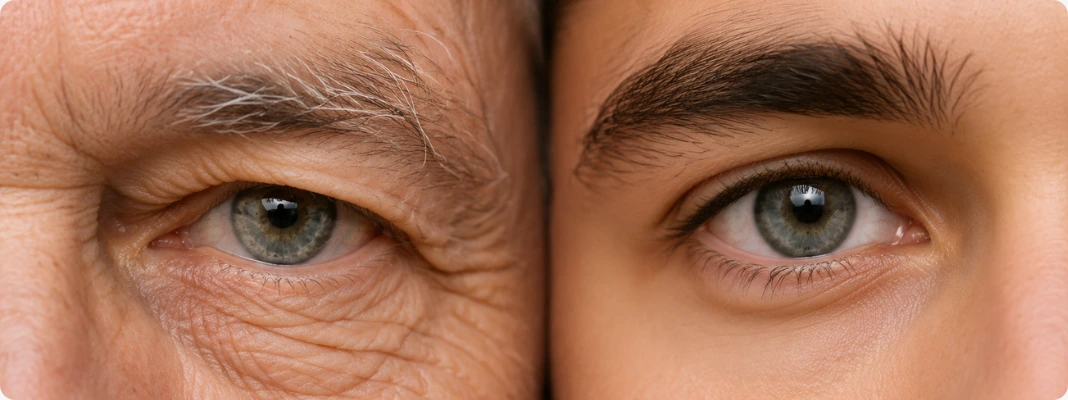
How does aging affect your eyes?
Aging can make it harder to focus up close, see clearly in dim light, distinguish similar colors, and keep your eyes comfortably moist. These age-related vision changes often develop slowly, but your risk of cataracts, glaucoma, age-related macular degeneration, and other eye diseases also rises over time. Trouble reading nearby text is commonly caused by presbyopia, which occurs as the eye’s natural lens becomes harder and less flexible. Depending on your prescription, lifestyle, and eye health, contact lenses for presbyopia may help correct near vision while also supporting intermediate and distance tasks.
Significant vision loss is not a routine or unavoidable part of aging, so regular eye exams remain important even when your eyesight seems unchanged. Starting to struggle with phone text, menus, or close-up tasks after 40? Learn what multifocal contact lenses are so you can understand one common option for age-related near vision changes.
What happens to your eyes as you age?
What happens to your eyes as you age often becomes noticeable during everyday tasks such as reading, driving at night, or moving between bright and dim spaces. Most normal vision changes with age develop gradually and can be managed with an updated prescription, better lighting, or appropriate eye care. Sudden or rapidly worsening changes are different and should be checked promptly.
Near vision becomes blurry after 40
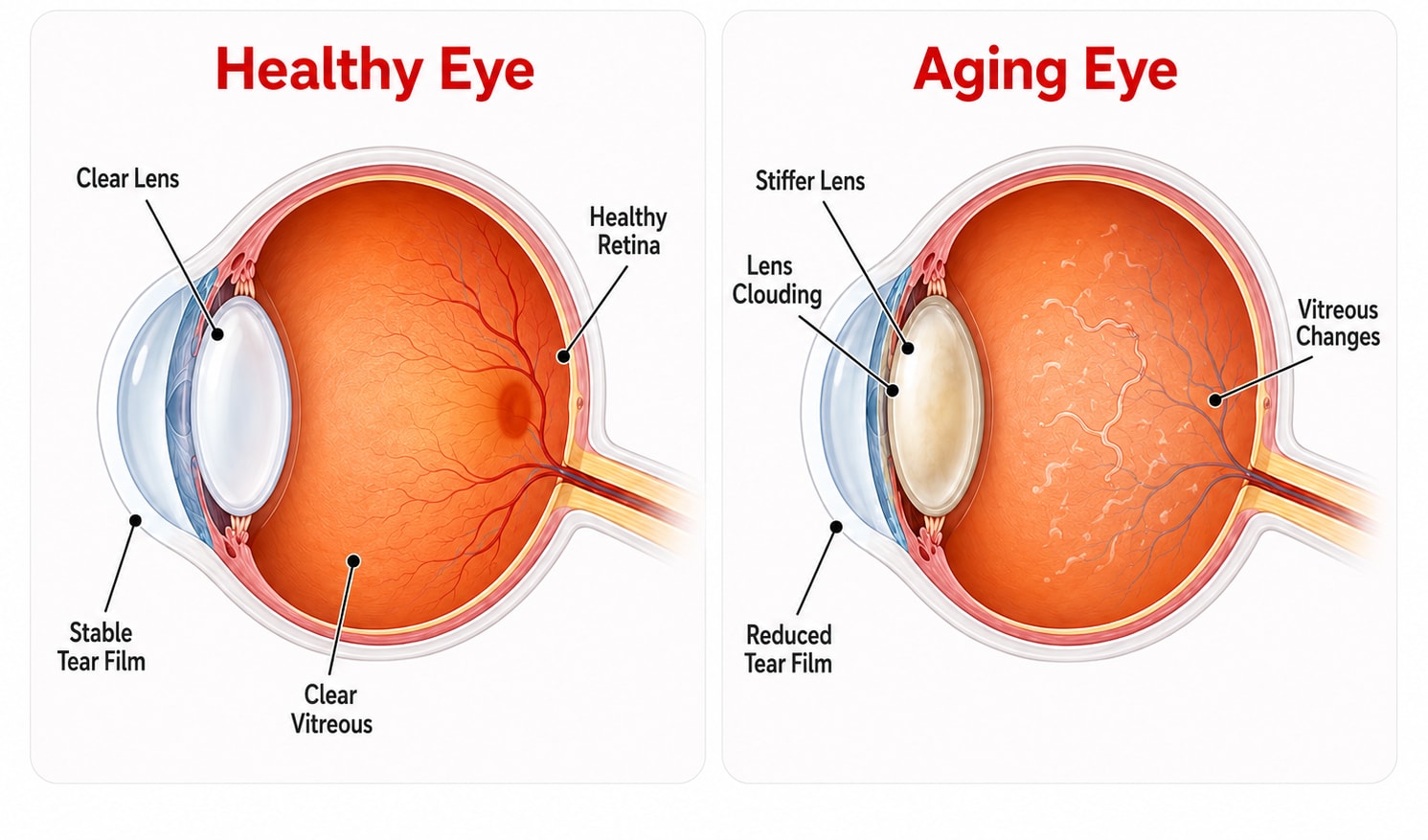
The natural lens inside your eye becomes harder and less flexible over time, making it more difficult to focus on nearby objects. This change is called presbyopia, and it often becomes noticeable in your 40s when you start holding text farther away, needing brighter light, or feeling eye strain during close work. Glasses and multifocal contact lenses for presbyopia can help correct the condition based on your vision needs.
Your eyes may feel drier
As you age, your eyes may produce fewer tears, or the tears may not work well enough to keep the surface of your eyes moist. Dry eyes can cause burning, grittiness, redness, light sensitivity, excessive watering, and blurry vision, and it may make contact lenses less comfortable. Adults age 50 and older have a higher risk, so ongoing symptoms are worth discussing with an eye care professional.
Night vision and glare become more difficult
Your pupils become smaller and may react more slowly to changes in light as you get older. This can make it harder to adjust after entering a dark room or deal with glare from headlights while driving at night. Mention new night-driving difficulty during your eye exam, especially if it affects how safely or confidently you drive.
Colors and contrast look different
Aging can make similar shades harder to tell apart and reduce your ability to see an object against a background of nearly the same color. You may notice dark blue and black looking more alike or find low-light rooms harder to navigate. Brighter task lighting and stronger color contrast around steps, switches, and household objects can make daily activities easier.
Floaters become more noticeable
Floaters can look like small spots, threads, or cobwebs drifting through your vision. They become more common as the gel inside your eye changes with age, and a few familiar floaters are often harmless. Seek urgent eye care if many new floaters appear suddenly, especially with flashes of light, blurry areas, or a curtain-like shadow across your vision.
Which age-related eye conditions can threaten vision?
Some age-related eye diseases can damage vision if they are not found and managed early. They are not simply harmless signs of getting older, and several may cause few or no symptoms at first. Regular comprehensive eye exams can detect changes before you notice a problem.
Cataracts
A cataract is a cloudy area in the eye’s natural lens, which normally helps focus light. Cataracts in older adults may gradually cause blurry or hazy vision, faded colors, glare, halos, and difficulty seeing at night. Cataracts do not always require immediate surgery, but an eye doctor can monitor whether they are beginning to interfere with reading, driving, or other daily activities.
Glaucoma
Glaucoma is a group of diseases that damage the optic nerve, which carries visual information from your eye to your brain. Glaucoma in older adults often develops without early symptoms and may slowly reduce side vision before you notice a change. A comprehensive dilated exam is important because an updated glasses or contact lens prescription cannot restore vision already lost to optic nerve damage.
Age-related macular degeneration
Age-related macular degeneration damages the macula, the part of the retina responsible for sharp central vision. It can make reading, recognizing faces, driving, and seeing fine details more difficult, although early AMD may cause no noticeable symptoms. Contact an eye care professional promptly if straight lines suddenly look wavy or crooked or a blurry area appears near the center of your vision.
Diabetic retinopathy
Diabetic retinopathy occurs when diabetes damages the small blood vessels in the retina, the light-sensitive tissue at the back of the eye. The condition may have no symptoms in its early stages, but later changes can include blurry vision or dark floating spots. If you have diabetes, follow the dilated-exam schedule recommended by your eye care and medical teams, even when your vision seems normal.
How can you tell normal aging from an eye problem?
Normal vision changes with age usually develop gradually, while sudden, painful, one-sided, or rapidly worsening symptoms are more concerning.
The table below can help you decide when a routine eye exam may be appropriate and when you should seek care sooner. It cannot identify the cause of a vision change.
| Vision Change | Normal Aging Signs | More Concerning Signs | Suggested Action |
|---|---|---|---|
| Near vision | Gradually needing more distance or brighter light to read | Sudden blur or a rapid change in one eye | Schedule a routine eye exam |
| Dryness | Mild burning or grittiness that comes and goes | Pain, discharge, marked redness, or lasting light sensitivity | Remove contacts if worn and seek care |
| Night vision | Gradually needing more light or noticing glare | Sudden difficulty seeing or feeling unsafe while driving | Stop driving and arrange an eye exam |
| Floaters | A few familiar spots or strands that remain stable | Many new floaters, flashes, or a curtain-like shadow | Seek urgent eye care |
| Color and contrast | Gradual difficulty distinguishing similar shades | Sudden color changes or missing areas of vision | Contact an eye care professional |
| Blurry vision | A slow prescription change affecting daily tasks | Sudden, severe, one-sided, or persistent blur | Seek prompt evaluation |
Note: This table can help organize symptoms, but it cannot determine their cause. An eye exam is the appropriate way to distinguish normal aging from a prescription change, dry eye, or an eye disease.
Can you improve or reverse aging eyesight?
You cannot reverse the normal aging process inside your eyes, but you can often correct or manage how it affects your vision. If you are searching for ways to reverse aging eyesight, a more realistic goal is to identify the cause of the change and choose the appropriate correction or treatment. For example, presbyopia cannot be reversed, but glasses, contact lenses, prescription drops, or certain procedures may make close-up tasks clearer.
Other age-related problems may also improve after proper care. Dry-eye treatment depends on the cause and may include artificial tears, prescription medication, environmental changes, or other therapies. Cataract surgery removes the cloudy natural lens when cataracts interfere with everyday activities, and about nine out of 10 patients see better afterward.
Treatments for glaucoma, age-related macular degeneration, and diabetic retinopathy may slow damage or help prevent further vision loss, but they do not make the eye biologically younger or restore every change that has already occurred. Eye exercises are not proven to eliminate the need for vision correction or reverse presbyopia. Healthy habits can support your overall eye health, but they should not replace an exam, diagnosis, or prescribed treatment.
Depending on the cause of your vision changes, your options may include:
- Progressive contact lenses, presbyopia contact lenses, or another professionally recommended correction for blurry near vision
- Treatment for dry eye after an eye care professional identifies what is affecting your tears
- Cataract surgery when cloudy vision begins to interfere with reading, driving, or other daily activities
- Medication, injections, laser procedures, surgery, or monitoring for a diagnosed eye disease
- Better lighting, stronger contrast, and low-vision tools when ordinary correction cannot fully restore sight
Be cautious with supplements marketed as universal “vision reversal” products. AREDS2 supplements can help certain people with intermediate or late age-related macular degeneration, but they do not prevent AMD from developing or treating every type of age-related vision change. The formula also contains high doses of vitamins and minerals that may interact with medicines, so discuss it with an eye care professional before taking it.
Can contact lenses correct age-related vision changes?
Contact lenses can correct some age-related vision changes, especially presbyopia, but the right option depends on your prescription, eye health, lifestyle, and tear quality. Getting older does not automatically mean you must stop wearing contacts. A current eye exam and contact lens fitting can help determine whether a different design, material, or wearing schedule would suit your changing vision.
A comparison of types of contact lenses can help you understand the materials, designs, and replacement schedules your eye care provider may discuss during your fitting.
Multifocal contact lenses
Multifocal contact lenses contain different prescription powers that help you focus at near, intermediate, and far distances. They can be useful when you need to read a phone, work at a computer, and see across a room without constantly switching eyewear. Results and adaptation vary, so your eye care provider may need to adjust the lens design or prescription during the fitting process.
Monovision contact lenses
Monovision usually corrects one eye more for distance and the other more for near tasks. Your brain combines the two images, but some people notice reduced depth perception, visual imbalance, or difficulty in dim light and while driving at night. A contact lens trial can help determine whether your eyes adapt comfortably before you commit to this type of correction.
Dryness and changing lens comfort
Dry eyes with age may shorten your comfortable wearing time or make a lens that once worked well feel irritating. Adults over 50 and contact lens wearers both have a higher risk of dry eye, but treatment should be based on the cause rather than trial-and-error changes at home. Do not switch lens materials, use unapproved drops, or extend your wearing schedule without guidance from your eye care provider.
How can you protect your eyes as you age?
You cannot prevent every age-related condition, but these habits can support your eye health and help problems get found earlier:
- Schedule comprehensive dilated eye exams as often as your eye care professional recommends for your age and risk factors.
- Wear sunglasses that block 99% to 100% of UVA and UVB rays, and add a brimmed hat for extra outdoor protection.
- Do not smoke, and ask a healthcare professional for help quitting if needed.
- Manage diabetes, high blood pressure, and high cholesterol with your healthcare team.
- Eat a varied diet that includes leafy greens, colorful fruits and vegetables, fish, and other nutrient-rich foods.
- Use bright, well-positioned lighting around reading areas, stairs, kitchens, and hallways.
- Give your eyes regular screen breaks and blink often during extended close work.
- Keep your glasses or contact lens prescription current.
- Tell your eye doctor and prescribing clinician about your medications and any new vision changes.
- Wear safety glasses or goggles during sports, repairs, yardwork, and other activities that could injure your eyes.
These steps support healthy vision, but they do not replace professional care or guarantee that an eye disease will not develop. Report new symptoms rather than waiting for your next routine appointment.
When should older adults get an eye exam?
Healthy adults age 65 and older are generally advised to have a comprehensive medical eye evaluation every one to two years. The right schedule may be more frequent depending on your symptoms, family history, general health, medications, contact lens use, and any known eye condition. Follow the timing recommended by your own eye care professional rather than waiting for your vision to feel worse.
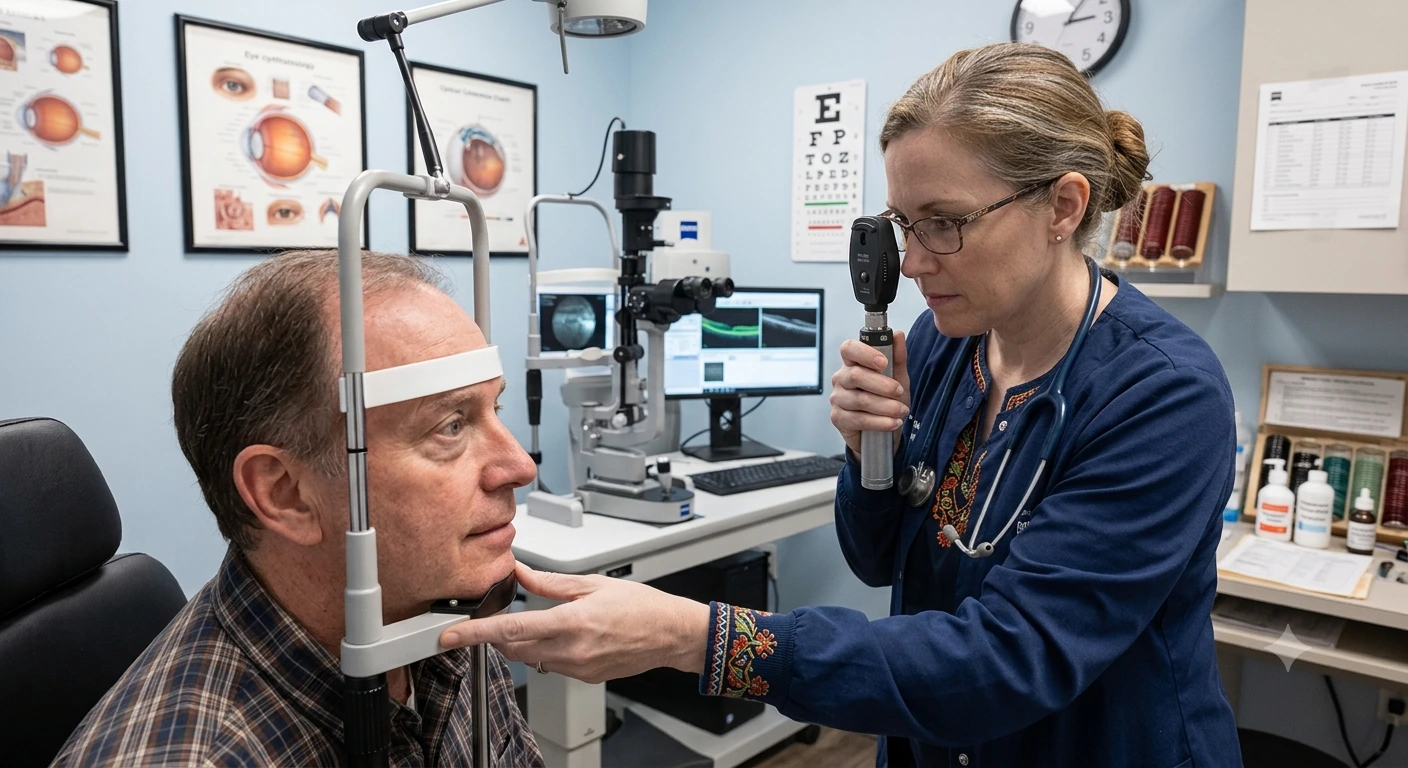
A comprehensive dilated exam checks much more than how clearly you can read an eye chart. It allows the doctor to examine your lens, retina, optic nerve, and other structures for diseases that may not cause early warning signs. This is why regular exams remain an important part of eye care for seniors, even when your current prescription seems fine.
You may need more frequent exams if you:
- Have diabetes or high blood pressure
- Have a family history of glaucoma or age-related macular degeneration
- Wear contact lenses
- Take medication that may affect your eyes or vision
- Have had eye surgery or an eye injury
- Have a diagnosed eye disease
Your eyes naturally change with age, but permanent vision loss should not be accepted as unavoidable. Gradual trouble with close focus, dryness, dim lighting, or contrast may be manageable with an updated prescription, better lighting, or appropriate treatment. Regular comprehensive exams help separate normal aging from eye disease before a problem becomes harder to treat. Seek prompt care whenever your vision changes suddenly or is accompanied by pain, flashes, many new floaters, double vision, or a shadow across your sight.
Could an updated contact lens prescription make near and distance tasks easier as your vision changes? Browse our contact lenses to explore prescribed options that may support your current vision and wearing needs.
Disclaimer: This information is for general informational purposes only and is not a substitute for professional advice, diagnosis, or treatment.
References
21 Ways Aging Changes Your Eyes. American Academy of Ophthalmology / Vered Hazanchuk. https://www.aao.org/eye-health/tips-prevention/20-ways-aging-changes-your-eyes. Date Accessed: July 1, 2026.
Vision and Aging Resources. National Eye Institute. https://www.nei.nih.gov/about/education-and-outreach/vision-and-aging-resources. Date Accessed: July 1, 2026.
Presbyopia. National Eye Institute. https://www.nei.nih.gov/eye-health-information/eye-conditions-and-diseases/presbyopia. Date Accessed: July 1, 2026.
Aging and Your Eyes. National Institute on Aging. https://www.nia.nih.gov/health/vision-and-vision-loss/aging-and-your-eyes. Date Accessed: July 1, 2026.
Dry Eye. National Eye Institute. https://www.nei.nih.gov/eye-health-information/eye-conditions-and-diseases/dry-eye. Date Accessed: July 1, 2026.