
Table of Contents
If you’ve heard someone mention “the 3-1-1 rule for contact lenses,” they’re actually conflating two different things.
The 3-1-1 rule is an airport security regulation about liquids in your carry-on luggage. It matters for contact lens wearers because contact lens solution and eye drops count as liquids.
Your contact lenses themselves aren’t subject to the liquid limit, so you can keep enough pairs for your trip in your carry-on. If you need to restock before departure, browse TSA contact lenses and order the lenses prescribed by your eye doctor.
Is 3-1-1 Actually a Contact Lens Rule?
Nope. Your contact lenses themselves are totally fine.
What trips people up is the bottle of solution, the drops, and anything else that can spill or smear. TSA treats those as liquids, so they fall under the same checkpoint limits as your shampoo or toothpaste—unless you’re bringing them as a medical necessity in larger amounts.
What Does "3-1-1" Stand for?
At the TSA checkpoint, the standard carry-on rule breaks down like this:
- 3.4 ounces (100 mL) per container
- 1 quart-size clear bag
- 1 bag per traveler
The FAA points to the same 100 mL (3.4 oz) limit for carry-on liquids at the TSA checkpoint.
Do Contact Lenses Count as Liquids?
No. Soft contacts in blister packs? Not liquids. An empty lens case? Not a liquid. Contact lens tools like scleral plungers? Also not liquids.
Your solution, saline, and rewetting drops are what trigger the 3-1-1 rule.
Does Contact Lens Solution Have to Go in the Quart Bag?
If the bottle is 3.4 oz (100 mL) or smaller, yes—treat it like any other liquid and toss it in the quart bag.
If it’s larger than 3.4 oz, you’ve got two options: pack it in your checked baggage, or bring it in your carry-on as a medically necessary liquid and declare it at screening.
Can You Bring a Full-Size Bottle of Contact Solution?
According to TSA’s own “What can I bring?” entry for contact lens solution, larger amounts of medically necessary liquids are allowed in reasonable quantities, but you have to declare them to security officers at the checkpoint.
That’s the official line. In practice, it can mean extra screening. The smoother path is usually a travel-size bottle in your 3-1-1 bag, with a backup in checked baggage if you’re checking a suitcase anyway. TSA also recommends putting contact lens solution over 3.4 oz in checked baggage.
Shop Quality Affordable Contacts at Lens.com
What About Eye Drops, Saline Vials, and Hydrogen Peroxide Systems?
These are all treated as liquids:
Rewetting drops: follow 3-1-1 unless you’re declaring them as medical.
Saline vials for scleral lenses: travel-size vials fit cleanly into the 3-1-1 bag. Larger containers might need the medical declaration route.
Hydrogen peroxide systems: the bottle is still a liquid, so the same rules apply as any other solution.
If you’re carrying a larger bottle, keep it easy to pull out and declare during screening.
Should You Pack Contacts in Carry-On or Checked Luggage?
Carry-on, every time.
Checked bags get delayed or lost more often than anyone wants to admit. If your contacts are in there, you’re stuck. Keep enough lenses for the entire trip in your personal item or carry-on, plus glasses as a backup.
A Simple Breakdown of What Goes in the 3-1-1 Bag
| Item | Carry-on allowed? | Goes in 3-1-1 quart bag? | Notes |
|---|---|---|---|
| Contacts in blister packs | Yes | No | Pack in carry-on. |
| Empty lens case | Yes | No | Fine in any bag. |
| Multi-purpose solution (3.4 oz or less) | Yes | Yes | Standard 3-1-1. |
| Contact solution (over 3.4 oz) | Sometimes | No | Declare as medically necessary, or check it. |
| Rewetting drops (3.4 oz or less) | Yes | Yes | Standard 3-1-1. |
| Saline vials | Yes | Usually yes | Small vials fit best. |
| Scleral plungers, tweezers | Yes | No | Not a liquid. |
Why Your Eyes Feel Worse on Planes
Cabin air is ridiculously dry. Your lenses can dry out faster than usual, especially on long flights.
Here’s a practical approach:
- Wear glasses during the flight if you can swing it
- If you do wear contacts, bring rewetting drops that fit in the 3-1-1 bag
- Bring a spare pair of lenses in your carry-on
What Hygiene Rules Matter More When You Travel?
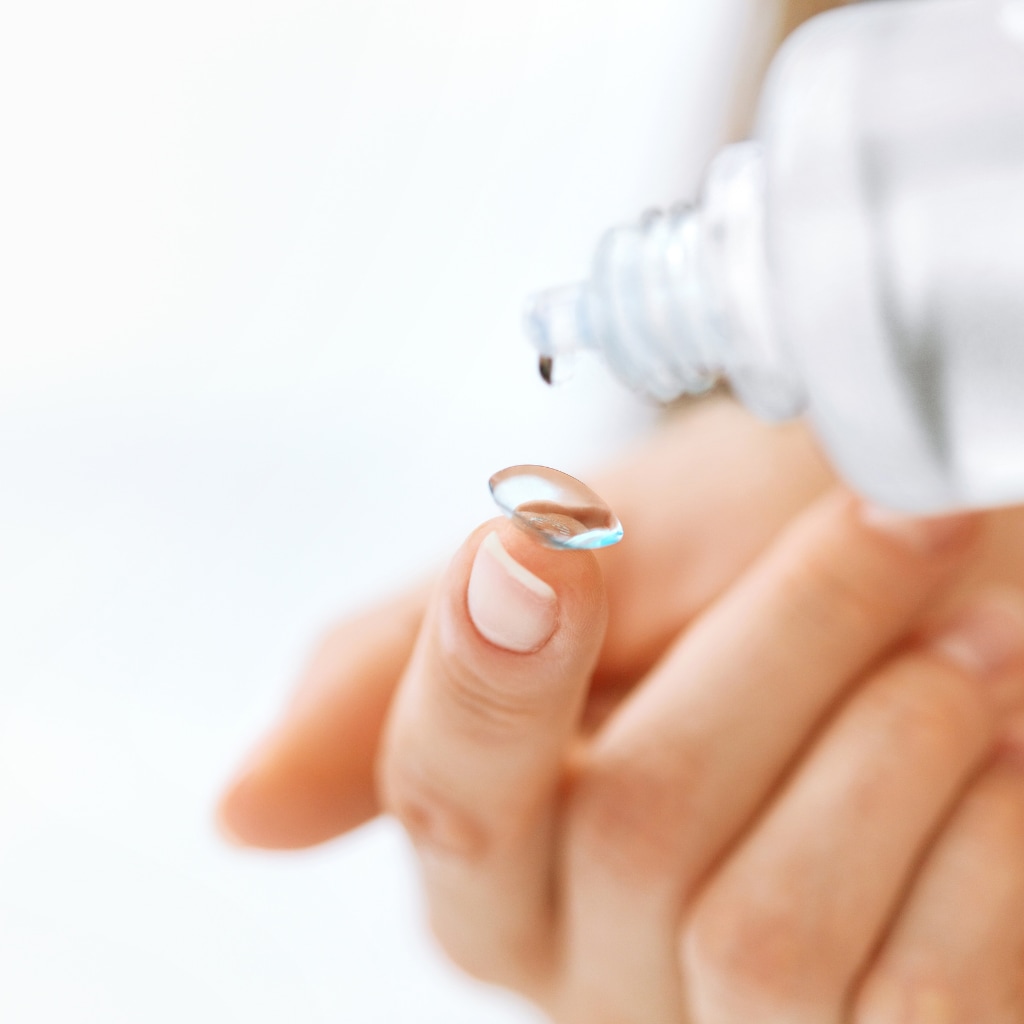
Travel is where people get lazy: rinsing a case with tap water, showering with lenses in, topping off yesterday’s solution.
CDC guidance is pretty blunt on this: keep water away from contact lenses, because water exposure raises your infection risk.
A few clean habits that travel well:
- Wash and dry your hands before handling lenses
- Use fresh solution each time, not yesterday’s leftovers
- Keep lenses out of showers, pools, hot tubs, lakes, and the ocean
Does the 3-1-1 Rule Change for International Flights?
Outside the U.S., most airports follow the same basic framework: small containers, one clear bag, one per traveler.
What changes is enforcement and the exact screening process. If you’re connecting through multiple countries, follow the strictest version so you don’t get caught off guard at your second airport.
Before you place a last minute order, verify right versus left power using the how to read contact lens prescriptions OD vs OS eye guide with calculator.
FAQs
Will TSA make me throw away my contact lens solution?
If it’s over 3.4 oz and you treat it like a normal liquid, yeah, it might get tossed. If you need a larger amount for medical reasons, TSA says you can bring it in reasonable quantities—but you have to declare it.
Do contact lenses go in the liquids bag?
Nope. Only the liquids do.
Can I bring more than one quart bag if I wear contacts?
The standard rule is one quart-size bag per traveler. If you need larger quantities of medical liquids, that’s a separate situation, and you declare them separately.
What’s the least stressful setup for security?
Travel-size solution and drops in your quart bag, plus extra lenses in your carry-on. Save the “full-size bottle” route for trips where you genuinely need it, and expect extra screening if you go that route.
References
- Transportation Security Administration (TSA): Liquids, aerosols, and gels rule
- TSA “What Can I Bring?”: Contact lens solution
- TSA “What Can I Bring?”: Medical
- Federal Aviation Administration (FAA) PackSafe: Medicinal & toiletry articles
- Centers for Disease Control and Prevention (CDC): Keeping water away from contact lenses
- CDC: Acanthamoeba keratitis (contact lens hygiene and water exposure risk)