Table of Contents
Children do not always say when something looks blurry or hard to follow. Instead, the first clues often show up in everyday habits, like squinting, rubbing the eyes, sitting too close to the TV, or getting frustrated during reading time. That is why it helps to know what to watch for before school struggles or eye strain become a bigger issue. This guide covers common warning signs of poor eyesight, when to book an eye exam, and what comes next if your child ends up needing vision correction.
Why Vision Problems In Children Are Easy To Miss
Many children assume the way they see is normal. If the board at school looks blurry or words on a page feel hard to follow, they may not realize that other children see things more clearly.
Parents are often the first to notice that something feels off. A child may lose interest in reading, get upset during homework, or seem distracted in class. At first, it may look like a focus issue when the real problem starts with vision.
Small clues are easy to shrug off. A headache after school or sitting too close to a screen may not seem like a big deal on its own. But when the same habits keep showing up, they are worth paying attention to.
Warning Signs Your Child Might Have a Vision Problem
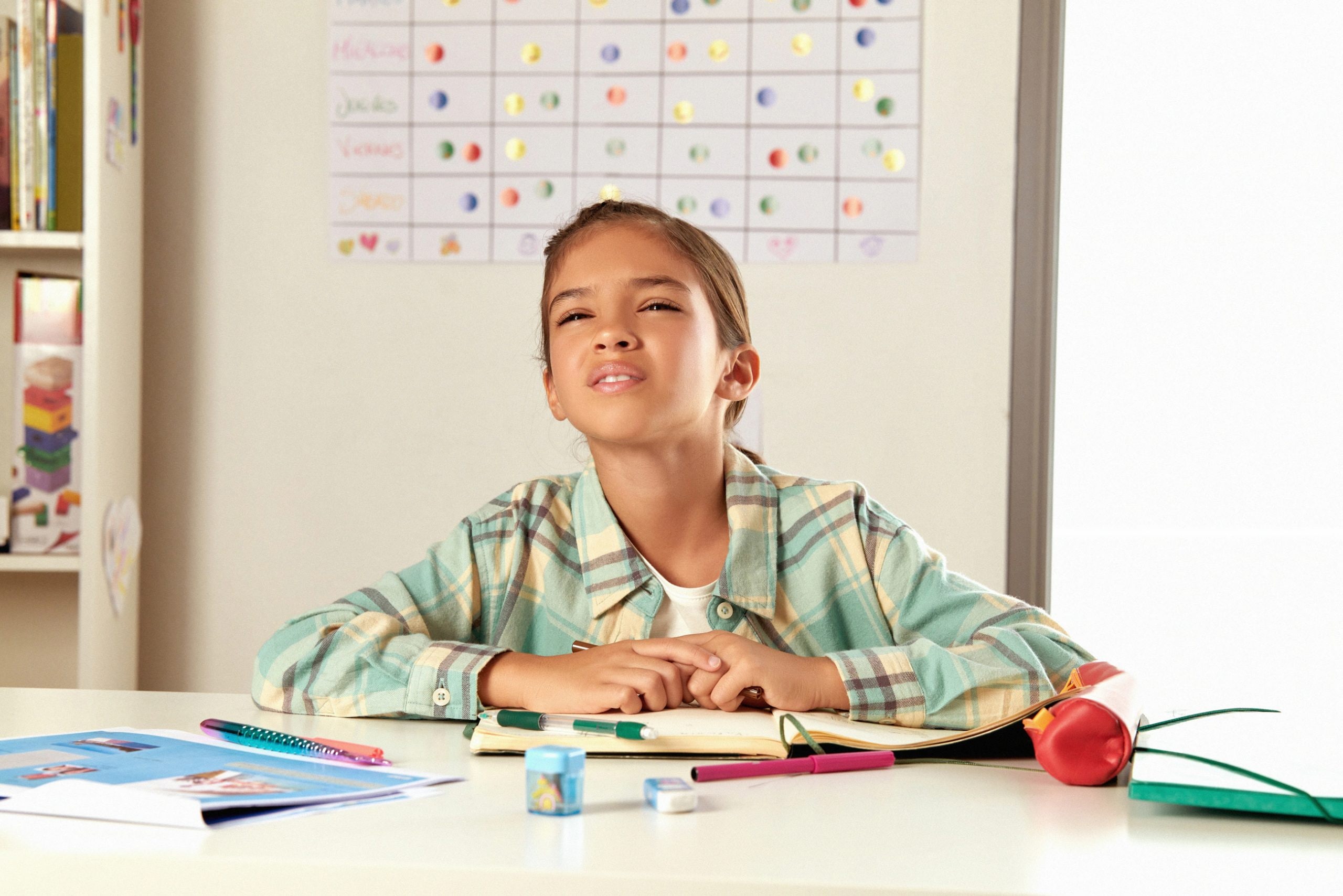
Children do not always talk about vision problems right away. In many cases, the first signs show up through small habits or changes in behavior. You might notice them during reading, homework, screen time, or play. When the same pattern keeps coming back, it deserves a closer look.
Squinting, Covering One Eye, Or Tilting The Head
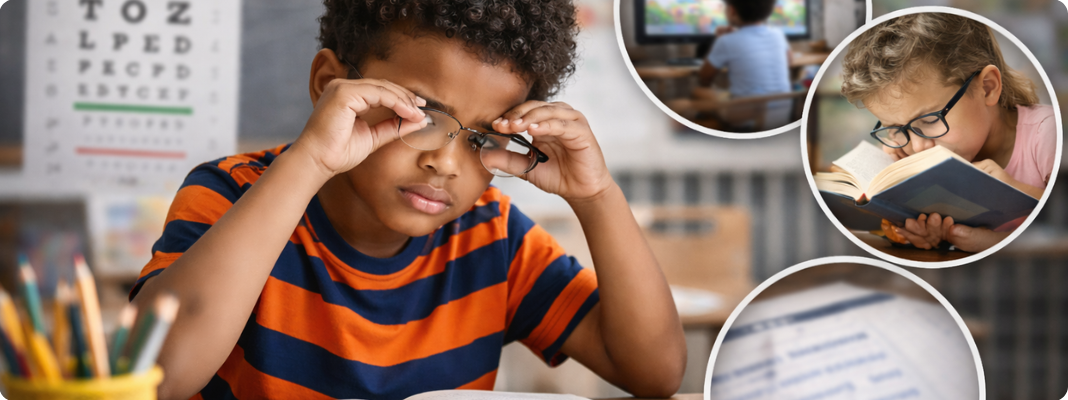
Some children squint because it helps things look a little clearer. Others cover one eye or tilt the head to make seeing feel easier. These habits can point to blurry vision or trouble with how the eyes line up.
You may notice this while your child watches TV, looks across the room, or reads signs outside. If it keeps happening, it is worth booking an eye exam.
Sitting Too Close To The TV Or Holding Books Too Close
A child who keeps moving closer to the TV or holds books and tablets very near to the face may be trying to see details more clearly. This is one of the more noticeable signs parents pick up at home.
You may also spot it during quiet play. Some children lean very close to puzzles, drawings, or toys with small details. If that becomes a regular habit, it is worth checking out.
Losing Place While Reading
If your child skips lines, rereads the same sentence, or uses a finger to keep track, vision may be part of the problem. Reading takes clear focus and steady eye movement.
This can show up as slow reading, frustration, or giving up early. A child may not say the words look blurry. Reading just starts to feel tiring.
Avoiding Reading, Homework, Or Other Close-Up Tasks
Some children do not complain about vision problems. They simply avoid the tasks that make the eyes feel tired. Reading, writing, coloring, and crafts can all feel harder than they should.
A child may say the activity is boring or too hard. Sometimes the real issue is eye strain during close-up work.
Frequent Eye Rubbing, Blinking, Or Watery Eyes
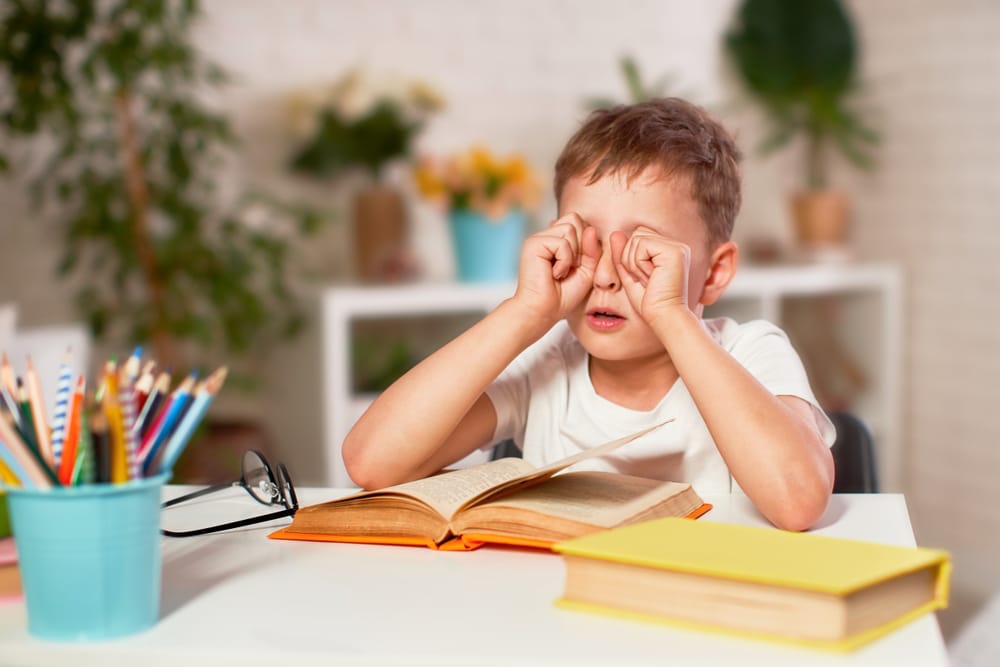
Eye rubbing often shows up when the eyes feel tired or irritated. Frequent blinking can mean the same thing. Even watery eyes do not always mean the eyes are fine.
These signs do not point only to a vision issue, since allergies or dry air can also play a part. Still, when they show up with headaches or reading trouble, they matter more.
Complaints Of Headaches Or Tired Eyes
A child who says the eyes feel tired or the head hurts after reading or screen time may be dealing with visual strain. Pain around the forehead or eyes can happen when focusing starts to take extra effort.
Headaches are easy to blame on a busy day or poor sleep. But if they keep showing up after homework or school, it is smart to think about eyesight too.
Trouble Focusing In School Or A Short Attention Span
When a child is having a hard time seeing clearly, staying engaged in a task gets harder. Looking at the board, reading worksheets, and shifting from near to far can wear the eyes out.
That can make a child seem restless or distracted. Sometimes what looks like a focus problem starts with vision.
Poor Hand-Eye Coordination Or Bumping Into Things
Vision plays a big part in judging distance and moving through space. A child who struggles to catch objects, bumps into furniture, or seems more awkward than usual may be having trouble seeing clearly.
This does not mean every clumsy moment points to an eye problem. But if it happens often and shows up with other signs, a comprehensive eye exam makes sense.
Child Vision Problem Signs At School, At Home, And During Play
Eye problems in children do not always look the same in every setting. One sign of poor eyesight may show up in the classroom, while another appears during sports or quiet time at home. Looking at daily routines can give you a clearer picture of what is going on. That is why it helps to notice where and when these signs show up.
Signs You May Notice In The Classroom
At school, a child with vision trouble may struggle to copy from the board, lose place while reading, or avoid written work. Teachers may notice slow work, skipped lines, or trouble staying on task.
Some children also ask to sit closer to the front or say the board looks blurry. Grades may start slipping even when the child is clearly trying.
Signs You May Notice At Home
At home, parents often notice repeated habits first. Sitting too close to the TV, holding screens too near, rubbing the eyes after homework, or talking about headaches in the evening are all worth noting.
You may also notice more frustration around books and assignments. Those patterns can say a lot, even when your child does not talk about eyesight.
Signs You May Notice During Sports And Play
During play, vision trouble can show up as weak hand-eye coordination, trouble judging distance, or less confidence during games. A child may hesitate during sports that involve tracking a ball or moving quickly.
Some children also stop joining in outdoor activities as much as they used to. That can look like lost interest when the real issue is trouble seeing clearly.
Symptoms Of Vision Issues In Children By Age Group
Signs of a vision problem can look different depending on a child’s age. Babies, preschoolers, and school-age children do not always show the same behaviors. Some signs become easier to spot once reading and classroom work become part of daily life. Looking at symptoms by age can make the pattern easier to see.
Babies And Toddlers
In very young children, warning signs include eyes that drift or cross often, trouble following objects, poor eye contact, or strong sensitivity to light. A toddler may rub the eyes a lot or seem uncomfortable in bright rooms.
Since babies and toddlers cannot explain what they see, parents have to rely on what they notice.
Preschoolers
Preschool-age children may squint, sit close to screens, hold books near the face, or avoid coloring and picture books. Some also seem clumsy or lose interest in activities that involve letters, shapes, or small details.
At this age, normal childhood behavior and vision trouble can look similar. That is why repeated patterns matter more than one random moment.
School-Age Children
School-age children are more likely to show vision problems through reading struggles, headaches, eye fatigue, shorter attention span, or complaints that the board looks blurry. Homework may also feel more stressful than it should.
These signs stand out more once school starts placing more demand on visual skills each day.
Signs That Mean It Is Time To Book An Appointment
Some signs mean it is time to stop watching and start acting. If your child keeps squinting, talks about blurry vision, gets frequent headaches, avoids reading, or shows repeated struggles at school, book an appointment with an eye doctor.
A failed school vision screening is another clear reason to schedule an exam. At the same time, a passed vision screening does not mean everything is fine. Parent concern matters too, so if something feels off, trust that instinct and get it checked.
Family history also matters. If eyeglasses, lazy eye, crossed eyes, or strong prescriptions run in the family, it is smart to stay extra aware of early signs of poor eyesight.
Vision Screening Vs. A Full Eye Exam

Many parents think a vision screening and a full eye exam are the same thing. They are not. A screening is a quick check, while a full eye exam takes a closer look at how your child sees and how the eyes work together. Knowing the difference makes it easier to figure out what your child needs.
What A Vision Screening Checks
A vision screening is a basic check for obvious vision problems. Schools and pediatric visits often use it to flag children who need a closer look.
What A Full Eye Exam Checks
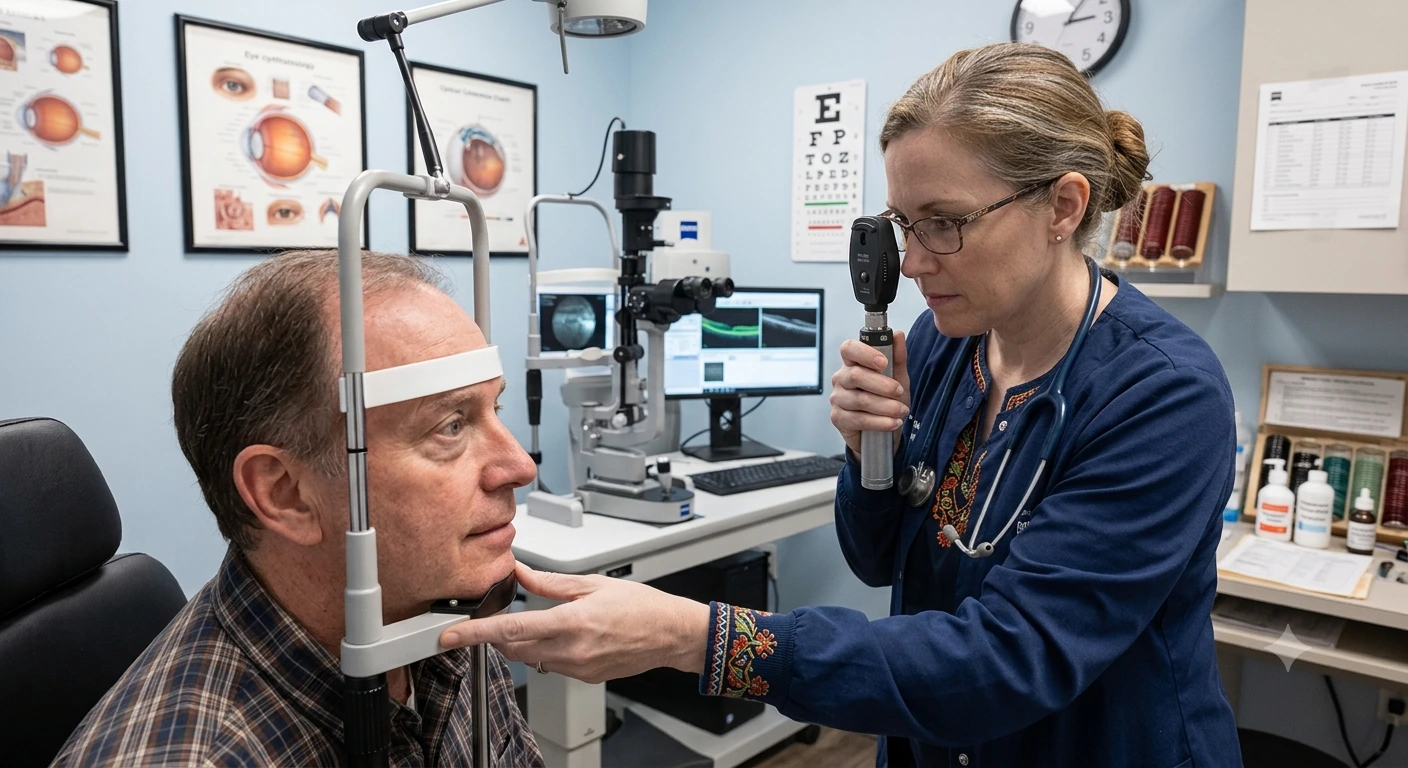
A full eye exam looks beyond whether your child can read letters on a chart. It checks how clearly each eye sees, how the eyes move, and whether both eyes stay lined up and work well together during reading and other close-up tasks.
The doctor also looks at focusing, tracking, and general eye health. That gives a fuller picture than a quick screening.
Why A Child Can Pass A Screening And Still Have A Vision Issue
A vision screening is helpful, but it does not catch every type of vision issue. Some children do well on a letter chart and still have trouble keeping place while reading, shifting focus from near to far, or using both eyes together in a steady way.
When that happens, schoolwork can feel tiring and reading can feel frustrating. That is why signs of eye problems in children still matter, even when a screening result looks normal.
What To Do If You Notice Symptoms Of Vision Issues In Children
Start by watching for patterns. Notice what your child keeps doing, when it happens, and which tasks seem to bring it out. Those details are useful during an eye appointment.
Then schedule a comprehensive eye exam. Do not wait for school stress or frustration to build up. Getting answers early can make daily life easier for your child.
It also helps to talk with your child in a calm, simple way. Ask whether words look blurry, whether the eyes feel tired, or whether looking at the board feels hard. Some children open up more once they realize there may be a reason for what they have been feeling.
If Your Child Ends Up Needing Contacts
Not every child with a vision problem will wear contact lenses. Many start with glasses first, and some are not ready for contacts yet. For older kids or teens whose eye doctor approves contacts, daily disposables are a practical starting point because each pair is fresh and there is no nightly cleaning routine.
Daily Contact Lenses for Nearsightedness or Farsightedness
For nearsightedness or farsightedness, Dailies Total 1, 1-Day Acuvue Moist, and Acuvue Oasys 1-Day with Hydraluxe are strong daily disposable options for comfort, hydration, and easy day-to-day wear. Since each pair is worn once and tossed at the end of the day, they are especially helpful for kids or teens who want a fresh lens every morning without dealing with a nightly cleaning routine.
Contact Lenses for Astigmatism
For astigmatism, Acuvue Oasys for Astigmatism, Biofinity Toric, and 1-Day Acuvue Moist for Astigmatism stand out for stable vision, dependable comfort, and lens designs made to stay in place better during the day. These are good options for kids or teens who need sharper vision with less blur or shifting, especially during reading, classroom work, or sports.
Monthly Contact Lenses for Older Kids or Teens
For a monthly replacement schedule, Biofinity, Air Optix plus HydraGlyde, and Acuvue VITA are popular picks because they focus on long-lasting moisture, breathability, and all-day comfort. They make sense for teens who are ready for reusable contact lenses and can keep up with proper lens care and cleaning.
Common Vision Problems Children Can Have
Several eye conditions can cause the signs listed here. Some affect distance vision, while others make reading or close-up work harder. A few also affect how the eyes work together. Knowing the basics can help you connect the dots.
Nearsightedness
Nearsightedness makes faraway objects look blurry. A child with nearsightedness may have trouble seeing the classroom board, street signs, or the TV from across the room.
Farsightedness
Farsightedness can make close-up tasks more tiring, especially after longer periods of reading or homework. Some children do not say anything directly, but they start avoiding those activities instead.
Astigmatism
Astigmatism can make vision look blurry or uneven at different distances. It can also lead to squinting, headaches, or extra effort during reading and screen time.
Eye Teaming Or Focusing Problems
Some children read the eye chart well and still struggle with close-up work. That can happen when the eyes have trouble staying focused together or moving smoothly across a page.
Amblyopia And Strabismus
Amblyopia (lazy eye) and strabismus (misalignment of the eyes) can affect how the eyes work as a pair. That is one reason early eye checks matter.
Frequently Asked Questions
Can Vision Problems In Children Go Unnoticed At First?
Yes. Some children do not complain because they think the way they see is normal. Others are too young to explain what feels off. That is why parents often notice changes in comfort, habits, or reading behavior first.
Do Teachers And Parents Notice Different Signs Of A Vision Problem?
Yes. A teacher may notice trouble copying from the board, losing place while reading, or a shorter attention span during close-up work. Parents may notice squinting, eye rubbing, headaches, or sitting too close to the TV.
Can A Child Pass A Vision Screening And Still Have A Vision Issue?
Yes. A child can still have trouble with focusing, tracking, or using both eyes together after passing a basic screening. A letter chart does not always catch those problems. That is why repeated symptoms still deserve attention.
Does Family History Matter When Watching For Vision Problems?
Yes. If vision problems run in the family, it is smart to watch more closely for early signs. Family history does not mean your child will have the same issue. It simply gives you one more reason to stay alert.
Can Early Eye Checks Make Daily Life Easier For Your Child?
Yes. When vision problems are found early, children often have an easier time with schoolwork, reading, and daily activities. It can also cut some of the frustration that comes with not knowing why things feel harder than they should.
Disclaimer: This content is for general information only and is not meant to replace professional medical advice, diagnosis, or treatment.
References
- Hidden signs of vision problems in children. Mayo Clinic Health System. https://www.mayoclinichealthsystem.org/hometown-health/speaking-of-health/hidden-signs-of-vision-problems-in-children. Accessed April 13, 2026.
- How to Know If Your Child Needs Glasses. Johns Hopkins Medicine. https://www.hopkinsmedicine.org/health/wellness-and-prevention/how-to-know-if-your-child-needs-glasses. Accessed April 13, 2026.
- Four Hidden Signs of Vision Problems in Kids. American Academy of Ophthalmology. https://www.aao.org/eye-health/tips-prevention/four-hidden-signs-of-vision-problems-in-kids. Accessed April 13, 2026.
- Signs Your Child May Have Vision Problems. University Eye Associates. https://www.universityeye.net/blog/205026-signs-your-kids-may-have-vision-problems. Accessed April 13, 2026.
- Signs Your Child May Have Vision Problems. Banner Health. https://www.bannerhealth.com/healthcareblog/teach-me/signs-your-child-may-have-vision-problems. Accessed April 13, 2026.
- Vision Screening. American Association for Pediatric Ophthalmology and Strabismus. https://aapos.org/glossary/vision-screening-description. Accessed April 13, 2026.
- Vision Screening Recommendations. American Association for Pediatric Ophthalmology and Strabismus. https://aapos.org/syndicated/vision-screening. Accessed April 13, 2026.
- Eye Screening for Children. American Academy of Ophthalmology. https://www.aao.org/eye-health/tips-prevention/children-eye-screening. Accessed April 13, 2026.
- Childhood Eye Diseases and Conditions. American Academy of Ophthalmology. https://www.aao.org/eye-health/tips-prevention/common-childhood-diseases-conditions. Accessed April 13, 2026.