
Best Contacts for Presbyopia
Contact lenses for presbyopia are designed to help you see clearly up close as the eye's natural lens becomes less flexible with age. Presbyopia usually makes reading, checking your phone, or focusing on other nearby objects more difficult, even when distance vision is still clear. Contact lenses can correct this change through the best multifocal contact lenses, monovision, or other specialty options that balance vision across different distances.
The best contact lenses for presbyopia are available here at Lens.com. The right contacts for you depends on your prescription, eye health, daily activities, and the distances you rely on most. Some wearers prioritize crisp reading vision, while others need smooth transitions between a computer screen, nearby objects, and distance tasks such as driving. An eye care professional can test different lens designs and powers to find the combination that provides the most useful vision for your routine.
to
to
to
to
to
to
to
to

to
to
to
to
to
to
to
What Is Presbyopia?
Presbyopia is an age-related change in a person's vision that makes it harder to focus on nearby objects. It happens as the natural lens inside the eye gradually becomes less flexible, reducing its ability to change shape and focus light clearly for close-up tasks. You might notice that small print looks blurry, you need to hold reading material farther away, or your eyes feel strained after using a phone or computer.
Presbyopia typically becomes noticeable sometime after age 40 and continues to progress for a number of years. It can affect people who already have nearsightedness, farsightedness, astigmatism, or previously clear distance vision. Reading glasses are one way to correct it, but many prefer wearing contact lenses instead. Multifocal contact lenses for presbyopia, monovision contact lenses, and other specialty designs can help restore useful near vision while supporting distance and intermediate tasks.
How Contact Lenses Correct Presbyopia
Contact lenses correct presbyopia by adding near-focus power that compensates for the eye's reduced ability to focus on close objects. Multifocal contacts contain different powers within the same lens, allowing your eyes to use information for near, intermediate, and distance vision. The exact optical pattern varies by lens design, so some lenses place near power toward the center while others distribute the powers differently across the lens.
Another way is through monovision correction, where one eye is corrected mainly for distance and the other is corrected for near vision. Your brain learns to rely more on the eye providing the clearest image for the task at hand.
Both approaches work well, but the best correction depends on your prescription, eye dominance, visual priorities, and how well you adapt to the lens design. Trial contact lenses and follow-up adjustments help determine the combination that gives you the most useful balance across different distances.
Types of Contact Lenses for Presbyopia
Several contact lens designs can correct presbyopia, although they don't all work the same way.
- Soft multifocal contact lenses
These lenses contain multiple prescription powers within one lens to support near, intermediate, and distance vision. They're available in daily, biweekly, and monthly contact lenses. - Multifocal toric contact lenses
These combine presbyopia correction with cylinder and axis powers for astigmatism. Multifocal toric contact lenses must also remain stable on the eye so the astigmatism and multifocal corrections stay properly positioned. - Rigid gas-permeable multifocal lenses
Rigid gas-permeable (RGP) multifocals use a firm, oxygen-permeable material and can provide sharp vision across several distances. Some designs move slightly with the blink. Others use simultaneous-vision optics similar to soft multifocals. - Scleral multifocal lenses
These larger rigid lenses vault over the cornea and rest on the sclera. Multifocal optics can be added for wearers who need presbyopia correction along with specialized fitting for irregular corneas or other complex needs. - Hybrid multifocal lenses
Hybrid contacts combine a rigid central optical zone with a softer outer skirt. Multifocal versions can provide presbyopia correction while giving wearers another option when standard soft or rigid lenses aren't suitable. - Monovision contact lenses
Monovision uses two single-vision lenses rather than a multifocal design. One eye is usually corrected for distance and the other for near vision, allowing the brain to favor the clearer image for each task. - Modified monovision
This approach combines strategies, such as using a multifocal lens in one eye and a single-vision lens in the other. The fitting can be adjusted according to whether you need stronger support for distance, intermediate, or near tasks. - Custom multifocal contact lenses
Made-to-order lenses can provide additional powers, diameters, curves, or optical-zone designs beyond standard product ranges. They can be useful for high prescriptions, unusual corneal shapes, or visual needs that stock multifocals don't address well.
Multifocal Contacts vs. Monovision for Presbyopia
Multifocal contact lenses and monovision correct presbyopia in different ways. Multifocal contacts place more than one prescription power within each lens, allowing both eyes to contribute to near, intermediate, and distance vision at the same time. Your brain learns to select the clearest visual information for the distance you're viewing. This approach can provide a more balanced range of vision, though some wearers need time to adapt to the optics.
Monovision uses a different prescription in each eye, with one eye typically corrected for distance and the other for near vision. It can be simpler than multifocal correction and works well for some wearers, but the difference between the eyes can reduce depth perception or make certain intermediate and low-light tasks more challenging.
An eye care professional can test both approaches with trial lenses and adjust the powers based on your eye dominance, prescription, and everyday visual demands.
What to Look for in the Best Contacts for Presbyopia
The best contacts for presbyopia should give you a useful balance of near, intermediate, and distance vision without making everyday tasks harder. Since no single lens works equally well for everyone, your prescription, eye health, work habits, and visual priorities should guide the choice.
Clear near vision
Your lenses should make reading, texting, checking labels, and other close-up tasks comfortable without requiring you to constantly hold objects farther away.
Reliable distance vision
Good presbyopia correction should still support activities such as driving, watching television, and recognizing signs or faces across a room.
Strong intermediate vision
Computer screens, dashboards, kitchen counters, and other arm's-length tasks fall between near and distance vision. This range deserves special attention if you spend several hours a day working on a computer.
The right add power
Multifocal prescriptions include an additional near-vision power, commonly called the add. Your eye care professional can adjust this value to balance close-up clarity with distance performance.
Stable lens positioning
Multifocal optics work best when the lens stays centered and moves appropriately with blinking. Excessive movement or decentration can make vision fluctuate.
A suitable lens material
Hydrogel and silicone hydrogel contact lenses differ in oxygen permeability, water content, and surface characteristics. Your eye health and wearing experience can help determine which material suits you better.
Comfort throughout your wearing time
A lens that feels fine for an hour but becomes dry or irritating later in the day probably isn't the best match for your routine.
A practical replacement schedule
Daily, biweekly, and monthly multifocal lenses require different levels of cleaning and maintenance. Consider how much lens care you're comfortable managing each day.
Correction for astigmatism when needed
Presbyopia and astigmatism can occur together. Multifocal toric lenses combine near-vision correction with cylinder and axis powers for wearers who need both.
Performance in different lighting conditions
Multifocal optics can behave differently in bright light, dim restaurants, nighttime driving, or other low-light settings. Testing lenses during your normal activities gives you a better sense of real-world performance.
Compatibility with your daily routine
Someone who spends most of the day reading or working on a computer may need a different visual balance than someone who drives frequently or relies heavily on distance vision.
Room for prescription adjustments
Finding the right multifocal lens sometimes takes more than one trial. A design that can be refined through changes in distance power, add power, or lens selection gives your eye care professional more ways to improve the result.
Daily vs. Biweekly vs. Monthly Contacts for Presbyopia
Daily, biweekly, and monthly contact lenses can all correct presbyopia, but the best replacement schedule depends on your routine and how much lens care you want to manage. Daily multifocal contacts are worn once and discarded at the end of the day, which removes the need for cleaning and storage. They can be convenient for occasional wear, travel, or people who prefer starting with a fresh pair each morning.
Biweekly and monthly multifocal lenses are reused for their prescribed replacement period and require regular cleaning, disinfection, and proper storage. They can work well for full-time wearers who are comfortable following a consistent care routine. Availability also varies by prescription, since some multifocal or multifocal toric parameters are only produced in certain replacement schedules.
Your eye care professional can help compare lens design, prescription range, wearing habits, and comfort before recommending one schedule over another.
Best Contact Lens Options for Presbyopia With Astigmatism
Presbyopia and astigmatism can be corrected at the same time, but the lens needs to handle both near-vision loss and uneven focusing from astigmatism.
- Multifocal toric contact lenses - These multifocal toric lenses for astigmatism combine sphere power, cylinder, axis, and add power in one design. Stabilization features help control rotation so the astigmatism correction stays properly aligned.
- Custom soft multifocal toric lenses - Custom designs can accommodate prescription combinations that fall outside the ranges of standard multifocal toric contacts. They may also allow more choices in base curve, diameter, and other fitting parameters.
- Rigid gas-permeable multifocal lenses - RGP contact lenses can provide sharp optics while correcting presbyopia and certain types of astigmatism. Their firm shape can also help create a smoother optical surface over the cornea.
- Scleral multifocal lenses - Scleral contact lenses vault over the cornea and rest on the sclera, making them useful for some people with irregular astigmatism or corneal conditions. Multifocal optics can be added to provide near and distance correction.
- Hybrid multifocal lenses - Hybrid lenses use a rigid central section surrounded by a soft skirt. This design can provide the optical benefits of a rigid lens while giving wearers a different fitting option for presbyopia and astigmatism.
- Monovision with toric lenses - One toric lens can be prescribed mainly for distance vision while the other is adjusted for near vision. This avoids multifocal optics, though some wearers notice changes in depth perception or intermediate vision.
- Modified monovision - A multifocal toric lens may be used in one eye and a different lens design in the other. This approach gives the eye care professional more flexibility to prioritize near, intermediate, or distance vision.
- Custom specialty lenses for irregular astigmatism - Corneal scarring, keratoconus, or post-surgical changes can create astigmatism that standard soft lenses don't correct well. Custom RGP, scleral, or other specialty multifocal designs may provide a more suitable optical and fitting solution.
How Presbyopia Contacts Handle Near, Intermediate, and Distance Vision
Presbyopia contact lenses are designed to help you see across several distances rather than correcting only one focal point. Multifocal contacts use different optical powers within the same lens to give your eyes access to near vision for reading, intermediate vision for computers and dashboards, and distance vision for activities such as driving. Your brain gradually learns to favor the clearest visual information for whatever you're looking at.
The balance between these distances can vary from one lens design to another. Some wearers need stronger near support for reading. Others depend more on intermediate vision for screen-heavy work or sharper distance vision for driving. During a fitting, an eye care professional can adjust the distance power, add power, or lens design to improve that balance.
Discomfort during a short adaptation period is not unusual, especially when switching to multifocal contacts for the first time.
Best Contact Lenses for Presbyopia
Lens.com currently lists multifocal options across daily, biweekly, and monthly schedules, including lenses for wearers who also have astigmatism.
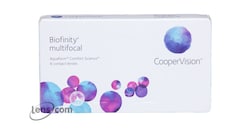
Biofinity Multifocal
This monthly silicone hydrogel lens is designed to support clear vision at near, intermediate, and far distances. It's a practical choice for regular multifocal wearers who prefer a reusable monthly schedule.
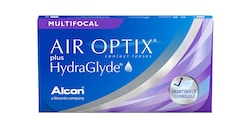
Air Optix plus HydraGlyde Multifocal
Another monthly silicone hydrogel option, this lens combines multifocal vision correction with a design intended for consistent moisture throughout the wearing period. It's ideal for those who prefer monthly lenses over daily disposables.
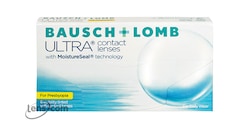
ULTRA for Presbyopia
This monthly lens uses Bausch + Lomb's 3-Zone Progressive Design to support vision across different distances. It's a silicone hydrogel option for presbyopic wearers.
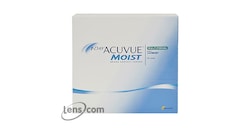
1-Day ACUVUE MOIST Multifocal
This daily disposable lens provides multifocal correction without the need for nightly cleaning or storage. It can suit wearers who prefer a fresh pair every day or use contacts only part of the week.
DAILIES TOTAL1 Multifocal
This daily silicone hydrogel multifocal is designed for near, intermediate, and distance vision. Its one-day replacement schedule eliminates the need for reusable-lens care products.
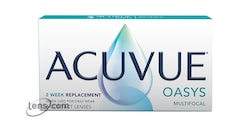
ACUVUE OASYS 2-Week Multifocal
This reusable multifocal follows a two-week replacement schedule, giving wearers an option between daily and monthly lenses. It uses silicone hydrogel material and is designed to support vision across multiple distances.
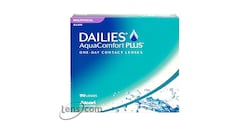
DAILIES AquaComfort Plus Multifocal
This daily hydrogel lens combines multifocal correction with blink-activated hydration. It's a convenient choice for people who want daily disposables and don't want to clean or store lenses overnight.
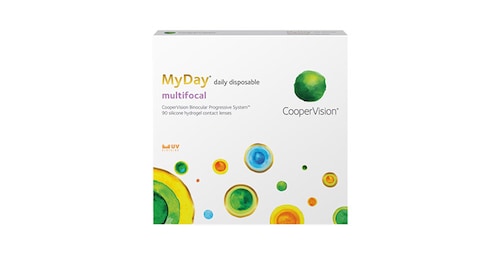
MyDay Daily Disposable Multifocal
Made from silicone hydrogel, this daily lens uses CooperVision's Binocular Progressive System to balance vision across different distances. It gives presbyopic wearers another daily disposable option.
TOTAL30 Multifocal
This monthly silicone hydrogel lens is designed for multifocal correction while following a reusable 30-day replacement schedule. It suits wearers who prefer monthly contacts and are comfortable with daily cleaning and storage.
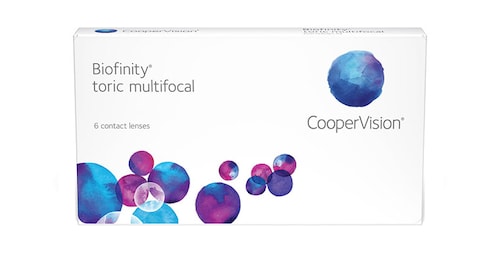
Biofinity Toric Multifocal
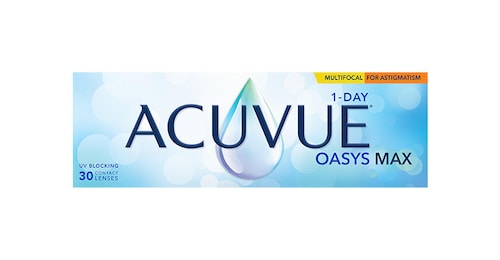
This monthly lens is for people who have both presbyopia and astigmatism. It combines multifocal correction with toric parameters, making it especially useful when near-vision loss needs to be corrected along with cylinder and axis requirements.
How a Presbyopia Contact Lens Fitting Works
A presbyopia contact lens fitting starts with your current prescription, eye health, corneal measurements, and the distances you rely on most during the day. Your eye care professional will also consider factors such as eye dominance, astigmatism, screen use, reading habits, and driving needs. From there, they may recommend multifocal lenses, monovision, or another presbyopia-correcting approach based on how you use your vision.
Trial lenses are then used to see how well the correction works in real-world conditions. Your near, intermediate, and distance vision may be checked after the lenses have settled, along with lens position and overall wearing comfort. Small changes to the distance power, add power, or balance between the two eyes can improve the result.
Since adapting to multifocal or monovision correction can take time, follow-up visits give your eye care professional a chance to fine-tune the prescription before settling on the final lens combination.
References
Presbyopia. National Eye Institute. https://www.nei.nih.gov/eye-health-information/eye-conditions-and-diseases/presbyopia. Published Date (December-04-2024). Date Accessed: August 11, 2026.
Contact Lenses for Presbyopia. Bharat Gurnani and Kirandeep Kaur/StatPearls Publishing. https://www.ncbi.nlm.nih.gov/books/NBK585045/. Published Date (June-11-2023). Date Accessed: August 11, 2026.
Contact Lenses. National Eye Institute. https://www.nei.nih.gov/eye-health-information/healthy-vision/contact-lenses. Published Date (December-05-2024). Date Accessed: August 11, 2026.
Types of Contact Lenses. U.S. Food and Drug Administration. https://www.fda.gov/medical-devices/contact-lenses/types-contact-lenses. Published Date (January-16-2018). Date Accessed: August 11, 2026.
Soft Multifocal Contact Lenses: A Review. Kathryn Dumbleton, PhD, MCOptom, and Jennifer Palombi, OD/Contact Lens Spectrum. https://clspectrum.com/issues/2022/june/soft-multifocal-contact-lenses-a-review. Published Date (June-01-2022). Date Accessed: August 11, 2026.
Popular Contact Lens Reviews
Contacts
This particular company is trustworthy and easy to order from and their prices are competitive as well!
Dalies Rule
I have experienced dailies for the first time and will not go back to the conventional lenses. No cleaning or cleaning supplies and always comfortable. At the end of the day I forget that I have them on. Great product!
Price
I've used Air Optix for several years and have been satisfied with this product. I compared costs and Lens.com was the most competitive.
Mr.
As with my last order, I received the contacts in only days. The product is excellent and the price is excellent and the service is excellent. I had an issue with one order several years ago and it was resolved to m satisfaction immediately and generously. Keeping my prescription on file makes a second ordering even easier. Thank you!
Shipping and rebate expediency and accuracy.
I have been doing business with lens.com for many years now, and have found them to be an excellent provider of contact lenses. I would highly recommend them to anyone, wishing to save money on their contract purchase.
Can read the dash again
I can finally see my phone and look up at the road while driving without weird blurs. Price tag hurts but they work perfectly.
Regular customer now
First time ordering from lens.com and they got my prescription right and shipped it fast. lenses feel great.
smooth focus
Seamless transition between reading up close and long distance. No headaches or squinting for me. Great service thank you!
Saved me from bifocals
I was so resistant to getting bifocal glasses, so my doctor suggested these instead. It took a couple of days for my brain to adjust to the zones, but now I can read my text messages and watch TV with zero issues.