
Daily Contacts For Astigmatism
Astigmatism can make vision look blurry, stretched, or shadowed because the eye doesn't focus light evenly. For contact lens wearers, this usually means regular spherical contacts may not give clear enough vision. Toric contact lenses are the soft lens type commonly prescribed for astigmatism because they're designed to correct vision in specific directions.
Daily contacts for astigmatism combine that toric design with the fresh-pair routine of daily disposable contact lenses. You wear a new pair for the day, then throw them away after removal, so there's no overnight cleaning or storage. This can be helpful if you want astigmatism correction with a simpler lens routine.
Your eye doctor will still need to fit the lens properly because toric contacts rely on power, cylinder, axis, and stable lens positioning. If your current lenses blur, rotate, shift, or feel uncomfortable, contacts for astigmatism may be worth comparing with your eye doctor. Explore the products shown on this page to find daily toric contacts that fit your prescription, support clear vision, and work with your wearing routine.
to
to


to
to
to
How To Choose Daily Contacts For Astigmatism
Daily contacts for astigmatism should give you clear, steady vision while keeping your routine simple. These contact lenses use a toric design, which helps correct the uneven focus caused by astigmatism. Since they're daily lenses, you wear a fresh pair each day and throw them away after use.
Toric prescriptions include more details than regular daily contacts. Power helps correct vision strength, while cylinder and axis help the lens correct astigmatism in the right direction. Each value should match what your eye doctor prescribed so the lens can sit properly and support clearer vision.
Follow these steps when comparing daily toric contacts:
- Check the exact product name on your contact lens prescription.
- Match the power for your right eye and left eye.
- Review the cylinder value for each eye.
- Match the axis value listed on your prescription.
- Check the base curve and diameter if those details are included.
- Confirm that the product is a daily disposable toric lens.
- Review the box count based on how often you wear contacts.
- Check if your right and left eye need different values.
- Review your prescription expiration date.
- Ask your eye doctor before changing to another toric lens.
Toric daily contact lenses are not one-size-fits-all. A lens that looks similar online can still fit differently, rotate differently, or give less stable vision. Take time to check the product details before ordering so you get the daily contacts your eye doctor fitted for your astigmatism.
Why Daily Toric Contacts Work Differently From Regular Daily Lenses
Daily toric contacts and regular daily lenses may both be replaced after one day, but they're made for different vision needs. These contact lens types differ in how they correct vision. Regular daily lenses correct common vision problems like nearsightedness or farsightedness, while daily toric contacts are designed for astigmatism.
Astigmatism needs a more specific lens design because the eye doesn't focus light evenly. Daily toric lenses help correct that by using extra prescription details and a design that helps the lens stay properly positioned.
Astigmatism Correction
Astigmatism can make vision look blurry, stretched, or shadowed. A regular daily contact may not give enough clarity if your prescription needs astigmatism correction.
Daily toric contacts use cylinder and axis values to correct that uneven focus. If your prescription includes those values, your eye doctor likely fitted you for a toric lens instead of a regular daily contact.
Lens Stability
Daily toric contacts need to stay lined up on your eye for the correction to work properly. If the lens rotates too much, your vision can blur, shift, or feel less steady throughout the day.
Your eye doctor checks lens movement during the fitting to see how well the lens settles after each blink. This is why switching to another toric lens without approval can affect both comfort and clarity.
Fresh Pair Routine
Daily toric contacts are thrown away after each day of wear. You don't need to clean them, store them overnight, or remember how long you've been using the same pair.
This can make the routine easier if you want astigmatism correction with fewer care steps. You'll still need clean, dry hands every time you insert or remove your lenses.
Which Contacts Fit Astigmatism and Daily Comfort Needs?
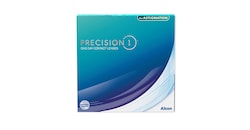
Precision1 for Astigmatism
Dailies Total 1 for Astigmatism
MyDay Daily Disposable Toric
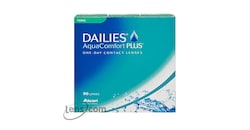
Dailies AquaComfort Plus Toric
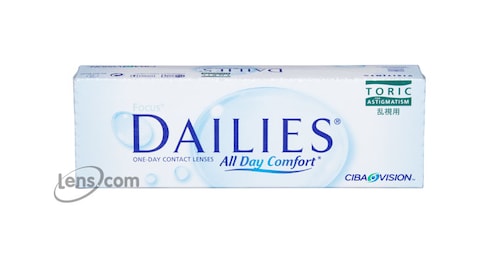
Focus Dailies Toric 30PK
What to Compare Before Buying Daily Contacts for Astigmatism?
|
Average Cost per day
|
Contact Lens Manufacturer
|
Contact Lens Type
|
Contact Lens Material Type
|
Contact Lens Water Content Percentage
|
Contact Lens Blocks UV
|
Each Box Contains
|
Average Star Rating
|
|
|---|---|---|---|---|---|---|---|---|
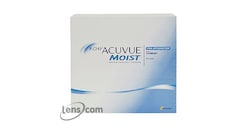
| 1-Day Acuvue Moist for Astigmatism | $0.65 | Johnson & Johnson | Daily | Hydrogel | 58% | 30 lenses, a 1-month supply |
|
|
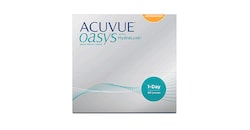
| Acuvue Oasys 1-Day for Astigmatism | $0.85 | Johnson & Johnson | Daily | Silicone Hydrogel | 38% | 30 lenses, a 1-month supply |
|
|
| Precision1 for Astigmatism | $1.01 | Alcon | Daily | Silicone Hydrogel | 51% | 90 lenses, a 3-month supply |
|
|
| Dailies Total 1 for Astigmatism | $0.00 | Alcon | Daily | Silicone Hydrogel | 33% | 90 lenses, a 3-month supply |
|
|
| MyDay Daily Disposable Toric | $1.10 | CooperVision | Daily | Silicone Hydrogel | 54% | 90 lenses, a 3-month supply |
|
|
| Dailies AquaComfort Plus Toric | $0.51 | Alcon | Daily | Silicone Hydrogel | 69% | 90 lenses, a 3-month supply |
|
|
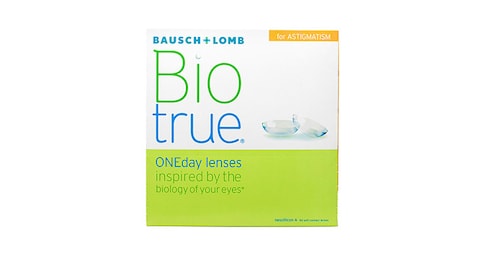
| Biotrue ONEday for Astigmatism | $0.57 | Bausch & Lomb | Daily | Hydrogel | 78% | 30 lenses, a 1-month supply |
|
|
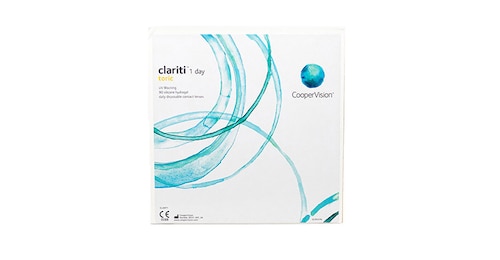
| Clariti 1-Day Toric | $0.58 | CooperVision | Daily | Silicone Hydrogel | 56% | 30 lenses, a 1-month supply |
|
|
| Focus Dailies Toric 30PK | $0.77 | Alcon | Daily | Hydrogel | 69% | 30 lenses, a 1-month supply |
|
|
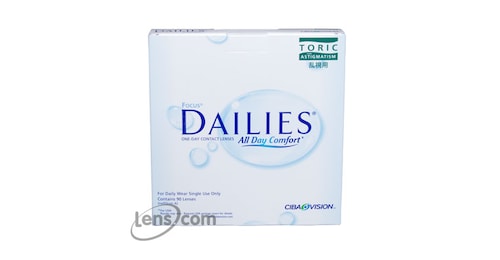
| Focus Dailies Toric | $0.54 | Alcon | Daily | Hydrogel | 69% | 90 lenses, a 3-month supply |
|
How to Save on Daily Contacts for Astigmatism?
|
box rebate
Rebate amount with a 4 box purchase
|
box rebate
Rebate amount with a 8 box purchase
|
Contact Lens Manufacturer
|
Contact Lens Type
|
Contact Lens Material Type
|
Contact Lens Water Content Percentage
|
Contact Lens Blocks UV
|
Each Box Contains
|
Average Star Rating
|
|
|---|---|---|---|---|---|---|---|---|---|
| 1-Day Acuvue Moist for Astigmatism | $75 | $290 | Johnson & Johnson | Daily | Hydrogel | 58% | 30 lenses, a 1-month supply |
|
|
| Acuvue Oasys 1-Day for Astigmatism | $75 | $180 | Johnson & Johnson | Daily | Silicone Hydrogel | 38% | 30 lenses, a 1-month supply |
|
|
| Dailies AquaComfort Plus Toric | -- | $220 | Alcon | Daily | Silicone Hydrogel | 69% | 90 lenses, a 3-month supply |
|
|
| Biotrue ONEday for Astigmatism | -- | $290 | Bausch & Lomb | Daily | Hydrogel | 78% | 30 lenses, a 1-month supply |
|
|
| Clariti 1-Day Toric | -- | $290 | CooperVision | Daily | Silicone Hydrogel | 56% | 30 lenses, a 1-month supply |
|
What Makes a Daily Contact Lens Toric?
A daily contact lens becomes toric when it is designed to correct astigmatism. Toric contact lenses for astigmatism have extra prescription details that regular daily lenses don't use, such as cylinder and axis. These values help correct the direction and amount of astigmatism in each eye. The lens also needs to stay steady enough during blinking so the correction doesn't move out of place. If your prescription says toric, choose the exact daily toric lens your eye doctor approved.
Are Daily Contacts for Astigmatism Good for Busy Routines
Daily contacts for astigmatism can work well for busy routines because each wear starts with a fresh pair. You don't need to clean lenses at night, refill a case, or track how long you've been using the same pair. That can be helpful for workdays, school days, travel, gym sessions, and part-time wear. The tradeoff is that you'll need enough daily lenses for the number of days you plan to wear them. Check your supply early so you're not stuck wearing old lenses longer than directed.
What Should New Toric Lens Wearers Expect?
New toric lens wearers may need a short adjustment period. The lens has to settle on the eye, and your eye doctor may check whether the position stays stable during blinking.
Watch for these details during your first few wears:
- Vision should feel clear and steady after the lens settles.
- Mild awareness can happen at first, but pain is not normal.
- The lens should not keep shifting or feeling loose.
- Your eyes should not stay red after removal.
- Blurry vision that comes and goes can point to lens rotation.
- Dryness late in the day should be discussed with your eye doctor.
- Each eye may have different toric prescription values.
- Daily toric lenses should be thrown away after one use.
- Backup glasses can help while you adjust.
- A follow-up visit may be needed if comfort or clarity feels off.
A new lens experience should improve with proper fit and handling. If discomfort, redness, or unstable vision keeps happening, remove the lenses and contact your eye doctor.
Can You Use Regular Daily Contacts If You Have Astigmatism?
Regular daily contacts may not give clear enough vision if your astigmatism needs toric correction. A spherical daily lens only corrects power in one general way, while a toric lens corrects power in specific directions. If your prescription includes cylinder and axis, that's a sign your eye doctor fitted you for astigmatism correction. Choosing a regular daily lens instead can leave your vision blurry or uneven.
Some wearers with very mild astigmatism may be fitted in a regular lens, but that decision should come from an eye doctor. Don't use the power number alone to choose a lens. Contact lens fit includes material, curve, diameter, movement, and how the lens works on your eye. If you want to move from regular dailies to daily toric contacts, ask for a fitting first.
How Do Daily Toric Contacts Compare With Monthly Toric Contacts?
Daily toric and monthly toric contacts can both correct astigmatism. The difference is how you replace and care for them.
Daily Toric Contacts
Daily toric contacts are worn once and thrown away after use. They don't need cleaning solution, lens cases, or overnight storage. This can be a good fit if you want fewer care steps or only wear contacts on certain days. Box count becomes more important because every day of wear uses a new pair.
Monthly Toric Contacts
Monthly contact lenses for astigmatism are reused on the schedule your eye doctor prescribed. They need cleaning, fresh solution, and proper storage after each wear. This routine can work if you're comfortable caring for lenses every night. Wearing them past the replacement date can affect comfort and eye health.
Choosing Between Them
The better choice depends on your prescription, comfort, budget, and daily habits. Daily toric lenses can simplify care, while monthly toric lenses require more maintenance. Your eye doctor can help compare both options based on how your lenses fit and how your eyes respond during wear. Don't switch schedules without approval.
Are Daily Toric Contacts Available in Silicone Hydrogel?
Yes, some daily toric contacts are made with silicone hydrogel material, while others use traditional hydrogel material. Silicone hydrogel contact lenses are known for letting more oxygen pass through to the eye, but the material alone doesn't decide comfort. Lens surface, fit, thickness, tear film, wearing time, and daily environment can all affect how the lens feels.
If you're interested in silicone hydrogel daily toric contacts, ask your eye doctor whether that material fits your prescription and eye health. The right daily toric lens should feel comfortable, stay stable, and support clear vision during your wearing day.
What Prescription Details Are Needed for Daily Toric Contacts?
Daily toric contacts need more details than standard daily lenses because they correct astigmatism. Use your contact lens prescription as the guide and check each field before checkout.
Look for these details:
- Exact daily toric lens name.
- Right eye and left eye values.
- Power for each eye.
- Cylinder value for astigmatism correction.
- Axis value for lens orientation.
- Base curve, if listed.
- Diameter, if listed.
- Daily disposable replacement schedule.
- Box count or supply amount.
- Prescription expiration date.
If one eye has different values from the other, enter each side carefully. Mixing up right and left eye values can lead to blurry vision or lenses you can't use.
When Should You Ask Your Eye Doctor About Daily Astigmatism Contacts?
Daily astigmatism contacts can be worth discussing if your current lenses don't give steady comfort or clear vision. Your eye doctor can check whether a daily toric lens fits your eyes and prescription.
Vision Keeps Shifting
Ask about daily toric contacts if your vision sharpens, blurs, then sharpens again during wear. That can happen when a toric lens moves too much or doesn't settle well. Your doctor can check lens position and rotation. A different daily toric design may sit better on your eye.
Your Current Routine Feels Too Much
Reusable toric contacts need cleaning and storage after each wear. If that routine feels hard to keep up with, daily toric contacts can reduce those care steps. You'll still need clean hands and safe handling. Your doctor can tell you whether daily disposables fit your prescription.
Your Eyes Feel Dry Or Tired
Dryness or tired eyes can come from lens fit, material, screen time, allergies, air conditioning, or wearing time. Daily toric contacts may help some wearers, but they're not an automatic fix. If dryness keeps returning, compare contacts for dry eyes and ask your doctor to check your tear film, current lens fit, and wearing routine.
How to Plan Your Supply of Daily Contacts for Astigmatism
Daily contacts for astigmatism are replaced after each wear, so your supply depends on how many days you plan to use them. Since every wearer uses a fresh pair, it helps to plan before your last few lenses are gone.
- Count how many days per week you usually wear contacts.
- Check if your right eye and left eye have different toric values.
- Order separate boxes for each eye if the prescriptions are different.
- Review the box count so you know how long your supply will last.
- Keep backup glasses ready for days when your lenses don't feel right.
- Reorder before your final pair so you have time for prescription verification and shipping.
- Check your prescription expiration date before buying a larger supply.
- Avoid stretching daily toric lenses beyond one use to make your box last longer.
- Ask your eye doctor before ordering a different daily toric product.
- Keep the exact lens name, power, cylinder, axis, and replacement schedule handy for future refills.
A little planning can help you avoid last-minute orders or wearing lenses longer than directed. For annual supply contact lenses, planning ahead can also help you estimate box count, reorder timing, and how many lenses you need for each eye.
References
About Contact Lens Types. Centers for Disease Control and Prevention. https://www.cdc.gov/contact-lenses/about/about-contact-lens-types.html. Updated May 27, 2025. Accessed June 3, 2026.
About Contact Lenses. Centers for Disease Control and Prevention. https://www.cdc.gov/contact-lenses/about/index.html. Accessed June 3, 2026.
About Cleaning, Disinfecting, And Storing Contact Lenses. Centers for Disease Control and Prevention. https://www.cdc.gov/contact-lenses/about/about-cleaning-disinfecting-and-storing-contact-lenses.html. Accessed June 3, 2026.
Astigmatism. American Optometric Association. https://www.aoa.org/healthy-eyes/eye-and-vision-conditions/astigmatism. Accessed June 3, 2026.
Astigmatism Explained: Causes, Diagnosis, Treatment. American Academy of Ophthalmology. https://www.aao.org/eye-health/astigmatism. Accessed June 3, 2026.
Buying Contact Lenses. U.S. Food and Drug Administration. https://www.fda.gov/medical-devices/contact-lenses/buying-contact-lenses. Accessed June 3, 2026.
Contact Lenses. U.S. Food and Drug Administration. https://www.fda.gov/medical-devices/consumer-products/contact-lenses. Published October 28, 2019. Accessed June 3, 2026.
Contact Lens Prescription. U.S. Food and Drug Administration. https://www.fda.gov/medical-devices/contact-lenses/contact-lens-prescription. Published October 28, 2020. Accessed June 3, 2026.
Contact Lenses For Vision Correction. American Academy of Ophthalmology. https://www.aao.org/eye-health/glasses-contacts/contact-lens-102. Updated July 16, 2025. Accessed June 3, 2026.
Corneal Infections Associated With Sleeping In Contact Lenses. Centers for Disease Control and Prevention. https://www.cdc.gov/mmwr/volumes/67/wr/mm6732a2.htm. Published August 17, 2018. Accessed June 3, 2026.
Preventing Eye Infections When Wearing Contacts. Centers for Disease Control and Prevention. https://www.cdc.gov/contact-lenses/prevention/index.html. Accessed June 3, 2026.
Toric Contact Lenses: What To Know. CooperVision. https://coopervision.com/about-contacts/toric-contact-lenses. Accessed June 3, 2026.
Types Of Contact Lenses. U.S. Food and Drug Administration. https://www.fda.gov/medical-devices/contact-lenses/types-contact-lenses. Accessed June 3, 2026.
Popular Contact Lens Reviews
crystal clear vision
they lock into place almost immediately after putting them in. no weird rotating or blurry spots when i blink.
Stays put
Very reliable toric. Doesn't shift around when I tilt my head at my desk. 10/10 will order again.
blurry sometimes
They work fine most days but sometimes they take a minute to settle on my eye right after blinking.
Stays put
Very reliable toric. Doesn't shift around when I tilt my head at my desk. 10/10 will order again
Not for everyone
For myself, I really don’t care for this brand. I often feel like either something is under the lens or it has a tear. Can only be worn for a short period of time before they have to be removed. Will be switching brands.
Continued Great Site - Easy to Use!
Len's.com have me a reminder when my current prescription was expiring, affording me the opportunity to reorder before running out of contacts. Always on top of my orders, even when I am not...
They take a minute to settle.into place
After putting them in it takes a few minutes to get them to fit properly. I sometimes have to spin them around.
Contacts
This is the first time wearing this brand and I am happy with it.
That my contacts are correctly prescribed and fit
Love my new daily contact. This is the first time I have ordered dailies.
They are awesome. Once you place your order, if there is any hang ups they will
Keep you informed.