
Toric Daily Contact Lenses
Daily disposable lenses can already make lens wear feel simpler, and toric daily contact lenses bring that same fresh-pair routine to people who need contact lenses for astigmatism. Just make sure that when you're wearing your toric lenses, they feel comfortable, stay stable during wear, and match the exact axis, cylinder, and power written on your prescription.
Since small fitting differences can affect clarity with astigmatism, it's worth knowing your options that your eye doctor has approved by brand, comfort features, prescription range, and pack size. Start with our daily toric lenses to see which product fits your prescription and routine.
to
to


to
to
to
Daily Toric Lenses Need The Right Stabilization Design
Unlike standard contact lenses, toric lenses must do more than correct your vision. They need to maintain a consistent position on the eye throughout the day. Even a small amount of lens rotation can affect how clearly you see, which is why stabilization design plays such an important role in daily toric contacts.
Manufacturers use different methods to help toric lenses stay properly aligned. While the goal is the same, each design approaches stabilization differently, which is one reason some wearers prefer certain toric lenses over others.
Common Stabilization Technologies
Accelerated Stabilization Design
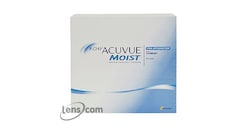
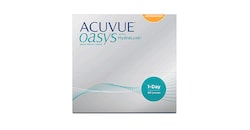
Used in lenses such as ACUVUE OASYS 1-Day for Astigmatism and 1-DAY ACUVUE MOIST for Astigmatism, this design uses multiple stabilization zones to help the lens return to its intended position after blinking.
Precision Balance Designs
Some manufacturers use weighted or balanced lens zones that work with the natural movement of the eyelids. These designs aim to maintain stability while preserving comfort during everyday wear.
Customized Toric Geometry
Other toric lenses rely on unique combinations of thickness profiles, lens shape, and material properties to help maintain orientation on the eye.
The best stabilization design is often the one that works best with your eyes. Two people with similar prescriptions may prefer different toric lenses based on comfort, fit, blinking patterns, and daily activities.
What Your Prescription Says About The Lens You Need
Toric contact lens prescriptions contain more information than standard contact lens prescriptions. Understanding what those numbers mean can make it easier for you to compare products and recognize compatible replacement options.
Sphere (SPH)
The sphere value corrects nearsightedness or farsightedness. This number appears on both standard and toric prescriptions and represents the primary vision correction needed for each eye.
Cylinder (CYL)
The cylinder value measures the amount of astigmatism correction required. Higher cylinder values indicate greater amounts of astigmatism. Not every toric lens is available in every cylinder power, which can affect your product options.
Axis
The axis determines where the astigmatism correction must be positioned on the eye. It is measured in degrees from 1 to 180. While two people may have the same sphere and cylinder values, different axis measurements can require different lens parameters.
Some Prescriptions Have Fewer Choices
Patients with higher cylinder powers, uncommon axis values, or more complex prescriptions sometimes have fewer daily toric options available. Manufacturers typically produce the highest-demand parameters first, while more specialized prescriptions may be available in a smaller selection of lenses.
Popular Daily Toric Contact Lens Options
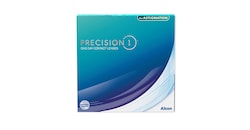
Precision1 for Astigmatism
Dailies Total 1 for Astigmatism
MyDay Daily Disposable Toric
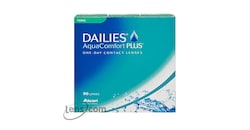
Dailies AquaComfort Plus Toric
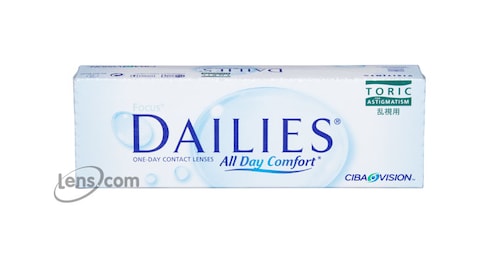
Focus Dailies Toric 30PK
Compare Daily Toric Lenses by Prices, Supply Lengths, and Features
|
Average Cost per day
|
Contact Lens Manufacturer
|
Contact Lens Type
|
Contact Lens Material Type
|
Contact Lens Water Content Percentage
|
Contact Lens Blocks UV
|
Each Box Contains
|
Average Star Rating
|
|
|---|---|---|---|---|---|---|---|---|
| 1-Day Acuvue Moist for Astigmatism | $0.65 | Johnson & Johnson | Daily | Hydrogel | 58% | 30 lenses, a 1-month supply |
|
|
| Acuvue Oasys 1-Day for Astigmatism | $0.85 | Johnson & Johnson | Daily | Silicone Hydrogel | 38% | 30 lenses, a 1-month supply |
|
|
| Precision1 for Astigmatism | $1.01 | Alcon | Daily | Silicone Hydrogel | 51% | 90 lenses, a 3-month supply |
|
|
| Dailies Total 1 for Astigmatism | $0.00 | Alcon | Daily | Silicone Hydrogel | 33% | 90 lenses, a 3-month supply |
|
|
| MyDay Daily Disposable Toric | $1.10 | CooperVision | Daily | Silicone Hydrogel | 54% | 90 lenses, a 3-month supply |
|
|
| Dailies AquaComfort Plus Toric | $0.51 | Alcon | Daily | Silicone Hydrogel | 69% | 90 lenses, a 3-month supply |
|
|
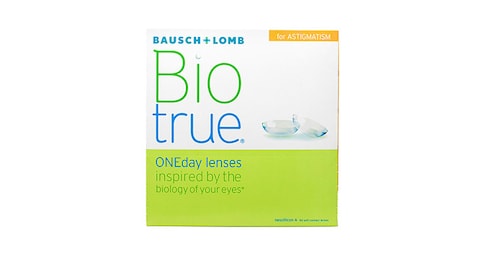
| Biotrue ONEday for Astigmatism | $0.57 | Bausch & Lomb | Daily | Hydrogel | 78% | 30 lenses, a 1-month supply |
|
|
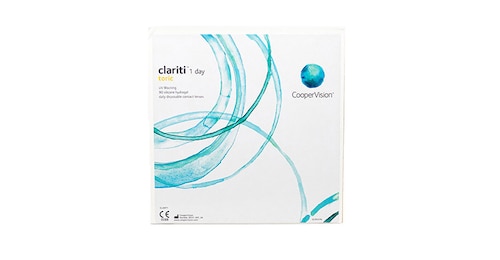
| Clariti 1-Day Toric | $0.58 | CooperVision | Daily | Silicone Hydrogel | 56% | 30 lenses, a 1-month supply |
|
|
| Focus Dailies Toric 30PK | $0.77 | Alcon | Daily | Hydrogel | 69% | 30 lenses, a 1-month supply |
|
|
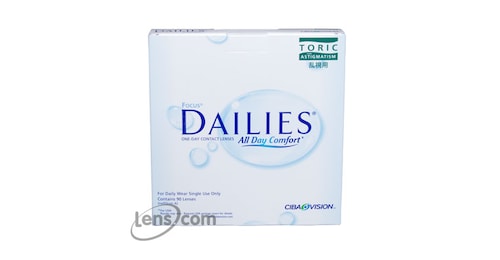
| Focus Dailies Toric | $0.54 | Alcon | Daily | Hydrogel | 69% | 90 lenses, a 3-month supply |
|
Save More on Your Contact Lenses With Rebates
|
box rebate
Rebate amount with a 4 box purchase
|
box rebate
Rebate amount with a 8 box purchase
|
Contact Lens Manufacturer
|
Contact Lens Type
|
Contact Lens Material Type
|
Contact Lens Water Content Percentage
|
Contact Lens Blocks UV
|
Each Box Contains
|
Average Star Rating
|
|
|---|---|---|---|---|---|---|---|---|---|
| 1-Day Acuvue Moist for Astigmatism | $75 | $290 | Johnson & Johnson | Daily | Hydrogel | 58% | 30 lenses, a 1-month supply |
|
|
| Acuvue Oasys 1-Day for Astigmatism | $75 | $180 | Johnson & Johnson | Daily | Silicone Hydrogel | 38% | 30 lenses, a 1-month supply |
|
|
| Dailies AquaComfort Plus Toric | -- | $220 | Alcon | Daily | Silicone Hydrogel | 69% | 90 lenses, a 3-month supply |
|
|
| Biotrue ONEday for Astigmatism | -- | $290 | Bausch & Lomb | Daily | Hydrogel | 78% | 30 lenses, a 1-month supply |
|
|
| Clariti 1-Day Toric | -- | $290 | CooperVision | Daily | Silicone Hydrogel | 56% | 30 lenses, a 1-month supply |
|
Axis Is Important When Ordering Toric Contacts
Axis is one of the most important numbers on a toric contact lens prescription because it tells the lens where the astigmatism correction needs to sit. Unlike a regular spherical lens, a toric lens has to align in a specific direction on the eye to give clear, steady vision.
The axis value is written in degrees, usually from 1 to 180. If the axis is wrong, even when the power and cylinder look correct, the lens may not correct your astigmatism properly. This can lead to blurry vision, shifting clarity, or vision that feels clear one moment and soft the next.
When ordering toric daily contacts, always match the axis exactly as written on your contact lens prescription. Eyeglass prescriptions and contact lens prescriptions are not always the same, so use the contact lens prescription your eye doctor gave you.
Daily Toric Contacts vs Monthly Toric Contacts
Daily and monthly toric contacts can both correct astigmatism, but they fit into different routines. Daily toric lenses are worn once and thrown away at the end of the day, which means there is no nightly cleaning or storage. Monthly toric lenses are reusable contact lenses, so they require proper cleaning, disinfecting, and storage after each wear.
Daily toric contacts may be a better fit for people who want a simpler routine, wear lenses only part-time, travel often, or prefer starting each day with a fresh pair. Monthly toric contacts may appeal to wearers who are comfortable with lens care and want fewer boxes to manage over time.
- Choose daily toric contacts if you want fresh lenses every day, less maintenance, and an easier travel routine.
- Choose monthly toric contacts if you are comfortable cleaning lenses nightly and prefer a reusable lens schedule.
The better option depends on your prescription, wearing habits, comfort needs, and what your eye doctor has approved for your eyes.
Why Daily Toric Lenses Feel Different Between Brands
Daily toric lenses can feel different between contact brands for astigmatism because each manufacturer uses its own lens material, stabilization design, moisture technology, edge profile, and thickness pattern. Even when two lenses correct the same sphere, cylinder, and axis values, they may sit on the eye differently during blinking and movement.
Some toric lenses are designed to settle quickly after each blink, while others focus more on moisture, breathability, or a thinner lens feel. The shape of your eyelids, tear film, blinking pattern, and corneal shape can also affect how a lens feels and performs throughout the day.
- Material can affect softness, oxygen flow, and how the lens feels after several hours.
- Stabilization design affects how well the lens stays aligned for astigmatism correction.
- Moisture technology can influence comfort, especially during long wear days.
- Lens edge design can affect how noticeable the lens feels during blinking.
That is why one daily toric lens may feel great for one wearer but less comfortable for another. The best brand is usually the one that matches both your prescription and the way the lens fits your eye.
Can You Switch to a Different Daily Toric Lens With the Same Prescription?
Not automatically. Even if the sphere, cylinder, and axis values are the same, toric contact lenses are not always interchangeable between brands. Each lens has its own base curve, diameter, material, thickness profile, and stabilization system, which can affect both comfort and visual clarity.
A different brand may rotate differently on your eye, settle in a different position, or feel different after several hours of wear. This matters more with toric lenses because the astigmatism correction has to stay aligned correctly. A lens that looks similar on paper may not perform the same way once it is on the eye.
Before switching to another daily toric lens, ask your eye doctor to confirm the fit and update your contact lens prescription if needed. This is especially important if you are changing from hydrogel to silicone hydrogel contact lenses, switching manufacturers, or moving to a lens with a different stabilization design.
What to Do If Your Toric Lens Feels Blurry After Blinking
Occasional blur after blinking can happen with toric contact lenses because the lens briefly moves before returning to its intended position. Unlike standard contact lenses, toric lenses contain astigmatism correction that must stay aligned correctly on the eye. If the lens rotates too much or takes too long to stabilize, vision may appear blurry for a few moments.
If the blur clears quickly and your vision returns to normal, the lens may simply be settling back into position. However, frequent or persistent blur may indicate that the lens fit, prescription, or lens design needs to be reviewed.
Things You Can Check First
- Make sure the lens is not inside out.
- Confirm you inserted the correct lens in the correct eye.
- Check for debris, makeup, or damage on the lens surface.
- Replace the lens if it is due for replacement or appears damaged.
- Use approved rewetting drops if dryness is contributing to fluctuating vision.
When To Contact Your Eye Doctor
- Blur remains after several blinks.
- Vision fluctuates throughout the day.
- The lens feels unstable or shifts frequently.
- You recently changed brands or prescriptions.
- You experience redness, discomfort, or irritation along with blurry vision.
Many toric lens issues can be resolved with a different lens design, stabilization system, or prescription adjustment. If blurry vision continues, your eye doctor can evaluate whether other daily contacts for astigmatism may provide better stability for your eyes.
References
Contact Lenses. American Academy of Ophthalmology. https://www.aao.org/eye-health/glasses-contacts/contact-lenses. Accessed June 22, 2026.
Contact Lens Care. American Optometric Association. https://www.aoa.org/healthy-eyes/vision-and-vision-correction/contact-lens-care. Accessed June 22, 2026.
Contact Lens Types. American Optometric Association. https://www.aoa.org/healthy-eyes/vision-and-vision-correction/contact-lenses/contact-lens-types. Accessed June 22, 2026.
Healthy Vision and Contact Lenses. American Optometric Association. https://www.aoa.org/healthy-eyes/vision-and-vision-correction/healthy-vision-and-contact-lenses. Accessed June 22, 2026.
Preventing Eye Infections When Wearing Contacts. Centers for Disease Control and Prevention. https://www.cdc.gov/contact-lenses/prevention/index.html. Updated May 27, 2025. Accessed June 22, 2026.
The Contact Lens Rule: A Guide for Prescribers and Sellers. Federal Trade Commission. https://www.ftc.gov/business-guidance/resources/contact-lens-rule-guide-prescribers-sellers. Accessed June 22, 2026.
Popular Contact Lens Reviews
crystal clear vision
they lock into place almost immediately after putting them in. no weird rotating or blurry spots when i blink.
Stays put
Very reliable toric. Doesn't shift around when I tilt my head at my desk. 10/10 will order again.
blurry sometimes
They work fine most days but sometimes they take a minute to settle on my eye right after blinking.
Stays put
Very reliable toric. Doesn't shift around when I tilt my head at my desk. 10/10 will order again
Not for everyone
For myself, I really don’t care for this brand. I often feel like either something is under the lens or it has a tear. Can only be worn for a short period of time before they have to be removed. Will be switching brands.
Continued Great Site - Easy to Use!
Len's.com have me a reminder when my current prescription was expiring, affording me the opportunity to reorder before running out of contacts. Always on top of my orders, even when I am not...
They take a minute to settle.into place
After putting them in it takes a few minutes to get them to fit properly. I sometimes have to spin them around.
Contacts
This is the first time wearing this brand and I am happy with it.
That my contacts are correctly prescribed and fit
Love my new daily contact. This is the first time I have ordered dailies.
They are awesome. Once you place your order, if there is any hang ups they will
Keep you informed.