
Personalized Contact Lenses
Personalized contact lenses are selected or designed around an individual wearer's prescription, eye shape, visual needs, and daily routine. Personalization may involve the lens power, base curve, diameter, material, optical design, replacement schedule, or stabilization system. Even standard eye contacts become part of a personalized fitting when an eye care professional confirms that their dimensions and performance suit the wearer's eyes.
Some custom contact lenses are made to order when standard products don't provide the required fit or correction. These may include custom soft lenses, RGP contact lenses, scleral lenses, extended-range toric designs, multifocals, or prosthetic tints, which are available below.
to
to
to
to

to
to
to
to
to
to
to
to
to
to
to
to
to
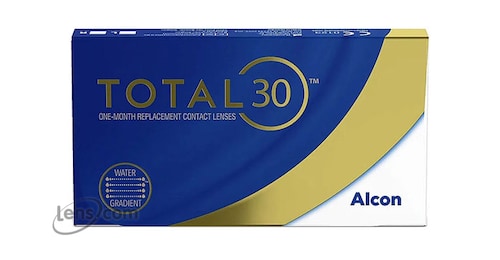
to
to
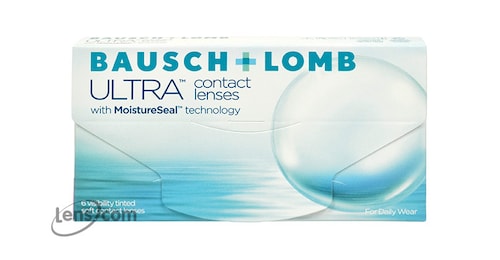
to
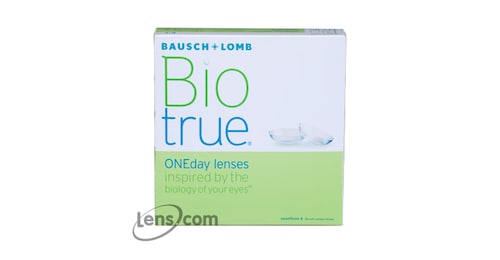
to
to
to
to
to
to
to
to
to
to
to
to
to
to
to
to
Ways Contact Lenses Can Be Personalized
Contact lenses can be tailored through their prescription, dimensions, material, optical design, and appearance. Some adjustments come from selecting the most suitable standard product, while others require a made-to-order lens manufactured with uncommon parameters.
- Prescription power - Sphere power can be adjusted for nearsightedness or farsightedness, including prescriptions outside the ranges carried by many standard lenses.
- Astigmatism correction - Toric contact lenses can be personalized through cylinder power, axis orientation, and stabilization design to keep the correction aligned on the eye.
- Near-vision correction - Multifocal contacts may use different add powers, optical-zone arrangements, or dominant-eye settings to support near, intermediate, and distance vision.
- Base curve - The curvature can be selected or manufactured to better match the shape of the cornea and control how the lens centers and moves.
- Lens diameter - Larger or smaller diameters may improve corneal coverage, edge position, centration, or handling for wearers whose eyes don't suit common stock sizes.
- Lens material - Hydrogel, silicone hydrogel, and rigid gas-permeable materials provide different levels of flexibility, oxygen permeability, water content, and surface wettability.
- Optical-zone placement - Custom designs may position the main corrective zone differently to account for pupil location, lens movement, or an off-center visual axis.
- Edge profile and thickness - Adjusting the lens edge, center thickness, or peripheral curves can affect movement, lid interaction, handling, and overall wearing experience.
- Scleral lens clearance - The sagittal depth and landing zones of a scleral lens can be modified to vault over the cornea while distributing support across the sclera.
- Replacement schedule - The prescribed lens may be a daily disposable, planned-replacement soft lens, or longer-lasting rigid design, depending on the available parameters and wearing routine.
- Cosmetic tint - Colored lenses can use selected shades, opacity levels, limbal rings, or iris patterns to create a particular visual effect.
- Prosthetic design - Custom-tinted lenses may help mask corneal scarring, reduce noticeable differences between the eyes, or recreate the appearance of an iris and pupil.
How a Personalized Contact Lens Fitting Works
A personalized contact lens fitting begins with a review of your prescription, eye health, previous lens experience, and typical wearing routine. Your eye care professional (ECP) may measure corneal curvature and diameter, assess the tear film, examine the eye with a slit lamp, and use corneal topography or anterior-segment imaging when more detailed fitting data is needed. These findings help determine the starting lens material, power, base curve, diameter, and design.
A diagnostic or trial contact lens is then placed on the eye and allowed time to settle. The ECP checks centration, corneal coverage, blink-induced movement, visual acuity, and any rotation in toric designs. Scleral fittings may also require measurements of central clearance and how the lens lands on the sclera.
Follow-up visits allow the design to be refined by adjusting the power, curves, diameter, edge profile, optical zones, or other parameters before the final prescription is issued.
Measurements Used to Customize Contact Lenses
Personalized contact lenses rely on several measurements for the eye's shape, prescription, and how a lens behaves during wear.
- Sphere power - This value corrects nearsightedness or farsightedness. Custom lenses may be made in powers beyond the ranges available in standard products.
- Cylinder and axis - These measurements define the amount and orientation of astigmatism correction. Both values help keep toric optics aligned with the eye.
- Add power - Multifocal lenses use an add value to provide extra focusing power for near tasks. The fitting may also account for eye dominance and preferred working distances.
- Corneal curvature - Keratometry measures the curvature of the central cornea. These readings help guide the initial base curve and identify regular or irregular astigmatism.
- Corneal topography - A topographer creates a detailed map of the corneal surface. It can reveal asymmetry, steep and flat regions, and irregular shapes that simpler measurements may miss.
- Horizontal visible iris diameter - This measurement estimates the width of the visible cornea from one side of the iris to the other. It helps guide the overall lens diameter and corneal coverage.
- Pupil size - Pupil diameter may be measured in bright and dim lighting. This information determines optical-zone size, multifocal zone placement, and night-vision performance.
- Base curve - The base curve describes the curvature of the back surface of the contact lens. It affects centration, movement, tear exchange, and how closely the lens follows the corneal shape.
- Lens diameter - Diameter determines how much of the eye the lens covers. Adjusting it can improve centration, edge position, movement, and stability.
- Sagittal depth - This measures the depth of the eye or lens over a given diameter. It is especially useful for scleral and custom soft lenses that need to vault over the cornea.
- Central and limbal clearance - During a scleral fitting, the space between the lens and the cornea is evaluated after the scleral contact lens settles. Enough clearance is needed without creating an unnecessarily deep fluid reservoir.
- Scleral shape - The white part of the eye may be uneven rather than perfectly symmetrical. Mapping or observing the sclera helps customize landing zones and reduce localized pressure.
- Lens movement - The ECP measures how the lens moves with blinking and eye movements. Too much or too little movement may require changes to the curves, diameter, or edge design.
- Centration and rotation - The lens should remain positioned over the visual axis, while toric or multifocal optics need stable orientation. Persistent decentration or rotation can guide further design adjustments.
- Tear-film condition - Tear quantity, stability, and breakup time can affect material choice and surface performance. These findings may influence whether a soft, rigid, or scleral lens is more suitable.
How Made-to-Order Contact Lenses Are Manufactured
Made-to-order contact lenses are produced from the exact prescription and design parameters supplied by an ECP. The manufacturing method varies by lens material and type, but the process typically moves from digital design to shaping, finishing, inspection, and packaging.
The laboratory receives the custom specifications.
The order may include sphere power, cylinder, axis, add power, base curve, diameter, corneal measurements, tint details, and specialty fitting parameters. These values create the production plan for an individual lens.
The lens design is calculated digitally.
Manufacturing software converts the prescribed measurements into precise front- and back-surface curves. Toric, multifocal, scleral, and other specialty designs may include several optical or fitting zones.
A suitable lens material is selected.
The laboratory chooses the prescribed hydrogel, silicone hydrogel, or rigid gas-permeable polymer. Material properties determine oxygen permeability, flexibility, wettability, thickness, and the manufacturing method used.
The lens is shaped using precision equipment.
Many custom rigid and soft lenses are lathe-cut from solid polymer blanks using computer-controlled tools. Other soft lenses may be formed with precision molding, depending on the material, design, and manufacturer.
The optical and fitting zones are created.
The equipment forms the required prescription power, peripheral curves, stabilization areas, multifocal zones, or scleral landing zones. These features determine how the lens corrects vision and interacts with the eye.
The surfaces and edges are finished.
The lens is polished to smooth the optical surfaces and edge profile. Careful finishing helps remove machining marks and ensures that the lens meets the intended dimensions.
Soft lenses are hydrated.
A lathe-cut soft lens begins as a firm, dry material and expands to its final size and softness when hydrated. The laboratory accounts for this dimensional change during production. CooperVision notes that soft contact lenses undergo polishing and hydration before quality testing.
Color or prosthetic details may be added.
Custom-tinted lenses can include an enhancement shade, opaque iris pattern, limbal ring, or artificial pupil. Tinted lenses may require additional processing compared with clear lenses.
Each lens undergoes quality checks.
Technicians verify labeled parameters such as power, base curve, diameter, thickness, surface condition, and tint placement. The lens must match its ordered specifications and be free from manufacturing defects.
The finished lens is cleaned and packaged.
After inspection, the lens is prepared in the appropriate sterile or disinfected packaging and labeled with its identifying parameters. It is then sent to the eye care practice for fitting or dispensing.
What To Check Before Buying Contact Lenses In Bulk
Personalized contact lenses may help when standard products don't provide the required vision, stability, or coverage. They can also be useful for wearers whose prescriptions, corneal shapes, or cosmetic needs fall outside common stock options.
- People with high prescriptions
Custom lenses may be produced in stronger plus or minus powers than many standard soft contacts provide. - Wearers with uncommon astigmatism values
Extended-range toric lenses can accommodate cylinder powers or axis combinations that aren't widely available in mass-produced products. - People with presbyopia
Personalized multifocal designs can adjust near power, optical-zone placement, and eye dominance to better match reading distance and everyday visual demands. - People with keratoconus
Rigid gas-permeable, hybrid, or scleral lenses may create a smoother optical surface over the irregular cornea and improve vision that glasses or standard soft lenses can't fully correct. - Wearers with other irregular corneal shapes
Conditions such as corneal ectasia, scarring, or pellucid marginal degeneration may require customized curves, diameters, or vaulting designs. - People who have undergone corneal surgery
Procedures such as corneal transplants or refractive surgery can leave the cornea with a shape that doesn't match standard lens designs. - People with severe dry-eye symptoms
Scleral lenses can hold a fluid reservoir over the cornea, which may protect the ocular surface and reduce exposure during wear. - Wearers with unusually large or small corneas
A customized diameter and base curve can improve corneal coverage, centration, movement, and edge position. - People with aphakia
Someone who doesn't have the eye's natural crystalline lens may need a high-powered custom contact lens for visual correction. - Wearers who haven't found a comfortable stock lens
Adjusting the material, thickness, edge profile, curvature, or overall design may improve how the lens interacts with the eyelids and tear film. - People with cosmetic or prosthetic needs
Custom-tinted lenses can help mask corneal scars, reduce visible differences between the eyes, recreate an iris pattern, or control the appearance of an irregular pupil. - People with complex visual demands
Customized optics may be useful for wearers who need stable vision across specific working distances, lighting conditions, or detailed professional tasks.
How Personalized Optics Address Complex Vision Needs
Personalized optics adjust the corrective zones of a contact lens to match vision needs that standard spherical designs may be unable to correct. Toric lenses can use customized cylinder power, axis, and stabilization to correct astigmatism, while multifocal designs may vary the near addition, zone size, and optical layout for presbyopia.
In more specialized cases, the corrective zone can be repositioned to account for lens decentration, pupil location, or an off-center visual axis.
Custom rigid gas-permeable and scleral lenses can also create a smoother refractive surface over an irregular cornea. This can improve image quality for people with keratoconus, corneal scarring, or post-surgical changes that cause light to focus unevenly.
Trial lenses and follow-up testing help refine the power and optical geometry until vision remains as clear and stable as possible across the wearer's normal activities.
Types of Personalized Contact Lenses
Personalized contact lenses come in several designs, depending on the wearer's prescription, corneal shape, ocular health, and visual goals. Some are modified versions of soft lenses, while others are manufactured from the ground up using custom measurements.
Custom soft contact lenses
These lenses can be made with less common powers, base curves, diameters, or thickness profiles. They may suit wearers who fall outside the parameter ranges of standard soft contacts.
Extended-range toric lenses
Custom toric contacts provide additional cylinder powers and axis combinations for astigmatism. Their stabilization design may also be adjusted to improve rotational stability.
Custom multifocal lenses
These lenses combine distance and near correction for presbyopia. The add power, optical-zone size, zone placement, and eye-dominance strategy can be tailored to the wearer's everyday visual demands.
Rigid gas-permeable lenses
RGP lenses are firm, oxygen-permeable contacts shaped to match the cornea. Their front and back surfaces can be customized to provide sharp vision for high prescriptions, astigmatism, or irregular corneas.
Scleral contact lenses
Scleral lenses vault over the cornea and rest on the white part of the eye. Their sagittal depth, diameter, landing zones, and fluid reservoir can be adjusted for keratoconus, severe dry eye, corneal scarring, or post-surgical changes.
Hybrid contact lenses
Hybrid designs combine a rigid optical center with a soft outer skirt. They aim to provide the visual clarity of a rigid lens with a softer edge around the cornea.
Orthokeratology lenses
These custom rigid lenses are worn overnight to temporarily reshape the cornea. They're commonly used to reduce daytime myopia correction and must be fitted and monitored carefully.
Custom prosthetic contact lenses
Prosthetic lenses use personalized iris colors, pupil designs, and opacity levels to mask scars, create a more symmetrical appearance, or reduce light entering an irregular pupil.
Custom cosmetic lenses
Cosmetic contact lenses may use selected shades, iris patterns, limbal rings, or pupil effects to create specific looks. The visual design is combined with individualized fitting parameters.
Aphakic contact lenses
People without a natural crystalline lens may need custom contacts with unusually high plus powers. The lens design must also account for thickness, weight, centration, and oxygen delivery.
Post-surgical contact lenses
Corneal transplants, refractive surgery, and other procedures can leave an uneven corneal surface. Customized soft, rigid, hybrid, or scleral lenses may be used to improve vision and fit over the altered shape.
Specialty therapeutic lenses
Certain custom contacts are designed to protect the cornea, maintain a fluid reservoir, or support a compromised ocular surface. Their use and replacement schedule depend on the wearer's condition and treatment plan.
How Trial Lenses and Design Adjustments Refine the Fit
Trial lenses allow an ECP to see how a proposed design behaves on the eye before the final lens is ordered. After the lens settles, they can check centration, blink-induced movement, rotation, corneal coverage, edge alignment, and visual stability. Scleral lenses may also be evaluated for central and limbal clearance, fluid-reservoir depth, and how evenly the landing zone rests on the sclera.
These findings guide precise design changes. The power, base curve, diameter, sagittal depth, peripheral curves, edge profile, stabilization system, or optical-zone position may be adjusted to address shifting vision, pressure areas, excessive movement, or poor alignment.
Another trial or follow-up check may be needed after the revised lens arrives, especially for complex prescriptions or irregular corneas. This step-by-step process helps refine both vision and lens performance before the final prescription is completed.
What to Consider Before Choosing Personalized Contact Lenses
Personalized contact lenses can address prescriptions and fitting needs that standard products don't handle well, but they usually require more time, testing, and follow-up care. Reviewing the practical details beforehand can help you decide whether a custom design fits your vision needs and daily routine.
- Your specific vision needs
Personalized lenses are most useful when standard contacts can't provide stable vision, suitable parameters, or dependable positioning on the eye. - Your overall eye health
Dry eye, corneal irregularities, allergies, scarring, or previous eye surgery can influence which lens type and material are appropriate. - The fitting process
A custom fitting may involve corneal measurements, imaging, trial lenses, and several evaluations. Complex designs often need more than one adjustment before the final fit is confirmed. - Adaptation time
Rigid gas-permeable, scleral, hybrid, and multifocal lenses can feel or perform differently from standard soft contacts. Your eyes and visual system may need time to adjust. - Follow-up appointments
Regular checks allow the eye care professional to assess vision, lens movement, corneal health, and any changes in the fit. Skipping these visits can allow small problems to go unnoticed. - Cost
Made-to-order lenses, diagnostic testing, fitting fees, and design changes may cost more than standard contacts. Ask which services and replacement lenses are included before beginning the process. - Insurance coverage
Some vision or medical plans may cover part of the cost when specialty lenses are medically necessary. Cosmetic customization or routine contact lens benefits may be handled differently. - Replacement frequency
Custom soft lenses, scleral contacts, and RGP lenses don't all follow the same replacement schedule. Knowing how long the lenses are expected to last can help with budgeting and care planning. - Daily cleaning requirements
Reusable personalized lenses may need specific cleaning, disinfection, rinsing, and storage products. Scleral lenses also require preservative-free saline for filling before insertion. - Handling and application
Larger scleral lenses or small rigid lenses may take practice to insert and remove correctly. Your eye care team should provide hands-on training before you take the lenses home. - Your daily routine
Work conditions, screen use, travel, sports, lighting, and typical wearing hours can affect the recommended design. Share these details during the fitting rather than focusing on prescription numbers alone. - Realistic visual expectations
Personalized lenses can improve many complex vision problems, but they don't always create perfect vision at every distance or in every lighting condition. Some wearers still need glasses for certain tasks. - Access to replacement lenses
Custom contacts may take longer to manufacture and ship than standard products. Keeping an approved backup pair or a current pair of glasses can prevent disruptions when a lens is lost or damaged.
What If Your Personalized Contact Lens Is Not Working for You?
A personalized contact lens may still need adjustments after you begin wearing it. Blurry or fluctuating vision, excessive movement, rotation, dryness, pressure, redness, or difficulty wearing the lens for the expected number of hours can mean that the fit or design needs another look.
Stop wearing the lens and contact your ECP rather than trying to tolerate ongoing discomfort or changing the wearing schedule on your own.
During a follow-up visit, the ECP checks the lens on your eye and identifies what isn't working. They may revise the prescription power, base curve, diameter, sagittal depth, edge profile, stabilization system, optical-zone position, or lens material. Some wearers need more than one modification before reaching a dependable result, so an early problem doesn't always mean personalized lenses are the wrong choice.
References
Soft Contact Lenses for Prosthetic Fitting. Dawn Lam, BSc, MSc, OD, FAAO/Contact Lens Spectrum. https://www.clspectrum.com/issues/2015/march/soft-contact-lenses-for-prosthetic-fitting/. Published Date (March-01-2015). Date Accessed: August 6, 2026.
What You Need to Know About Sagittal Height and Scleral Lenses. Lee Hall, BSc (Hons), PhD, MCOptom, FBCLA/Contact Lens Spectrum. https://www.clspectrum.com/issues/2015/may/what-you-need-to-know-about-sagittal-height-and-scleral-lenses/. Published Date (May-01-2015). Date Accessed: August 6, 2026.
About Contact Lens Types. Centers for Disease Control and Prevention. https://www.cdc.gov/contact-lenses/about/about-contact-lens-types.html. Published Date (May-27-2025). Date Accessed: August 6, 2026.
How Our Contacts Are Made. CooperVision. https://coopervision.com/blog/how-our-contacts-are-made. Published Date (February-17-2023). Date Accessed: August 6, 2026.
Fitting Custom Soft Lenses. Susan A. Resnick, OD, FAAO, and Steven L. Sorkin, OD/Contact Lens Spectrum. https://www.clspectrum.com/issues/2024/may/fitting-custom-soft-lenses/. Published Date (May-01-2024). Date Accessed: August 6, 2026.
Popular Contact Lens Reviews
Night and Day
Been wearing these for many years. Very thin to allow more oxygen to the eye. I remove and sanitize daily. Great product.
Excellent service!
This product has nothing to dislike about. It is a good quality of contact lenses and will not stop using this brand. My vision is satisfactory using Air Optix brand. Please do not stop carrying them. The sales representative was also very knowledgeable, professional, articulate and kind. My order came in before Thanksgiving and I appreciate it. She expedited sending my order so I will be happy, satisfied with my new lenses. Thank you kindly, for the excellent service !
Affordable price and quality
Love the ease and price of buying Focus dailies through Lens.com. Quick delivery and cheaper than through my eye doctor. Same product and quality. Why waste time and money anywhere else.
Awesome service
I have used Lens.com for several years now and their service is excellent. They even took back contacts I had ordered by mistake. They make it easy to order and receive your product quickly.
Would highly recommend them!
Easy wearing
Been wearing this brand of contacts for 3 years- feel easy on the eyes, light, flexible & easy to dispose of. Say adios to buying contact solution & contact cases!
The customer service is prompt and OUTSTANDING
Lens.com is such a breeze to order contacts from, and their customer service is the best. Several boxes of contacts I ordered were lost in the mail and they so were so kind about resending me my order fast and without any extra fees. The quality of these contacts (Biofinity) is unmatched as well. I would highly recommend both Lens.com and Biofinity to anyone.
Great prices
I have ordered several times from Lens.com.
I have had no issues with orders or scripts. I love the rebate when you order 4 boxes or more. I will purchase from them again.
First time buyer
Great service, great price and very easy to order and pay. Will be back for my next order.
I have been using B+L SofLens Toric Astigmatism.
After I had been happily using them for decades, I could not reorder my contact lenses since Bausch+Lomb officially discontinued many SofLens® Toric lenses in July  2023.
As my Rx had not changed, my optometrist recommended another manufacturer, which I tried using for months, and was very disappointed.
Then on the Lens.com website, I ordered B+L ULTRA for Astigmatism Contact Lenses, and they seem just the same to me as the discontinued B+L SofLens® Toric contact lens. Now I couldn't be happier!