Contacts for Near and Far
Contacts for near and far can refer to eye contacts that correct nearsightedness or farsightedness, two common refractive errors that affect how clearly you see objects at different distances. With nearsightedness, distant objects appear blurry while nearby objects are usually clearer. Farsightedness can make close objects harder to see clearly. Contact lenses correct these problems by changing how light focuses on the retina.
The right lens depends on your specific prescription and vision needs. Standard spherical contacts can correct nearsightedness or farsightedness, while multifocal contacts can help people who need clearer vision at near, intermediate, and far distances because of presbyopia. Your eye doctor can determine which lens design below is appropriate based on your eyes, fit, and everyday visual needs.
to
to
to
to
to
to
to
to
to
to
to
to
to
to
to
to
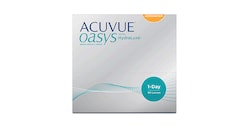
to
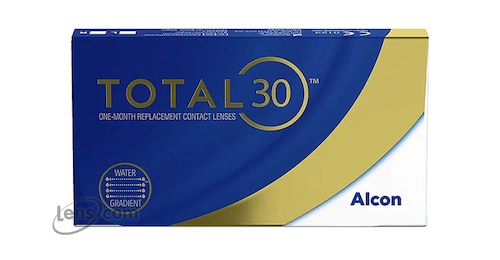
to
to
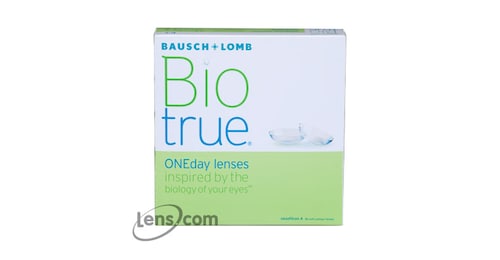
to
to
to
to
to
to
to
to
to
to
to
to
to
to
to
to
to
to
What to Look for in Contacts for Nearsightedness and Farsightedness
When choosing contact lenses for near and far vision, start with the prescription your eye doctor provides. Then compare lens features that support clear vision, a comfortable fit, and a wearing schedule that works for you.
- The Correct Prescription Power
Choose the lens power prescribed for your nearsightedness or farsightedness. Do not substitute a different power based on how clear your vision seems with someone else's contacts. - A Proper Lens Fit
Base curve and diameter affect how the lens sits and moves on your eye. Your eye doctor can assess the fit and determine whether the lens works well with your eyes. - The Right Lens Design
Spherical contacts typically correct nearsightedness or farsightedness. If you also need correction at multiple distances because of presbyopia, your eye doctor might recommend a multifocal design. - A Suitable Replacement Schedule
Daily, biweekly, and monthly contact lenses require different replacement routines. Choose the schedule that fits your wearing habits and that your eye doctor recommends. - Comfort for Your Typical Wear Time
Consider how many hours you normally wear contacts. Lens material, moisture characteristics, surface design, and fit can all affect comfort during the day. - A Material That Supports Your Eyes
Hydrogel and silicone hydrogel contact lenses have different oxygen transmission and water characteristics. Your eye doctor can help determine which material suits your eyes and wearing pattern. - Availability in Your Prescription Range
Check that the lens comes in your required sphere power and, when applicable, cylinder, axis, or ADD values. Not every lens design covers every prescription. - Features for Specific Vision Needs
If you have astigmatism, look for toric lenses. If you need near, intermediate, and distance correction, go for multifocal lenses. - Overall Cost
Compare the price per lens and estimated yearly cost rather than looking only at the box price. Rebates, insurance benefits, and care supplies for reusable lenses can change your total spending. - A Reputable Lens and Seller
Use the exact brand and specifications prescribed by your eye doctor and purchase from a legitimate source that verifies your prescription, such as Lens.com. This helps you avoid lenses that do not match your prescribed correction or fit.
How Nearsightedness and Farsightedness Affect Vision
Nearsightedness, or myopia, occurs when the eye focuses light in front of the retina instead of directly on it. As a result, distant objects appear blurry while nearby objects remain clearer. A contact lens for myopia uses a minus, or negative, prescription power to adjust how light enters the eye and move the focal point back onto the retina, making distant objects appear clearer.
Farsightedness, or hyperopia, works differently because the eye focuses light behind the retina rather than directly on it. Nearby objects often appear blurry, although stronger hyperopia can affect vision at multiple distances. Contact lenses for hyperopia use a plus, or positive, prescription power to redirect incoming light so it focuses correctly on the retina.
Contacts for Nearsightedness vs. Farsightedness
Nearsightedness and farsightedness require different types of vision correction. The main distinction is the prescription power and the way the lens redirects light toward the retina.
Nearsightedness (Myopia)
Myopia makes distant objects appear blurry while nearby objects are usually clearer. Contacts for myopia typically use a minus (-) spherical power to move the focal point back onto the retina and improve distance vision.
Farsightedness (Hyperopia)
Hyperopia can make nearby objects difficult to see clearly and can affect distance vision with stronger prescriptions. Contacts for hyperopia typically use a plus (+) spherical power to bring the focal point forward onto the retina.
Prescription Power
The sphere value tells you the lens power used to correct myopia or hyperopia. Negative values indicate myopic correction, while positive values indicate hyperopic correction.
Lens Design
Both conditions can be corrected with standard spherical contacts. If you also have astigmatism, your eye doctor might prescribe toric contact lenses instead.
Near and Distance Vision
Myopic contacts primarily help sharpen distance vision. Hyperopic contacts can improve near vision and, depending on the prescription, distance vision as well. Presbyopia is different because it can affect the ability to focus at multiple distances.
Multifocal Contacts
If you have presbyopia in addition to myopia or hyperopia, your eye doctor might recommend multifocal contacts. These lenses use different optical zones to help provide clearer near, intermediate, and distance vision.
Fitting Requirements
Your eye doctor must determine the appropriate lens fit, even when the prescription appears straightforward. Base curve, diameter, lens material, and how the lens moves on your eye all affect the final result.
What Is Monovision Contact Lens Correction?
Monovision contact lens correction uses a different prescription in each eye to help with vision at different distances. Typically, the eye doctor fits one eye for distance vision and the other for near vision. The brain then learns to use the appropriate eye for the task, allowing some people with presbyopia to see both near and distant objects without using separate glasses.
Monovision does not work equally well for everyone. An eye doctor will test the approach before prescribing a final lens combination. Some people adjust quickly. Others notice reduced depth perception, less sharp vision at certain distances, or difficulty in low-light conditions. A proper fitting and trial period can help determine whether monovision provides the visual performance and comfort you need.
What Prescription Powers Are Used for Near and Far Vision?
Contact lens prescriptions for near and far vision use different sphere powers. The strength of the correction appears as a number in diopters, with the sign indicating the type of refractive correction.
- Minus (-) Sphere Power for Nearsightedness
Myopia typically requires a negative sphere value, such as -1.00 or -4.50. The lens uses this power to help focus light directly on the retina and improve blurry distance vision. - Plus (+) Sphere Power for Farsightedness
Hyperopia typically requires a positive sphere value, such as +1.00 or +3.00. The lens adds focusing power so incoming light reaches the retina more accurately. - Sphere (SPH) Value
The sphere value indicates the amount of correction needed for myopia or hyperopia. A larger number in either direction represents a stronger spherical correction. - Cylinder (CYL) and Axis for Astigmatism
If you have astigmatism, your prescription can include cylinder power and an axis measurement in addition to the sphere value. Your eye doctor may prescribe a toric contact lens that incorporates these parameters. - ADD Power for Presbyopia
People with presbyopia can have an ADD or addition value that indicates extra power for near vision. Multifocal contact lenses use their optical design to provide different focusing powers across the lens. - Different Powers for Each Eye
Your right and left eyes may require different prescriptions. Use the exact power prescribed for each eye rather than assuming both eyes need the same lens. - Prescription Strength Does Not Determine Lens Fit
Sphere power tells the lens manufacturer how much optical correction to provide, but it does not determine whether the lens physically fits your eye. Base curve, diameter, and other lens parameters also matter.
Can One Contact Lens Prescription Correct Both Near and Far Vision?
One contact lens prescription can sometimes address both near and far vision, but the approach depends on why you need correction at different distances. People with nearsightedness or farsightedness typically use a spherical prescription to correct their distance vision.
If presbyopia also affects your ability to focus on nearby objects, your eye doctor might prescribe multifocal contact lenses, which use different optical zones to provide correction for near, intermediate, and distance vision within the same lens. Multifocal contacts can reduce the need to switch between separate near and distance prescriptions, but they do not work the same way as a single-focus lens. The lens design distributes different powers across the optical area, allowing your visual system to use the appropriate power for the viewing distance.
Contacts for Near and Far Vision to Check Out
If you need contact lenses for clear vision at near and far distances, check out this list. The options below, all available at Lens.com., include standard lenses for myopia or hyperopia as well as multifocal designs for people who need correction at multiple distances.
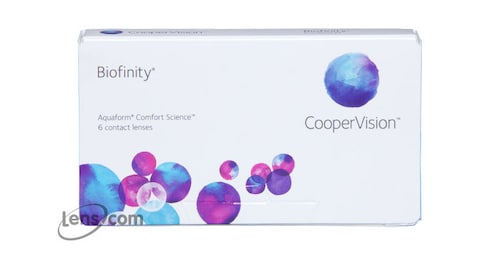
- Biofinity
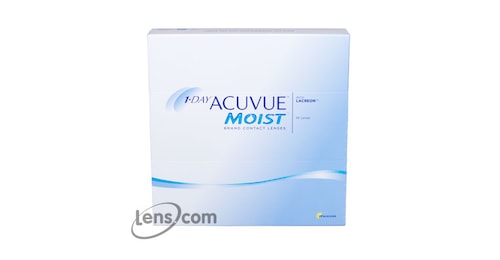
This monthly silicone hydrogel lens provides standard vision correction for people with prescriptions for nearsightedness or farsightedness. It suits wearers who prefer a reusable monthly schedule. - 1-Day ACUVUE MOIST
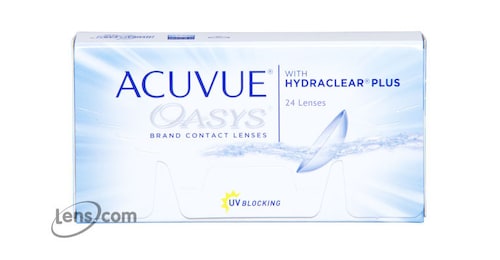
This daily disposable hydrogel lens provides standard vision correction without requiring overnight cleaning or storage. It works well for people who prefer to use a fresh pair each day. - ACUVUE OASYS
This two-week lens uses silicone hydrogel material and provides standard spherical correction. It's for people who prefer a reusable replacement schedule. - DAILIES TOTAL1
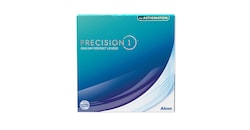
This daily disposable silicone hydrogel lens uses Water Gradient Technology and is designed for standard vision correction. Its daily replacement schedule eliminates the need to store lenses overnight. - PRECISION1
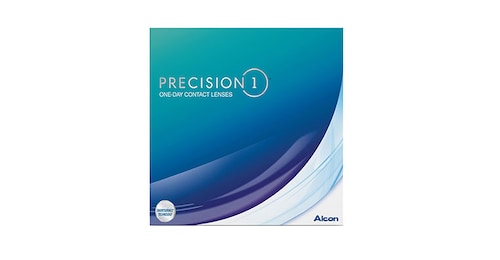
This daily disposable silicone hydrogel lens provides standard correction and features SmartSurface Technology. It's perfect for wearers who prefer daily replacement and a moisture-focused lens surface. - Biofinity Multifocal
This monthly multifocal lens is designed for people with presbyopia who need help with vision at different distances. Its multifocal design provides correction for near, intermediate, and distance vision within the same lens. - DAILIES TOTAL1 Multifocal
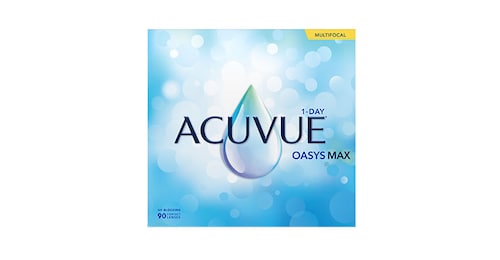
This daily disposable multifocal lens combines a daily replacement schedule with multifocal optics. It provides an option for presbyopic wearers who prefer a fresh lens each day. - 1-Day ACUVUE MOIST Multifocal
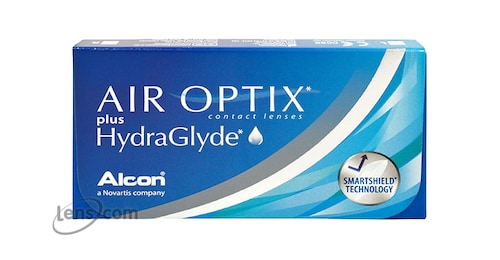
This daily disposable multifocal lens is designed to address presbyopia while providing the convenience of daily replacement. It can help correct vision across multiple viewing distances. - Air Optix plus HydraGlyde Multifocal
This monthly silicone hydrogel multifocal lens is designed for people with presbyopia. Its monthly replacement schedule makes it ideal for wearers who prefer reusable contacts. - Acuvue OASYS 2-Week Multifocal
This multifocal lens combines a two-week replacement schedule with a design intended for presbyopic vision correction. It provides another option for people who need help seeing at multiple distances.
Daily vs. Monthly Contacts for Near and Far Vision
Daily and monthly contacts can both correct nearsightedness or farsightedness. The choice comes down to your wearing habits and preference for convenience or reuse. Daily disposable lenses provide a fresh pair each day and require no overnight cleaning or storage. Monthly lenses reduce how often you need to replace your contacts, but you must clean and disinfect them properly after each wear and follow the recommended replacement schedule.
Your prescription and lens fit still come first, regardless of the replacement schedule you choose. Daily and monthly lenses are available in different powers and designs, including options for people with astigmatism or presbyopia. Consider how often you wear contacts, how much maintenance you want to handle, and the long-term cost of each option, then ask your eye doctor which schedule works with your prescription and eyes.
Features to Compare in Contacts for Near and Far Vision
Contact lenses for near and far vision come with different features that can affect how they feel and perform during everyday wear. Compare the features below after confirming that the lens is appropriate for your prescription and eye health.
Moisture-Focused Design
Some lenses use designs intended to maintain moisture on the lens surface during wear. This can help support comfort, particularly when you spend many hours wearing contacts.
High Oxygen Transmission
Some soft lenses use materials designed to allow more oxygen to reach the cornea. This feature can be useful for people who wear contacts regularly or for longer periods during the day.
UV Protection
Certain contact lenses include UV-blocking properties. This feature can complement, but does not replace, UV-blocking sunglasses.
Smooth Lens Surface
Some lenses use surface technologies designed to create a smooth, wettable surface. This can help the lens interact comfortably with the tear film as you blink.
Advanced Multifocal Optics
Multifocal lenses use different optical zones to support vision at near, intermediate, and far distances. This feature can benefit people who need correction for presbyopia alongside their existing prescription.
Astigmatism Stabilization
Toric lenses use stabilization features to help maintain the correct orientation on the eye. Consistent positioning helps the lens maintain its intended astigmatism correction.
Visibility Tint
A visibility tint can make a lens easier to see when handling or removing it. The tint is generally designed to assist with handling rather than change your natural eye color.
Deposit Resistance
Some lens materials and surface designs resist the buildup of deposits during wear. This can help maintain lens performance and comfort between replacements.
Water Gradient Technology
Some lenses use a water-gradient design that changes the water content from the lens interior toward the surface. The design aims to create a highly water-rich surface while maintaining the lens's structural properties.
Blink-Activated Moisture Features
Certain lenses incorporate technologies designed to interact with the natural blinking process. These features can help maintain moisture across the lens surface during everyday wear.
How to Choose Contacts for Clear Vision at Different Distances
Choosing contacts for clear vision at different distances starts with identifying what your eyes need to see clearly. Your prescription, age, eye health, and daily activities all influence which lens design will work best.
Start with a current contact lens prescription.
Use a prescription specifically written for contact lenses. Your eye doctor can determine the correction and lens parameters needed for each eye.
Identify your vision requirements.
Spherical contacts can correct nearsightedness or farsightedness. If you also have astigmatism or presbyopia, you might need a toric, multifocal, or multifocal toric contact lenses.
Consider your daily activities.
Think about the distances you rely on throughout the day. Reading, computer work, driving, and other activities can help your eye doctor determine which type of correction you need.
Choose a lens that fits properly.
A contact lens should sit comfortably and maintain a stable position on your eye. Your eye doctor can evaluate the fit and make adjustments if the lens moves too much or causes discomfort.
Compare multifocal and monovision options.
People with presbyopia can discuss multifocal contacts or monovision with their eye doctor. Each approach uses a different method to provide near and distance vision.
Consider your replacement schedule.
Daily disposable and reusable lenses both provide vision correction. Choose a schedule that fits your wearing habits and that you can maintain consistently.
Pay attention to visual quality.
Clear vision involves more than simply reading an eye chart. Tell your eye doctor if you notice glare, reduced contrast, halos, or blurry vision at particular distances while testing a lens.
Allow time to adjust to a new design.
Some people need time to adapt when switching to multifocal or monovision contacts. Follow your eye doctor's instructions during the adjustment period and report persistent vision problems.
References
Refractive Errors. National Eye Institute. https://www.nei.nih.gov/eye-health-information/eye-conditions-and-diseases/refractive-errors. December-19-2025. Date Accessed: September 16, 2026.
Presbyopia. National Eye Institute. https://www.nei.nih.gov/eye-health-information/eye-conditions-and-diseases/presbyopia. November-26-2025. Date Accessed: September 16, 2026.
About Contact Lens Types. Centers for Disease Control and Prevention. https://www.cdc.gov/contact-lenses/about/about-contact-lens-types.html. May-27-2025. Date Accessed: September 16, 2026.
Contact Lens Correction of Presbyopia. Edward S. Bennett. Clinical and Experimental Optometry. https://pubmed.ncbi.nlm.nih.gov/18201225/. May-2008. Date Accessed: September 16, 2026.
Visual Performance of a Multifocal Toric Soft Contact Lens. David Madrid-Costa, Elena Tom�s, Teresa Ferrer-Blasco, Santiago Garc�a-L�zaro, and Robert Mont�s-Mic�. Optometry and Vision Science. https://pubmed.ncbi.nlm.nih.gov/23034336/. November-2012. Date Accessed: September 16, 2026.
Popular Contact Lens Reviews
Excellent service!
This product has nothing to dislike about. It is a good quality of contact lenses and will not stop using this brand. My vision is satisfactory using Air Optix brand. Please do not stop carrying them. The sales representative was also very knowledgeable, professional, articulate and kind. My order came in before Thanksgiving and I appreciate it. She expedited sending my order so I will be happy, satisfied with my new lenses. Thank you kindly, for the excellent service !
Affordable price and quality
Love the ease and price of buying Focus dailies through Lens.com. Quick delivery and cheaper than through my eye doctor. Same product and quality. Why waste time and money anywhere else.
Awesome service
I have used Lens.com for several years now and their service is excellent. They even took back contacts I had ordered by mistake. They make it easy to order and receive your product quickly.
Would highly recommend them!
Easy wearing
Been wearing this brand of contacts for 3 years- feel easy on the eyes, light, flexible & easy to dispose of. Say adios to buying contact solution & contact cases!
The customer service is prompt and OUTSTANDING
Lens.com is such a breeze to order contacts from, and their customer service is the best. Several boxes of contacts I ordered were lost in the mail and they so were so kind about resending me my order fast and without any extra fees. The quality of these contacts (Biofinity) is unmatched as well. I would highly recommend both Lens.com and Biofinity to anyone.
Great prices
I have ordered several times from Lens.com.
I have had no issues with orders or scripts. I love the rebate when you order 4 boxes or more. I will purchase from them again.
First time buyer
Great service, great price and very easy to order and pay. Will be back for my next order.
I have been using B+L SofLens Toric Astigmatism.
After I had been happily using them for decades, I could not reorder my contact lenses since Bausch+Lomb officially discontinued many SofLens® Toric lenses in July  2023.
As my Rx had not changed, my optometrist recommended another manufacturer, which I tried using for months, and was very disappointed.
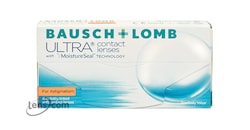
Then on the Lens.com website, I ordered B+L ULTRA for Astigmatism Contact Lenses, and they seem just the same to me as the discontinued B+L SofLens® Toric contact lens. Now I couldn't be happier!
Great contact lens
These lens fit well and stay comfortable no matter my activity. Very good value for keeping my eyes seeing as well as possible.