
Colored Contacts USA
Colored contacts in the USA enhance your natural iris shade. They can also create a more dramatic or noticeable color change. Color contacts are available with vision correction or in plano form for wearers who don't need corrective power. The ultimate appearance of the wearer depends on the lens opacity, printed iris pattern, chosen shade, and your natural eye color.
Across the USA, buying colored contact lenses requires a valid prescription, including cosmetic and plano designs. An eye care professional checks the fit, and decides on the correct brand, power, base curve, and diameter. Online sellers must also obtain or verify the prescription before filling an order, so choose a legitimate retailer and purchase the exact lens prescribed for your eyes. Check out our colored contact lenses below.
to
to
to
to
How to Buy Colored Contacts in the USA
Buying colored contacts follows the same prescription process as buying standard contact lenses. Corrective and plano colored contacts are medical devices, so start with a professional fitting and purchase only the product approved for your eyes.
- Schedule a contact lens exam and fitting. An eye care specialist (ECP) will measure your eyes' dimensions, assess your eye health, and check how the selected colored lens fits and moves.
- Get a valid contact lens prescription. Your prescription should include the exact brand, product name, power, base curve, diameter, and expiration date. Plano colored contacts require a prescription even though they don't correct vision.
- Choose the prescribed color and lens type. Review the available shades, opacity, iris pattern, replacement schedule, and box quantity. Your natural eye color and the lens pigment can affect the final appearance.
- Select a legitimate seller. Buy from your ECP or a retailer that requires prescription verification. Avoid beauty stores, novelty shops, street vendors, and unfamiliar websites that sell colored contacts without asking for an official prescription.
- Enter the prescription exactly as written. Check the values for your right and left eyes separately. Don't change the brand, power, or lens measurements to match a different product.
- Submit the prescription for verification. Upload a copy during checkout or provide your prescriber's contact details. Under the Federal Trade Commission (FTC) Contact Lens Rule, the seller must obtain the prescription or verify it with the prescriber before filling the order.
- Review the full order before paying. Confirm the product, shade, prescription values, number of boxes, replacement schedule, shipping charges, and estimated supply length.
- Inspect the lenses when they arrive. Make sure the manufacturer packaging is sealed, undamaged, properly labeled, and within its expiration date. Don't wear lenses that appear opened, counterfeit, contaminated, or different from what was prescribed.
- Follow the prescribed care routine. Wear the contacts only for the recommended period, replace them on schedule, and keep them away from water. Reusable colored lenses must be cleaned and stored with approved contact lens solution, while daily disposable lenses should be discarded after removal.
Types of Colored Contact Lenses Available in the USA
Colored contacts can be grouped by their visual effect, prescription power, and replacement schedule. The right option depends on your natural eye color, desired appearance, vision needs, and the exact lens fitted by your eye care professional.
Enhancement-tint lenses
These lenses deepen or brighten the natural iris rather than covering it completely. They tend to create the most visible results on light-colored eyes.
Opaque-tint lenses
Opaque contacts use denser pigment to conceal more of the natural iris. They can produce a stronger color change and are commonly chosen by people with dark brown or deeply pigmented eyes.
Iris-defining lenses
These designs add contrast, detail, or a darker limbal ring around the iris. The effect can make the eyes appear more defined without completely changing their natural color.
Multi-tone colored contacts
Several pigment shades, dots, rings, and gradients are layered within the printed iris pattern. This creates added depth and helps the color blend more naturally with the wearer's eyes.
Prescription colored contacts
The best prescription colored contacts combine cosmetic color with vision correction for nearsightedness or farsightedness. Availability for astigmatism or presbyopia is more limited and depends on the manufacturer.
Plano colored contacts
Non prescription colored contacts change eye color but contain no corrective power. They still require a valid prescription and professional fitting because their size, material, and movement affect eye health.
Daily disposable colored contacts
A fresh pair is worn once and discarded after removal. Daily disposable coloured contacts suit occasional wearers and people who prefer not to clean or store reusable lenses.
Reusable colored contacts
These lenses follow a longer replacement schedule, such as biweekly or monthly wear. They must be removed, cleaned, disinfected, and stored after each use.
Natural-looking colored contacts
Soft gradients, fine pigment dots, and blended iris patterns create a subtle result. Natural colored contacts resemble the texture and color variation of a natural iris.
Decorative or costume contacts
These costume contact lenses use bold colors, graphic patterns, unusual pupils, or theatrical designs for cosplay and costumes. Like everyday colored lenses, they require a prescription and should come from a seller that completes prescription verification.
Why Plano Colored Contacts Still Require a Prescription
Plano colored contacts have zero corrective power, but they still sit directly on the eye and can affect the cornea, tear film, and oxygen delivery. An ECP must examine each eye and evaluate the lens's base curve, diameter, centration, and movement. A poor fit causes irritation, corneal abrasions, infection, or other complications.
In the United States, decorative, cosmetic, and plano contacts are regulated medical devices and require a valid contact lens prescription. The prescription identifies the approved brand and fitting details, while the seller must obtain a copy or verify the information with the prescriber before completing the order. Avoid retailers that sell colored lenses without prescription verification or advertise them as one-size-fits-all.
What to Check Before Ordering Colored Contacts Online
Buying colored contacts online requires more than selecting a shade. Review the prescription, product details, seller practices, and final cost carefully before completing your order.
- A valid contact lens prescription
Like all eye contacts, visual correction and plano colored contacts require a prescription. Choose a retailer that requests a copy or verifies the prescription with your eye care professional. - The exact prescribed brand and product
Contact lenses aren't interchangeable based on power alone. Order the specific product written on your prescription rather than choosing another lens with a similar color or price. - The correct shade
Double-check the color name before checkout, especially when a product comes in several similar shades. Packaging that has been opened may not qualify for a return or exchange. - Right- and left-eye values
Review the OD and OS information separately. Look at the sphere power and any other prescribed values for each eye. - Base curve and diameter.
These measurements affect how the lens fits and moves on the eye. Select the values associated with the prescribed product rather than choosing the closest available option. - Desired color effect
Check whether the lens uses an enhancement tint, opaque pigment, limbal ring, or multi-tone iris pattern. Natural eye color and lighting can change how the final look. - The replacement schedule.
Determine whether the contacts are daily disposables or reusable lenses. Reusable colored contacts require an approved disinfecting solution, proper storage, and replacement on schedule. - The number of lenses per box
Box sizes vary, so calculate how long the order will last for both eyes. Different prescriptions usually require separate boxes. - Manufacturer and packaging information
The listing should clearly identify the lens brand and manufacturer. When the order arrives, make sure the boxes and blister packs are sealed, properly labeled, and within their expiration dates. - The seller's contact and return information
Look for accessible customer service, clear shipping terms, and a return policy for unopened boxes. Be cautious when a seller provides no reliable contact details. - The total checkout cost
Compare the price for the complete supply rather than one box alone. Include shipping, taxes, rebates, and any cleaning supplies required for reusable lenses.
What FDA Review Means for Colored Contact Lens Buyers
An approved FDA review means a colored contact lens has completed the applicable premarket process before it can be legally marketed in the United States. This involves a cleared 510(k) submission or an approved premarket approval application. The review considers the lens material, design, manufacturing information, labeling, intended use, and prescribed wearing schedule. Colored contact lenses for cosplay are included because all contact lenses are regulated medical devices.
This review doesn't mean every colored lens is suitable for every wearer. You still need an ECP to check your eyes, evaluate the fit, and prescribe the exact brand and parameters. Buy only from sellers that carry FDA-cleared or approved contacts and require prescription verification, since unreviewed or counterfeit lenses can have uncertain materials, sterility, and manufacturing quality.
How to Choose Colored Contacts for Light or Dark Eyes
Your natural iris color affects how strongly a colored lens shows and how well the printed pattern blends.
- Light blue or gray eyes - Enhancement tints can deepen the natural color without covering it completely. Blue, aqua, gray, green, and violet shades usually create a visible change with a softer finish.
- Green eyes - Hazel, honey, gray, blue, and deeper green contact lenses can shift the overall tone while allowing some natural variation to show through. A defined limbal ring adds contrast around the iris.
- Hazel eyes - Green, amber, honey, and light brown contacts can emphasize the warm and cool tones already present. Blue or gray creates a stronger contrast and a more noticeable transformation.
- Light brown eyes -Multi-tone hazel, honey, green, and gray lenses can blend with the natural iris while still changing its appearance. Moderate opacity usually creates a balanced result.
- Medium brown eyes - Look for lenses with stronger pigment coverage and layered iris patterns. Hazel, olive green, amber, gray, and brighter blue shades tend to show more clearly than translucent tints.
- Dark brown eyes -Opaque colored contacts provide the most visible change because they conceal more of the natural iris. Dense blue, green, gray, honey, violet, and light brown shades usually stand out better than enhancement tints.
- For a subtle result -Choose a color close to your natural eye shade with soft gradients, fine pigment dots, and a faded outer ring. Lower contrast helps the lens blend more naturally.
- For a dramatic result - Pick an opaque shade that contrasts with your natural iris. A dark limbal ring, brighter center tones, or a high-definition pattern can make the change more pronounced.
- Match the undertone - Warm shades such as honey, amber, and brown can complement golden or olive undertones. Cooler blue, gray, green, and violet lenses create a crisper effect against cool undertones.
- Check the pattern as well as the shade - Two lenses labeled blue can look completely different depending on pigment density, limbal-ring strength, and how much of the natural iris remains visible.
How Prescription Verification Works for Colored Contacts
When you order colored contacts online, the retailer obtains a copy of your valid contact lens prescription or verifies the information with your ECP. You can upload the prescription during checkout. Another option is to enter the prescribed brand, shade, power, base curve, diameter, and prescriber details so the seller can submit a verification request.
The prescriber confirms the prescription, corrects inaccurate information, or tells the retailer that the prescription is expired or invalid. A properly submitted request is treated as verified when the prescriber doesn't respond within eight business hours. Those hours follow the prescriber's normal business schedule rather than eight consecutive clock hours.
Prescription verification can be delayed when the product, shade, eye values, or clinic information is entered erroneously.
How to Compare Colored Contact Lens USA Costs
A low box price doesn't always mean the lowest overall cost. Compare the same supply length for both eyes and include the replacement schedule, box quantity, shipping, and care supplies before choosing between products.
- Check how many lenses come in each box. Box quantities vary by product. A higher-priced box can provide better value when it contains more lenses or lasts longer.
- Calculate the cost per lens or pair. Divide the box price by the number of lenses included. This creates a fairer comparison between products sold in different pack sizes.
- Compare the same supply period. Work out the total cost for three months, six months, or one year. Comparing one box of daily lenses with one box of monthly lenses won't show the true difference.
- Include the supply for both eyes. Different prescriptions usually require separate boxes for the right and left eyes. Make sure the estimate covers the quantity needed for each eye.
- Factor in the replacement schedule. Daily colored contacts require a fresh pair for every wearing day. Reusable lenses last longer after opening but must be replaced according to their prescribed schedule.
- Add cleaning and storage supplies. Reusable colored contacts require disinfecting solution and a lens case. Daily disposables don't need these supplies because they're discarded after removal.
- Consider how frequently you'll wear them. Daily disposables can be cost-effective for occasional use since you open a pair only when needed. Frequent wearers should compare the total annual cost of each prescribed option.
- Review manufacturer rebates. Some rebates require a six-month or annual supply, a recent eye exam, or a purchase within a set period. Include the savings only when your order meets every requirement.
- Check vision insurance benefits. Your plan could include a contact lens allowance or partial coverage for fitting fees. Confirm whether the retailer is in network and whether you need to submit the claim yourself.
- Consider FSA or HSA funds. Prescription colored contacts can qualify for payment through a Flexible Spending Account (FSA) or Health Savings Account (HSA). Check your plan rules and save the receipt.
- Include shipping, taxes, and handling charges. A lower product price can become more expensive once checkout fees are added. Compare the final total rather than the advertised box price alone.
- Don't switch products based on cost alone. A cheaper colored lens isn't automatically interchangeable with the one on your prescription. Compare prices only for the exact brand, shade, and parameters approved for your eyes.
Why the Exact Colored Contact Lens Brand and Shade Matter
Colored contact lenses differ in more than color names. Each brand uses its own material, base curve, diameter, pigment pattern, opacity, limbal ring, and clear pupil-zone design. Those details affect how the lens fits, how much of your natural iris shows through, and whether the finished result looks subtle or more noticeable.
Shade names also aren't standardized across manufacturers. One brand's hazel color may look warmer, darker, or more opaque than another brand's version. Ordering the exact product and shade listed on your prescription helps preserve the fit, vision, and appearance evaluated by your eye care professional.
Best Colored Contact Lenses
The best colored contact lenses depend on the look you want, how frequently you wear contacts, and the replacement schedule written on your prescription.
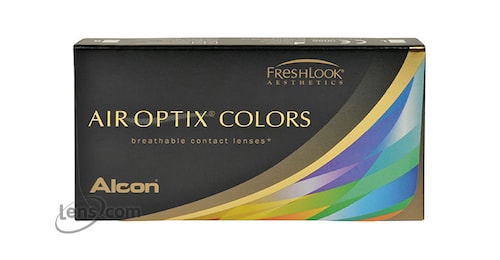
AIR OPTIX COLORS for monthly wear and a wide shade range
These silicone hydrogel contact lenses use 3-in-1 Color Technology to blend an outer ring, primary color, and inner ring. They come in 12 shades, ranging from Brown and Pure Hazel to Brilliant Blue, Gemstone Green, and Amethyst. Each six-count box provides a six-month supply for one eye when the lenses are replaced monthly.
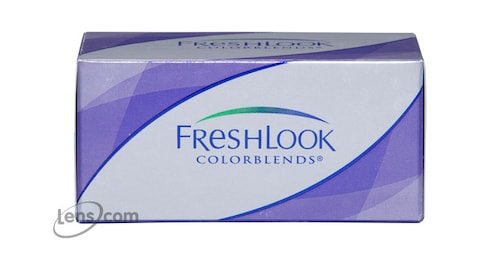
FreshLook ColorBlends for a layered, noticeable color change
Three colors are blended within each lens to add depth and create either a natural-looking result or a bolder transformation. These hydrogel contacts come in 12 shades and follow a two-week replacement schedule, so they must be removed, cleaned, disinfected, and stored after each use.
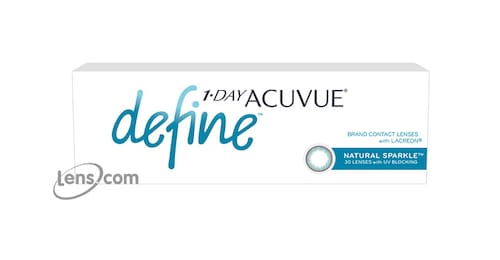
1-DAY ACUVUE DEFINE for subtle iris enhancement
Rather than completely covering the natural iris, these daily disposable lenses add definition, contrast, and dimension. The available designs include Natural Shine, Vivid, and Accent. LACREON Technology incorporates a moisture-rich wetting agent into the lens, while the pigments are enclosed between layers of lens material.
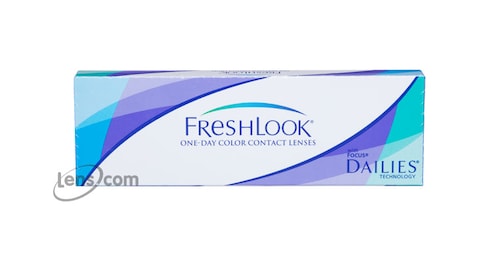
FreshLook One-Day for occasional wear and simple lens care
These daily disposables use 3-in-1 Colour Blend Technology to combine three shades in one printed pattern. They're available in Blue, Green, Grey, and Pure Hazel. Since each lens is discarded after one use, there's no cleaning or overnight storage routine.
References
About Decorative Contact Lenses. Centers for Disease Control and Prevention. https://www.cdc.gov/contact-lenses/about/about-decorative-contact-lenses.html. Published Date (May-27-2025). Date Accessed: August 4, 2026.
Colored and Decorative Contact Lenses: A Prescription Is A Must. U.S. Food and Drug Administration. https://www.fda.gov/consumers/consumer-updates/colored-and-decorative-contact-lenses-prescription-must. Published Date (October-24-2022). Date Accessed: August 4, 2026.
Decorative, Non-corrective Contact Lenses. U.S. Food and Drug Administration. https://www.fda.gov/regulatory-information/search-fda-guidance-documents/decorative-non-corrective-contact-lenses. Published Date (November-24-2006). Date Accessed: August 4, 2026.
FTC Announces Final Amendments to the Agency's Contact Lens Rule. Federal Trade Commission. https://www.ftc.gov/news-events/news/press-releases/2020/06/ftc-announces-final-amendments-agencys-contact-lens-rule. Published Date (June-23-2020). Date Accessed: August 4, 2026.
About Contact Lens Types. Centers for Disease Control and Prevention. https://www.cdc.gov/contact-lenses/about/about-contact-lens-types.html. Published Date (May-27-2025). Date Accessed: August 4, 2026.
Popular Contact Lens Reviews
Excellent service!
This product has nothing to dislike about. It is a good quality of contact lenses and will not stop using this brand. My vision is satisfactory using Air Optix brand. Please do not stop carrying them. The sales representative was also very knowledgeable, professional, articulate and kind. My order came in before Thanksgiving and I appreciate it. She expedited sending my order so I will be happy, satisfied with my new lenses. Thank you kindly, for the excellent service !
Subtle but noticeable change
It has a subtle difference but completely changes up my look. Very comfortable for colored lenses.
Vibrant Colors
Freshlook ColorBlends are great! The colors are truly vibrant and are just as pictured
Best online vendor for contacts
Never disappoints!!! Best prices and super fast shipping!!