
Best Prescription Colored Contacts
The best prescription colored contacts combine clear vision correction, comfortable wear, and a color effect that suits your natural eye color and preferred look. Options include daily, biweekly, and monthly lenses, with shades ranging from subtle enhancement to more noticeable color changes. Comparing replacement schedule, color intensity, prescription availability, and lens features can help you find the best option for your needs.
to
to
to
to
About Best Prescription Colored Contacts
Prescription colored contacts are soft lenses with color pigment added to the iris area, leaving the pupil zone clear. Quality lenses use sandwich printing technology, where pigment is sealed between two layers of lens material so it never touches the cornea directly. This matters because pigments used in colored lenses often contain metal oxides including titanium and iron, which can irritate the cornea if they reach the eye surface.
They are available for wearers with nearsightedness, farsightedness, and in select cases astigmatism. A contact lens prescription specifies power, base curve, diameter, lens brand, and wear schedule, all confirmed during a professional fitting. Prescription colored contacts are available at Lens.com with a valid prescription.
Best Prescription Colored Contacts Overview
Prescription colored contact lenses combine vision correction with cosmetic color change in a single lens. They are available in monthly and daily formats across a range of shades, from subtle natural enhancement to full color transformation, and require a valid prescription regardless of whether they correct vision or are worn for cosmetic purposes only.
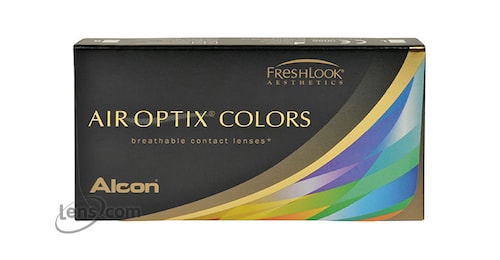
Air Optix Colors
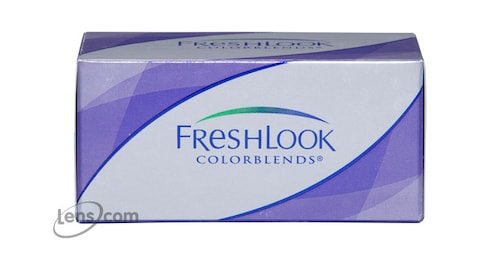
FreshLook ColorBlends
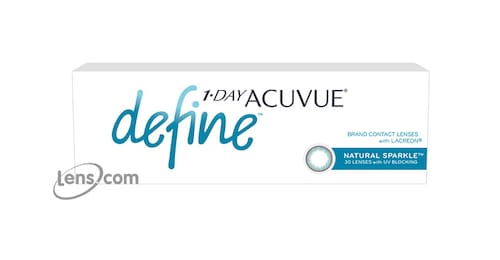
1-Day Acuvue Define
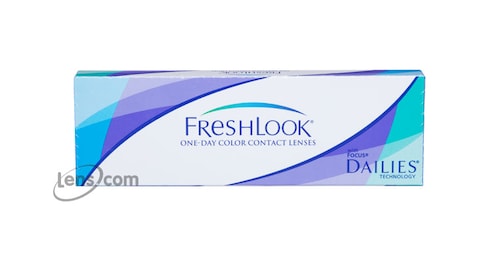
FreshLook One-Day
Best Prescription Colored Contacts Compared
|
Average Cost per day
|
Contact Lens Manufacturer
|
Contact Lens Type
|
Contact Lens Material Type
|
Contact Lens Water Content Percentage
|
Contact Lens Blocks UV
|
Each Box Contains
|
Average Star Rating
|
|
|---|---|---|---|---|---|---|---|---|
| Air Optix Colors | $0.26 | Alcon | Monthly | Silicone Hydrogel | 33% | 6 lenses, a 6-month supply |
|
|
| FreshLook ColorBlends | $0.71 | Alcon | Daily | Hydrogel | 55% | 6 lenses, a 3-month supply |
|
|
| 1-Day Acuvue Define | $0.67 | Johnson & Johnson | Daily | Hydrogel | 58% | 30 lenses, a 1-month supply |
|
|
| FreshLook One-Day | $0.90 | Alcon | Daily | Hydrogel | 69% | 10 lenses, a 0-month supply |
|
How to Apply for Prescription Colored Contacts Rebate
|
box rebate
Rebate amount with a 4 box purchase
|
box rebate
Rebate amount with a 8 box purchase
|
Contact Lens Manufacturer
|
Contact Lens Type
|
Contact Lens Material Type
|
Contact Lens Water Content Percentage
|
Contact Lens Blocks UV
|
Each Box Contains
|
Average Star Rating
|
|
|---|---|---|---|---|---|---|---|---|---|
| Air Optix Colors | $85 | -- | Alcon | Monthly | Silicone Hydrogel | 33% | 6 lenses, a 6-month supply |
|
|
| FreshLook ColorBlends | -- | $180 | Alcon | Daily | Hydrogel | 55% | 6 lenses, a 3-month supply |
|
|
| 1-Day Acuvue Define | -- | $160 | Johnson & Johnson | Daily | Hydrogel | 58% | 30 lenses, a 1-month supply |
|
|
| FreshLook One-Day | $75 | -- | Alcon | Daily | Hydrogel | 69% | 10 lenses, a 0-month supply |
|
Best Prescription Colored Contacts at Lens.com
Lens.com carries the top-selling FDA-cleared prescription colored contact lenses from Alcon and CooperVision. Here is how the available options compare.
Air Optix Colors
Air Optix Colors are monthly prescription colored contacts made by Alcon. They are built from lotrafilcon B silicone hydrogel with 33% water content and a Dk/t of 138, making them the most breathable colored contact lens available at Lens.com. SmartShield Technology creates an ultra-thin surface layer that resists protein and lipid deposits throughout the month. Air Optix Colors come in 12 shades including Brilliant Blue, Pure Hazel, Gemstone Green, Sterling Gray, True Sapphire, Honey, Brown, Amethyst, and Turquoise, covering both subtle enhancement and more dramatic color changes. They are the top-selling prescription colored lens on Lens.com.
Expressions Colors
Expressions Colors are monthly prescription colored contacts made by CooperVision. They use advanced tinting technology to produce a realistic, vibrant color result and come in eight shades including Topaz, Brown, Green, Hazel, Aqua, Blue, Gray, and Jade. They are available with and without vision correction, making them a practical option for wearers who want cosmetic color change alongside prescription correction.
FreshLook ColorBlends
FreshLook ColorBlends are biweekly prescription colored contacts made by Alcon using 3-in-1 Color Technology, which blends three shades in a single lens to create a more natural-looking iris effect. They are made from phemfilcon A hydrogel with 55% water content and come in 12 shades. Note, Alcon has discontinued FreshLook ColorBlends and remaining stock is limited. Alcon recommends Air Optix Colors as the replacement.
FreshLook Colors
FreshLook Colors are biweekly prescription colored contacts that sit in the enhancement category, designed to brighten and intensify existing eye color rather than transform it. They work best on light eye colors and produce a more subtle result compared to opaque options.
What Is the Difference Between Enhancement and Opaque Colored Contacts?
Enhancement tints are translucent lenses that intensify the existing iris color without covering it. They work best on light eye colors that want a more vivid version of their natural shade. FreshLook Colors sits in this category.
Opaque lenses use solid pigment that fully covers the natural iris, making them the right choice for wearers who want a complete color change regardless of their natural eye color. Air Optix Colors and Expressions Colors both fall into this category. The right choice depends on your natural eye color and how noticeable you want the result to be.
How to Choose Prescription Colored Contacts for Your Eye Color
Your natural eye color is the most important factor when choosing a shade. Here is a quick breakdown:
- Light blue, gray, or green eyes - Low natural pigment means even a translucent enhancement lens produces a clear, visible result. Wearers with light eyes have the widest range of options across both enhancement and opaque styles.
- Medium to dark brown eyes - An opaque lens is required for any meaningful color change to show. A sheer or enhancement tint will be overpowered by the natural pigment underneath. Look for lenses described as full coverage with layered color patterns.
- Skin tone - Cool undertones work well with blue, gray, and green shades. Warm undertones complement honey, hazel, and brown tones. The same lens can look different on two people with the same eye color depending on these factors.
Can Prescription Colored Contacts Correct Astigmatism?
Options for prescription colored contacts that also correct astigmatism are more limited than for standard sphere prescriptions. Most colored lenses are manufactured in sphere powers only. Availability of toric colored lenses depends on specific cylinder and axis values in the prescription. Wearers with astigmatism should raise this with their eye doctor during a fitting to confirm whether a stable toric colored option is available for their prescription.
How Long Can You Wear Prescription Colored Contacts?
Wear time depends on the specific lens format. Monthly colored contacts such as Air Optix Colors and Expressions Colors are worn daily for up to 30 days with nightly removal, cleaning, and storage before being replaced. Biweekly lenses such as FreshLook Colors follow a two-week replacement cycle with the same nightly care routine.
No prescription colored contact lens is approved for overnight wear. Sleeping in colored contacts, including those with prescription correction, increases the risk of corneal hypoxia and infection. Daily wear limits of 8 to 10 hours are generally recommended, though wearers using silicone hydrogel lenses such as Air Optix Colors may comfortably extend this slightly given the higher oxygen transmissibility of the material.
Will Prescription Colored Contacts Affect How You See?
No. The color zone covers only the iris area and the pupil zone is left completely clear, allowing light to pass through to the retina without interference.
In very low light, when the pupil dilates beyond the clear central zone, some wearers may notice a mild halo effect at the outer edge of their vision. This is a known characteristic of colored lens design. A professional fitting accounts for this by selecting a base curve, diameter, and lens design that aligns the clear zone correctly with the pupil.
Are Prescription Colored Contacts Safe for Daily Wear?
Prescription colored contacts from FDA-cleared manufacturers are safe for daily wear when properly fitted, worn as directed, and cared for correctly. The FDA classifies all colored contact lenses as Class II medical devices, meaning they must meet strict safety and biocompatibility standards before they can be legally sold in the United States.
The risks associated with colored contacts come primarily from purchasing unregulated products without a prescription, wearing lenses beyond the recommended replacement schedule, or failing to follow proper hygiene practices. The FDA has documented cases of serious eye injury from decorative lenses purchased without a prescription, including corneal ulcers and in rare cases permanent vision loss. Buying from a seller that requires a valid prescription and carries only FDA-cleared products is the most reliable way to reduce these risks.
Signs You Should Remove Your Colored Contacts Right Away
Remove prescription colored lenses immediately if any of the following occur during wear:
- Persistent redness that does not improve after blinking
- Sharp pain, burning, or stinging in one or both eyes
- Blurry or hazy vision that appears suddenly
- Light sensitivity or discomfort in bright environments
- Excessive tearing or unusual discharge from the eye
- A lens that feels dry, thick, or difficult to blink over
If symptoms continue after removal do not reinsert the lenses. Contact your eye doctor before wearing colored contacts again.
References
Colored and Decorative Contact Lenses: A Prescription Is a Must. U.S. Food and Drug Administration. https://www.fda.gov/consumers/consumer-updates/colored-and-decorative-contact-lenses-prescription-must. Published October 24, 2022. Accessed June 23, 2026.
Decorative Contact Lenses for Halloween and More. U.S. Food and Drug Administration. https://www.fda.gov/medical-devices/contact-lenses/decorative-contact-lenses-halloween-and-more. Published October 22, 2024. Accessed June 23, 2026.
Preventing Eye Infections When Wearing Contacts. Centers for Disease Control and Prevention. https://www.cdc.gov/contact-lenses/prevention/index.html. Published May 27, 2025. Accessed June 23, 2026.
Cosmetic Contact Lenses: Potential Threat to Vision Health. American Academy of Ophthalmology. https://www.aao.org/education/clinical-statement/cosmetic-contact-lenses-potential-threat-to-vision. Accessed June 23, 2026.
Healthy Vision and Contact Lenses. American Optometric Association. https://www.aoa.org/healthy-eyes/vision-and-vision-correction/healthy-vision-and-contact-lenses. Accessed June 23, 2026.
Popular Contact Lens Reviews
Excellent service!
This product has nothing to dislike about. It is a good quality of contact lenses and will not stop using this brand. My vision is satisfactory using Air Optix brand. Please do not stop carrying them. The sales representative was also very knowledgeable, professional, articulate and kind. My order came in before Thanksgiving and I appreciate it. She expedited sending my order so I will be happy, satisfied with my new lenses. Thank you kindly, for the excellent service !
Subtle but noticeable change
It has a subtle difference but completely changes up my look. Very comfortable for colored lenses.
Vibrant Colors
Freshlook ColorBlends are great! The colors are truly vibrant and are just as pictured
Best online vendor for contacts
Never disappoints!!! Best prices and super fast shipping!!