
Feline Contact Lenses
Planning to dress up as a feline for a special occasion? Pair your costume with costume contact lenses made for cat-eye, creature, and animal-inspired looks where the eyes need to feel sharp, mysterious, or less human. Feline contact lenses often use vertical pupils, bold colors, or graphic patterns to create a more predatory effect for Halloween, cosplay, fantasy makeup, theatrical roles, photoshoots, and costume styling.
Aside from cat-like lenses, you can also check out other novelty-style options for red contact lenses, blackout contact lenses, white out contacts, anime-inspired designs, and supernatural characters. These lenses can help complete almost any bold look, but they still need a valid prescription, proper fit, clean handling, and safe wear-time habits.
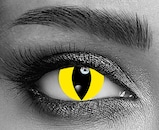
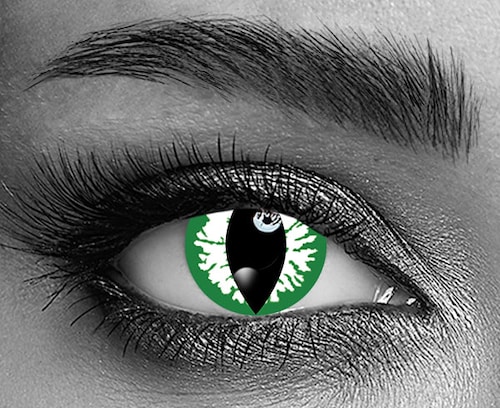

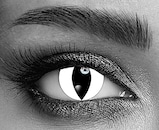
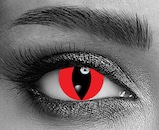
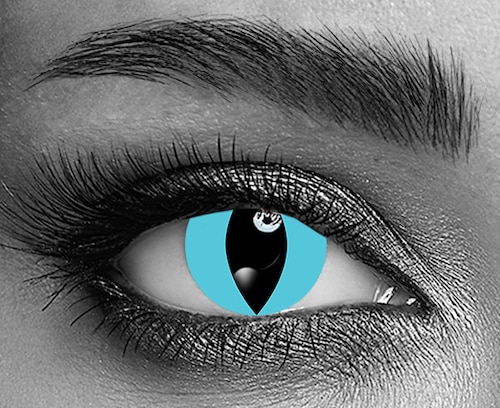
Cat-Eye Contacts For Feline-Inspired Looks
Feline contact lenses are all about changing the shape and attitude of the eyes. The vertical slit pupil is what creates that sharp cat-eye effect, making the eyes look more alert, predatory, mysterious, or creature-like compared with standard colored contacts. This design can work for classic cat costumes, fantasy beasts, demon cats, werecats, witches' familiars, anime-inspired characters, and theatrical makeup looks where natural eye color would feel too soft. These contact lenses can help complete the overall character effect without relying on natural eye color alone.
Different feline lenses create different levels of intensity. Yellow Cat gives a classic golden cat-eye effect, while Red Cat feels more aggressive, demonic, or horror-driven. Aqua Cat can lean fantasy, magical, or aquatic creature, while Purr-ple Kitty has a more playful, anime-inspired feel. Banshee and Creepers use stronger color contrast and graphic detail, making them better for looks that need a stranger, less-human stare.
Different Feline Lens Effects For Costumes And Cosplay
The best feline contact lenses depend on the character you want to create. Some lenses look closer to a classic house cat or jungle predator, while others feel more supernatural, villainous, or fantasy-inspired. Choosing by character effect can help you pick a lens that fits the full costume instead of choosing by color alone.
Classic Cat And Witch Familiar Looks
Yellow contact lenses can work well for classic feline styling because the bright iris color and vertical pupil immediately read as cat-like. Yellow Cat can work for black cat costumes, witch familiar looks, jungle cat makeup, and simple Halloween outfits where you want the eyes to carry most of the transformation.
Demon Cat And Horror Creature Looks
Red Cat creates a darker and more threatening feline effect. The red color makes the eyes feel dangerous, possessed, or less friendly, which works well for demon cats, cursed creatures, horror characters, haunted house makeup, and villain-inspired costumes.
Fantasy Beast And Magical Creature Looks
Aqua Cat and Green Cat can push the feline look into fantasy territory. Aqua Cat feels more magical, icy, aquatic, or otherworldly, while Green Cat can work for forest creatures, shapeshifters, monster cats, or supernatural animal characters. These colors are useful when you want the vertical pupil effect but do not want a traditional yellow cat-eye look.
Anime, Playful, And Mischievous Cat Looks
Purr-ple Kitty is a good fit for anime cat-girl or cat-boy cosplay, playful fantasy characters, Cheshire-style makeup, and colorful convention looks. If your costume leans cute, strange, mischievous, or animated, anime contact lenses may also be worth comparing with feline styles.
How Cat-Eye Contacts Look on Light and Dark Eyes
Cat-eye contacts can look different depending on your natural eye color, the opacity of the lens, and the color contrast in the design. On lighter eyes, yellow, aqua, green, purple, or red feline lenses may appear brighter because the natural iris underneath is already light. This can make the vertical pupil and printed pattern look sharper, especially in close-up photos or bright lighting.
On darker eyes, the final effect depends more on how opaque and high-contrast the lens is. Strong cat-eye designs like Yellow Cat, Red Cat, Aqua Cat, Green Cat, and Purr-ple Kitty can still create a clear feline effect, but softer colors may appear deeper or more muted over brown eyes. If you want the lens to show clearly on dark eyes, look for designs with a strong iris color, visible vertical pupil, and defined pattern.
Lighting also changes the result. Bright daylight, camera flash, ring lights, and stage lighting can make feline contacts look more vivid, while dim rooms can make the color look darker and more mysterious. If the lenses are part of a full costume, test them with your makeup and lighting before the event so you know how intense the final look will be.
Will Feline Contacts Affect Your Vision?
Some feline contact lenses can slightly affect your vision depending on the design, pupil opening, lighting conditions, and how the lens sits on your eye. Many cat-eye lenses use a vertical slit pupil or heavy printed pattern to create the animal-inspired effect, which can feel different from wearing standard clear or lightly tinted contacts.
In bright lighting, most wearers can still see normally through the clear center of the lens. However, in dim environments, your natural pupil may expand beyond the clear opening. When that happens, you may notice shadows, reduced peripheral clarity, halos, or parts of the printed design entering your field of view.
High-contrast feline lenses used for cosplay, haunted attractions, conventions, stage performances, or Halloween makeup can also feel more visually noticeable than regular colored contacts. This does not automatically mean the lenses are unsafe, but it does mean they may not feel identical to everyday prescription contacts.
How Long Can You Wear Feline Contact Lenses?
Feline contact lenses should only be worn for the amount of time recommended by your eye doctor and the lens manufacturer. Even though they are commonly used for cosplay, Halloween, photoshoots, haunted attractions, conventions, and theatrical makeup, they are still medical devices that sit directly on the eye.
The replacement schedule and the daily wear time are also not the same thing. Some feline lenses are daily disposables, while others are reusable for a limited period such as 30 days or 90 days after opening. That does not mean the lenses should be worn continuously for that entire timeframe. A reusable 30-day lens still needs to be removed, cleaned, and stored properly after each use.
Long events can make novelty contacts feel less comfortable over time. Convention halls, stage lighting, dry indoor air, makeup, and reduced blinking during photos or performances can all make the eyes feel drier throughout the day. If the lenses start feeling uncomfortable, blurry, scratchy, or irritating, remove them instead of trying to force extra wear time.
Before wearing feline contacts to a major event, it helps to test them at home first. This gives you time to see how your eyes respond to the fit, the vertical pupil design, and the overall comfort before wearing them for several hours in costume or makeup.
Signs You Need to Take Your Contacts Out
Feline contact lenses should never feel severely painful or impossible to ignore while wearing them. A slight awareness can happen when first inserting novelty contacts, especially if you are not used to vertical-pupil designs, but ongoing discomfort is a sign that something may be wrong with the fit, the lens condition, or the health of your eyes.
Before wearing them, make sure the color contacts are approved for your eyes so the product, power or plano status, base curve, diameter, design, and replacement schedule match what your eye doctor prescribed
- Sharp pain or burning: Remove the lenses immediately if your eyes suddenly feel painful, burning, or unusually sensitive.
- Blurry or distorted vision: If your vision becomes hazy, unstable, or difficult to focus, the lens may not be sitting correctly on the eye.
- Persistent redness: Mild redness after insertion can happen briefly, but worsening redness should not be ignored.
- Dryness that becomes distracting: Long events, stage lighting, makeup, convention halls, and dry indoor air can make feline contacts feel uncomfortable over time.
- Excessive tearing or discharge: Watery eyes, mucus, or discharge may signal irritation or another problem that needs attention.
- Strong light sensitivity: If your eyes suddenly become very sensitive to light, remove the contacts and allow your eyes to rest.
Don't continue wearing novelty contacts simply to finish a costume, performance, or photoshoot. For safer ordering, compare FDA-approved colored contacts through a seller that requires prescription verification. If symptoms continue after removing the lenses, contact your eye doctor as soon as possible.
References
Decorative Contact Lenses for Halloween and More. U.S. Food and Drug Administration. https://www.fda.gov/medical-devices/contact-lenses/decorative-contact-lenses-halloween-and-more. Published October 22, 2024. Accessed June 2, 2026.
About Decorative Contact Lenses. Centers for Disease Control and Prevention. https://www.cdc.gov/contact-lenses/about/about-decorative-contact-lenses.html. Updated May 27, 2025. Accessed June 2, 2026.
About Contact Lenses. Centers for Disease Control and Prevention. https://www.cdc.gov/contact-lenses/about/index.html. Updated May 27, 2025. Accessed June 2, 2026.
Colored Contacts & Halloween Safety. American Academy of Ophthalmology. https://www.aao.org/eye-health/halloween-cosplay-colorful-contacts-eye-safety. Accessed June 2, 2026.
Contact Lens Care. American Optometric Association. https://www.aoa.org/healthy-eyes/vision-and-vision-correction/contact-lens-care. Accessed June 2, 2026.
Novelty Contact Lens Reviews
Hot Red Cat Contacts!!!!
I love the red cat contacts! They are such a hot completion to my halloween costumeeee!
SOO Hotttt!!! yellow
i ordered the yellow cat contacts because i wanted to switch up from just regular colored enhancer contacts. i was a little skeptical at first but once i put them in i lovedddddd themmmm!!!!!
Hottt White Cat Eye Contacts
The white cat eye contacts are so hot i love them! i'm excited now to be cat women for halloween :) :)