
Balafilcon A Contact Lenses
Balafilcon A is a silicone hydrogel contact lens material made to let more oxygen reach the cornea than traditional hydrogel lenses. It has a 36% water content and a treated surface that helps the lens stay wettable during wear. You will mostly find this material in the PureVision family, where it supports monthly lenses made for different prescriptions and visual needs.
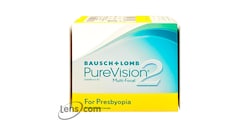
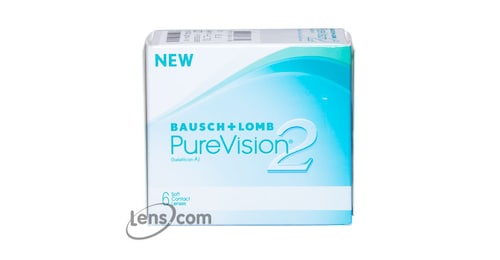
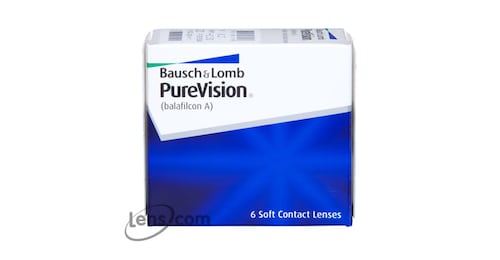
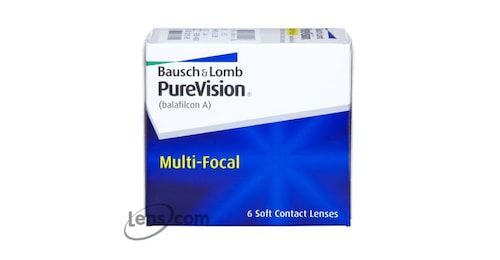
If your prescription lists Balafilcon A, Lens.com carries contacts with these kinds of material for standard vision correction, astigmatism, and presbyopia, including PureVision, PureVision 2 HD, PureVision 2 HD for Astigmatism, and PureVision 2 Multi-Focal. Since these lenses share the same material, it can be easy to assume they are similar, but their optical designs and prescription options are different. Check the exact product name, wearing schedule, and prescription type before ordering so the lens matches what your eye doctor prescribed.
to
to
to
to
PureVision Contact Lenses Made With Balafilcon A
Balafilcon A is used throughout the PureVision family, but each lens is designed for a different prescription and visual need. While they share the same silicone hydrogel material, these contact lenses differ in optical design, available parameters, and vision correction. Let's understand what each PureVision lens is made for, so you can identify easily which product you need.
PureVision
PureVision is the original monthly lens in the family for standard vision correction. Made with balafilcon A, it combines silicone hydrogel with a plasma-treated surface that helps improve wettability while allowing high levels of oxygen to reach the cornea. This is a monthly contact lens that can be approved for extended wear schedule, provided that it is prescribed by your eye doctor. It remains a suitable option for many wearers who need reliable monthly vision correction without astigmatism or presbyopia.
PureVision2
PureVision2 builds on the same balafilcon A material with a thinner lens profile and High Definition Optics. The thinner design helps reduce lens awareness during wear, while the optical design is intended to reduce spherical aberration that can contribute to halos and glare in low-light conditions. Like the original PureVision, it is designed for monthly replacement and is a great vision correcting contact lens for standard refractive errors such as nearsightedness and farsightedness.
PureVision2 For Astigmatism
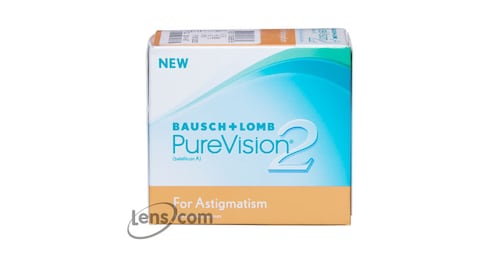
PureVision2 For Astigmatism combines the balafilcon A material with an Auto Align Design that helps stabilize the lens during blinking. This allows the correcting power for astigmatism to remain properly oriented on the eye while maintaining the oxygen permeability associated with the PureVision family. It's a great start for wearers who need monthly contact lenses for astigmatism.
PureVision Multi-Focal
PureVision Multi-Focal is designed for people with presbyopia who need clear vision at more than one distance. Using the same balafilcon A material, the lens incorporates a multifocal optical design that helps wearers transition between near, intermediate, and distance vision without changing glasses throughout the day. It offers monthly replacement while addressing the changing focusing needs that naturally occur with age.
Although every lens above is made from balafilcon A, they are not interchangeable. Each PureVision lens has its own optical design, prescription parameters, and fitting characteristics. Always order the exact product prescribed by your eye doctor rather than selecting another balafilcon A lens with a similar replacement schedule.
Compare Contact Lenses By Manufacturer, Material, and Price
|
Average Cost per day
|
Contact Lens Manufacturer
|
Contact Lens Type
|
Contact Lens Material Type
|
Contact Lens Water Content Percentage
|
Contact Lens Blocks UV
|
Each Box Contains
|
Average Star Rating
|
|
|---|---|---|---|---|---|---|---|---|
| Purevision 2 Multi-Focal | $0.33 | Bausch & Lomb | Monthly | Silicone Hydrogel | 36% | 6 lenses, a 6-month supply |
|
|
| PureVision 2 HD | $0.10 | Bausch & Lomb | Monthly | Silicone Hydrogel | 36% | 6 lenses, a 6-month supply |
|
|
| PureVision | $0.14 | Bausch & Lomb | Monthly | Silicone Hydrogel | 36% | 6 lenses, a 6-month supply |
|
|
| PureVision MultiFocal | $0.24 | Bausch & Lomb | Monthly | Silicone Hydrogel | 36% | 6 lenses, a 6-month supply |
|
|
| PureVision 2 HD for Astigmatism | $0.31 | Bausch & Lomb | Monthly | Silicone Hydrogel | 36% | 6 lenses, a 6-month supply |
|
|
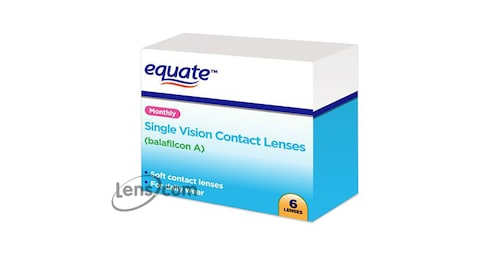
| Equate Monthly (Same as Purevision 2 HD) | $0.37 | Bausch & Lomb | Daily | 64% balafilcon A | 36% | 6 lenses, a 6-month supply |
|
Save More on Balafilcon A Lenses With Rebates
|
box rebate
Rebate amount with a 4 box purchase
|
Contact Lens Manufacturer
|
Contact Lens Type
|
Contact Lens Material Type
|
Contact Lens Water Content Percentage
|
Contact Lens Blocks UV
|
Each Box Contains
|
Average Star Rating
|
|
|---|---|---|---|---|---|---|---|---|
| PureVision 2 HD | $85 | Bausch & Lomb | Monthly | Silicone Hydrogel | 36% | 6 lenses, a 6-month supply |
|
|
| PureVision | $85 | Bausch & Lomb | Monthly | Silicone Hydrogel | 36% | 6 lenses, a 6-month supply |
|
|
| PureVision MultiFocal | $75 | Bausch & Lomb | Monthly | Silicone Hydrogel | 36% | 6 lenses, a 6-month supply |
|
|
| PureVision 2 HD for Astigmatism | $75 | Bausch & Lomb | Monthly | Silicone Hydrogel | 36% | 6 lenses, a 6-month supply |
|
Are There Alternatives to Balafilcon A?
Yes. Balafilcon A is one of several silicone hydrogel materials used to manufacture contact lenses. Other commonly prescribed silicone hydrogel materials include comfilcon A, senofilcon A, lotrafilcon A, samfilcon A, fanfilcon A, delefilcon A, and verofilcon A. Each material has its own combination of water content, oxygen permeability, surface properties, and lens design, which is why different manufacturers of contact lenses use different materials across their product families.
Although these materials all belong to the silicone hydrogel category, they are not direct substitutes for one another. A lens made from another material may have a different optical design, base curve, diameter, replacement schedule, or stabilization system for astigmatism. Your eye doctor considers all of these factors when prescribing a contact lens, so changing materials typically involves changing to a different lens rather than simply selecting another silicone hydrogel product.
If your current balafilcon A lens is no longer meeting your vision or comfort needs, your eye doctor may recommend an alternative made from a different silicone hydrogel material. The decision is based on how the new lens fits your eyes and performs during wear, not on the material alone.
How Balafilcon A Compares With Other Silicone Hydrogel Materials
Balafilcon A belongs to the silicone hydrogel family, a group of contact lens materials developed to allow more oxygen to reach the cornea than conventional hydrogel materials. While silicone hydrogels share that general purpose, each material differs in its water content, oxygen permeability, surface treatment, flexibility, and the way it is incorporated into a finished lens. These differences allow manufacturers to develop lenses for a wide range of prescriptions, replacement schedules, and wearing experiences.
Compared with newer silicone hydrogel materials, balafilcon A has a lower water content and relies on a plasma-treated surface to improve wettability. Other materials achieve similar goals using different approaches, such as incorporating internal wetting agents, moisture-retaining polymers, or water-gradient designs. Each method reflects the manufacturer's lens philosophy rather than a universal improvement over another material.
Every contact lens combines its material with a specific optical design, thickness profile, and fitting characteristics, so no silicone hydrogel material is automatically better for every wearer. A lens made from balafilcon A can perform differently from one made with comfilcon A, senofilcon A, or delefilcon A, even when both are prescribed for the same type of vision correction.
Why Balafilcon A Has a Lower Water Content
A water content of 36% might seem low compared with many conventional hydrogel contact lenses. However, silicone hydrogel materials follow a different design approach. Instead of depending on water by itself to deliver oxygen to the cornea, they use silicone as the primary pathway for oxygen transmission. This allows the lens to maintain high oxygen permeability without requiring a high water content.
A lower water content can also influence how the lens performs during wear. Conventional hydrogel lenses with higher water content may lose moisture over time as water evaporates from the lens surface. Silicone hydrogel materials such as balafilcon A rely less on water for oxygen delivery, so manufacturers can focus on balancing oxygen transmission, durability, wettability, and overall lens performance through the material itself and surface treatments.
Water content is only one characteristic of a contact lens and should not be used by itself to compare products. The overall lens design, oxygen permeability, optical performance, replacement schedule, and fit all contribute to how a lens performs on the eye.
What Surface Treatment Does in Balafilcon A Lenses
Balafilcon A contains silicone, which allows large amounts of oxygen to pass through the lens. However, untreated silicone is naturally hydrophobic, meaning it does not attract or spread water very well. If left unchanged, the lens surface could be less wettable, making it harder for tears to spread evenly across the front of the lens.
To solve this, balafilcon A lenses undergo a plasma surface treatment during manufacturing. This process permanently modifies the outer surface of the lens, creating a thin hydrophilic layer that interacts more easily with the tear film while leaving the silicone-rich core unchanged. The result is a lens that combines high oxygen permeability with a surface designed to support consistent wetting during wear.
The plasma treatment is part of the lens itself rather than a temporary coating that washes away with cleaning. Even so, overall lens performance still depends on proper lens care, the condition of the tear film, and how well the lens fits your eyes. The surface treatment is one part of the overall lens design, not the only factor that determines comfort or visual performance.
Does Balafilcon A Work for Astigmatism or Presbyopia?
Yes, but not because of the material. Balafilcon A serves as the silicone hydrogel material used to manufacture the lens, while the optical design determines how the lens corrects a particular vision condition. In other words, the same material can be used to create lenses for standard vision correction, astigmatism, or presbyopia.
For people with astigmatism, balafilcon A is available in toric lens designs such as PureVision 2 HD for Astigmatism. These lenses include additional cylinder and axis values that correct the uneven curvature of the eye while incorporating stabilization features to help keep the lens properly oriented during blinking.
For people with presbyopia, balafilcon A is used in multifocal lenses such as PureVision 2 Multi-Focal. Instead of correcting only one viewing distance, these lenses contain multiple optical zones that help wearers see clearly at near, intermediate, and distance ranges. Your eye doctor determines whether a toric or multifocal design is needed based on your prescription, visual demands, and the results of your contact lens fitting.
Can You Switch From Balafilcon A to Another Lens Material?
Yes, but changing from Balafilcon A to another contact lens material should be done under the guidance of your eye doctor. Although many silicone hydrogel materials are designed to deliver high levels of oxygen to the cornea, they differ in water content, flexibility, surface properties, lens geometry, and the technologies used during manufacturing. These differences can affect how a lens fits, moves, and interacts with your tear film.
Your eye doctor may recommend another material if your prescription changes, your current lenses no longer provide the desired vision or comfort, or a different lens design is better suited to your eyes. In many cases, the decision is based on the overall performance of the contact lens rather than on the material alone. A new material is frequently accompanied by a different lens family, optical design, or replacement schedule.
If you are changing from Balafilcon A to another silicone hydrogel material, a new contact lens fitting helps confirm that the replacement lens provides stable vision, an appropriate fit, and healthy corneal physiology. Unless your eye doctor recommends a change, continue ordering the exact Balafilcon A contact lens listed on your prescription rather than selecting another lens based solely on its material.