
Aphakic Contact Lenses
Aphakic contact lenses are made for people whose eye is missing its natural lens, which can happen after cataract surgery without an intraocular lens implant, an eye injury, or a congenital condition. Without the natural lens to focus light, the eye needs much stronger vision correction than other standard soft contact lenses can give.
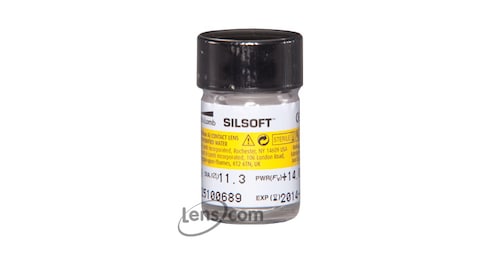
Aphakic lenses use high plus powers and specialized designs to help restore clearer vision for daily activities. Lens.com carries Silsoft Aphakic Adult for adults who have been prescribed this type of vision correction. Since aphakic contacts require precise powers, dimensions, and fitting measurements, order the exact product and parameters listed on your prescription. Your eye doctor will determine if an aphakic soft lens fits your eye and how it should be worn, replaced, and cared for.
How Aphakic Contact Lenses Correct Vision
The natural lens inside the eye bends incoming light so it can focus on the retina. It also changes shape to shift focus between distant and nearby objects. When that lens is absent, the eye loses a large amount of focusing power and becomes strongly farsighted. Light comes to a focus behind the retina instead of directly on it, which leaves vision blurry without correction.
Aphakic contact lenses compensate for this missing focusing power with strong plus prescriptions. They sit directly on the eye and redirect light before it enters the eye, helping bring the image back into focus on the retina. The exact power depends on the wearer's remaining refractive error, corneal shape, surgical history, and visual needs.
Replacing the Eye's Missing Focusing Power
An ordinary contact lens corrects common refractive errors, which is why there are certain lenses for nearsightedness or lenses for farsightedness. An aphakic contact lens has a different job. It must replace much of the focusing power that the natural lens once supplied, which is why aphakic prescriptions can reach much higher plus powers than standard soft contacts.
The lens does not become a new part of the eye or restore the natural lens itself. It acts as an external optical correction. When the power and fit are correct, the contact lens bends incoming light more strongly so the eye can form a clearer retinal image. The wearer's final vision can still depend on the health of the cornea, retina, optic nerve, and other parts of the visual system.
Aphakic Contact Lenses Use High Plus Powers
Plus-powered lenses converge light before it reaches the eye. In aphakia, the missing natural lens creates a much greater need for this converging power than ordinary farsightedness does. Aphakic contacts are therefore made in strong plus prescriptions, with lens designs capable of carrying the required power while maintaining an appropriate fit.
Higher power also changes the shape and thickness of the contact lens. The center of a plus lens is thicker than its edges, and the difference becomes more pronounced as the prescription increases. Lens material, diameter, base curve, thickness profile, and oxygen transmission must all be considered during the fitting. A lens that has the correct numerical power but does not center or move properly may still produce unstable vision or affect eye health.
Contact Lenses Compared With Aphakic Glasses
High-powered aphakic glasses can correct vision, but their lenses sit several millimeters in front of the eyes. That distance can noticeably magnify the retinal image, restrict the usable field of view, and create distortion toward the edges of the lenses. These optical effects can be especially difficult when only one eye is aphakic because the corrected image from that eye may appear much larger than the image from the other eye.
Contact lenses sit on the tear film, much closer to the eye's optical system. This position generally produces less spectacle-induced magnification and fewer peripheral distortions than high-plus glasses. It can also allow a wider, more natural field of view because the correction moves with the eye instead of remaining fixed in a spectacle frame.
That does not mean contacts are the right choice for every person with aphakia. Handling ability, corneal health, tear quality, age, prescription, and tolerance all affect the decision. Some wearers may use glasses, contact lenses, an intraocular lens, or a combination of corrections based on their eye doctor's recommendations.
Distance and Near Vision After Aphakia
Correcting the strong farsighted prescription can restore clearer distance vision, but an aphakic contact lens does not recreate accommodation. Accommodation is the natural lens's ability to change shape and increase focusing power for close work. Once the natural lens is absent, that automatic focusing response is also lost.
Many aphakic wearers therefore need additional near correction even when their distance vision is clear through contact lenses. Depending on age and visual needs, an eye doctor may prescribe reading glasses over the contacts, a bifocal or multifocal correction, different powers for distance and near, or another individualized approach. Children require particularly close management because their prescriptions and visual needs can change as the eyes grow.
Why Lens Fit and Centration Affect Visual Clarity
Strong plus lenses need to remain properly centered over the pupil for the optical zone to stay aligned with the wearer's line of sight. A lens that moves too much, sits off-center, or fits too tightly can cause fluctuating clarity and may interfere with healthy tear exchange. The effect can be more noticeable with an aphakic prescription because small changes in lens position can influence how the high-powered optics perform.
During a fitting, the eye doctor checks the lens power, base curve, diameter, centration, movement, and visual response. Follow-up examinations allow the doctor to check that the prescription still gives clear vision and that the eye continues to tolerate the lens. Aphakic contacts should be reordered according to the exact product and parameters on the prescription rather than replaced with another high-plus lens based on power alone.
Save More on Aphakic Lenses With Rebates
|
Contact Lens Manufacturer
|
Contact Lens Type
|
Contact Lens Material Type
|
Contact Lens Water Content Percentage
|
Contact Lens Blocks UV
|
Each Box Contains
|
Average Star Rating
|
|---|
Why Are Contact Lenses Used for Aphakia?
Contact lenses are prescribed for aphakia because they replace much of the focusing power lost when the eye's natural lens is absent. Unlike standard contact lenses that correct common refractive errors, aphakic lenses are designed with much stronger plus powers to help focus light on the retina and restore clearer vision. They are commonly prescribed after cataract surgery without an intraocular lens implant, following certain eye injuries, or for congenital aphakia and other conditions where the natural lens is missing.
For many wearers, contact lenses provide optical advantages over high-powered aphakic glasses. Because the lens sits directly on the eye, it generally produces less image magnification, a wider field of view, and fewer peripheral distortions than spectacles. This can be particularly beneficial when only one eye is aphakic, since contact lenses reduce the image-size differences that can occur between the two eyes.
Not everyone with aphakia is treated the same way. Depending on the health of the eye, the prescription, age, and individual visual needs, an eye doctor may recommend contact lenses, glasses, an intraocular lens, or a combination of these options. The goal is to achieve the clearest, most comfortable lenses for your vision while maintaining the long-term health of the eye.
Soft vs. Rigid Gas Permeable Aphakic Contact Lenses
Soft and rigid gas permeable (RGP) contact lenses can both be prescribed for aphakia, but they serve different fitting and visual needs. The right choice depends on factors such as your prescription, corneal shape, eye health, lifestyle, and the results of your contact lens fitting. An eye doctor will determine which design is most appropriate for your eyes.
Soft Aphakic Contact Lenses
-
Made from flexible materials that conform to the surface of the eye.
-
Available in high plus powers to replace the focusing power lost with aphakia.
-
Many wearers find them easier to adapt to because they move less during blinking.
-
Can be a good option when the cornea has a regular shape and a standard or specialty soft lens provides an appropriate fit.
Rigid Gas Permeable Aphakic Contact Lenses
-
Made from firm, oxygen-permeable materials that retain their shape on the eye.
-
Create a smooth optical surface that can produce sharper vision for some wearers, particularly when the cornea is irregular.
-
Can be customized in a wide range of parameters for more complex prescriptions and fitting needs.
-
Typically require a longer adaptation period than soft lenses because of their firmer design.
Neither lens type is automatically better than the other. Some people achieve excellent vision with soft aphakic lenses, while others benefit more from rigid gas permeable designs. Your eye doctor will recommend the lens that provides the best combination of vision, comfort, fit, and eye health for your individual needs.
Pediatric Aphakic Contact Lenses
Children with aphakia have different visual needs than adults because their eyes are still developing. Aphakia in infants and young children is commonly associated with congenital cataracts or cataract surgery performed early in life. Since clear vision plays an important role in normal visual development, correcting aphakia promptly can help the brain learn to process visual information while the eyes continue to grow.
Pediatric aphakic contact lenses, such as Silsoft Super Plus Kids, are fitted differently from adult lenses. An eye doctor considers the child's age, eye size, corneal measurements, prescription, and expected eye growth before selecting a lens. As the child's eyes develop, the prescription and lens parameters may need to be updated more frequently than they would for an adult, making regular follow-up appointments an important part of long-term care.
Many infants and young children rely on parents or caregivers to insert, remove, clean, and monitor their contact lenses each day. Families should follow the prescribed wearing schedule, replacement schedule, and lens care instructions exactly as directed. Parents should also contact their eye doctor if they notice persistent redness, excessive tearing, unusual discharge, or changes in the child's vision or comfort.
How Are Aphakic Contact Lenses Fitted?
Fitting an aphakic contact lens involves more than selecting the correct prescription power. Because these lenses use much stronger plus powers than standard contacts, the eye doctor also evaluates how the lens fits the surface of the eye, how well it centers over the pupil, how much it moves with each blink, and whether it provides stable vision throughout the day. Measurements such as the corneal curvature, lens diameter, and overall eye shape help determine which lens parameters are most appropriate.
After placing a trial lens on the eye, the doctor checks the fit with a slit lamp and evaluates the quality of the wearer's vision. Small adjustments to the power, base curve, diameter, or lens design may be needed before the final prescription is written. The goal is to achieve clear, comfortable vision while maintaining healthy tear exchange and minimizing unnecessary pressure on the cornea.
Follow-up appointments remain an important part of the fitting process. During these visits, the eye doctor checks that the lens continues to fit properly, that the prescription still meets the wearer's visual needs, and that the cornea remains healthy. If the eye changes over time, the prescription or lens parameters may need to be updated before new lenses are ordered.
Caring for Aphakic Contact Lenses
Proper lens care helps maintain clear vision, extends the usable life of reusable lenses, and reduces the risk of eye infections and other complications. Follow the care instructions provided by your eye doctor, since the cleaning routine and replacement schedule can vary depending on the lens material and design.
-
Wash and dry your hands before handling your lenses. Clean hands help reduce the transfer of dirt, oils, and microorganisms to the lens surface.
-
Use only the recommended cleaning and disinfecting solution. Unless specifically directed otherwise, do not clean or store contact lenses in tap water, bottled water, or saliva.
-
Follow the prescribed replacement schedule. Replace your lenses according to your eye doctor's instructions, even if they still feel comfortable.
-
Clean and replace your lens case regularly. Empty the old solution after each use, allow the case to air dry, and replace it about every three months or sooner if it becomes damaged or contaminated.
-
Remove your lenses if your eyes become painful or unusually red. Contact your eye doctor promptly if you experience persistent discomfort, blurred vision, excessive tearing, discharge, or light sensitivity.
-
Attend your scheduled follow-up appointments. Regular examinations allow your eye doctor to evaluate the fit of your aphakic lenses, monitor the health of your eyes, and determine whether your prescription or lens parameters need to be updated.
Because aphakic contact lenses are individually prescribed, do not share them with another person or substitute a different high-plus lens unless your eye doctor recommends a change.
Can You Wear Glasses Instead of Aphakic Contact Lenses?
Yes. Glasses can correct aphakia, and some people wear them full time or in combination with contact lenses. The right choice depends on factors such as whether one or both eyes are affected, your prescription, eye health, lifestyle, and the treatment plan recommended by your eye doctor. Some wearers also use glasses over their contact lenses for reading or other near tasks.
High-powered aphakic glasses sit several millimeters in front of the eye, which can create noticeable image magnification and reduce the peripheral field of view. These optical effects can be especially challenging when only one eye is aphakic because the corrected image from that eye may appear significantly larger than the image seen by the other eye. Contact lenses rest directly on the eye, so they generally produce less image magnification and provide a wider, more natural field of view for many wearers.
Neither option is automatically better for every person with aphakia. Some patients achieve excellent results with glasses, while others benefit more from contact lenses or another form of vision correction. Your eye doctor will recommend the solution that provides the best combination of vision, comfort, eye health, and long-term visual outcomes for your individual needs.
Reordering Aphakic Contact Lenses
Reordering aphakic contact lenses requires more than matching the prescription power. Because these lenses are prescribed in high plus powers and may include specific fitting parameters, every detail on the prescription should match the original lens prescribed by your eye doctor. Before placing an order, verify the product name, power, base curve, diameter, replacement schedule, and any other information included on your prescription.
If your prescription has expired, your vision has changed, or your current lenses no longer provide the same level of comfort or clarity, schedule an eye examination before ordering another supply. Small changes in the eye can affect how an aphakic contact lens fits and performs, particularly with stronger prescriptions.
When reordering through Lens.com, select the exact aphakic contact lens prescribed by your eye doctor rather than substituting another high-plus lens with similar specifications. If you are unsure whether your prescription is still current or have questions about the product listed on your prescription, contact your eye care provider before placing your order.