Contact Lenses
Contact lenses are prescription medical devices worn directly on the eyes to correct nearsightedness, farsightedness, astigmatism, and presbyopia, depending on the lens design. According to the Centers for Disease Control and Prevention (CDC), approximately 45 million Americans wear contact lenses.
Since 1995, Lens.com has helped customers purchase prescription contact lenses online. Our selection includes daily, biweekly, and monthly contacts, along with toric, multifocal, silicone hydrogel, gas permeable, and colored lenses from established manufacturers such as ACUVUE, Alcon, CooperVision, and Bausch + Lomb.
Buying contact lenses online starts with a current prescription for the exact lens fitted by your eye care professional. Find your prescribed brand and product, confirm the prescription details for each eye, and compare pack sizes, replacement schedules, and available rebates before placing your order.
to
to
to
to
to
to
to
to
to
to
to
to
to
to
to
to
to
to
to
to
to
to
to
to
to
to
to
to
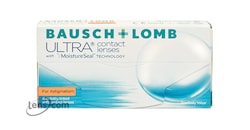
to
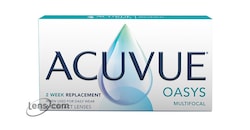
to
to
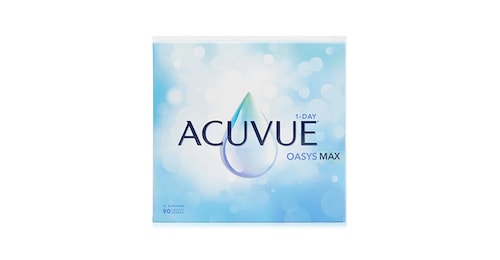
to
to
to
to
to
to
What Features Should You Look for in Contact Lenses?
Contact lenses vary in material, prescription design, replacement schedule, and other features that affect how they're worn and maintained. When comparing contact lenses, consider the following characteristics.
- Vision correction: Spherical lenses correct nearsightedness or farsightedness, toric lenses correct astigmatism, and multifocal lenses help people with presbyopia see at different distances.
- Lens material: Soft contacts are typically made from hydrogel or silicone hydrogel. Silicone hydrogel generally allows more oxygen to reach the cornea, while rigid gas permeable lenses use firm, oxygen-permeable materials.
- Replacement frequency: Daily disposable contacts are discarded after one use, biweekly lenses are replaced every 14 days, and monthly lenses are typically replaced after one month.
- Wearing schedule: Daily-wear lenses must be removed before sleeping. Certain extended-wear lenses are approved for overnight use, but only when prescribed for that purpose.
- Color and appearance: Colored contacts can enhance or change your natural eye color. They're available with or without vision correction, but all colored contact lenses require a prescription in the United States.
Your eye care professional determines which lens design, material, and wearing schedule are appropriate based on your prescription, eye health, and fitting needs.
Benefits of Contact Lenses
Contact lenses correct vision without the frames, lenses, or other physical limitations of eyeglasses. When properly fitted and worn as prescribed, they have several advantages for everyday use.
- Clear vision correction: Contact lenses correct nearsightedness, farsightedness, astigmatism, and presbyopia. Specialty lenses can also address certain complex vision needs.
- Wider field of vision: Contacts move with your eyes, providing an unobstructed view without eyeglass frames limiting your peripheral vision.
- Greater freedom during physical activities: Contacts stay in place during most movements, making them a practical choice for exercise, sports, and other active routines.
- No fogging or rain-covered lenses: Unlike glasses, contacts don't fog up when temperatures change or collect raindrops that interfere with your view.
- Freedom to wear different eyewear: Contacts allow you to wear nonprescription sunglasses, protective eyewear, and other accessories without accommodating prescription eyeglass frames.
These advantages depend on proper lens fitting, eye health, and wearing habits. Your eye care professional can help determine which contact lenses suit your prescription and daily activities. Always follow the recommended wearing, replacement, and care instructions.
What Contact Lenses Are Approved for Overnight Wear?
Certain extended-wear contact lenses are approved for overnight use because their materials allow oxygen to reach the cornea during sleep. Depending on the specific lens, approval may cover up to 6 consecutive nights or as many as 30 days of continuous wear. Overnight wear should only be considered when your eye care professional has prescribed and approved it for you.
Daily-wear contact lenses, including daily disposables, aren't approved for sleeping or napping. Even with extended-wear lenses, sleeping in contacts increases the risk of eye infections, so following your prescribed wearing schedule is important.
Same-Day Contacts vs. Biweekly and Monthly Contacts
Contact lenses come with different replacement schedules, including daily, biweekly, and monthly options. The main differences are how long each pair lasts and whether the lenses need cleaning and storage between uses.
Same-Day Contact Lenses
Same-day contact lenses, more commonly called daily disposable contacts, are designed for single use. You wear a fresh pair each day and discard them after removal. Since these lenses aren't reused, there's no need to clean, disinfect, or store them overnight. They're a practical choice for people who prefer a new pair every day or wear contacts occasionally. Source
Biweekly and Monthly Contact Lenses
Biweekly contacts are replaced every 14 days, while monthly contacts are replaced after approximately 30 days, following the prescribed replacement schedule. Unlike daily disposables, these reusable lenses must be cleaned, disinfected, and stored properly after removal. They may suit people who wear contacts regularly and prefer using each pair for a longer period. Both types should be replaced on schedule, even if they still feel comfortable.
Compare Popular Contact Lenses
Lens.com carries ocular contact lenses across every major replacement schedule, daily, biweekly, monthly, and many more, from the most trusted manufacturers in the industry. The selection covers standard sphere prescriptions, astigmatism, presbyopia, and extended wear needs across a wide range of leading brands.
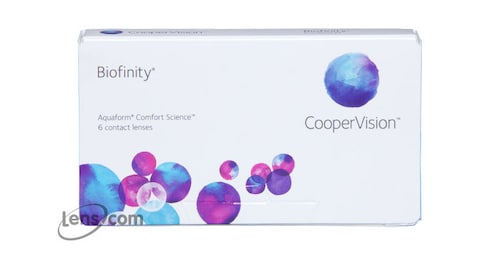
Biofinity
Acuvue Oasys for Astigmatism
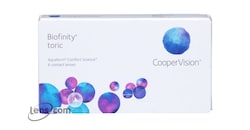
Biofinity Toric
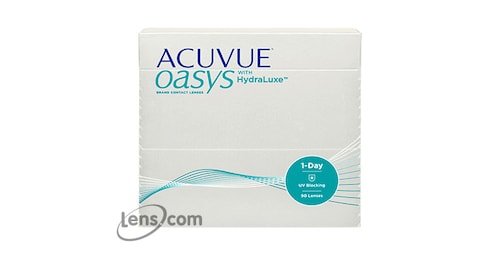
Acuvue Oasys 1-Day with Hydraluxe
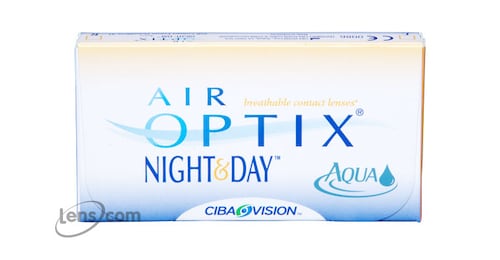
Air Optix Night & Day Aqua
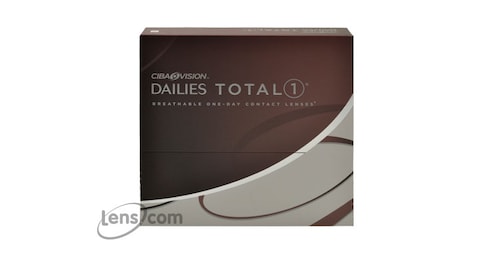
Dailies Total 1
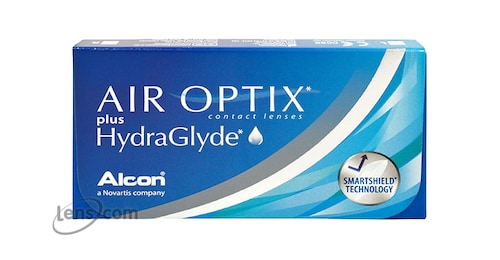
Air Optix plus HydraGlyde
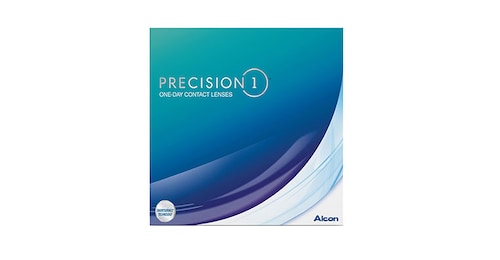
Precision1
How to Apply for Rebates
|
box rebate
Rebate amount with a 4 box purchase
|
box rebate
Rebate amount with a 8 box purchase
|
box rebate
Rebate amount with a 2 box purchase
|
Contact Lens Manufacturer
|
Contact Lens Type
|
Contact Lens Material Type
|
Contact Lens Water Content Percentage
|
Contact Lens Blocks UV
|
Each Box Contains
|
Average Star Rating
|
|
|---|---|---|---|---|---|---|---|---|---|---|
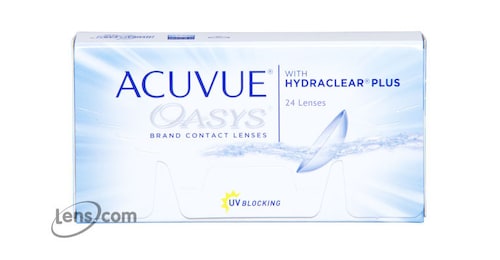
| Acuvue Oasys | $50 | -- | -- | Johnson & Johnson | Weekly | Silicone Hydrogel | 38% | 12 lenses, a 6-month supply |
|
|
| Biofinity | $55 | -- | -- | CooperVision | Monthly | Silicone Hydrogel | 48% | 6 lenses, a 6-month supply |
|
|
| Acuvue Oasys for Astigmatism | -- | $60 | -- | Johnson & Johnson | Weekly | Silicone Hydrogel | 38% | 6 lenses, a 3-month supply |
|
|
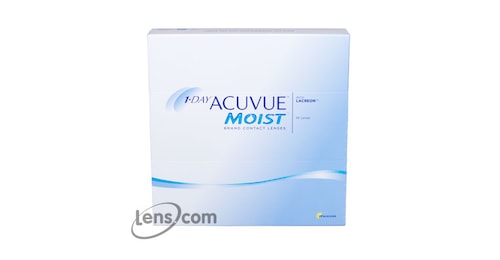
| 1-Day Acuvue Moist | -- | $130 | $20 | Johnson & Johnson | Daily | Hydrogel | 58% | 30 lenses, a 1-month supply |
|
|
| Biofinity Toric | $70 | -- | -- | CooperVision | Monthly | Hydrogel | 48% | 6 lenses, a 6-month supply |
|
|
| Acuvue Oasys 1-Day with Hydraluxe | -- | $90 | -- | Johnson & Johnson | Daily | Silicone Hydrogel | 38% | 90 lenses, a 3-month supply |
|
|
| Air Optix Night & Day Aqua | $85 | -- | -- | Alcon | Monthly | Silicone Hydrogel | 24% | 6 lenses, a 6-month supply |
|
|
| Dailies Total 1 | -- | $150 | -- | Alcon | Daily | Silicone Hydrogel | 33% | 90 lenses, a 3-month supply |
|
|
| Air Optix plus HydraGlyde | $40 | -- | -- | Alcon | Monthly | Silicone Hydrogel | 33% | 6 lenses, a 6-month supply |
|
|
| Precision1 | -- | $105 | -- | Alcon | Daily | Silicone Hydrogel | 51% | 90 lenses, a 3-month supply |
|
|
| Biofinity Multifocal | $70 | -- | -- | CooperVision | Monthly | Silicone Hydrogel | 48% | 6 lenses, a 6-month supply |
|
|
| 1-Day Acuvue Moist for Astigmatism | -- | $90 | $20 | Johnson & Johnson | Daily | Hydrogel | 58% | 30 lenses, a 1-month supply |
|
|
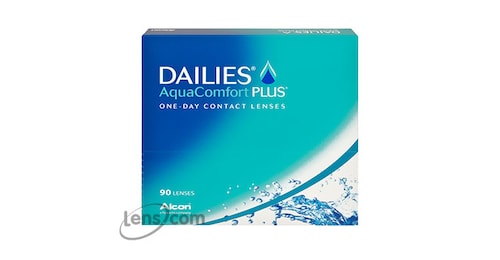
| Dailies AquaComfort Plus | -- | $115 | -- | Alcon | Daily | Hydrogel | 69% | 90 lenses, a 3-month supply |
|
|
| Air Optix plus HydraGlyde Multifocal | $80 | -- | -- | Alcon | Monthly | Silicone Hydrogel | 33% | 6 lenses, a 6-month supply |
|
|
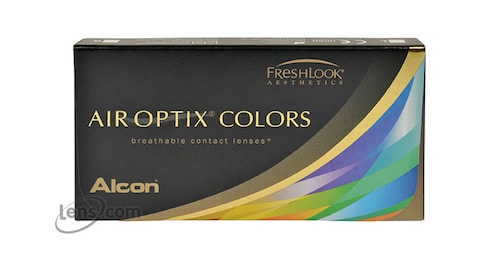
| Air Optix Colors | -- | -- | $20 | Alcon | Monthly | Silicone Hydrogel | 33% | 6 lenses, a 6-month supply |
|
What Are the Different Types of Contact Lenses?
Contact lenses can be classified into 4 main categories based on their material, prescription design, replacement schedule, and wear schedule. These categories describe different features of a lens and can overlap within the same product.
By Material
There are 2 primary contact lens material categories, soft and rigid gas permeable (RGP). Soft contact lenses are made from flexible materials, including hydrogel and silicone hydrogel, that allow oxygen to reach the cornea. They adapt to the shape of the eye and are available for different prescriptions and replacement schedules. Silicone hydrogel materials generally allow greater oxygen transmission than traditional hydrogel materials.
Rigid gas permeable (RGP) contacts are made from firmer, oxygen-permeable materials that maintain their shape on the eye. They are durable, resistant to deposit buildup, and can provide clear vision for standard prescriptions and certain corneal conditions. Unlike soft lenses, which often feel comfortable sooner, RGP lenses may take several weeks to get used to and require a specific fitting and care routine.
By Prescription Design
There are 3 common corrective contact lens designs, spherical, toric, and multifocal. Spherical contacts correct nearsightedness or farsightedness using a single prescribed optical power. Toric contacts correct astigmatism and include 2 additional prescription values, cylinder (CYL) and axis (AX), with the axis measured from 1 to 180 degrees. Multifocal contacts incorporate multiple focusing powers to address presbyopia, allowing wearers to see at different distances without switching between separate pairs of glasses.
Colored contacts are another design option that can enhance or change eye color and are available with or without vision correction. Even lenses with 0.00 diopters of corrective power, commonly called plano lenses, require a valid contact lens prescription in the United States. The appropriate design depends on your vision needs, prescription, and the lens fitted by your eye care professional.
By Replacement and Wear Schedule
Contact lenses generally have 2 replacement approaches, single-use and planned replacement. Daily disposable contacts are worn once and discarded after removal, while reusable soft lenses may have replacement schedules of 7, 14, or 30 days, depending on the product. Reusable contacts must be cleaned, disinfected, and stored as directed between uses, and their replacement period begins when the package is opened.
Wear schedules are divided into 2 main categories, daily wear and extended wear. Daily-wear contacts must be removed before sleeping, while certain extended-wear lenses are approved for continuous wear ranging from 1 to 6 nights or up to 30 days, depending on the specific lens and professional guidance. A monthly replacement schedule does not automatically permit overnight wear, and sleeping in contacts increases the risk of serious eye infections even when the lenses are approved for extended wear.
Top 10 Best-Selling Contact Lenses for Dry Eyes in 2026
Dry eyes can make wearing contact lenses uncomfortable, particularly during long hours of screen use or in dry environments. Lens material, surface moisture, and replacement frequency can all influence how comfortable contacts feel throughout the day.
The following 10 contact lenses from Lens.com's best-selling list feature different materials and technologies designed to maintain moisture, support lens wettability, or resist deposits. The right choice depends on your prescription, tear film, and professional fitting.
What Causes Dry Eyes?
Dry eyes occur when your eyes don't produce enough tears or when tears evaporate too quickly. Symptoms include burning, redness, blurry vision, sensitivity to light, and a gritty sensation.
Common contributing factors include aging, hormonal changes, medications, certain health conditions, and dry or windy environments. Extended screen use can also contribute to dryness because people tend to blink less frequently when looking at digital devices.
What Are the Best Contact Lenses for Dry Eyes?
These 10 contact lenses have moisture-related features that may help support comfortable wear. Each uses a different approach to lens hydration, surface wettability, or deposit resistance.
1. ACUVUE OASYS with HYDRACLEAR PLUS Technology
ACUVUE OASYS are biweekly silicone hydrogel contacts made with HYDRACLEAR PLUS Technology. A wetting agent is incorporated into the lens material to create a smooth, lubricated surface. They're designed for comfortable wear across different daily activities.
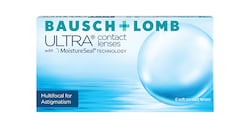
2. Bausch + Lomb ULTRA
Bausch + Lomb ULTRA are monthly silicone hydrogel contacts featuring MoistureSeal Technology. This technology helps retain moisture within the lens material and is designed to support comfort during prolonged digital device use, when reduced blinking can contribute to dryness.
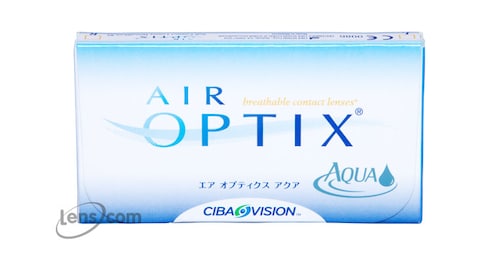
3. AIR OPTIX AQUA
AIR OPTIX AQUA are monthly silicone hydrogel lenses with a surface treatment designed to maintain wettability and resist deposits. Their material allows oxygen to reach the cornea, while the treated surface helps maintain comfort during wear.
4. Biofinity
Biofinity monthly contact lenses use Aquaform Technology, which helps the silicone hydrogel material retain water without relying on an added surface coating. Their material also allows oxygen to pass through the lens, supporting corneal health during prescribed wear.
5. 1-DAY ACUVUE MOIST
1-DAY ACUVUE MOIST contacts feature LACREON Technology, which incorporates a moisture-retaining ingredient into the lens material. These daily disposables are discarded after each use, eliminating the need for overnight cleaning and storage.
6. Biotrue ONEday
Biotrue ONEday are daily disposable contacts made from HyperGel material with 78% water content. Their surface is designed to help limit dehydration during wear. These lenses also provide UV protection, although they don't replace sunglasses.
7. DAILIES TOTAL1
DAILIES TOTAL1 are daily disposable silicone hydrogel contacts featuring Water Gradient Technology. Water content increases toward the lens surface, creating a highly hydrated outer layer. SmarTears Technology also releases an ingredient naturally found in tears to support tear film stability.
8. ACUVUE OASYS 1-DAY with HydraLuxe Technology
ACUVUE OASYS 1-DAY are silicone hydrogel daily disposables featuring HydraLuxe Technology. Their tear-inspired design helps support a smooth lens surface and comfortable blinking, including during prolonged screen use.
9. PureVision
PureVision monthly silicone hydrogel contacts use AerGel material, which allows oxygen to reach the cornea while resisting protein deposits. Their rounded-edge design is also intended to reduce interaction between the lens and eyelids during blinking.
10. AIR OPTIX plus HydraGlyde
AIR OPTIX plus HydraGlyde are monthly silicone hydrogel contacts combining two technologies. SmartShield Technology helps resist deposits, while HydraGlyde Moisture Matrix supports surface wettability and moisture retention throughout wear.
Does Higher Water Content Mean Better Contacts for Dry Eyes?
Not necessarily. A lens with higher water content isn't automatically more comfortable for someone with dry eyes. Lens material, surface treatment, fit, and tear film quality all influence comfort. Your eye care professional can help determine which design is appropriate for your eyes.
Who Can Wear Contact Lenses?
Most wearers with nearsightedness, farsightedness, astigmatism, or presbyopia can wear contact lenses with the right prescription and fit. Contacts are available for different ages and vision needs, including people who require specialty lenses for certain eye conditions.
- Wearers with nearsightedness or farsightedness: Spherical contact lenses correct blurry distance or near vision caused by these common refractive errors.
- Wearers with astigmatism: Toric contacts correct astigmatism using specific cylinder and axis measurements to account for the eye's shape.
- Adults with presbyopia: Multifocal contacts help people see at different distances as the eye's ability to focus up close changes with age.
- Children and teenagers: There is no universal minimum age for wearing contacts. Younger wearers may qualify if they can safely handle and care for their lenses, with appropriate supervision when needed.
- Wearers with certain corneal conditions: Specialty contacts, including rigid gas permeable and scleral lenses, may help correct vision when standard soft lenses aren't suitable.
- Wearers with dry eyes or allergies: Some people with these conditions can still wear contacts, depending on symptom severity, tear film health, and lens compatibility.
An eye examination and contact lens fitting determine which lenses are suitable for your eyes. Your eye care professional will consider your prescription, eye health, and wearing habits before recommending a lens type and replacement schedule. If you experience persistent discomfort, redness, or changes in vision, remove your contacts and seek professional advice.
How to Buy Contact Lenses Online
Buying contact lenses online is straightforward when you have a current prescription. Follow these five steps to make sure you order the correct lenses for your eyes.
- Check your prescription. Make sure your contact lens prescription is valid and includes the exact lens prescribed by your eye care professional.
- Find your prescribed contacts. Search for the exact product listed on your prescription, and don't switch to another lens without professional approval.
- Enter your prescription details. Carefully enter the power (PWR/SPH), base curve (BC), diameter (DIA), and any cylinder (CYL), axis, or ADD values required for each eye.
- Compare prices and pack sizes. Review the number of lenses per box, replacement schedule, available rebates, shipping costs, and total order price before checking out.
- Complete prescription verification and place your order. Submit a copy of your prescription or provide your eye care professional's contact details for verification. Review your order for accuracy before completing your purchase.
How Many Contacts Are in a Box?
The number of contact lenses in a box depends on the lens type, replacement schedule, and package size. Daily disposable contacts commonly come in boxes of 30 or 90 lenses, with some available in 180-count packs. Biweekly and monthly contacts typically come in boxes of 6 or 12 lenses, although packaging varies by product. Each box contains individual contact lenses, not pairs.
How long a box lasts depends on how often you wear contacts and whether both eyes have the same prescription. For example, a 30-count box of daily disposables provides a 30-day supply for one eye, while a 90-count box lasts approximately three months for one eye with daily use. If your eyes have different prescriptions, you'll generally need separate boxes for each eye. Always check the lens count and prescribed replacement schedule before ordering.
OD Eye vs. OS Eye: How To Read Your Contact Lens Prescription
OD and OS are abbreviations used to identify your right and left eyes on a contact lens prescription. Since each eye may require different lens measurements, understanding these terms helps you enter the correct prescription details when ordering contacts online.
- OD (Oculus Dexter): Refers to your right eye.
- OS (Oculus Sinister): Refers to your left eye.
- PWR or SPH (Power or Sphere): Indicates lens strength in diopters. Negative values correct nearsightedness, while positive values correct farsightedness.
- BC (Base Curve): Measures the curvature of the contact lens in millimeters.
- DIA (Diameter): Measures the lens width in millimeters.
- CYL (Cylinder): Indicates the additional lens power needed to correct astigmatism.
- AXIS: Specifies the orientation of astigmatism correction in degrees.
- ADD (Addition): Indicates additional power for near vision in multifocal contacts.
Not every prescription includes CYL, AXIS, or ADD, as these depend on your vision needs. Before ordering, confirm that the prescribed lens name and all measurements match your current contact lens prescription for each eye. A glasses prescription can't be used in place of a contact lens prescription.
Non-Prescription vs Prescription Contacts
Non-prescription and prescription contact lenses serve different purposes. Some are worn to change eye appearance, while others correct vision. However, all contact lenses require a valid prescription, even if you don't need vision correction.
Non-Prescription Contacts
Non-prescription contacts, also called plano or cosmetic contacts, don't correct vision. They're typically used to change or enhance eye color for everyday wear or special occasions. Despite their name, these lenses still require an eye examination, proper fitting, and a valid prescription. Wearing poorly fitted contacts can cause corneal scratches, infections, and other eye complications.
Prescription Contacts
Prescription contacts are designed to correct vision conditions such as nearsightedness, farsightedness, astigmatism, and presbyopia. They're available in different lens designs and replacement schedules based on individual needs. An eye care professional determines the appropriate lens power, measurements, and fit to help maintain clear vision and comfortable wear.
How Long Is a Contact Lens Prescription Good For?
A contact lens prescription is generally valid for at least one year, although some states require a longer period, such as two years. Federal regulations establish a minimum validity period of 12 months unless your eye care professional determines that a shorter period is medically necessary. Any shorter expiration period must be supported by a documented medical reason.
You can find the expiration date on your contact lens prescription. Once it expires, you'll need an updated prescription before purchasing more contacts online or in stores. Regular eye examinations also help confirm that your prescription, lens fit, and eye health haven't changed, even if your current contacts still feel comfortable.
How Long Does Contact Lens Prescription Verification Take?
Contact lens prescription verification can take up to 8 business hours if the seller needs to confirm your prescription with your eye care professional. Under federal regulations, the verification period begins when your eye care professional receives a complete request. If they don't respond within 8 business hours, the prescription is considered automatically verified, allowing the seller to process your order. This is known as passive verification.
Business hours are generally counted from 9 a.m. to 5 p.m., Monday through Friday, excluding federal holidays. Certain Saturday hours may also count if the seller knows your eye care professional is regularly open. Verification may finish sooner if your prescription is confirmed directly. Providing a valid prescription when ordering can also eliminate the need for this separate verification process.
How to Care for Your Contact Lenses
Daily disposable contacts are designed for single use and should be discarded after removal. Reusable contacts require regular cleaning, disinfection, and proper storage to help prevent eye infections and maintain lens comfort.
Follow these steps when caring for reusable contact lenses:
- Wash and dry your hands thoroughly before handling your contacts.
- Rub and rinse your lenses with the recommended contact lens solution, following the instructions for your specific care system.
- Use fresh disinfecting solution every time you store your lenses. Never reuse or top off old solution.
- Avoid water exposure. Remove contacts before showering or swimming, and never use tap water or saliva to clean or moisten them.
- Clean and air-dry your lens case using fresh contact lens solution, not water.
- Replace your lens case at least every three months and change your contacts according to their prescribed replacement schedule.
Water exposure can lead to serious eye infections, including Acanthamoeba keratitis. According to the CDC, this rare infection can sometimes require a year or more of treatment. Always keep contact lenses away from water, including swimming pools, lakes, and hot tubs.
What Are Rebates And How Do They Work?
Contact lens rebates help you save money by returning part of your purchase cost after you buy eligible contacts and submit a claim. Unlike instant discounts, rebates are processed after your purchase, and the amount you receive depends on the product, quantity, and promotion terms.
What Are Contact Lens Rebates?
Contact lens rebates are promotional savings available on qualifying purchases, often for six-month or annual supplies. They may come from manufacturers or retailers, with different eligibility requirements and rebate amounts. You'll generally pay the full purchase price upfront and receive the rebate after your claim is approved.
How Do Contact Lens Rebates Work?
To claim a rebate, purchase the required quantity of eligible contacts, keep your receipt and packaging, and complete the rebate form after your order ships. Submit the form with any required proof of purchase before the deadline. Once your claim is approved, you'll receive your rebate, typically through a prepaid card. Processing times and submission requirements vary by program.
More Reasons to Shop With Lens.com
Since 1995, Lens.com has helped customers buy prescription contact lenses online at competitive prices. With an extensive independently held inventory, straightforward prescription verification, and flexible ordering options, we've made it easier to find and reorder the contacts you need.
- Competitive prices and rebates. Shop contact lenses at low online prices, with additional savings available through rebates on eligible purchases.
- Straightforward prescription verification. Provide your eye doctor's name and contact information, and we'll contact their office to verify your prescription. You can also submit a copy directly.
- Easy online ordering. Find your prescribed contacts, enter your lens details, and track your order through your account.
- A wide selection of contact lenses. Choose from popular brands such as ACUVUE, AIR OPTIX, Biofinity, and Proclear, with options for different prescriptions and replacement schedules.
- Online vision test. Eligible customers can take an online vision test from home to renew their contact lens prescription without scheduling an in-office visit.
With competitive pricing, a broad product selection, and convenient prescription services, Lens.com brings the steps of ordering contact lenses together in one place. Whether you're replacing your current supply or planning ahead, you can shop with a clearer picture of your options and costs.
Popular Contact Lens Reviews
Excellent service!
This product has nothing to dislike about. It is a good quality of contact lenses and will not stop using this brand. My vision is satisfactory using Air Optix brand. Please do not stop carrying them. The sales representative was also very knowledgeable, professional, articulate and kind. My order came in before Thanksgiving and I appreciate it. She expedited sending my order so I will be happy, satisfied with my new lenses. Thank you kindly, for the excellent service !
Affordable price and quality
Love the ease and price of buying Focus dailies through Lens.com. Quick delivery and cheaper than through my eye doctor. Same product and quality. Why waste time and money anywhere else.
Awesome service
I have used Lens.com for several years now and their service is excellent. They even took back contacts I had ordered by mistake. They make it easy to order and receive your product quickly.
Would highly recommend them!
Easy wearing
Been wearing this brand of contacts for 3 years- feel easy on the eyes, light, flexible & easy to dispose of. Say adios to buying contact solution & contact cases!
The customer service is prompt and OUTSTANDING
Lens.com is such a breeze to order contacts from, and their customer service is the best. Several boxes of contacts I ordered were lost in the mail and they so were so kind about resending me my order fast and without any extra fees. The quality of these contacts (Biofinity) is unmatched as well. I would highly recommend both Lens.com and Biofinity to anyone.
Great prices
I have ordered several times from Lens.com.
I have had no issues with orders or scripts. I love the rebate when you order 4 boxes or more. I will purchase from them again.
Fast service.
I enjoyed the easy to use website as well as the fast processing time.
First time buyer
Great service, great price and very easy to order and pay. Will be back for my next order.
I have been using B+L SofLens Toric Astigmatism.
After I had been happily using them for decades, I could not reorder my contact lenses since Bausch+Lomb officially discontinued many SofLens® Toric lenses in July  2023.
As my Rx had not changed, my optometrist recommended another manufacturer, which I tried using for months, and was very disappointed.
Then on the Lens.com website, I ordered B+L ULTRA for Astigmatism Contact Lenses, and they seem just the same to me as the discontinued B+L SofLens® Toric contact lens. Now I couldn't be happier!